Scorpaena maderensis
Spot the Madeira Rockfish on Mediterranean reefs from the French Riviera to Gozo. Present year-round in 14-20 °C waters, but patience pays off.
Safety warning
The spines along the dorsal, pelvic, and anal fins deliver a venomous sting that causes intense, immediate pain and can cause localised swelling. Never touch or handle one, and check where you place your hands before grabbing a rock on any Mediterranean dive. If stung, immerse the affected area in hot (but not scalding) water as soon as possible, which breaks down the protein-based venom, and seek medical advice.
If you're stung
Venomous spinesGeneral first-aid guidance, not a substitute for professional medical care. In an emergency, call your local emergency number.
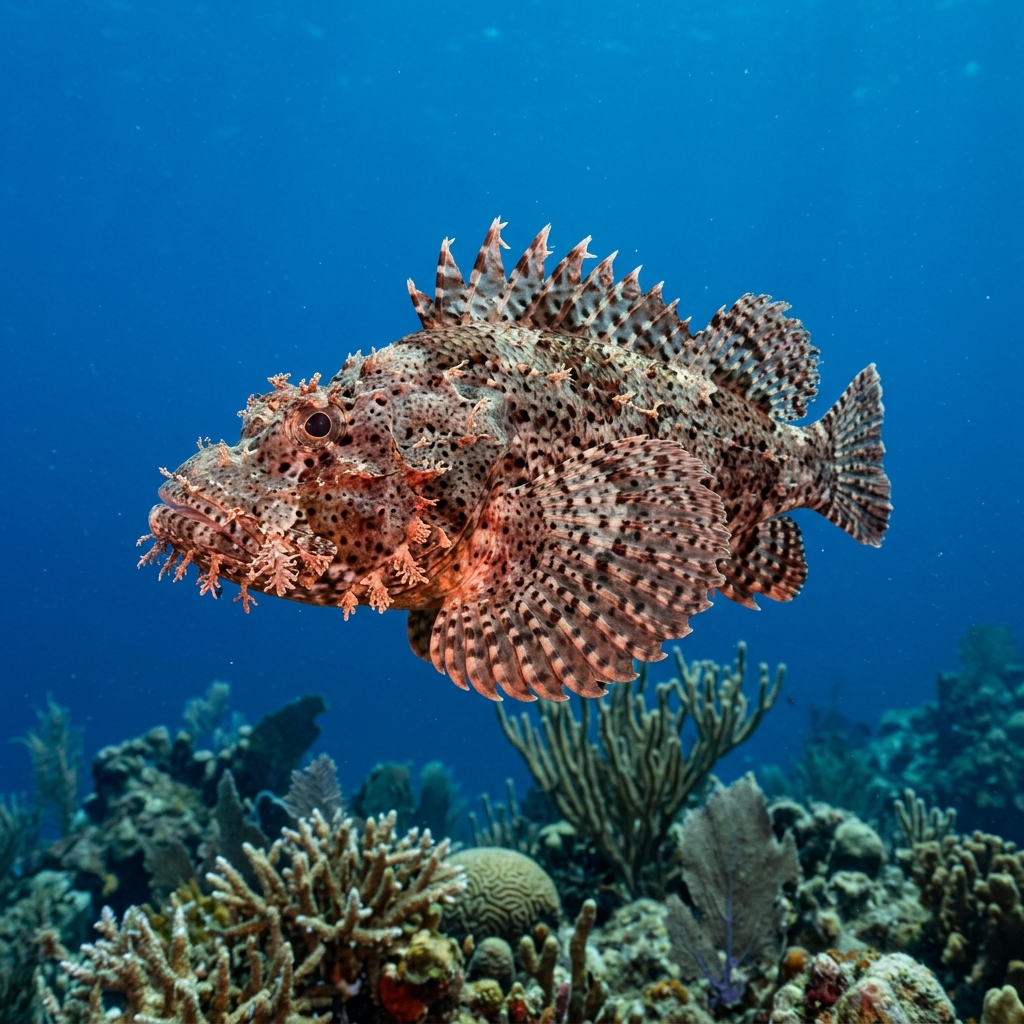
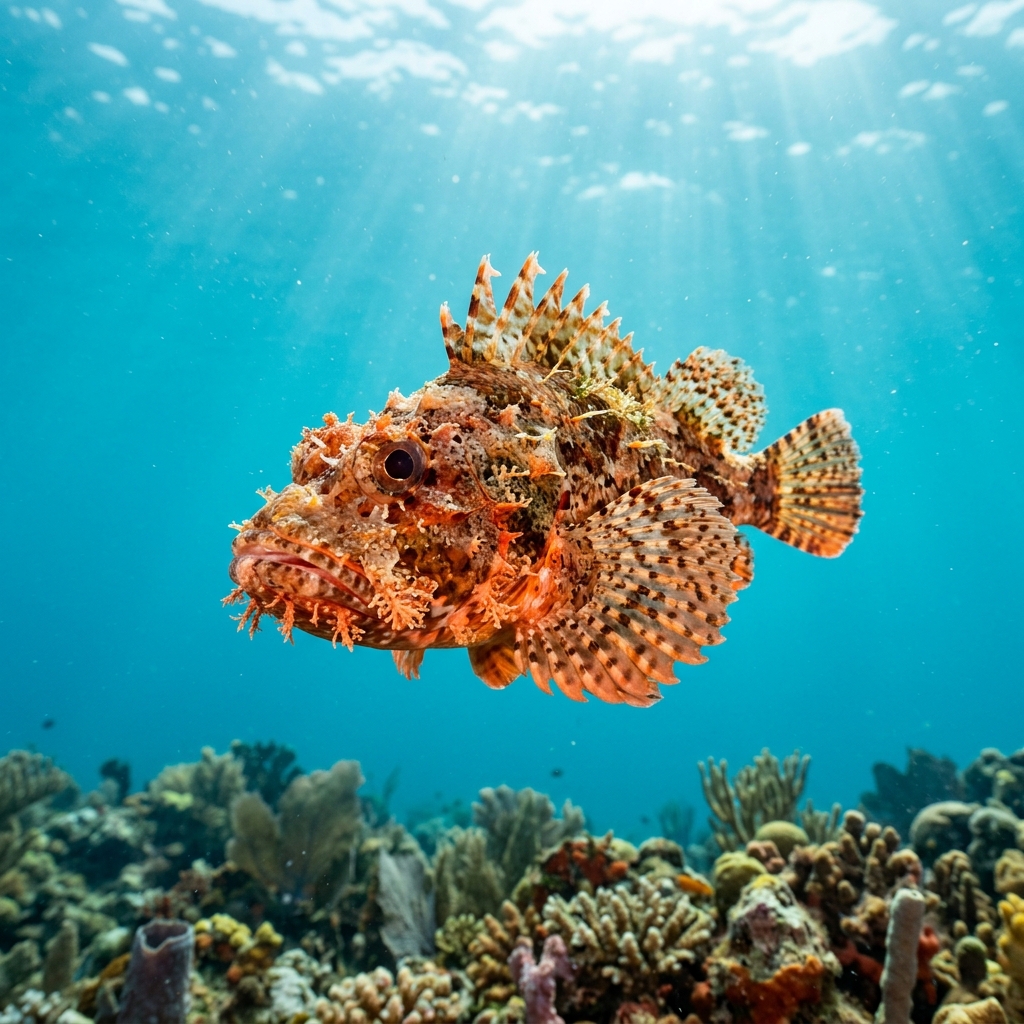
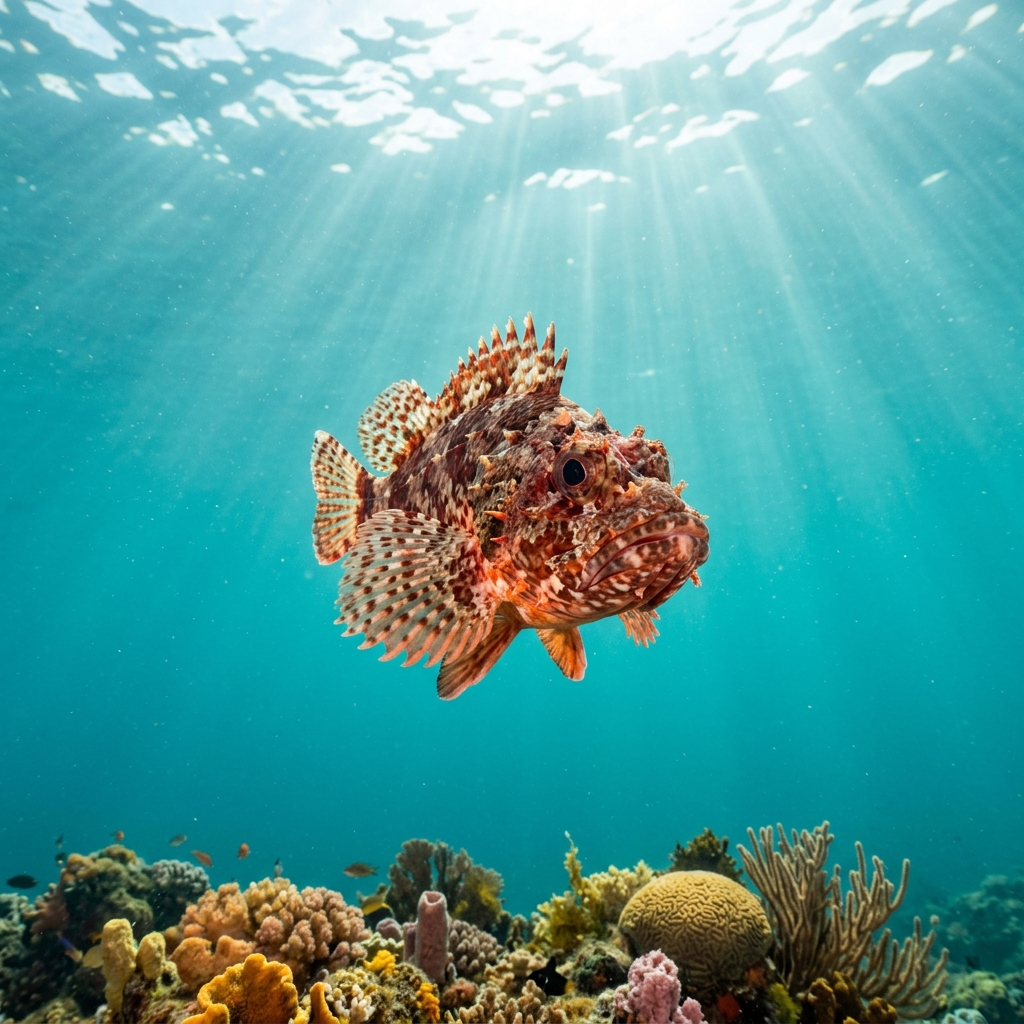
A small, chunky scorpionfish around 11 cm long, it sits motionless on the seabed with a mottled red, orange, and brown body that blends convincingly into rocky or algae-covered reef. Look for the broad, spiny dorsal fin fanned upright and the large, upturned mouth typical of ambush predators. The skin has numerous small flaps and fleshy projections (cirri) that break up the outline and add to the camouflage. At depth the reds deepen and the fish can appear almost uniform dark brown, so a torch helps reveal the true patterning.
Like most scorpionfish, the Madeira Rockfish is a sit-and-wait predator: when you find one it will almost certainly be completely still, pressed against rock or coarse rubble at 20-40 m depth. It relies on its camouflage rather than flight, so it typically holds position even when a diver gets close, making for a good photo opportunity if you approach slowly. It is most active at dusk and night when it hunts small fish and crustaceans.
Its venom-loaded dorsal spines are not just for defence, they are precisely why small prey rarely get far once the Madeira Rockfish decides to strike, lunging from its stationary ambush with a strike faster than the human eye can track.
Sightings are spread across all twelve months with no concentrated season, which makes sense given its comfortable temperature window of roughly 14 to 20 °C, a range that Mediterranean and eastern Atlantic reefs sit in for much of the year. You can plan a dive at any time without missing a peak.
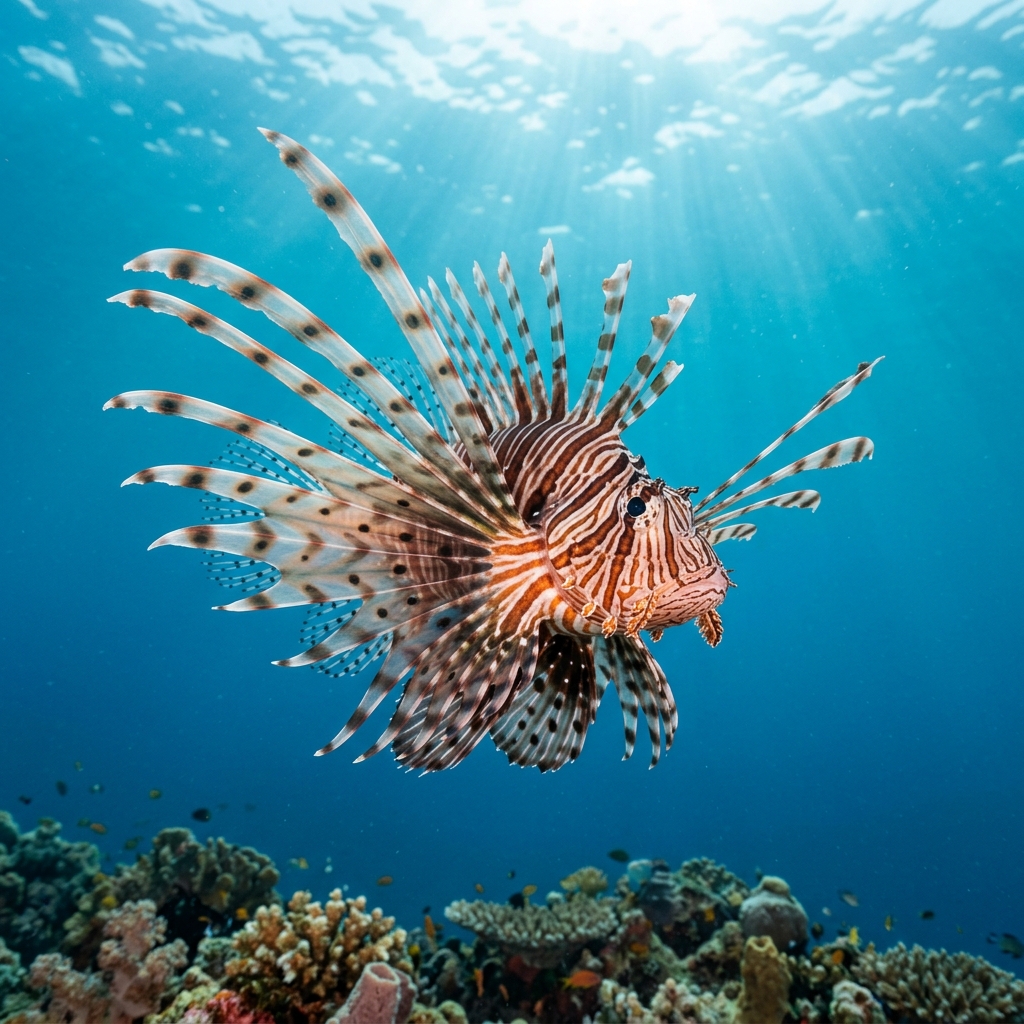
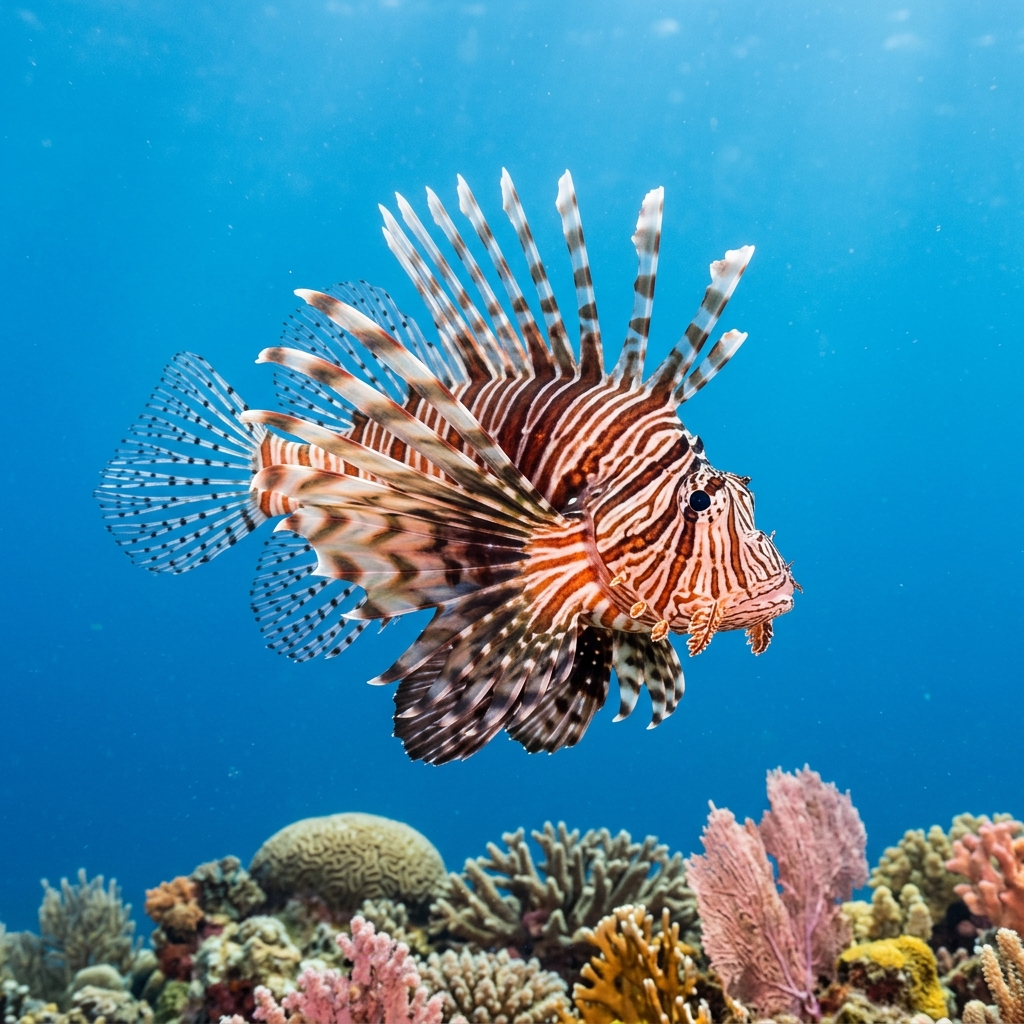
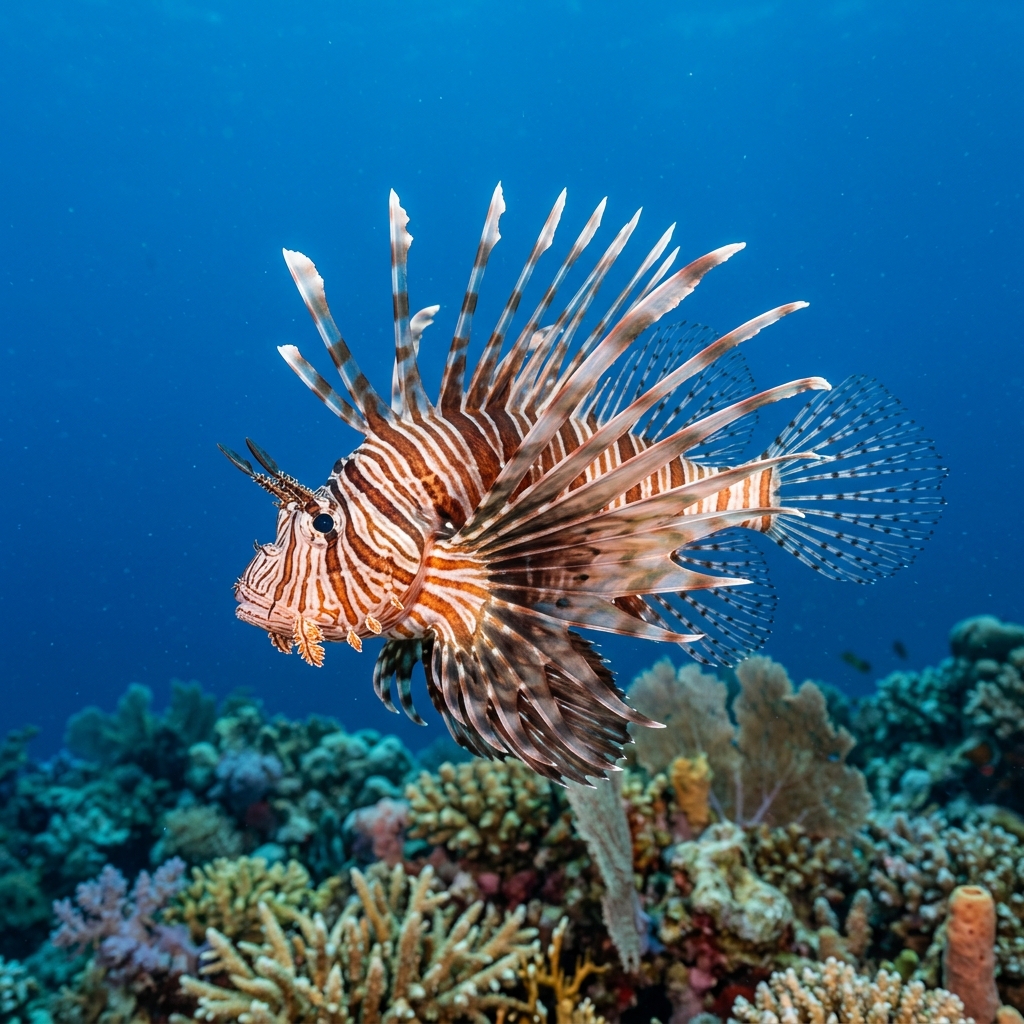
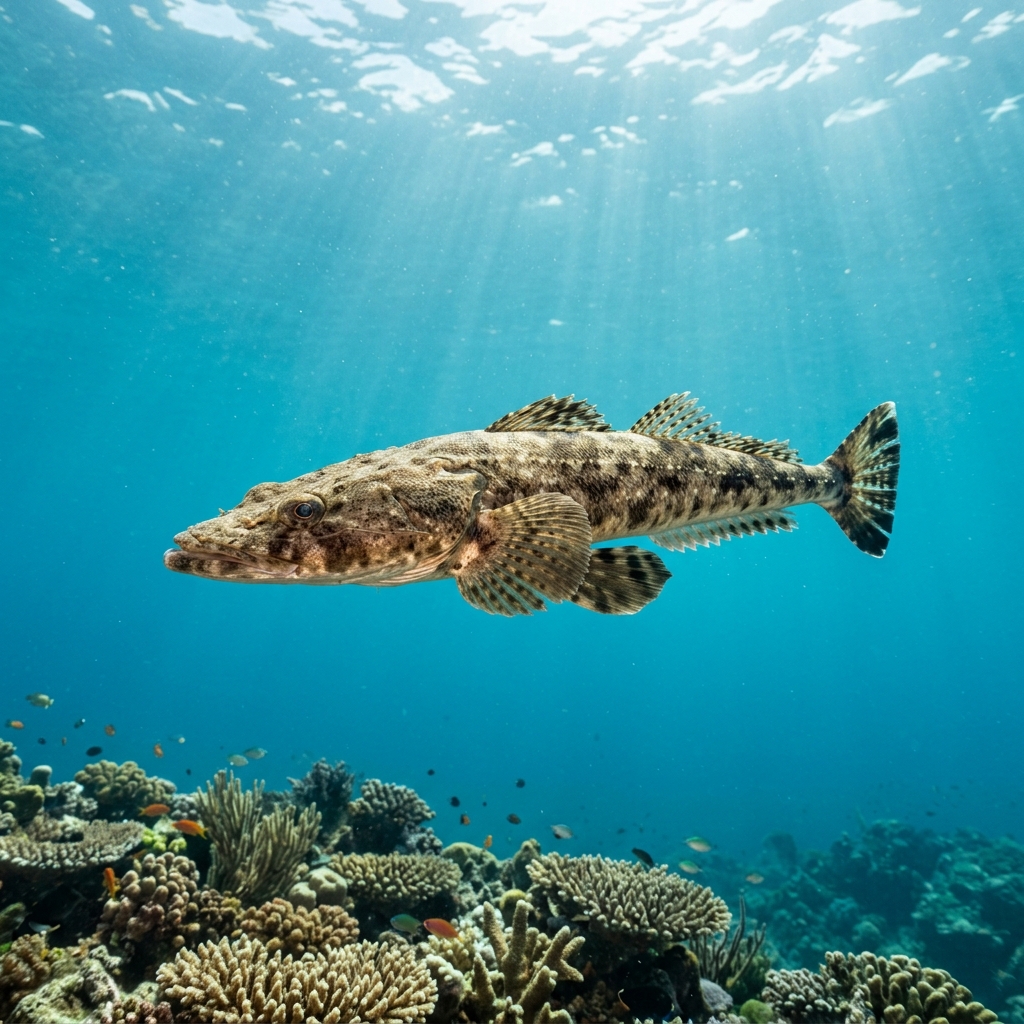
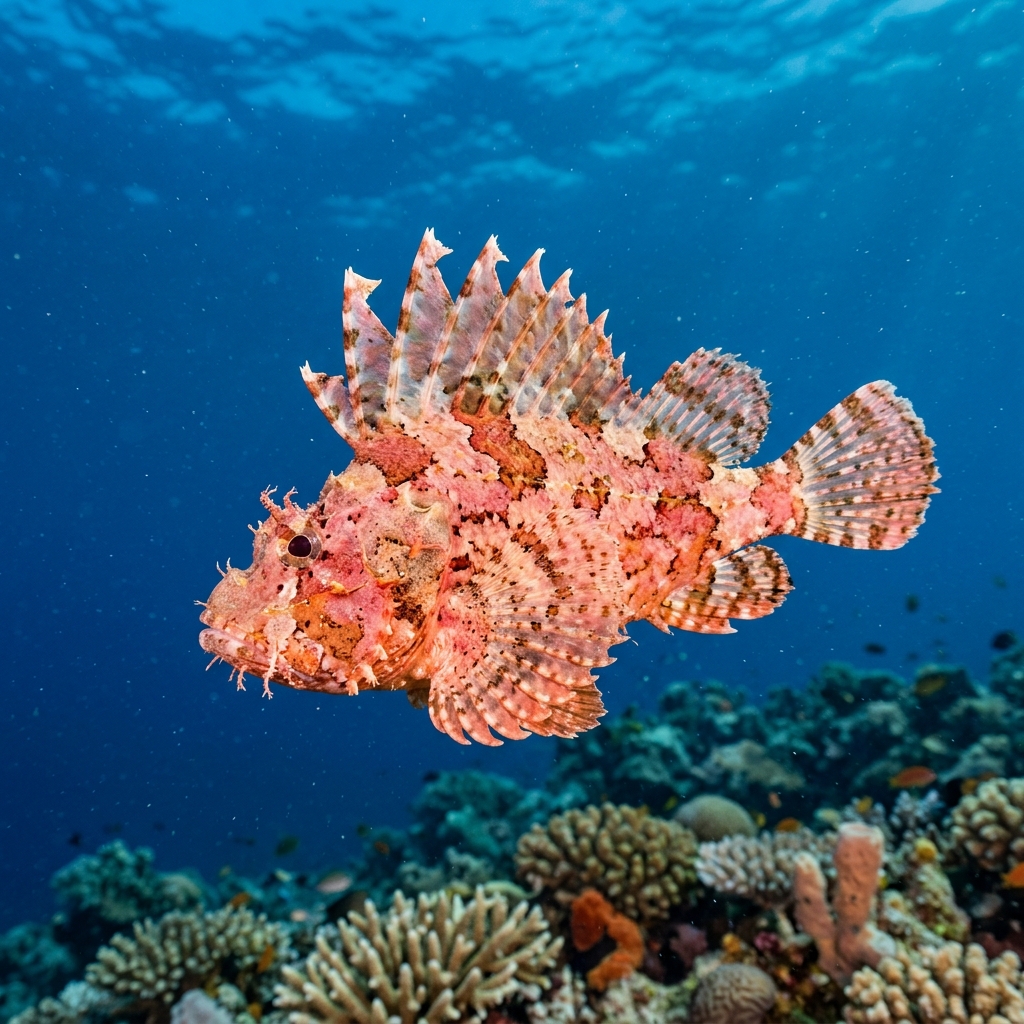
Reef neighbours a diver could mistake it for. Use the identification notes above to tell them apart.
Most commonly logged across the Mediterranean and eastern Atlantic, with the strongest sighting records in Spain, Italy, Greece, and France. The French Riviera and Provence, Costa Blanca, Sardegna and Tuscany, and Gozo in Malta are the standout regions. The Canary Islands and Azores round out the Atlantic hotspots where divers regularly encounter this species.
Mapping where Madeira Rockfish is logged…
The species is well distributed across the Mediterranean and eastern Atlantic. Spain, Italy, Greece, and France lead the records, with strong populations in the French Riviera, Costa Blanca, Sardegna, and Gozo in Malta. The Canary Islands and Azores are reliable Atlantic options.
Sightings are recorded year-round with no pronounced peak season. The species is comfortable in water temperatures between roughly 14 and 20 °C, conditions that Mediterranean and Atlantic reefs sustain for most of the year, so any month is a reasonable choice.
Yes. Like all scorpionfish, the Madeira Rockfish has venomous dorsal, pelvic, and anal spines. A sting causes sharp, prolonged pain and swelling. Because the fish is so well camouflaged, the main risk is accidentally touching one. Keep hands away from rocky surfaces and never handle the fish.
Look for a small, 11 cm fish sitting completely still on rocky reef at 20-40 m, with a mottled red-brown-orange body, a broad spiny dorsal fin, and skin covered in small fleshy tabs. Its large upturned mouth and complete motionlessness are the two strongest cues. A dive torch helps reveal the true colouration in deeper water where reds wash out.
Typical adults reach around 11 cm in length, making this one of the smaller scorpionfish in the Mediterranean. Despite the modest size, the broad head and chunky body make it look more substantial than that figure suggests when you find one on the reef.
Most divers who log an encounter rate it as uncommon, meaning you may need a few dives at a good site before spotting one. The species is well distributed but easy to overlook given its camouflage. Rare sightings are also frequently reported, so a slow, careful dive style focused on rocky substrate at 20-40 m gives the best odds.
Site and sighting data is aggregated from diver logs, iNaturalist and GBIF. For taxonomy and conservation status:
Indian Lionfish
2,604 sites