Cryptocentrus sericus
Spot this small burrow-sharing goby on sandy reef flats in Dili and Krabi, comfortable year-round in 27-29C water.
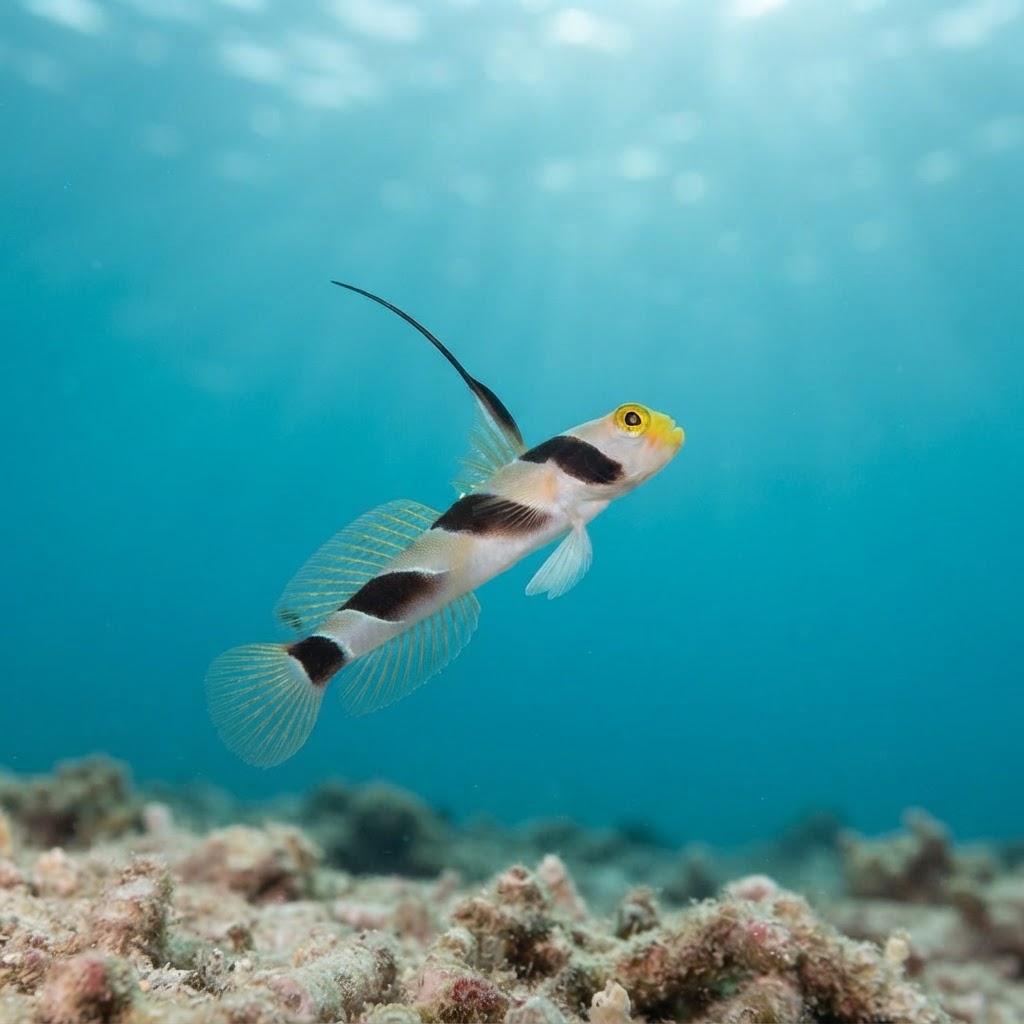
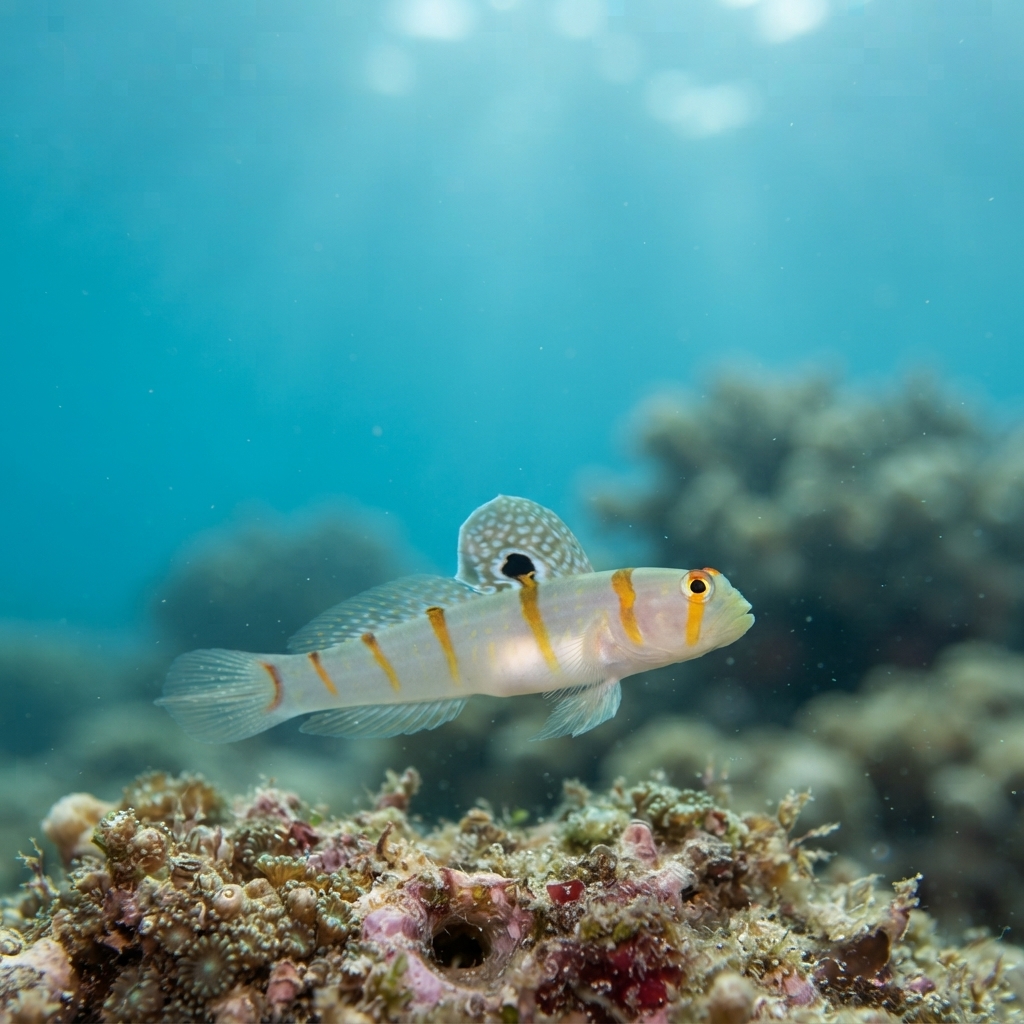
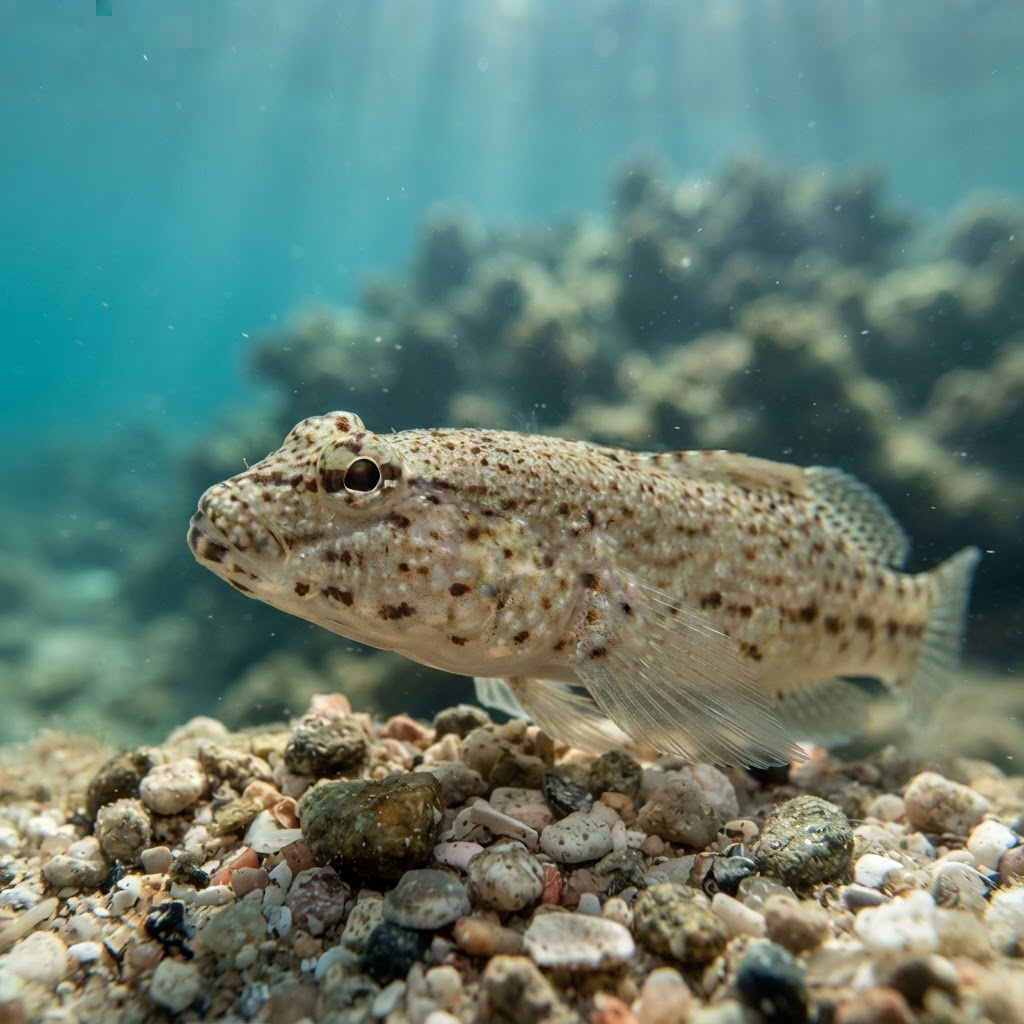
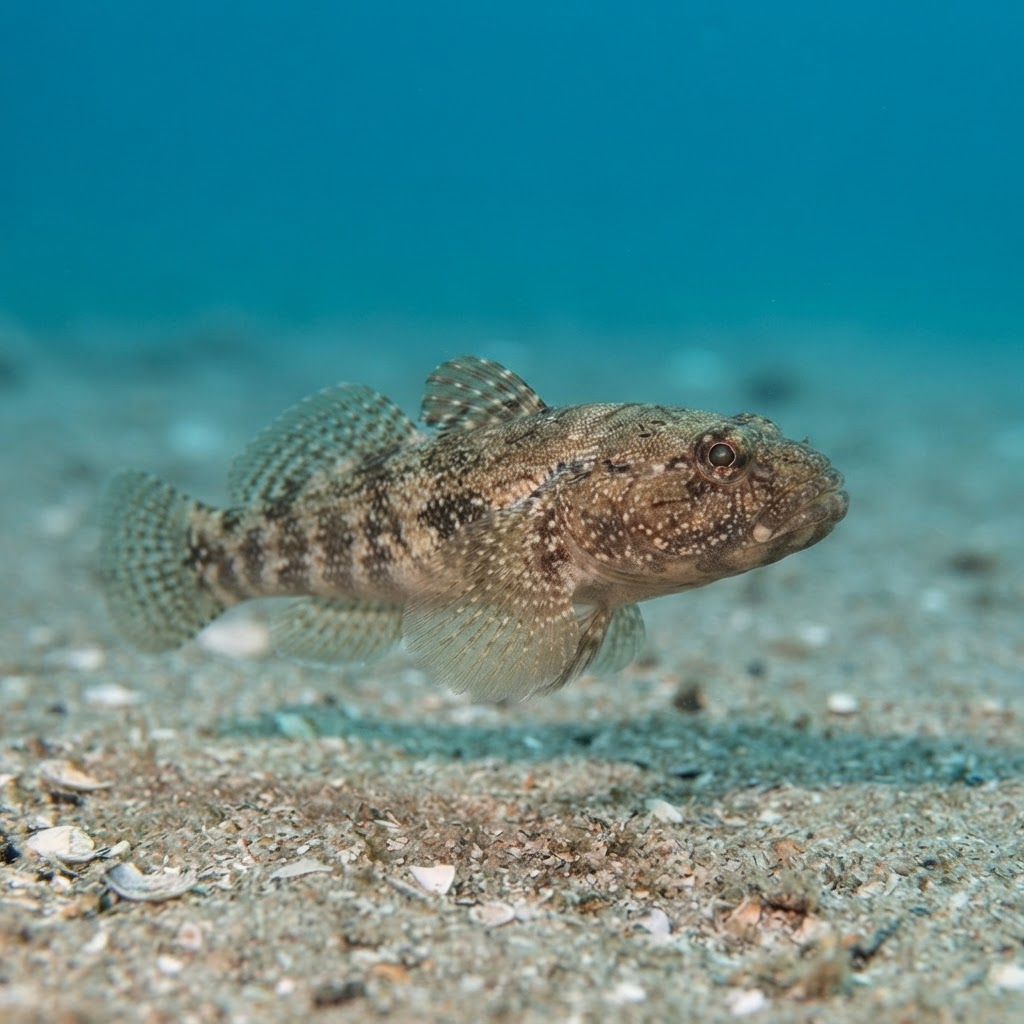
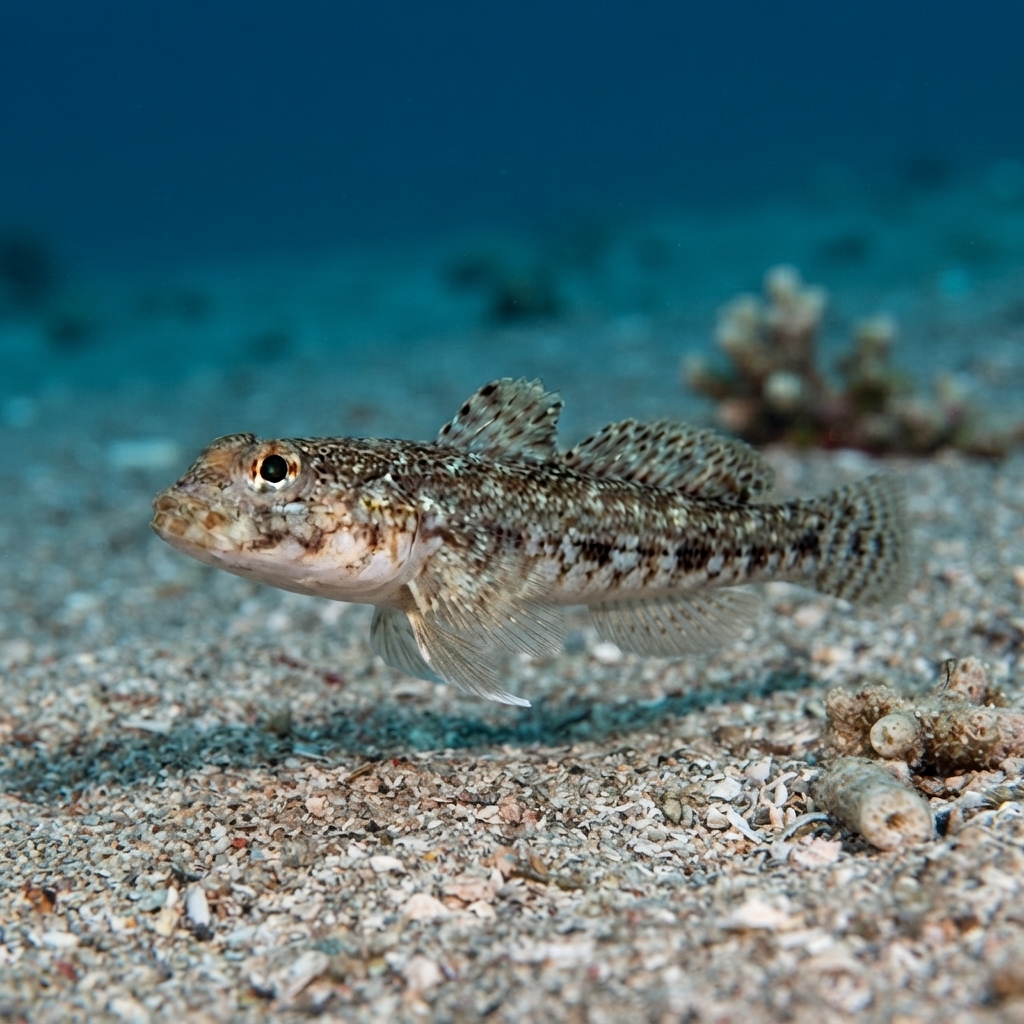
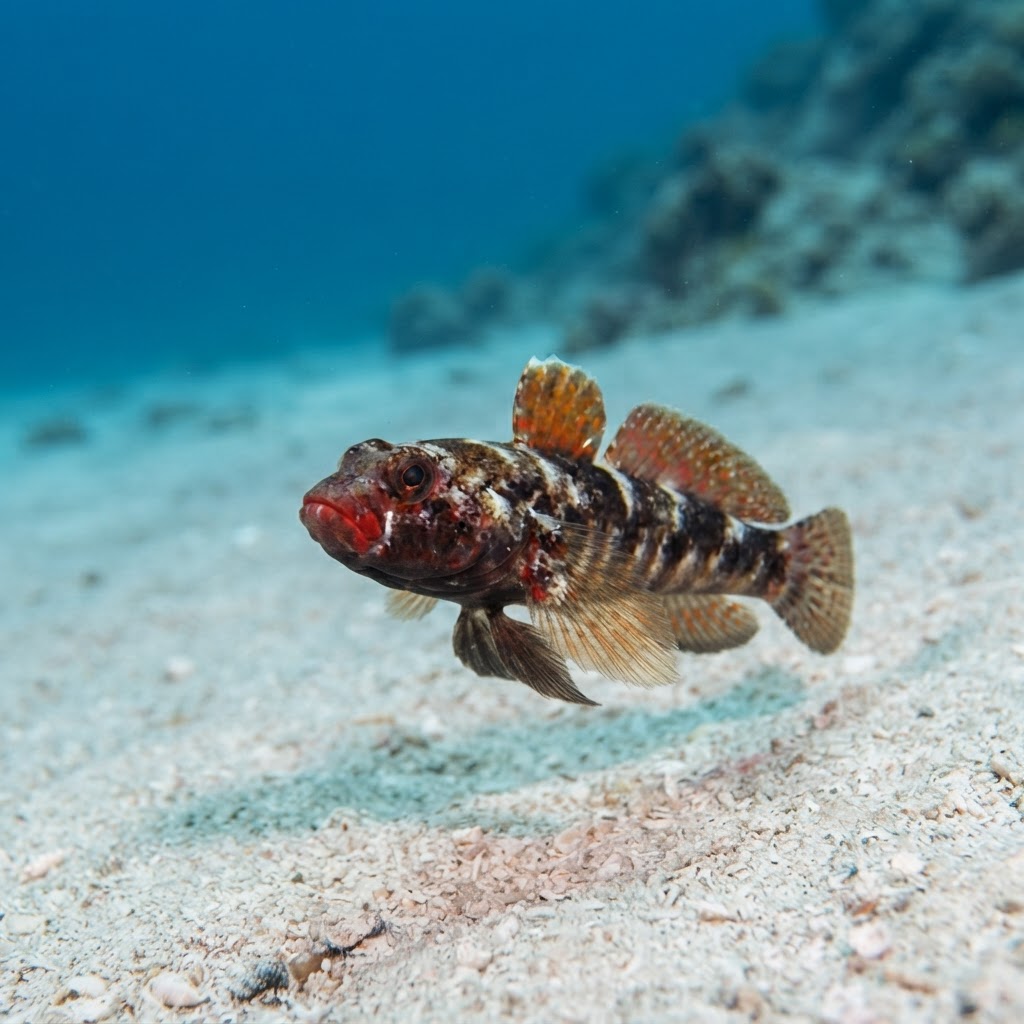
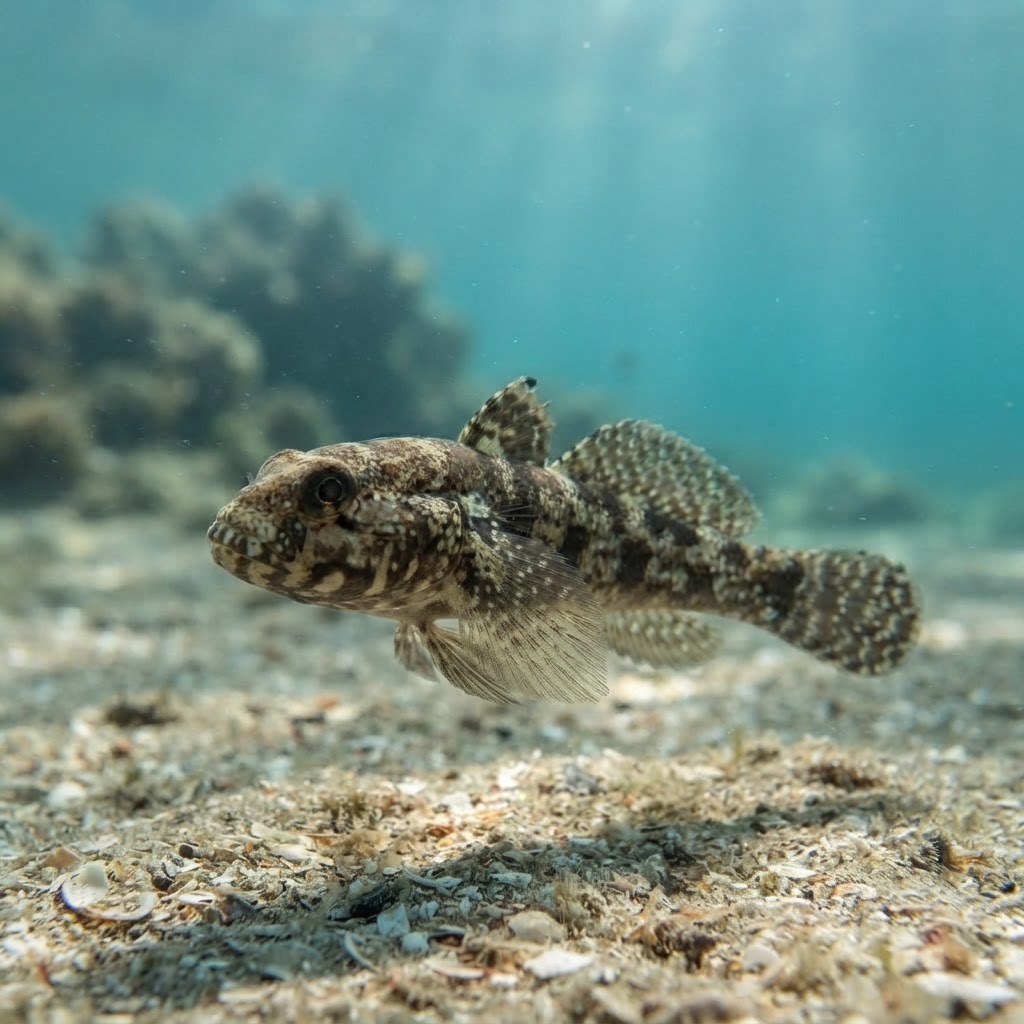
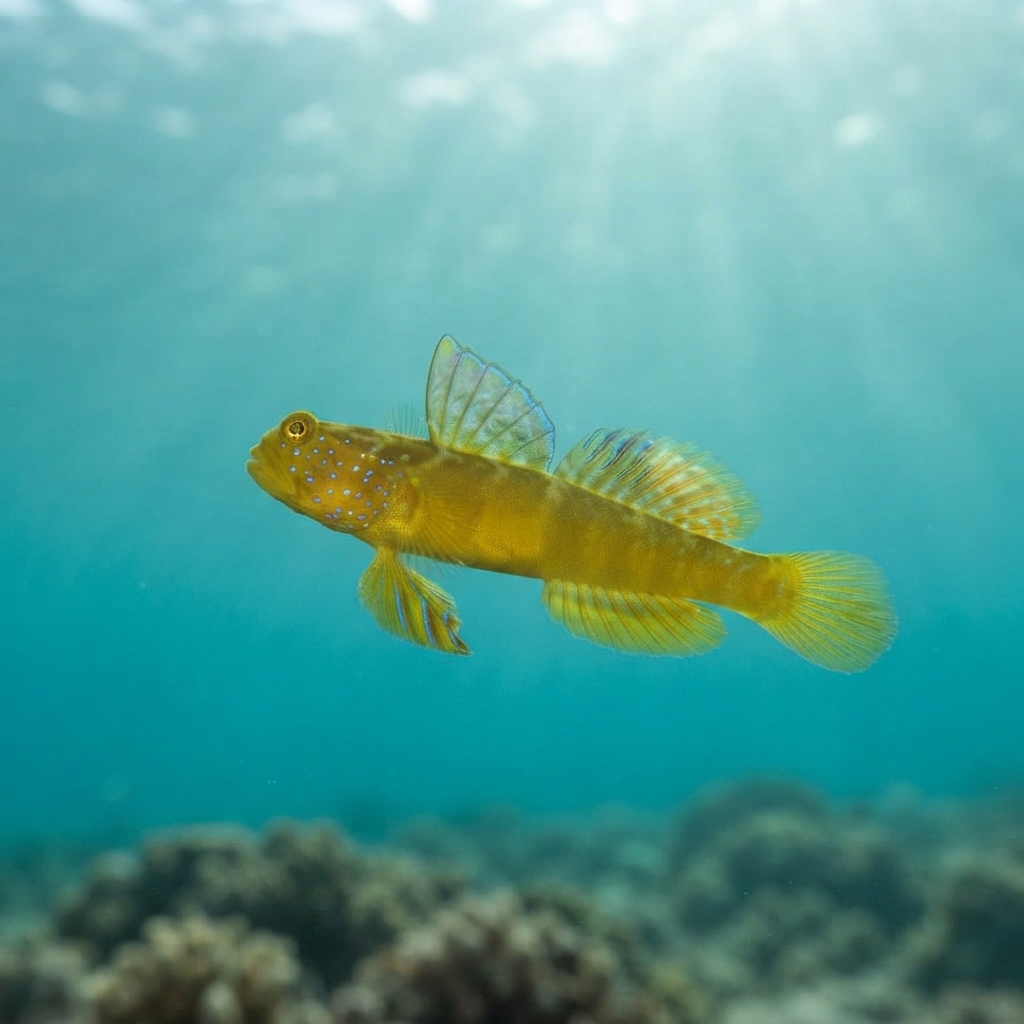
A small, slender goby around 7 cm, pale grey to sandy in colour with a series of dark bars running along the lower body and belly, which is the easiest mark to key on underwater. It holds a raised, alert posture near its burrow entrance, tail flicking, and has the elongated first dorsal fin typical of shrimpgobies. Look for it hovering just above the sand rather than perched on coral or rock.
Found hovering at the mouth of a burrow dug into sand or rubble patches, usually sharing the hole with a partner shrimp that does the excavation work while the goby keeps watch. It reacts to divers by backing quickly into the burrow at the first sign of a close approach, so slow, low movement gets you the best look. Most sightings come from calm sandy flats and lagoon-edge reef rather than current-swept walls.
Like other shrimpgobies, it runs a partnership with a burrowing shrimp: the shrimp digs and maintains the shared burrow while the goby stands guard and signals danger with a flick of its tail, letting both retreat together at the first sign of trouble.
No clear seasonal pattern shows up in the sighting data, and it sits comfortably in water from 26.7 to 29.3 C year-round, so any month on these tropical reefs works.
Reef neighbours a diver could mistake it for. Use the identification notes above to tell them apart.
Most reliably logged around Dili in Timor-Leste and Krabi in Thailand, with further sightings in Sai Kung in Hong Kong and Sulawesi in Indonesia. Also turns up on sandy reef flats in Luzon in the Philippines, Queensland in Australia and the Southern Islands of Singapore, though it stays an uncommon find at most of these sites rather than a guaranteed one.
Mapping where Ventral-barred Shrimpgoby is logged…
Best chances are around Dili in Timor-Leste and Krabi in Thailand, with further sightings logged in Sai Kung in Hong Kong, Sulawesi in Indonesia, Luzon in the Philippines, Queensland in Australia and Singapore's Southern Islands.
There's no strong season in the sighting data, and it tolerates a comfortable 26.7 to 29.3 C range, so it's a fair year-round sighting on tropical sand flats.
Look for a small, pale goby around 7 cm long with dark bars along its lower body and belly, hovering upright near a burrow entrance on sand or rubble. It darts into its hole quickly if you approach fast, so a slow approach gives the best view of the belly bars.
They stay small, typically around 7 cm long, which is standard for shrimpgobies sharing burrows with pistol shrimp.
It shares a burrow with a partner shrimp, which digs and maintains the tunnel while the goby stands guard outside and signals danger, letting both animals dive back in together when threatened.
No, they pose no threat to divers. They're shy and retreat into their burrow rather than approach or defend territory aggressively.
Site and sighting data is aggregated from diver logs, iNaturalist and GBIF. For taxonomy and conservation status:
Slender Goby
806 sites