Inimicus filamentosus
A camouflaged stingfish uncommon at reefs in Trou aux Biches, Mauritius and the Red Sea Riviera, Egypt, in 24 to 28C water year-round.
Safety warning
Carries venomous spines along the dorsal fin that can cause a severely painful sting if trodden on or handled, and its camouflage makes it easy to miss on sand. Keep hands and fins off the substrate in areas where it has been logged, and never attempt to touch or move one for a photo.
If you're stung
Venomous spinesGeneral first-aid guidance, not a substitute for professional medical care. In an emergency, call your local emergency number.
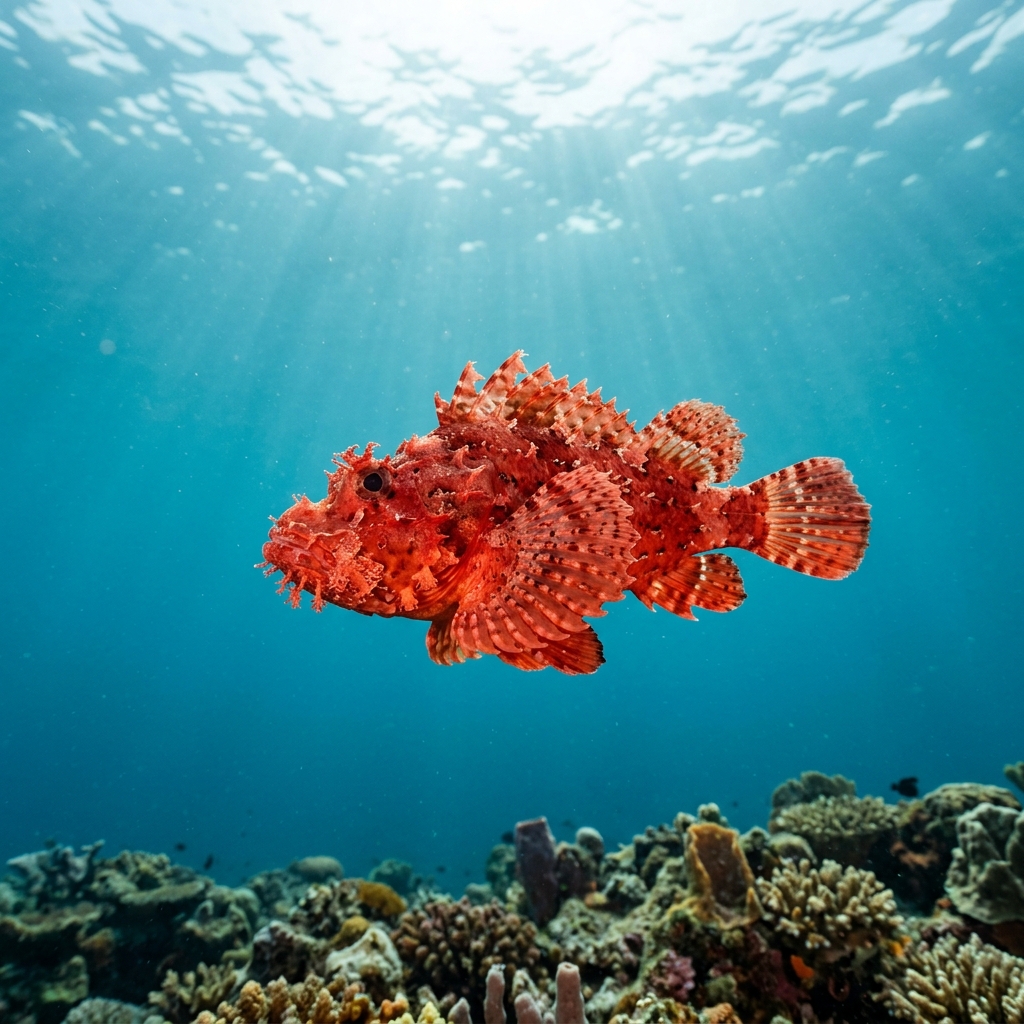
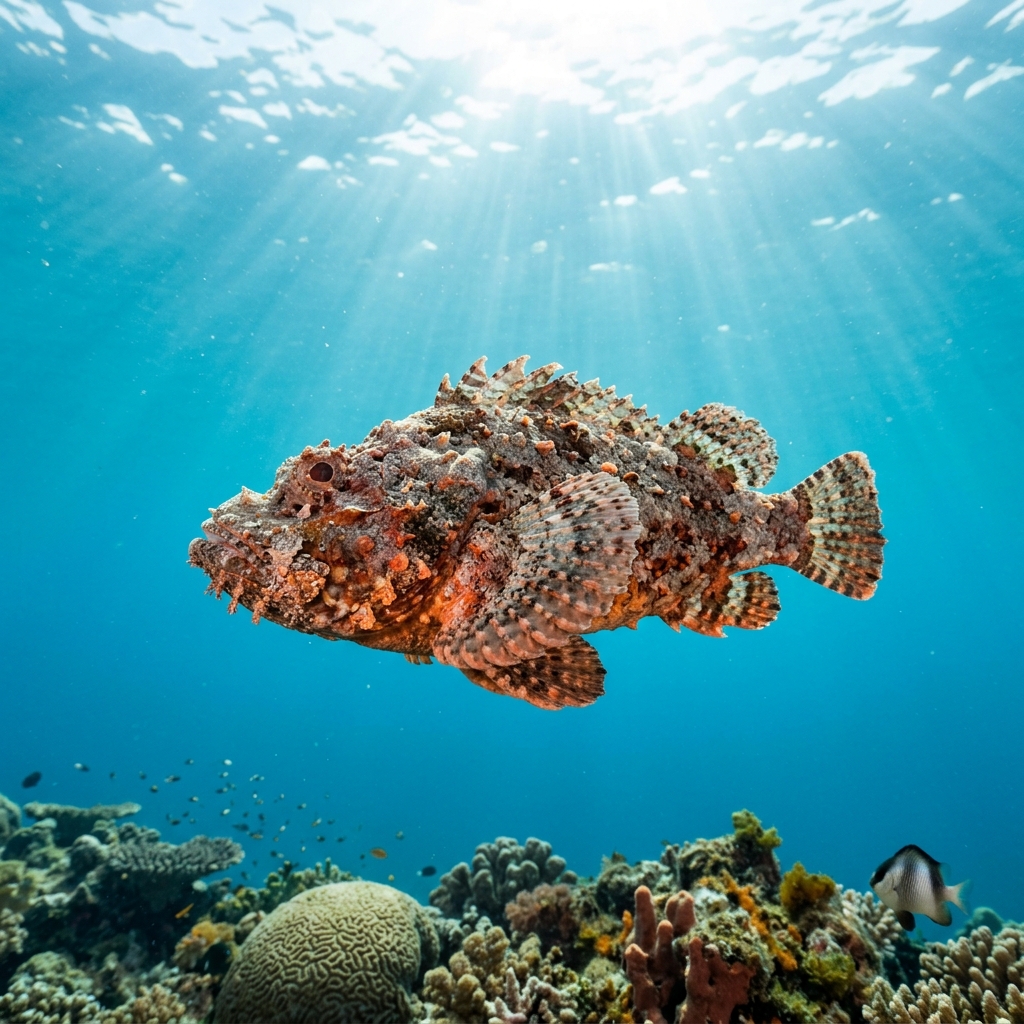
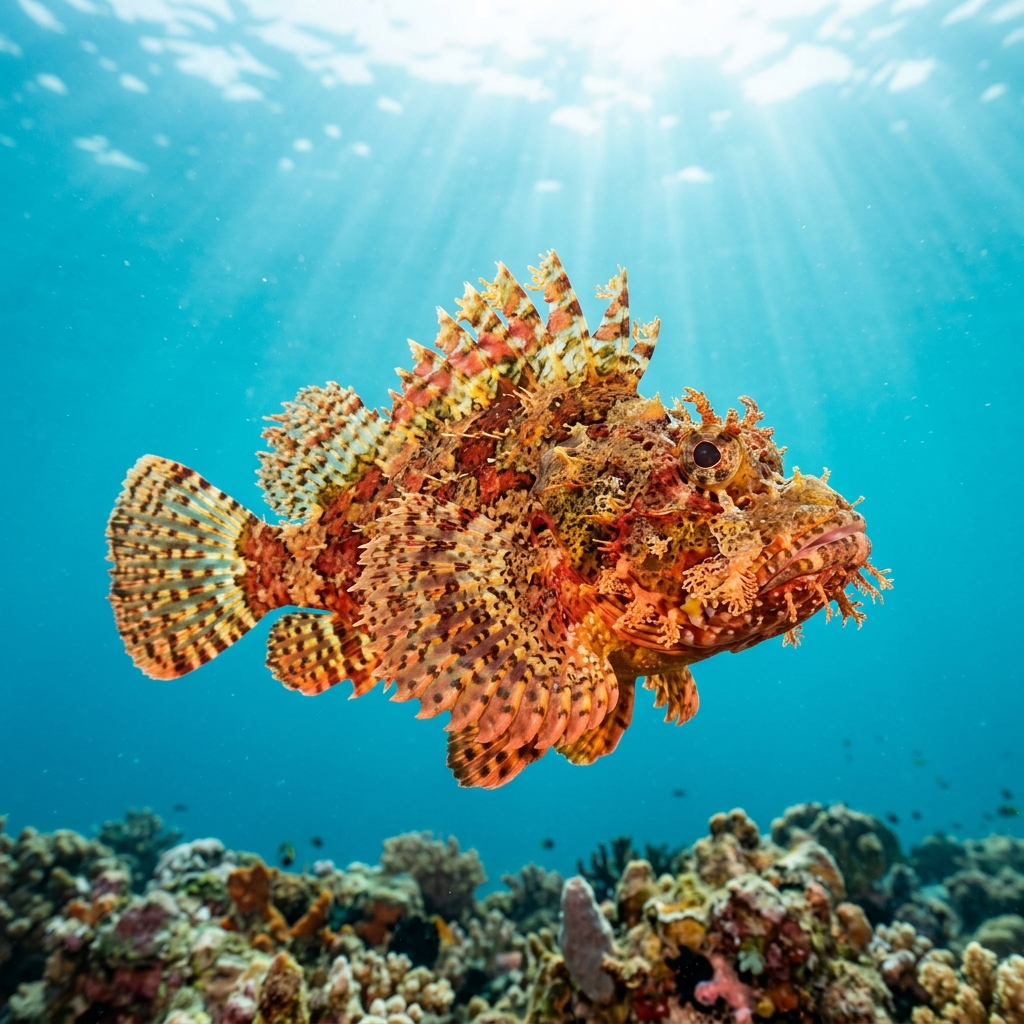
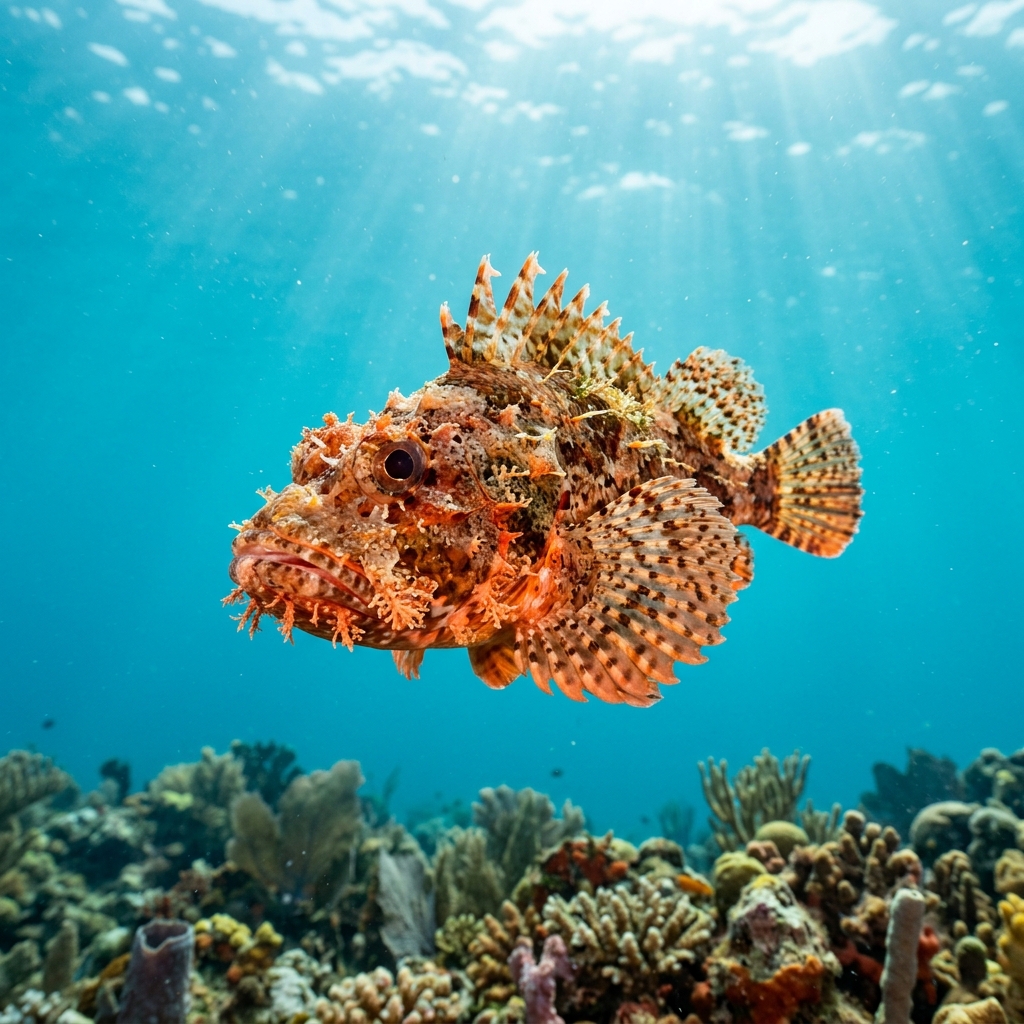
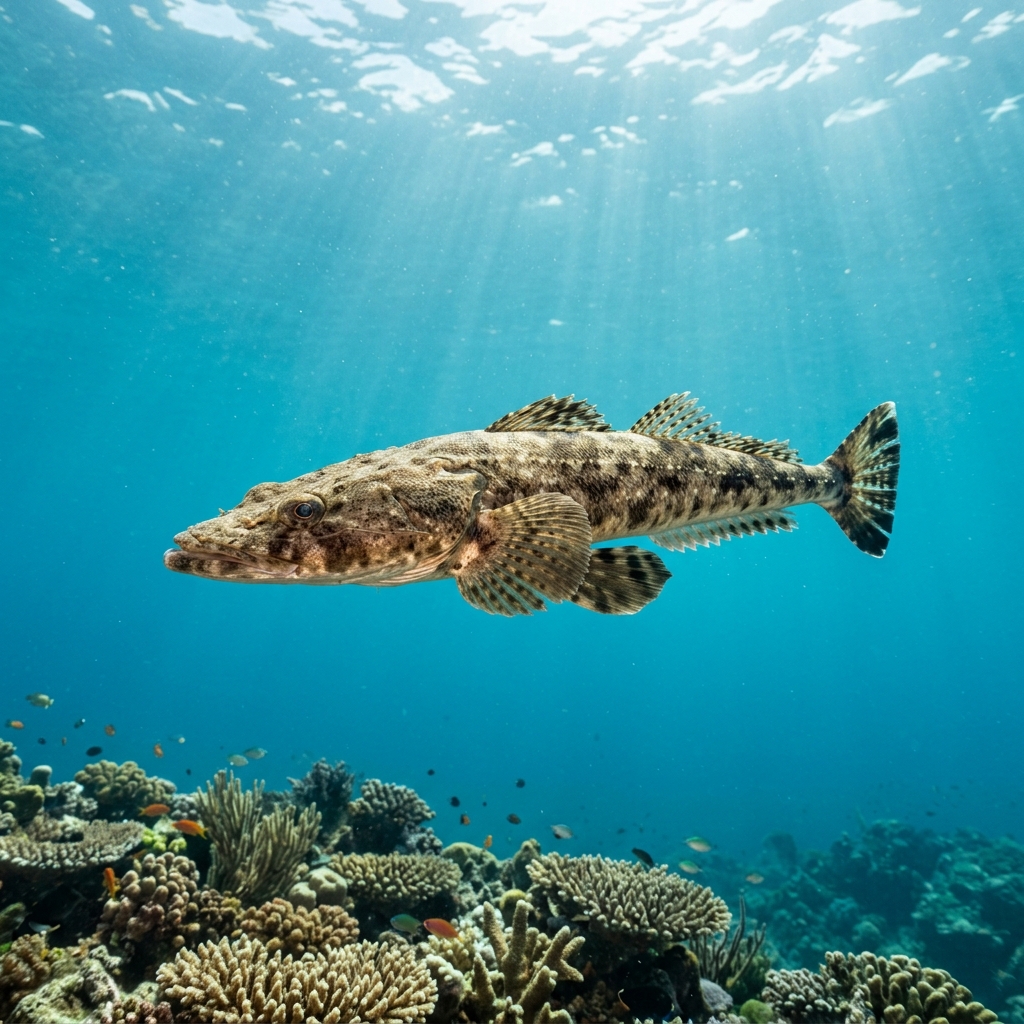
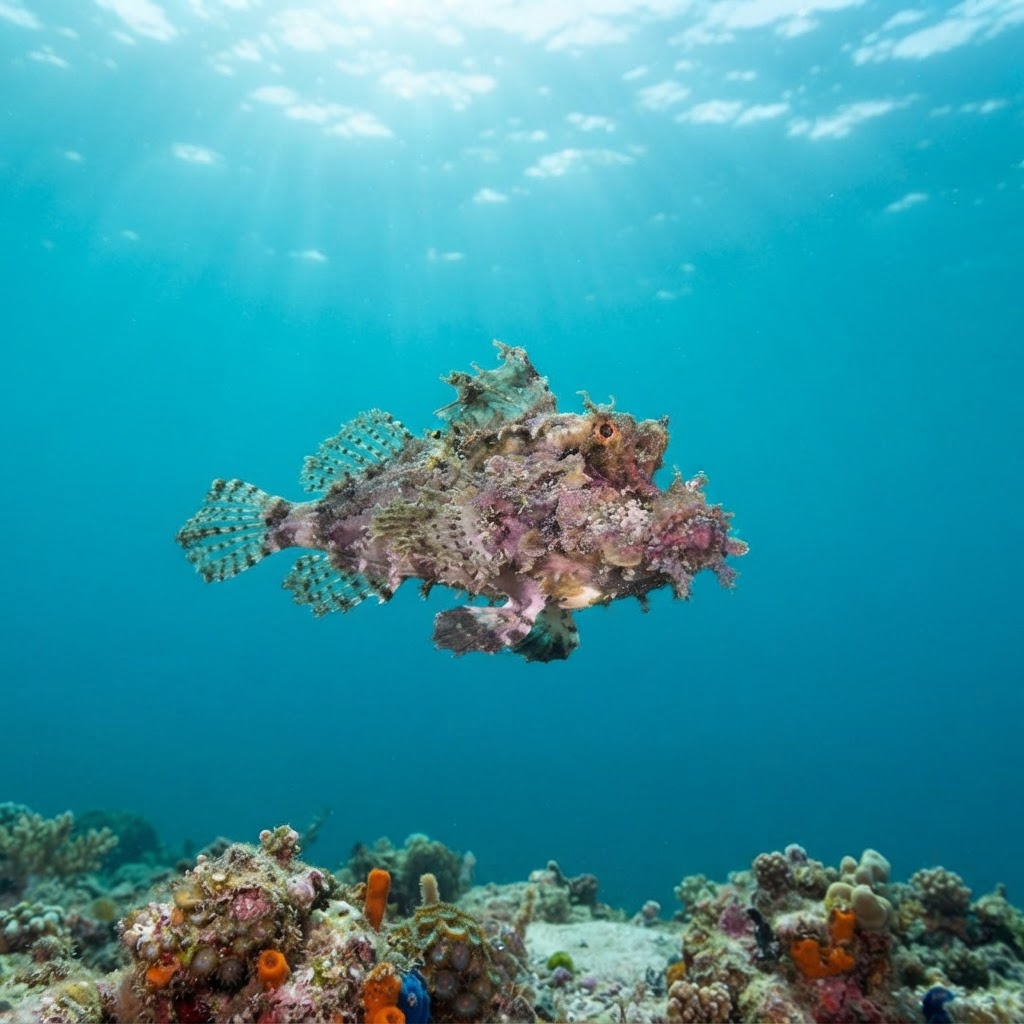
Grows to around 18cm and lies flat on sand or rubble, body mottled brown, grey and cream to match the seabed almost perfectly. The head is bony and angular with upward-pointing eyes, and two long, separate filaments trail from the top of the head, which is the feature that gives this fish its name. Pectoral fins are large and fan-like, often propped against the substrate like stilts, and the whole outline reads as a rock until it moves.
Expect it sitting motionless, half-buried in sand or tucked against rubble, relying on camouflage rather than flight when divers approach. It is usually spotted by chance during slow, close-focus swims over sandy patches near reef structure rather than out in open water, and it will hold its position even at close range. Divers who move slowly and scan the substrate rather than the reef wall have the best odds of picking one out.
Those two long filaments on the head are thought to help lure or startle small prey within striking range, a trick shared with several of its stingfish relatives.
No clear season shows in the data, and with a comfortable range of 24.2 to 28.1C this fish sits happily on tropical reefs all year, so any month works for a dive.
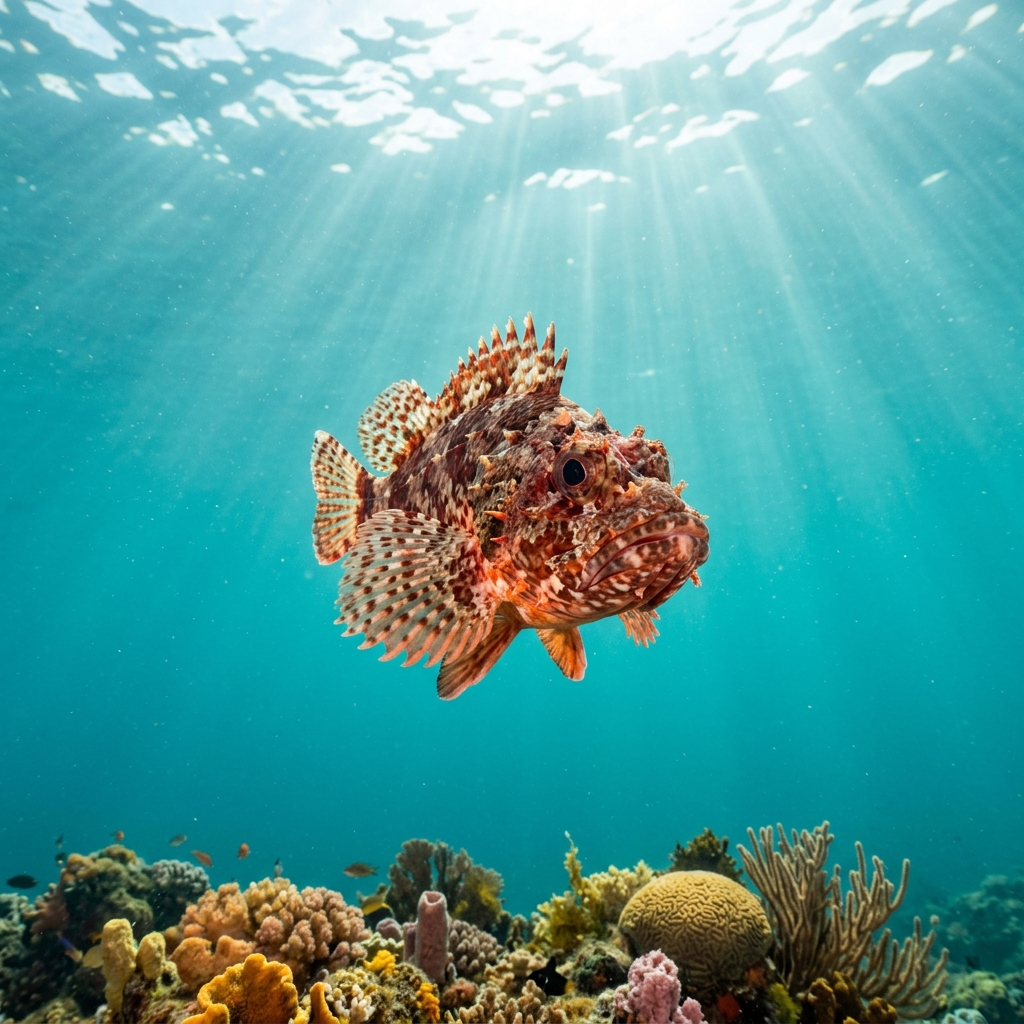
Reef neighbours a diver could mistake it for. Use the identification notes above to tell them apart.
Most reliably logged in the Indian Ocean and Red Sea, with the strongest showing around Trou aux Biches in Mauritius and a solid run of sightings along Egypt's Red Sea Riviera. Smaller numbers turn up in Marsa Alam and the Deep South, in Aqaba in Jordan, and off Eilat in Israel, so the northern Red Sea is worth checking too.
Mapping where Two-stick Stingfish is logged…
Best chances are around Trou aux Biches in Mauritius and along Egypt's Red Sea Riviera, with additional sightings in Marsa Alam, Aqaba in Jordan and Eilat in Israel.
There is no strong seasonal pattern in sightings. It tolerates water from about 24 to 28C, which covers most of the year on the reefs where it is found, so it can turn up on any dive.
Yes. It carries venomous dorsal spines and its sand-coloured camouflage makes it easy to step on. Watch where you place hands and fins on sandy bottoms and never handle one.
Look for a flattened, mottled brown and cream body lying on sand or rubble, with an angular bony head and two long filaments trailing from the top of the head. Large fan-like pectoral fins often prop the body up slightly off the substrate.
Around 18cm, small enough to blend easily into sand and rubble patches, which is a big part of why divers rate it uncommon rather than easy to spot.
The paired head filaments that give this fish its name are thought to act as a lure, twitching to draw small prey close enough for the stingfish to ambush from its motionless position.
Site and sighting data is aggregated from diver logs, iNaturalist and GBIF. For taxonomy and conservation status:
Madeira Rockfish
2,773 sites