Haemulon aurolineatum
Small silvery grunts logged over 200 times in Florida and reliably seen in Grenada and the BVI, year-round in warm reef water.
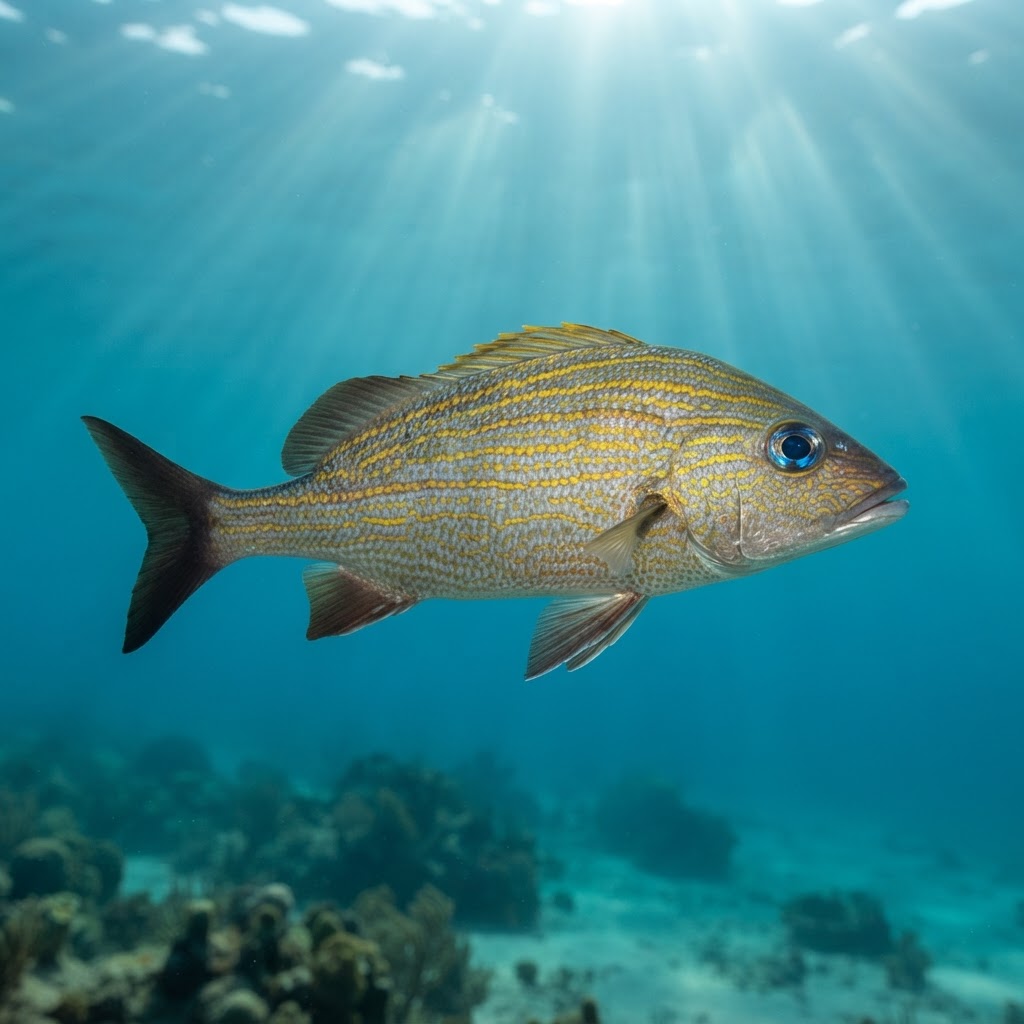
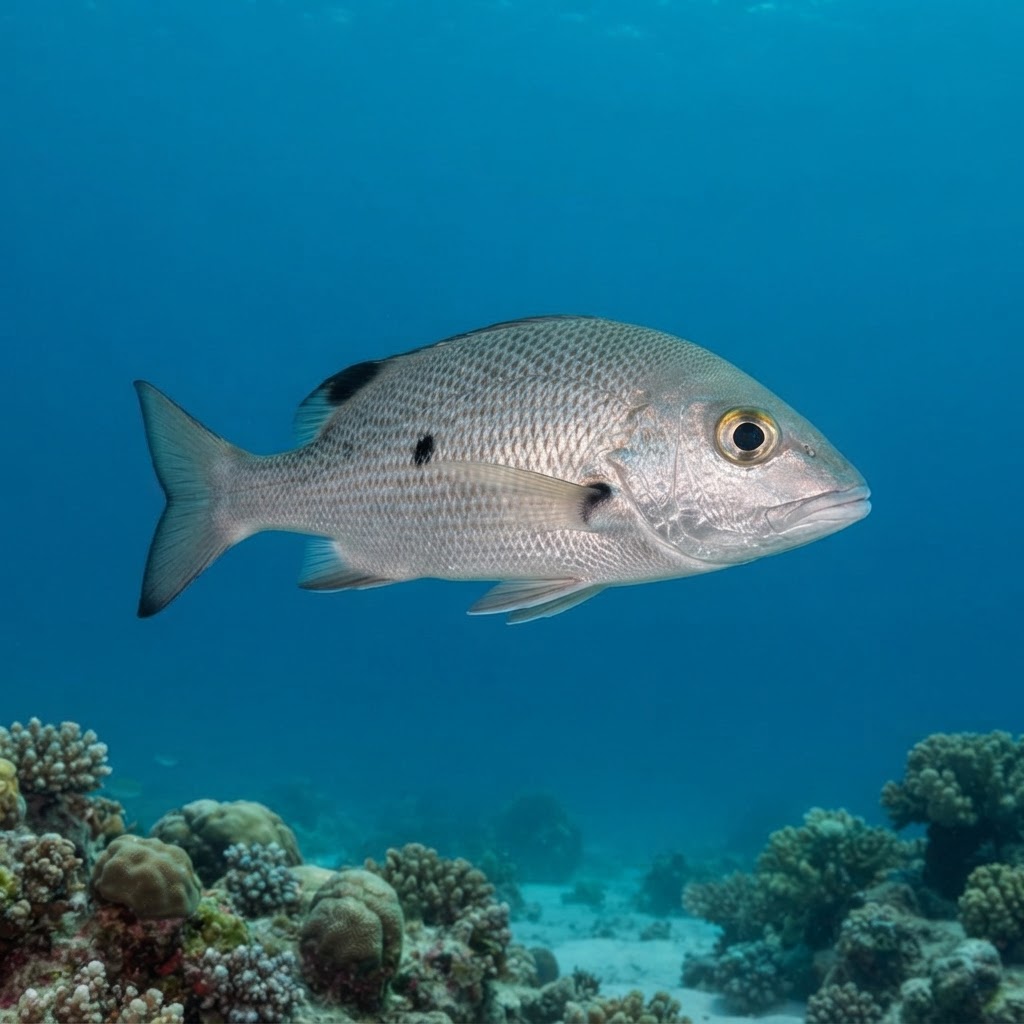
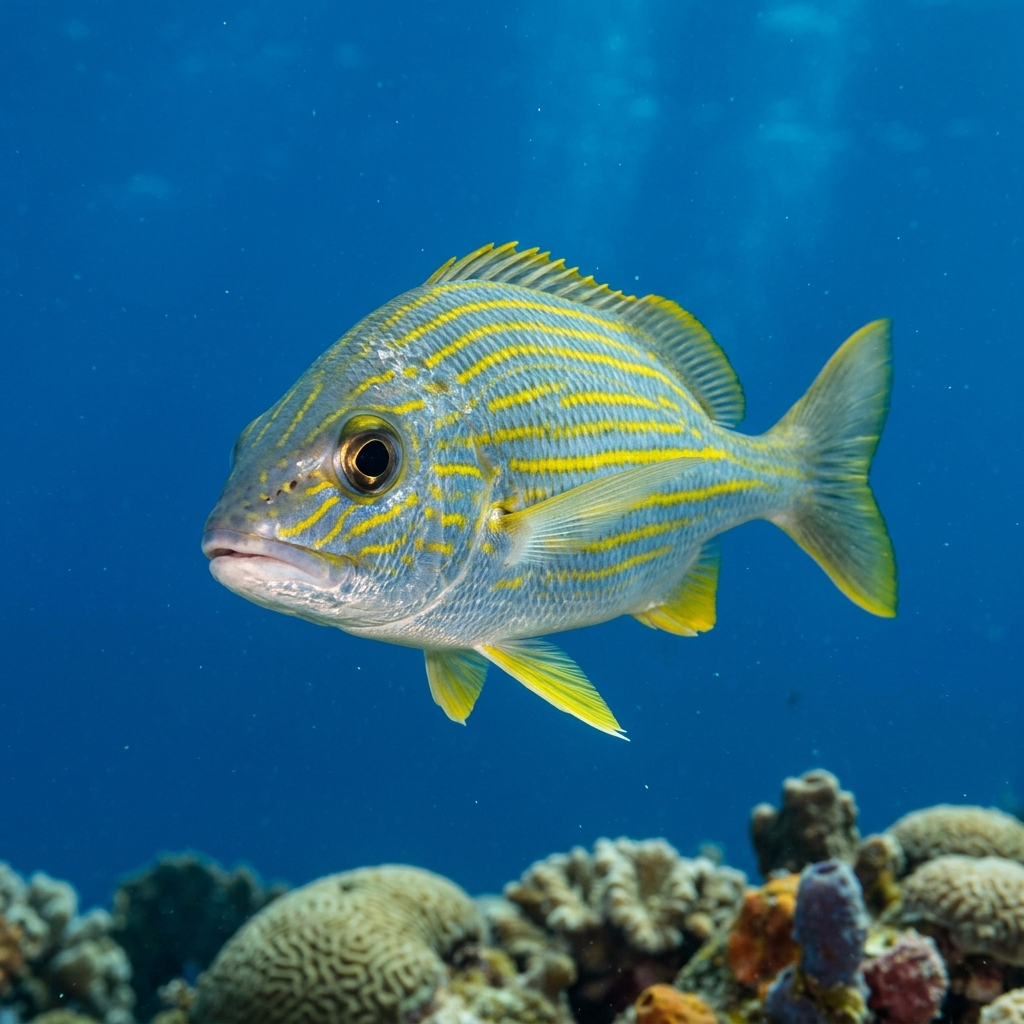
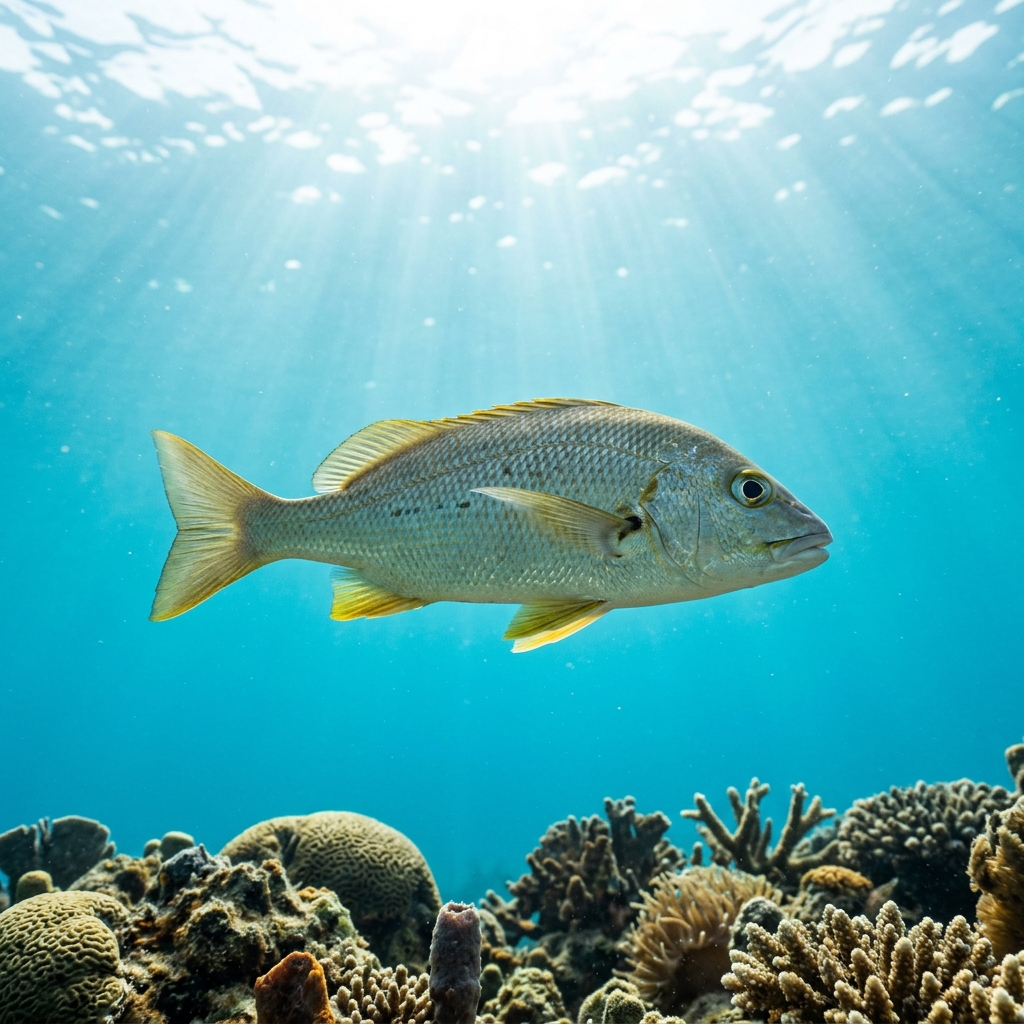
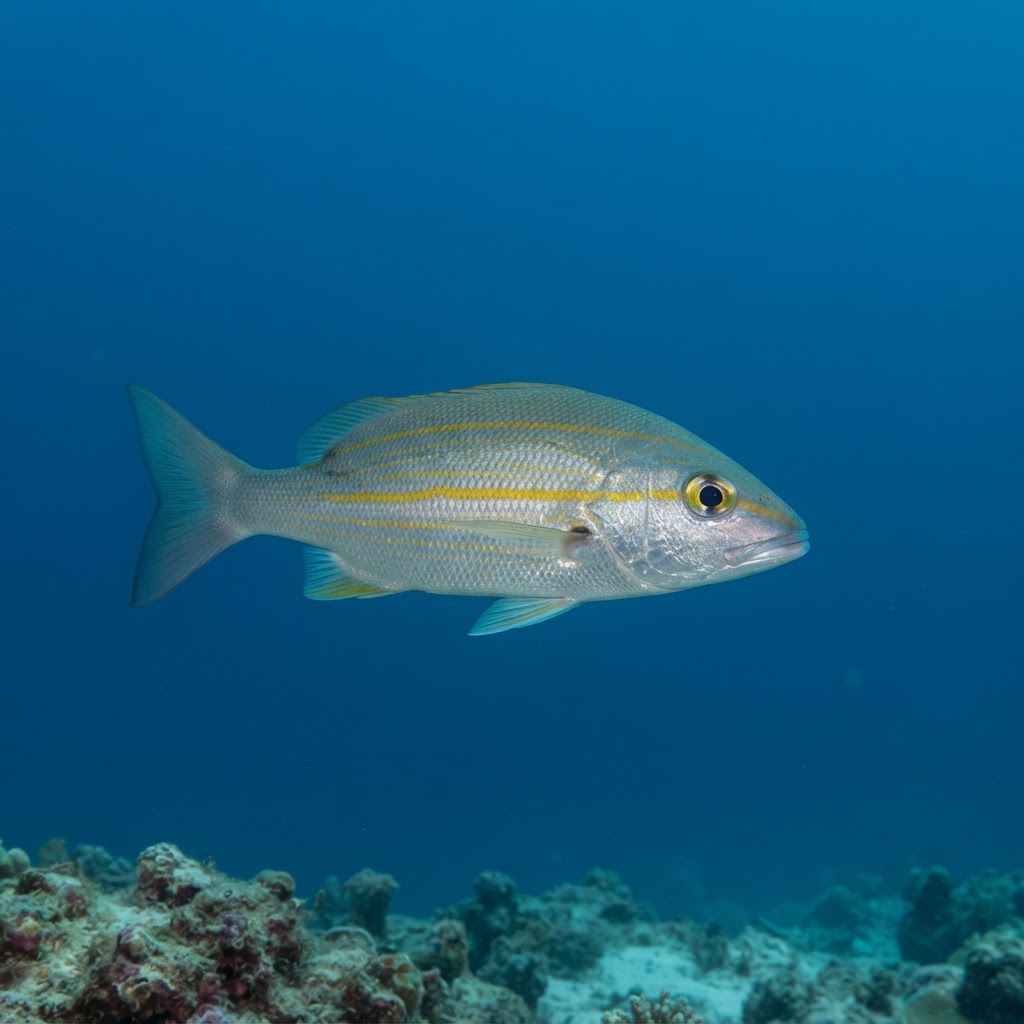
A slim, silvery grunt around 19 cm with a faint golden-yellow stripe running from snout to tail and a dusky spot at the base of the tail fin. The body is deeper than a herring but more streamlined than most grunts, with a slightly upturned snout. Look for it hovering in loose groups just off the reef rather than tight against structure.
Divers typically find it drifting in loose aggregations just above the reef, often mixed in with other grunt species and snappers rather than schooling on its own. It holds a fairly relaxed distance from divers, easing off rather than bolting when approached, and tends to be more active around dusk when it moves up off the bottom to feed. During the day it's more likely to be logged hanging near ledges and coral heads at moderate depth.
It's one of the smaller, less showy grunts, and its main defence is simply blending into mixed schools of similar-looking fish, which is part of why divers often log it as "uncommon" even on reefs where it's actually present in numbers.
No clear season shows up in the sighting data, and with a comfort range of roughly 23 to 28 C it sits happily on Caribbean and Florida reefs all year, so any month works.
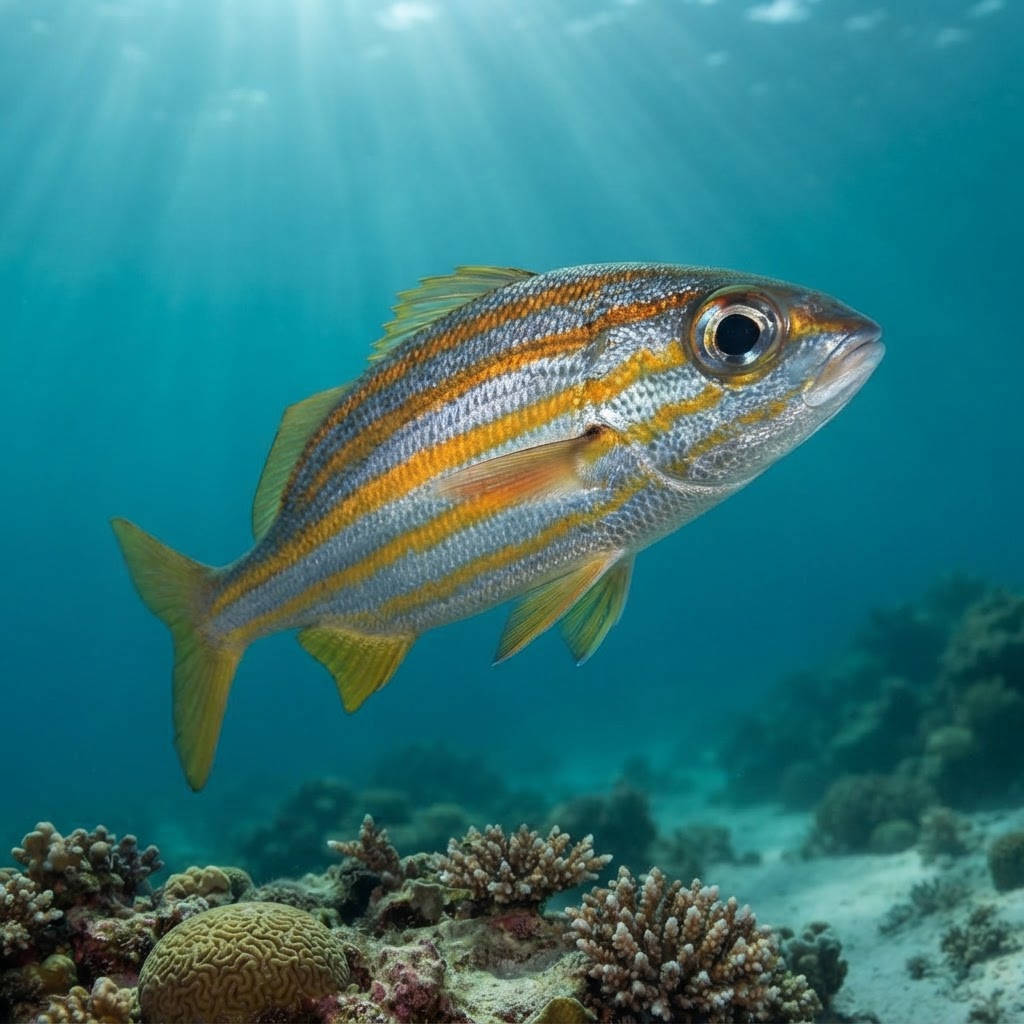
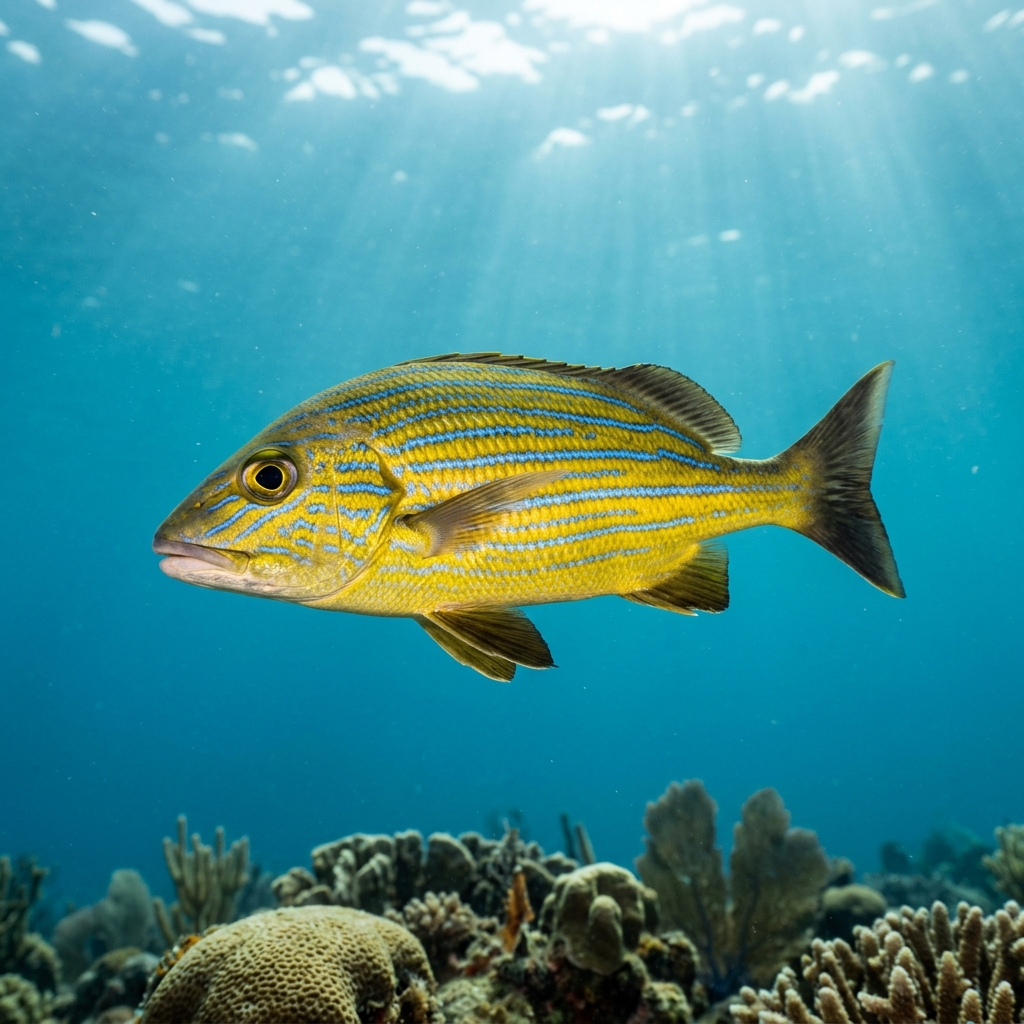
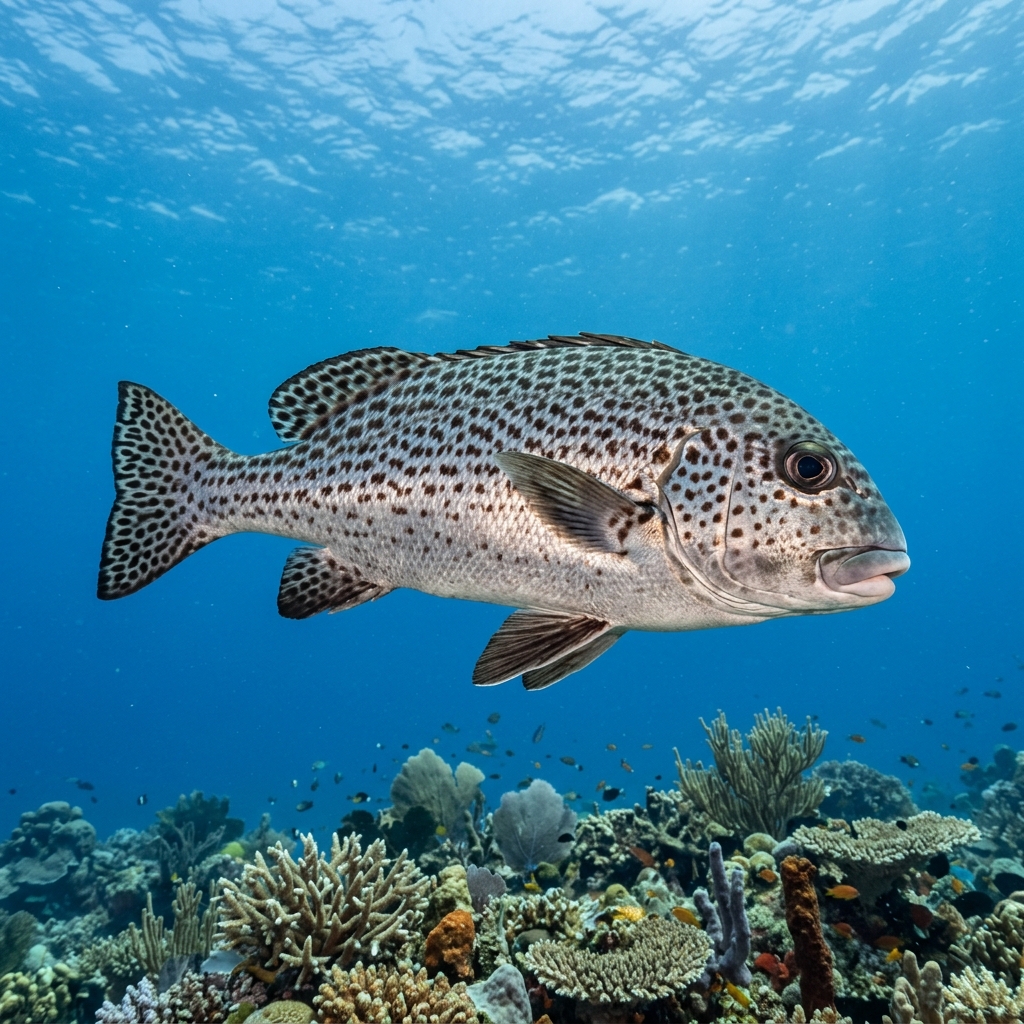
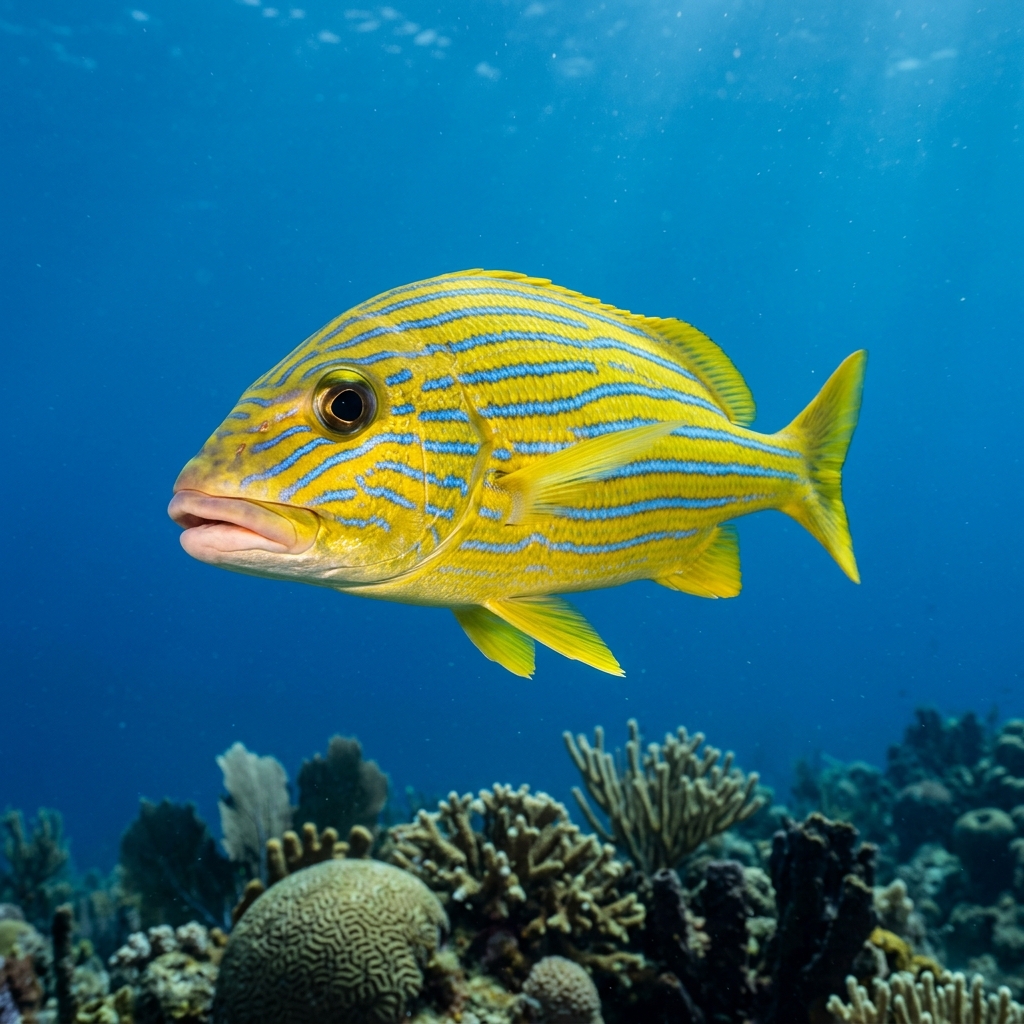
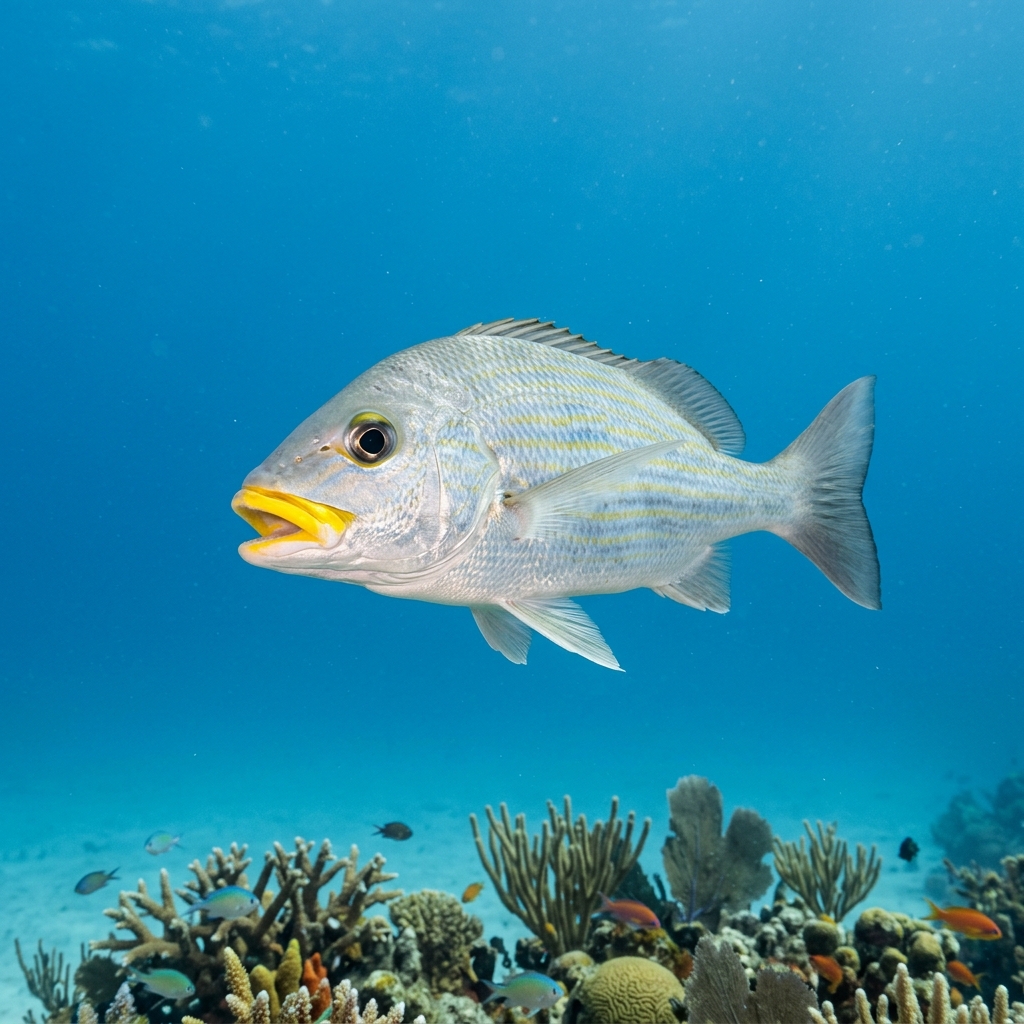
Reef neighbours a diver could mistake it for. Use the identification notes above to tell them apart.
Most often logged on Florida's reefs, where it turns up on the vast majority of dives that record it, and it's a reliable sighting in Grenada, the British Virgin Islands and US Virgin Islands, and St. Martin/Sint Maarten. Further south it holds strong numbers in Brazil around Rio de Janeiro, and it's regularly noted in the Bay Islands of Honduras and Mexico's Yucatán Peninsula.
Mapping where Tomtate is logged…
Florida is the strongest hotspot by far, with reliable sightings also in Grenada, the British Virgin Islands, US Virgin Islands, and St. Martin/Sint Maarten. It also shows up well in Brazil's Rio de Janeiro region, Honduras's Bay Islands, and Mexico's Yucatán Peninsula.
There's no strong seasonal pattern in the sighting data, and it tolerates a wide warm-water range of about 23 to 28 C, so it's present on reefs year-round.
Look for a small, silvery grunt around 19 cm with a faint gold stripe along its side and a dark smudge at the tail base. It's usually seen loosely grouped with other grunts just off the reef rather than schooling tightly on its own.
They're a small grunt species, typically reaching around 19 cm in length, so they're easy to overlook among larger reef fish.
No. They're harmless carnivores that feed on small invertebrates and pose no threat to divers.
Site and sighting data is aggregated from diver logs, iNaturalist and GBIF. For taxonomy and conservation status:
Bluestriped Grunt
1,907 sites