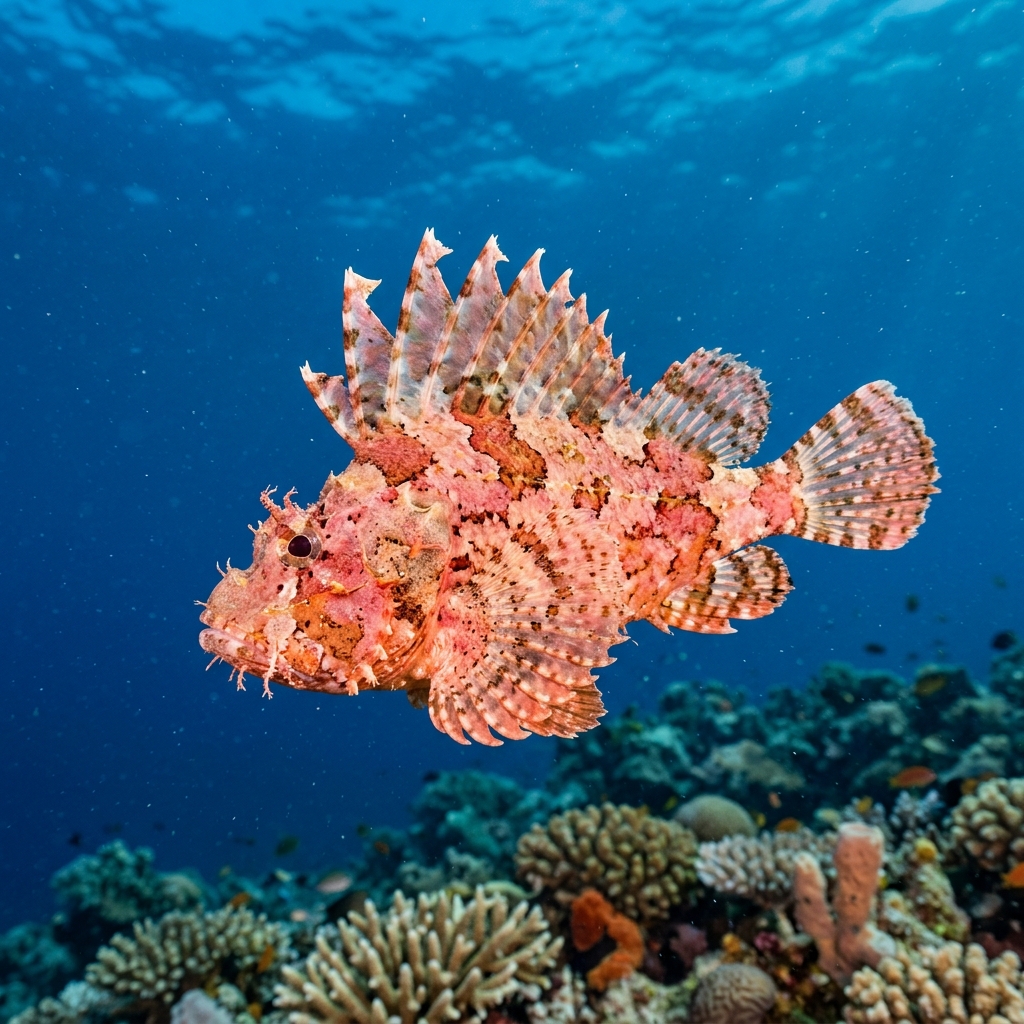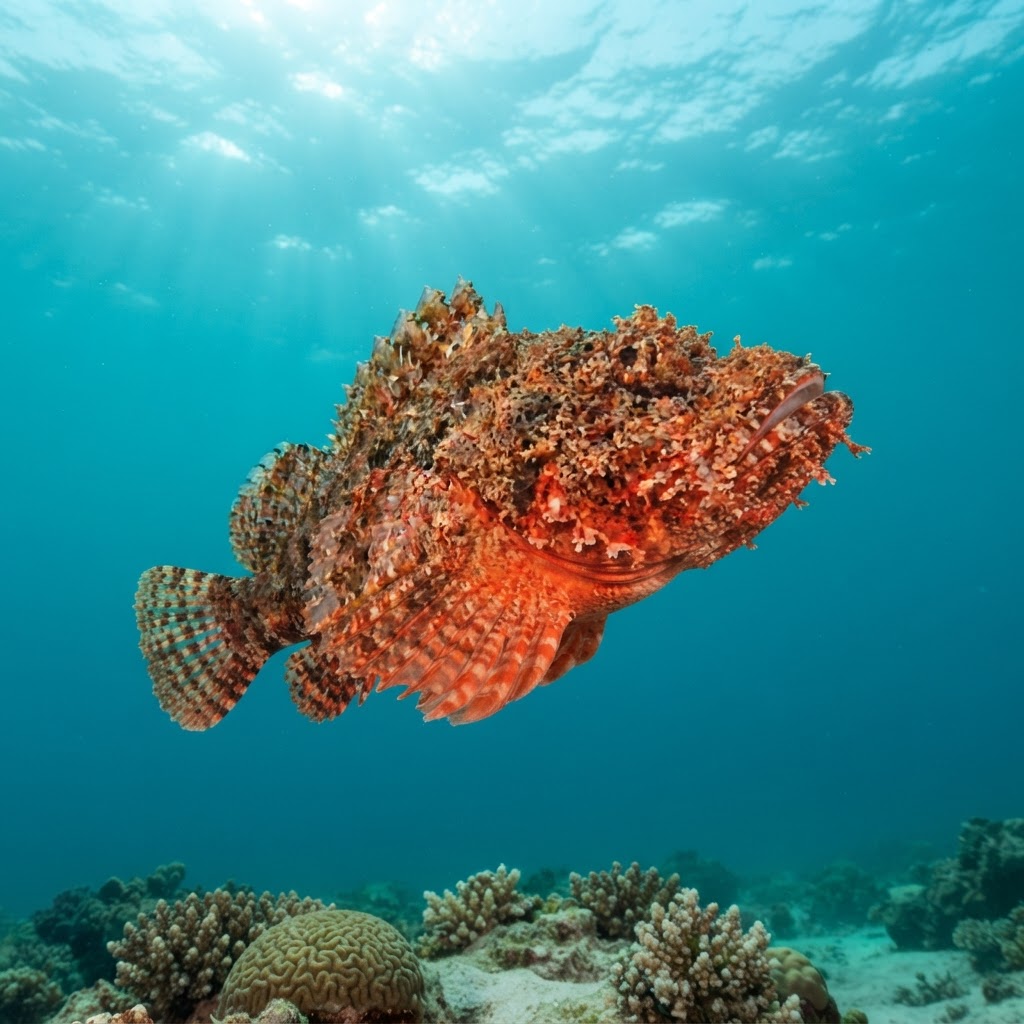
Scorpaenopsis cacopsis
Rock-mimicking giant of Hawaii's reefs, logged at 21.3-25C, uncommon but unmistakable once you spot it on the bottom.
Safety warning
Carries venomous spines along its dorsal fin that deliver a painful sting if touched or knelt on, and its rock-like camouflage means it is often not seen until a hand or fin is already close. Keep buoyancy and hand placement deliberate on Hawaiian rock and rubble bottoms, and never touch bottom-resting fish you cannot positively identify.
If you're stung
Venomous spinesGeneral first-aid guidance, not a substitute for professional medical care. In an emergency, call your local emergency number.
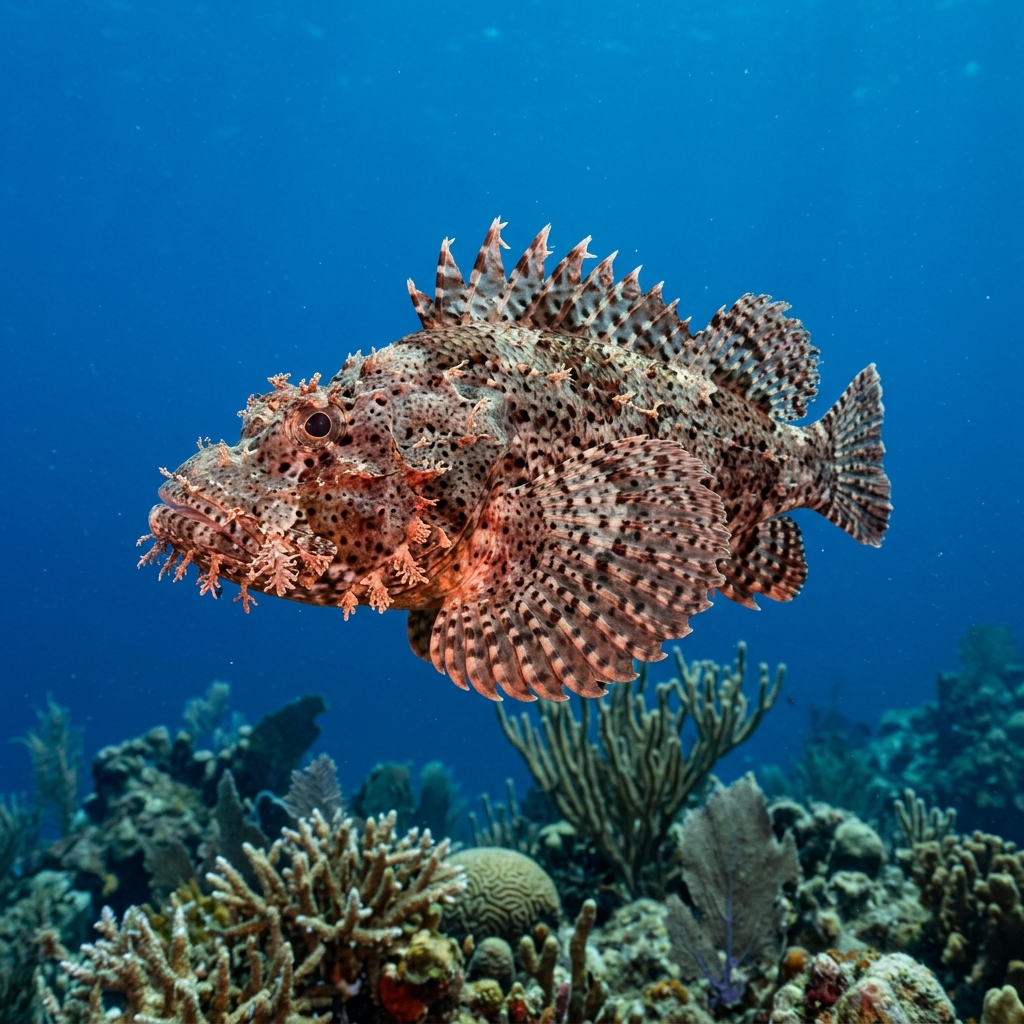
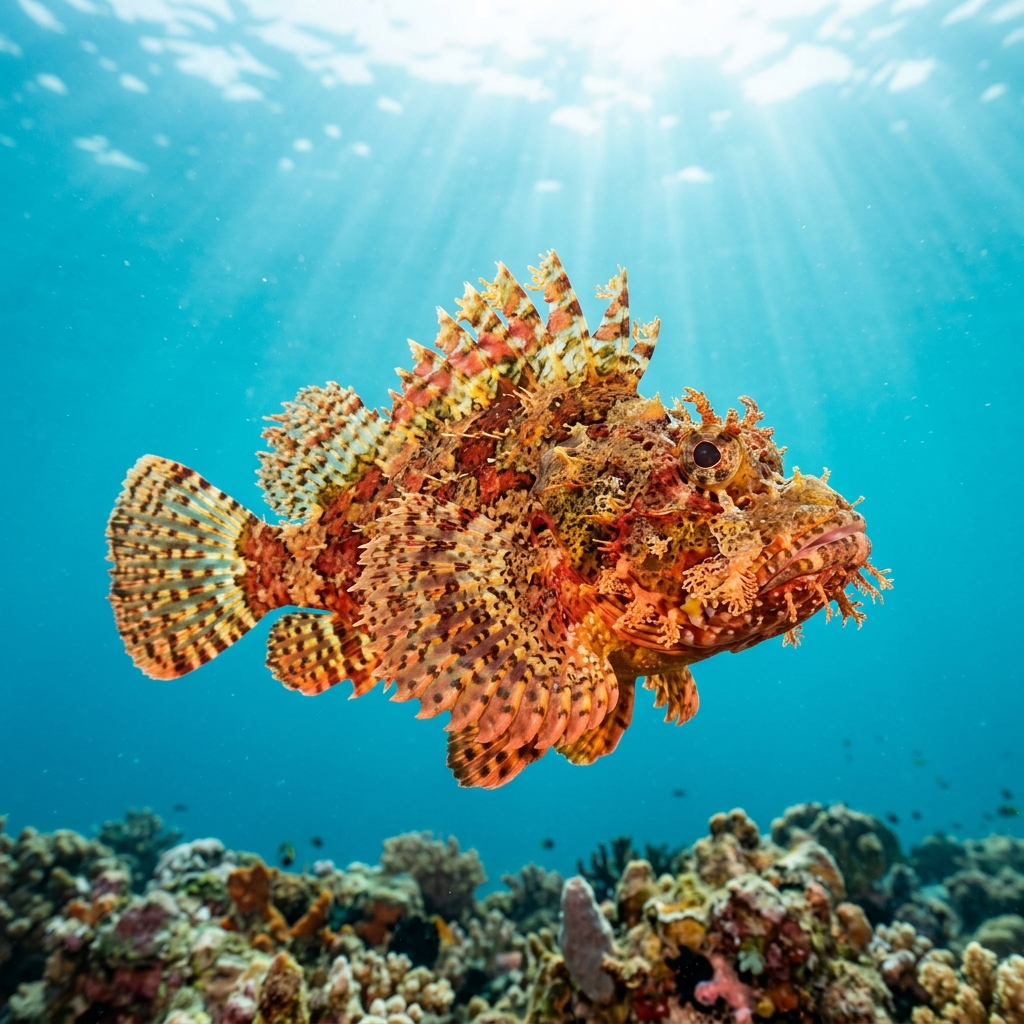
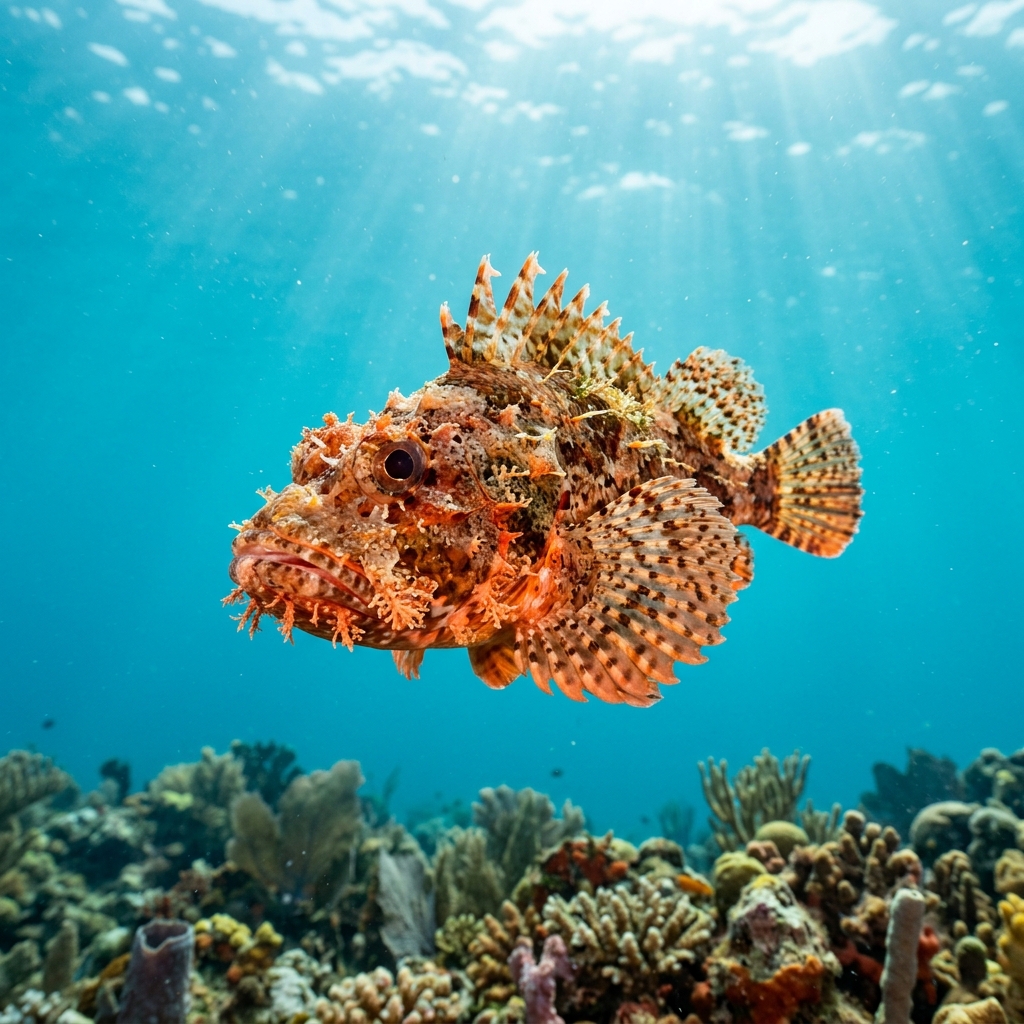
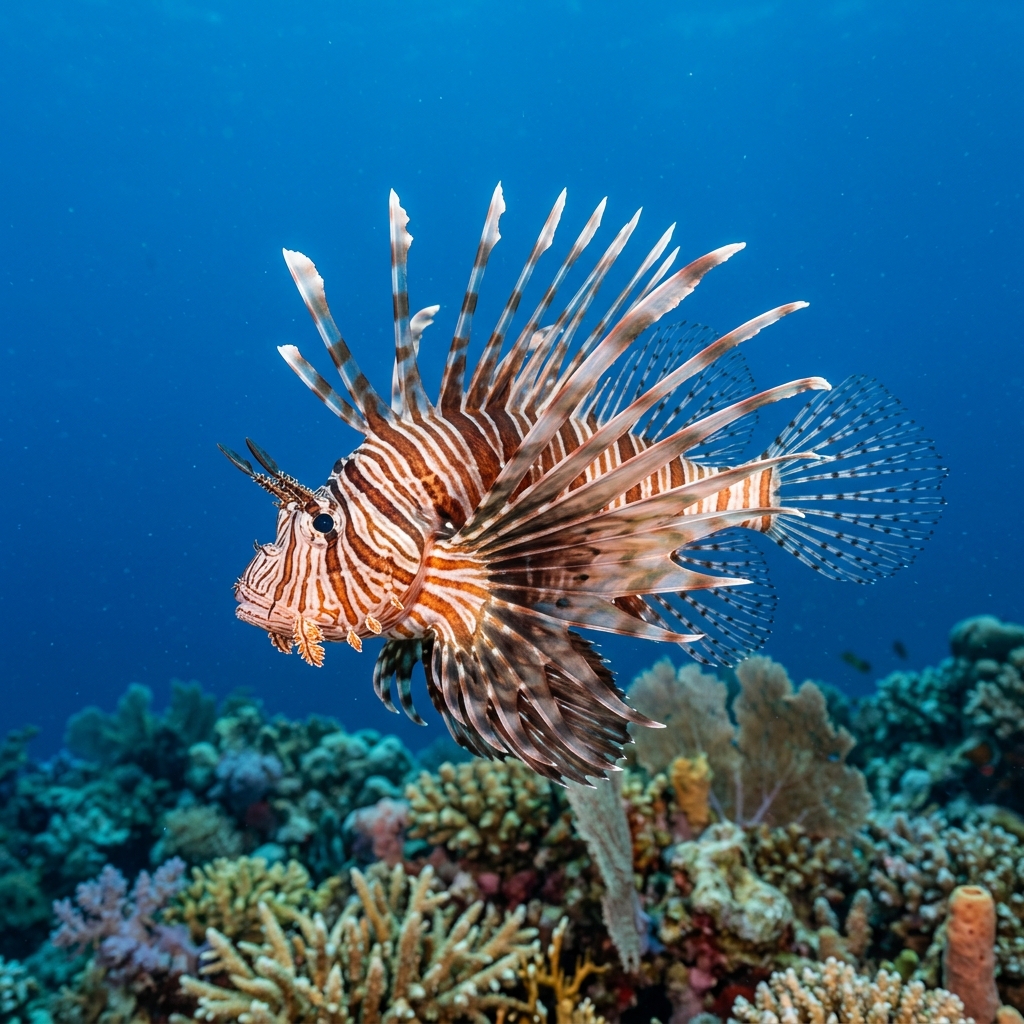
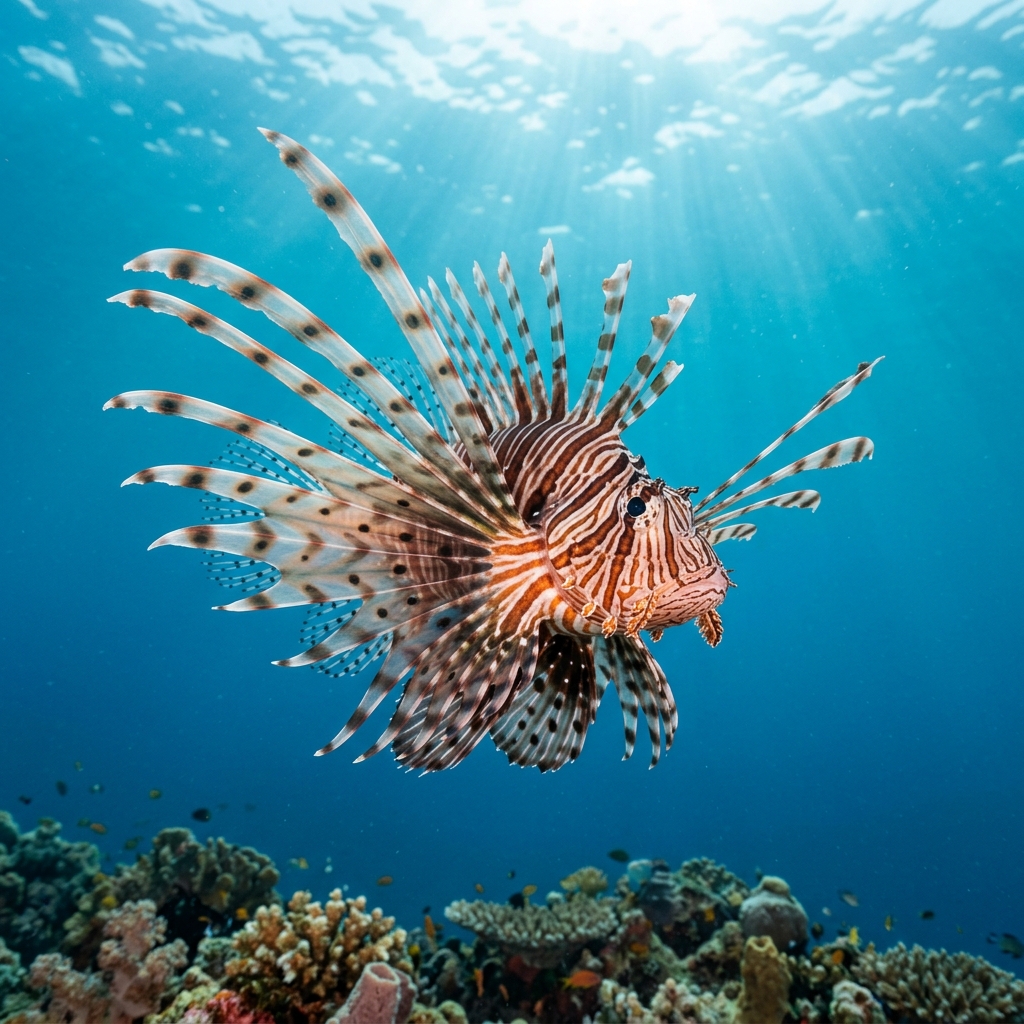
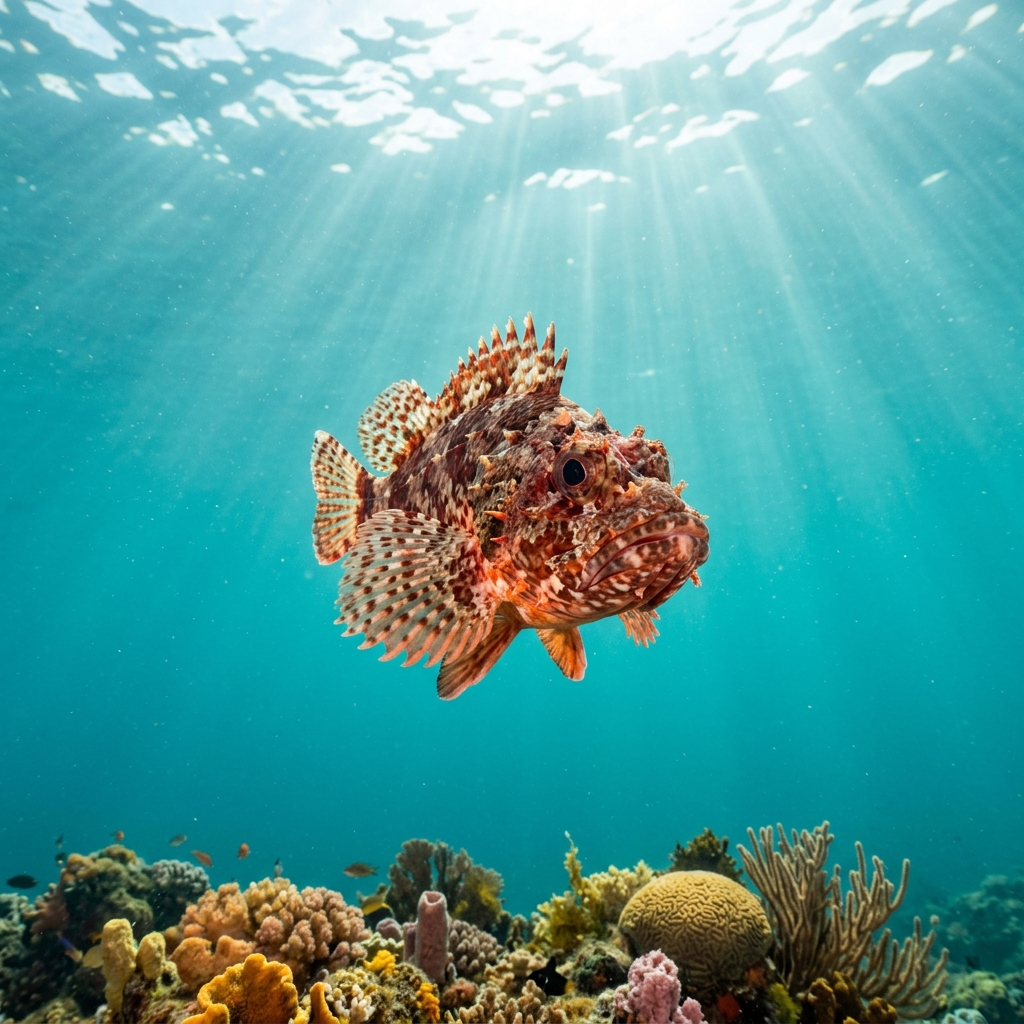
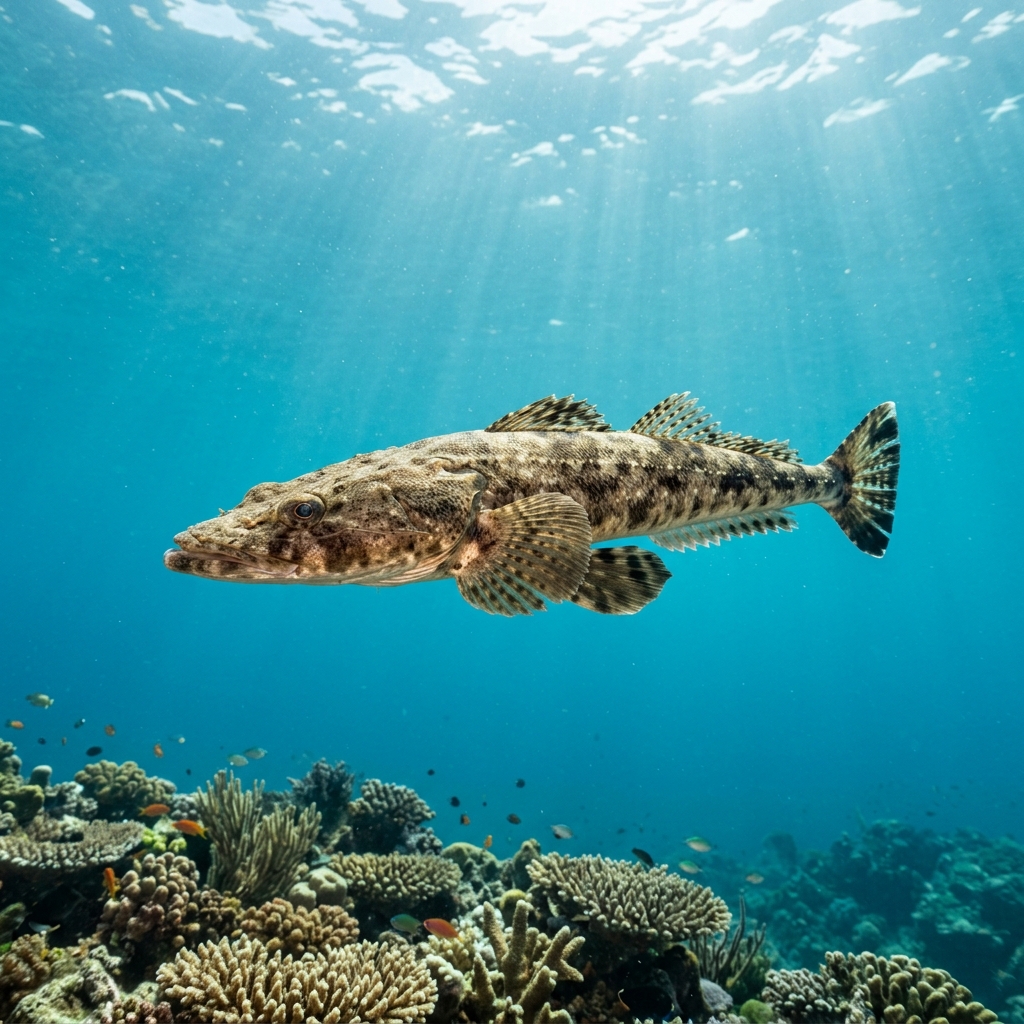
Reaches around 36 cm, making it one of the larger scorpionfish a diver will find on Hawaiian reefs, with a broad, heavily textured head and a mottled brown, grey and cream pattern that breaks up its outline against rock and rubble. Fleshy flaps and bumps over the eyes and jaw complete the camouflage, so it reads as a lump of encrusted rock until it blinks or shifts weight on its pectoral fins. Look for the thick-set body tapering to a squared-off tail rather than the slimmer, more feathery look of related scorpionfish.
Expect to find it sitting motionless on rock, rubble or a coral ledge, relying on its camouflage rather than flight to avoid attention. It rarely moves when divers approach, which is exactly why it is easy to miss and easy to bump into by accident. Most sightings are on the bottom rather than in open water, consistent with an ambush predator waiting for small fish and crustaceans to wander too close.
Like other scorpionfish, it feeds by staying still and letting camouflage do the work, then engulfing prey in a single fast gape rather than chasing it down.
Sightings show no detectable season, and with water temperatures logged between 21.3 and 25C year-round in Hawaii, there is no particular month to target. Treat it as a resident species you might encounter on any dive rather than one tied to a migration window.
Reef neighbours a diver could mistake it for. Use the identification notes above to tell them apart.
Every logged sighting in the data comes from Hawaii, United States, making it the only confirmed region for this species and the place to focus a search. Within Hawaii it turns up across a spread of sites rather than one hotspot, so reef and rocky bottom terrain generally is worth a slow look rather than any single named dive.
Mapping where Titan Scorpionfish is logged…
All confirmed sightings come from Hawaii, United States, spread across several sites rather than one dive spot. It has not been documented elsewhere in diver logs, so Hawaii is currently the place to look for it.
There is no detected season for this species, and it has been logged in water from 21.3 to 25C year-round. It is best treated as a resident you could encounter on any dive in Hawaii, any month.
Yes, they carry venomous dorsal spines that cause a painful sting if touched. Their camouflage makes them easy to miss, so the real risk is accidental contact rather than any aggression from the fish itself.
Look for a heavy-bodied, rock-textured fish around 36 cm long, mottled brown, grey and cream, sitting motionless on rubble or reef rock. Fleshy flaps over the eyes and a broad head help distinguish it from slimmer scorpionfish species.
They typically reach around 36 cm, making them noticeably bulkier than many reef-dwelling scorpionfish.
They are logged as uncommon at every Hawaiian site where they have been recorded, so spotting one takes a careful scan of the bottom rather than a guaranteed encounter.
Site and sighting data is aggregated from diver logs, iNaturalist and GBIF. For taxonomy and conservation status:
Madeira Rockfish
2,773 sites