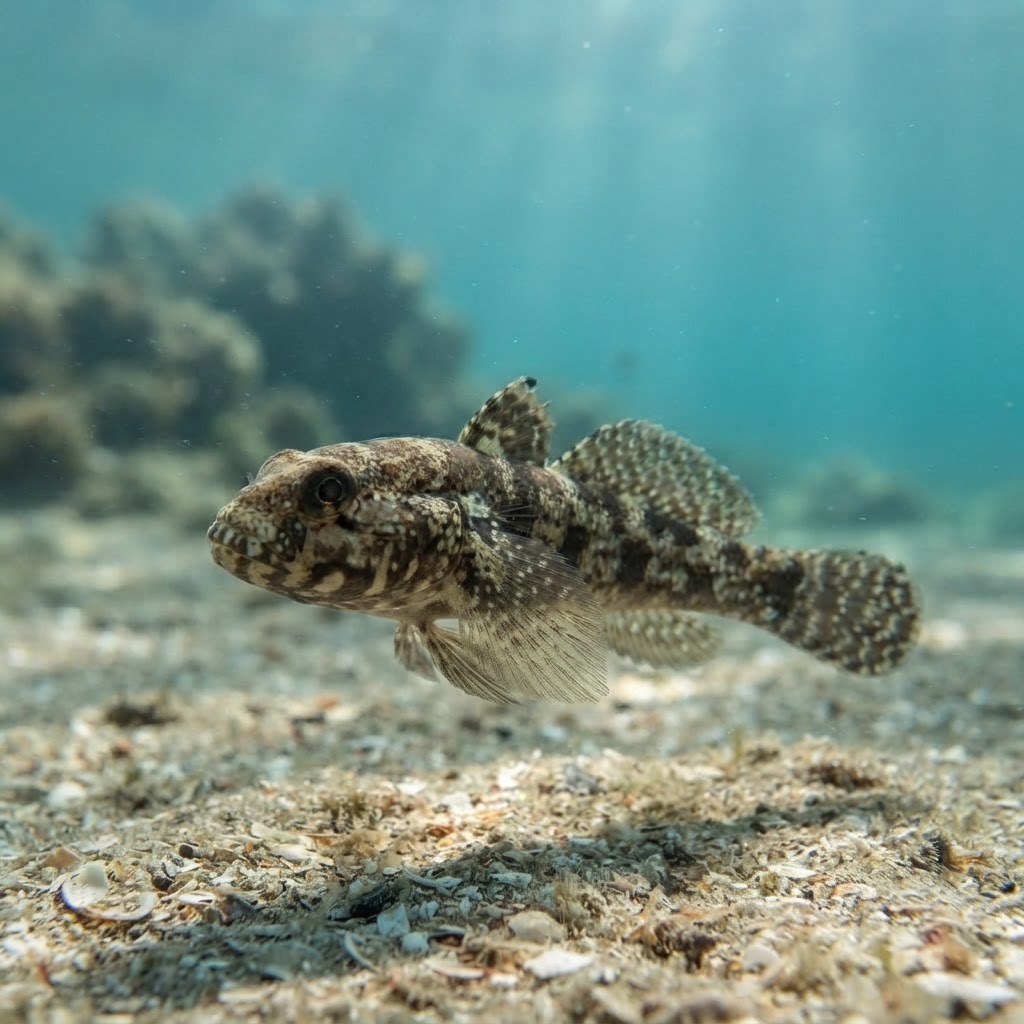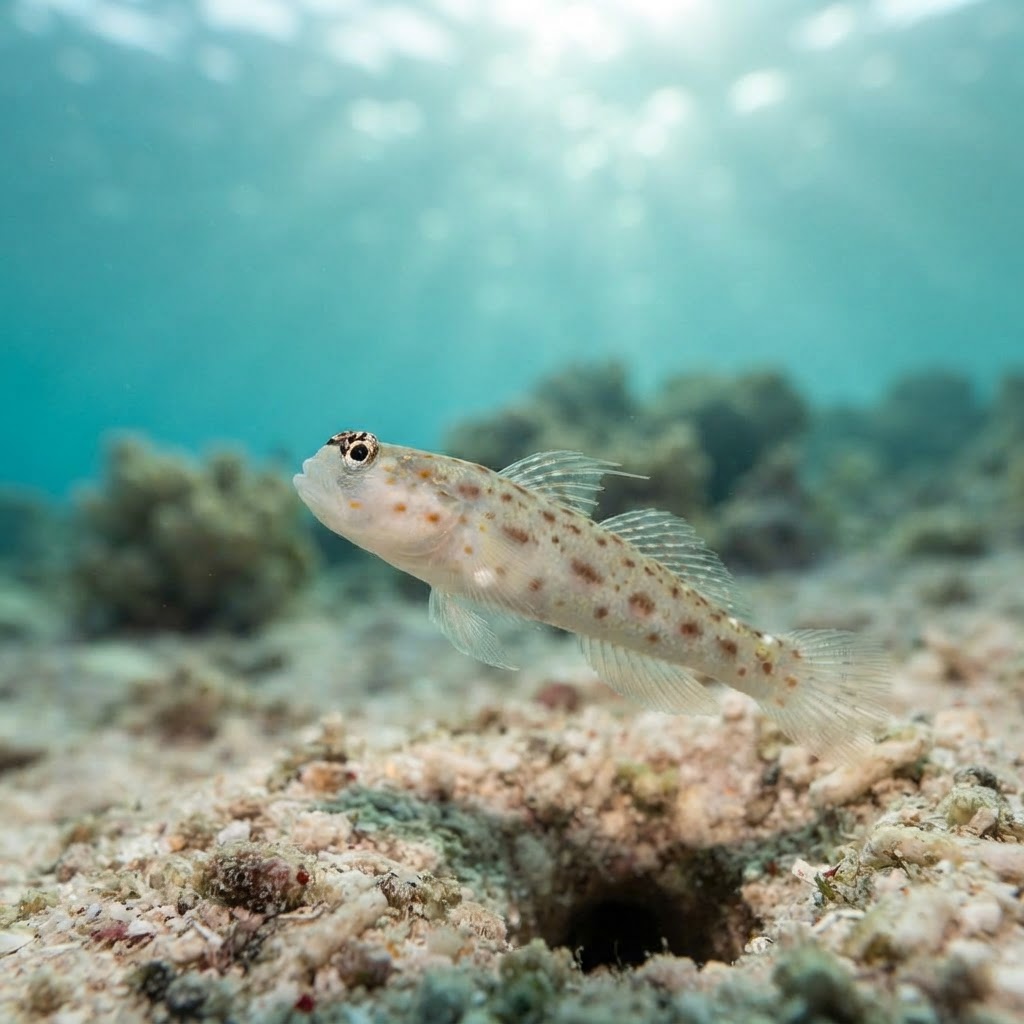
Ctenogobiops mitodes
Look for this pale, slender goby hovering over its burrow in Apra Harbor, Guam, in warm 26-29C water year-round.
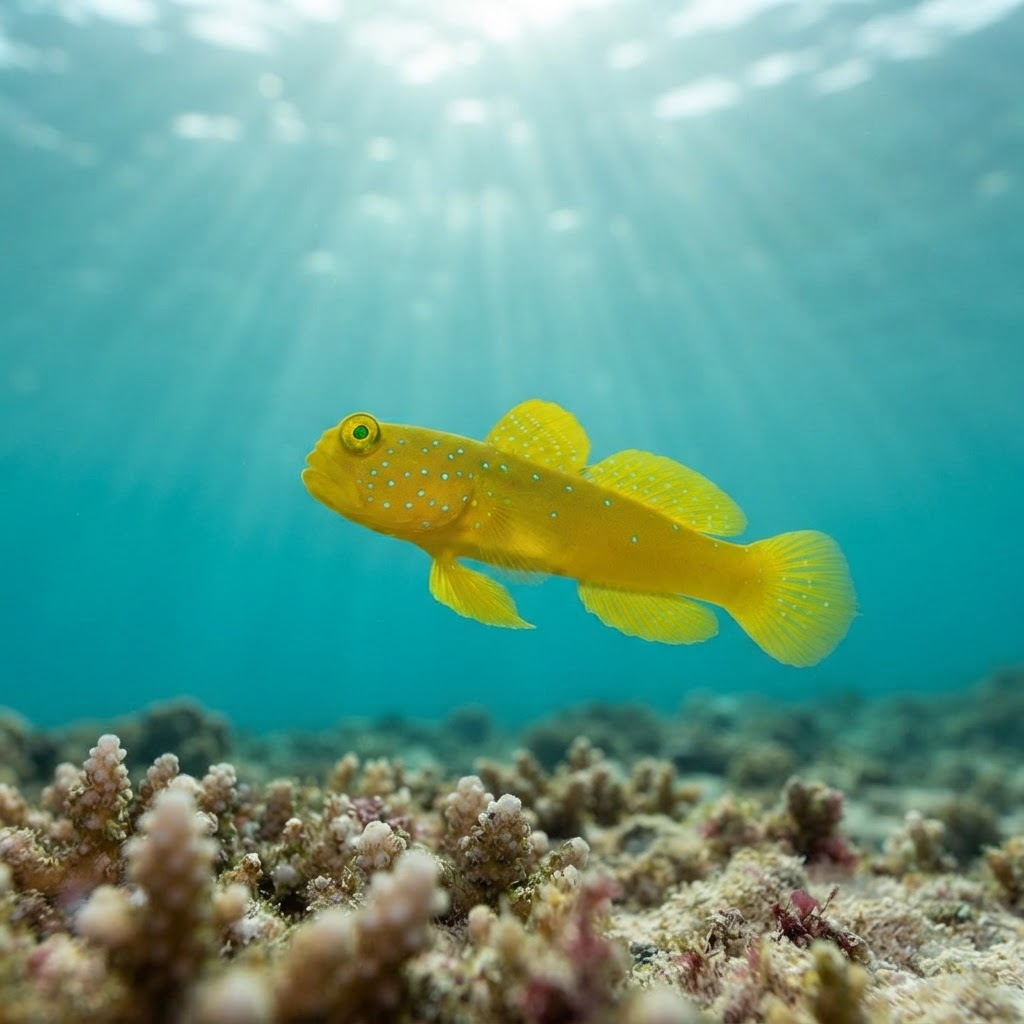
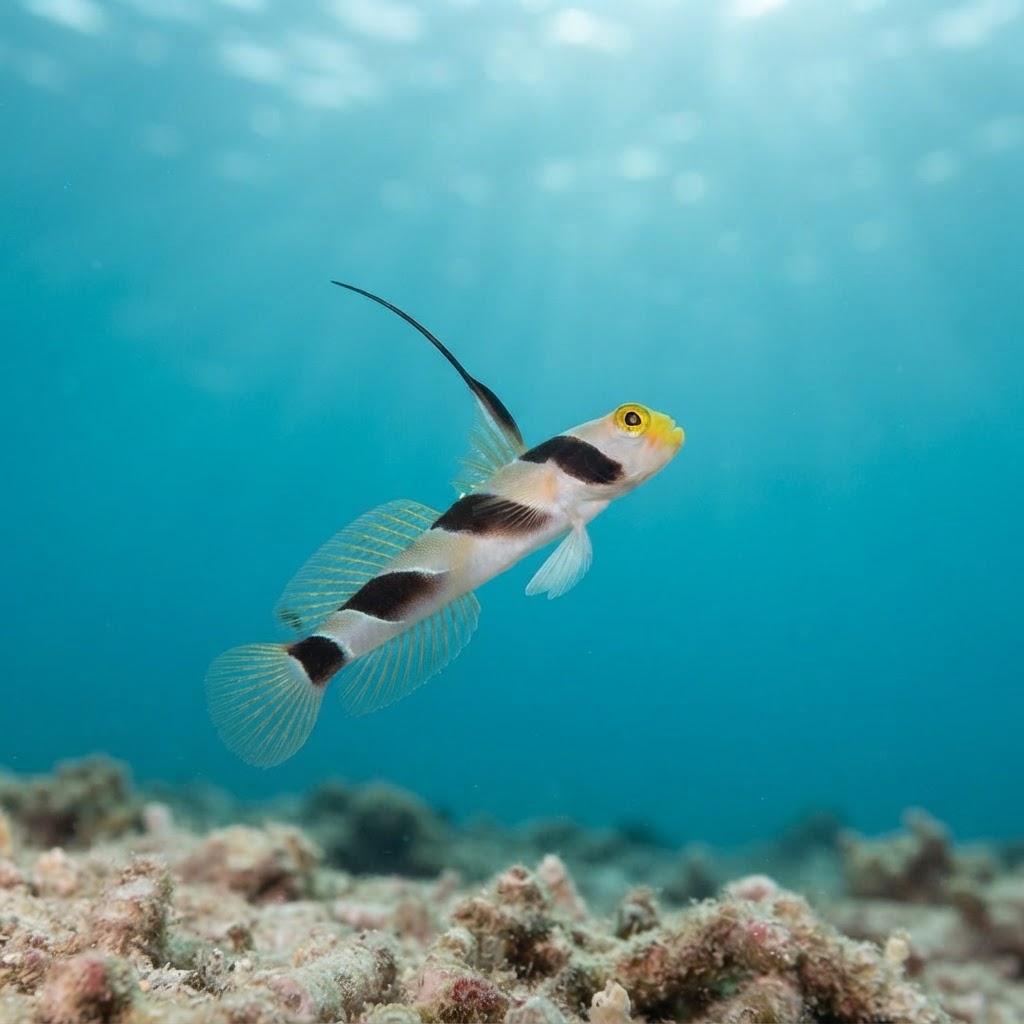
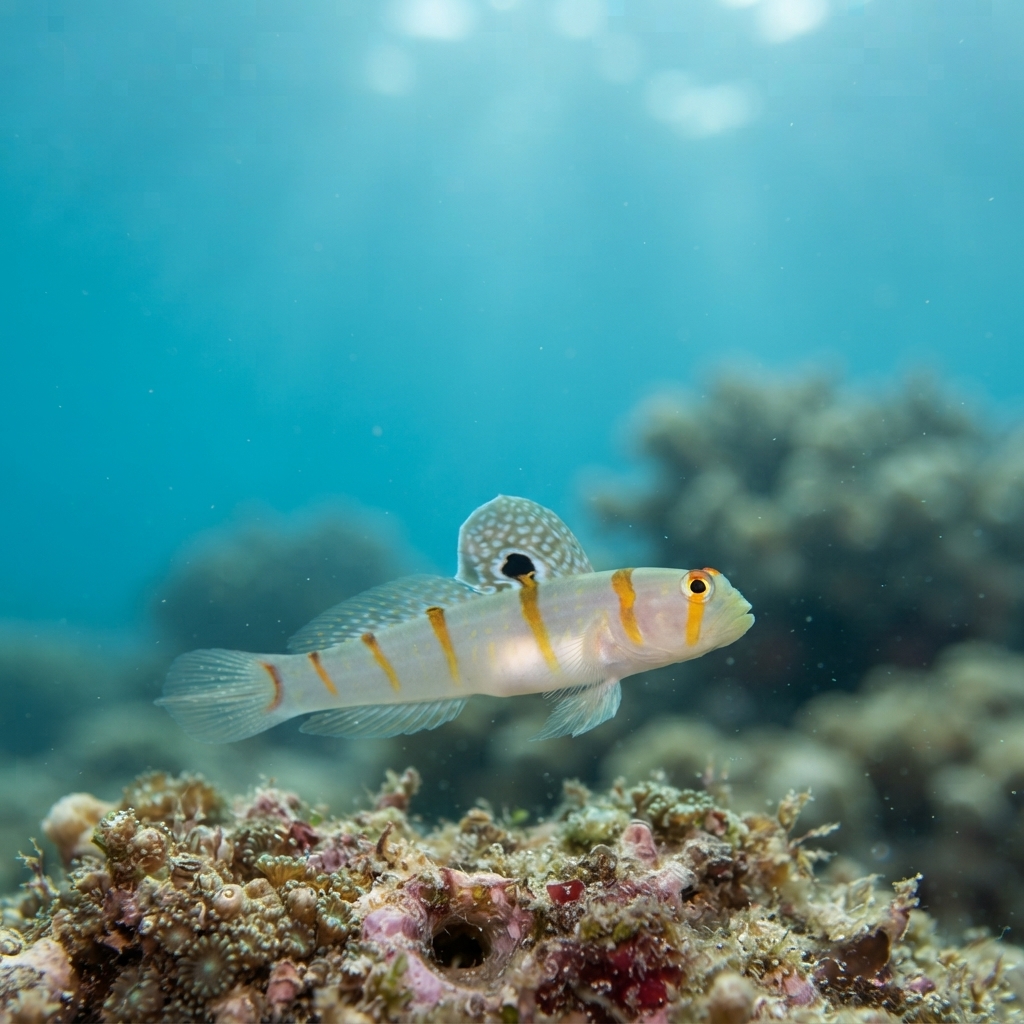
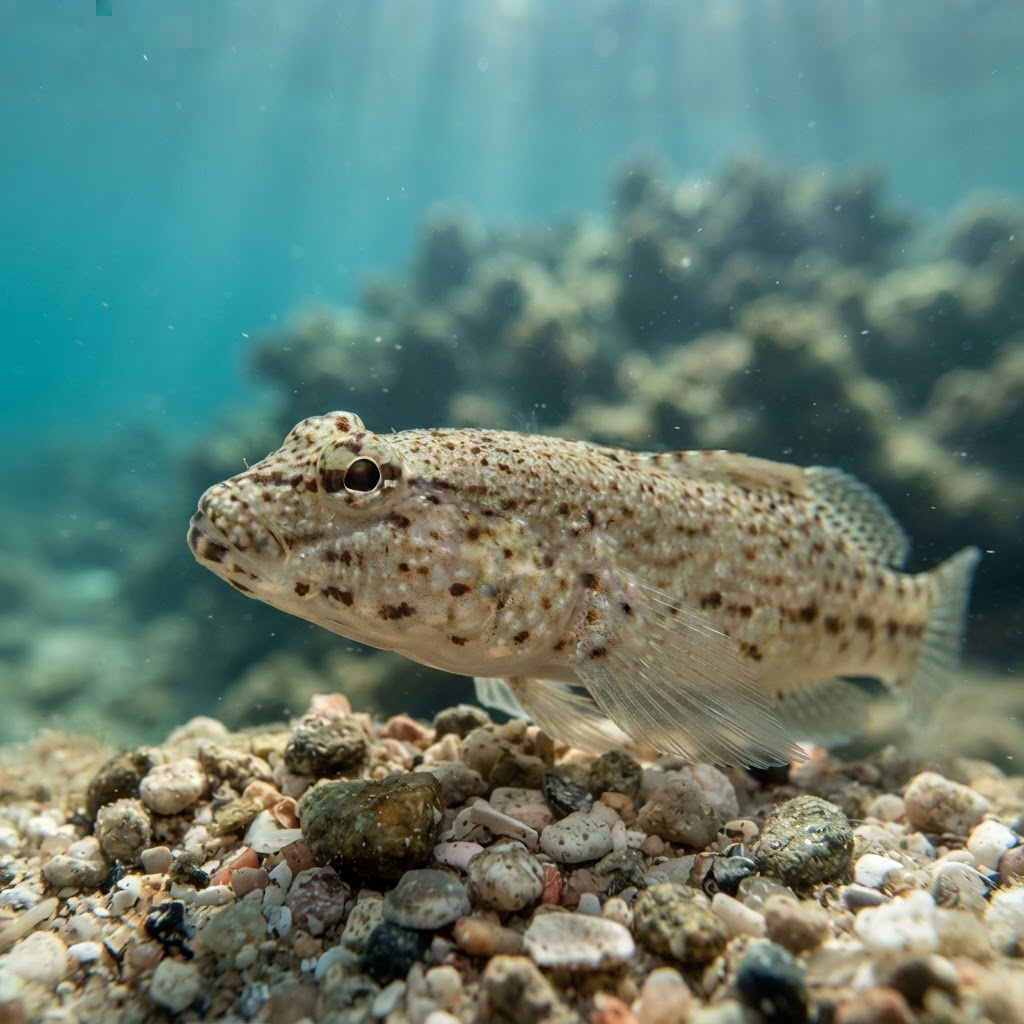
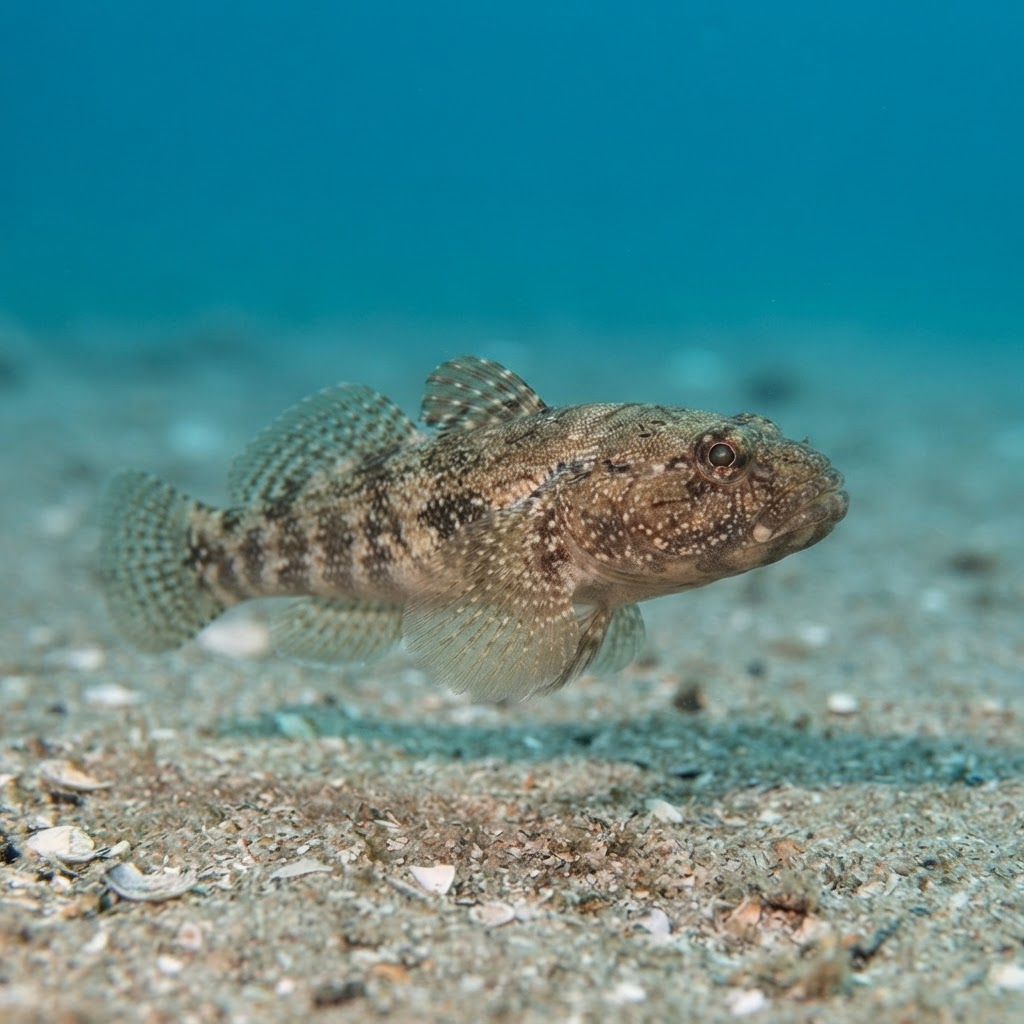
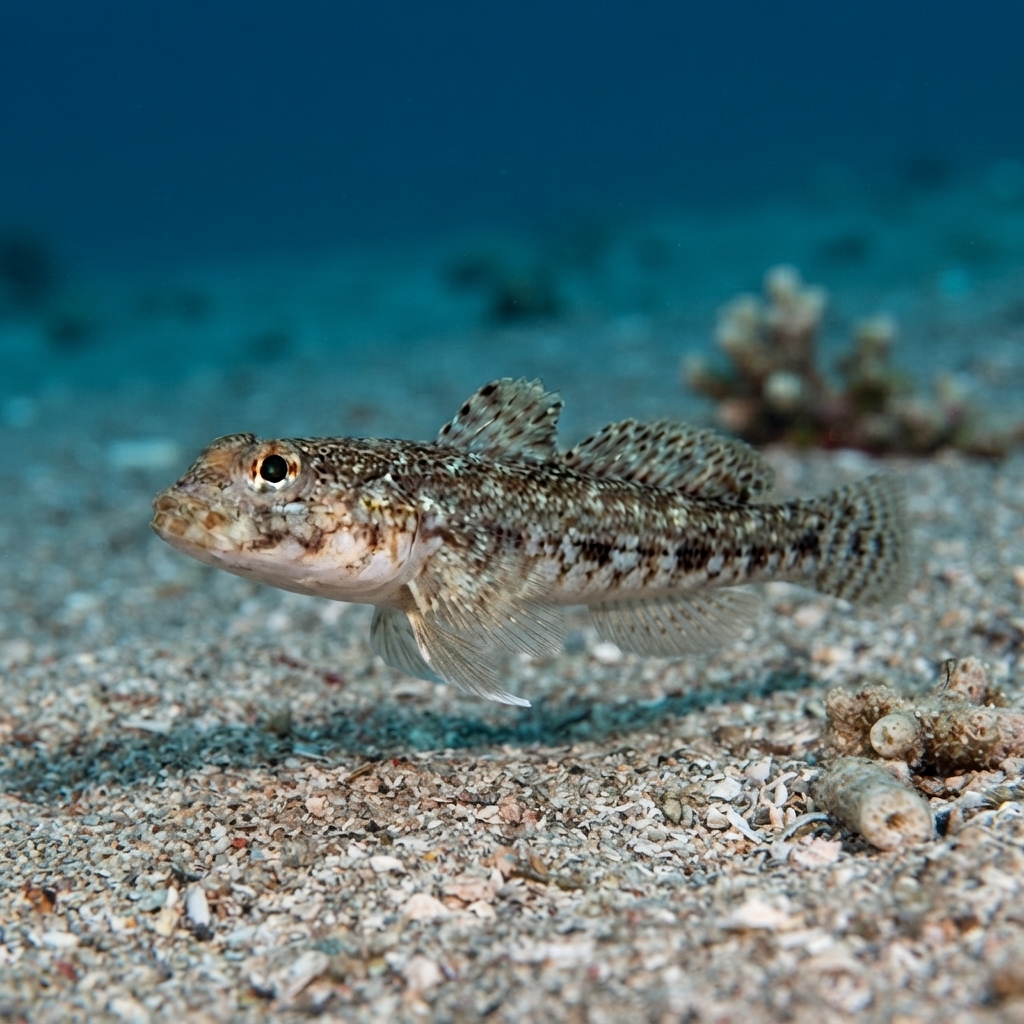
Slim, almost translucent body no bigger than a fingernail, pale grey to sandy in tone with faint rows of small dark speckles along the sides. Look for the elongated first dorsal fin ray, which gives the fish its thread-like silhouette when it flicks upright over its burrow. It hovers just above the sand with its tail cocked, ready to dart down at the first sign of trouble.
Spends its time hovering a few centimetres above a burrow shared with a symbiotic shrimp, ducking down tail-first whenever a diver gets too close or a shadow passes overhead. Most sightings come from sandy or rubble patches near reef edges rather than open coral, where the burrow entrance is easiest to spot. It is a slow, patient watch rather than an active swimmer, so divers who hover still nearby get the best look as it re-emerges.
Shares its burrow with a shrimp that digs and maintains the tunnel while the goby stands guard, flicking its tail to warn the shrimp of danger, a classic shrimpgoby-shrimp partnership.
No clear seasonal pattern shows up in the sighting data, and its comfort range of roughly 25.6 to 29.3C matches tropical reefs year-round, so any month works for a look.
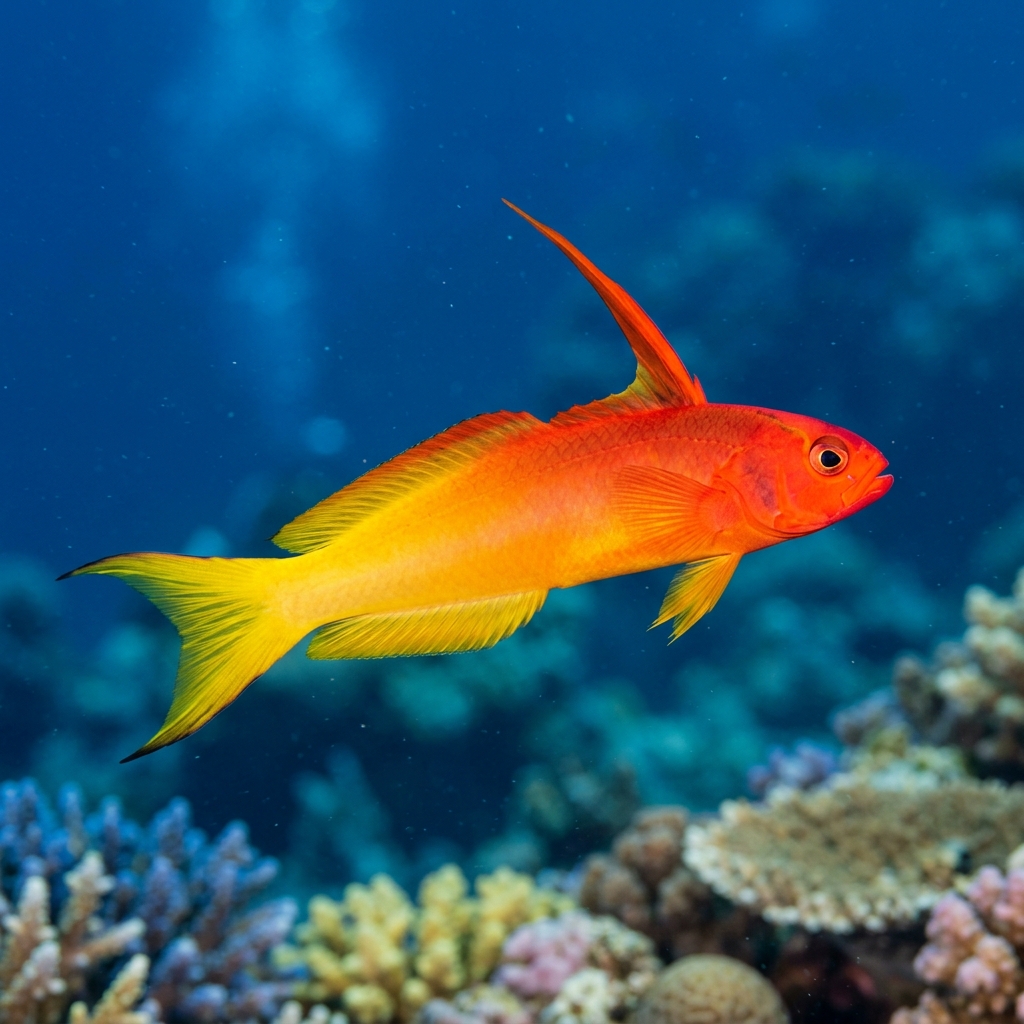
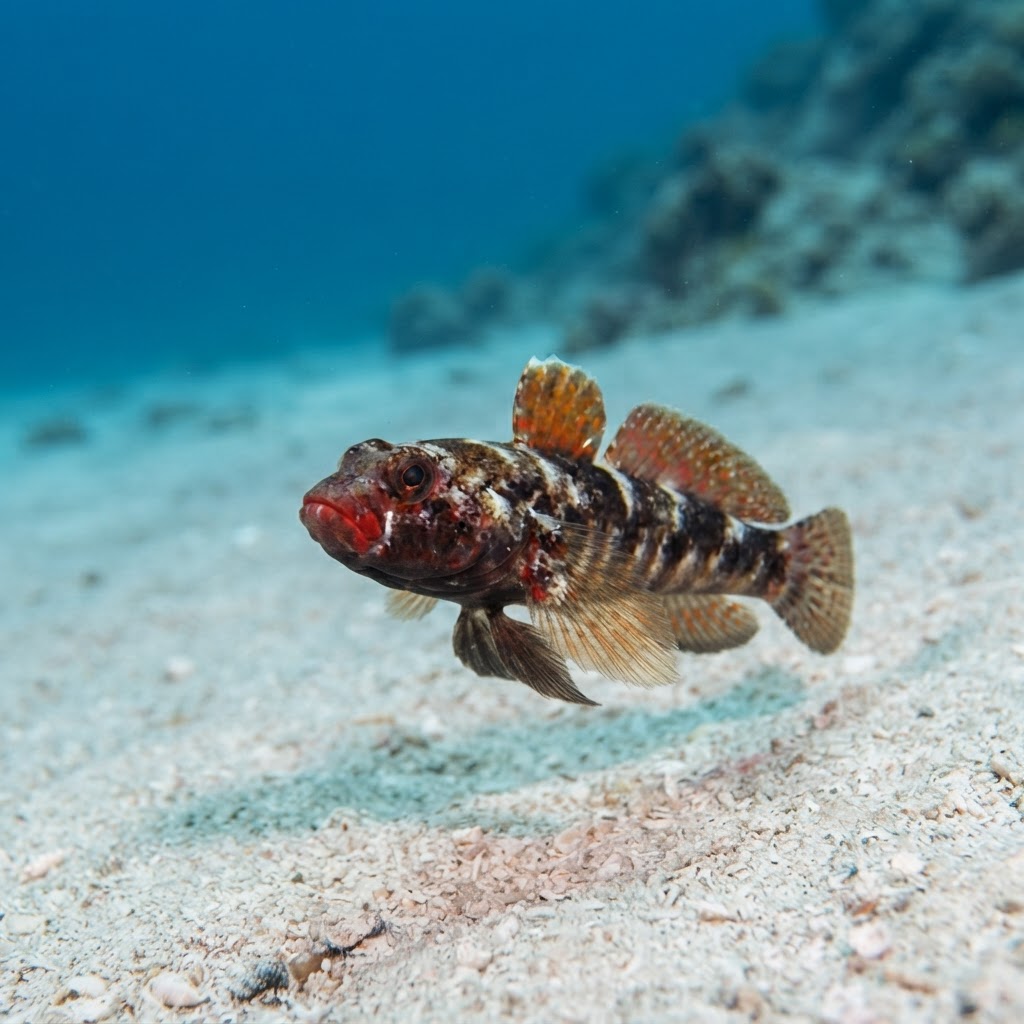
Reef neighbours a diver could mistake it for. Use the identification notes above to tell them apart.
Most reliably logged in Guam, especially around Apra Harbor and the Southern Coast, with a smaller presence noted in Sulawesi, Indonesia. Guam accounts for the bulk of sightings, so divers focused on this species should prioritise sites there over the wider Indo-Pacific.
Mapping where Thread Shrimpgoby is logged…
Guam is the strongest spot, particularly Apra Harbor and the Southern Coast, with additional sightings from Sulawesi, Indonesia. It turns up on sandy or rubble patches near reef structure rather than on open coral.
There is no detected season, and it sits comfortably in water from about 25.6 to 29.3C, so it is a year-round sighting on the reefs where it occurs.
Check for a small, pale, almost see-through goby around 4cm long hovering over a burrow entrance, with a stretched thread-like first dorsal fin ray. It typically sits with its tail curled, ready to dive into the sand.
They stay tiny, reaching only around 4cm, so a slow, close look near burrow entrances is usually needed to spot them.
It lives in partnership with a burrowing shrimp, sharing a single tunnel in the sand. The goby keeps watch while the shrimp does the digging, and a tail-flick from the goby signals danger to send both diving underground.
Site and sighting data is aggregated from diver logs, iNaturalist and GBIF. For taxonomy and conservation status:
Slender Goby
806 sites