Mugil cephalus
Silvery schooling fish logged from Florida to Fuerteventura, often cruising shallow water year-round in 11 to 28°C seas.
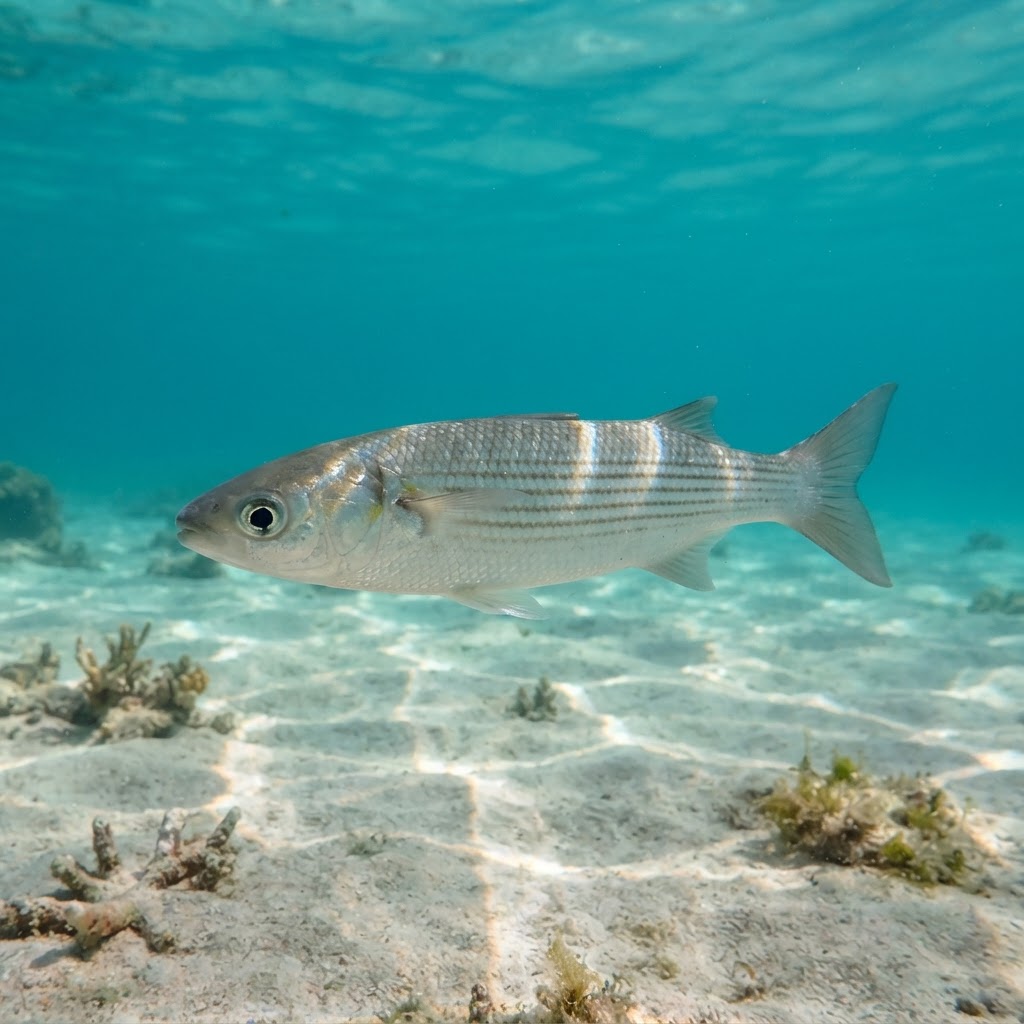
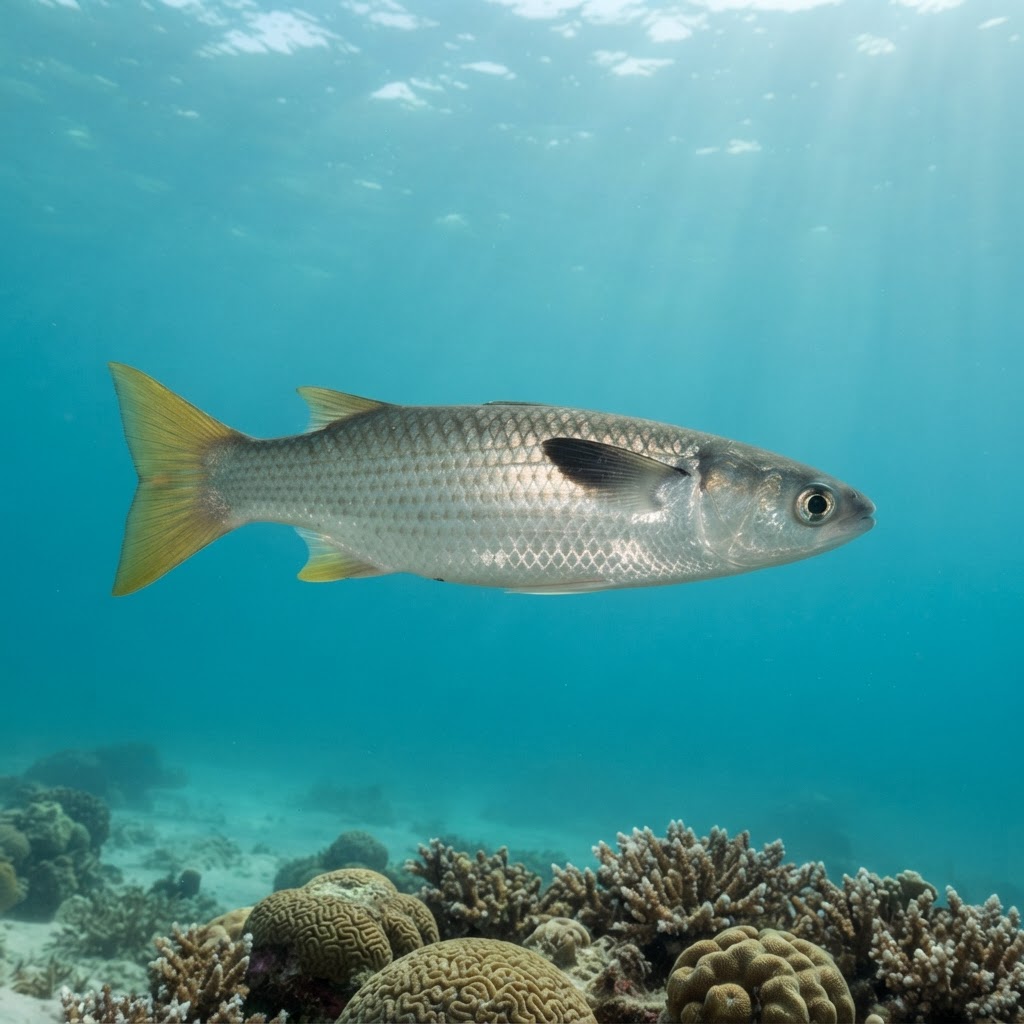
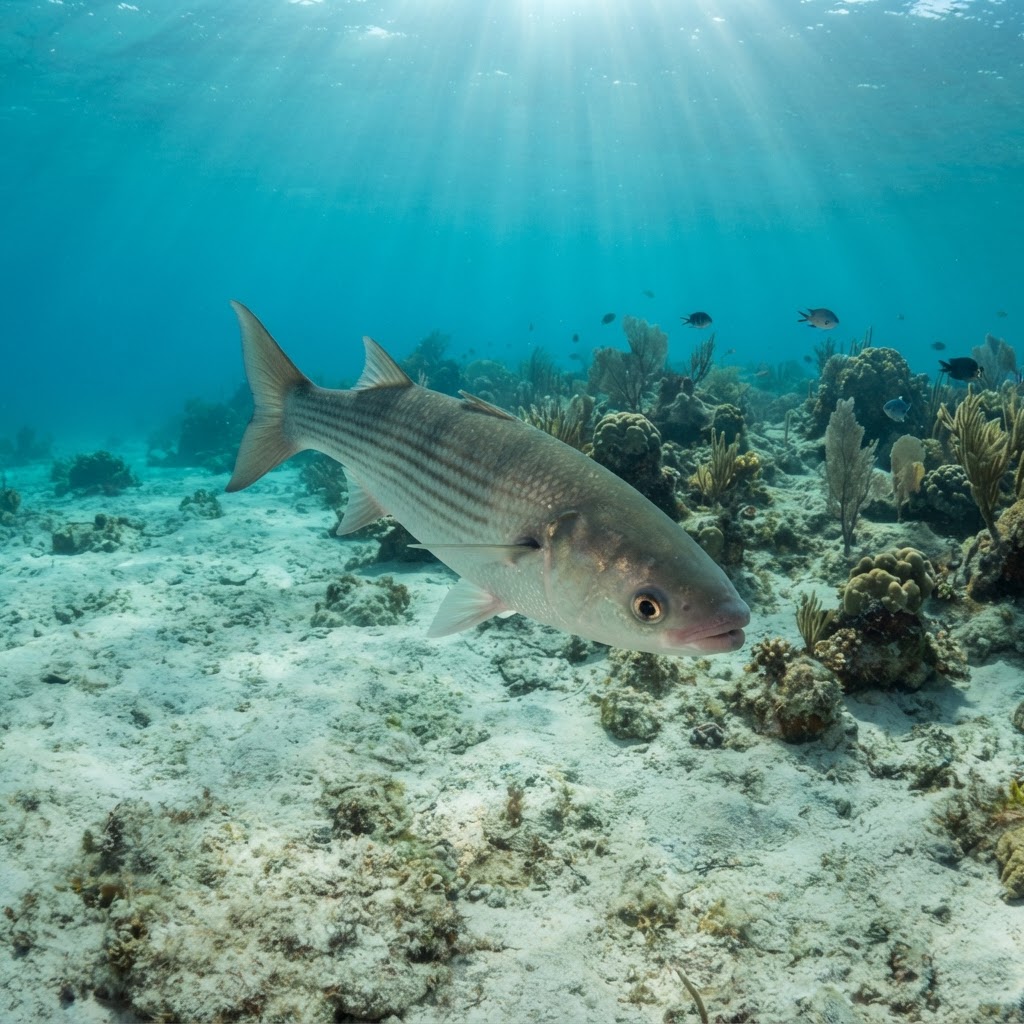
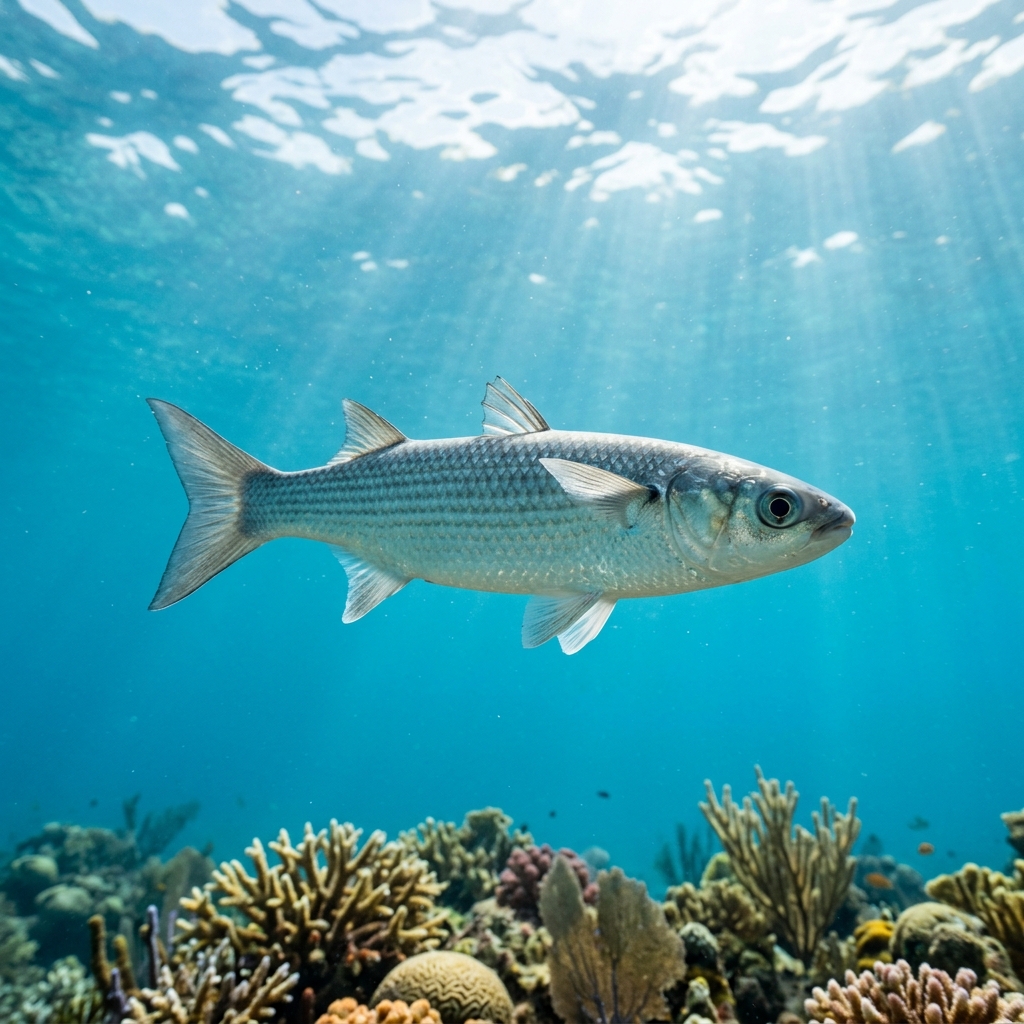
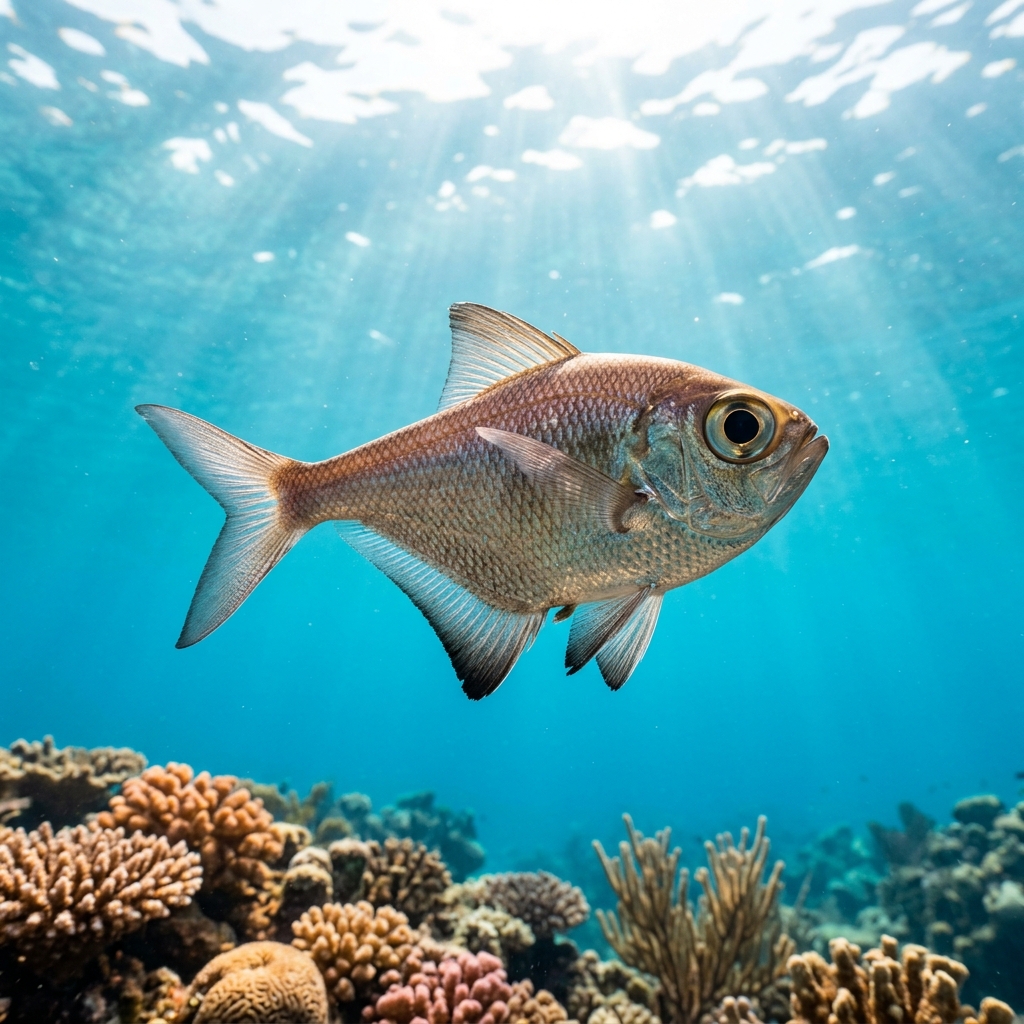
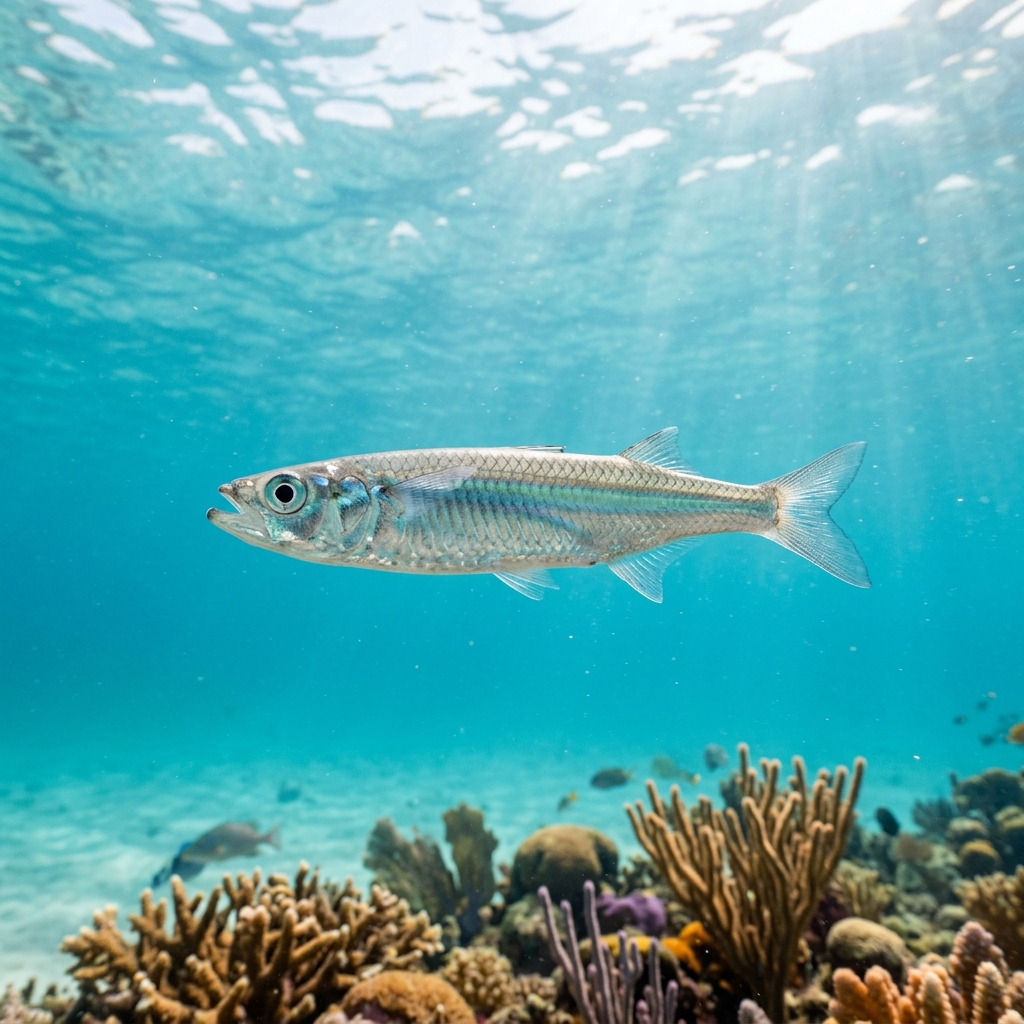
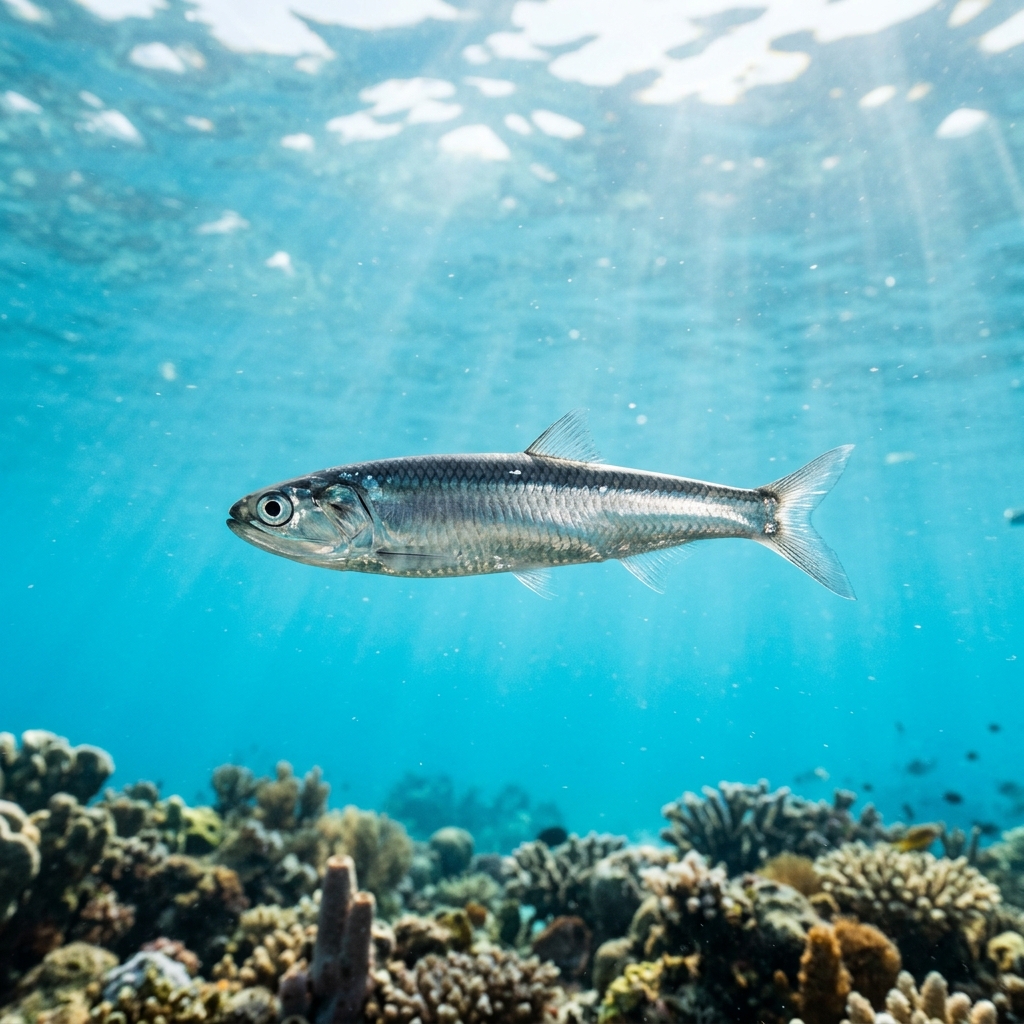
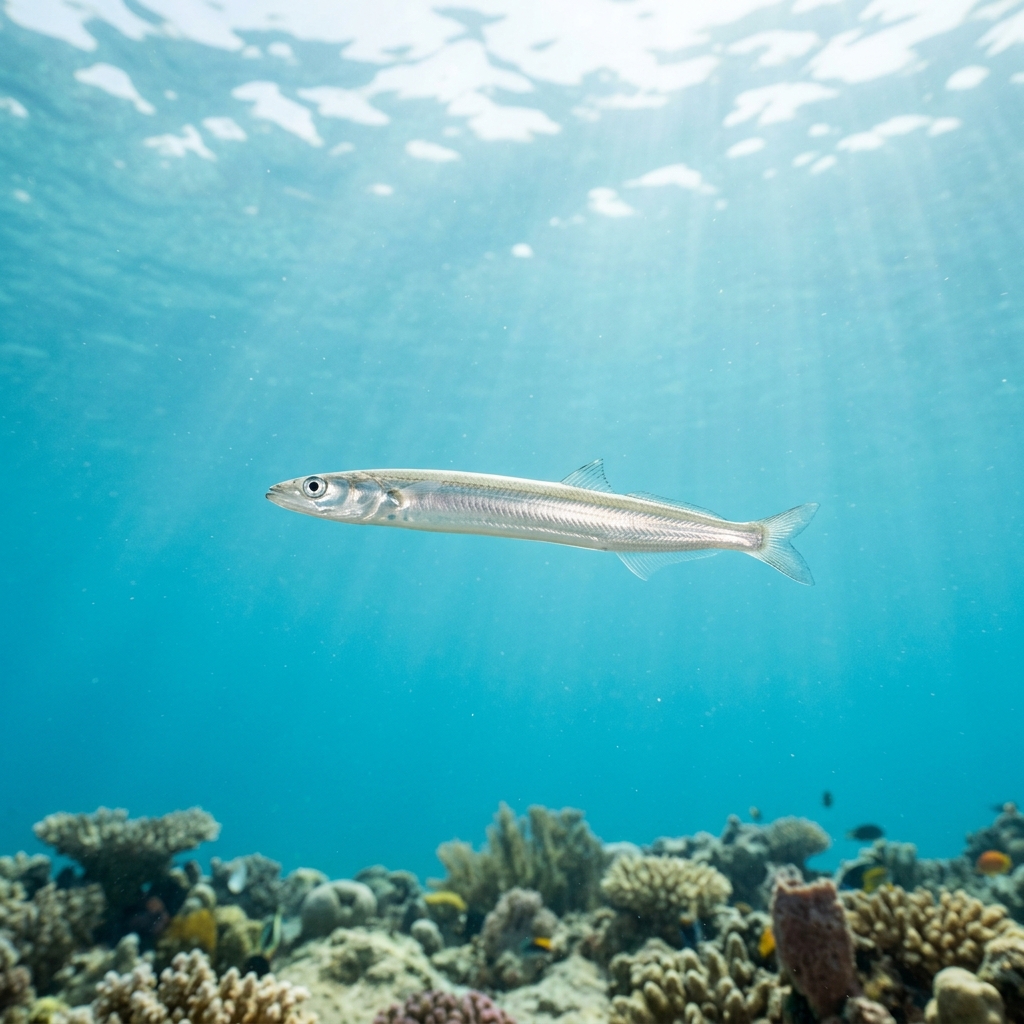
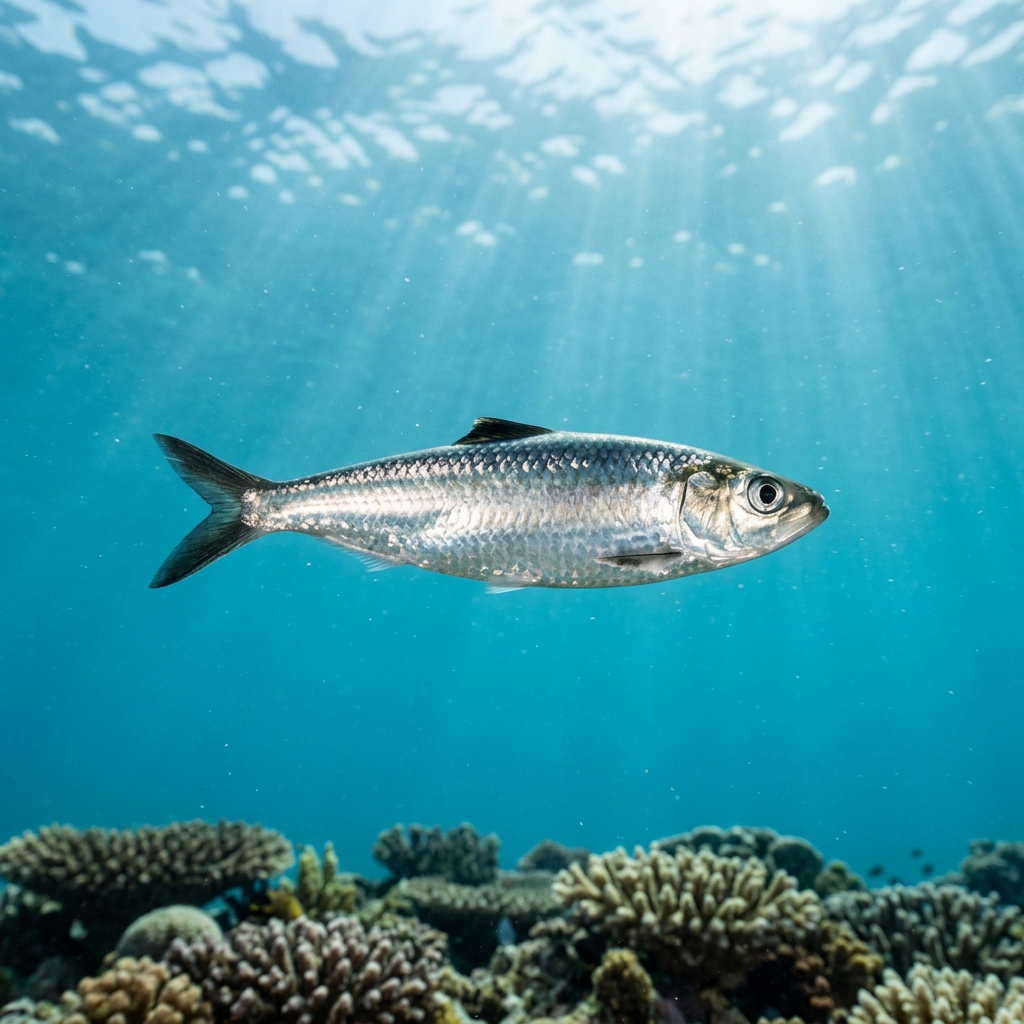
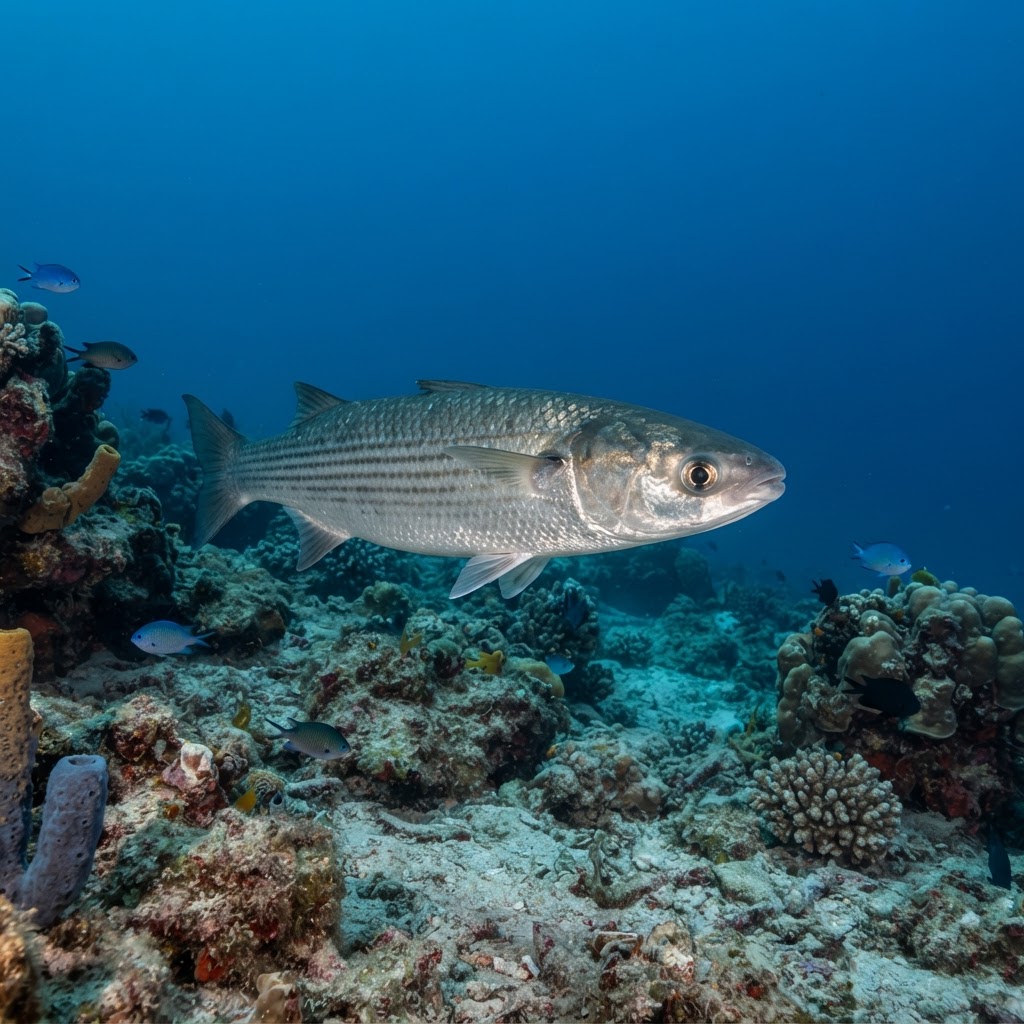
Look for a torpedo-shaped, silvery fish around 70 cm with faint dark horizontal stripes running along its flanks and a blunt, rounded head. It has a small mouth set low and a slightly forked tail, and usually shows up as part of a loose, moving school rather than alone. The stripes and streamlined, cigar-like body are the main things that separate it from deeper-bodied schooling fish sharing the same water.
Divers most often encounter it moving in loose schools over sand, seagrass or shallow reef flats, grazing on algae and organic film rather than chasing prey. It tends to keep a comfortable distance from divers and will drift off as a group if approached too directly, but it is not especially skittish in areas where it sees regular boat and diver traffic. Shallow, sheltered water close to shore is the typical setting, often in the same spots dive briefings mention for the safety stop.
It feeds by sifting fine algae and detritus off the seabed, and this constant grazing makes it a useful indicator of healthy shallow sediment and seagrass systems.
Sightings show no clear seasonal pattern, and its wide temperature tolerance of roughly 11 to 28°C means it turns up across the year in both warm subtropical sites like Florida and cooler spots like the Canary Islands. Plan around the destination's general diving season rather than a mullet-specific one.
Reef neighbours a diver could mistake it for. Use the identification notes above to tell them apart.
Most reliably logged in the United States, especially around Florida, and in the Canary Islands across Fuerteventura, Gran Canaria and Lanzarote. Portugal's Costa Verde and Ecuador's Galápagos Islands also produce regular sightings, with smaller but consistent records from New Zealand's North Island, Italy, Australia and Hong Kong.
Mapping where Striped Mullet is logged…
Florida in the United States and Fuerteventura, Gran Canaria and Lanzarote in the Canary Islands are the most reliable places, with additional sightings in Portugal's Costa Verde and Ecuador's Galápagos Islands.
There is no strong seasonal pattern in the sighting data, and their wide temperature tolerance from around 11 to 28°C means they can be seen year-round wherever they are found.
Look for a silvery, torpedo-shaped fish around 70 cm long with faint horizontal stripes and a blunt head, usually moving in a loose school over sand or seagrass rather than swimming alone.
They typically reach around 70 cm in length, giving them a solid, cigar-shaped presence when seen schooling in shallow water.
No, they pose no danger to divers. They are herbivorous grazers that keep their distance and are best simply watched as they move through the water column.
They graze on algae and organic detritus from the seabed, sifting through fine sediment and seagrass rather than hunting other fish.
Site and sighting data is aggregated from diver logs, iNaturalist and GBIF. For taxonomy and conservation status:
Anchovy
2,433 sites