Taeniurops grabatus
Most reliably spotted in the Canary Islands and Cape Verde between April and November. Here's where divers find round fantail stingrays and how to ID them.
If you're stung
Venomous tail barbGeneral first-aid guidance, not a substitute for professional medical care. In an emergency, call your local emergency number.
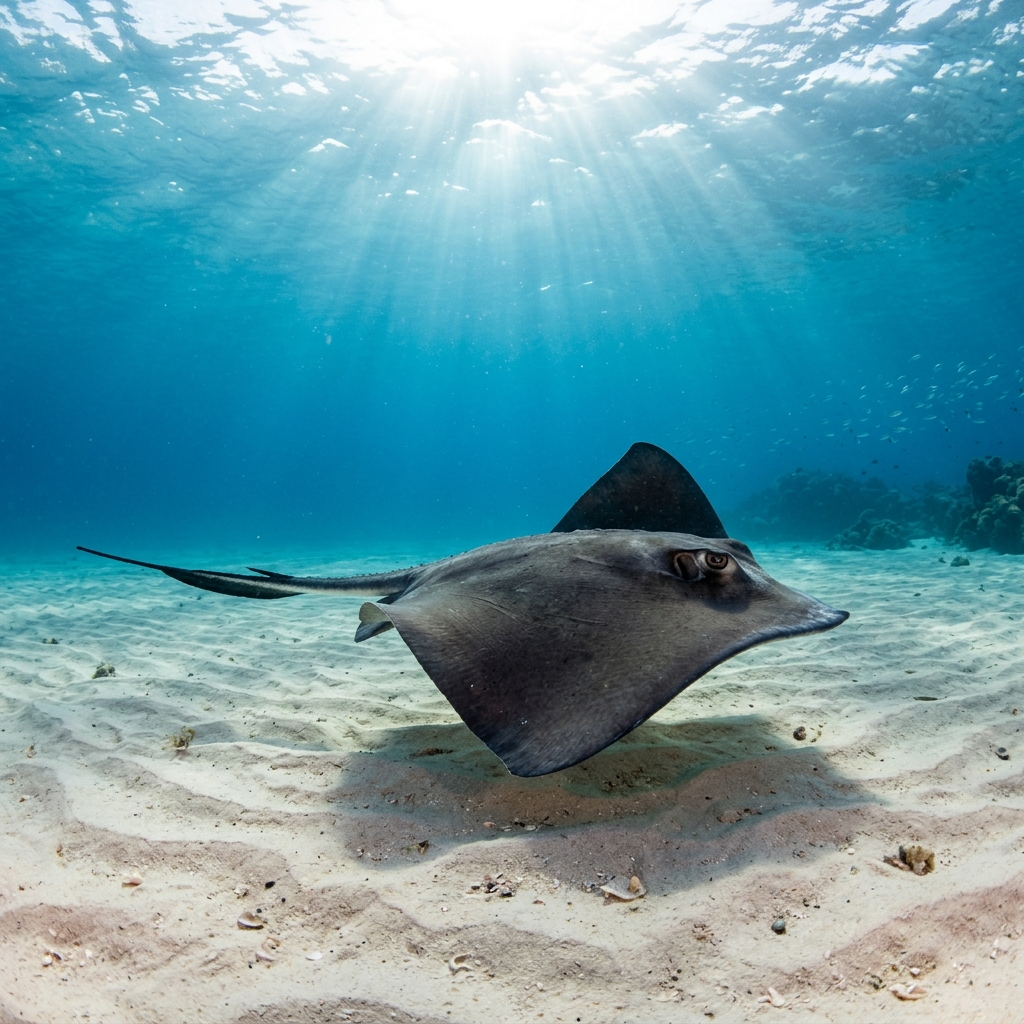
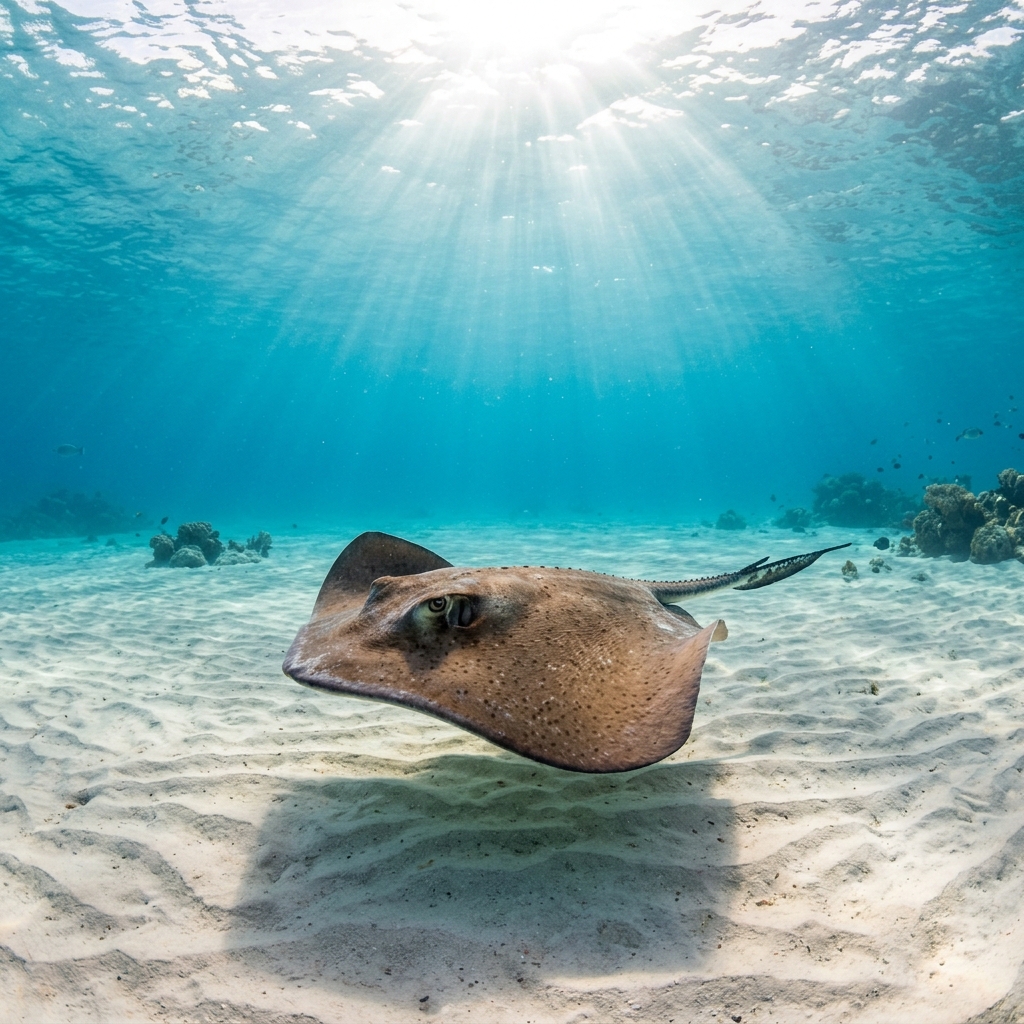
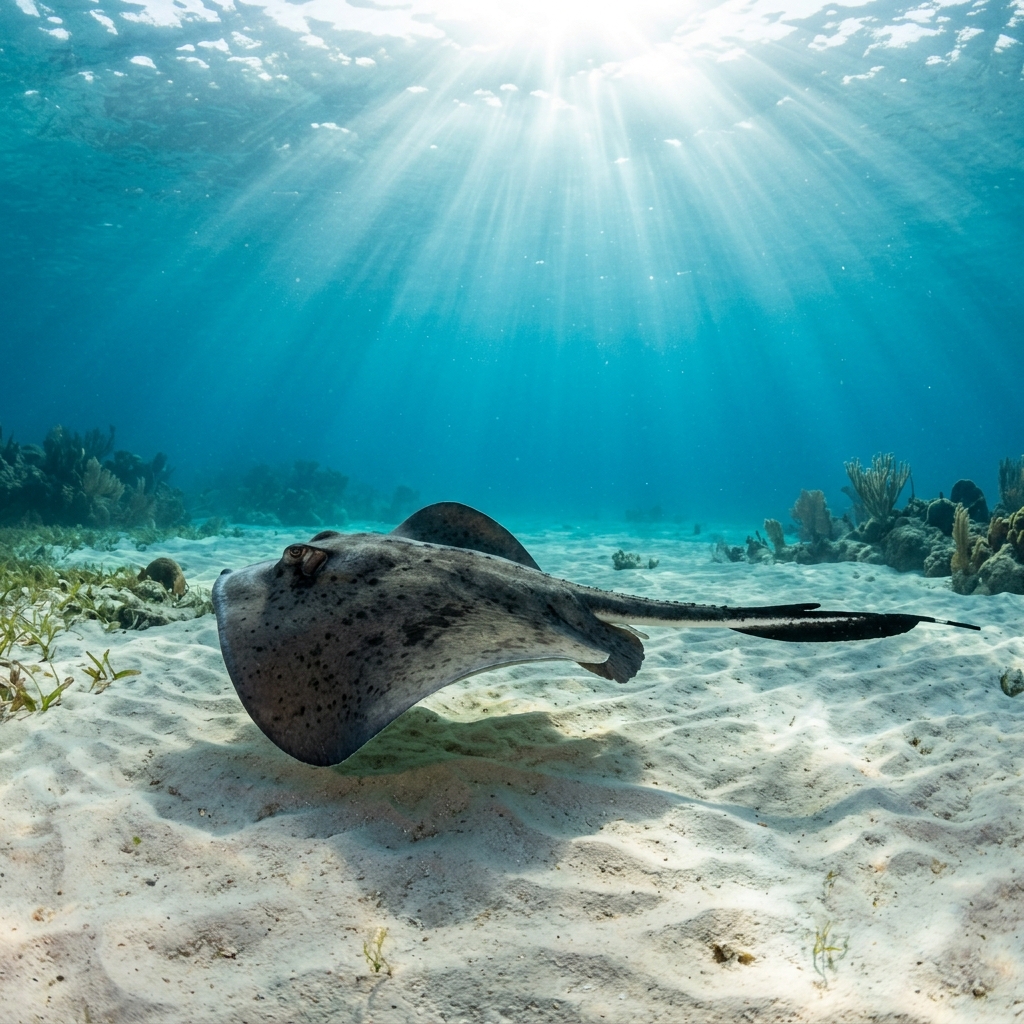
A broad, almost circular disc with smooth, dark brownish-grey to olive-brown upper surface and a pale underside sets this ray apart from its flatter-looking relatives. The tail is long and whip-like, noticeably longer than the body, with a distinctive low fin fold running along the underside. Look for the rounded, fan-like outline of the disc edges when it glides past, that rounded shape is the quickest ID clue in the water.
Divers most often find this ray settled flat on sandy or rubble seabeds, partially buried or simply resting still, which makes it easy to miss if you are not scanning the bottom carefully. When approached slowly it tends to hold its position briefly before gliding away with smooth, unhurried wingbeats. It is generally tolerant of calm divers who keep their distance and avoid shadowing it from above.
This species is endemic to the eastern Atlantic, its range is centred on Macaronesian archipelagos and the West African coast, meaning encounters in the Canary Islands represent some of the best-observed wild populations of any ray with such a restricted natural range.
Sightings concentrate from April through November across the Canary Islands, with a notable peak from June to November, so planning a trip in the warmer months of the Atlantic summer gives the best odds.
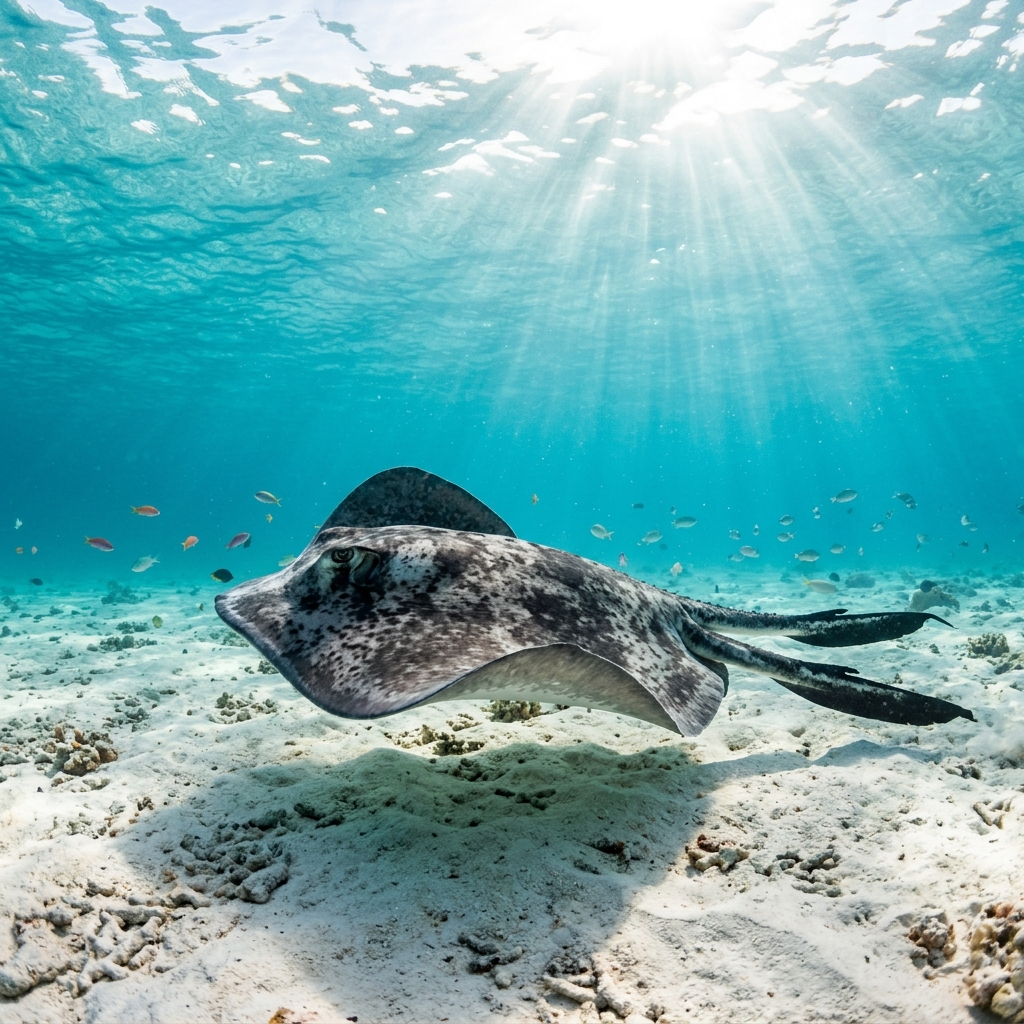
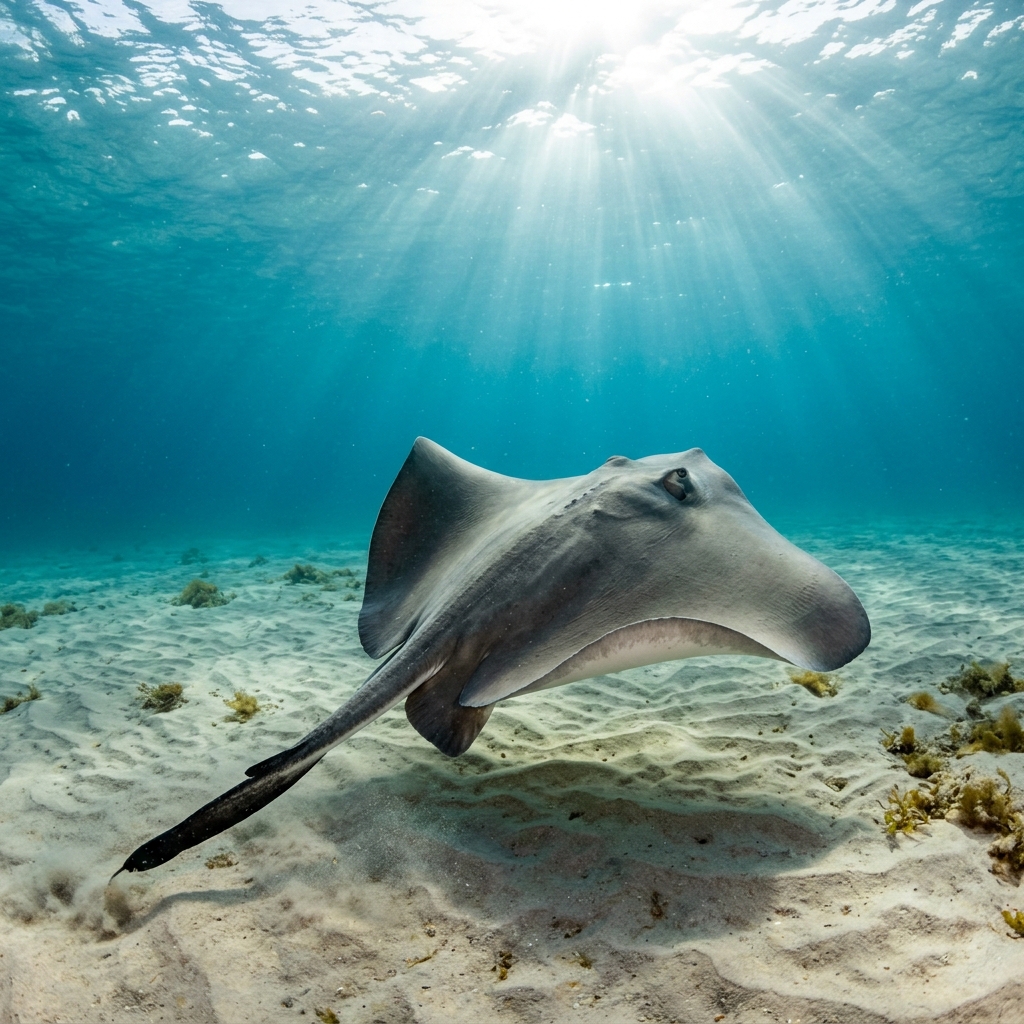
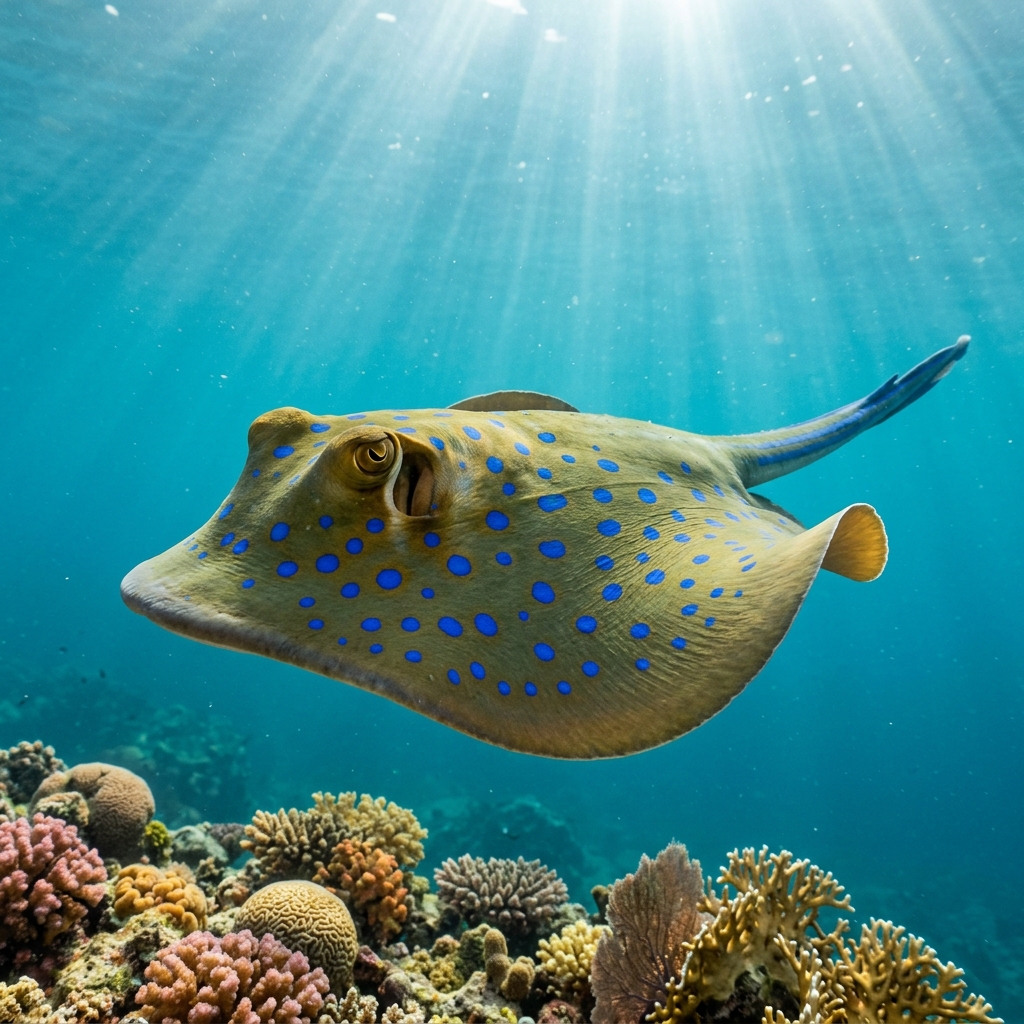
Reef neighbours a diver could mistake it for. Use the identification notes above to tell them apart.
By far the strongest sighting record is in the Canary Islands, particularly around Gran Canaria, Tenerife, Lanzarote, and Fuerteventura, where it is the most consistently logged ray of its kind. Cape Verde, especially Sao Vicente and Santo Antao, and the island of Sal, provides the next best chance, with a solid showing in Senegal's Dakar region and smaller numbers around Madeira and the Azores rounding out the range.
Mapping where Round Fantail Stingray is logged…
The Canary Islands are by far the top destination, with Gran Canaria, Tenerife, Lanzarote, and Fuerteventura all producing regular sightings. Cape Verde and the Dakar region of Senegal are the next best bets, with smaller numbers also recorded around Madeira and the Azores.
Sightings across the Canary Islands and Cape Verde concentrate from April through November, with the June to November window particularly productive. Water temperatures in the observed range of 18 to 23 °C align with this period in the eastern Atlantic.
Look for the distinctively rounded, almost circular disc with dark brownish-grey colouring on top and a pale belly. The very long whip-like tail and a fin fold running along its underside help confirm the ID. The smooth, fan-shaped disc edge is the quickest feature to clock as it passes.
They are currently listed as Near Threatened on the IUCN Red List. The species has a relatively restricted range centred on Macaronesia and the West African coast, making it vulnerable to bycatch and localised habitat changes.
Like all stingrays, they carry a venomous tail spine used purely for defence. In practice they are not considered dangerous to divers, they are typically calm and will move away if approached too closely. Avoid touching or cornering them and you will have a safe encounter.
Site and sighting data is aggregated from diver logs, iNaturalist and GBIF. For taxonomy and conservation status:
Whiptail Stingray
1,747 sites