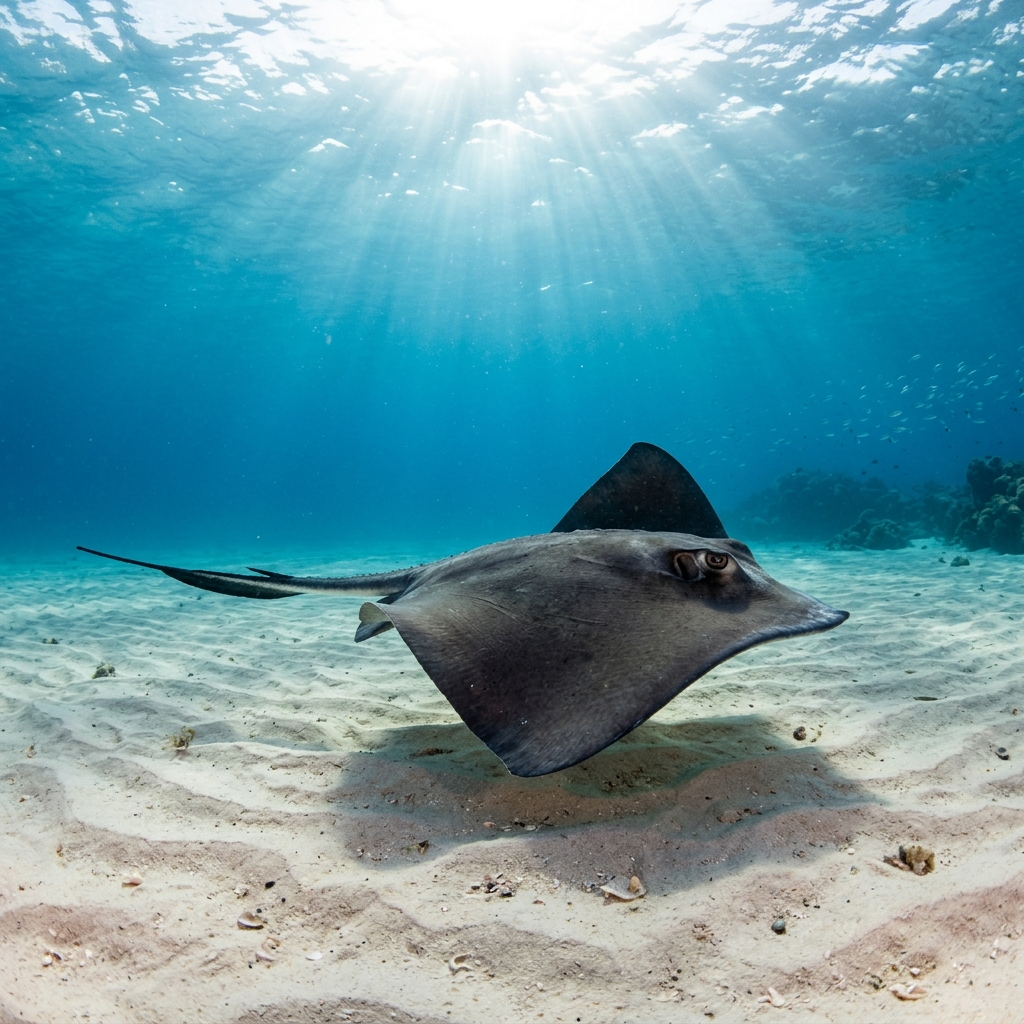
Dasyatis pastinaca
Most commonly logged around the Canary Islands and Madeira, the common stingray favours cool 18-23 °C Atlantic waters. Find out where and when to see one.
If you're stung
Venomous tail barbGeneral first-aid guidance, not a substitute for professional medical care. In an emergency, call your local emergency number.
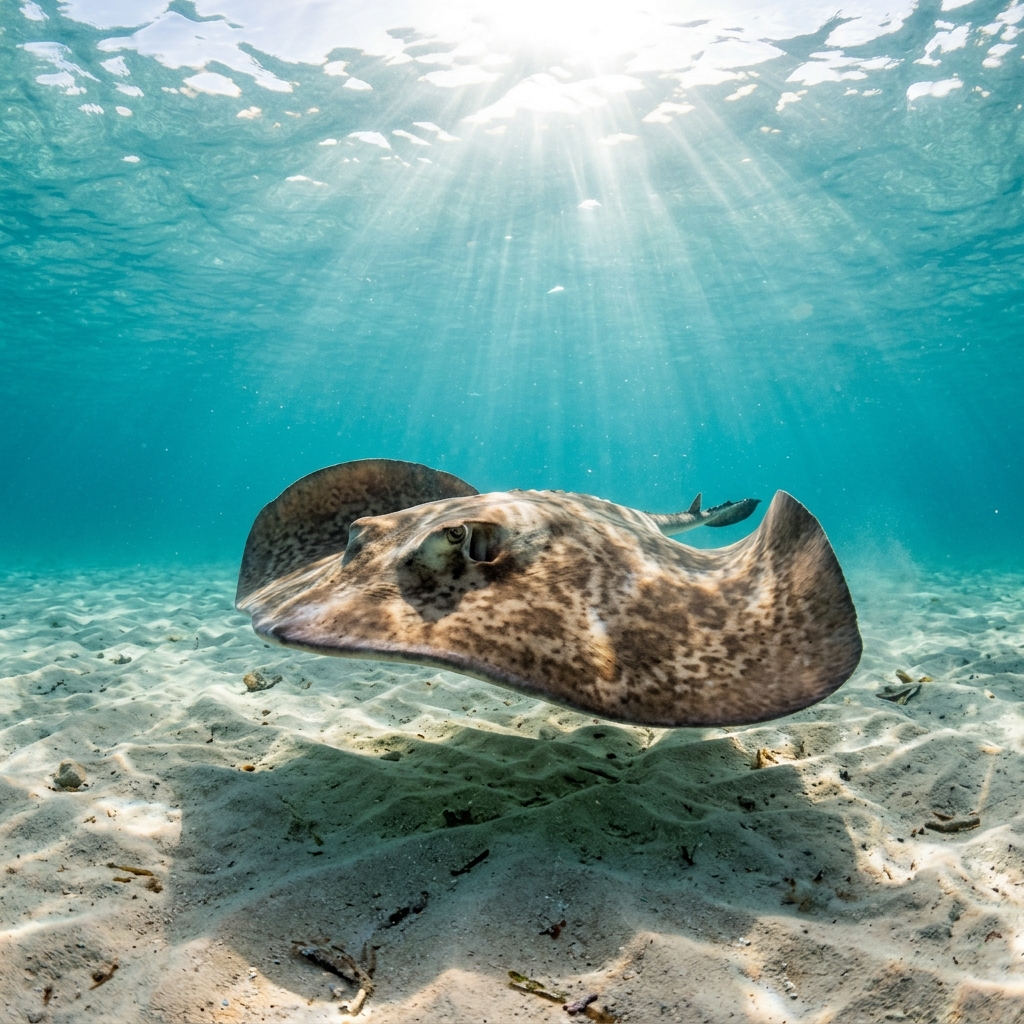
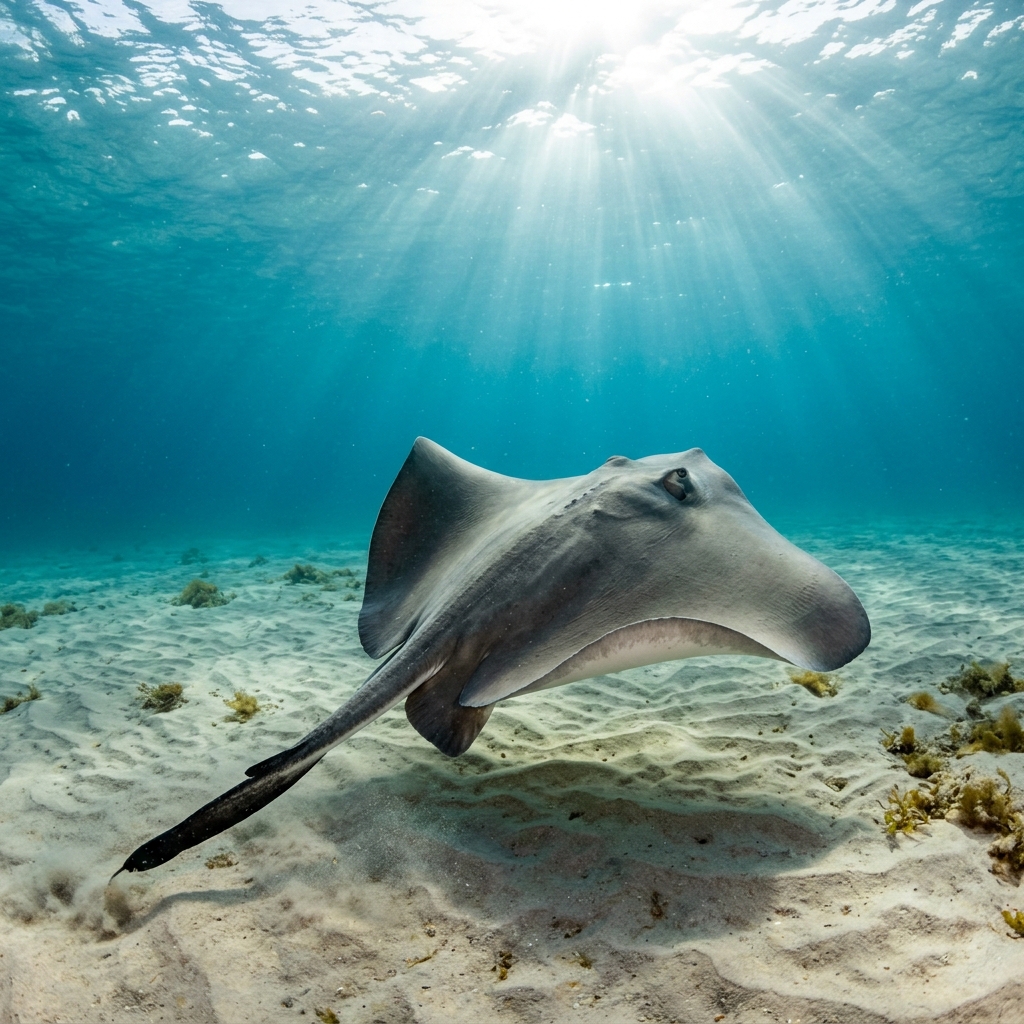
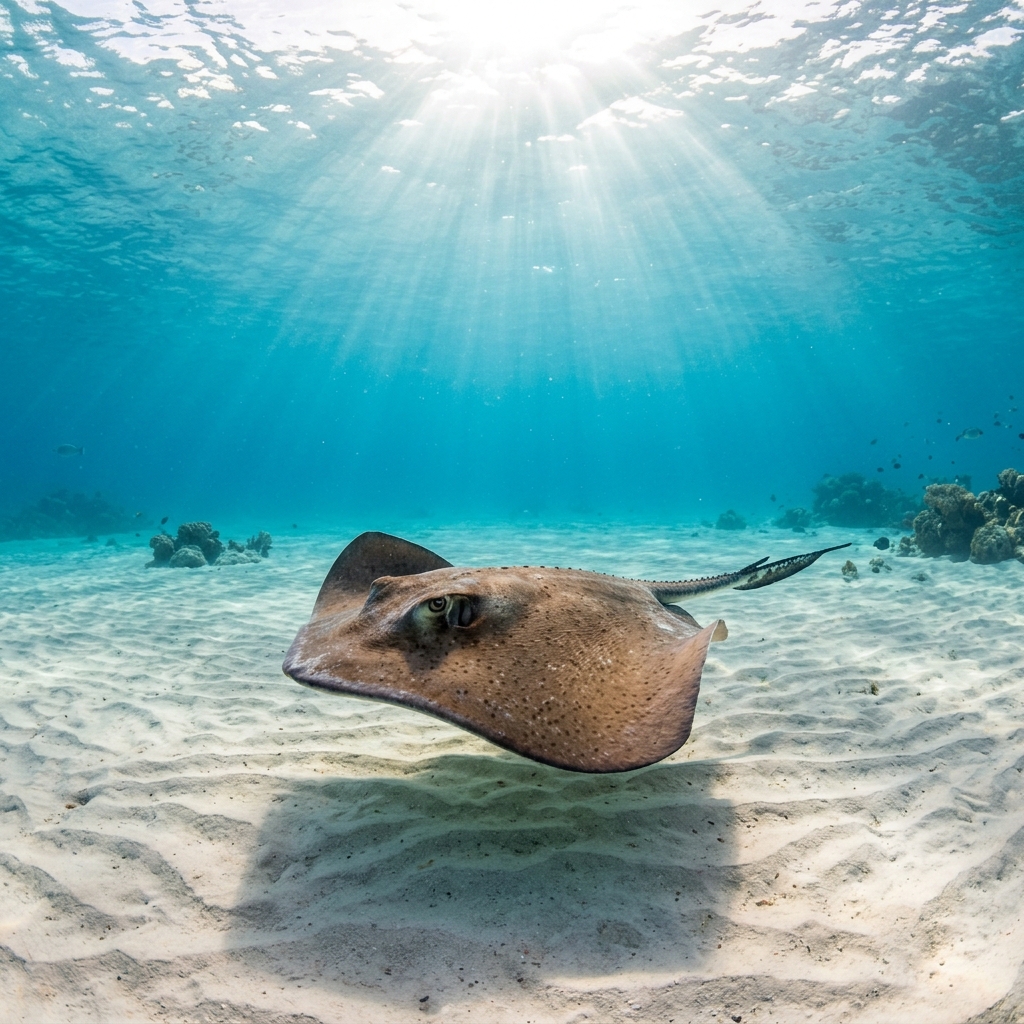
A flat, diamond-shaped disc is the key feature, uniformly grey-brown to olive on top with a pale underside and no patterning to confuse you. The tail is notably long, whip-like, and carries a venomous spine near its base. Disc width can reach roughly 60-70 cm on large adults, giving it a solid, plate-like presence when it glides over the sand. There are no spots, mottling, or wing-tip markings to break up the plain dorsal surface.
Common stingrays are typically found resting or slowly cruising just above sandy or mixed-sediment bottoms, often partially buried and blending into the substrate. They tend to tolerate a calm diver at a respectful distance but will glide away if approached too quickly or too closely. Encounters are usually solitary; finding two together at the same site in one dive would be noteworthy.
Like other members of its family, this ray is ovoviviparous (the embryos develop inside the mother, nourished by a yolk sac, and are born as fully formed miniature rays rather than hatched from eggs laid on the seabed).
There is not enough monthly data to point to a peak season, so treat it as a year-round possibility at the sites where it occurs. Its observed temperature window of roughly 18-23 °C fits the cool, stable Atlantic conditions found at the Canary Islands and Madeira throughout the year.
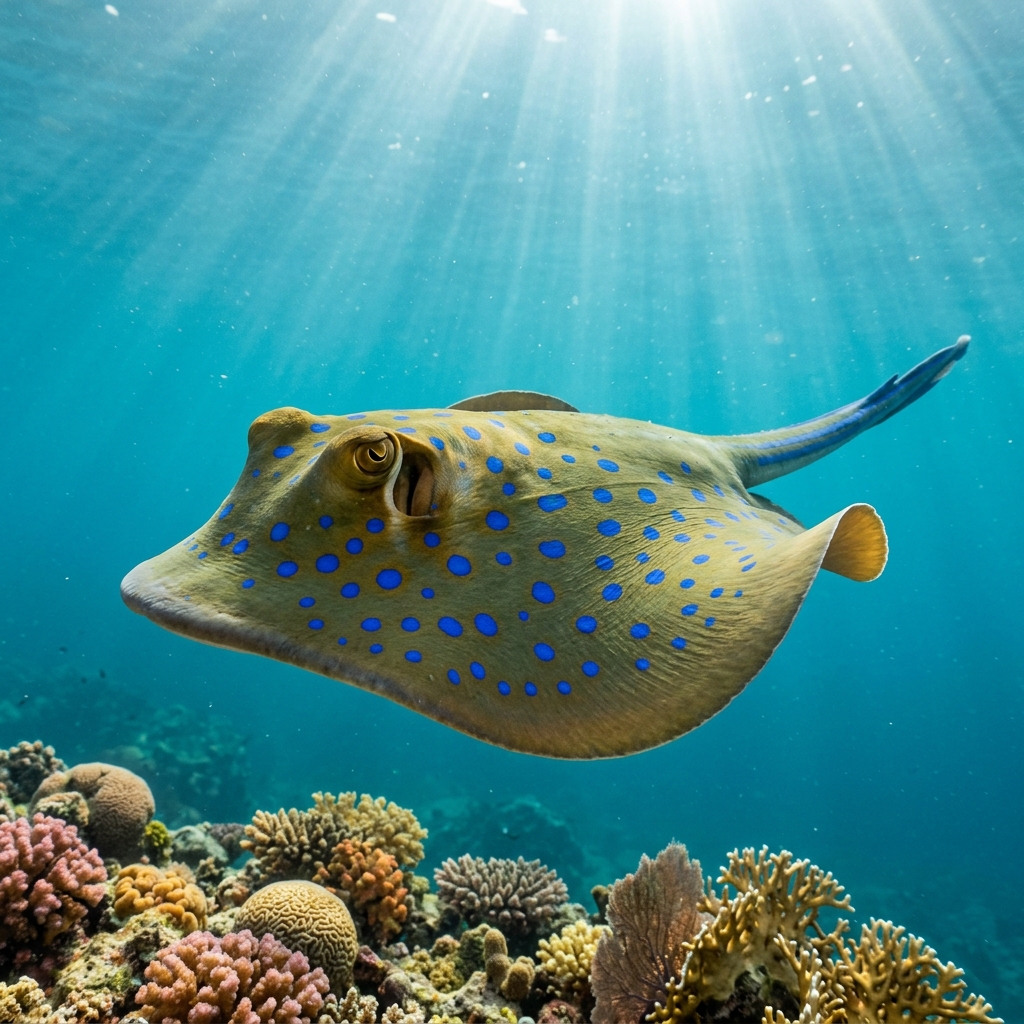
Reef neighbours a diver could mistake it for. Use the identification notes above to tell them apart.
The overwhelming majority of sightings come from the Canary Islands, with Tenerife, Lanzarote, El Hierro, and Fuerteventura all producing regular records. Madeira and Porto Santo are a strong second hub, while the Azores (particularly Faial and São Jorge) and the Costa Blanca in Spain round out the known range for divers.
Mapping where Common Stingray is logged…
The Canary Islands are by far the most reliable place, with strong records from Tenerife, Lanzarote, El Hierro, and Fuerteventura. Madeira and Porto Santo are a solid alternative, and the Azores plus the Costa Blanca in mainland Spain also produce sightings.
No clear seasonal peak has been identified from diver observations, so encounters are possible year-round at the sites where the species is known. Its preferred water temperature of roughly 18-23 °C is present at Canary Islands and Madeira dive sites throughout most of the year.
Look for a plain, unmarked grey-brown to olive diamond-shaped disc with no spots or mottling, and a very long whip tail with a venomous spine near the base. The lack of any patterning on the dorsal surface is the quickest clue separating it from similar Atlantic rays.
They are not considered dangerous to divers under normal circumstances. Like all stingrays, they carry a venomous tail spine used purely for defence, so the standard advice applies: do not touch, do not corner, and give them a clear escape route. An unprovoked sting is extremely unlikely.
Yes, they are listed as Vulnerable on the IUCN Red List. Bycatch in coastal fisheries is the main threat across their range. Logging your sightings with photos helps researchers monitor where populations still occur.
The Common Stingray is listed as vulnerable by the IUCN. Observe from a distance, avoid touching or feeding it, and report sightings to local marine research organisations.
The common stingray is assessed as Vulnerable on the IUCN Red List, largely due to heavy bycatch pressure across its range. If you see one, log the sighting with a photo and location to help track population health, and avoid any behaviour that might stress or displace it.
Site and sighting data is aggregated from diver logs, iNaturalist and GBIF. For taxonomy and conservation status:
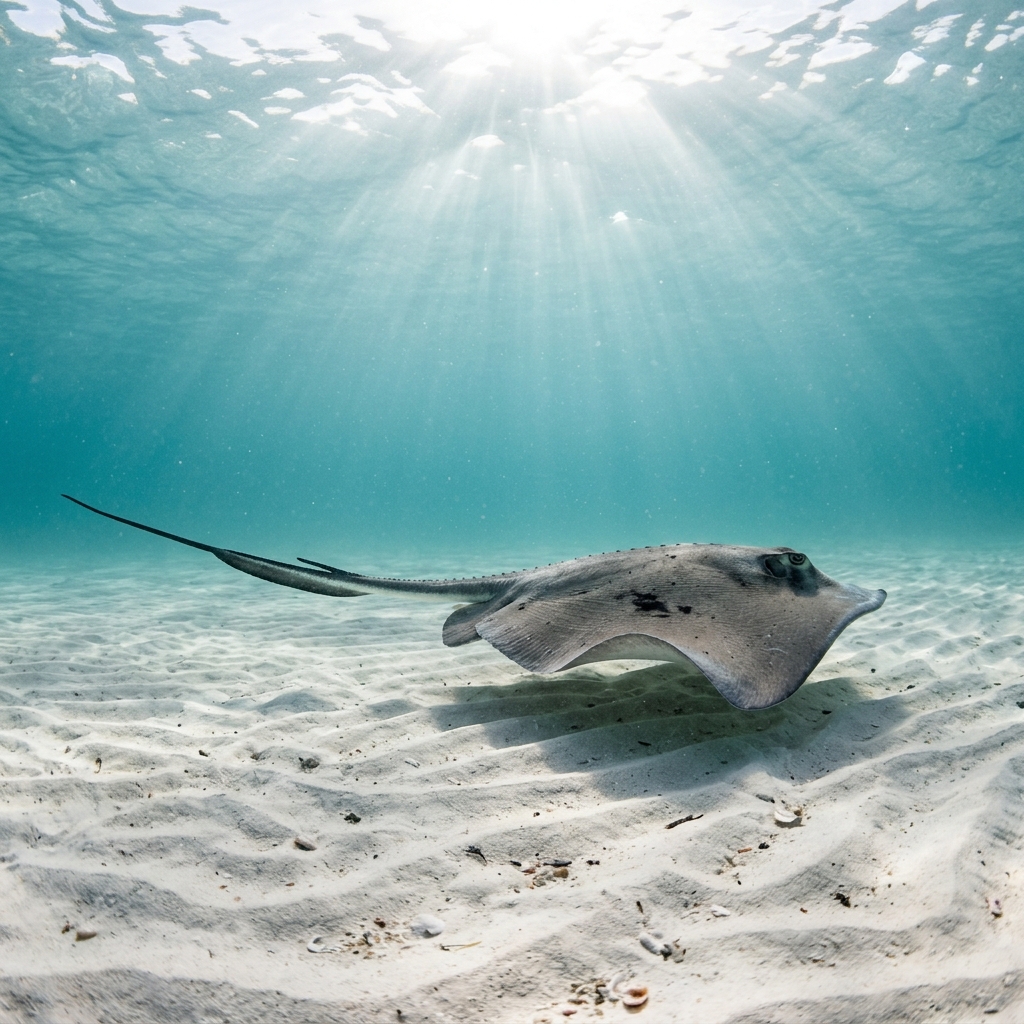
Whiptail Stingray
1,747 sites