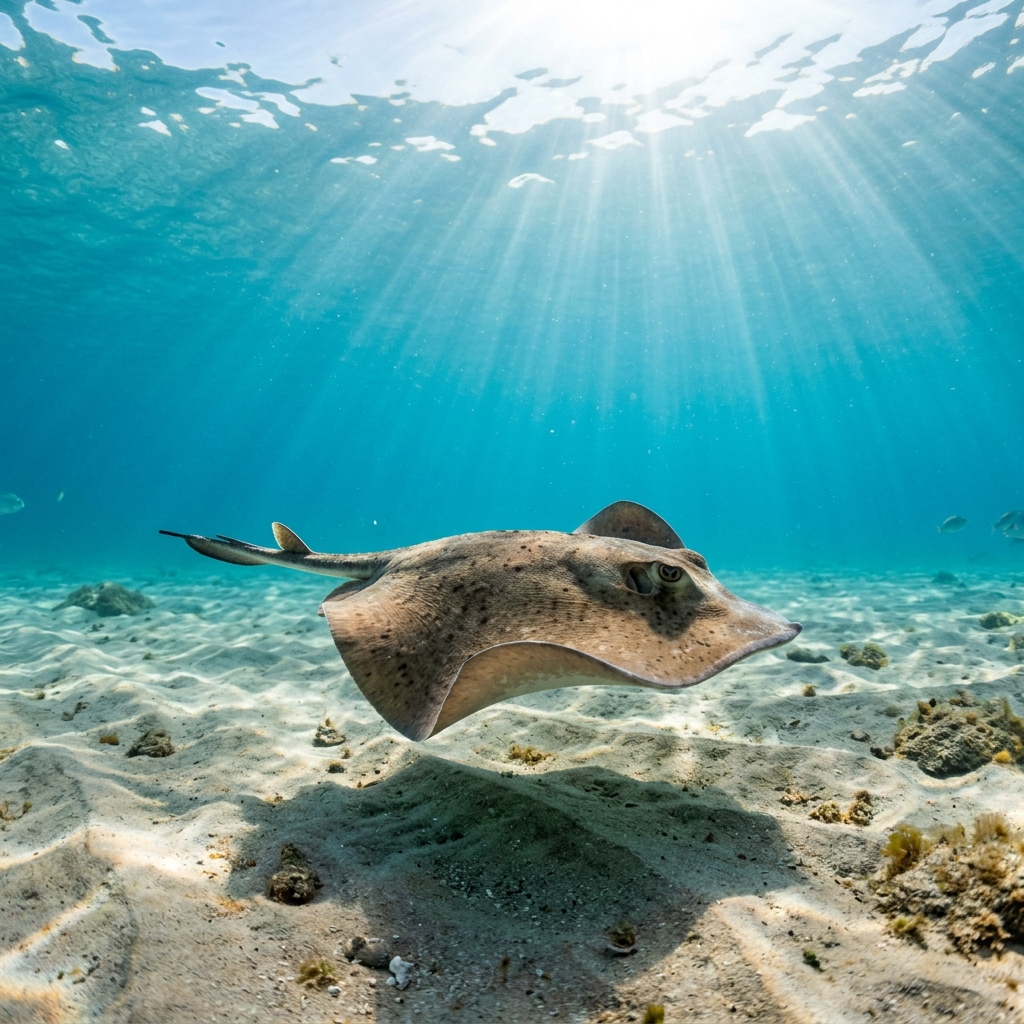
Urogymnus asperrimus
No tail spine, all attitude: spot this thornback ray year-round in the Maldives' Northern Atolls or Queensland's reefs.
Safety warning
It's listed as dangerous mainly on caution rather than an actual spine risk, since it lacks the venomous tail barb most stingrays carry. The real hazard is its rough, thorn-covered skin and its size if handled or stepped on, so keep hands off and give it room to move away undisturbed.
If you're stung
Venomous tail barbGeneral first-aid guidance, not a substitute for professional medical care. In an emergency, call your local emergency number.
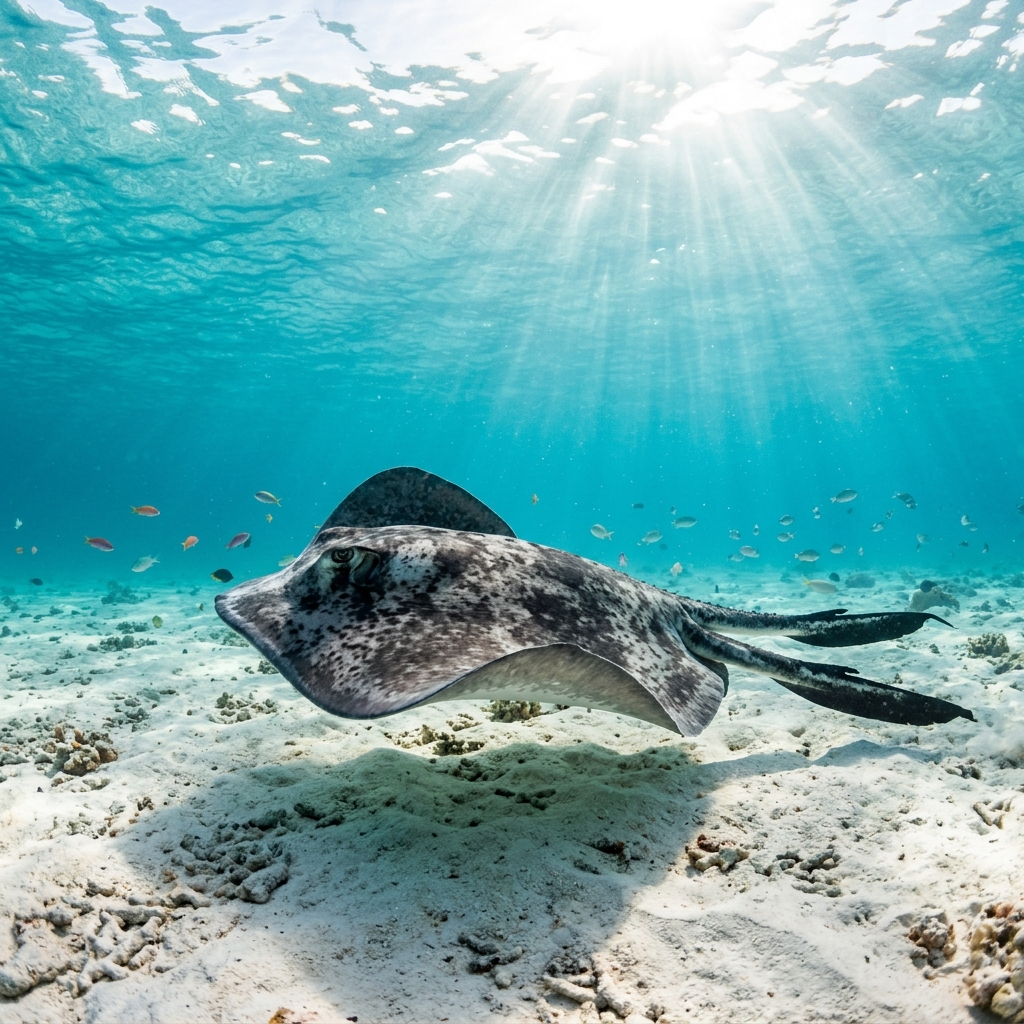
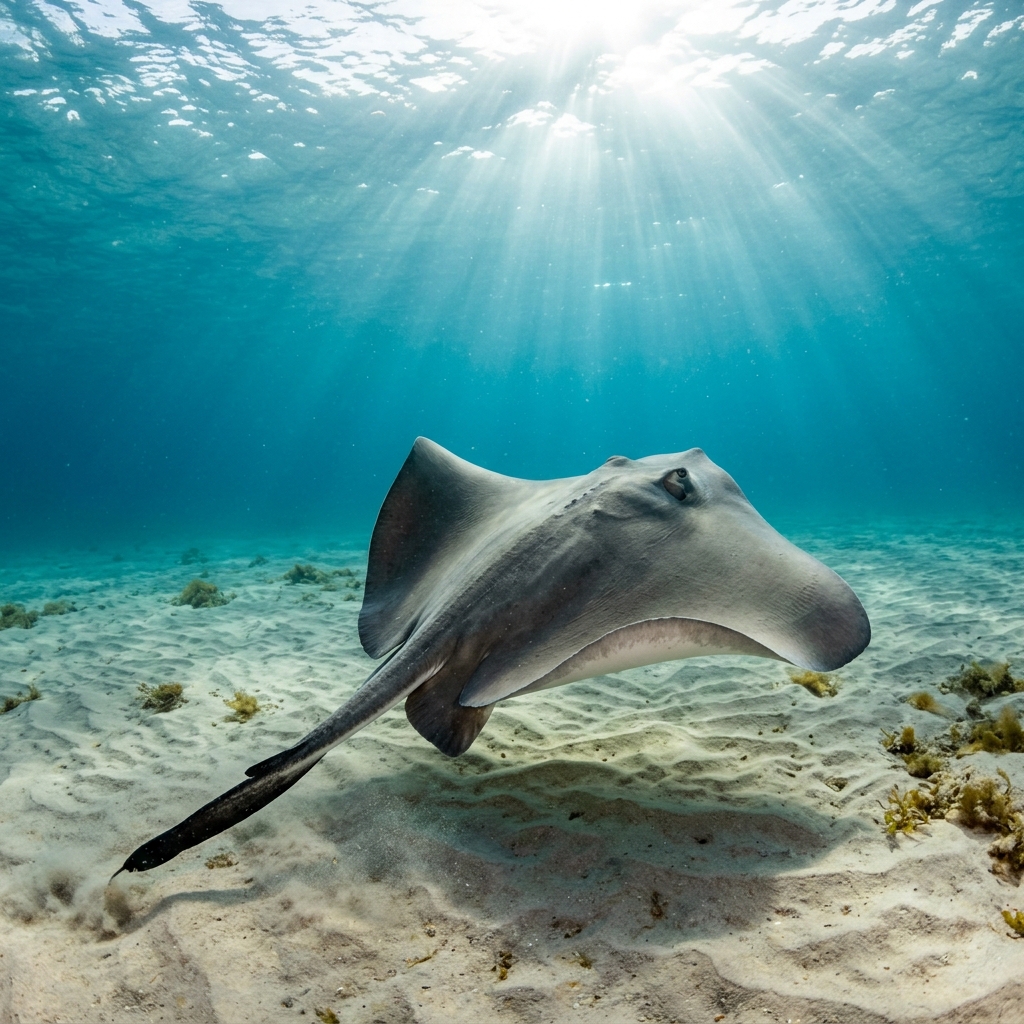
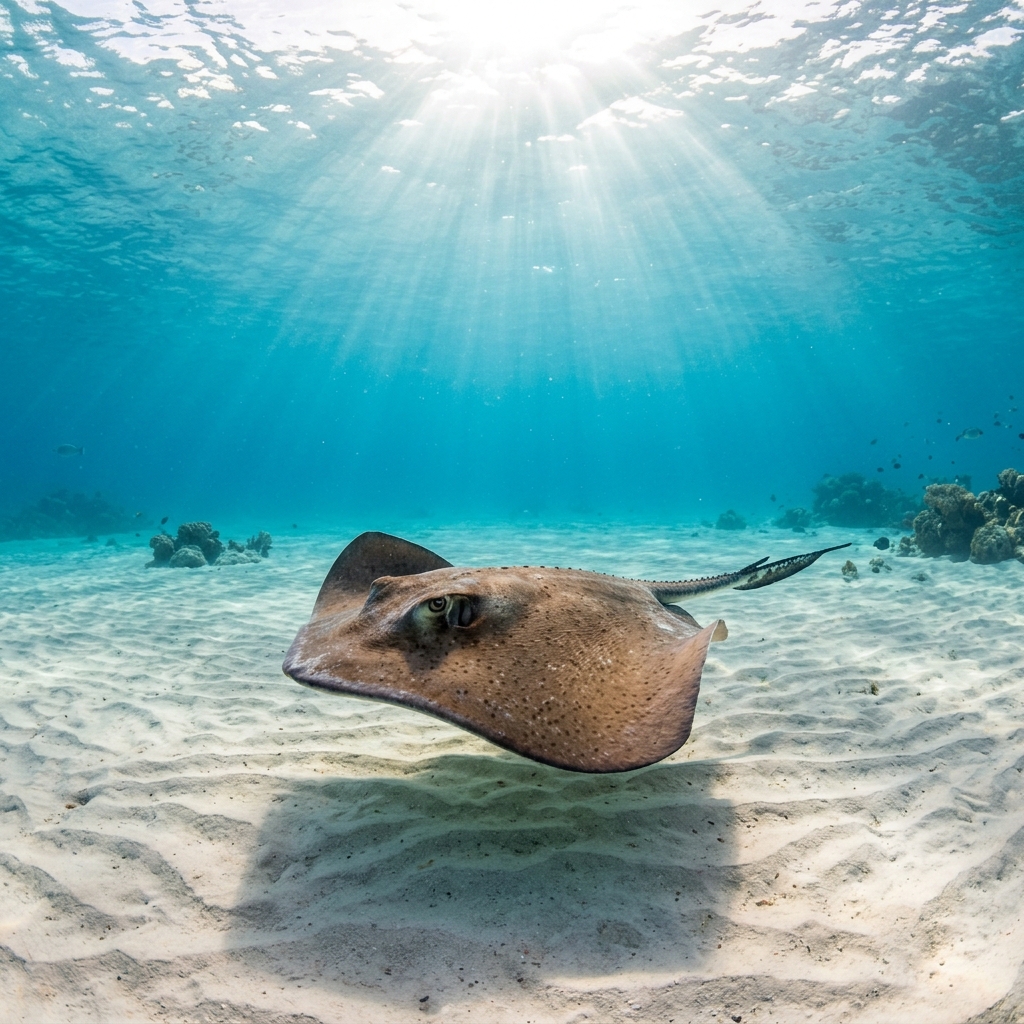
A broad, rounded diamond-shaped disc in grey to brown, roughly a metre across, covered top to bottom in small thorn-like denticles rather than smooth skin. There's no tail spine at all, which is the giveaway if you can get a clear look, and the tail itself is thick and short compared with most stingrays. It often lies half-buried in sand on the reef flat, so the textured, studded surface is usually the first thing you notice rather than the outline.
Usually found resting on open sand or rubble patches near reef structure, often partly covered, and it tends to stay put unless you get close, then moves off with a slow glide rather than a bolt. Divers log it as an uncommon find at most sites, so a sighting tends to come from careful scanning of sandy gutters and flats rather than expecting one on every dive. It's not a fish that schools or interacts, so most encounters are brief, solitary passes.
Unlike almost every other stingray you'll encounter, this species has no tail spine at all, relying instead on that thorny, denticle-covered skin as its main defence.
No clear seasonal pattern shows up in the data, and with a comfort range of roughly 23 to 29C it's on tropical reefs year-round, so any month you're diving the Maldives, Queensland or the Philippines is fair game.
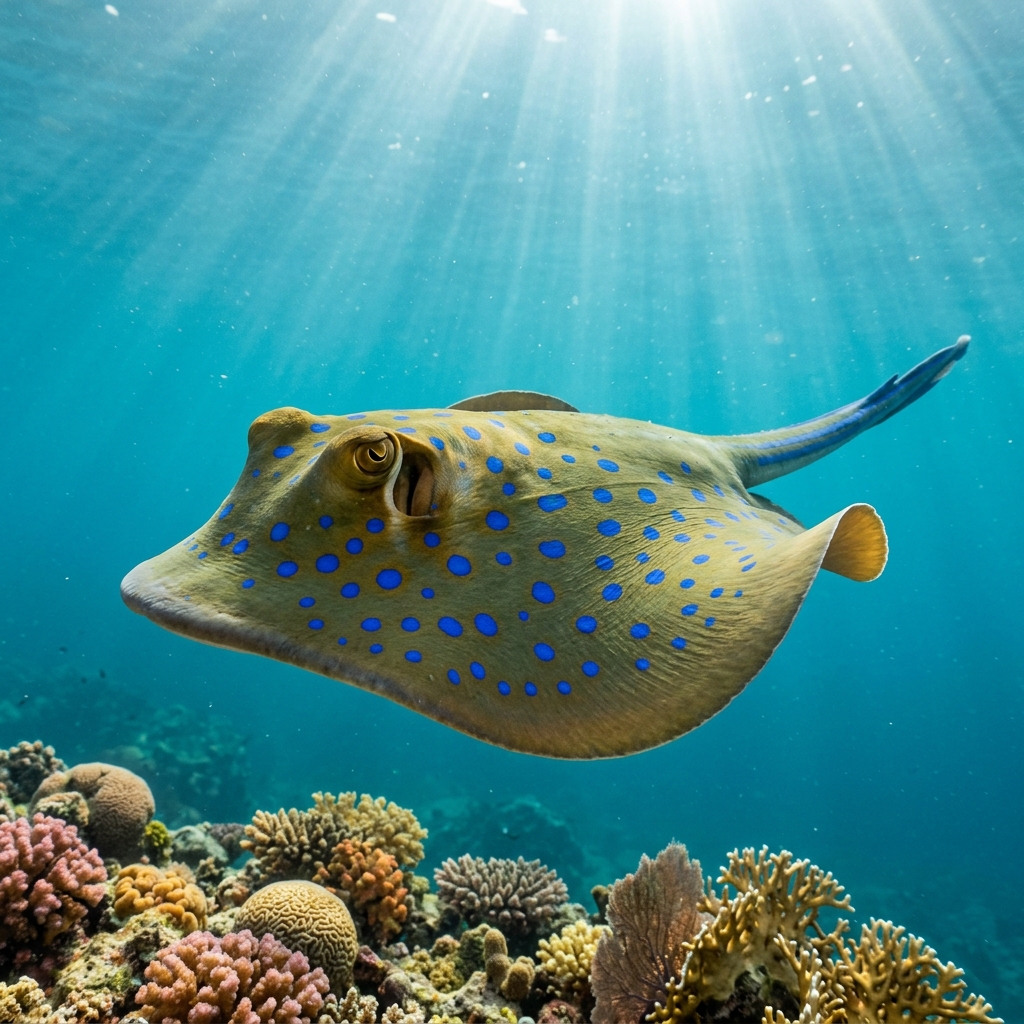
Reef neighbours a diver could mistake it for. Use the identification notes above to tell them apart.
Most reliably logged in the Maldives, especially the Northern and Southern Atolls, and in Queensland, Australia, with further sightings across the Philippines (Luzon, Palawan, Mindanao, Visayas) and Indonesia. Thailand, Malaysia, Egypt and Saudi Arabia also turn up records, so it's a broad Indo-Pacific and Red Sea presence rather than one hotspot.
Mapping where Porcupine Ray is logged…
Best logged in the Maldives (Northern and Southern Atolls) and Queensland, Australia, with regular sightings across the Philippines and Indonesia, plus scattered records in Thailand, Malaysia, Egypt and Saudi Arabia.
There's no strong seasonal signal in the sightings data, and its comfort range of about 23 to 29C keeps it on reefs year-round, so it's a case of diving the right sandy habitat rather than timing a season.
They're marked as a caution species but carry no tail spine, unlike most stingrays. The risk is mostly from their rough, thorny skin if handled, so watch rather than touch.
Look for a rounded grey-brown disc about a metre across, covered in small thorn-like bumps, lying on sand with a short thick tail and no visible spine.
They typically reach around 102cm across the disc, making them a solid mid-sized ray rather than a giant.
They're one of the few stingrays with no tail spine at all, relying instead on rough, denticle-covered skin for defence rather than a venomous barb.
Site and sighting data is aggregated from diver logs, iNaturalist and GBIF. For taxonomy and conservation status:
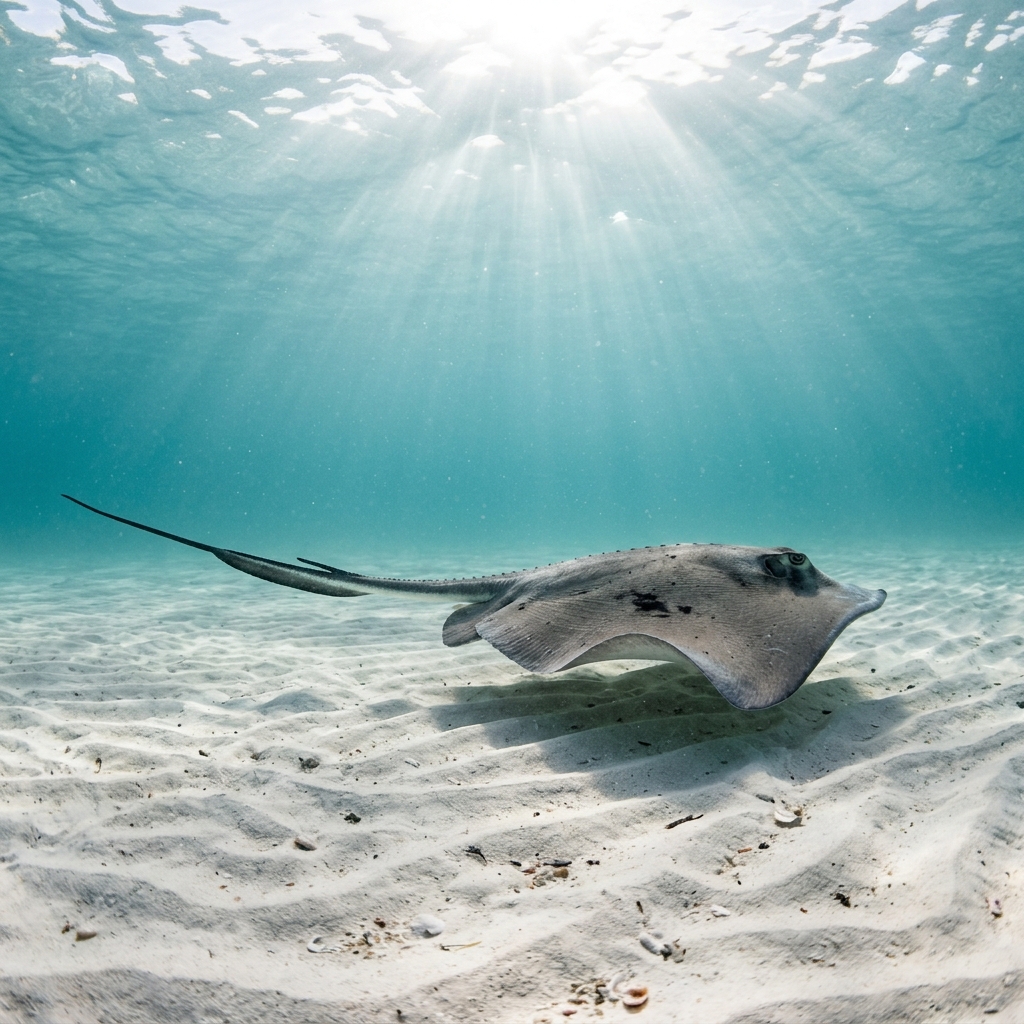
Whiptail Stingray
1,747 sites