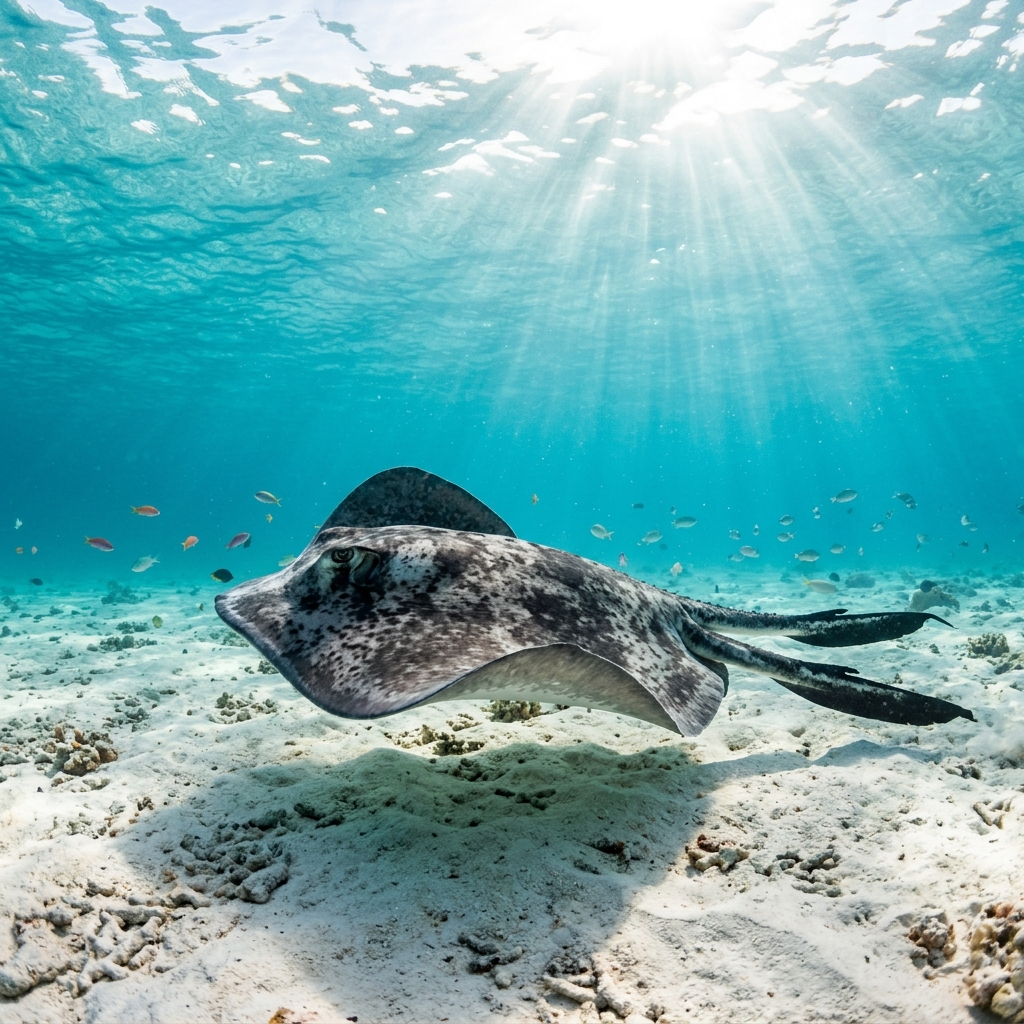
Taeniurops meyeni
Spot marble rays across the Philippines, Indonesia and Queensland reefs. Know what to look for, when to go, and how to stay safe around this venomous ray.
Safety warning
Like all stingrays, marble rays carry one or more serrated venomous spines on the tail, capable of causing a serious puncture wound. The risk is almost entirely a result of accidental contact, so never kneel or place hands on the sand near a resting ray, and avoid hovering directly above one. Give it a clear exit route and let it move away on its own terms.
If you're stung
Venomous tail barbGeneral first-aid guidance, not a substitute for professional medical care. In an emergency, call your local emergency number.
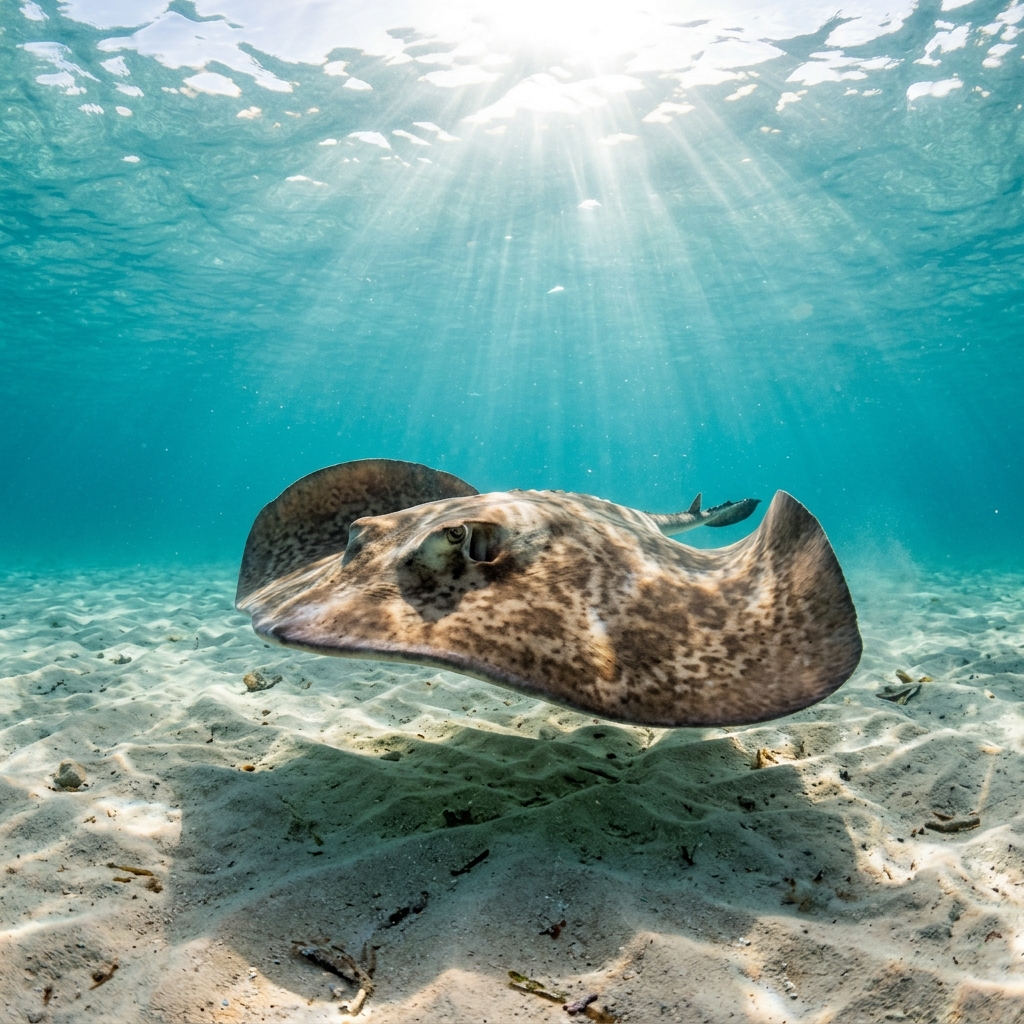
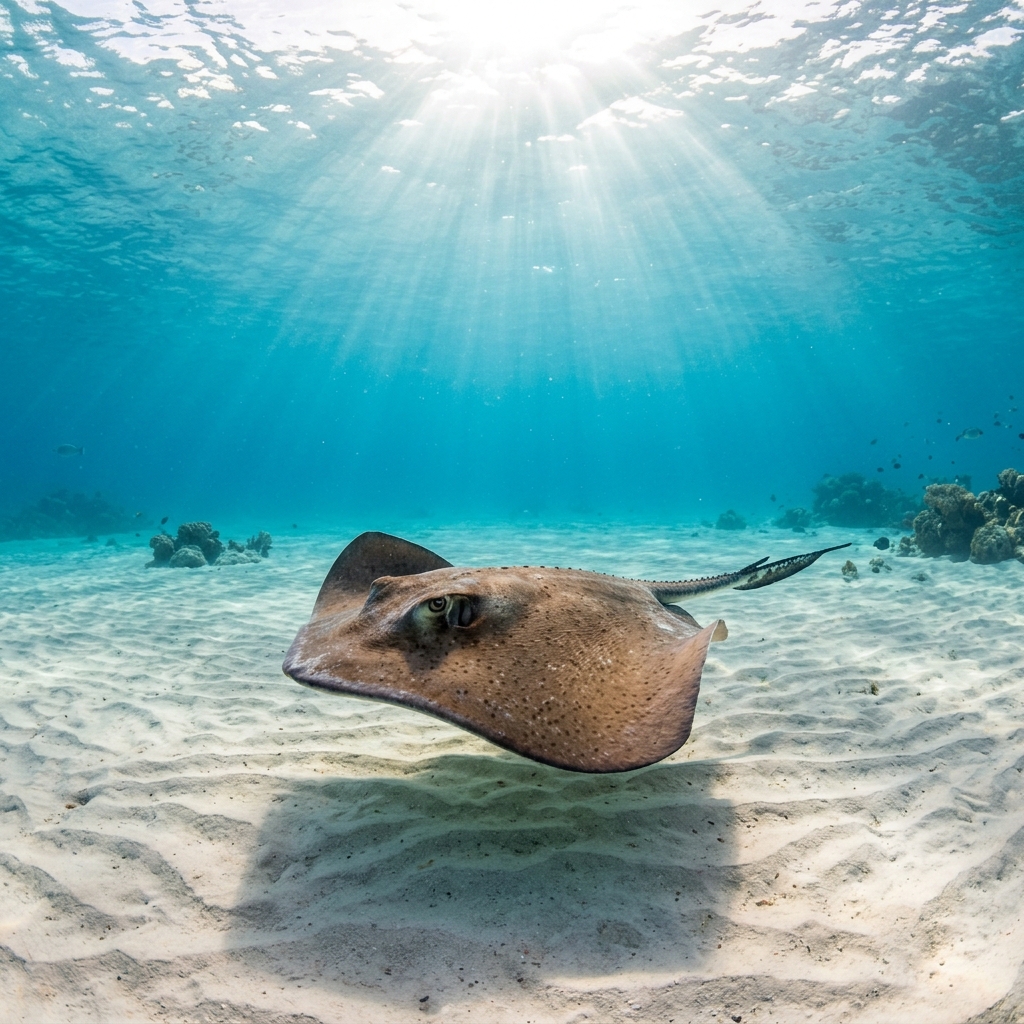
A large, disc-shaped stingray covered in a bold jigsaw pattern of dark blotches on a pale grey or white background, making it one of the most visually distinctive rays on the reef. At up to 230 cm disc width, it is substantially bigger than most other stingrays you'll encounter. The thick, relatively short tail carries a serrated venomous spine, and the underside is white with dark edges to the disc. That marbled dorsal pattern is the key field mark; no other common reef stingray looks quite like it.
Marble rays are most often found resting motionless on sandy patches or rubble between coral heads, where their marbled pattern provides surprisingly effective camouflage against broken substrate. When approached calmly they tend to sit tight, giving divers a good look, but a clumsy approach will send them gliding off at speed. They forage actively too, using their muscular disc to pin and excavate prey from the sand, so watch for one that is actively moving low over the bottom with small fish hovering nearby to pick up scraps.
Marble rays are ovoviviparous (embryos develop inside the mother, nourished by yolk rather than a placenta), typically producing small litters of live pups. This slow reproductive rate is one reason populations are slow to recover from pressure.
Seasonality data from Southern Hemisphere sites points to October through March as the most productive window. In the tropical waters of the Philippines and Indonesia, where temperatures sit comfortably between 23 and 29 °C, sightings are reported year-round.
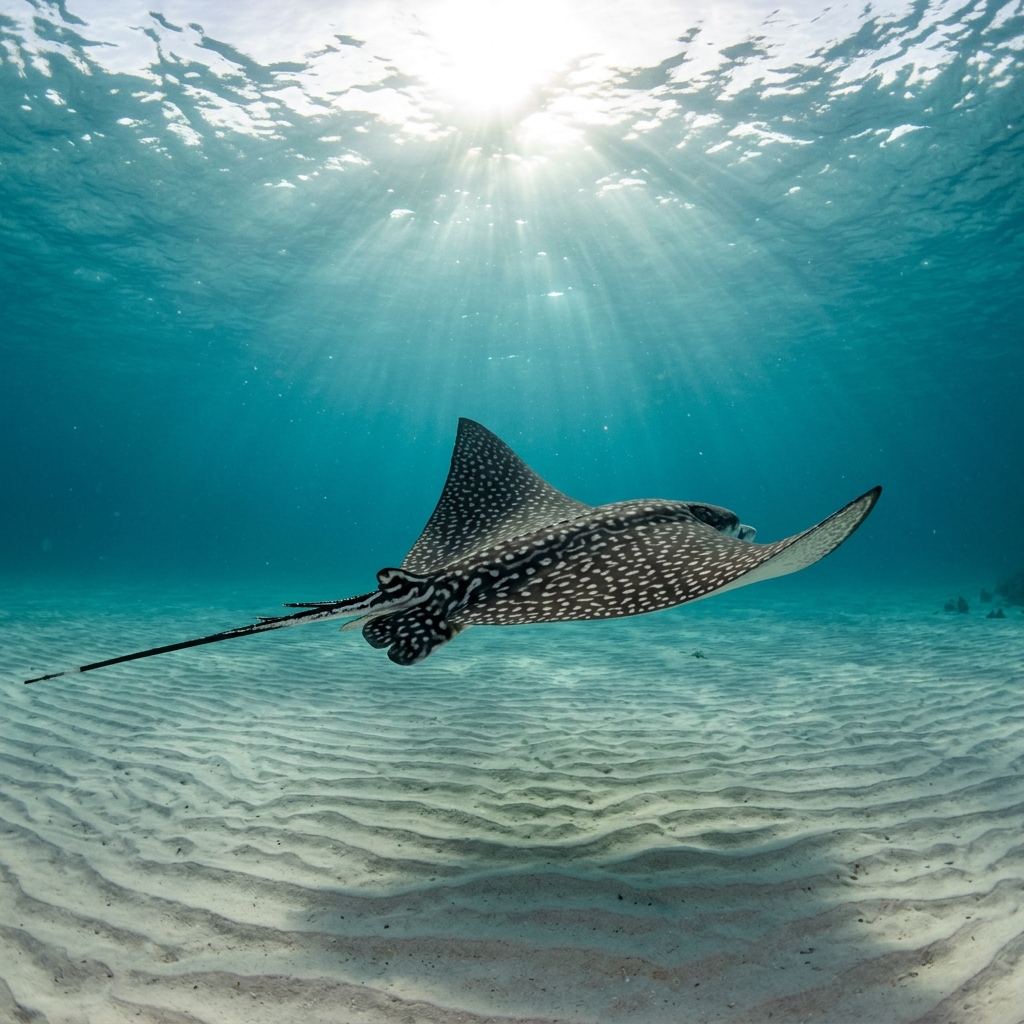
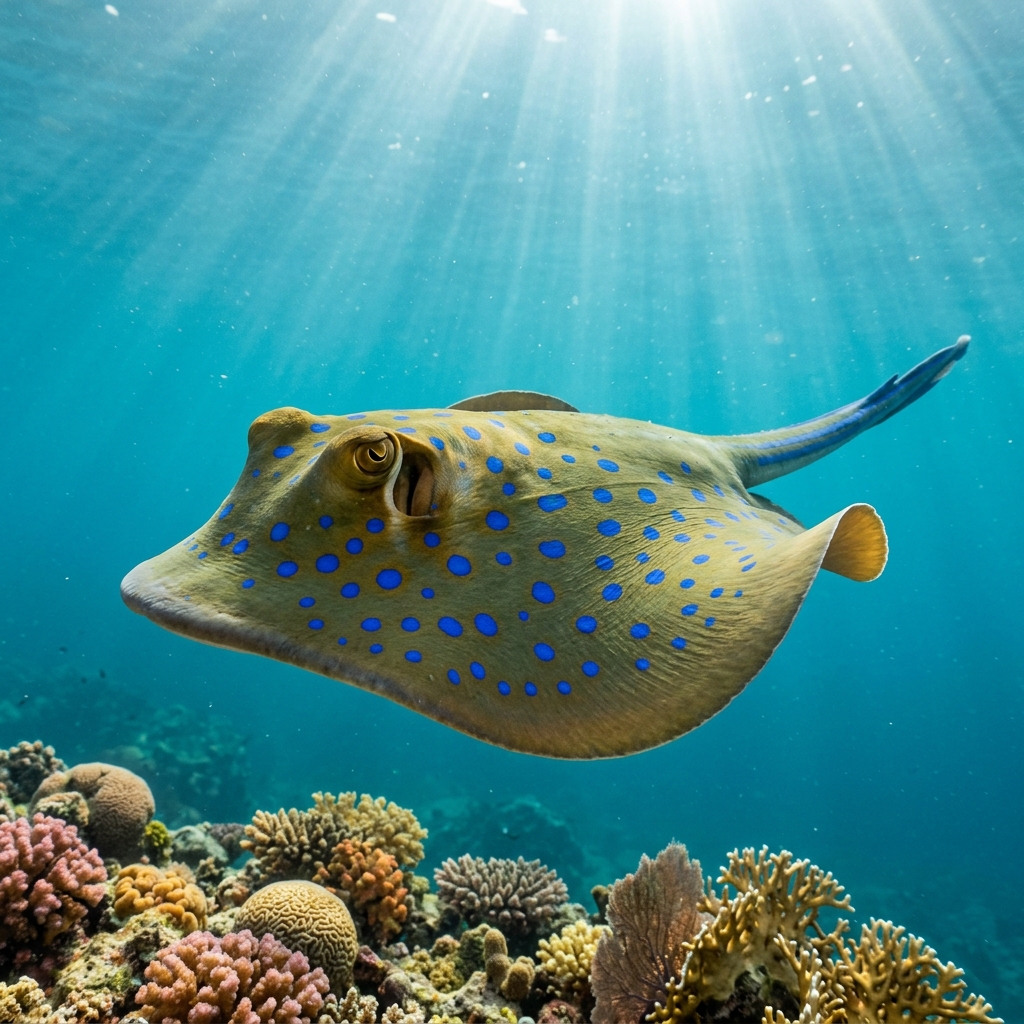
Reef neighbours a diver could mistake it for. Use the identification notes above to tell them apart.
Most commonly logged in the Philippines and Indonesia, with the Visayas, Palawan and Apo Reef, and the Maluku and Papua regions standing out as reliable spots. Australia is another strong area, particularly Queensland and Western Australia. Mozambique and Madagascar represent the best chances in the western Indian Ocean.
Mapping where Marble Ray is logged…
The Philippines and Indonesia offer the greatest number of logged sites, with standout regions including the Visayas, Palawan and Apo Reef, and the Maluku and Papua islands. Queensland and Western Australia are strong options in the Pacific, while Mozambique and Madagascar are the go-to destinations if you are diving the western Indian Ocean.
In Southern Hemisphere destinations, sightings concentrate between October and March. Across the tropical Philippines and Indonesia, where water temperatures stay within their preferred range year-round, you have a reasonable chance in any month, though individual site conditions vary.
They can be. Marble rays carry venomous tail spines that can inflict a serious wound if a diver accidentally makes contact. Maintain a respectful distance, never place hands on the sand near a resting ray, and avoid hovering above it. Behave calmly and the risk is very low.
Look for the bold jigsaw or mosaic pattern of dark irregular blotches covering the entire upper surface of a large, broad disc. No other common reef stingray shares this marbled look. Size is also a clue; at up to 230 cm across, this is one of the largest stingrays on the reef.
Disc width reaches around 230 cm in large adults, making them one of the bigger stingrays a diver is likely to encounter on an Indo-Pacific reef. Their bulk and broad disc make them visually imposing even when resting flat on the sand.
They are listed as Vulnerable by the IUCN. Slow reproduction means populations recover poorly from fishing pressure and bycatch. Sighting reports from divers contribute to monitoring efforts, so logging your encounters on citizen-science platforms is useful.
The Marble Ray is listed as vulnerable by the IUCN. Observe from a distance, avoid touching or feeding it, and report sightings to local marine research organisations.
Listed as Vulnerable on the IUCN Red List, marble rays face pressure from targeted fishing and bycatch across much of their Indo-Pacific range. Divers can help by reporting sightings through platforms like iNaturalist, avoiding any physical contact, and supporting reef-protection initiatives in the regions where they dive.
Site and sighting data is aggregated from diver logs, iNaturalist and GBIF. For taxonomy and conservation status:
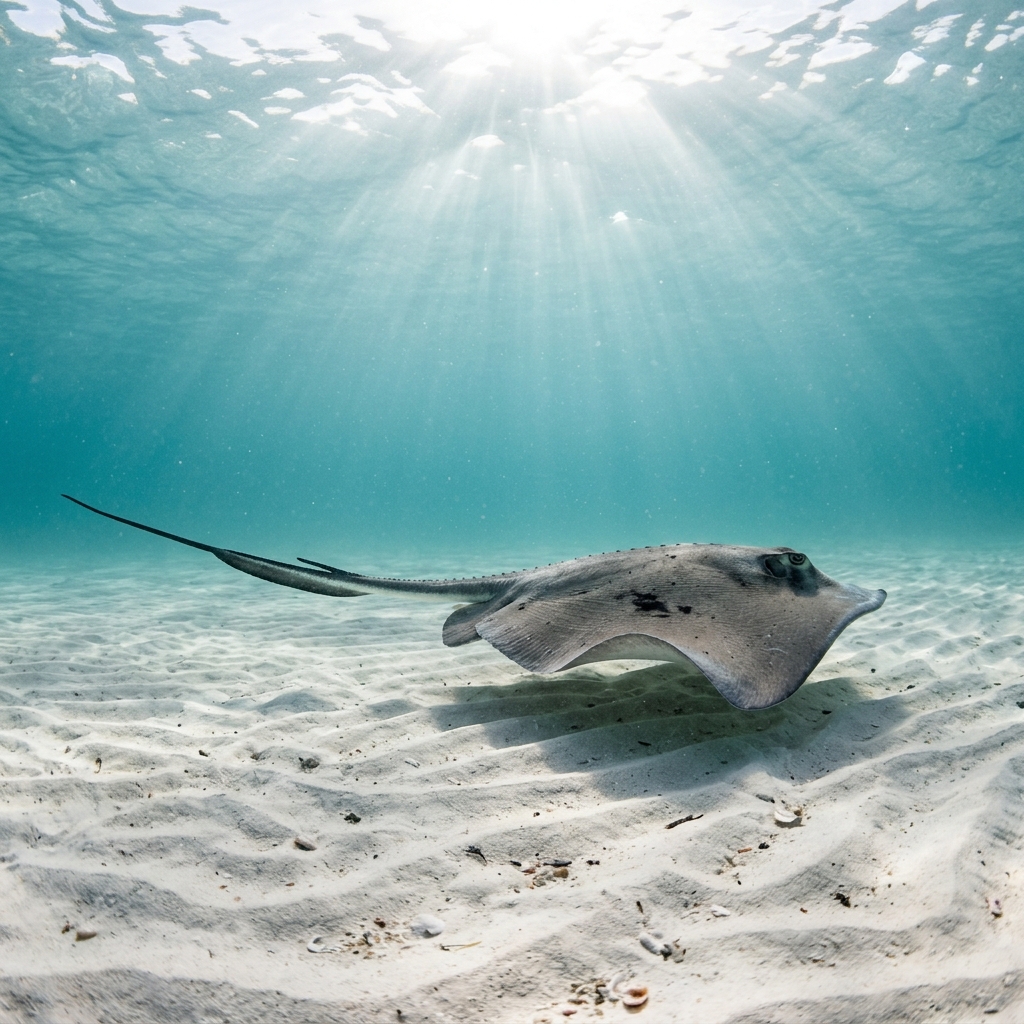
Whiptail Stingray
1,747 sites