Amblyeleotris guttata
Pale, spot-studded goby that shares a burrow with a shrimp; most reliably logged across the Visayas in the Philippines and Viti Levu, Fiji.
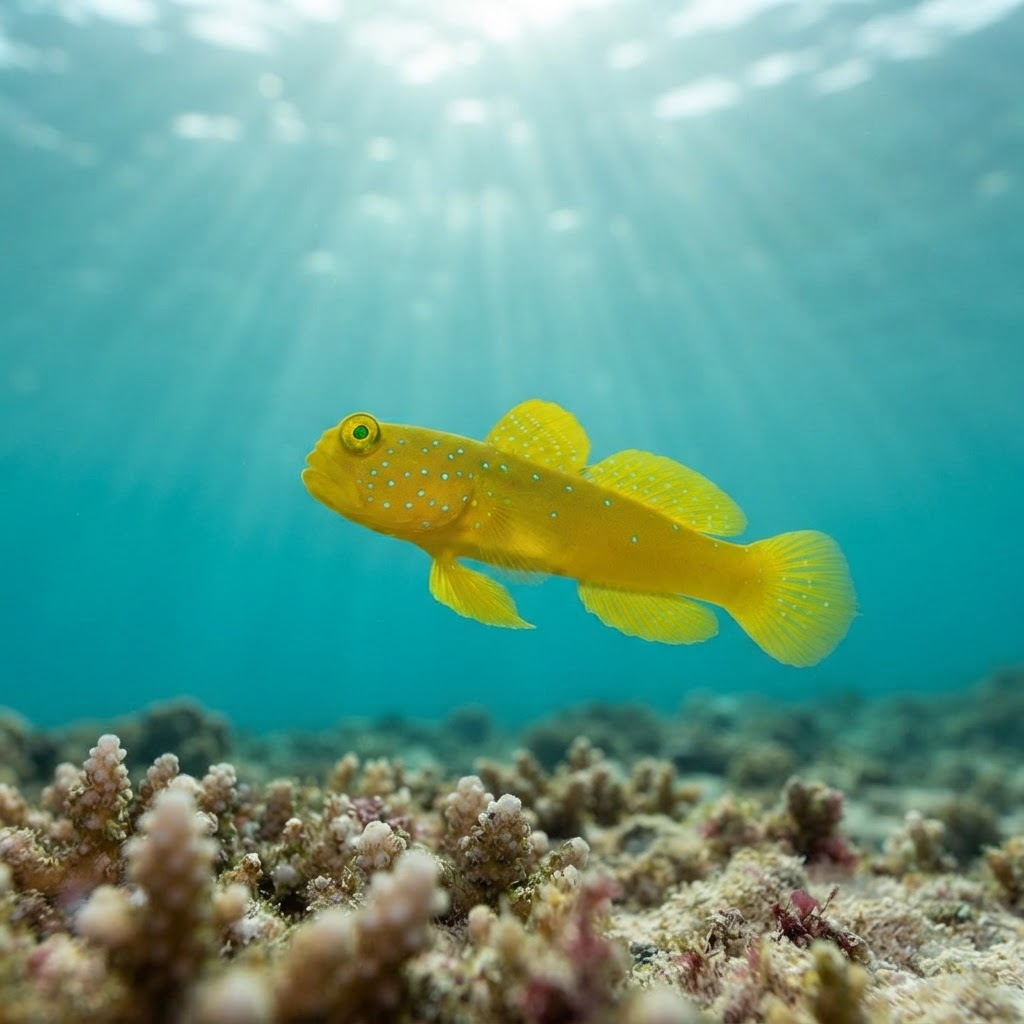
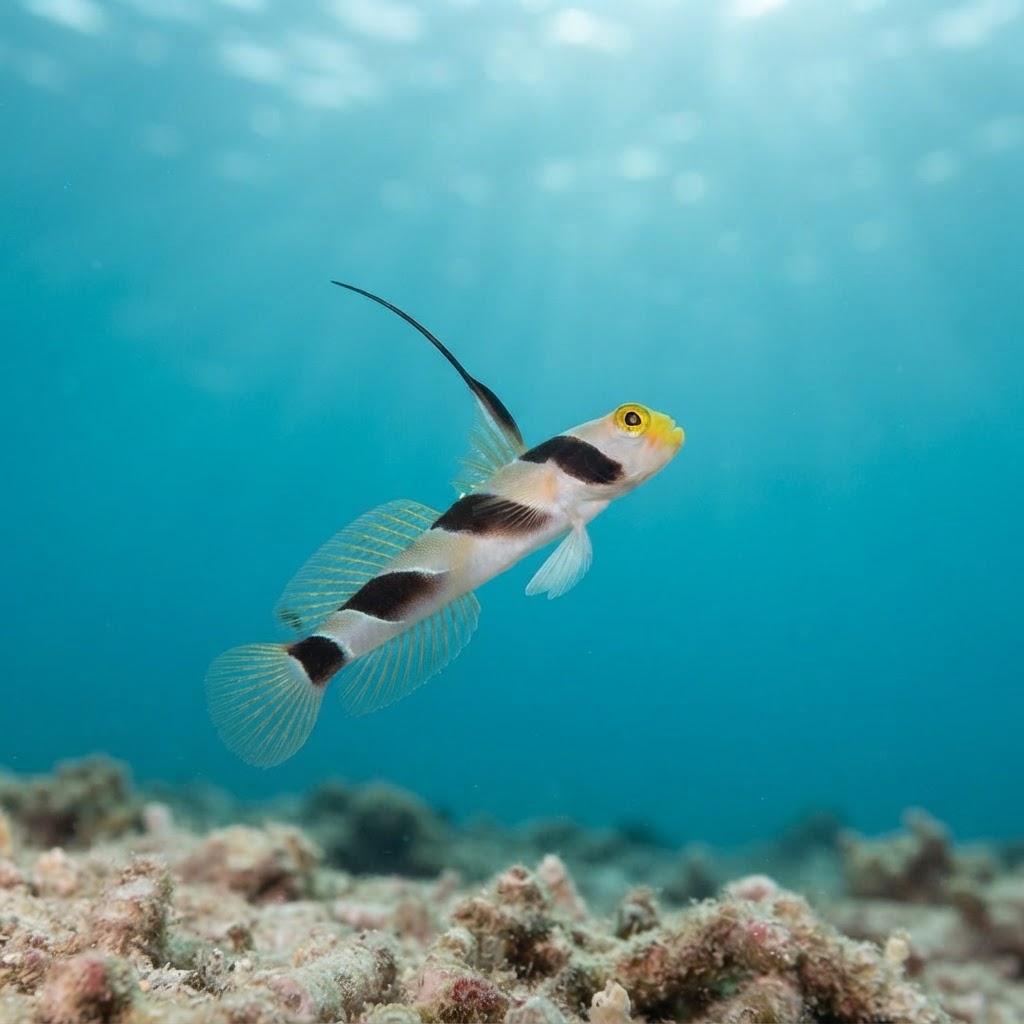
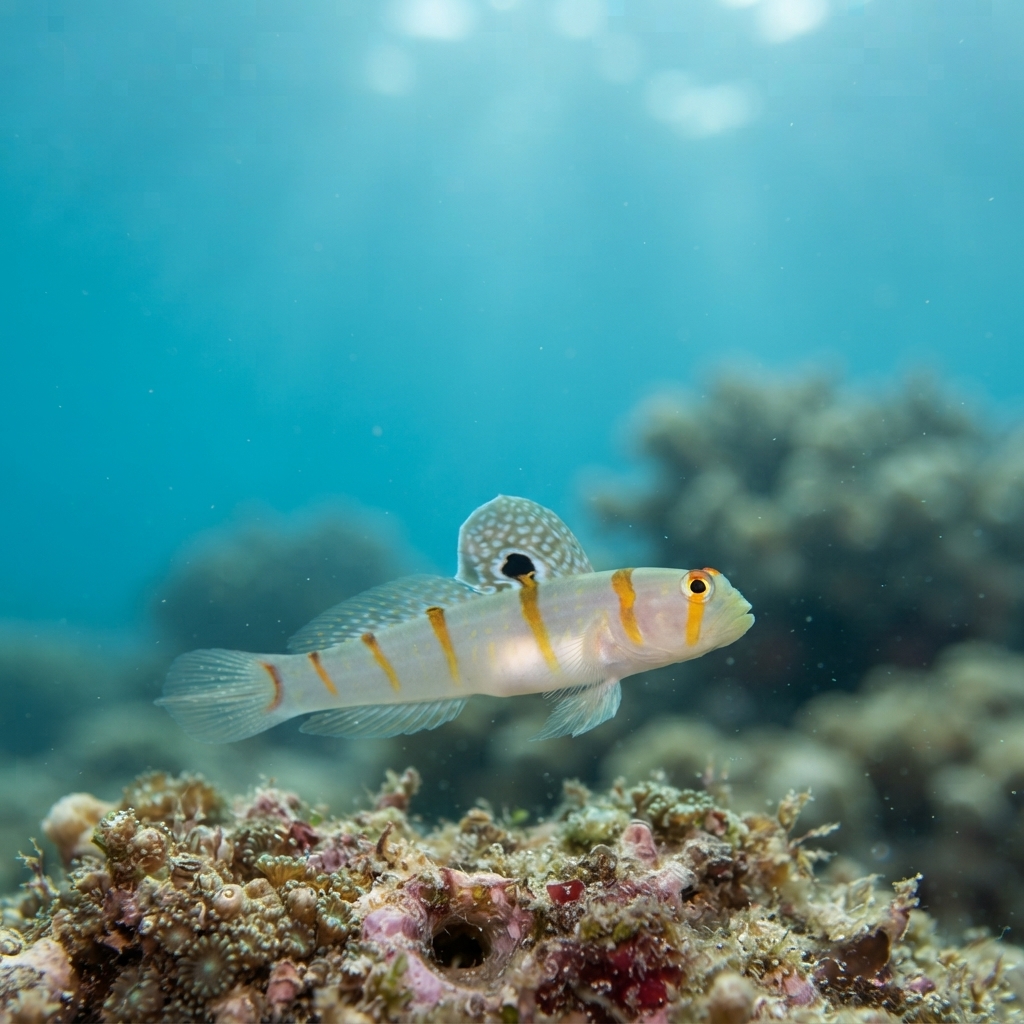
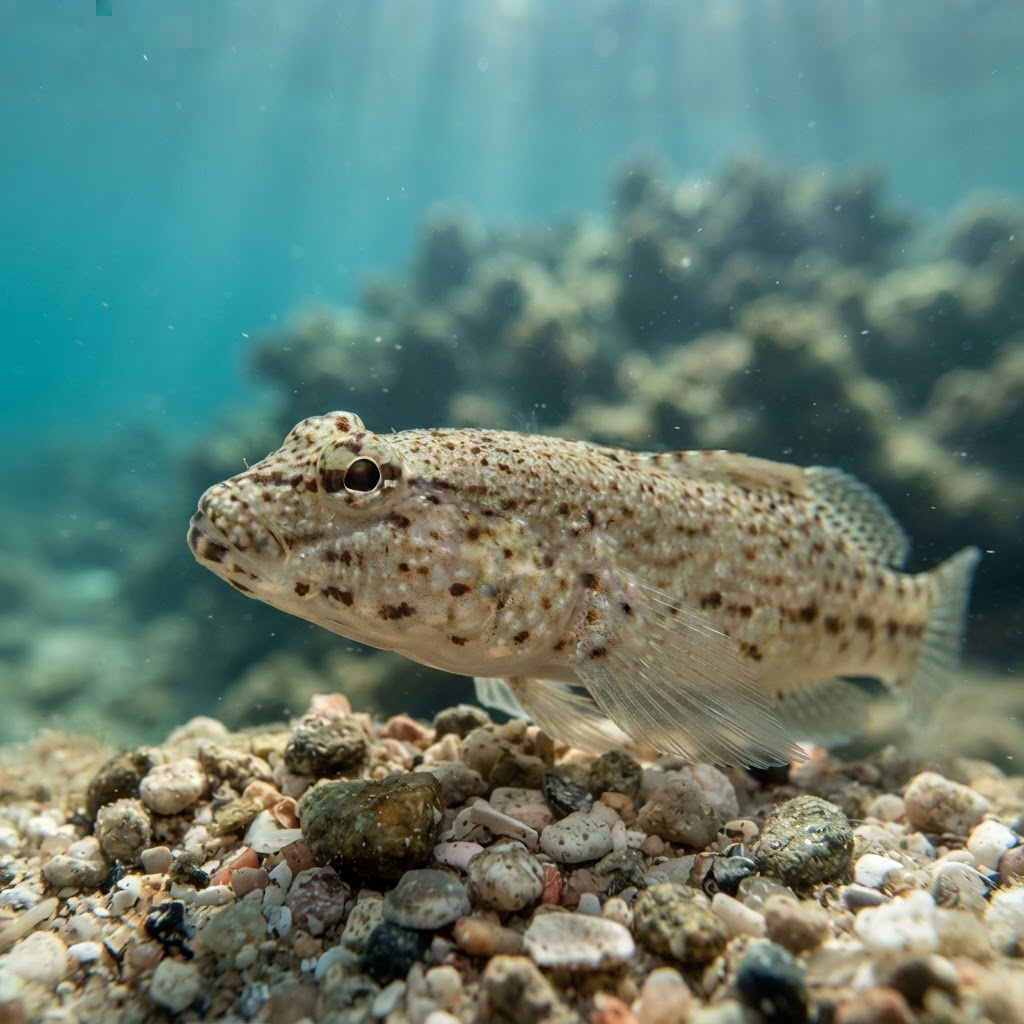
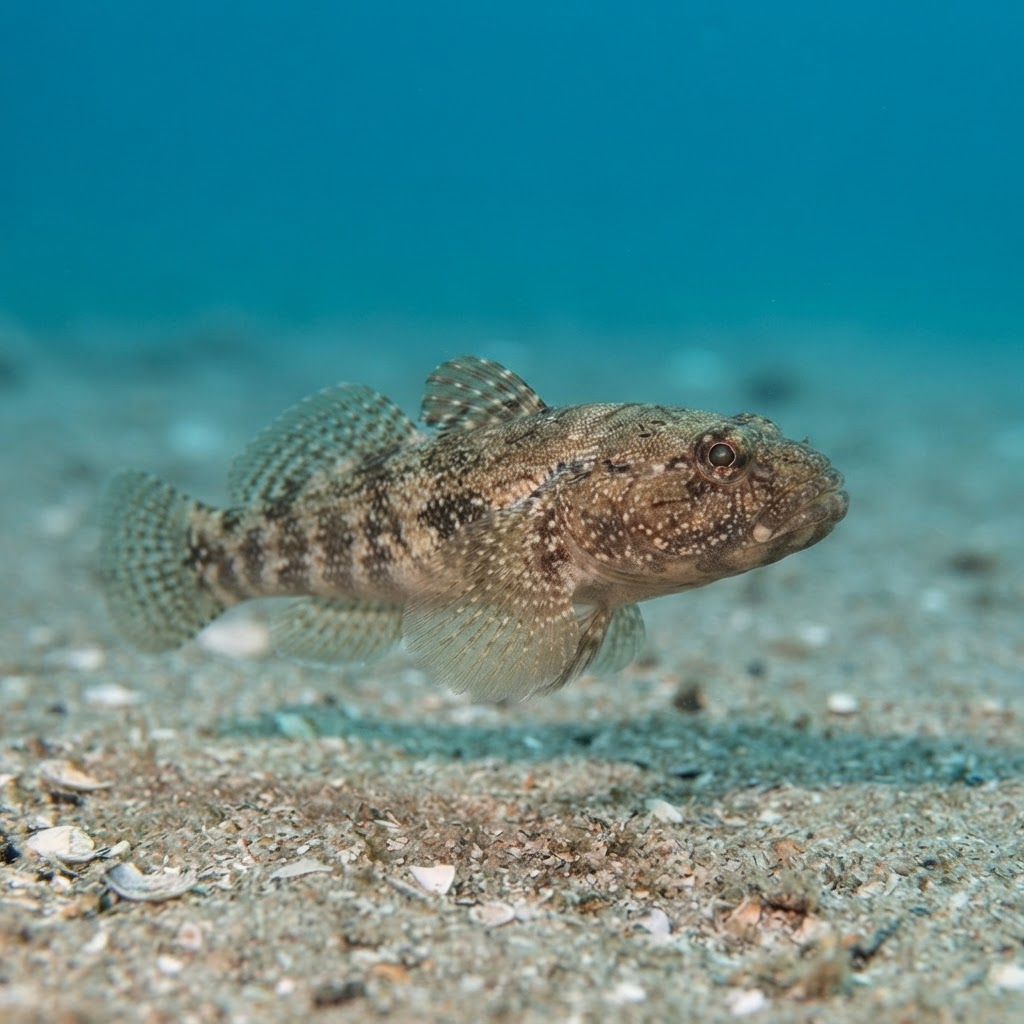
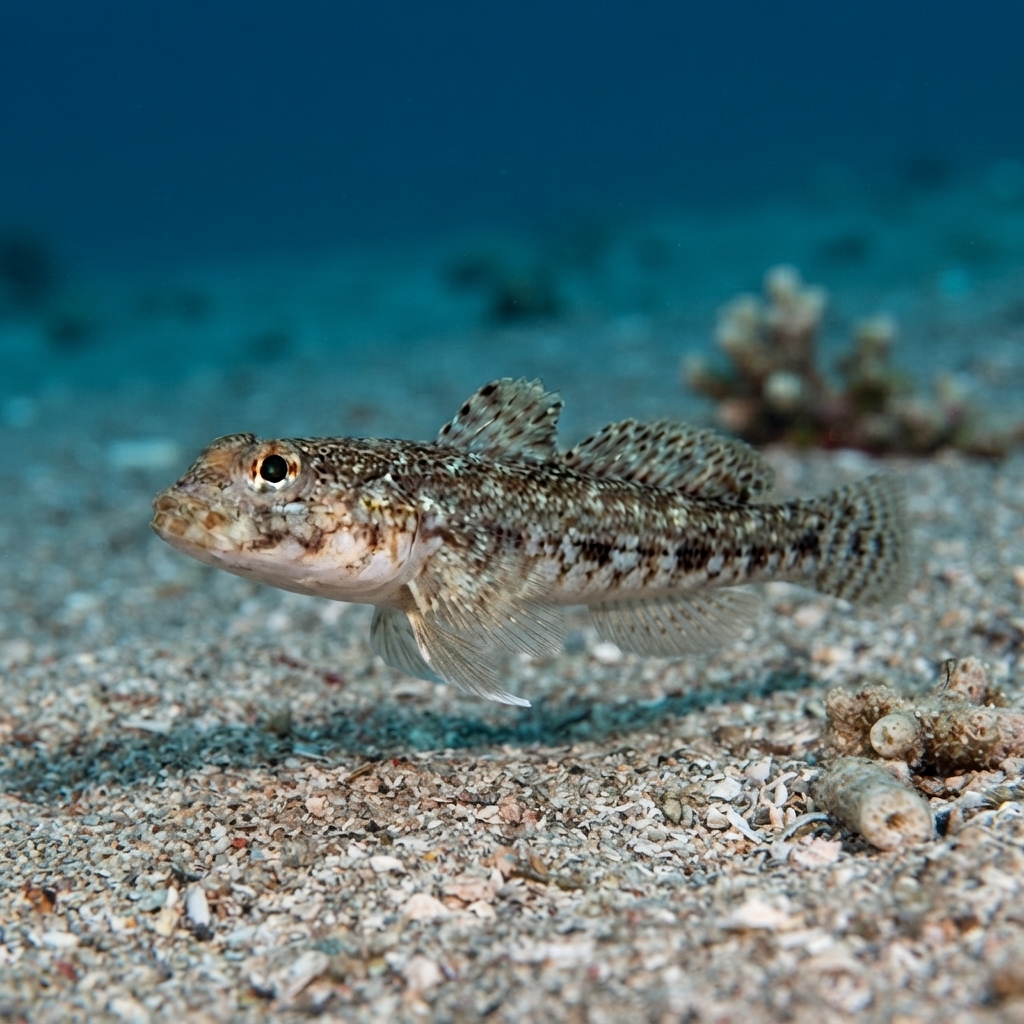
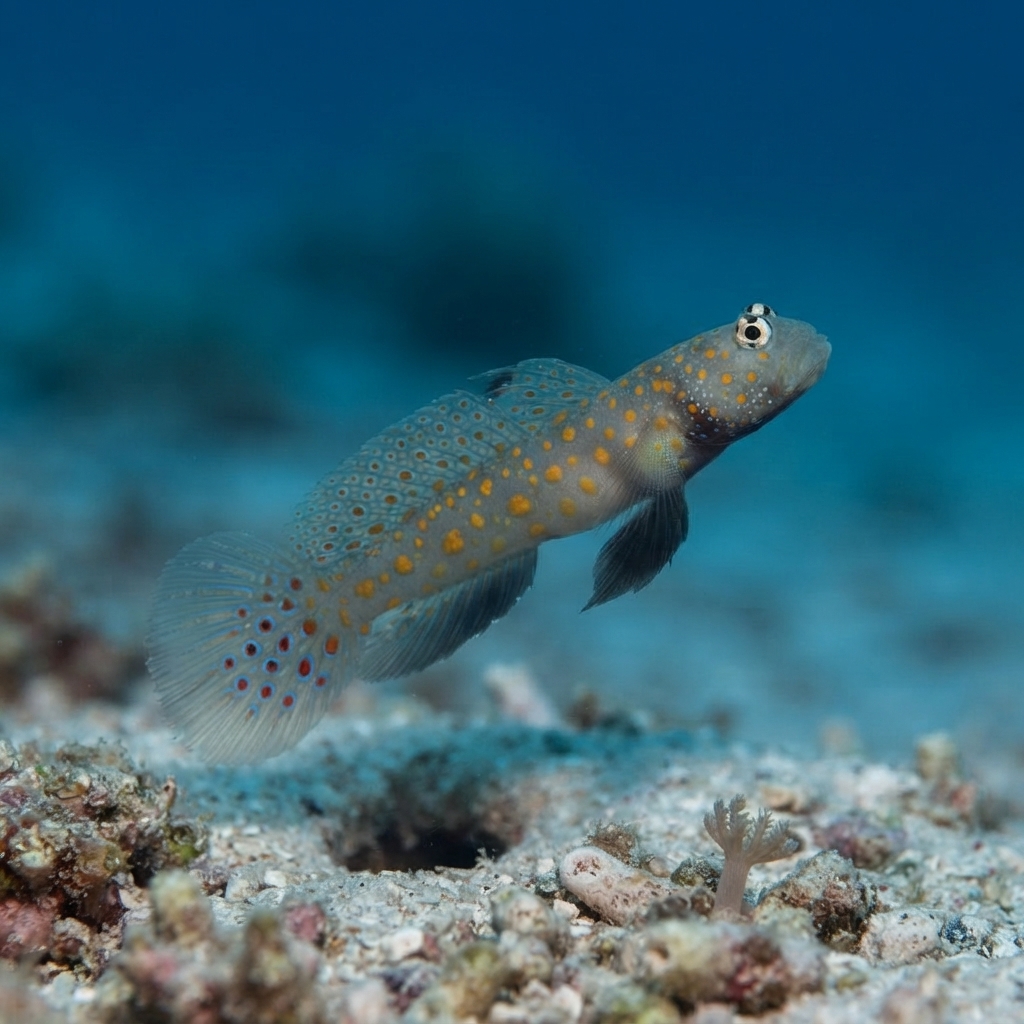
Small, slender goby about 7 cm long, pale grey to cream body covered in rows of distinct dark brown spots running head to tail. It hovers just above a burrow opening in sand or rubble, propped on extended pectoral fins, ready to dart down at the first sign of trouble. Look for the spotted pattern rather than bars or stripes to separate it from similar burrow-sharing gobies.
Watch for it hovering at the mouth of a shared burrow on sand or rubble patches, usually alongside a partner shrimp that keeps the tunnel clear while the goby stands guard. It reacts to divers by sinking halfway into the burrow at the first sudden movement, then re-emerging once things settle, so a slow approach and a bit of patience gets the best look. Most sightings come from gentle sand slopes and flats rather than hard coral structure, often in the same spot dive after dive.
It lives in a mutualistic partnership with a burrowing shrimp: the shrimp digs and maintains the tunnel while the goby, with better eyesight, watches for predators and flicks its tail to warn the shrimp when it's time to retreat.
No clear seasonal pattern shows up in the sightings, and its comfortable range of 25.5 to 28.8 C holds year-round on these tropical reefs, so any month is workable. Plan around good visibility and calm sand-flat conditions rather than a particular season.
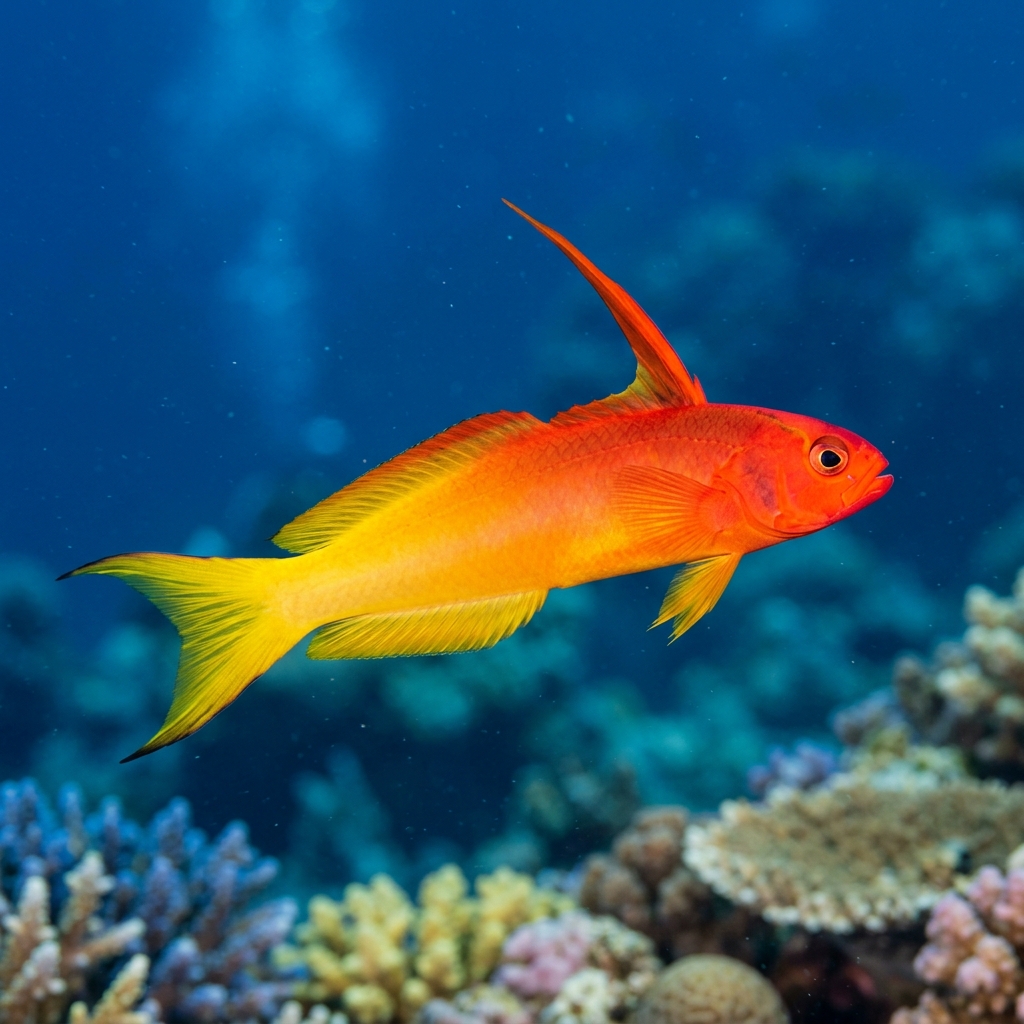
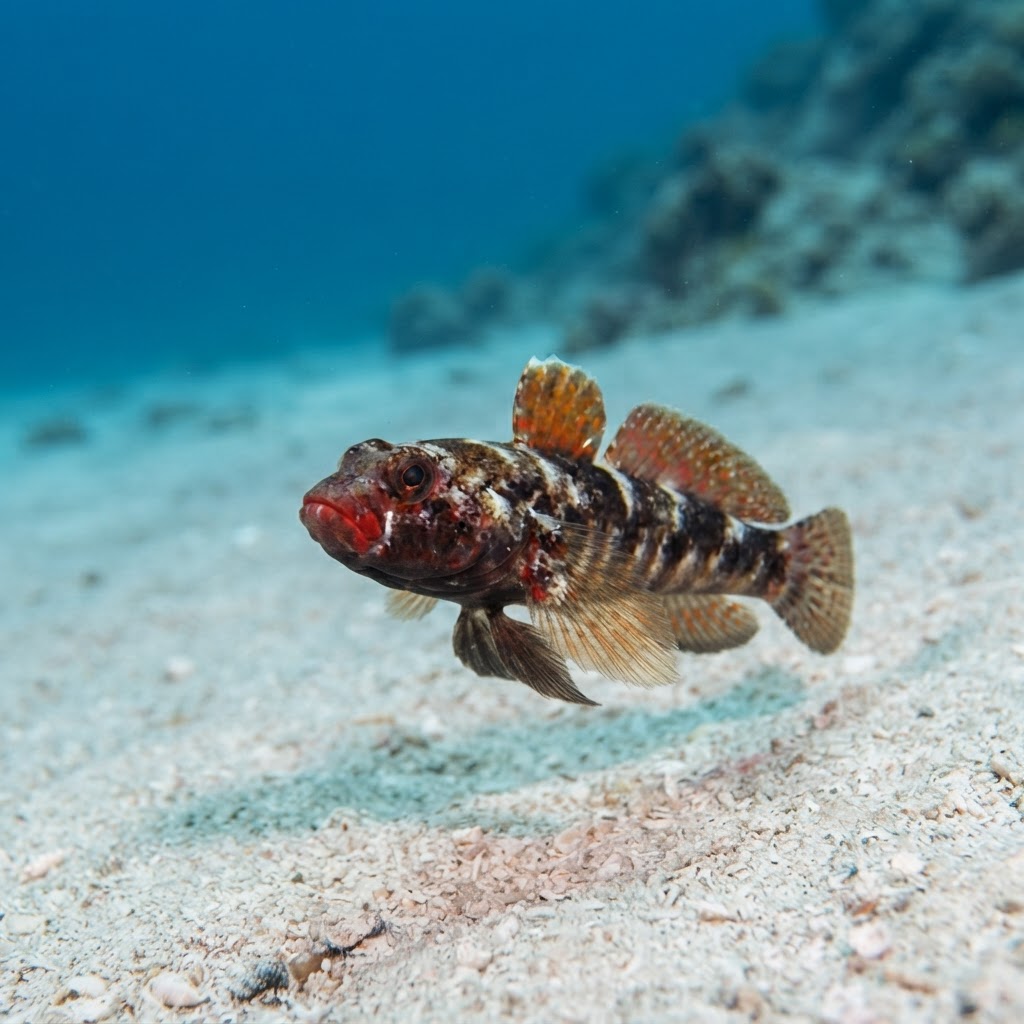
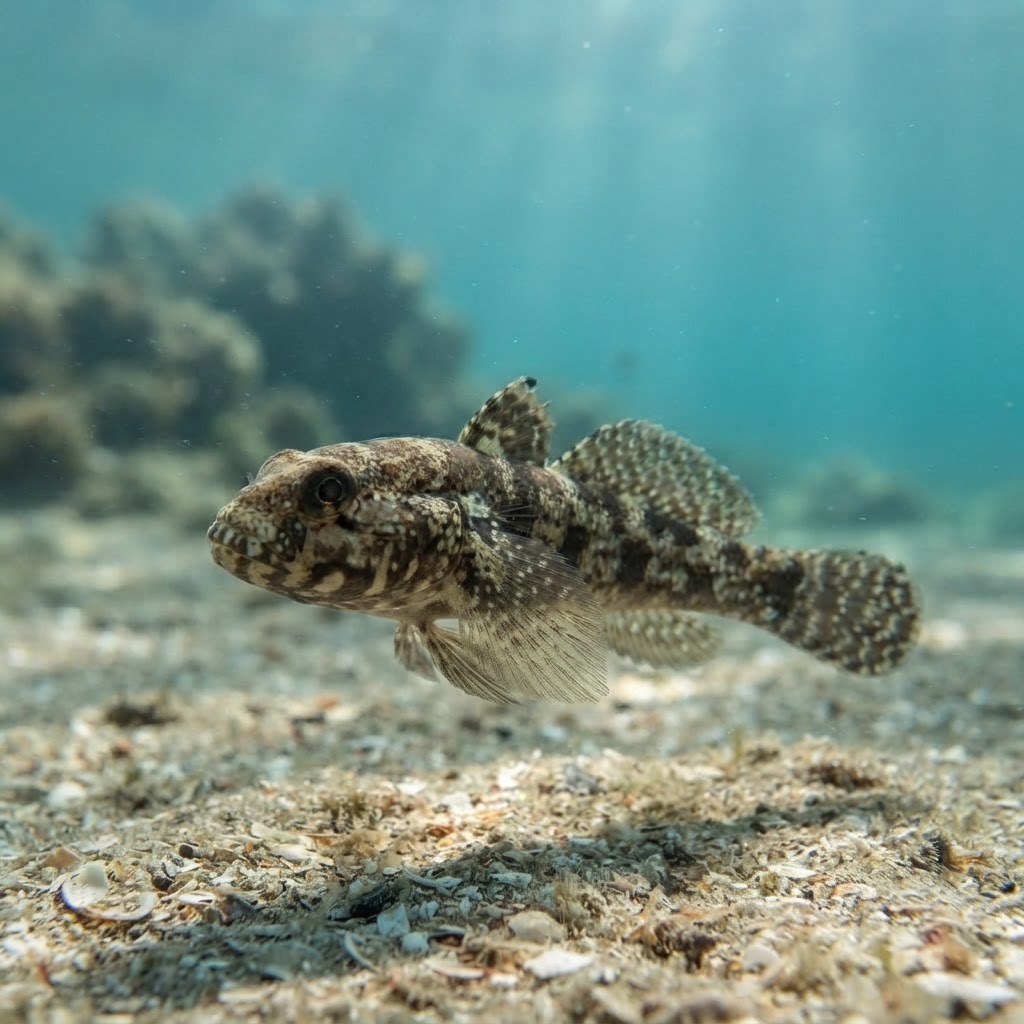
Reef neighbours a diver could mistake it for. Use the identification notes above to tell them apart.
Most consistently logged in the Philippines, especially across the Visayas, and a reliable find on Viti Levu in Fiji. Indonesia's Raja Ampat and Sulawesi, Saipan in the Northern Mariana Islands, and Tufi in Papua New Guinea also produce steady sightings, with smaller but confirmed populations around Dili in Timor-Leste and the Rock Islands of Palau.
Mapping where Spotted Prawn-goby is logged…
Best chances are in the Philippines, particularly around the Visayas, and on Viti Levu in Fiji. It also turns up reliably in Raja Ampat and Sulawesi in Indonesia, Saipan in the Northern Mariana Islands, and Tufi in Papua New Guinea.
There's no strong season in the sightings data, and it sits comfortably in 25.5 to 28.8 C water year-round, so it's a fair target on any tropical dive trip to its known range.
Look for a small pale goby, around 7 cm, dotted with rows of dark spots, hovering on raised pectoral fins at a sandy burrow entrance. The spotted pattern, rather than banding or stripes, is the key giveaway.
They stay small, reaching roughly 7 cm in length, making them one of many easy-to-overlook gobies on a sand or rubble dive.
Yes. It pairs with a burrowing shrimp in a classic reef partnership: the shrimp excavates and maintains the tunnel while the goby stands guard, using its sharper eyesight to spot danger for both of them.
Site and sighting data is aggregated from diver logs, iNaturalist and GBIF. For taxonomy and conservation status:
Slender Goby
806 sites