Gymnothorax isingteena
Uncommon but reliable in Malaysia's Peninsular East Coast, this large moray shows up on reefs year-round in 21-29C water.
Safety warning
A bite risk exists mainly if a diver corners it, reaches into a crevice, or attempts to hand-feed it, since morays have poor close-range eyesight and strike at movement near their face. Keep hands away from holes and crevices on reefs where it is logged as common, and admire from a body length or two away.
If you're bitten
BiteGeneral first-aid guidance, not a substitute for professional medical care. In an emergency, call your local emergency number.
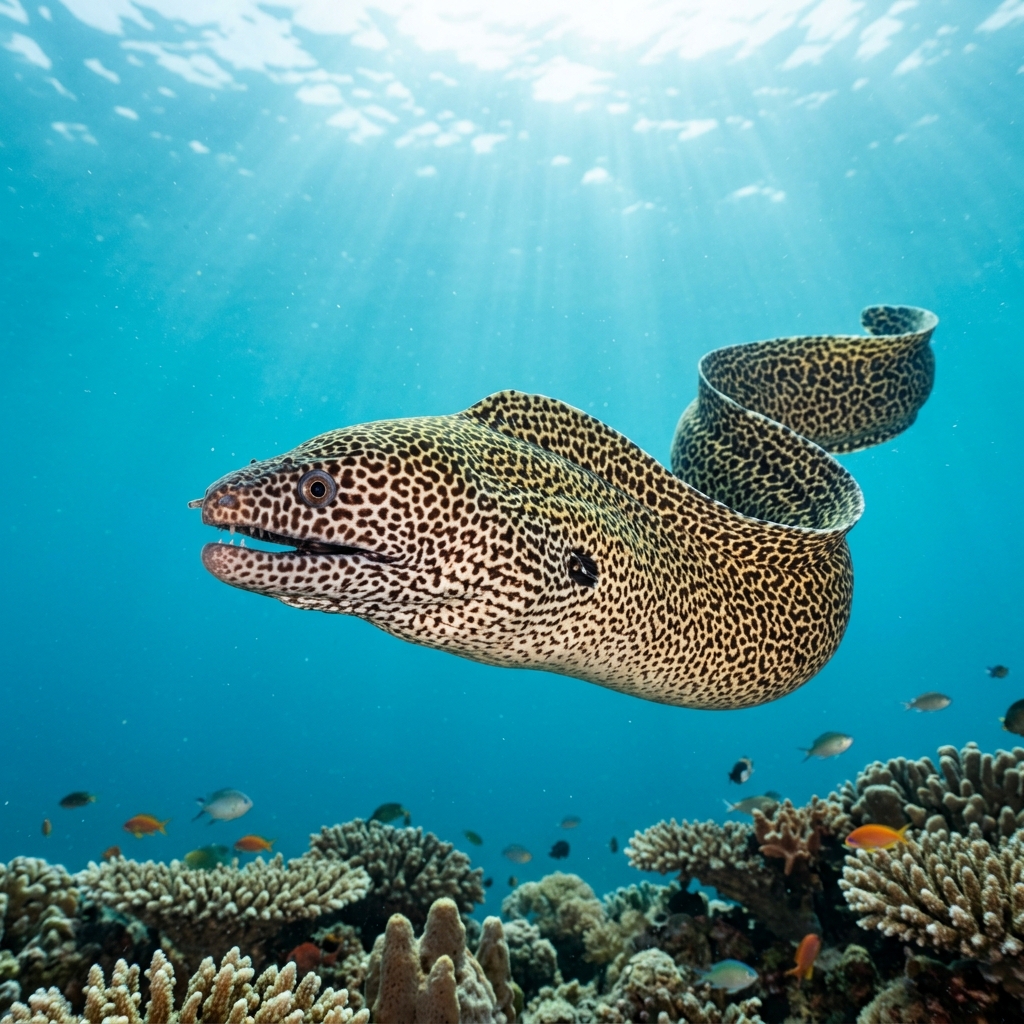
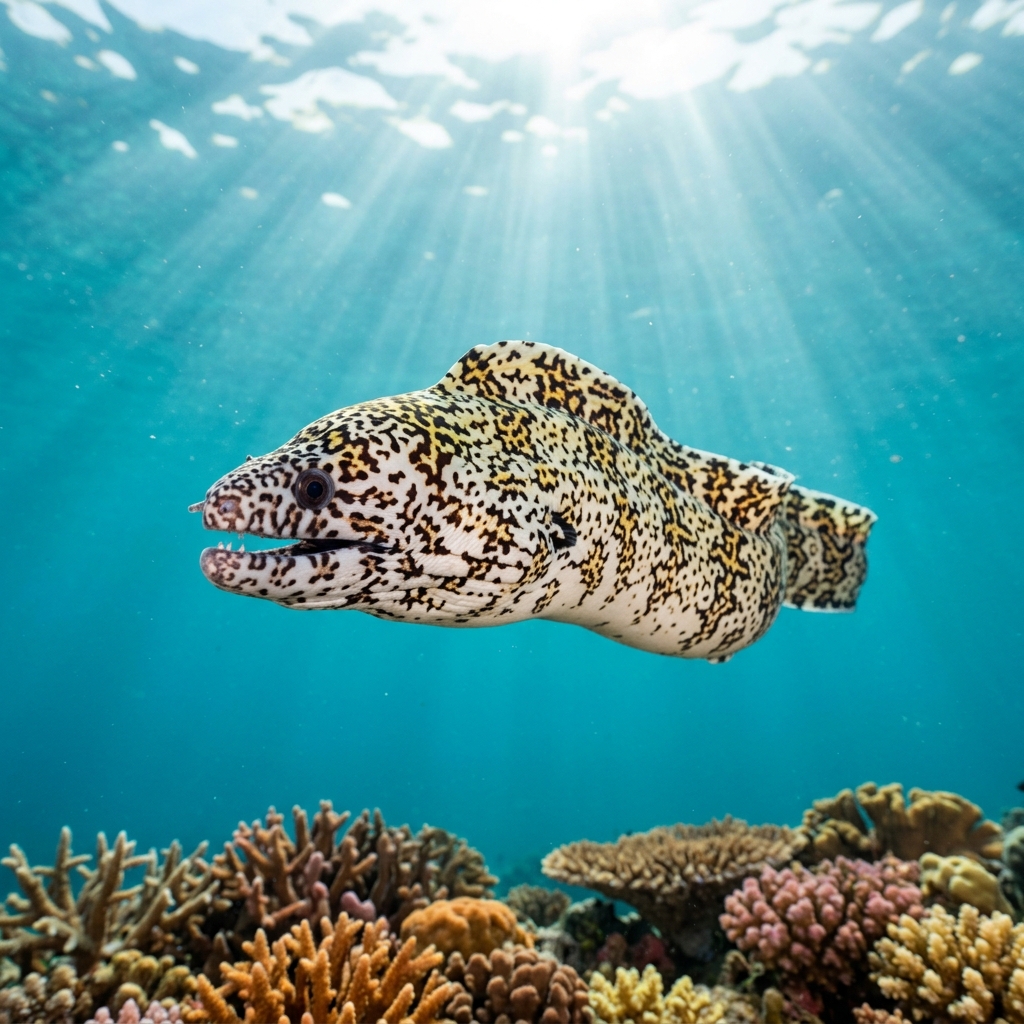
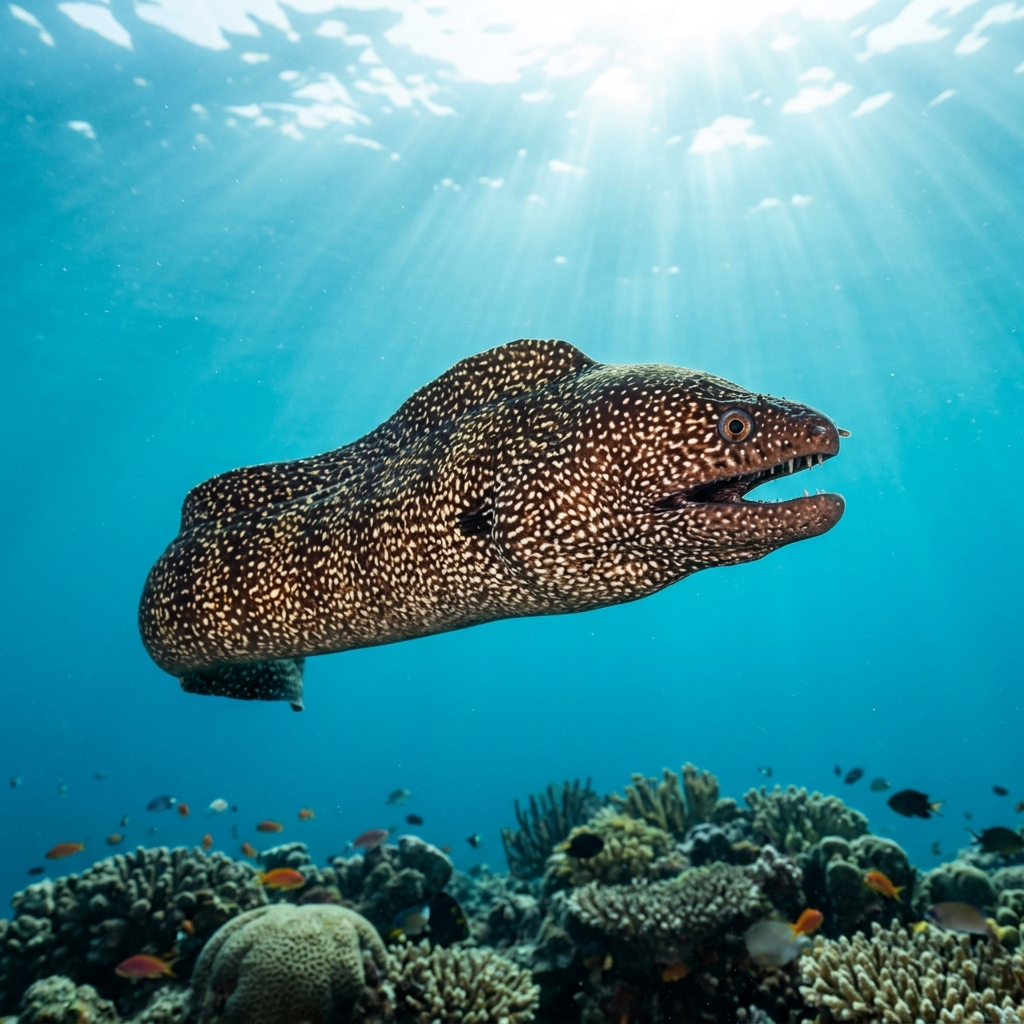
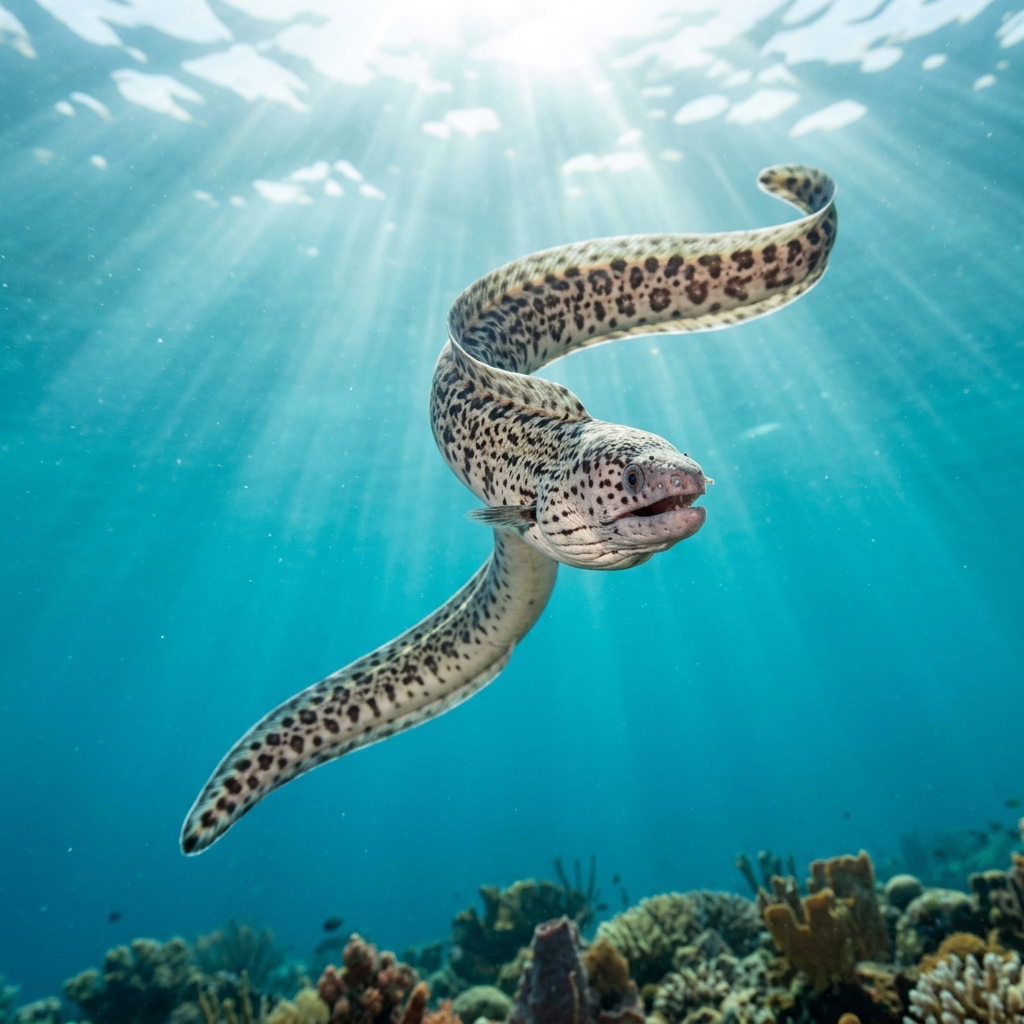
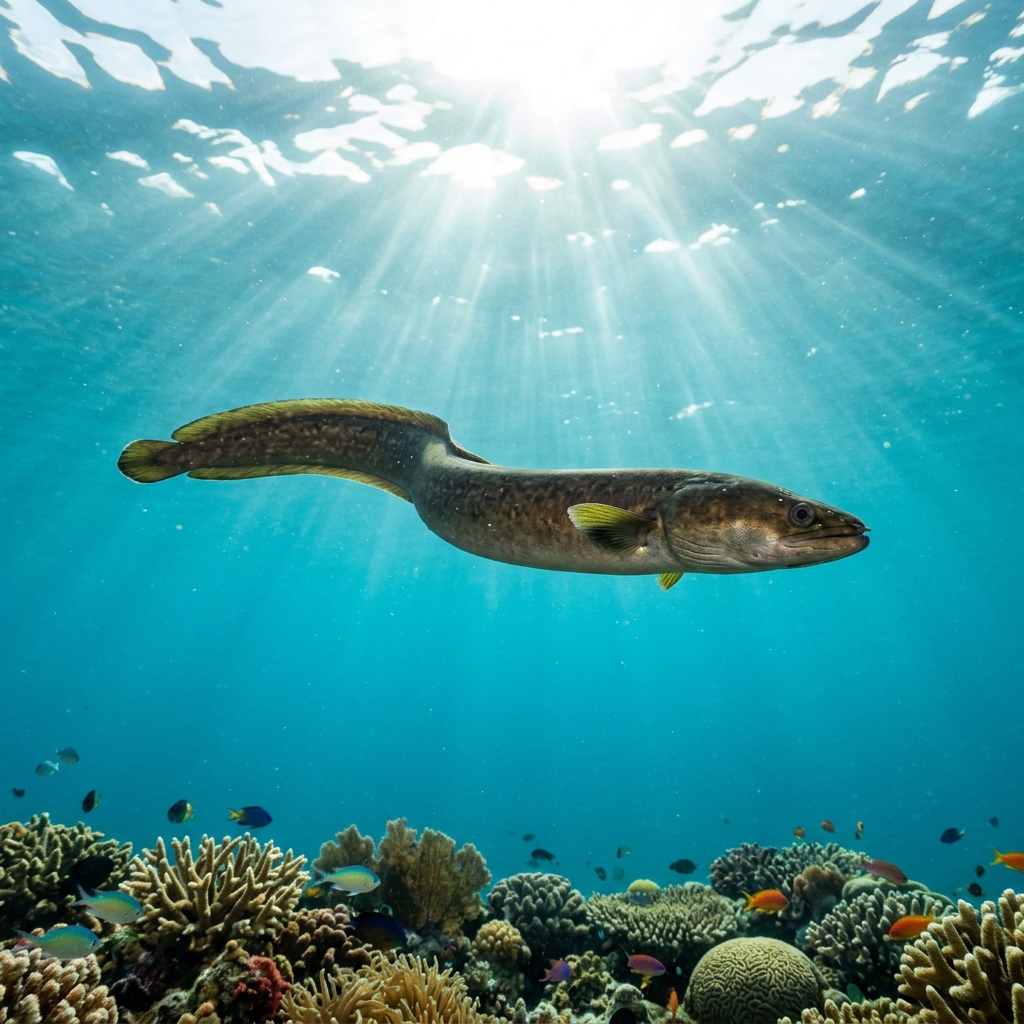
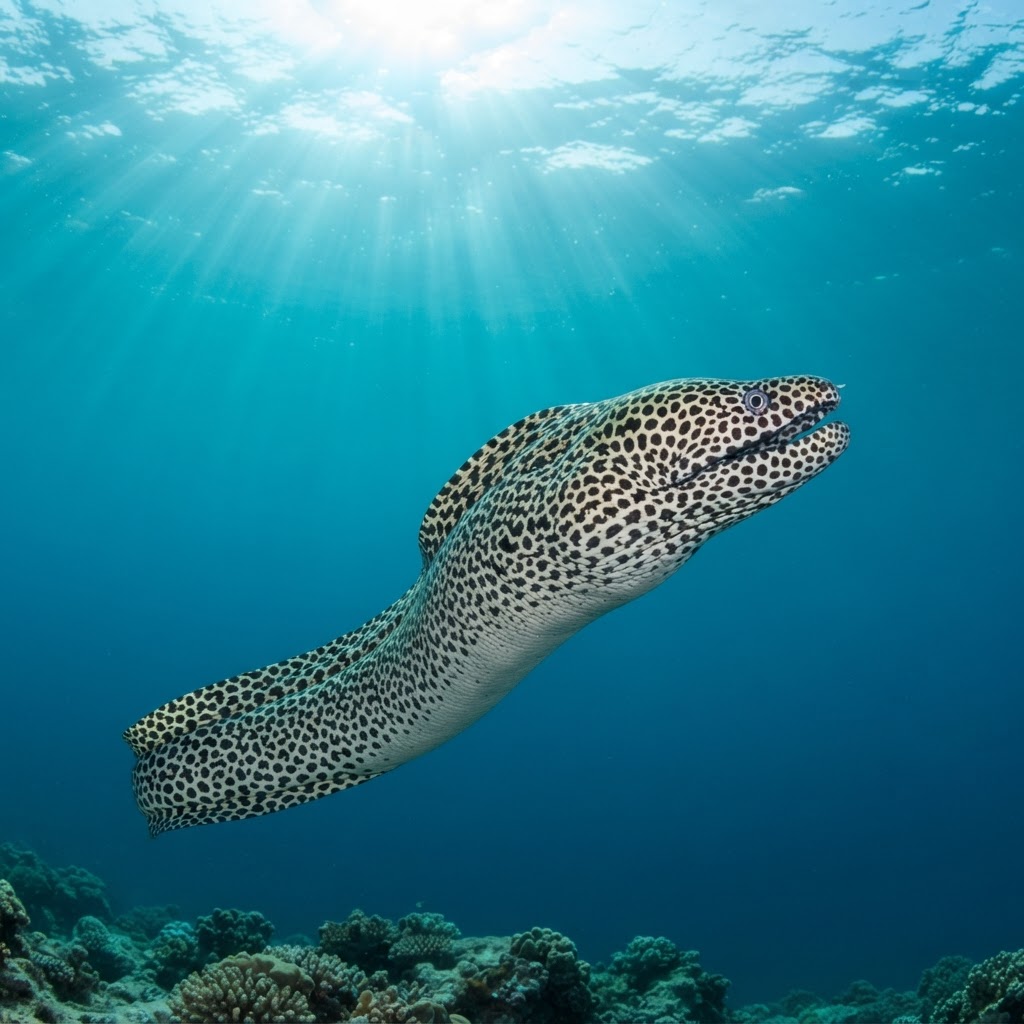
A thick-bodied eel reaching over a metre, patterned all over with dense dark spots or blotches on a paler base colour, giving it a mottled, leopard-like look rather than bands or stripes. It usually shows just its head and a length of neck poking from a crevice, jaws working open and closed as it breathes. The spotting is fine and even along the whole body, which is the main thing that separates it from coarser-patterned relatives.
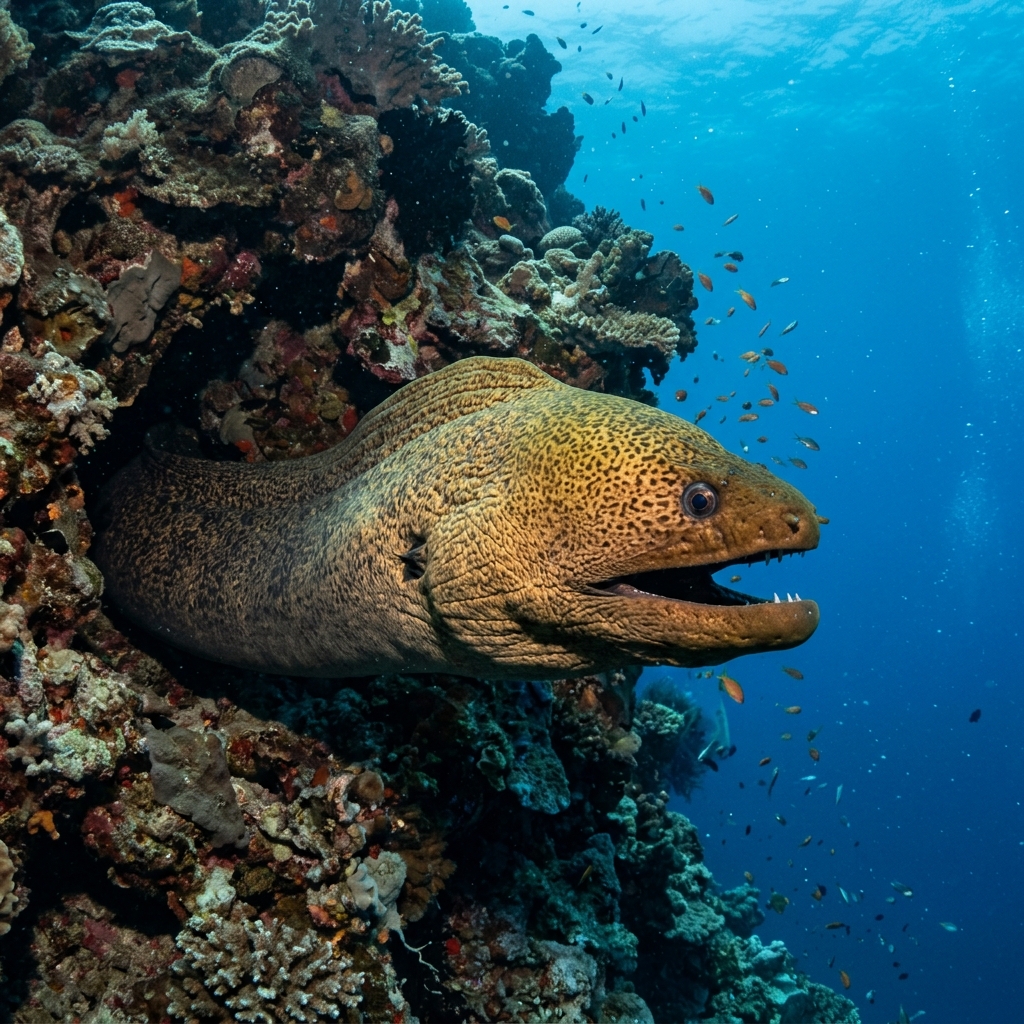
Divers most often find it with just its head out of a crevice or hole, mouth opening and closing steadily as it moves water over its gills, which can look like a threat display but is not. It tends to hold its ground rather than bolt when approached, and most sightings are during the day tucked into reef structure rather than out swimming in the open. Night dives can reveal more of the body as it hunts.
Like other morays it lacks the gill covers and body slime other fish rely on to breathe passively, so that constant jaw-pumping is doing the job of moving oxygenated water across the gills rather than signalling aggression.
No clear seasonal pattern shows up in the data, and with a comfortable range of 21.4 to 29.2C it is present on these reefs year-round. Plan around the destination's general dive season rather than chasing a particular month.
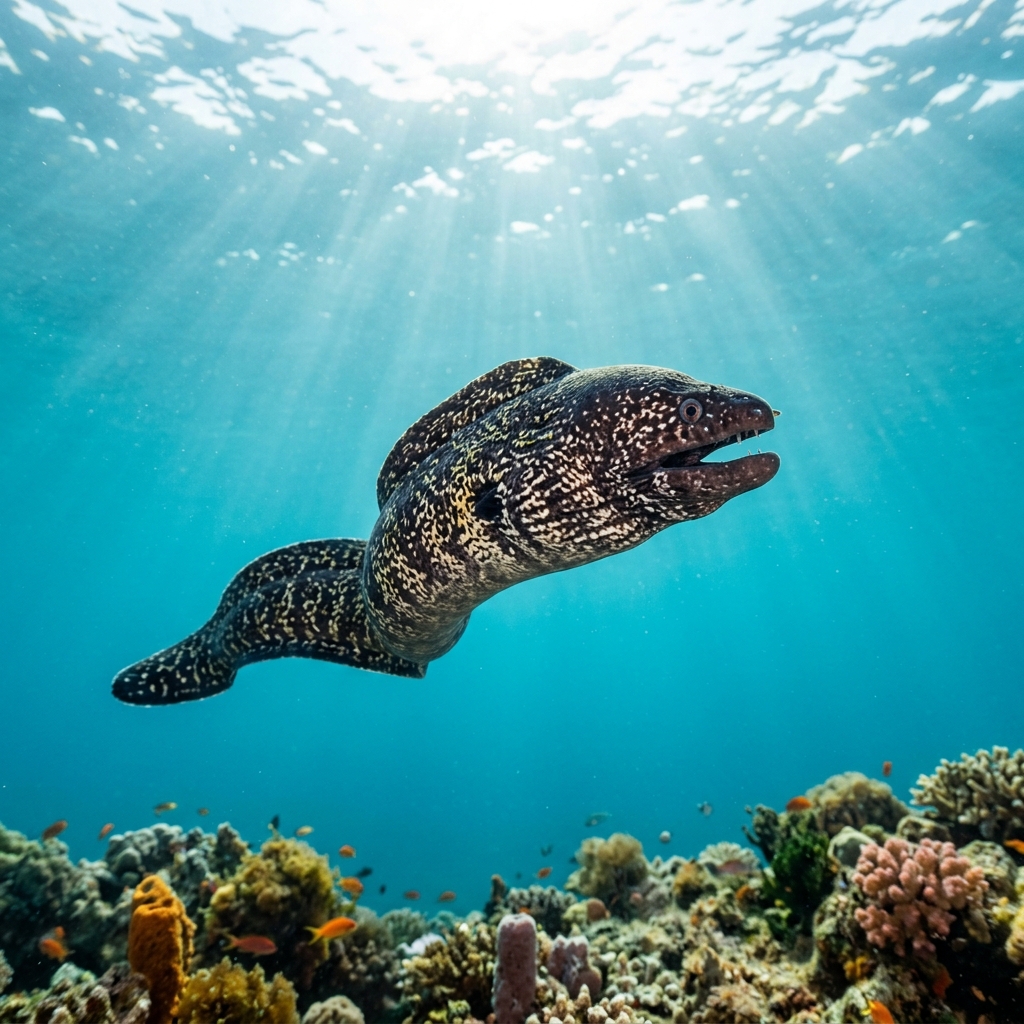
Reef neighbours a diver could mistake it for. Use the identification notes above to tell them apart.
This one is most reliably found on Malaysia's Peninsular East Coast, where the bulk of logged sightings come from, with a smaller but steady presence around Taiwan's Longdong and Xiaoliuqiu. Across both countries it turns up as an uncommon but dependable find on rocky and coral reef terrain rather than a headline sighting.
Mapping where Indo-Pacific Spotted Moray is logged…
The strongest sightings come from Malaysia's Peninsular East Coast, with additional records from Longdong and Xiaoliuqiu in Taiwan. At most of these sites it counts as an uncommon but findable species on the reef.
There is no strong seasonal signal in the sighting data, and it tolerates a wide temperature range of roughly 21 to 29C, so it can be found year-round rather than in a specific window.
They can bite if provoked, cornered, or fed by hand, and their jaw strength makes any bite a real injury. Left alone in their crevice they pose little risk to a passing diver.
Look for a thick eel body covered evenly in fine dark spots or blotches rather than bands, usually seen with just the head protruding from a reef crevice. It can grow past a metre, noticeably bulkier than smaller reef eels nearby.
They typically reach around 126cm, making them one of the larger morays a diver is likely to encounter on these reefs.
That constant jaw movement is breathing, not aggression. Morays lack the gill covers other fish use to pump water over their gills, so they pump water manually by mouth instead.
Site and sighting data is aggregated from diver logs, iNaturalist and GBIF. For taxonomy and conservation status:
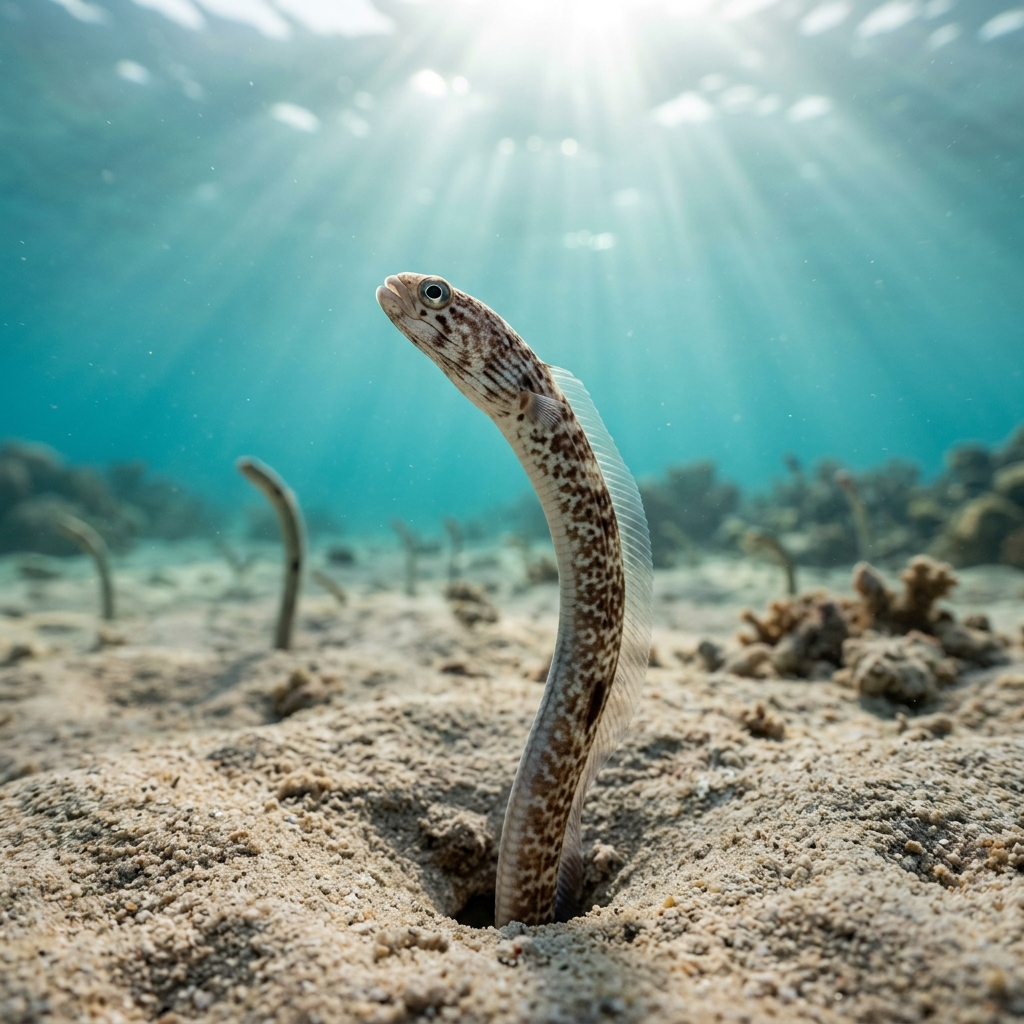
Garden Eel
2,448 sites