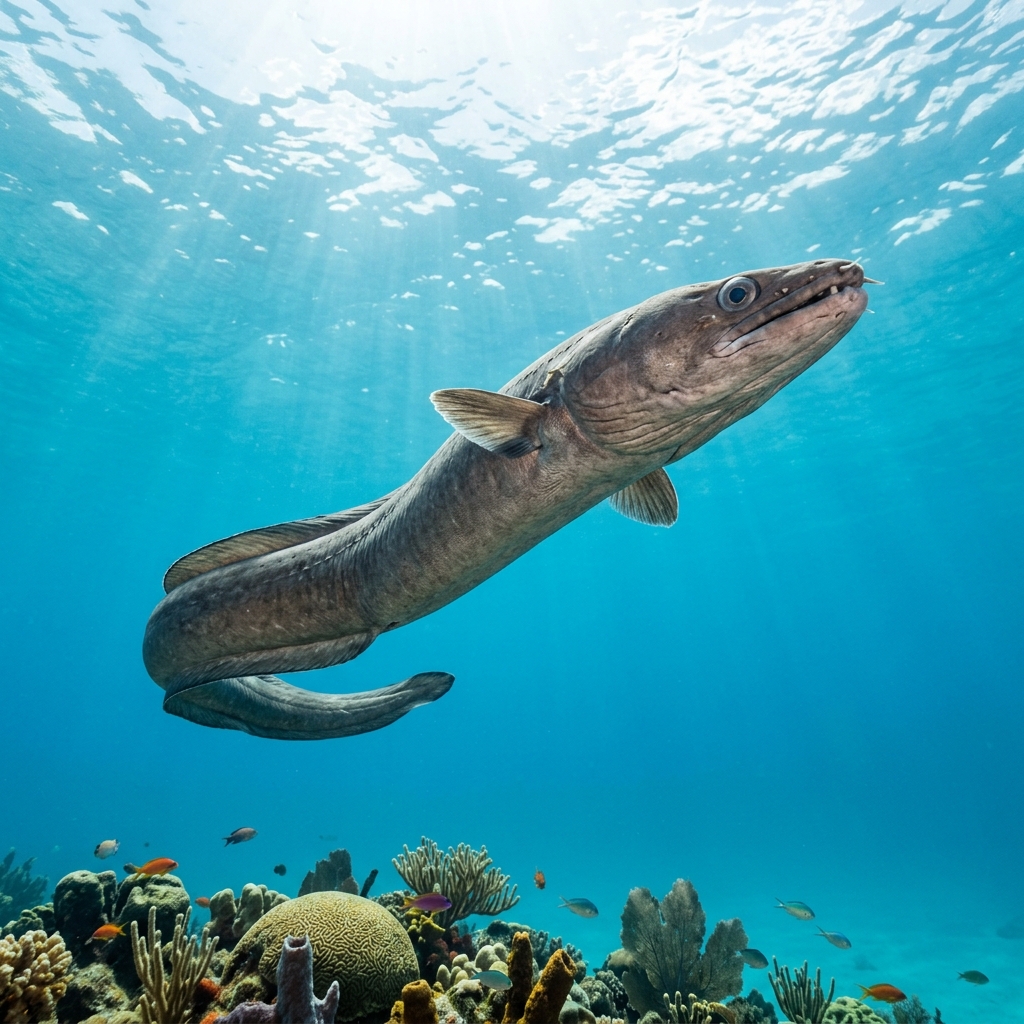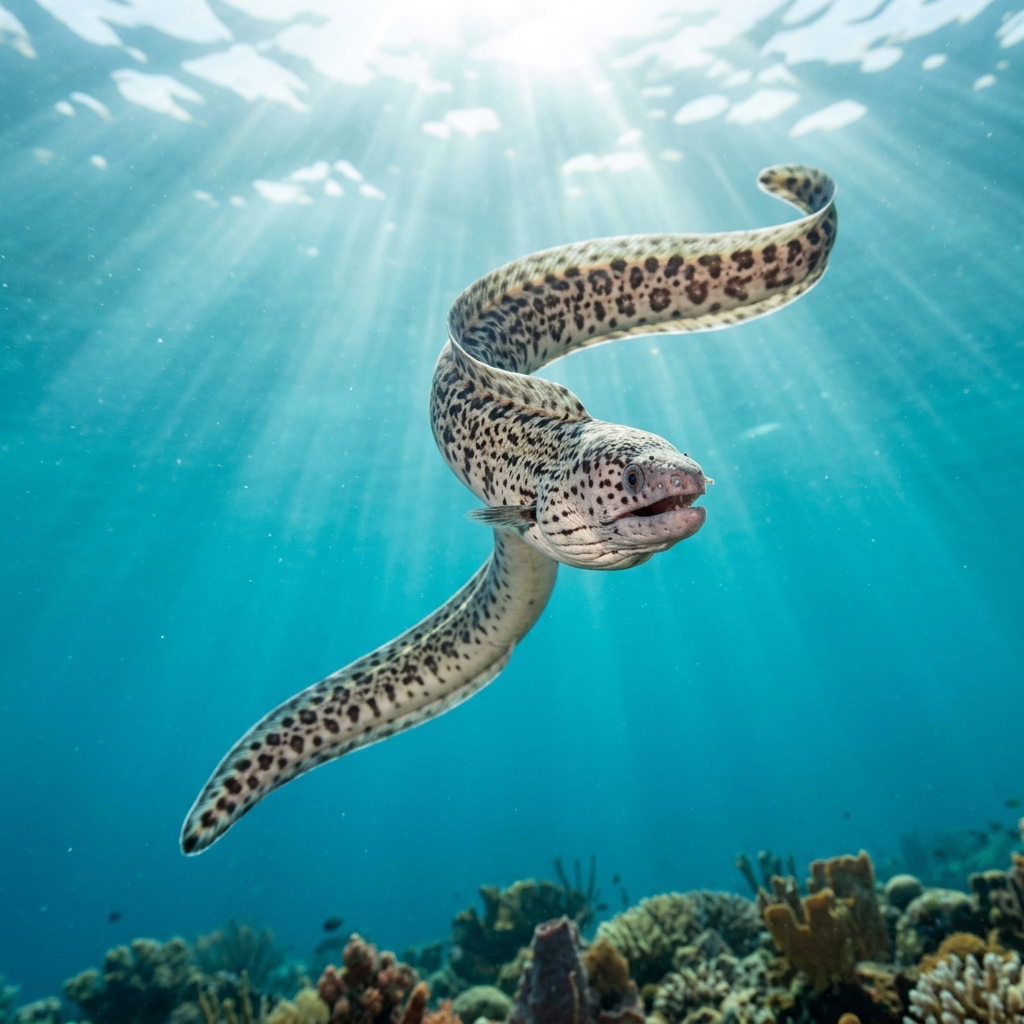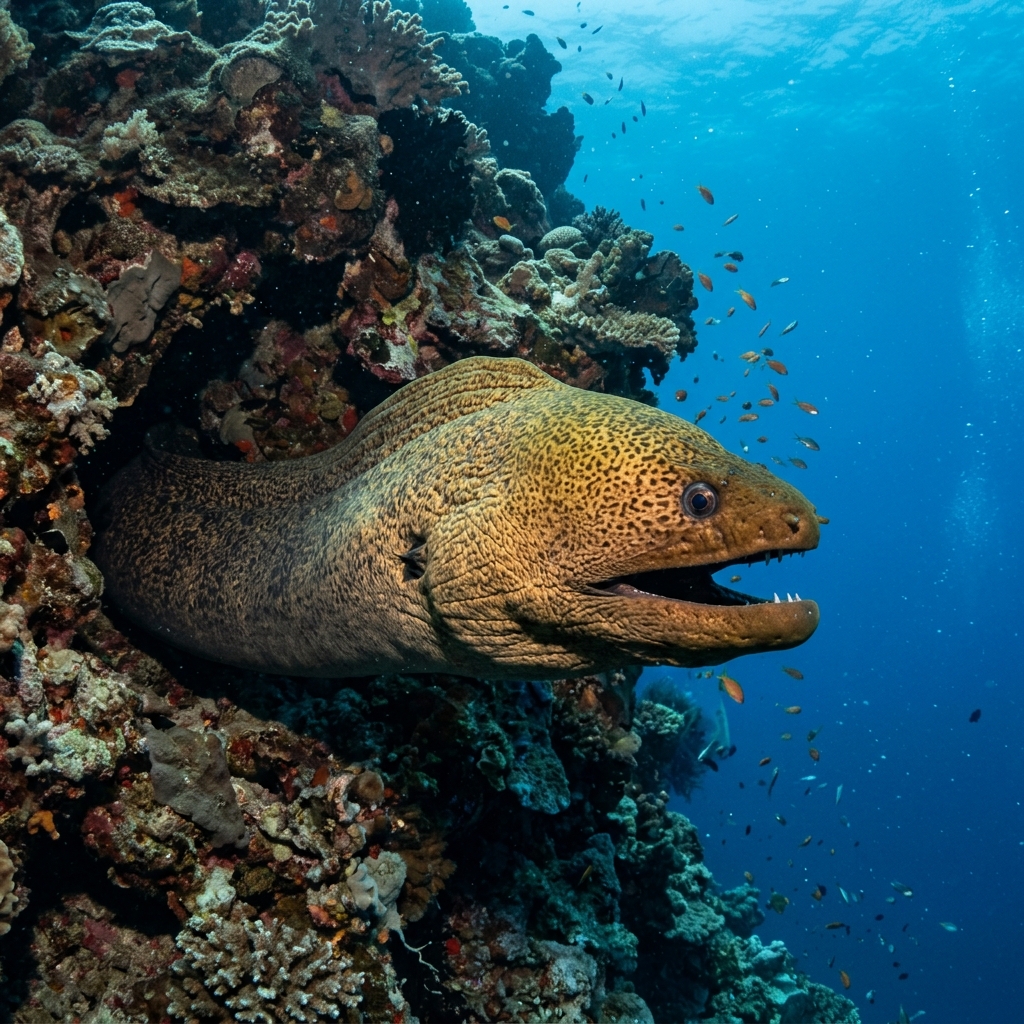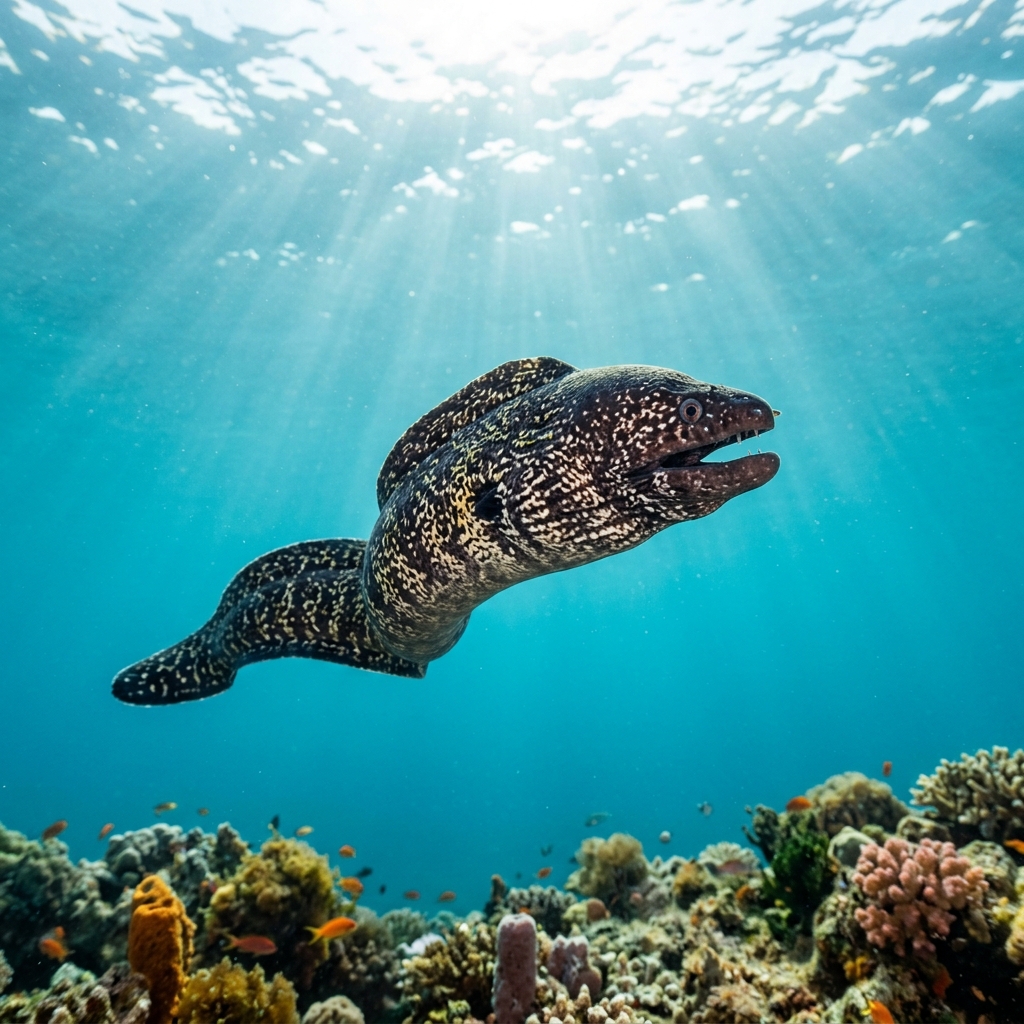
Heterocongrinae spp.
Garden eels sway in sandy colonies across Florida, the Maldives and the Philippines. Learn where to find them and how to approach without scaring them off.
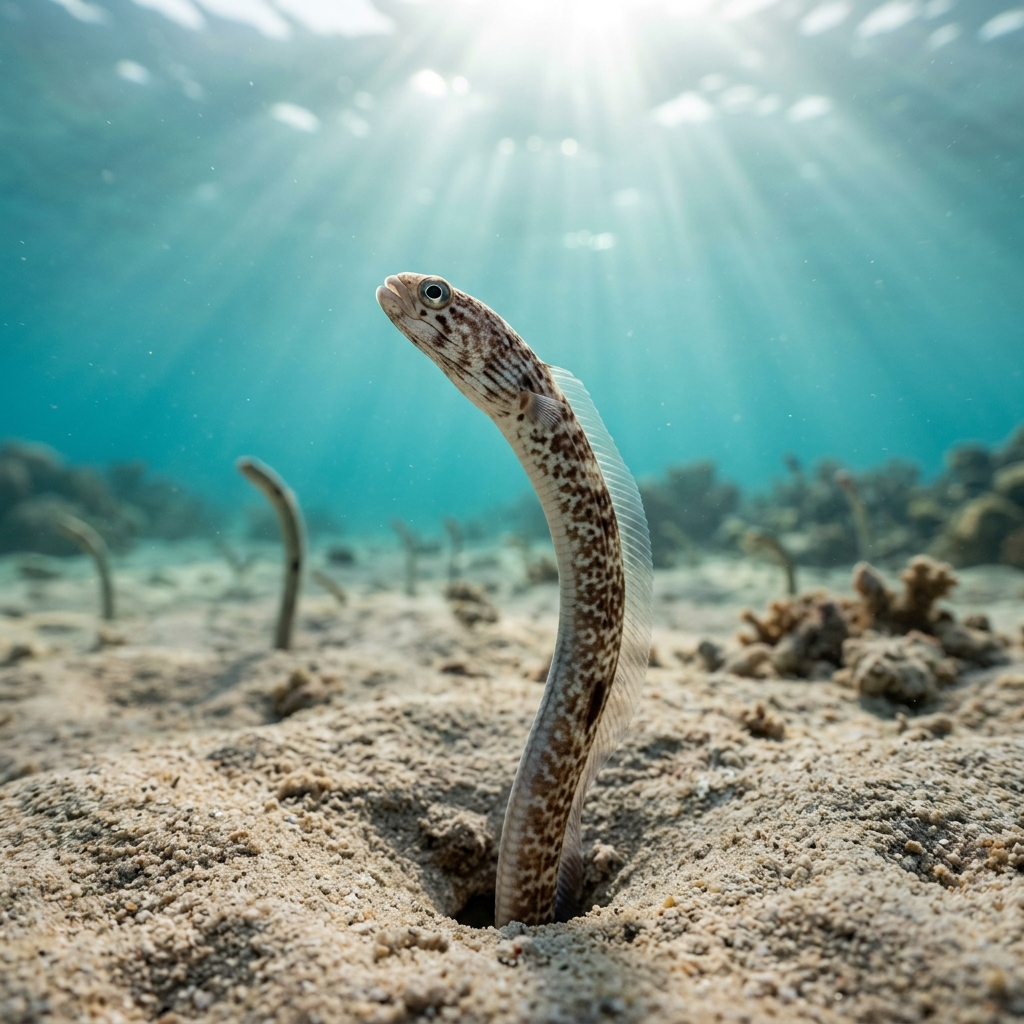
Slender, worm-like bodies that poke vertically out of the sand, with only the front half exposed and the tail always anchored in a burrow below. Most species are pale grey, cream, or tan with small darker spots or patches, and the head is tiny with a small round mouth. You rarely see the full body length because they never fully leave their burrows. The colony habit is the clincher: dozens to hundreds of individuals all facing the current in the same direction, creating a living meadow effect.
Each eel hovers vertically above its personal burrow, body swaying in the current as it picks plankton (tiny drifting organisms) from the passing water. Approach too quickly and the whole colony sinks into the sand like a slow-motion disappearing act; the key is to descend well up-current, move slowly, and stop well short of the colony to let them re-emerge. They are most active during the day when plankton is moving with the current, and tend to retract more quickly when diver bubbles pass overhead.
Garden eels mate without ever fully leaving their burrows: neighbouring pairs stretch toward each other until they can intertwine in the water column, spawning while still anchored below.
Available data does not point to a distinct season, so garden eels are treated as a year-round target. Their observed water-temperature range of roughly 22 to 29 °C lines up with permanent tropical reef conditions across all of their main ranges.
Garden eels are logged across a wide tropical belt, with particularly strong coverage in Florida and the broader US Southeast, the Maldives, and the Philippines. Indonesia, Japan, Cuba, Brazil, and Venezuela all have solid numbers of sites too. If you are targeting them, the North and Central Atolls of the Maldives and the Visayas and Palawan regions of the Philippines are among the most reliable areas.
Mapping where Garden Eel is logged…
Garden eels turn up across the tropical Indo-Pacific and Atlantic. The strongest diving coverage is in Florida, the Maldives, and the Philippines, with good options also in Indonesia, Japan, Cuba, and Brazil. Sandy slopes adjacent to reef walls are the habitat to target.
Because garden eels live in warm tropical waters year-round and the sighting data shows no strong seasonal peak, they are effectively a year-round target at any of their main locations. Water temperatures between about 22 and 29 °C suit them, which describes most tropical dive destinations across all seasons.
Look for a colony of slender, pale, worm-like fish standing upright in open sand, all facing the same direction. Their tails are always hidden in individual burrows, so you only ever see the upper portion of the body swaying in the current. No other common reef fish behaves quite like this, making the colony habit the easiest identification clue.
Size varies by species within the family, but most garden eels reach roughly 30 to 75 cm in total length. Because you only ever see the exposed upper half above the sand, they tend to look smaller in the water than they actually are.
Each eel excavates and maintains a personal mucus-lined burrow, which it retreats into tail-first when threatened. Hovering above the burrow gives them access to current-borne plankton while keeping an escape route permanently open. They essentially spend their entire lives attached to one spot.
Not at all. Garden eels pose no threat to divers; they are timid animals whose only response to perceived danger is to drop into their burrows. The main challenge is not disturbing them rather than protecting yourself from them.
Site and sighting data is aggregated from diver logs, iNaturalist and GBIF. For taxonomy and conservation status:
Mediterranean Moray
2,020 sites