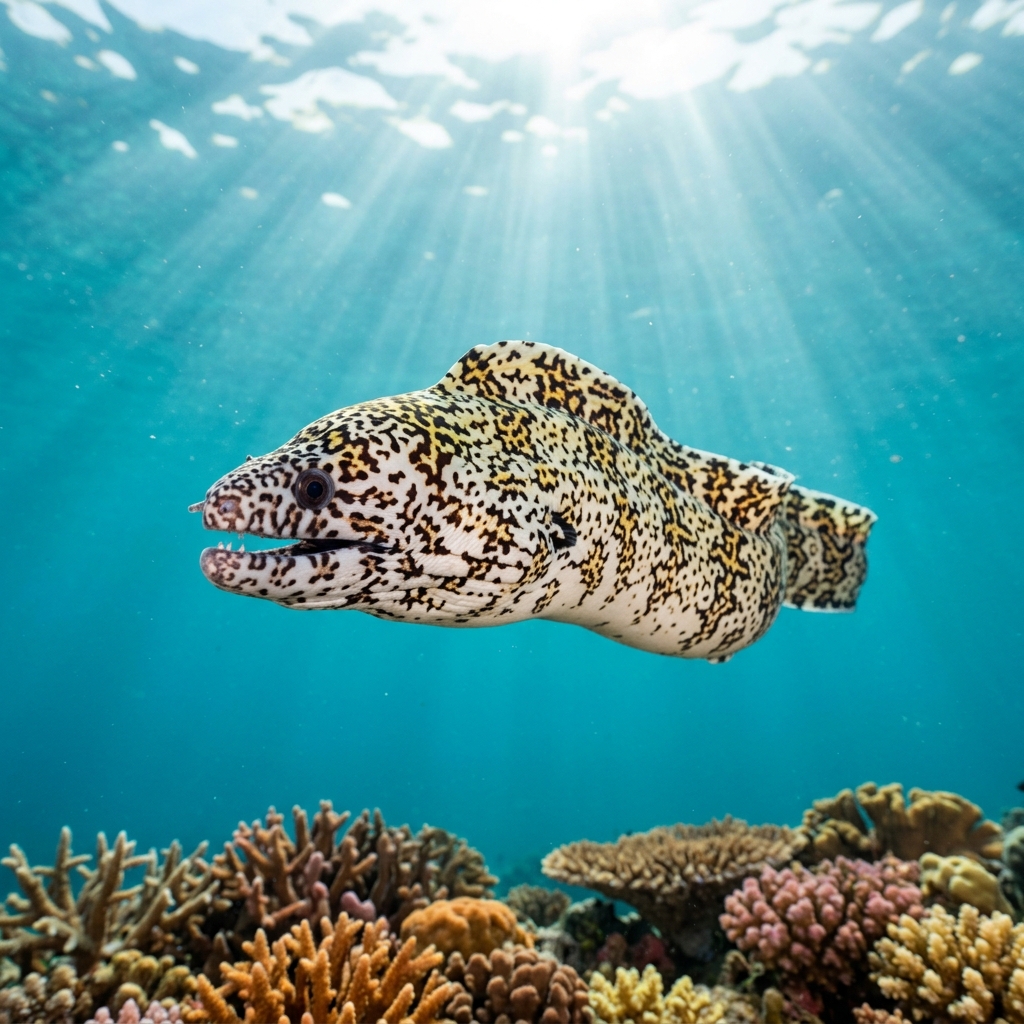
Echidna nebulosa
Spot the Snowflake Moray's bold white-and-black rosette pattern on reefs across the Philippines, Hawaii, and the Maldives. Year-round in warm Indo-Pacific waters.
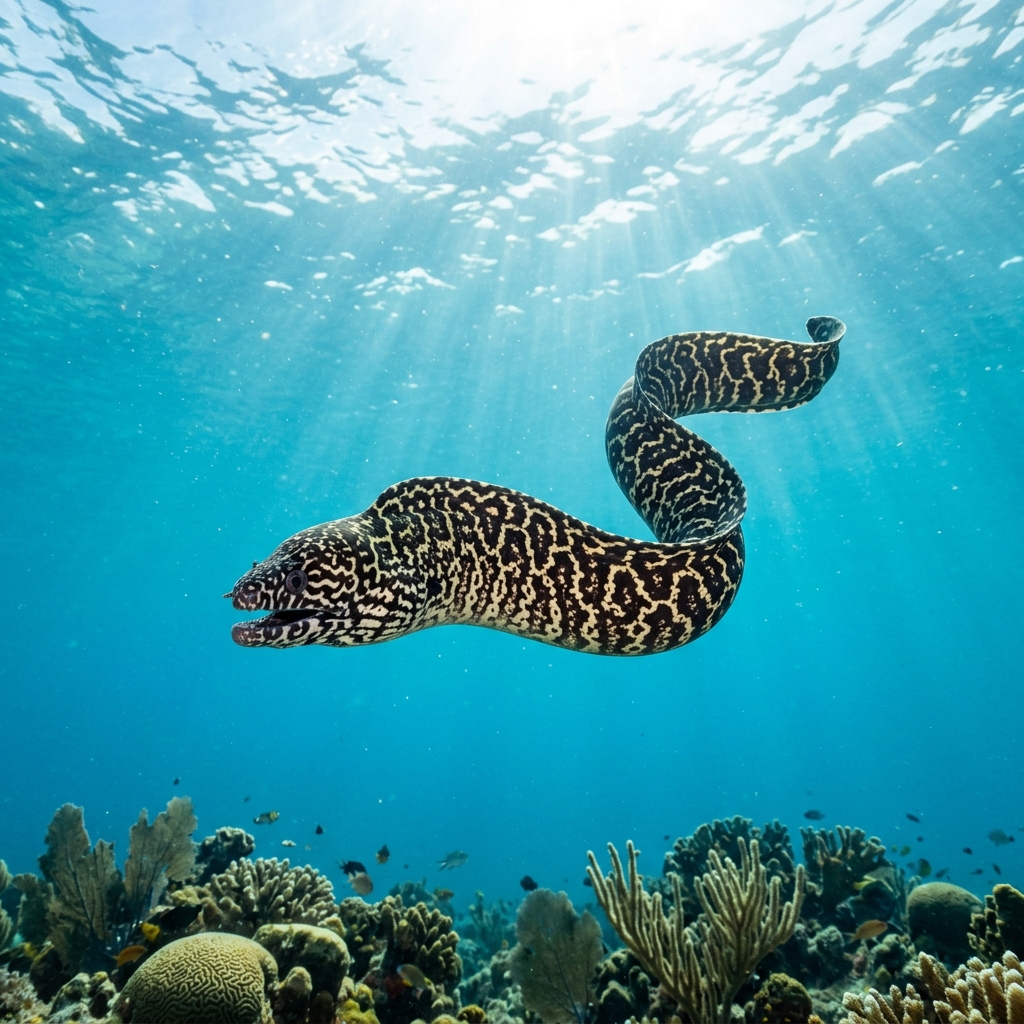
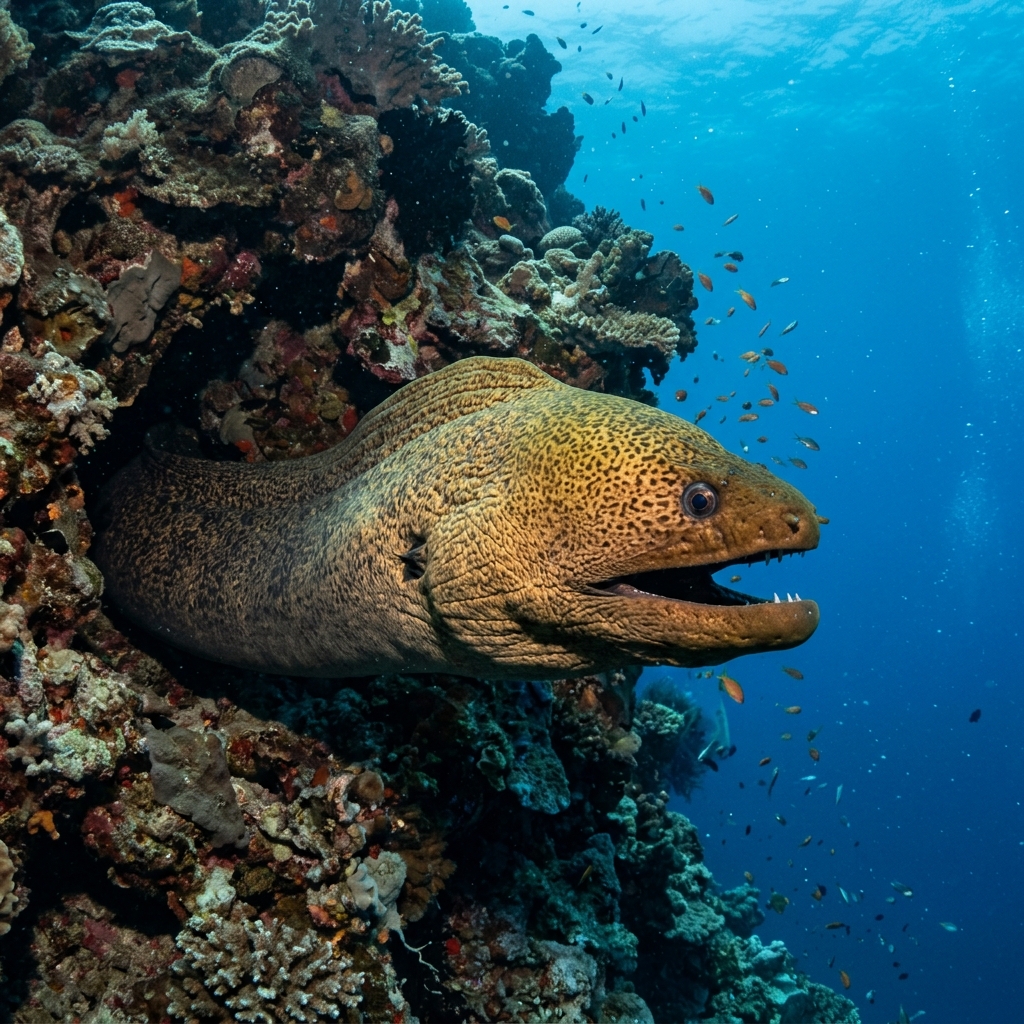
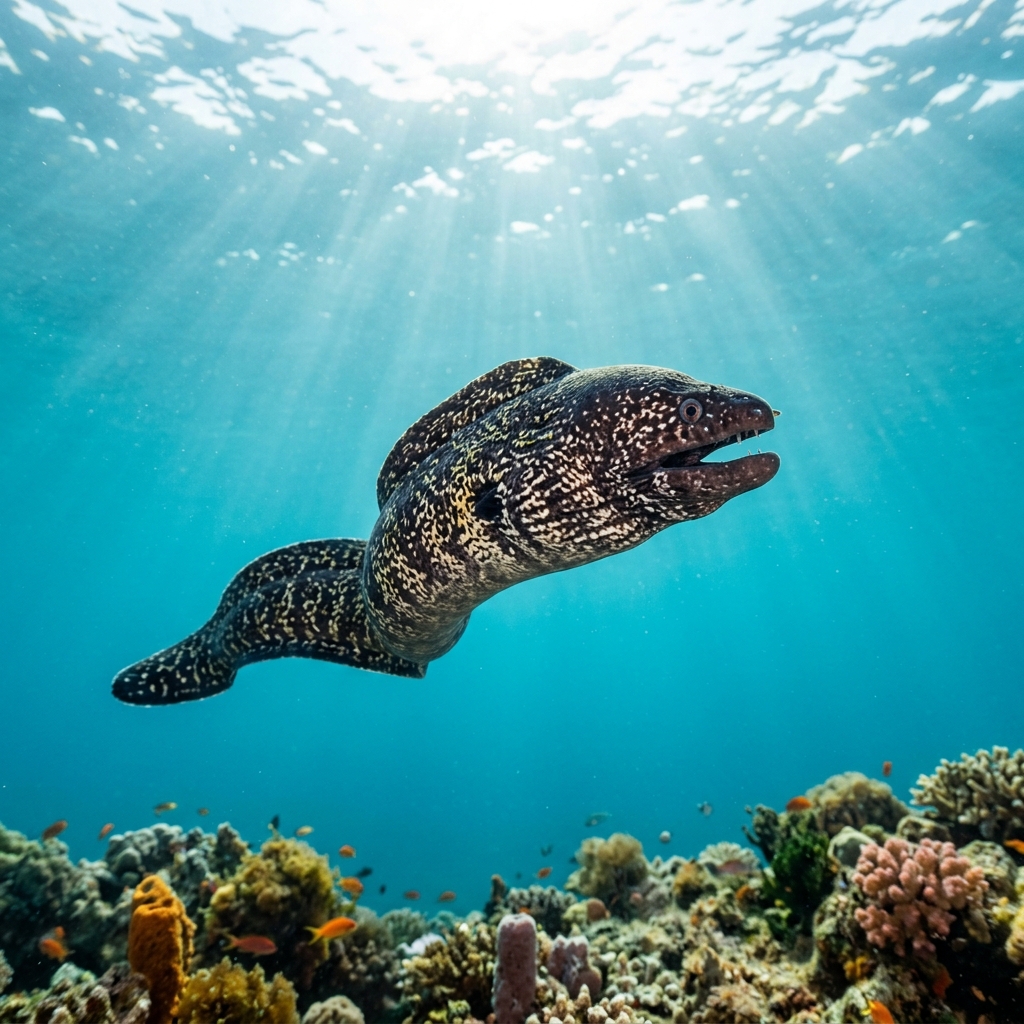
Bold, irregular black and yellow rosettes scattered across a white or pale grey body make this one of the most distinctive morays on the reef, earning it the name. The body is relatively stocky compared to other morays, and the blunt, rounded snout is a reliable in-water cue. Unlike many moray relatives, the jaws hold rounded, pebble-like teeth rather than sharp fangs, which is visible when the mouth opens during breathing. Juveniles share the same pattern but appear in higher contrast black and white before yellow tones develop.
Almost always encountered with its head and forebody protruding from a reef crevice or coral overhang, weaving slowly while it breathes through its gills. It is largely nocturnal but can be found resting in holes during the day, and rarely retreats fully when a diver approaches calmly. On night dives it moves more openly across rubble and reef flats, hunting crustaceans.
Unlike the fang-toothed morays that target fish, snowflake morays are specialist crustacean hunters. Their blunt, molar-like teeth are built to crush hard shells, so they pose virtually no threat to divers even when handled carelessly by other animals nearby.
Comfortable across a water temperature range of roughly 24 to 29 °C, it is present on tropical reefs year-round in the Northern Hemisphere with no concentrated season. In the Southern Hemisphere, sightings peak between September and January.
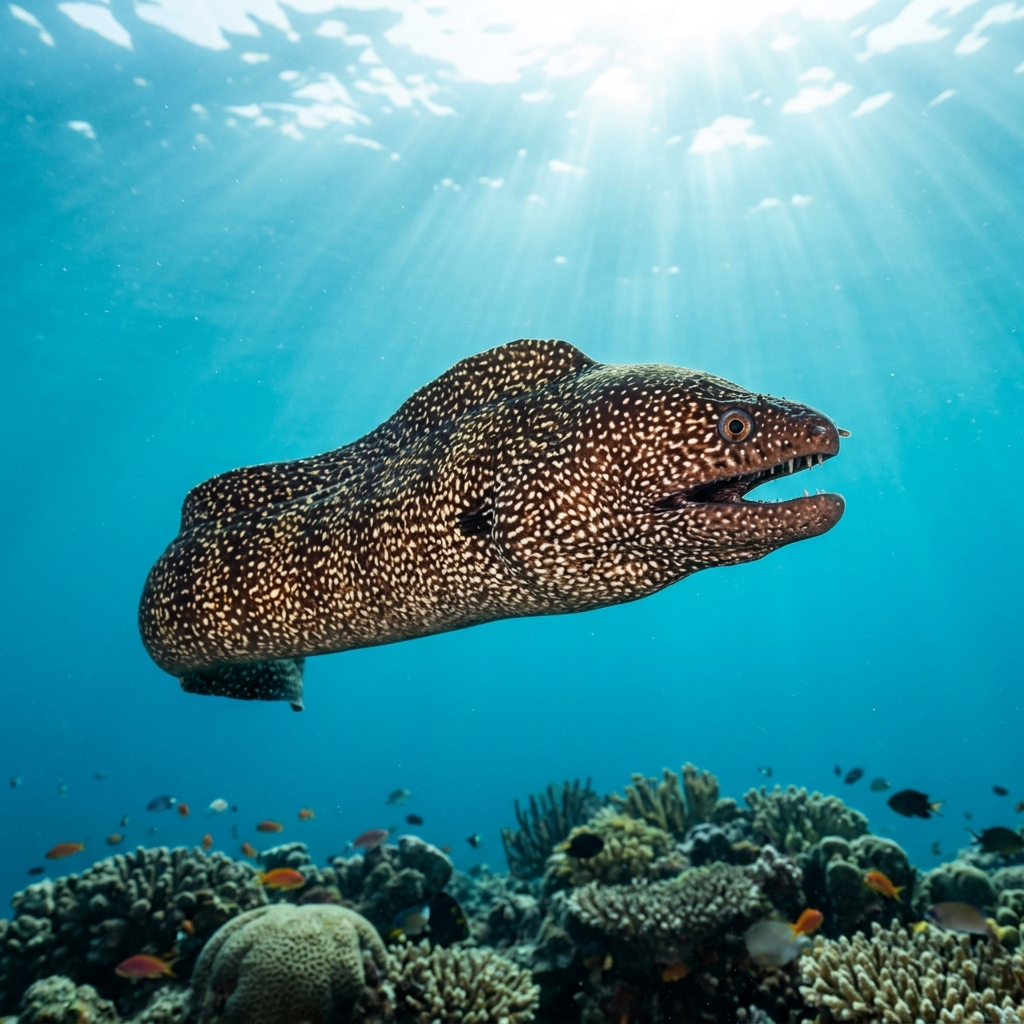
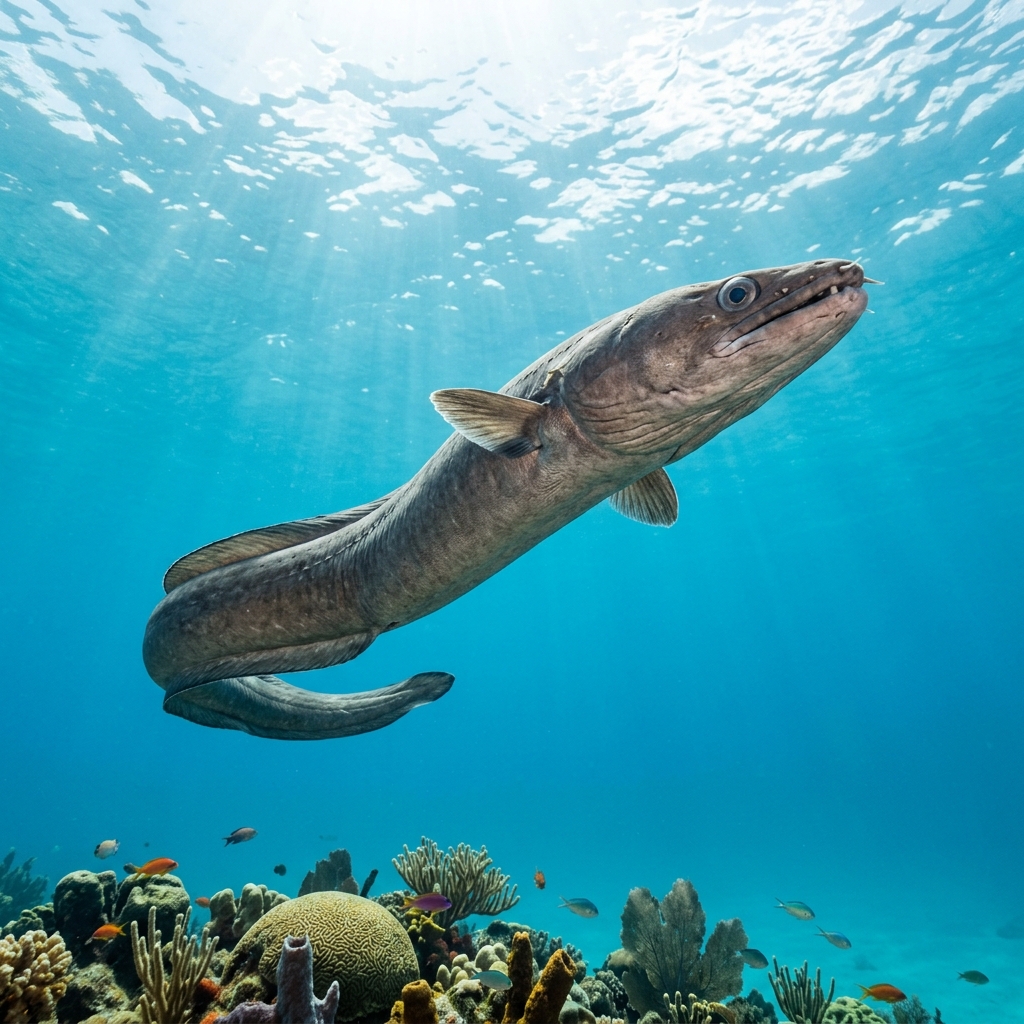
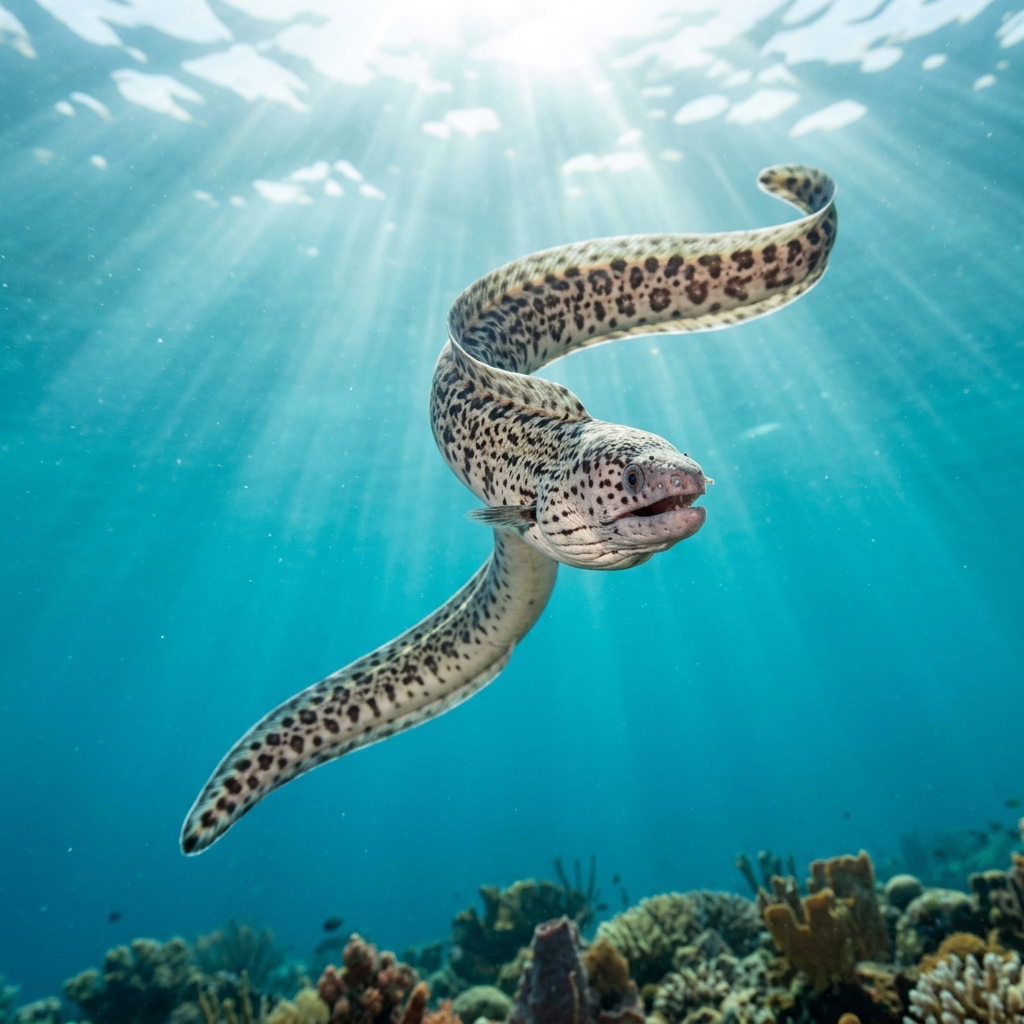
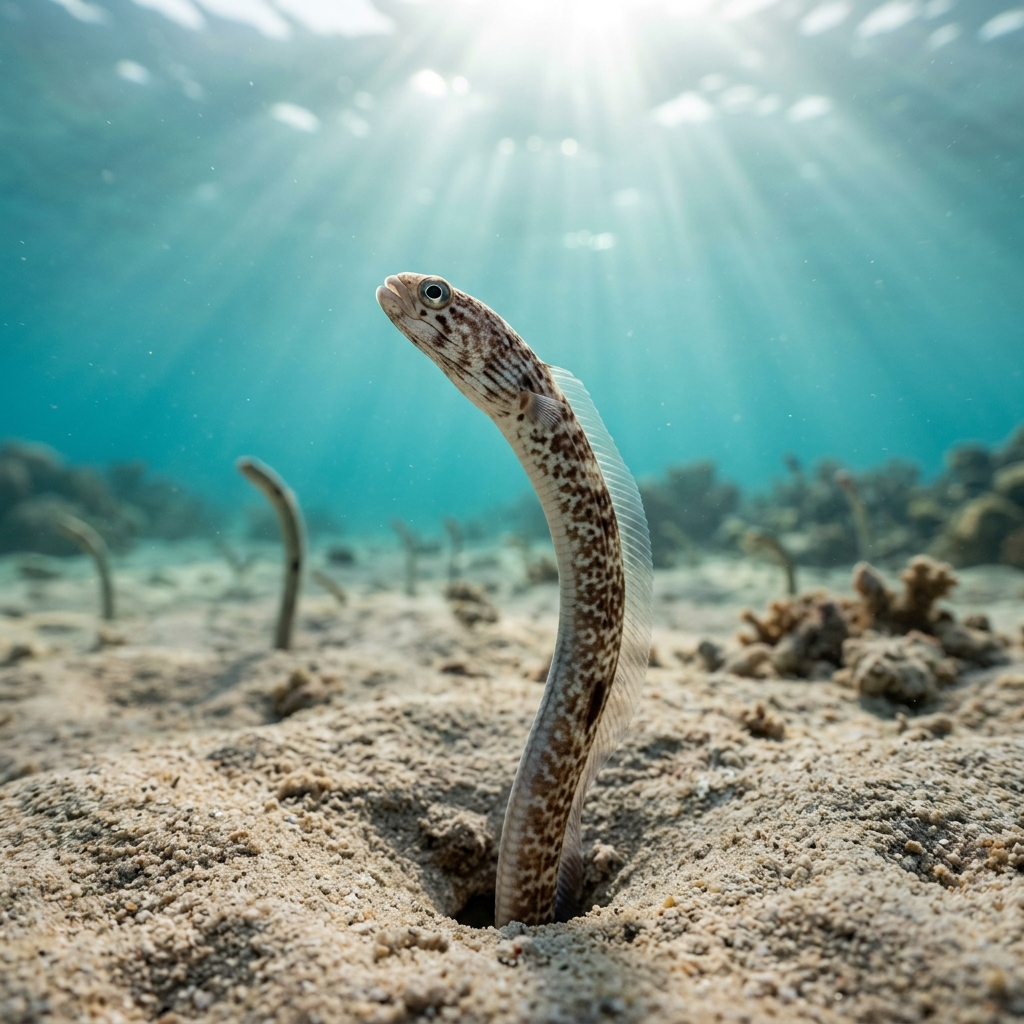
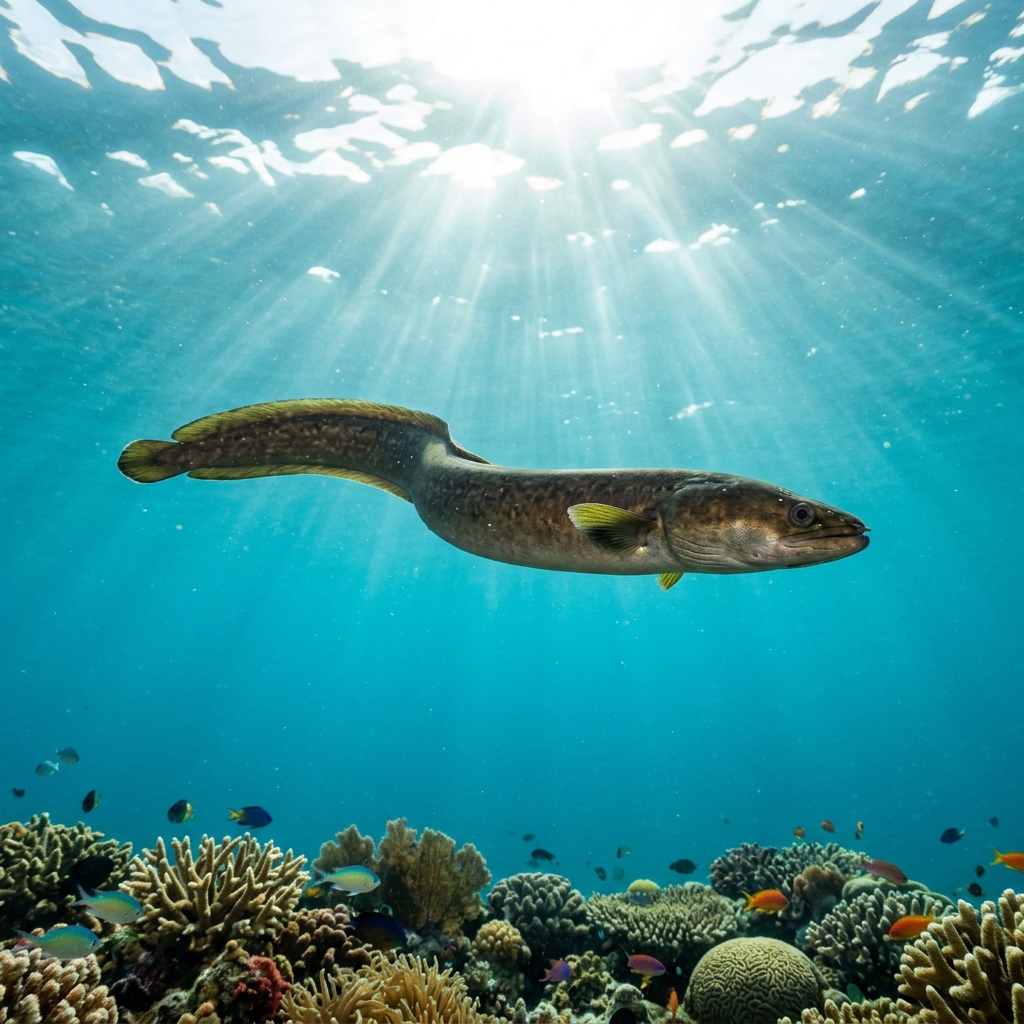
Reef neighbours a diver could mistake it for. Use the identification notes above to tell them apart.
Most commonly logged across the Philippines, particularly in the Visayas Central region, making it by far the strongest destination for sightings. Indonesia, especially Bali and Sulawesi, and Hawaii in the United States also deliver reliable encounters, followed by the Maldives and Phuket in Thailand. Egypt's Red Sea, Costa Rica's Pacific coast, and Japan round out the global spread.
Mapping where Snowflake Moray is logged…
The Philippines, particularly the Visayas Central region, leads all destinations by a wide margin. Strong populations also occur in Indonesia (Bali, Sulawesi), Hawaii, the Maldives, Thailand's Phuket and Phi Phi area, Egypt's Red Sea, and Japan. It is one of the most widely distributed morays in the Indo-Pacific.
In the Northern Hemisphere, sightings are spread throughout the year with no single peak season. In the Southern Hemisphere, encounters are most frequent between September and January. The species thrives between 24 and 29 °C, so any time of year on a healthy tropical reef is worth your while.
Look for a white or pale body covered in irregular black and yellowish rosette markings, a blunt rounded snout, and a stocky build. The pattern is bolder and more distinct than most morays you will encounter. The lack of sharp fangs is a bonus clue if you see the mouth open.
No. They are considered one of the safest morays to encounter. Their teeth are rounded and built for crushing crustacean shells, not slicing flesh, so an accidental bite is far less serious than with fish-eating morays. They are generally calm around divers and will retreat before biting.
They are specialist crustacean predators, feeding primarily on crabs, shrimps, and other hard-shelled invertebrates. Their blunt, molariform (pebble-like) teeth evolved specifically to crack shells rather than grip slippery fish. This makes their diet and tooth shape a useful distinguishing feature compared to most other morays.
Site and sighting data is aggregated from diver logs, iNaturalist and GBIF. For taxonomy and conservation status:
Garden Eel
2,448 sites