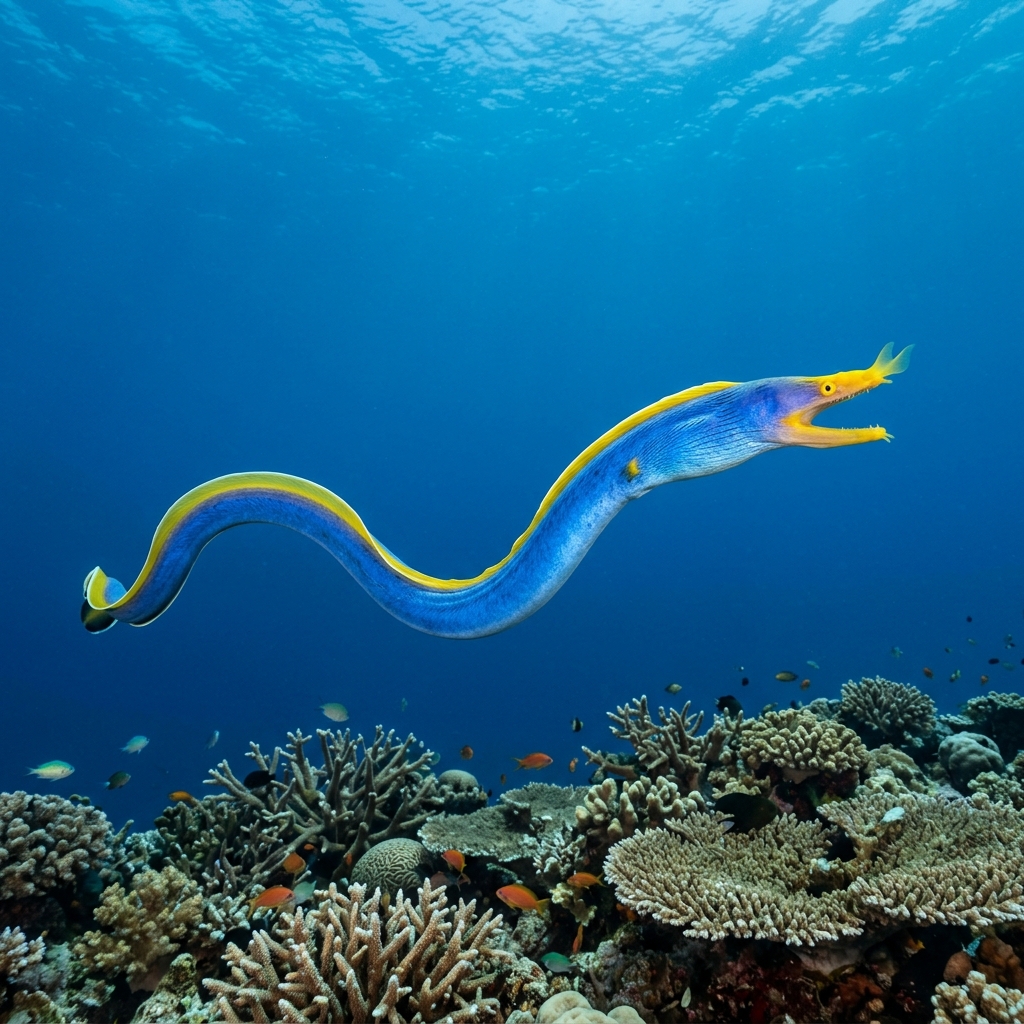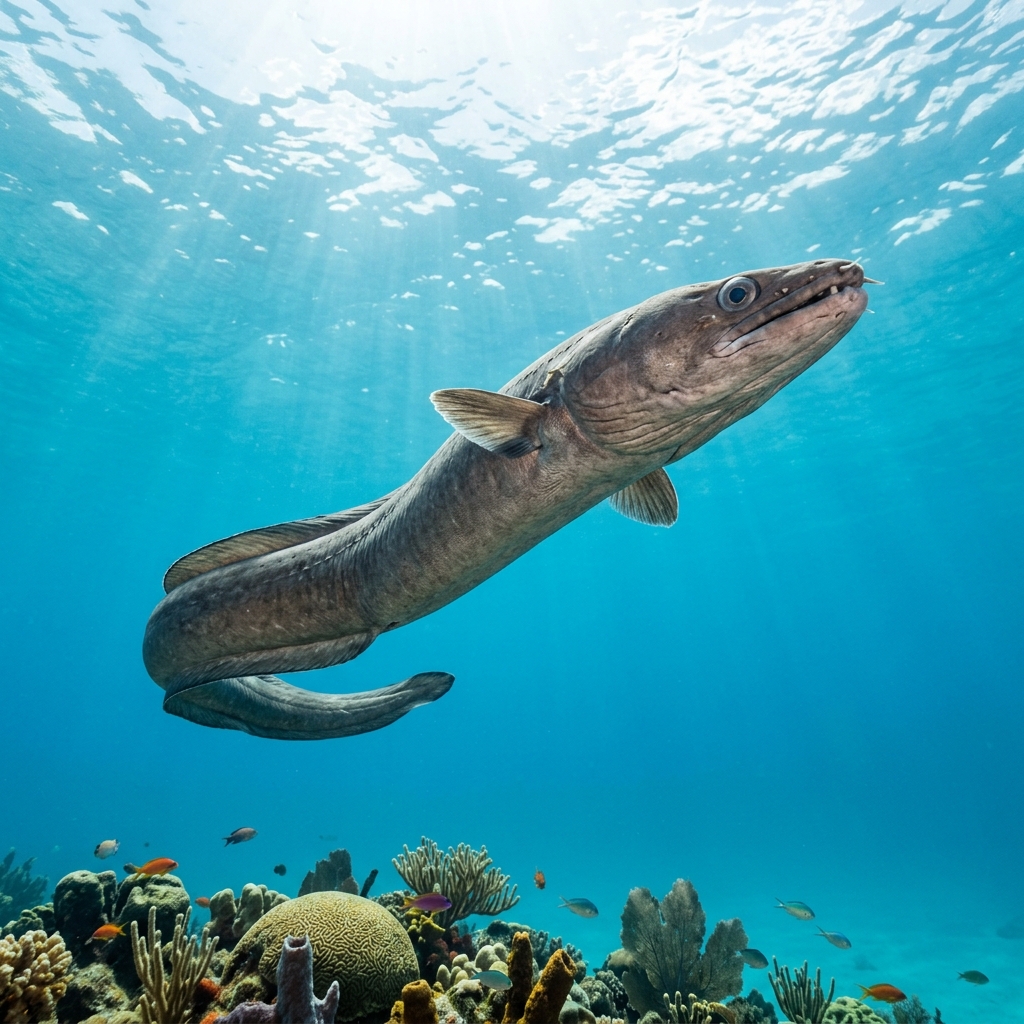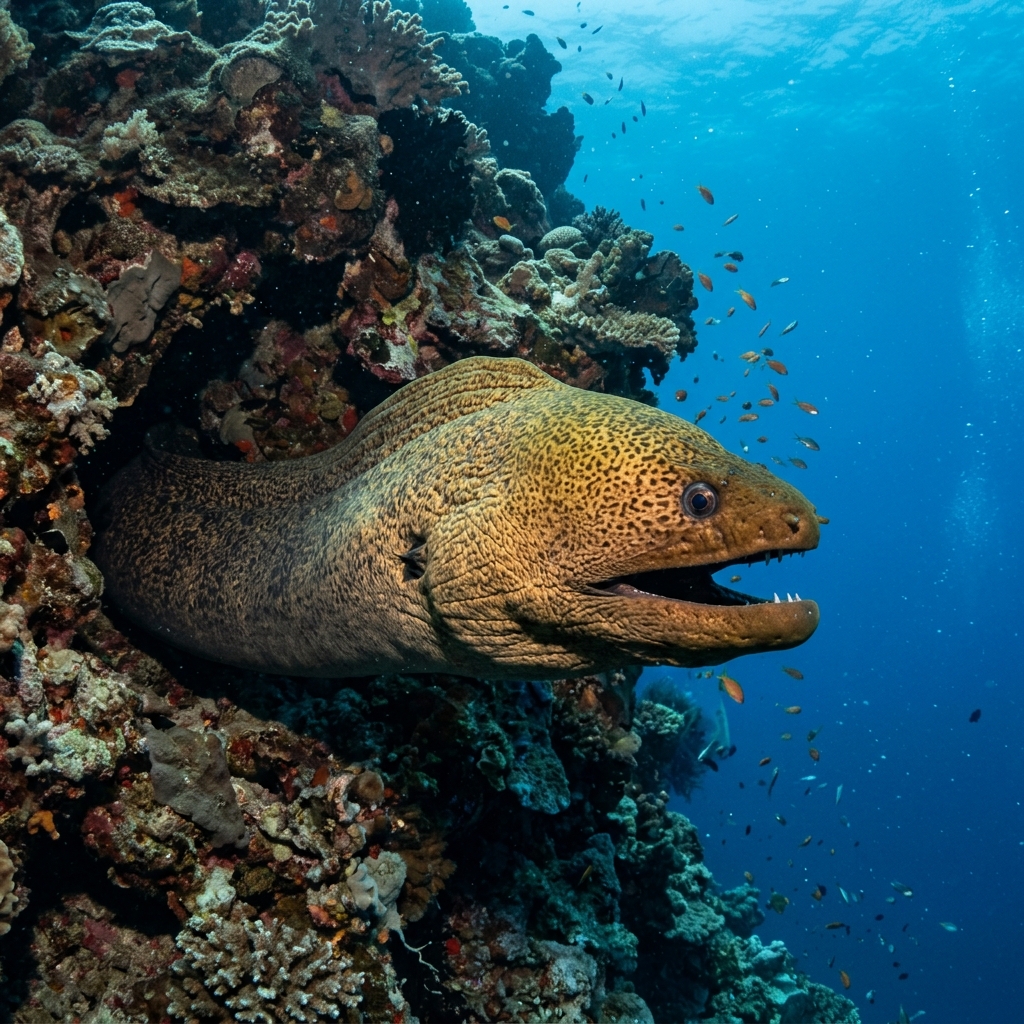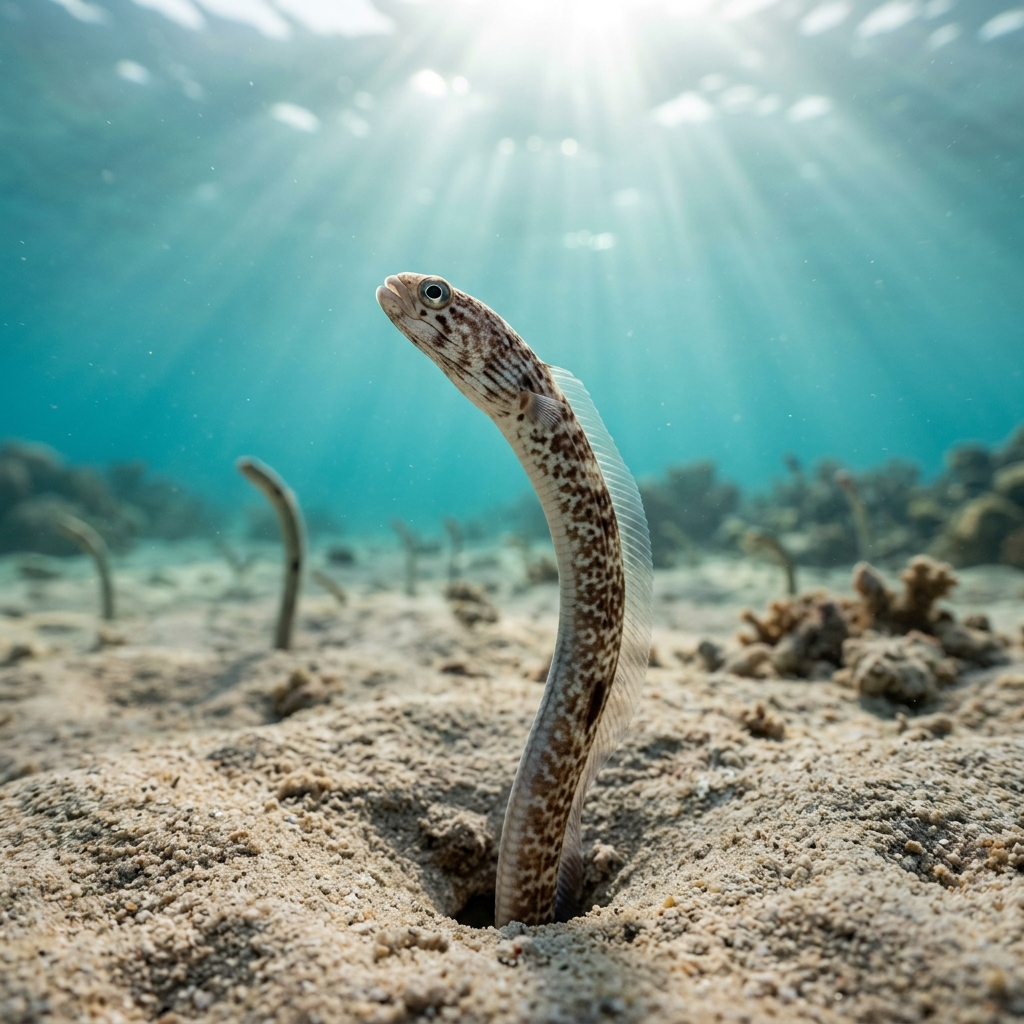
Ophichthidae spp.
Snake eels are logged from Florida to the Philippines and Maldives. Spot them buried in sand or slipping through rubble in water from 17 to 29 °C.
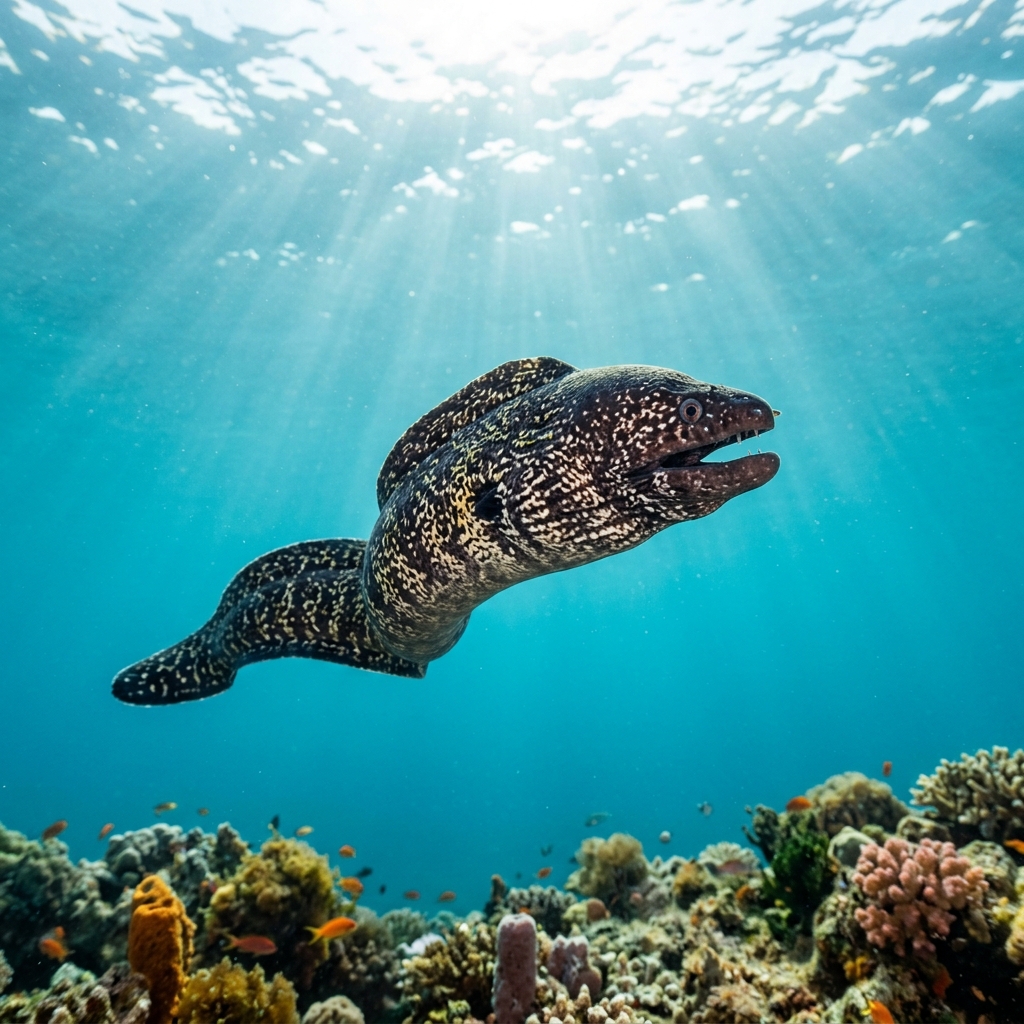
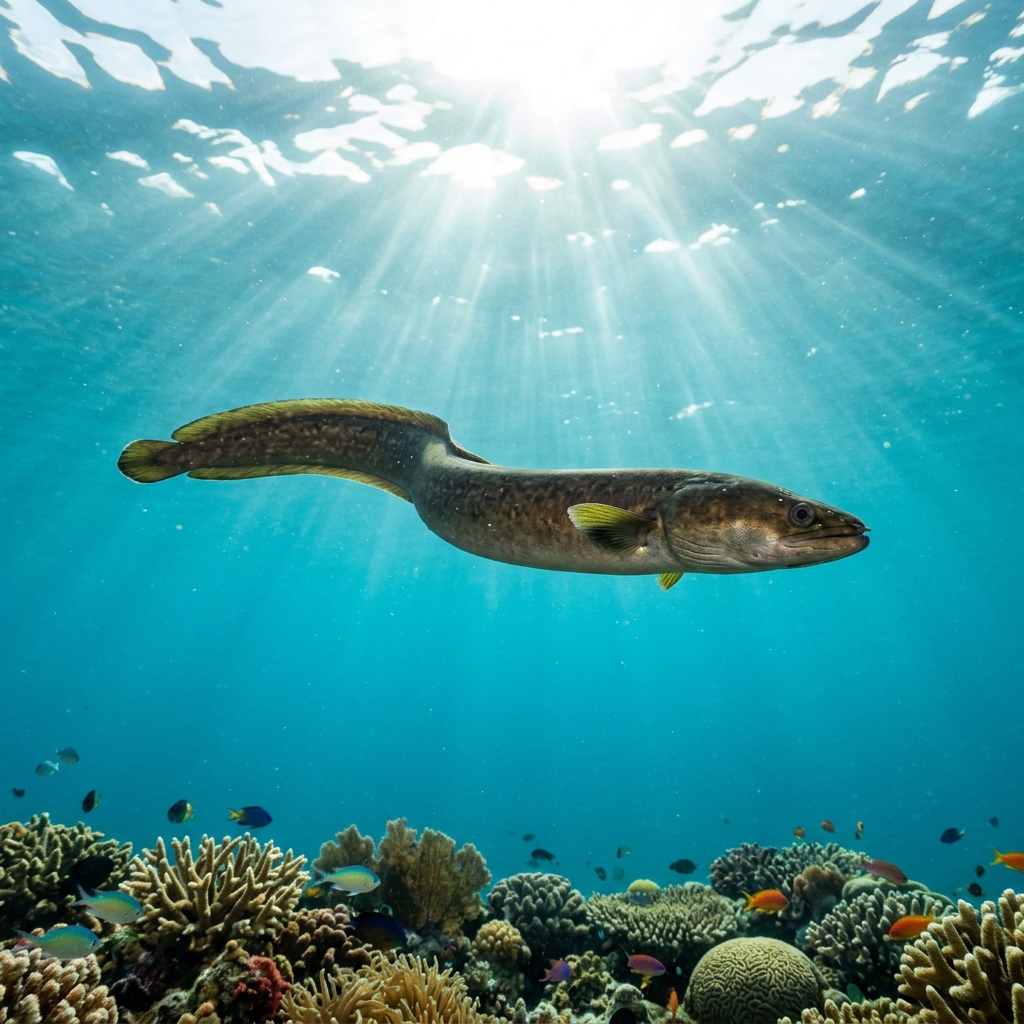
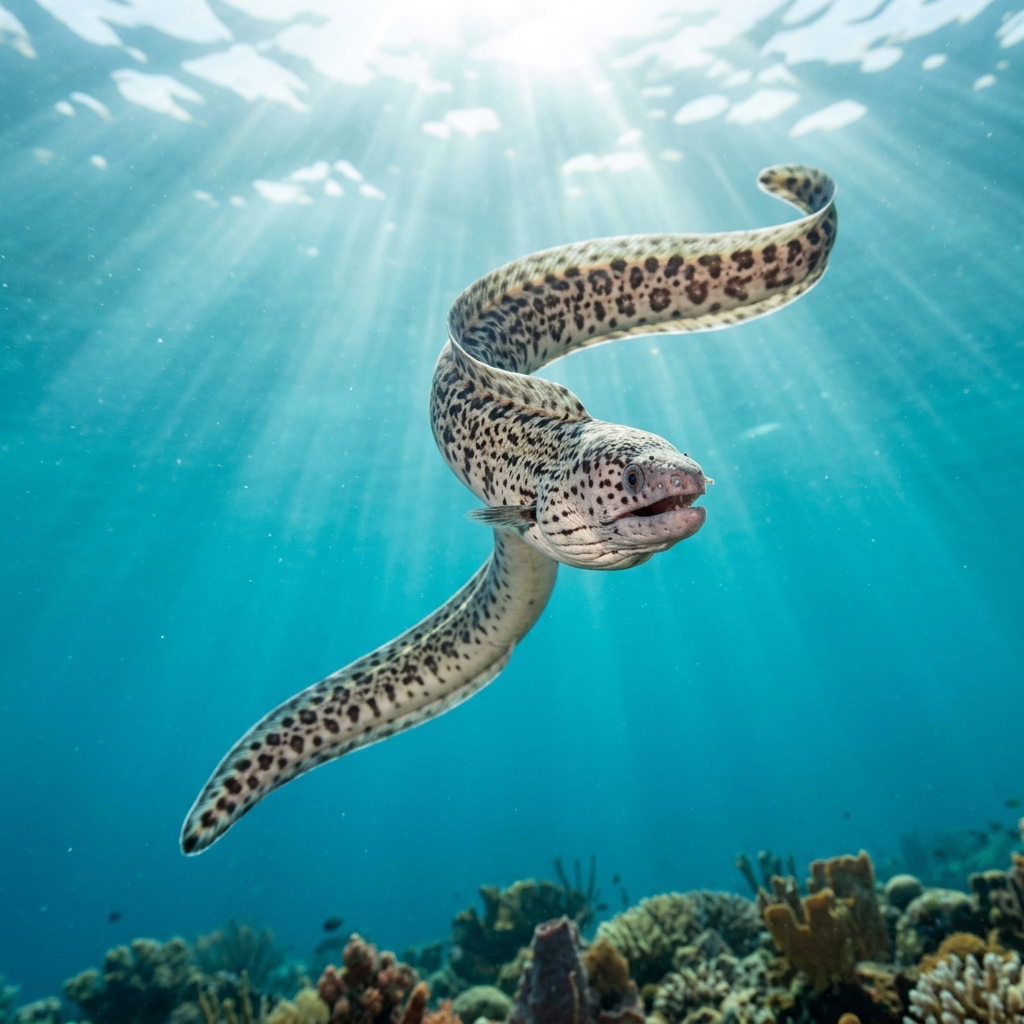
Snake eels share a long, stiff, cylindrical body that tapers to a hard, pointed tail tip, that rigid, finless tail is the single most reliable field mark underwater. Unlike moray eels, most species lack a continuous tail fin, and many have a short, fleshy dorsal fin running only part of the back. Colouration varies widely across the family: you'll encounter plain yellow, cream with dark spots or bands, and intricately patterned species, but the stiff posture and spade-like snout with forward-facing nostrils are consistent across the group. Size spans from pencil-thin species under 30 cm to robust animals approaching a metre in length.
Most sightings catch snake eels either buried tail-first in sand or rubble with only the head exposed, or gliding low across the seafloor between patches of cover. They tend to ignore divers initially but will reverse underground quickly if approached too closely, so a slow, low approach from a distance gives the longest views. Nocturnal hunting is common across the family, so a torch-lit night dive significantly increases your chances of catching one fully out in the open.
Snake eels use that hardened, scale-covered tail tip as a digging tool, reversing into sediment at speed, some species can bury themselves completely in seconds. Fascinatingly, parasitic gnathiid isopods and even larval nematodes are known to exploit this burrowing behaviour, with some nematode larvae escaping from the eel's stomach and encapsulating themselves in the body wall rather than being digested.
In the Northern Hemisphere, snake eels are present year-round with no concentrated peak season, which fits their tolerance for water temperatures ranging from around 17 to 29 °C, comfortable on both subtropical and tropical reefs throughout the year. In the Southern Hemisphere, sightings concentrate in December to February and again in July to August, so timing a trip around those windows improves your odds.
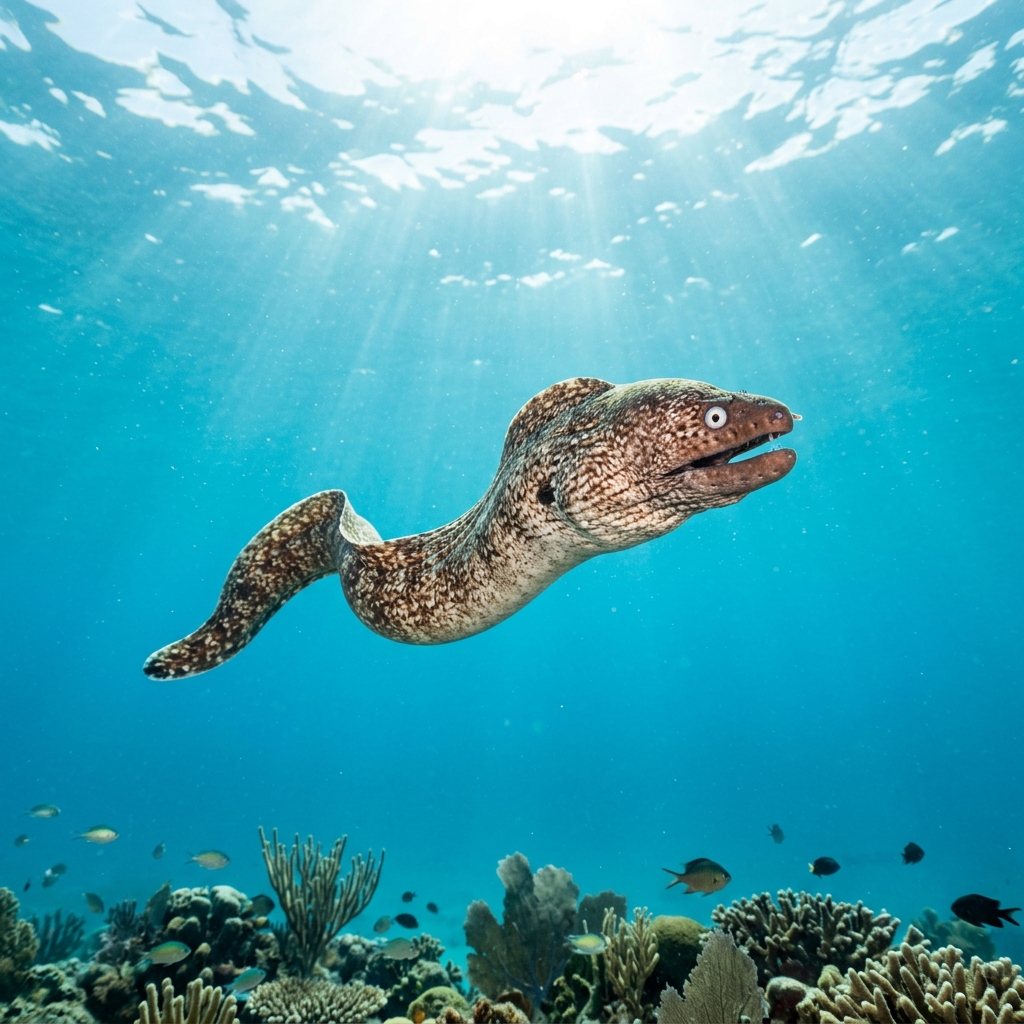
Reef neighbours a diver could mistake it for. Use the identification notes above to tell them apart.
Snake eels are most consistently logged in the United States (particularly Florida and the Southeast), the Philippines (especially Luzon and the Visayas), and Indonesia (notably Sulawesi). Strong records also come from Australia (Western Australia and Queensland), the Maldives (North and Central Atolls), Italy, and Greece, making this a family you can encounter across both tropical and warm-temperate dive destinations worldwide.
Mapping where Snake Eel is logged…
Snake eels are logged across a huge range of countries. The strongest records come from Florida and the wider Southeast United States, the Philippines (Luzon and the Visayas), Indonesia (Sulawesi), Australia (Western Australia and Queensland), and the Maldives. Warm-temperate destinations like Italy and Greece also have confirmed sightings.
In the Northern Hemisphere they appear year-round with no clear peak, so any season works. In the Southern Hemisphere sightings cluster in December to February and July to August, making those the recommended windows if you are diving Australia or similar destinations.
Look for the stiff, cylindrical body and the hard, pointed tail with no fin, that finless tail tip is the key difference from most other eels. A short dorsal fin starting well behind the head and a blunt, forward-nostrilled snout also help. Colouration varies widely, so body shape is more reliable than colour for a family-level ID.
Snake eels are not considered dangerous. They are shy animals that will retreat underground if disturbed. As with any eel, avoid putting fingers into sandy burrows, but there is no documented threat to divers observing them normally.
Size varies considerably across the family. Small species reach around 30 cm, while larger members of the group can approach or exceed one metre in length. In the water most encounter are mid-sized animals roughly 40 to 70 cm long, slender enough to look deceptively short when partially buried.
Site and sighting data is aggregated from diver logs, iNaturalist and GBIF. For taxonomy and conservation status:
Mediterranean Moray
2,020 sites