Onigocia spinosa
A camouflaged bottom-dweller seen uncommonly on dive sites in Western Australia, resting motionless on sand in 17 to 28C water.
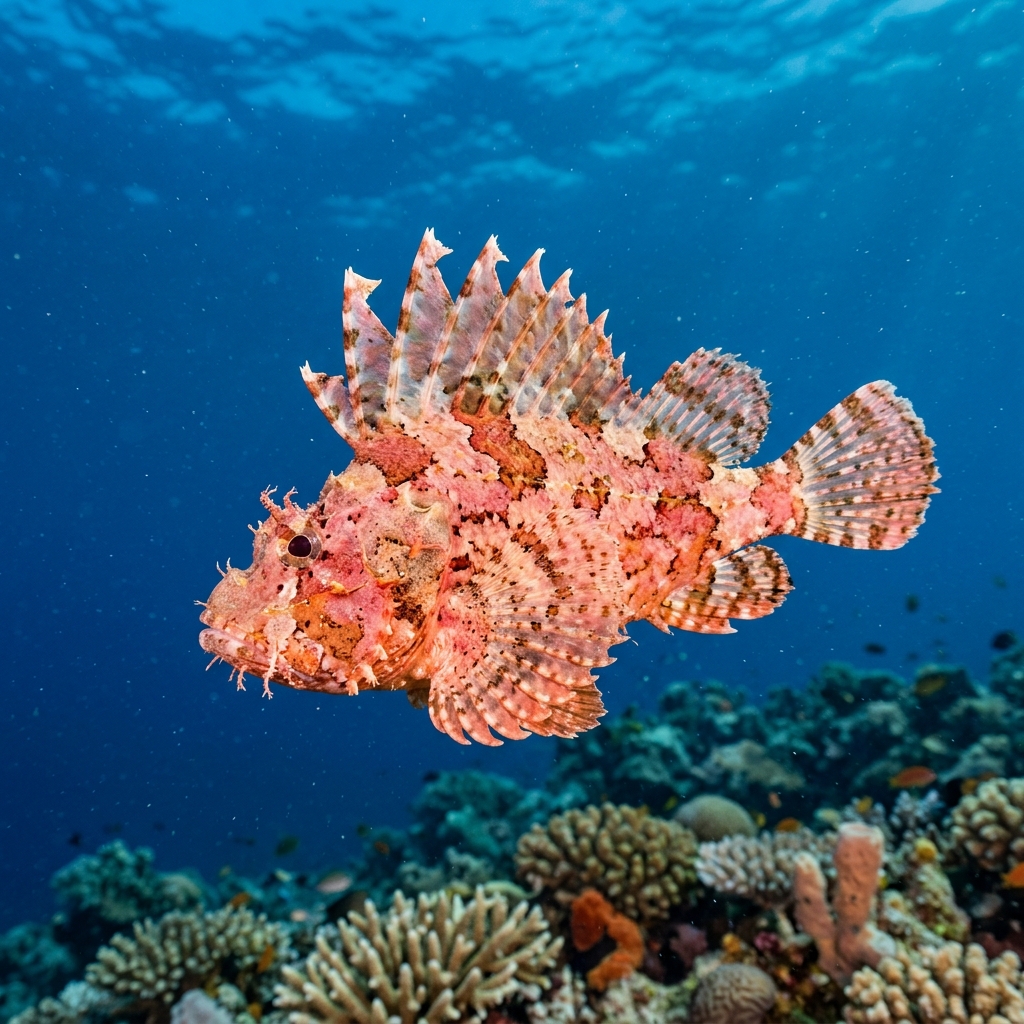
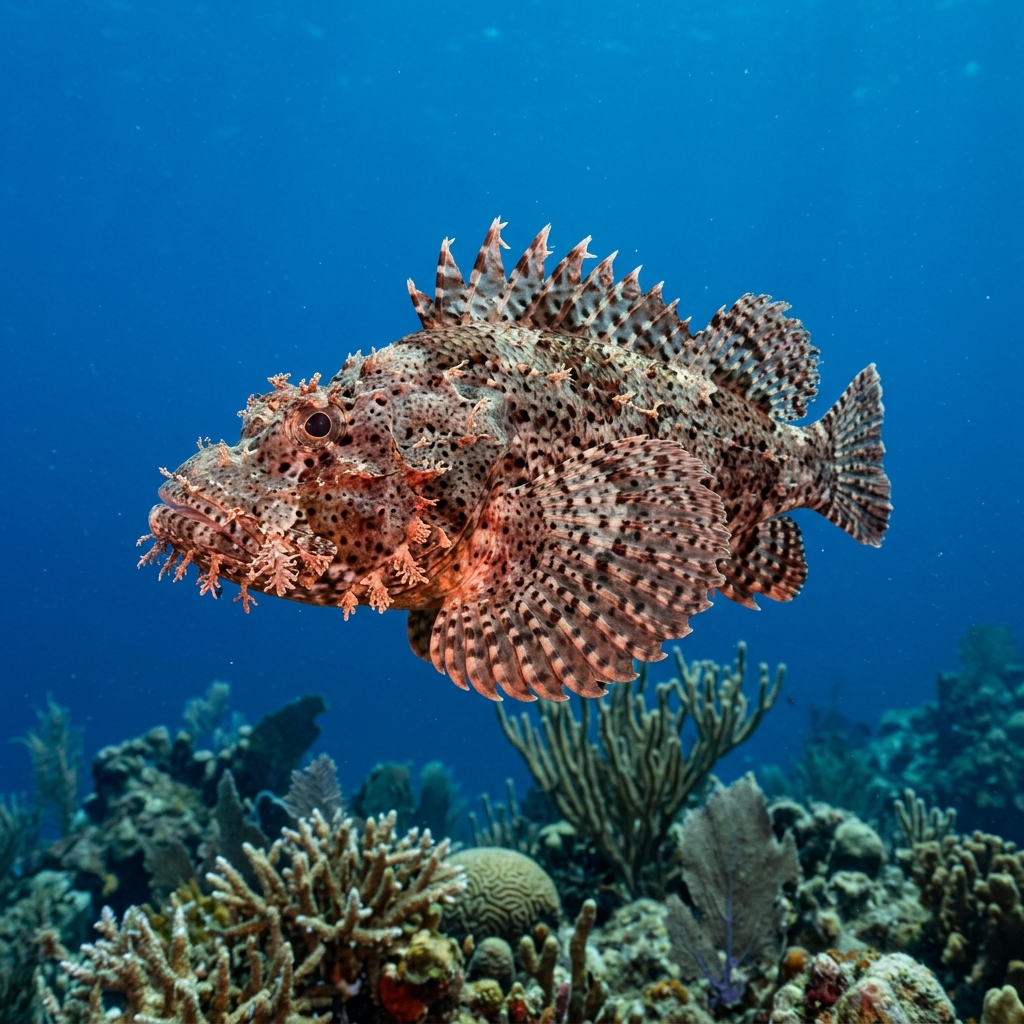
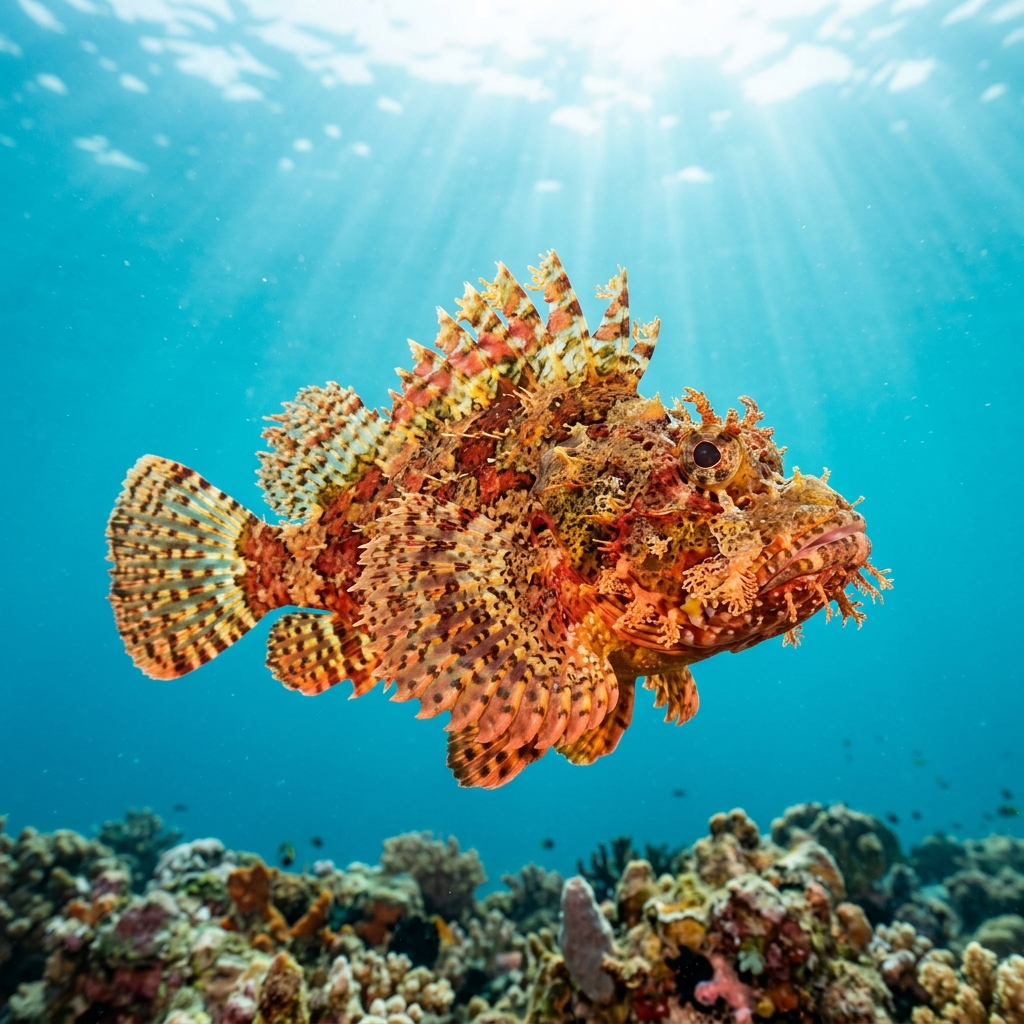
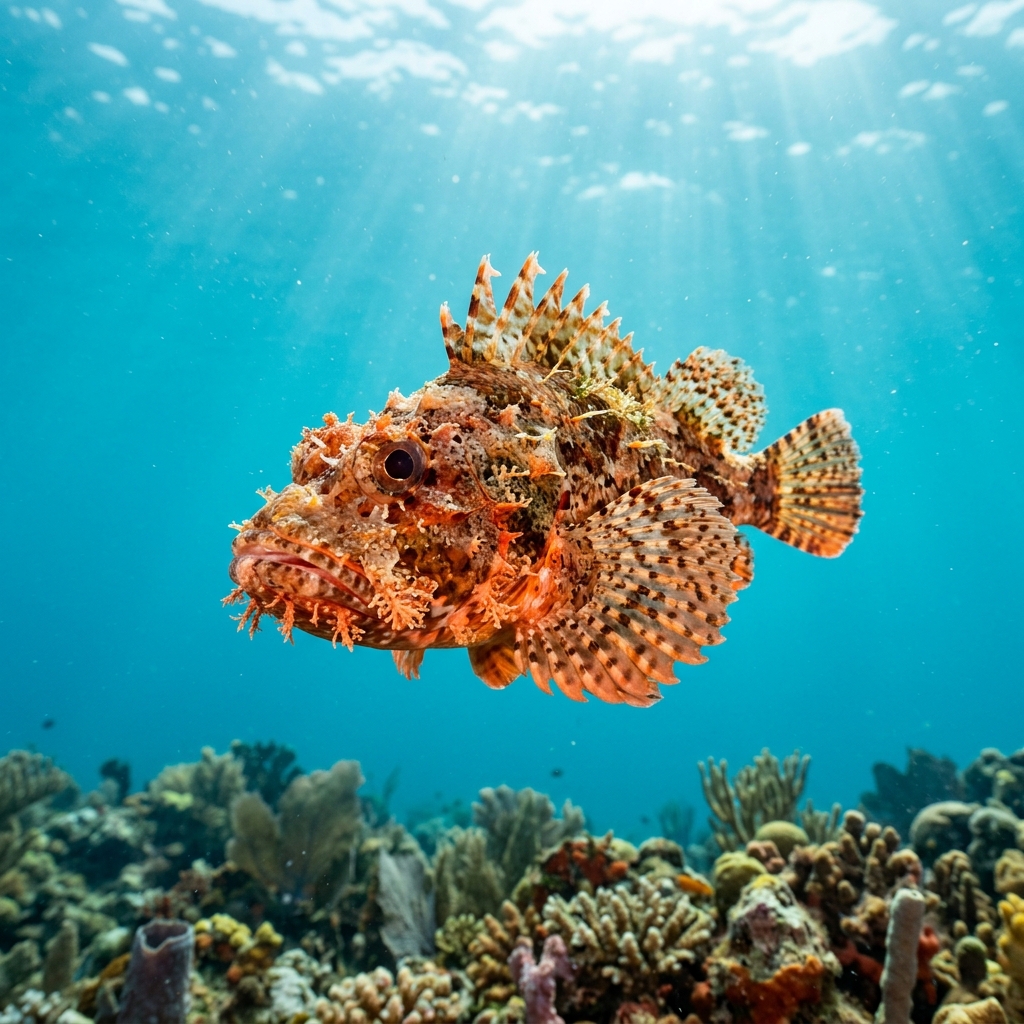
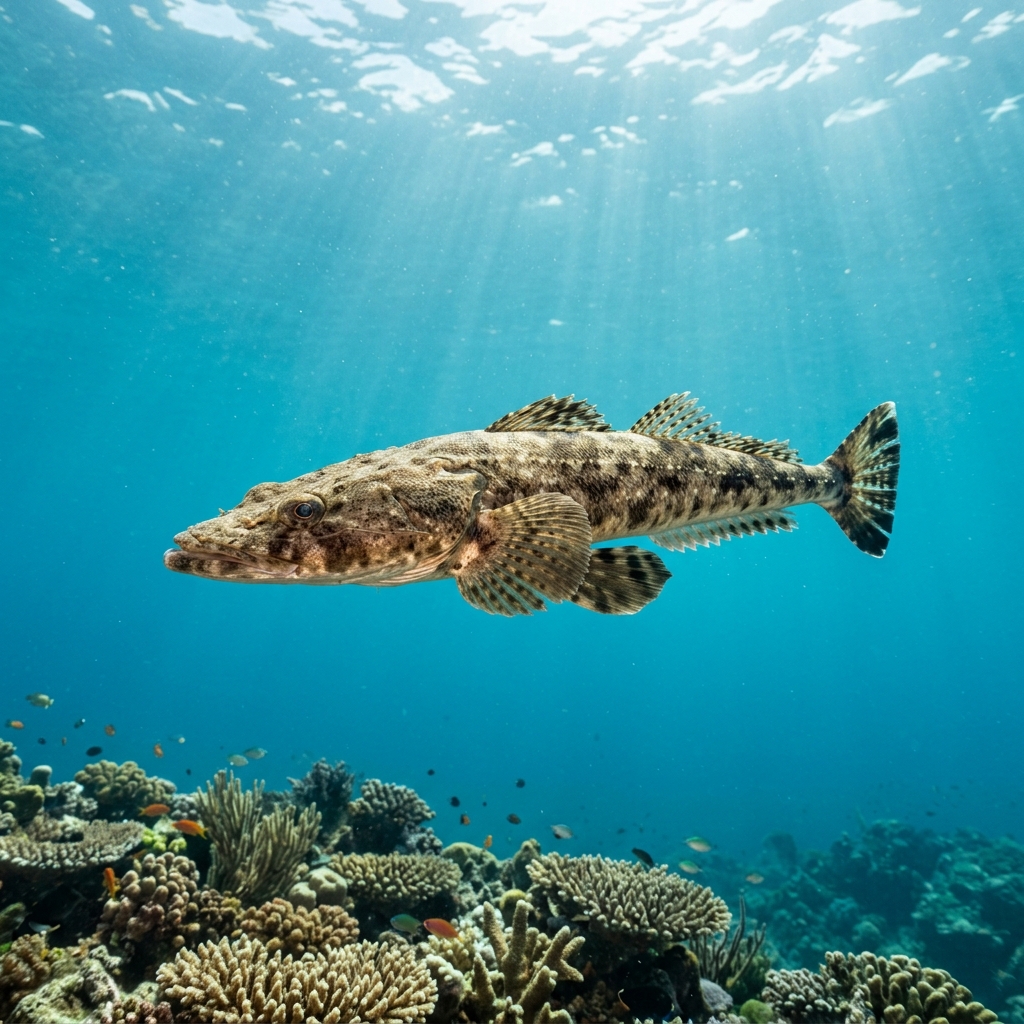
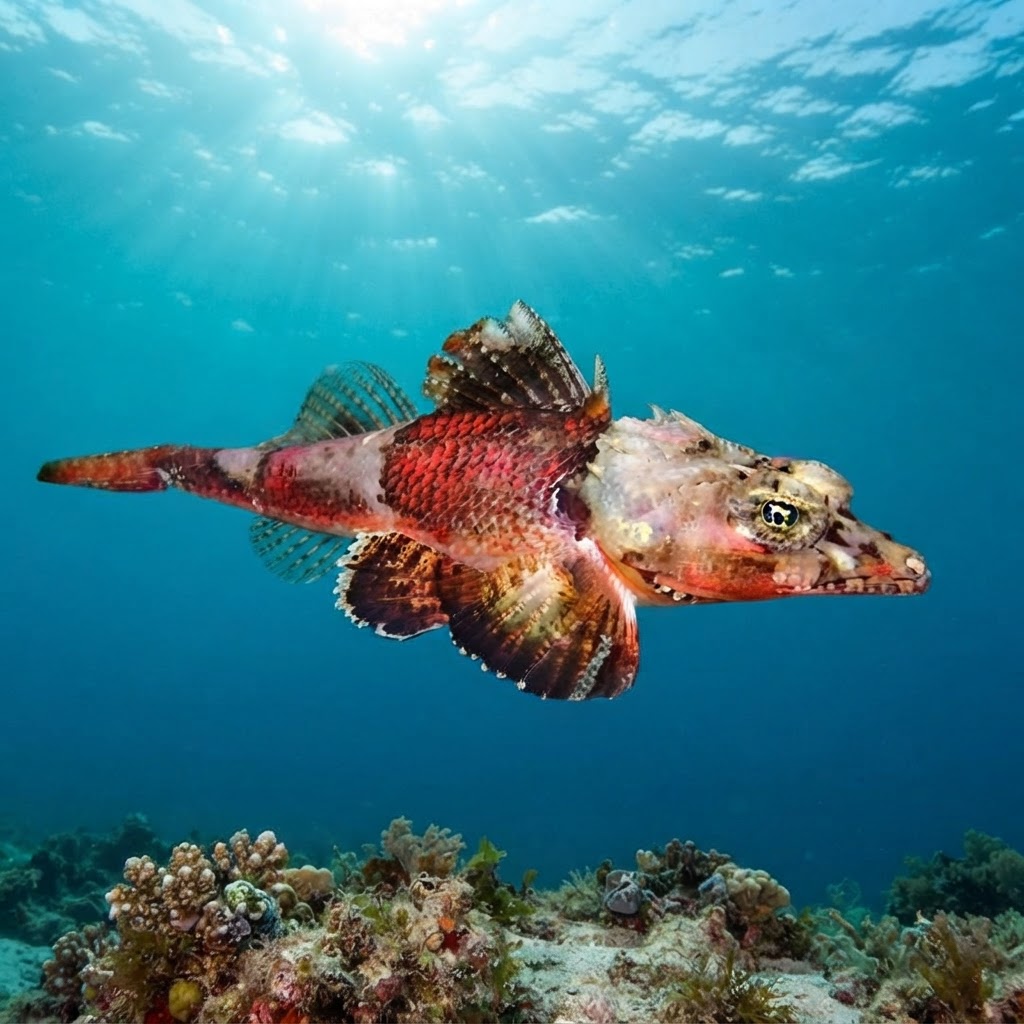
Grows to around 18cm, with a flattened head and tapering body built for lying flush against sand or rubble. Mottled brown, grey and cream patterning breaks up its outline against the seabed, and the eyes sit raised on top of the head like a crocodile's. Look for the faint bars or spots along the flanks and the small spines on the head that give the species its name, usually only visible on a close, careful look.
Spends most of its time lying still on sand or fine rubble, relying on camouflage rather than flight to avoid attention. Divers who spot one usually do so by chance during a slow swim near the bottom, since it rarely moves unless closely approached. It will sit tight through a hover overhead and only dart off in a short burst if you get too close or touch the substrate near it.
Its flattened profile and eyes-on-top design let it bury itself almost invisibly in loose sediment, ambushing small prey that wander within striking range.
Comfortable across a wide range from 17.4 to 28.1C, and there is not enough seasonal data to point to a specific window, so treat sightings as possible year-round. Time your dive to slow, methodical bottom scanning rather than a particular month.
Reef neighbours a diver could mistake it for. Use the identification notes above to tell them apart.
All logged sightings so far come from Western Australia, making it the place to look if you want a real shot at this one. It has not yet been reliably reported from other countries, so treat any Western Australian site with sandy or rubble bottoms as your best bet.
Mapping where Spiny Flathead is logged…
The only confirmed sightings logged so far are from Western Australia, where it turns up uncommonly on sandy or rubble-bottomed dive sites. It has not been documented elsewhere, so Western Australia is currently the place to look.
There is not enough data to point to a distinct season, and it has been recorded across a wide temperature range of 17.4 to 28.1C. Treat it as a year-round possibility rather than a seasonal target.
Look for a flattened, camouflaged body around 18cm long lying still on sand, with mottled brown and grey patterning and eyes raised on top of the head. Small spines on the head are the key detail that separates it from similar bottom-dwelling species.
They typically reach around 18cm in length, making them a small, easy-to-overlook bottom dweller.
No, they are not considered dangerous to divers. They rely on camouflage and stillness rather than aggression, and will only dart away if disturbed at close range.
Site and sighting data is aggregated from diver logs, iNaturalist and GBIF. For taxonomy and conservation status:
Madeira Rockfish
2,773 sites