Haemulon macrostomum
Spot Spanish Grunt on Florida's reefs or Sint Maarten's walls, uncommon but steady sightings year-round in 24 to 30 C water.
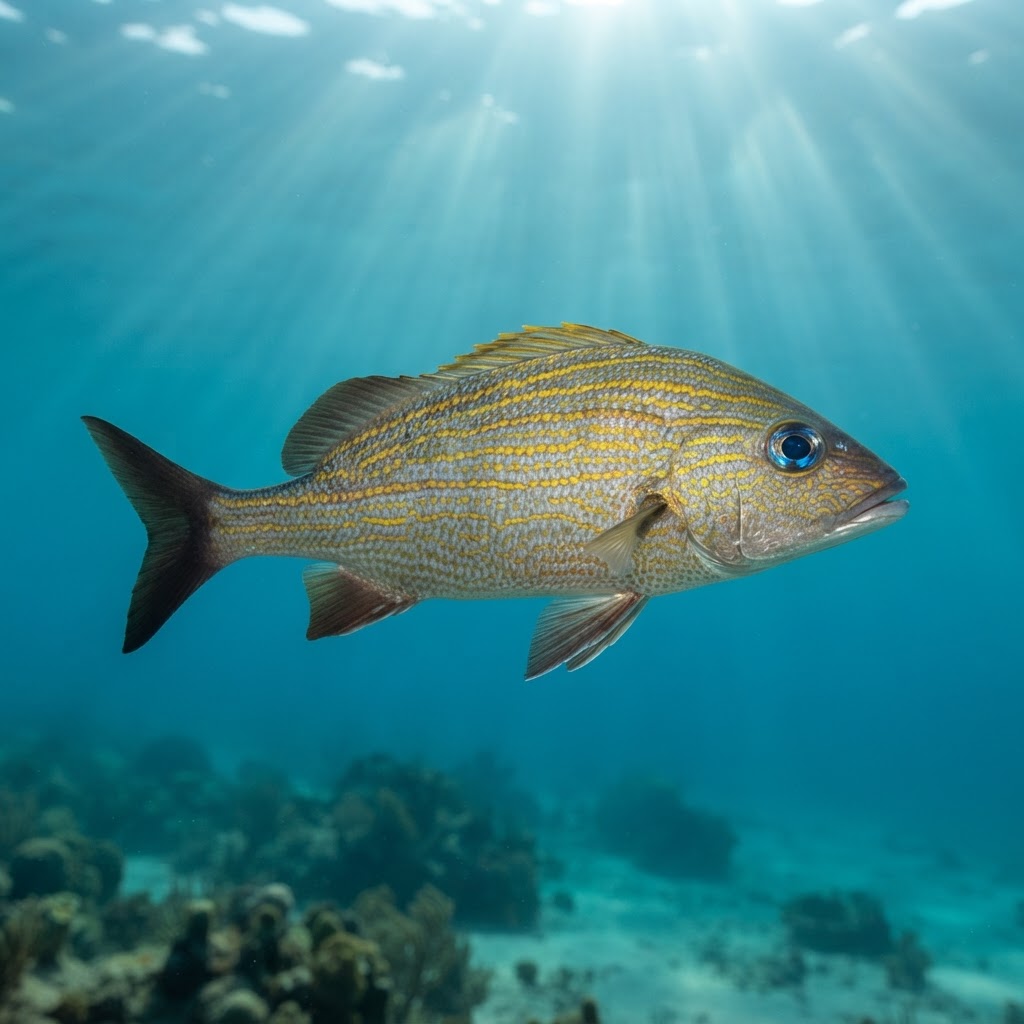
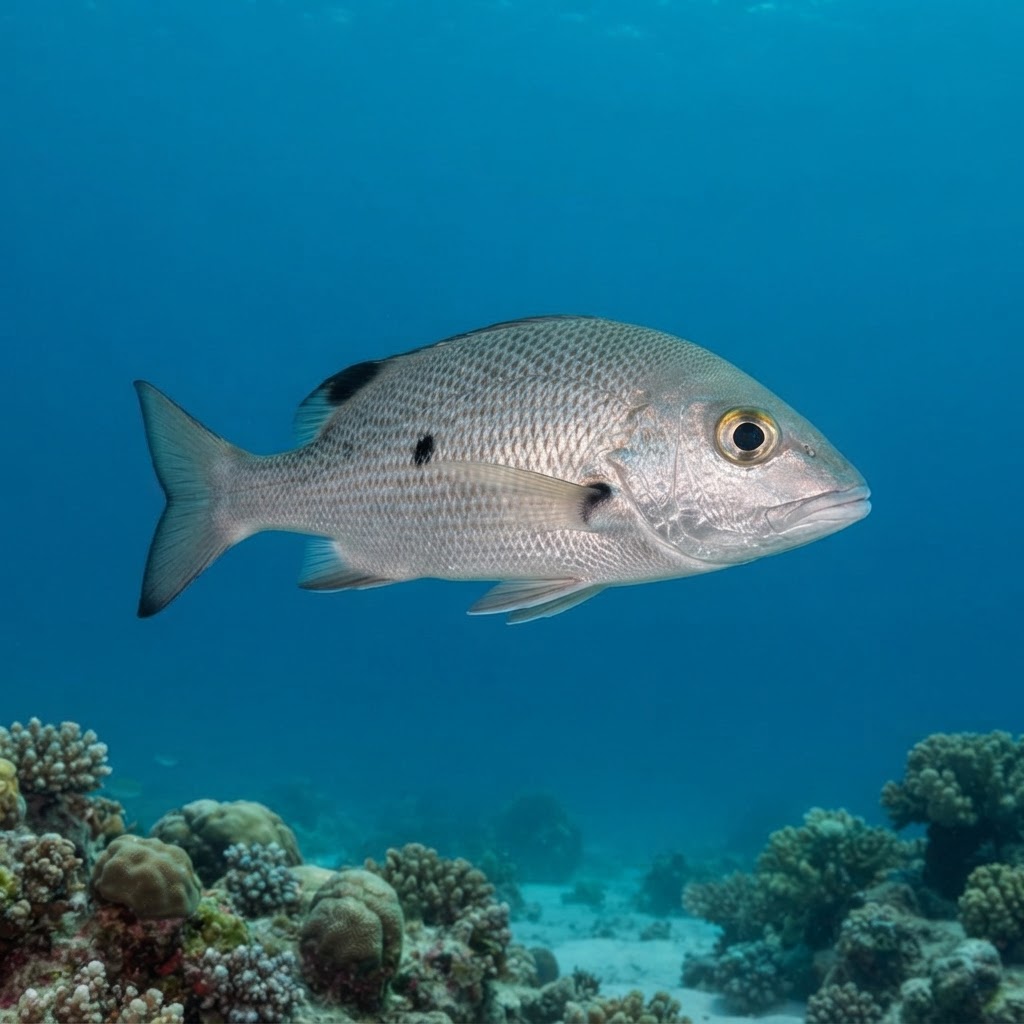
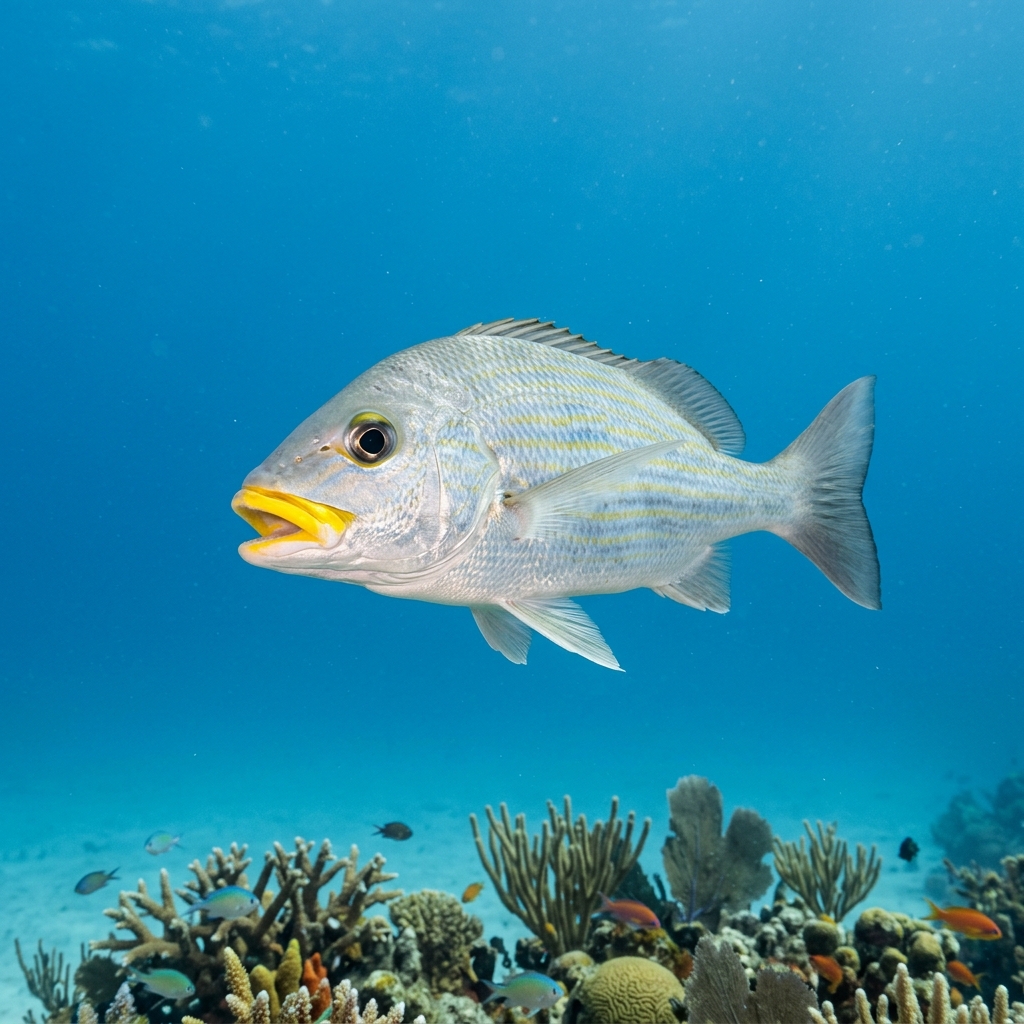
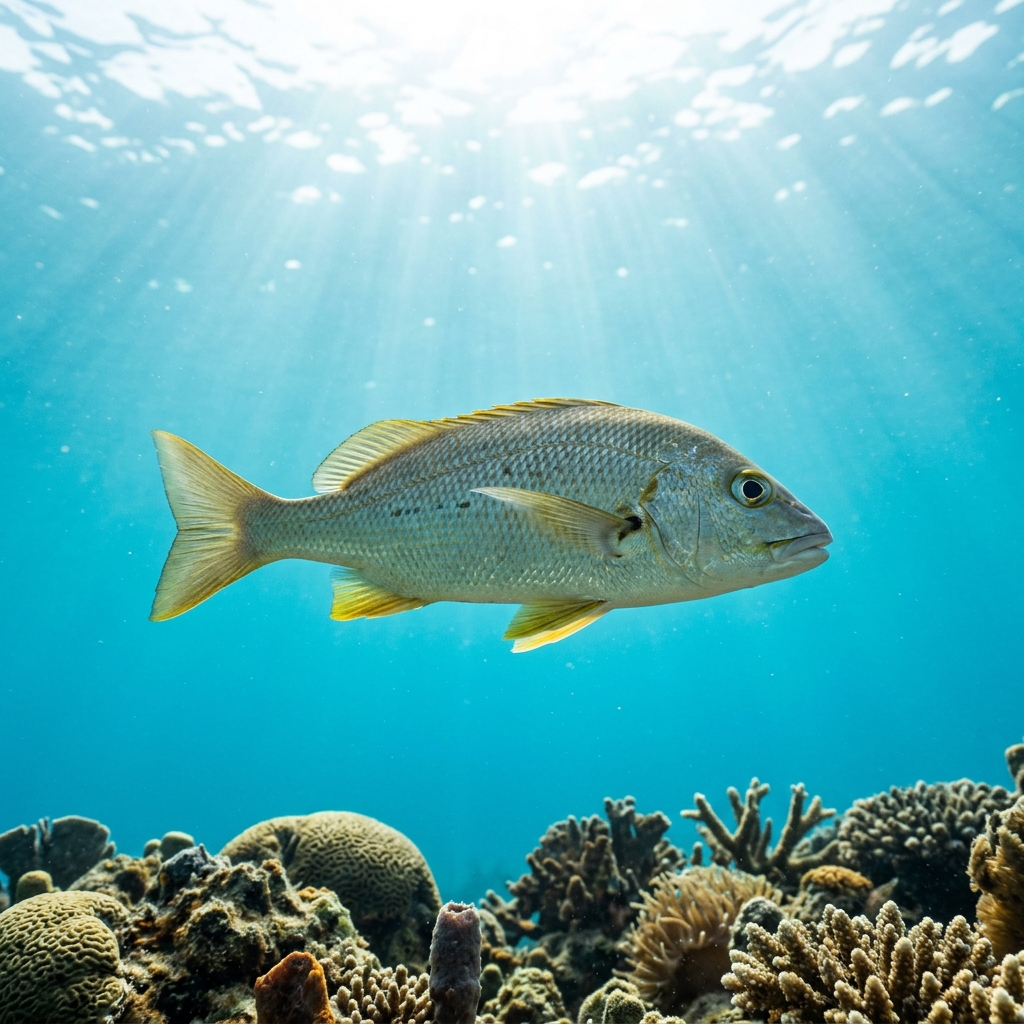
Look for a chunky, deep-bodied grunt with a two-tone pattern: dark grey-brown upper body fading to a pale, almost white lower half and belly. A key marker is the solid black blotch at the base of the tail, which stands out clearly against the pale rear body. The mouth is notably large for a grunt, matching the species' scientific name, and the eye is often reddish.
Usually found hovering in loose groups near reef structure, ledges, and coral heads rather than out in the open, often mixed in with other grunt species. They are generally unbothered by divers, holding position or drifting slowly away rather than bolting, which makes them easy to approach for a photo. Most sightings come from daytime reef dives where they sit quietly rather than actively feeding.
Like other grunts, this species produces its name-giving sound by grinding its pharyngeal teeth, a noise amplified by the swim bladder that can sometimes be felt as a low buzz through the water rather than clearly heard.
No clear seasonal pattern shows up in the data, and with a comfortable range of 24.3 to 30.3 C this is a year-round sighting on Caribbean and Florida reefs rather than a seasonal special.
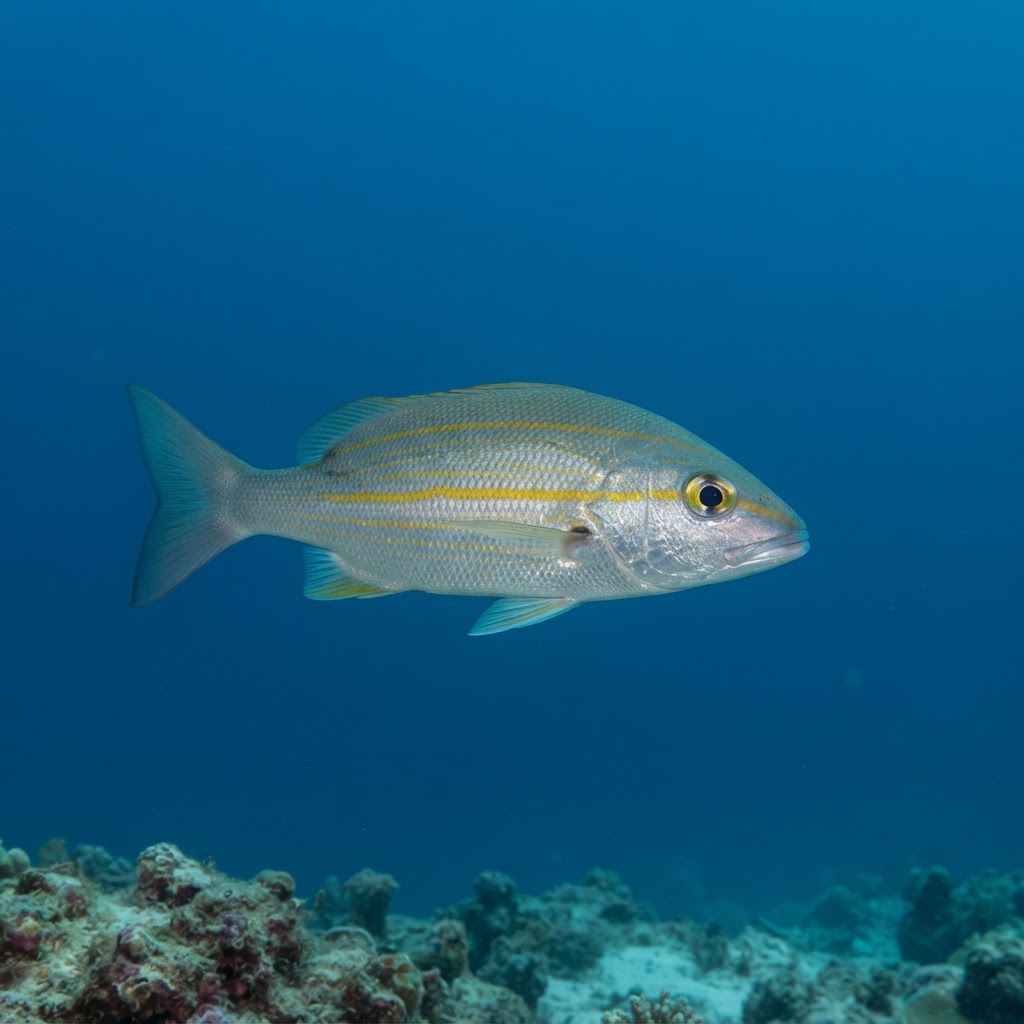
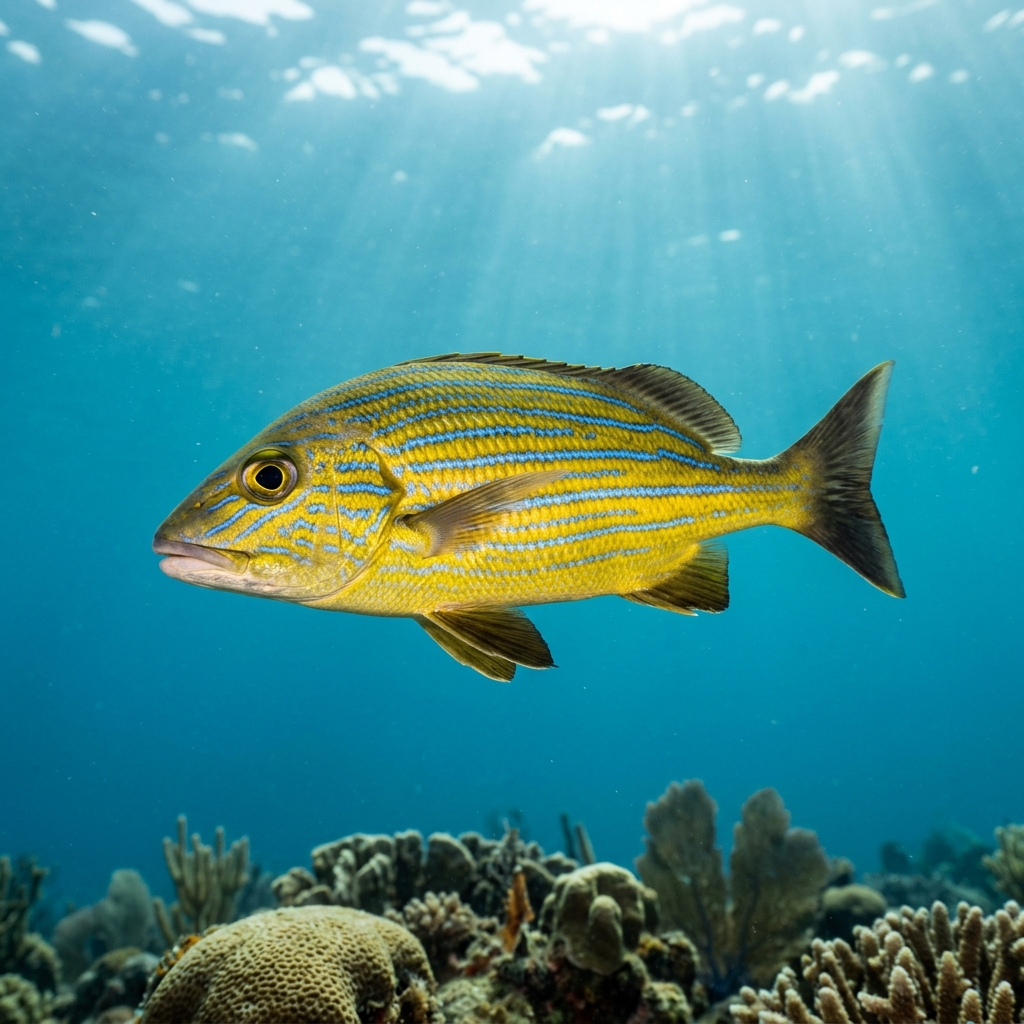
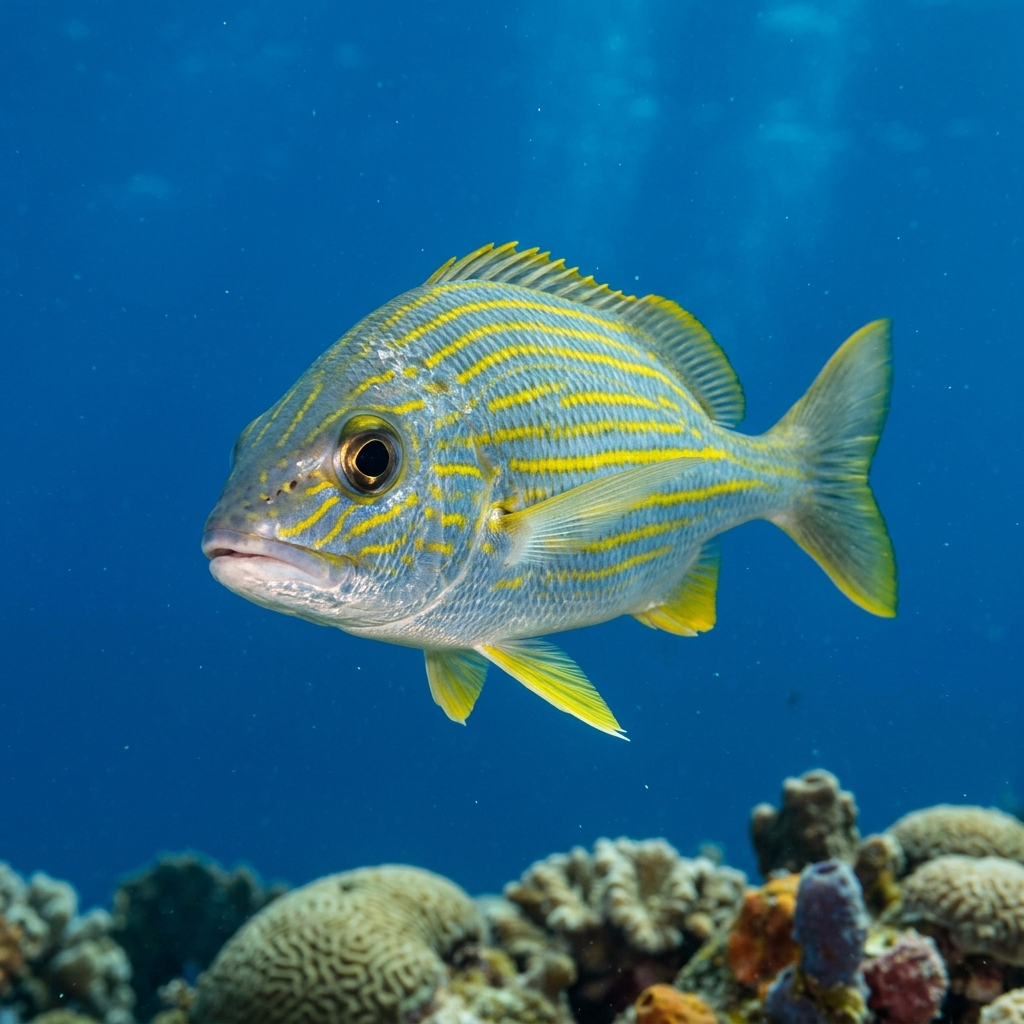
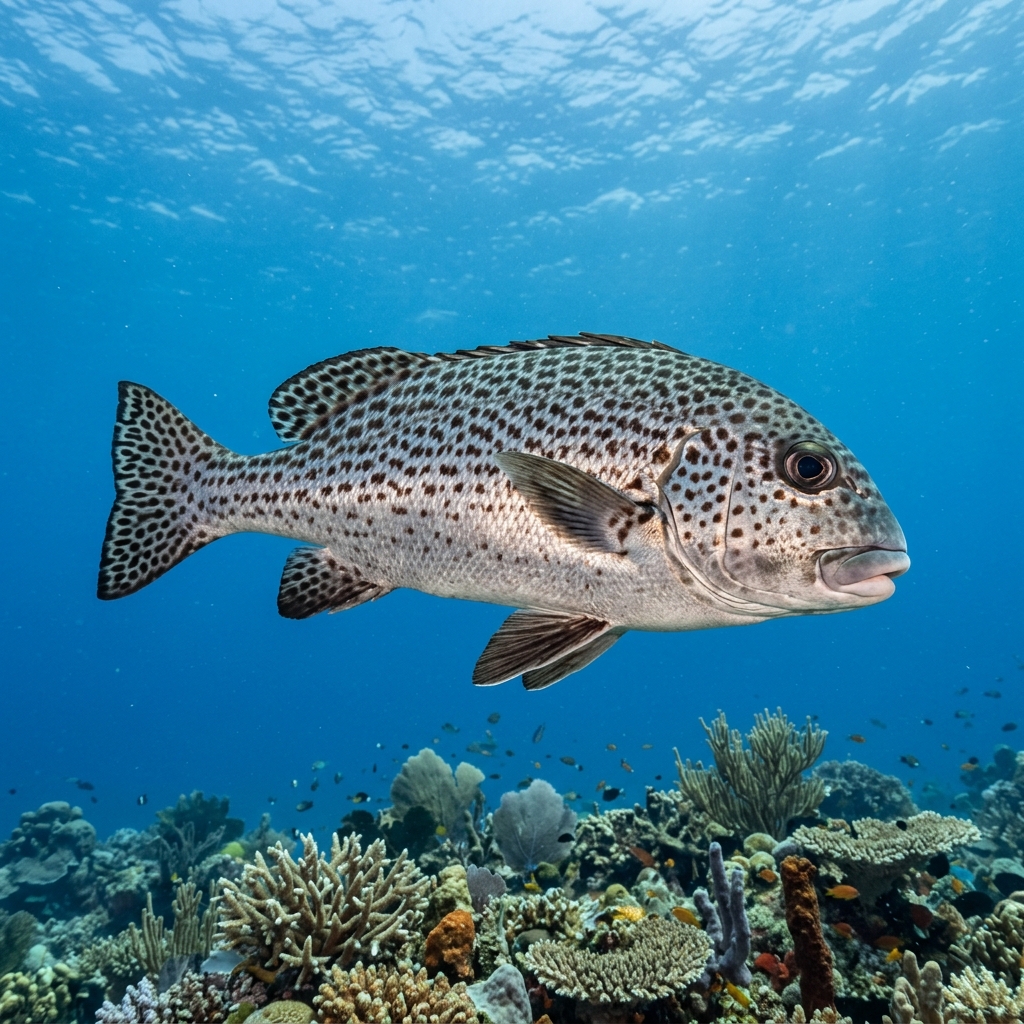
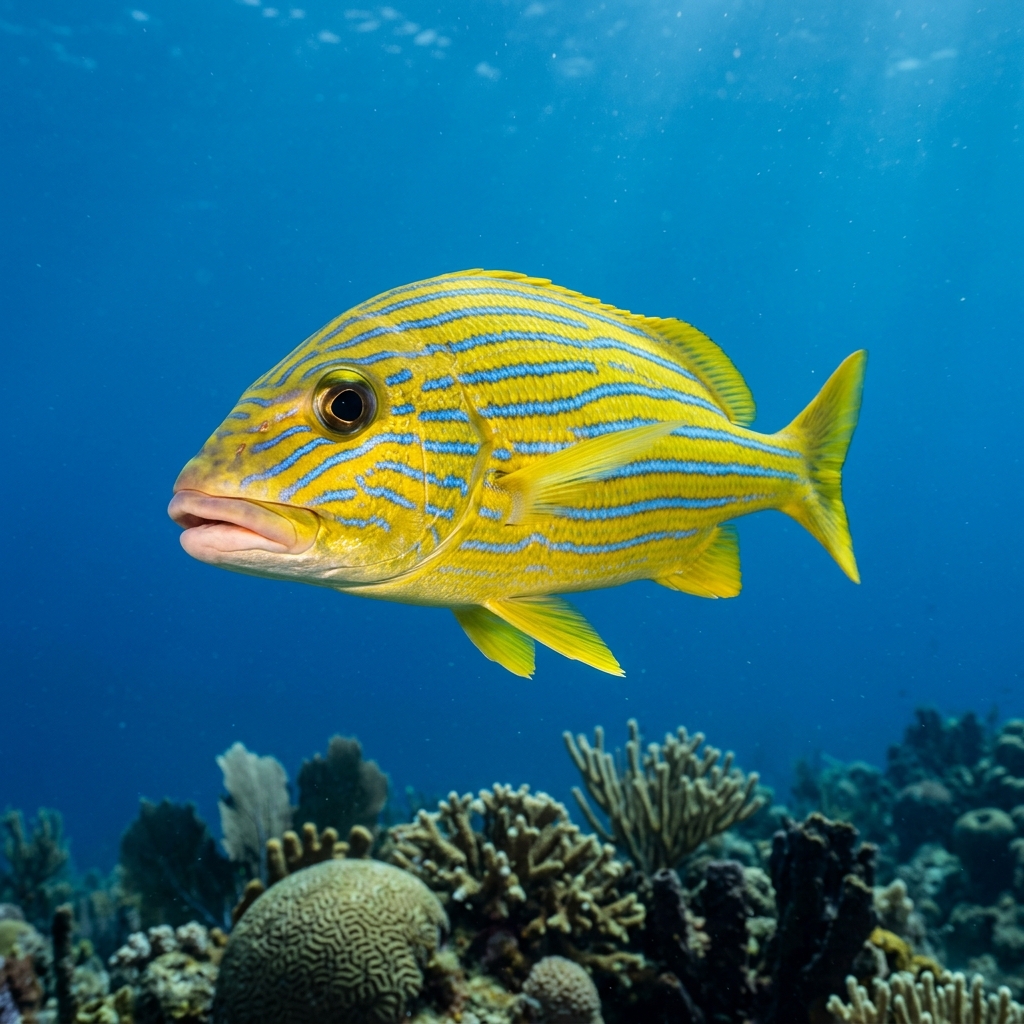
Reef neighbours a diver could mistake it for. Use the identification notes above to tell them apart.
Most reliably logged on reefs in Florida, which dominates the sightings, with a strong secondary presence in Sint Maarten and Saint Martin. Divers also report steady sightings in Tobago, the British Virgin Islands around Tortola, and along Colombia's Caribbean coast, with occasional records from the Bay Islands in Honduras and Anguilla.
Mapping where Spanish Grunt is logged…
Florida has the most logged sightings by far, with additional strongholds in Sint Maarten, Saint Martin, Tobago, and the British Virgin Islands around Tortola. Smaller numbers turn up in Colombia's Caribbean coast, Honduras' Bay Islands, and Anguilla.
There is no strong seasonal pattern in sightings, so they are a year-round find on tropical reefs. Water temperatures where they are seen range from 24.3 to 30.3 C, comfortable across most of the diving calendar in their range.
Look for a dark grey-brown upper body that fades sharply to a pale, whitish lower half, plus a solid black blotch at the base of the tail. The mouth is larger than on most other grunts, a useful detail if you get a close look.
No, they pose no threat to divers and will typically hold position or ease away calmly if you approach slowly.
Their common name comes from a real sound: they grind teeth in their throat to produce a grunting noise, amplified by the swim bladder, which is how the whole family gets its name.
Site and sighting data is aggregated from diver logs, iNaturalist and GBIF. For taxonomy and conservation status:
Bluestriped Grunt
1,907 sites