Lethrinus nebulosus
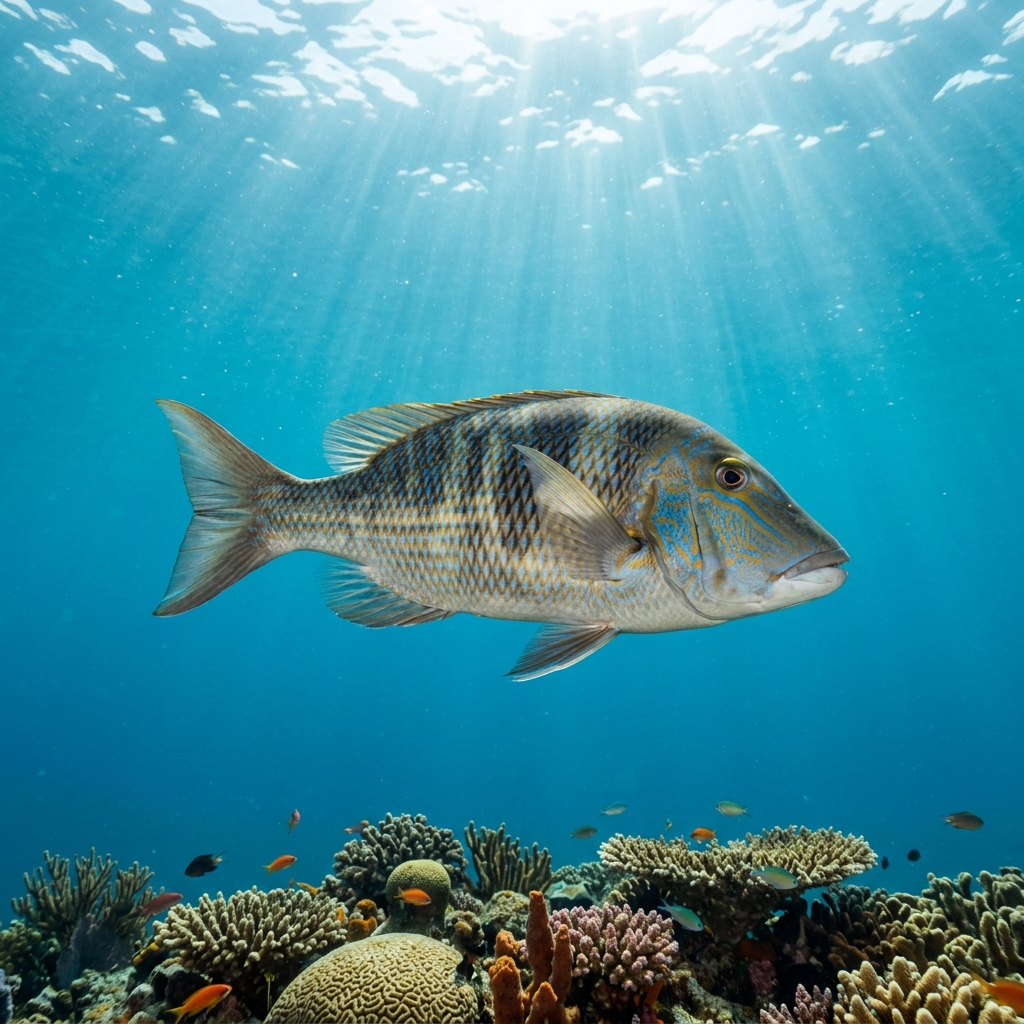
Silvery reef fish with blue facial streaks, common on Red Sea reefs in South Sinai and reliably logged around Okinawa year-round in 24-29 C water.
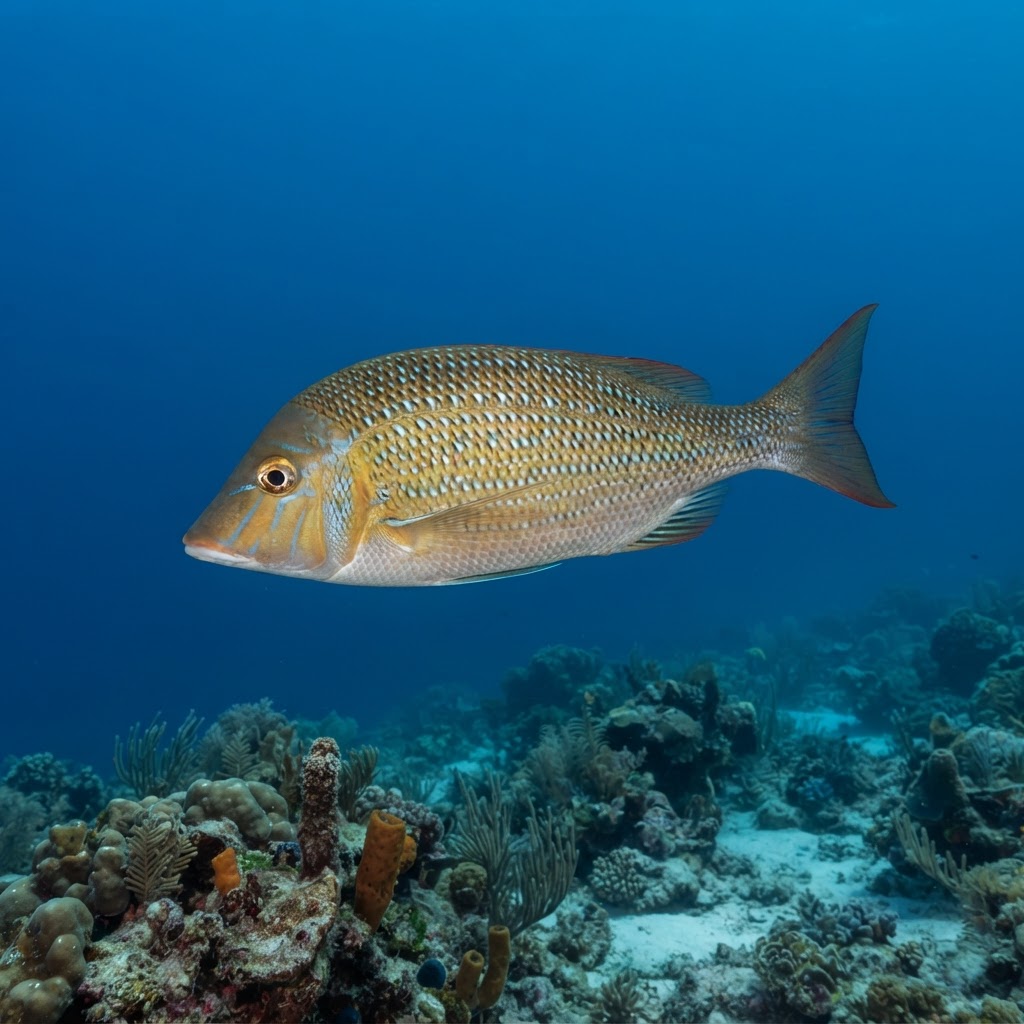
Deep-bodied and silvery-grey with a faint bluish-green sheen, growing to around 60 cm in the water, with a blunt, sloped head profile typical of emperors. The giveaway is the pattern of wavy blue lines and spots radiating across the cheeks and snout, most visible when a diver gets close and the light hits the face. Fins are usually a plain yellowish or orange tint, and the body lacks any bold stripes or blotches, which helps rule out most reef fish confusion at a glance.
Usually seen cruising alone or in loose small groups over sand patches, rubble and the edges of reef, often working the bottom for buried prey rather than schooling in open water. It tends to keep a comfortable distance from divers and will move off steadily rather than bolt, so a slow approach along the sand gives the best look. Most logs describe it as an uncommon but dependable sighting rather than something you count on every dive.
It hunts by digging into sand and rubble for molluscs, crustaceans and small fish, using strong jaws and rounded teeth built for crushing hard-shelled prey rather than slicing.
Sightings show no detectable seasonal pattern, and with a comfortable range of 24.2 to 29.0 C it turns up on tropical and subtropical reefs across the year. Plan around good reef conditions in your chosen region rather than a particular month.
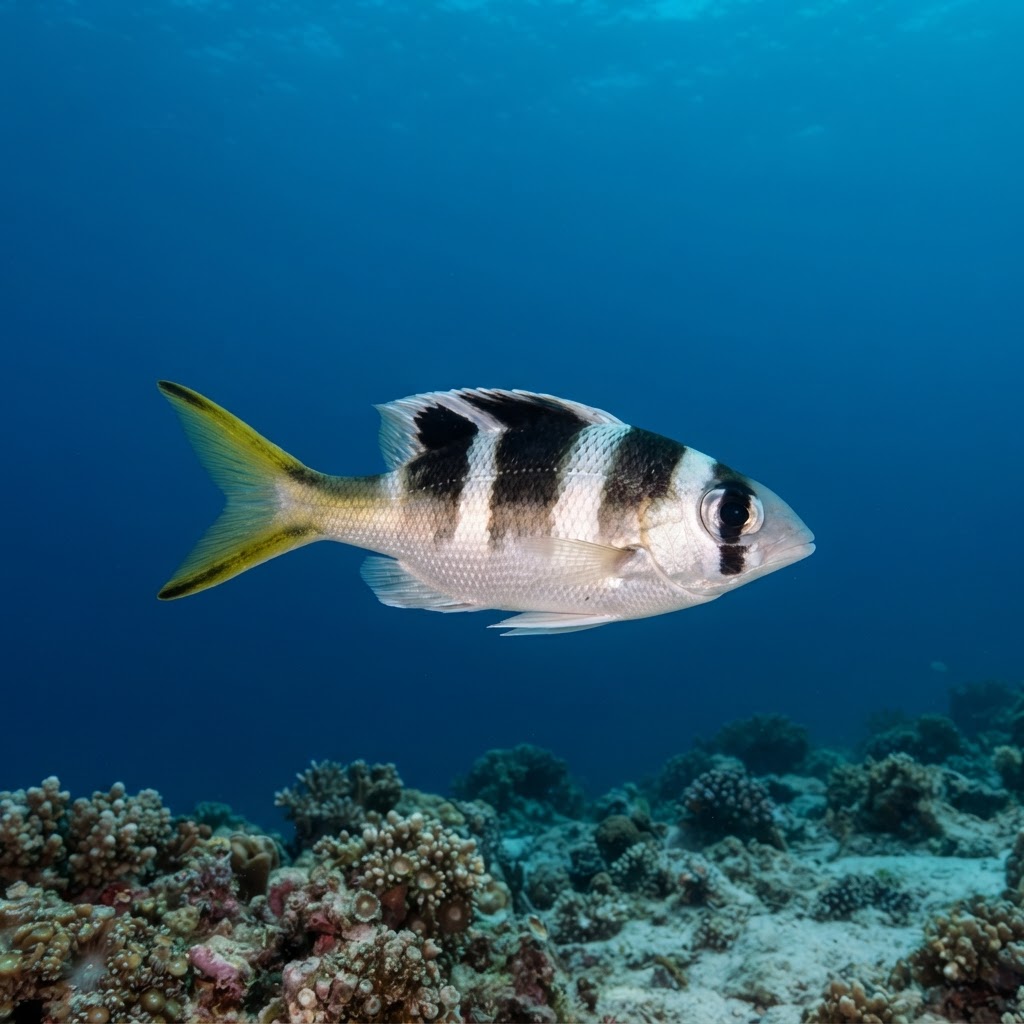
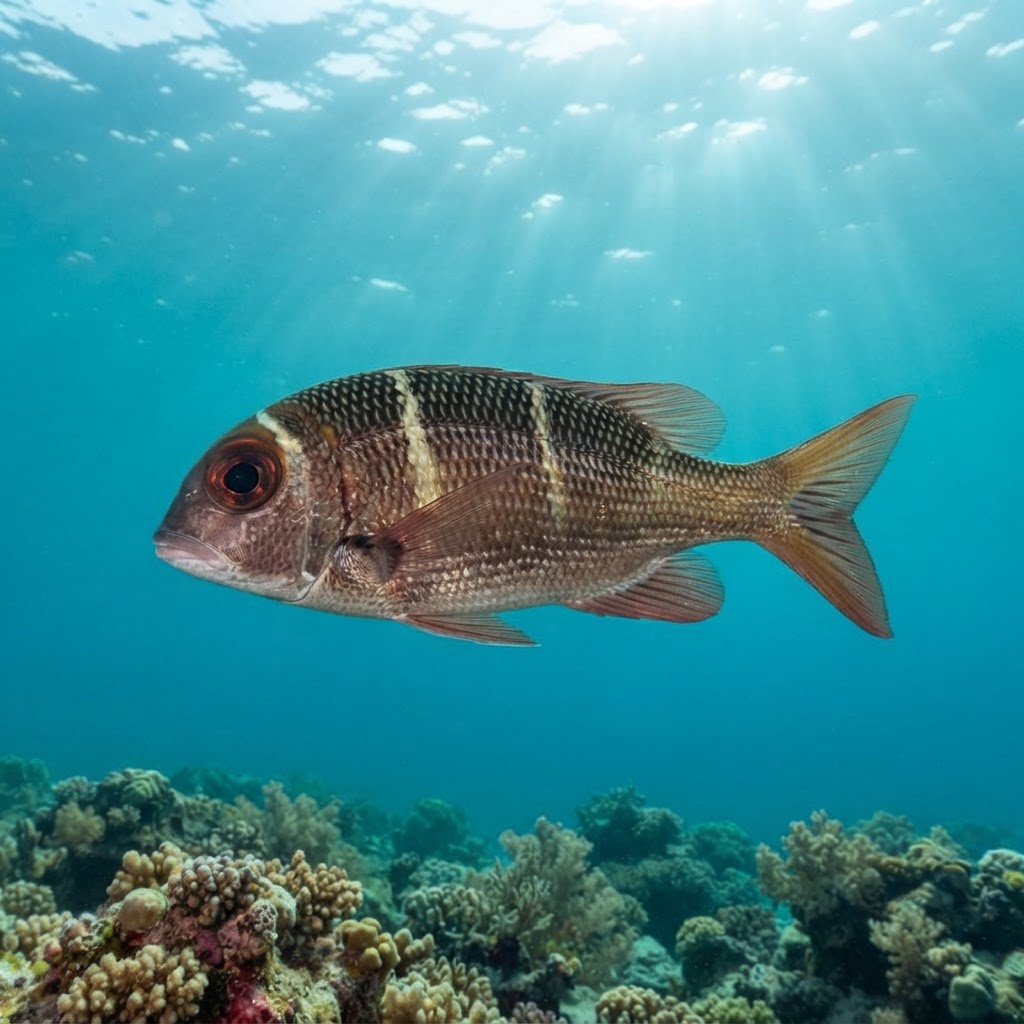
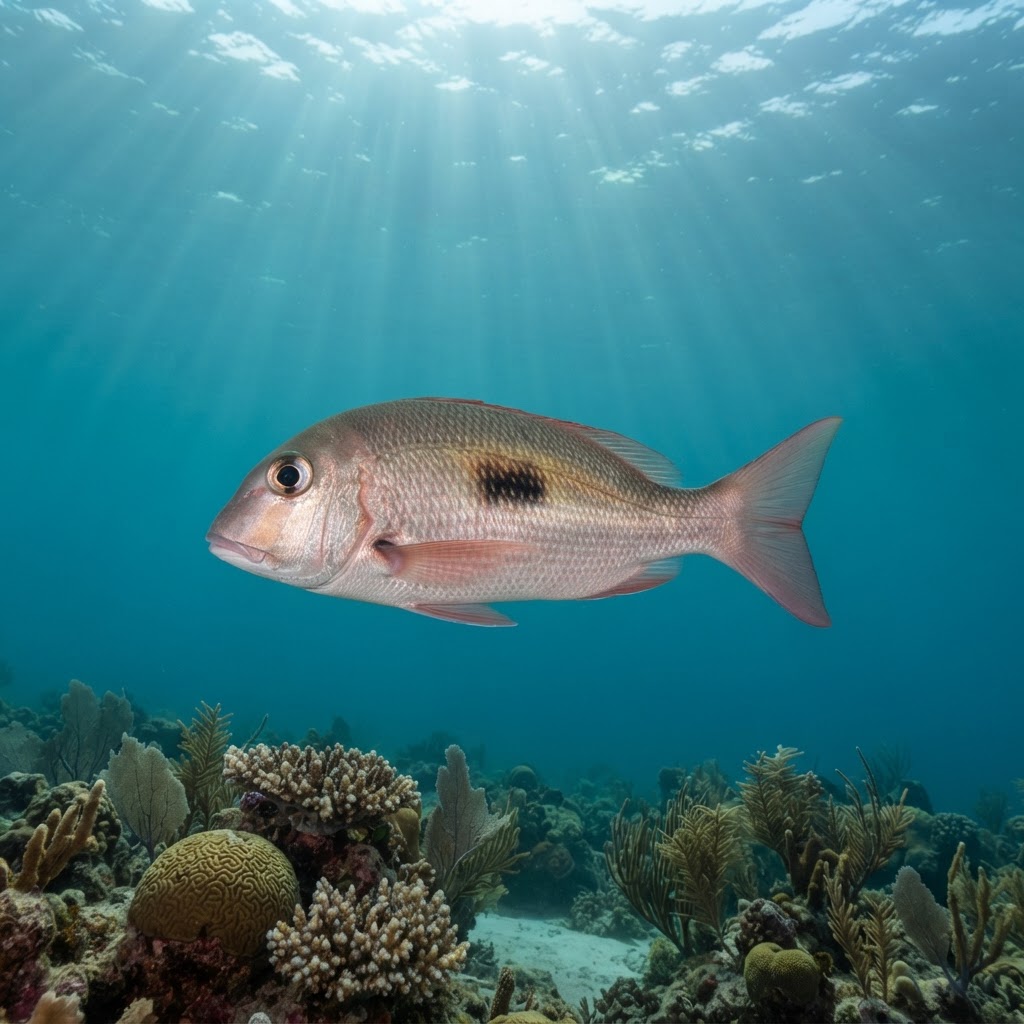
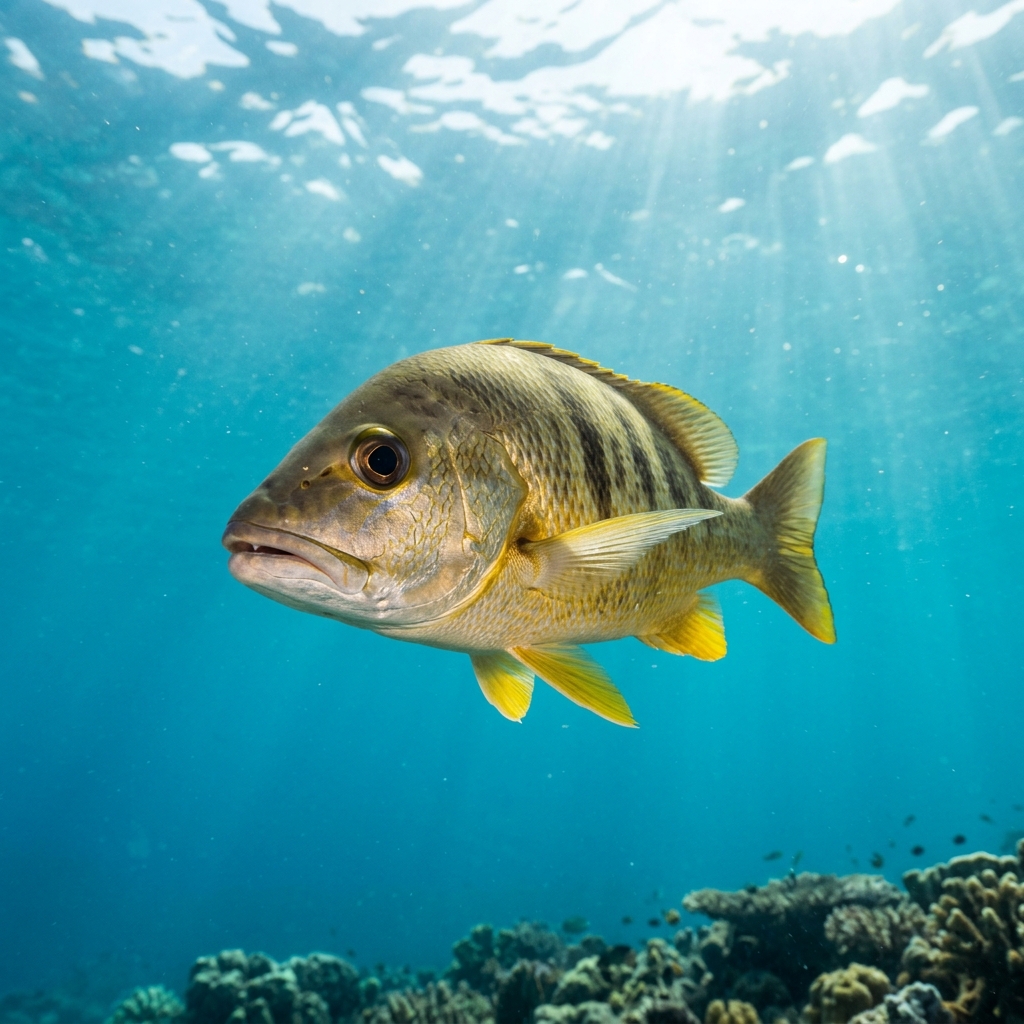
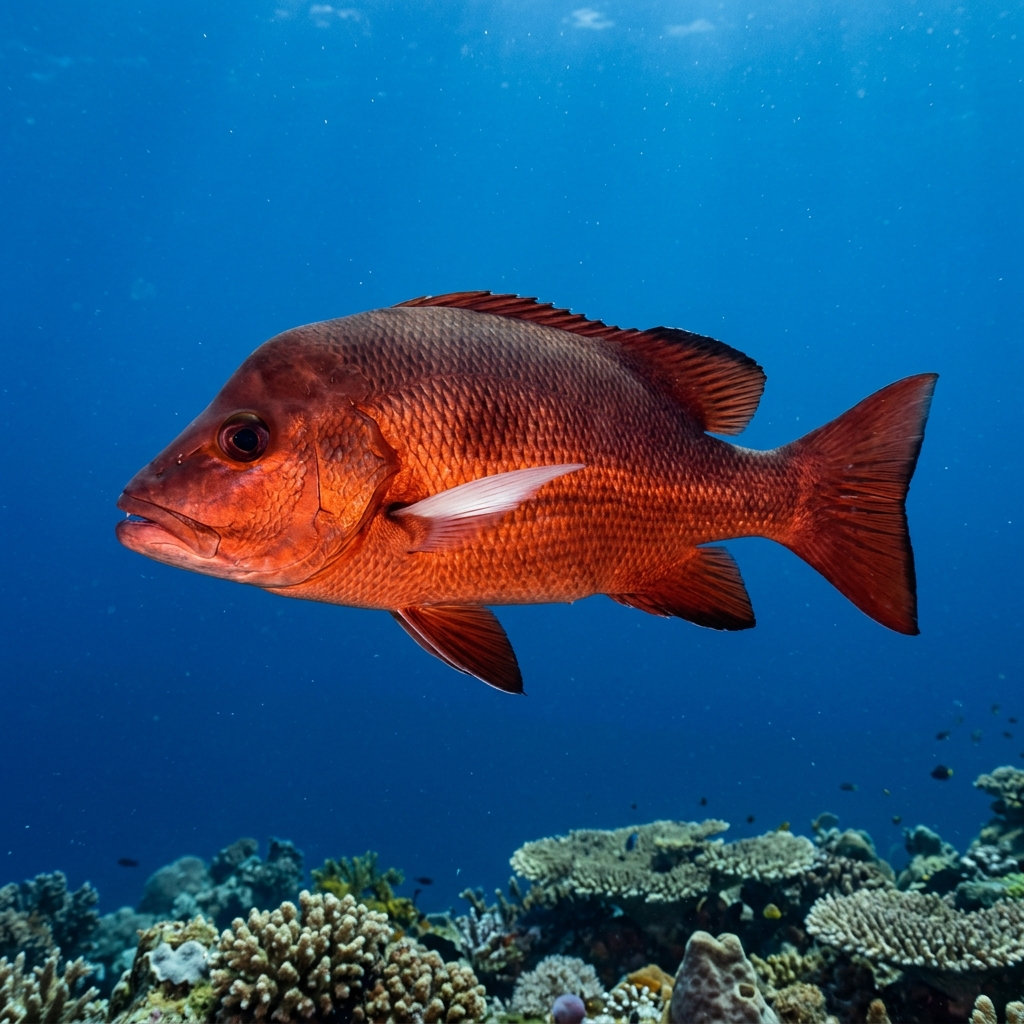
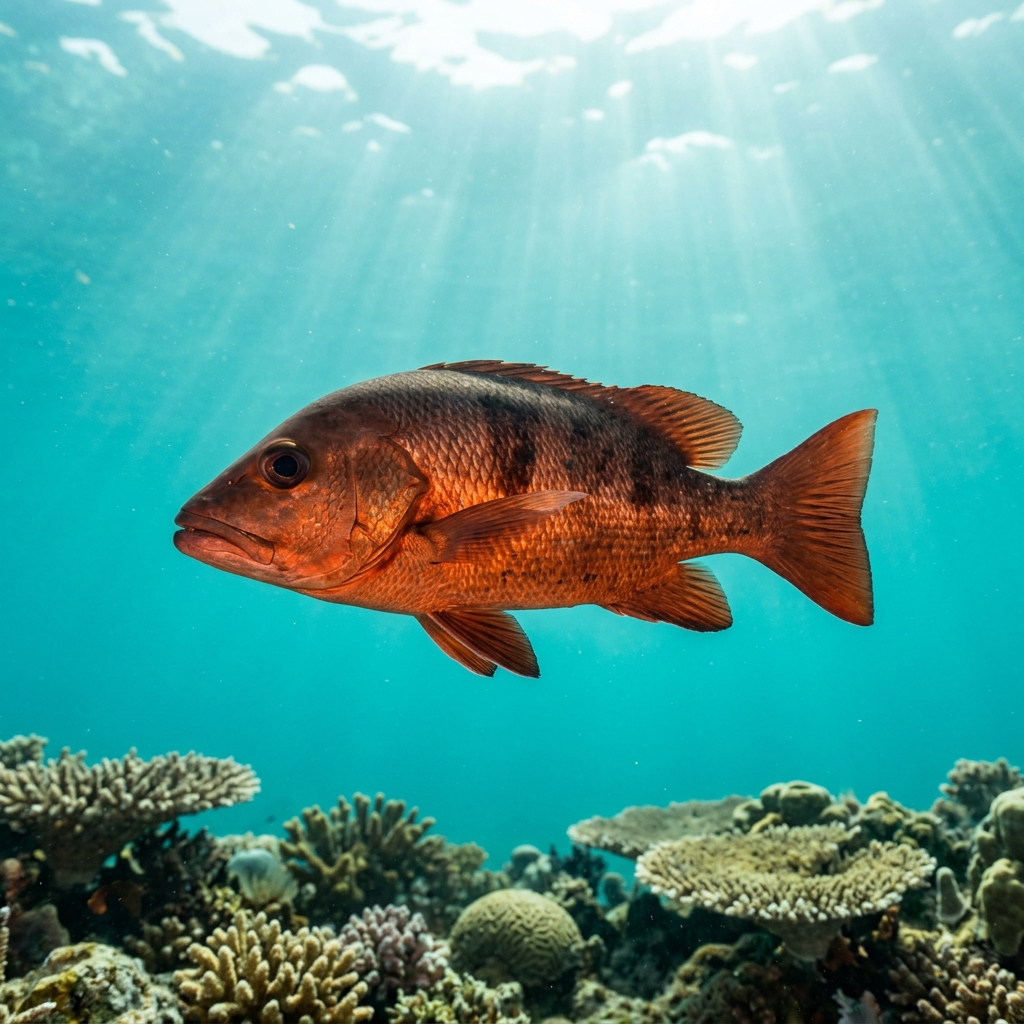
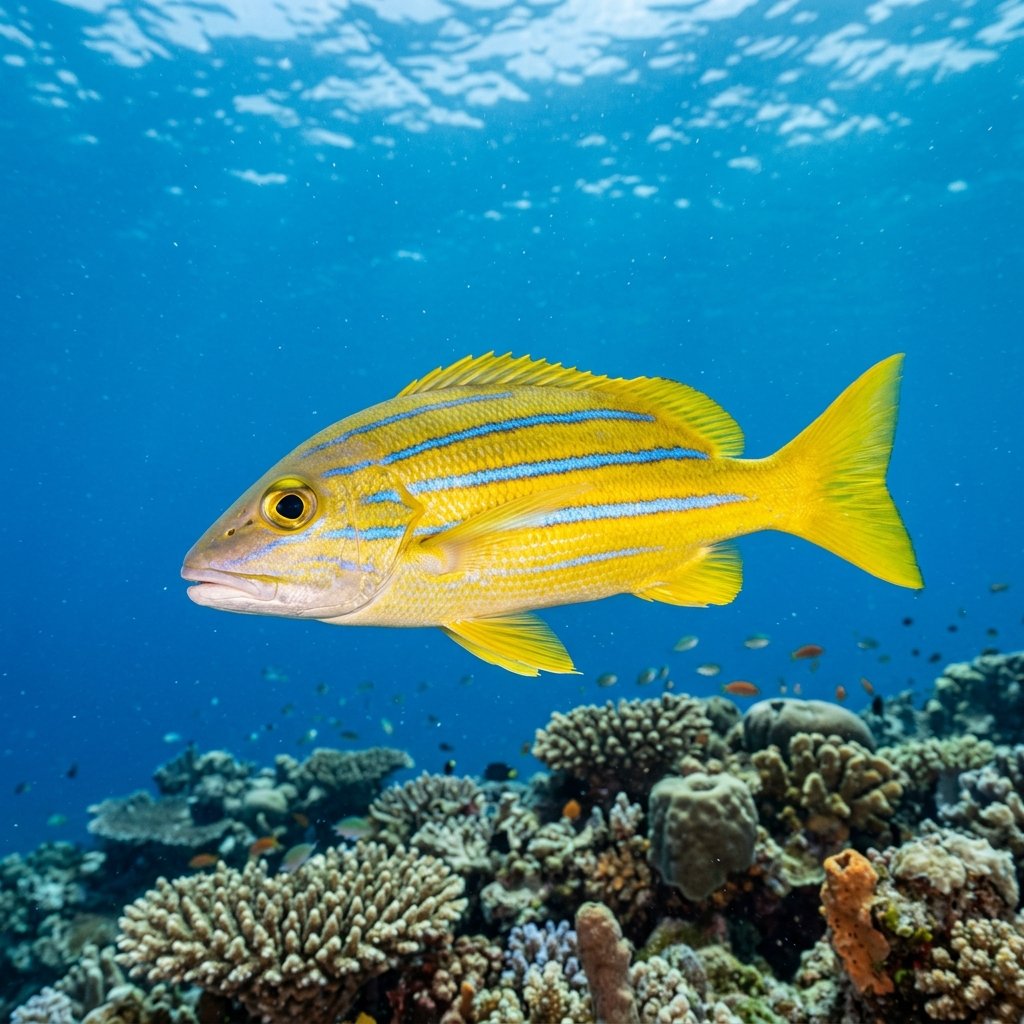
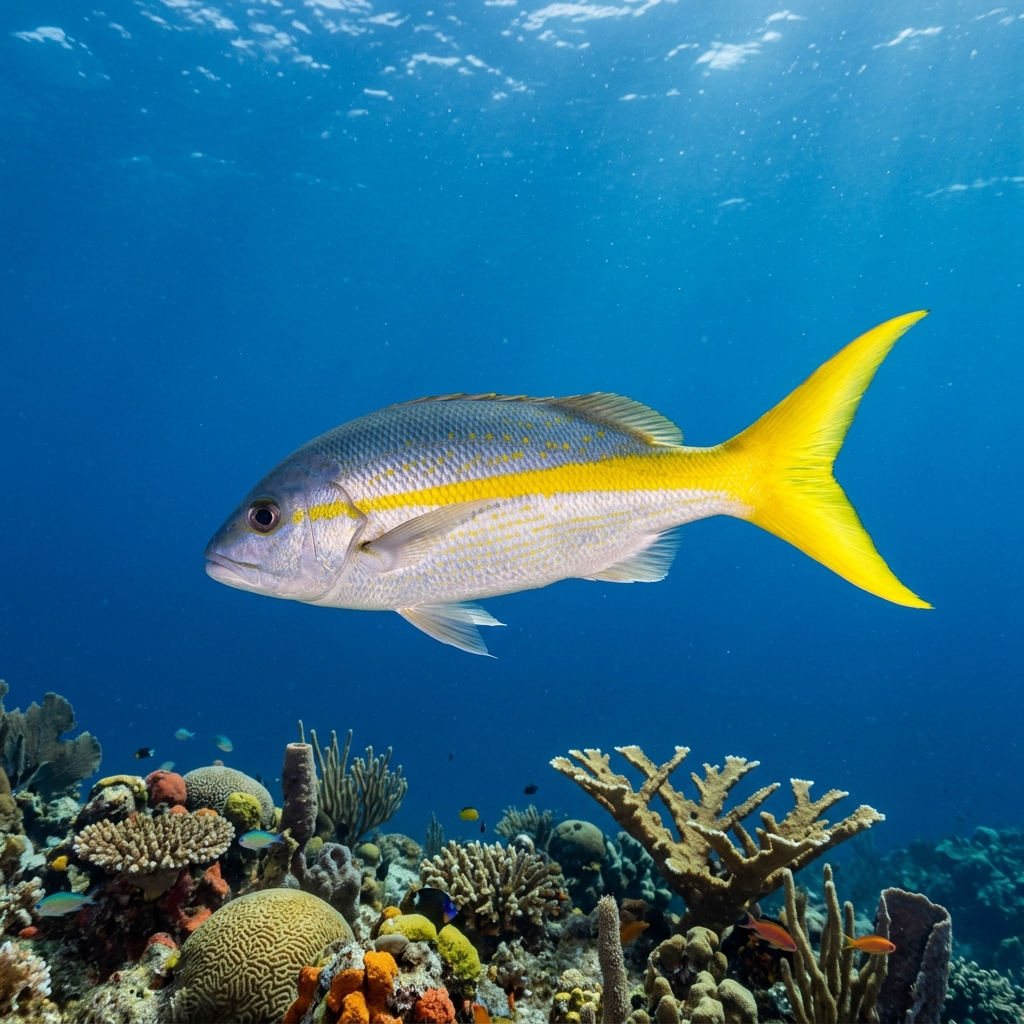
Reef neighbours a diver could mistake it for. Use the identification notes above to tell them apart.
Most consistently logged in Egypt, especially South Sinai and the Red Sea Riviera, with strong numbers also coming out of Okinawa and the Ryukyu Islands in Japan. Australia is another reliable region, with sightings spread across Queensland, New South Wales and Western Australia, and smaller but steady populations reported from Mauritius and Eilat in Israel.
Mapping where Spangled Emperor is logged…
South Sinai and the Red Sea Riviera in Egypt are the most reliable regions, alongside Okinawa and the Ryukyu Islands in Japan. Queensland, New South Wales and Western Australia in Australia also produce steady sightings, with smaller populations logged in Mauritius and Eilat, Israel.
There is no strong seasonal pattern in the sighting data, so it is essentially a year-round encounter. It favours water between 24.2 and 29.0 C, which covers most tropical and subtropical reef seasons.
Look for a silvery-grey, deep-bodied fish around 60 cm with a sloped head and wavy blue lines across the cheeks and snout. It lacks bold body stripes, so the facial markings are the most reliable feature up close.
They typically reach around 60 cm in length, making them one of the larger reef-associated emperors divers encounter regularly.
No, they pose no threat to divers and simply move away calmly if approached. They have no venom or aggressive behaviour worth noting underwater.
They forage over sand and rubble for molluscs, crustaceans and small fish, using strong crushing teeth to deal with hard-shelled prey. Watching one work a sand patch is often the best way to spot it, since it stays close to the bottom while feeding.
Site and sighting data is aggregated from diver logs, iNaturalist and GBIF. For taxonomy and conservation status:
Bluestriped Snapper
2,054 sites