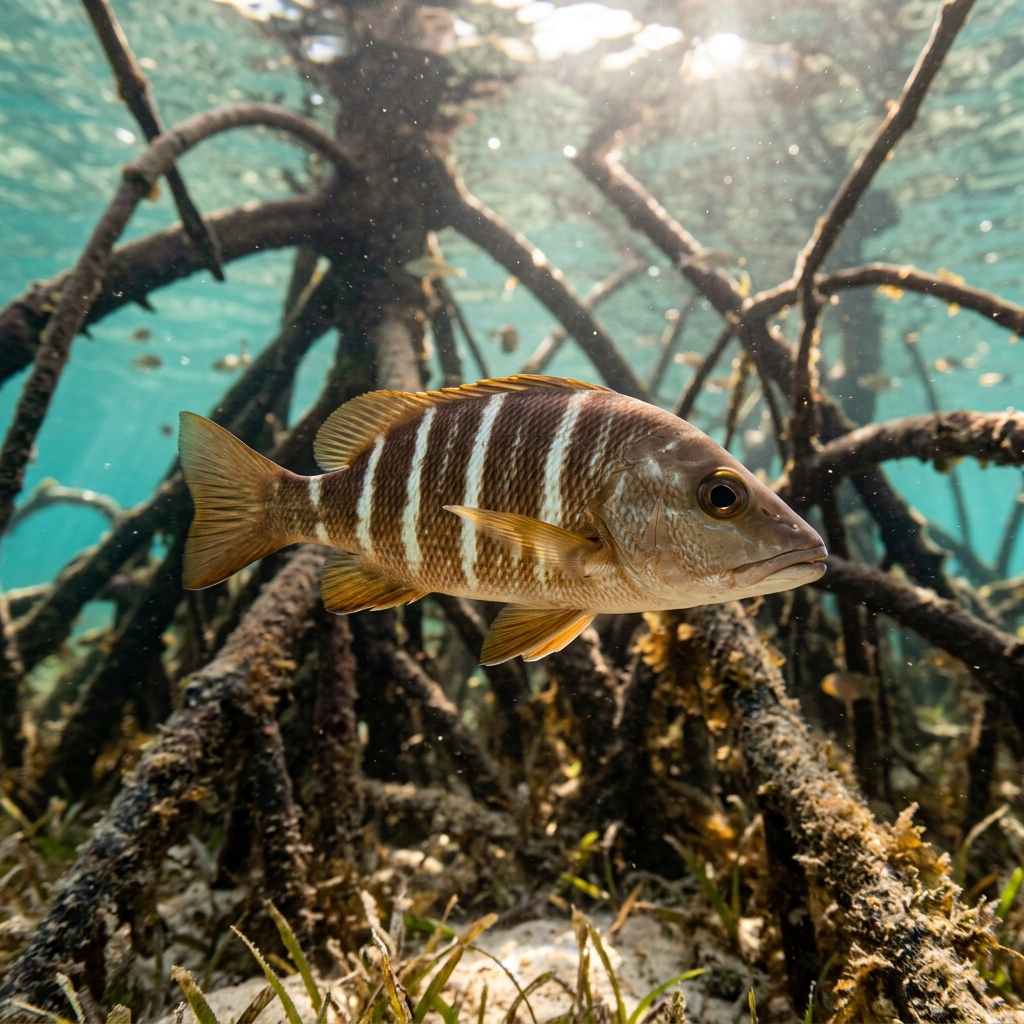
Lutjanus apodus
Spot schoolmaster snapper from Florida to Bonaire. Learn the yellow-fin, pale-stripe ID clues and when to dive Caribbean reefs for reliable sightings.
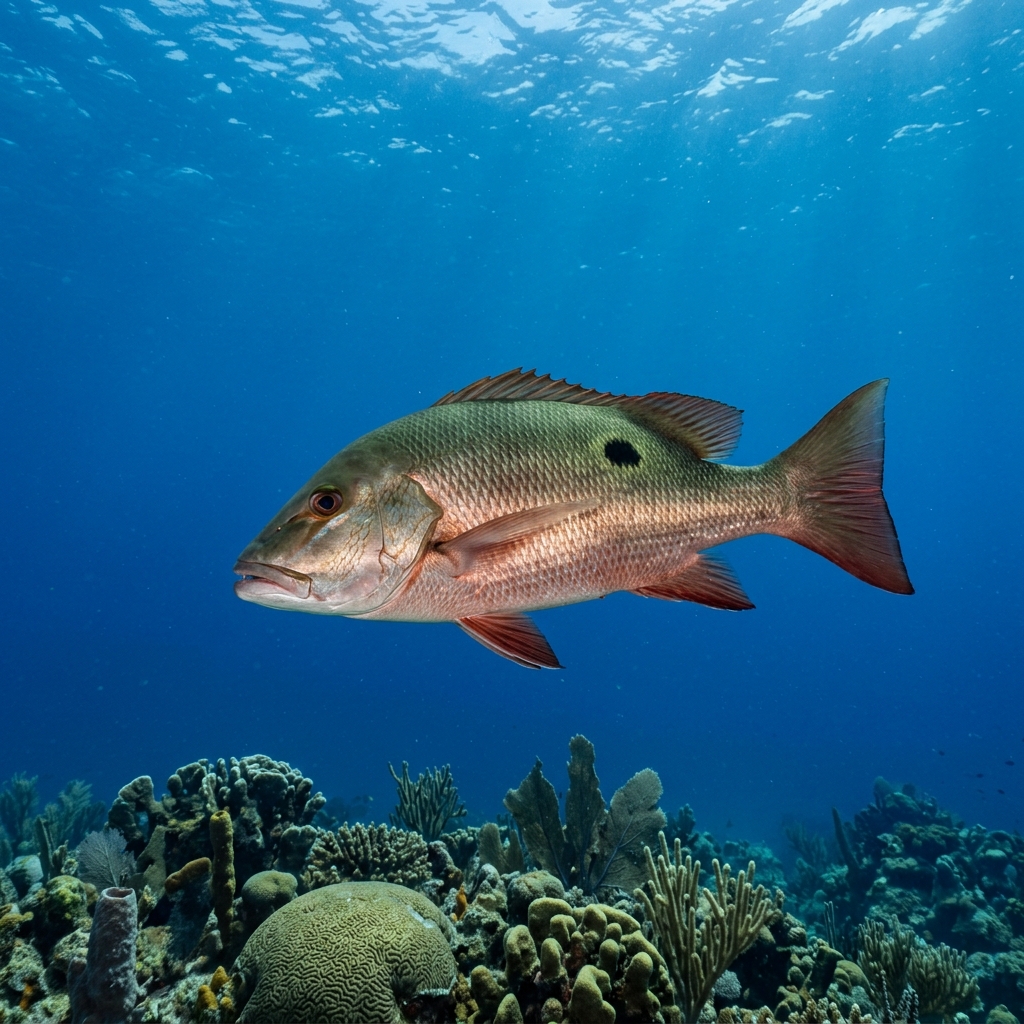
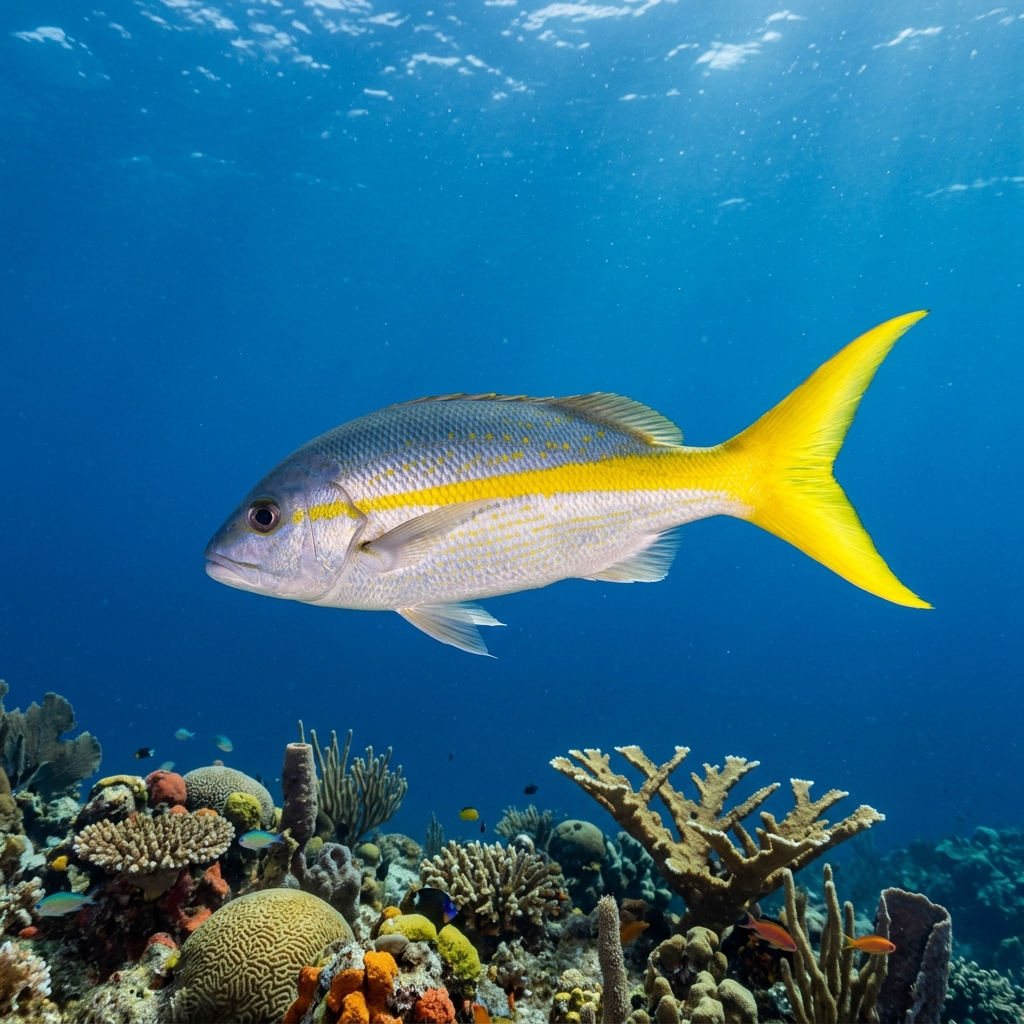
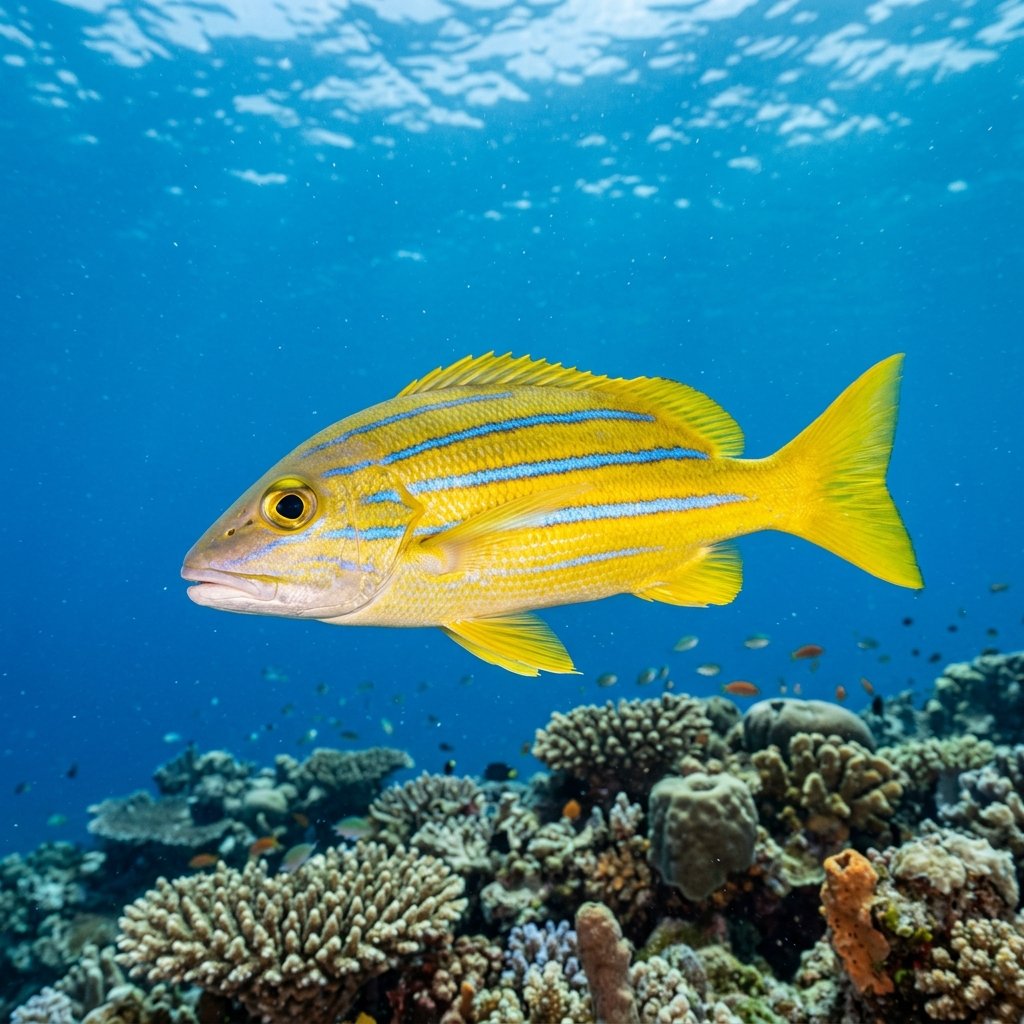
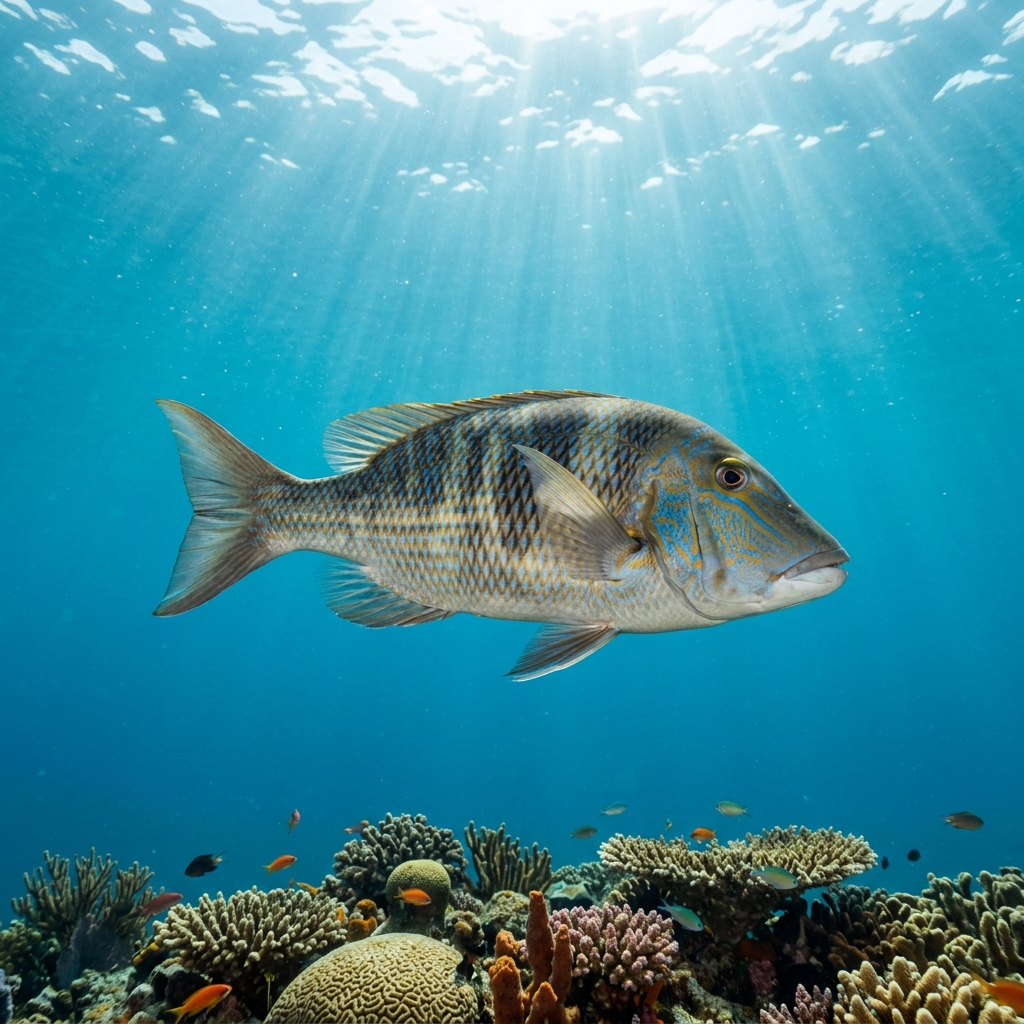
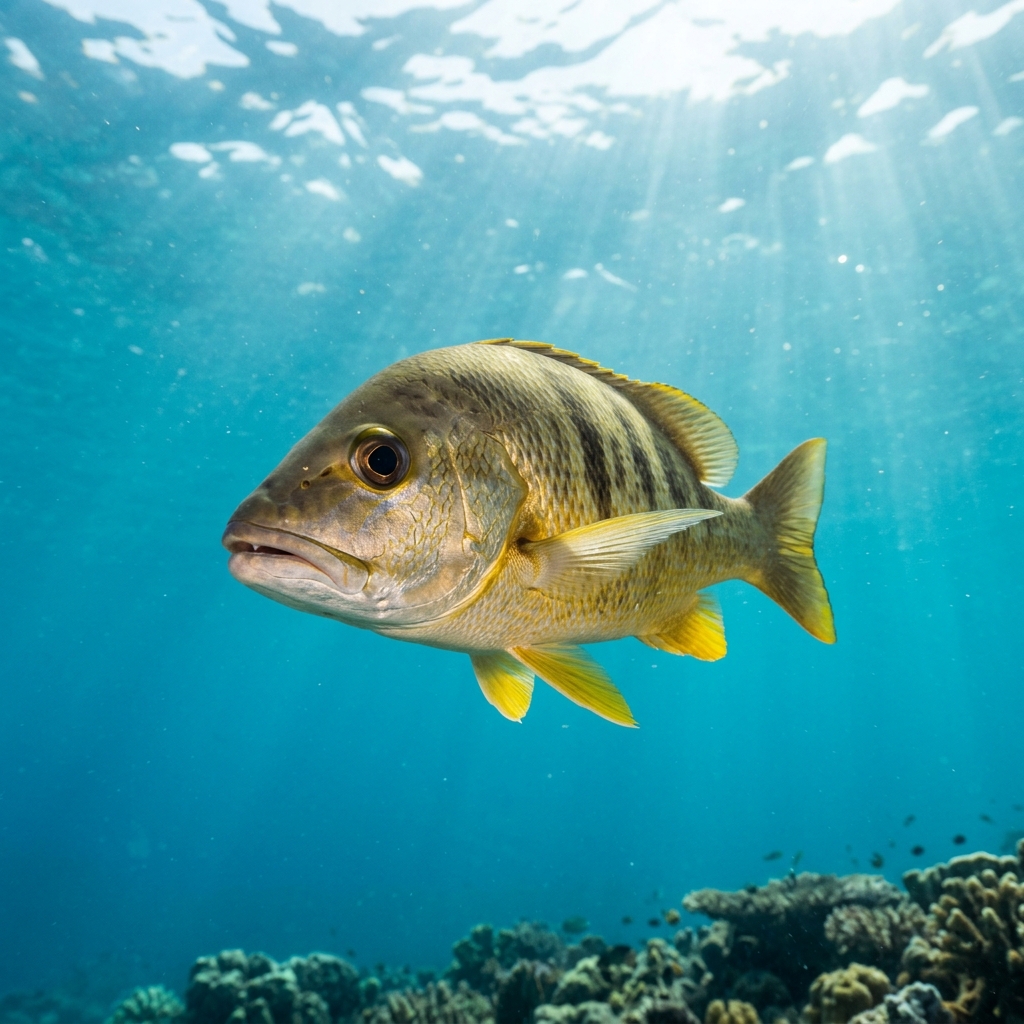
A medium-sized snapper reaching roughly 55 cm, with a warm silvery-olive body that shades to yellow on the fins and belly. Look for a row of faint pale vertical bars along the flank and a distinctive pattern of thin blue lines running below the eye. The body is deep and laterally compressed with a pointed snout typical of snappers, and the canine teeth are sometimes visible when the mouth gapes. Juveniles show much bolder white bars on a browner body and are found in very shallow mangrove habitat rather than on the open reef.
Schoolmasters are social fish, often found hovering in loose aggregations close to coral heads, ledges, or the base of reef walls during the day. They tend to hold position calmly as divers approach, making close observation straightforward, though very slow, non-threatening movement helps. Feeding activity ramps up at night when they move off the reef to hunt small fish and invertebrates in open sandy areas nearby.
Juveniles spend their early months sheltering among mangrove roots and seagrass beds before recruiting onto coral reefs as adults, making healthy coastal mangroves directly important to reef populations.
Northern hemisphere sightings concentrate from October through August, suggesting a slight dip around September, but the species is broadly present across most of the year. Its comfort in water temperatures between roughly 23 and 28 °C keeps it on Caribbean and Gulf reefs through all but the coldest winter weeks.
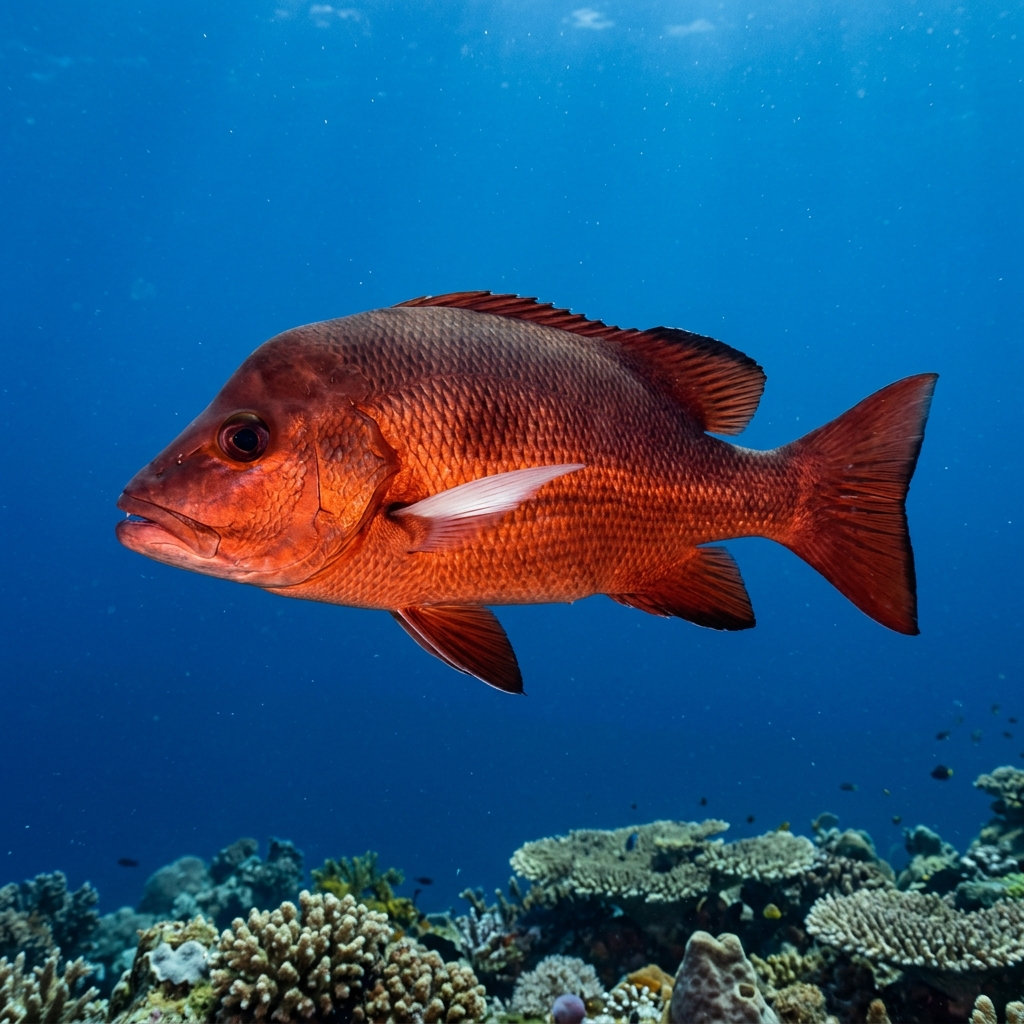
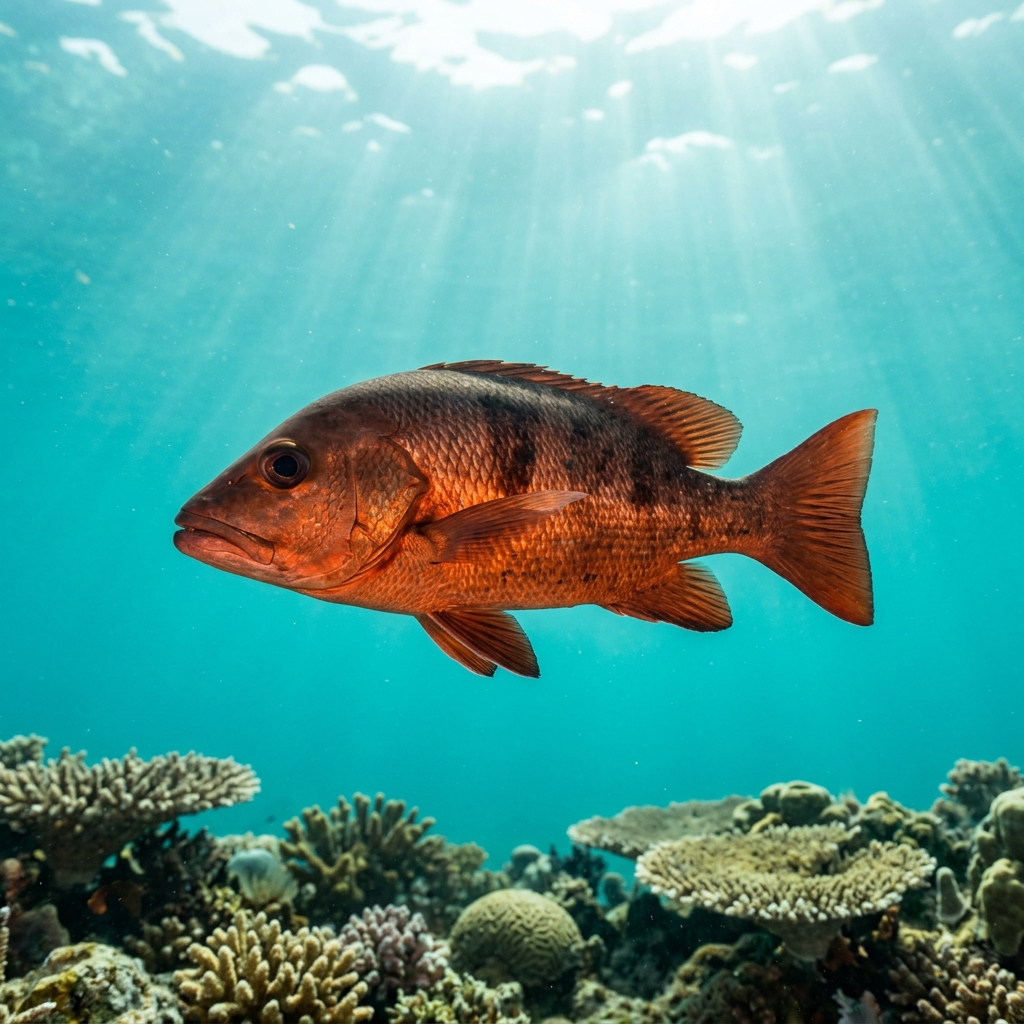
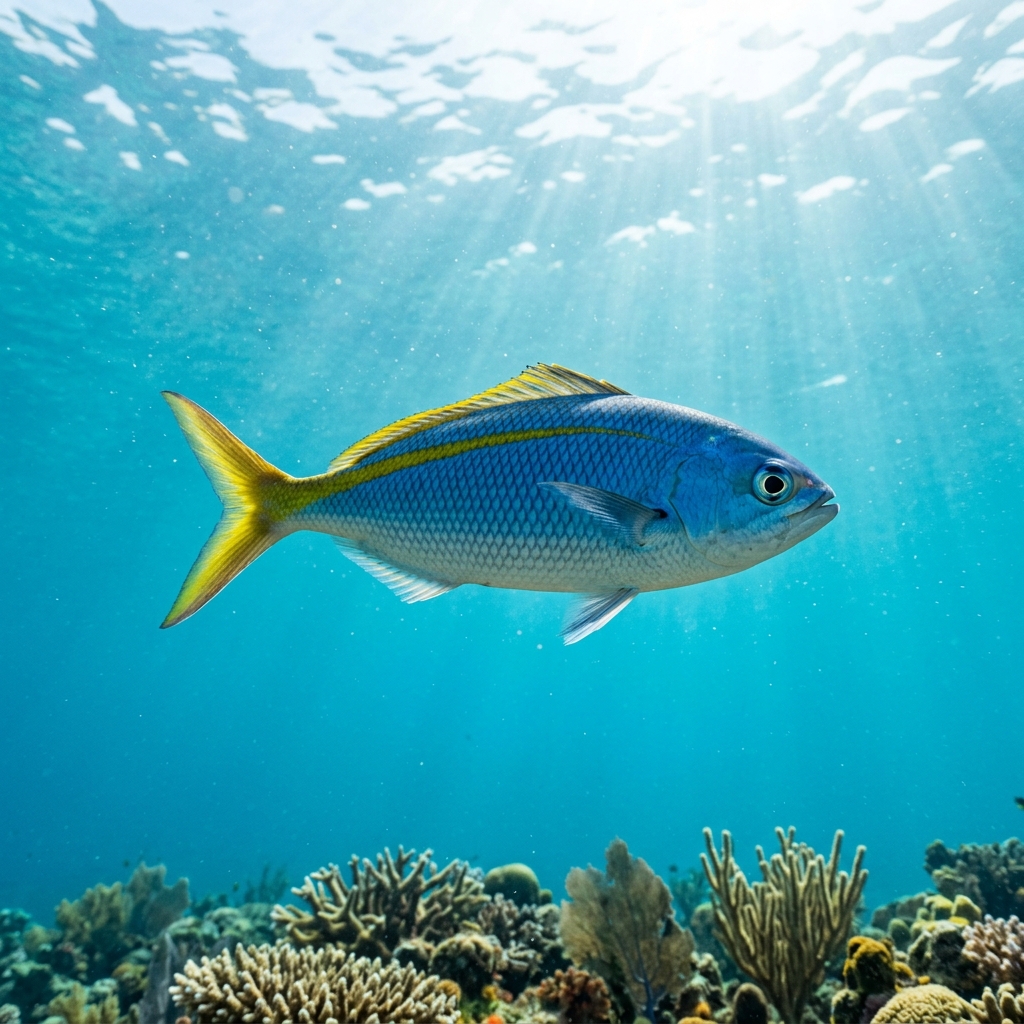
Reef neighbours a diver could mistake it for. Use the identification notes above to tell them apart.
Most commonly logged across the wider Caribbean, with the strongest presence in Florida and the US Southeast, the Yucatán Peninsula in Mexico, and Roatán in Honduras. The Cayman Islands, Bonaire, the Bahamas, Cuba, and Belize also return reliable records. Sites span a huge arc from the US Atlantic coast through the Lesser Antilles.
Mapping where Schoolmaster Snapper is logged…
Schoolmaster snapper are most reliably encountered across the Caribbean, with strong populations logged in Florida, the Yucatán Peninsula, Roatán in Honduras, the Cayman Islands, Bonaire, and the Bahamas. They are a consistent reef fish across the entire Caribbean basin and into the Gulf of Mexico.
Sightings are recorded across most of the year, with the peak window running from October through August. The species is comfortable between roughly 23 and 28 °C, so warm-water Caribbean destinations offer encounters year-round, with only a slight lull around September in northern hemisphere records.
Key on the warm silvery-olive body with yellow fins and belly, a row of faint pale vertical bars along the flank, and distinctive thin blue lines running beneath the eye. The pointed snout and deep compressed body shape are typical of snappers, but the blue facial lines are the quickest field mark.
A typical adult reaches around 55 cm in length. On the reef they look solidly built rather than large, roughly the size of a dinner plate when you see them side-on hovering near a coral head.
The common name likely refers to their tendency to form organised, disciplined-looking aggregations near the reef, somewhat resembling a class being kept in order. Despite the name, they are not aggressive towards divers and are among the more approachable snappers on Caribbean reefs.
Site and sighting data is aggregated from diver logs, iNaturalist and GBIF. For taxonomy and conservation status:
Emperor
2,052 sites