Monotaxis grandoculis
Silvery reef fish with huge dark eyes, most commonly logged in the Maldives' Central Atolls and Egypt's Marsa Alam, comfortable year-round in warm water.
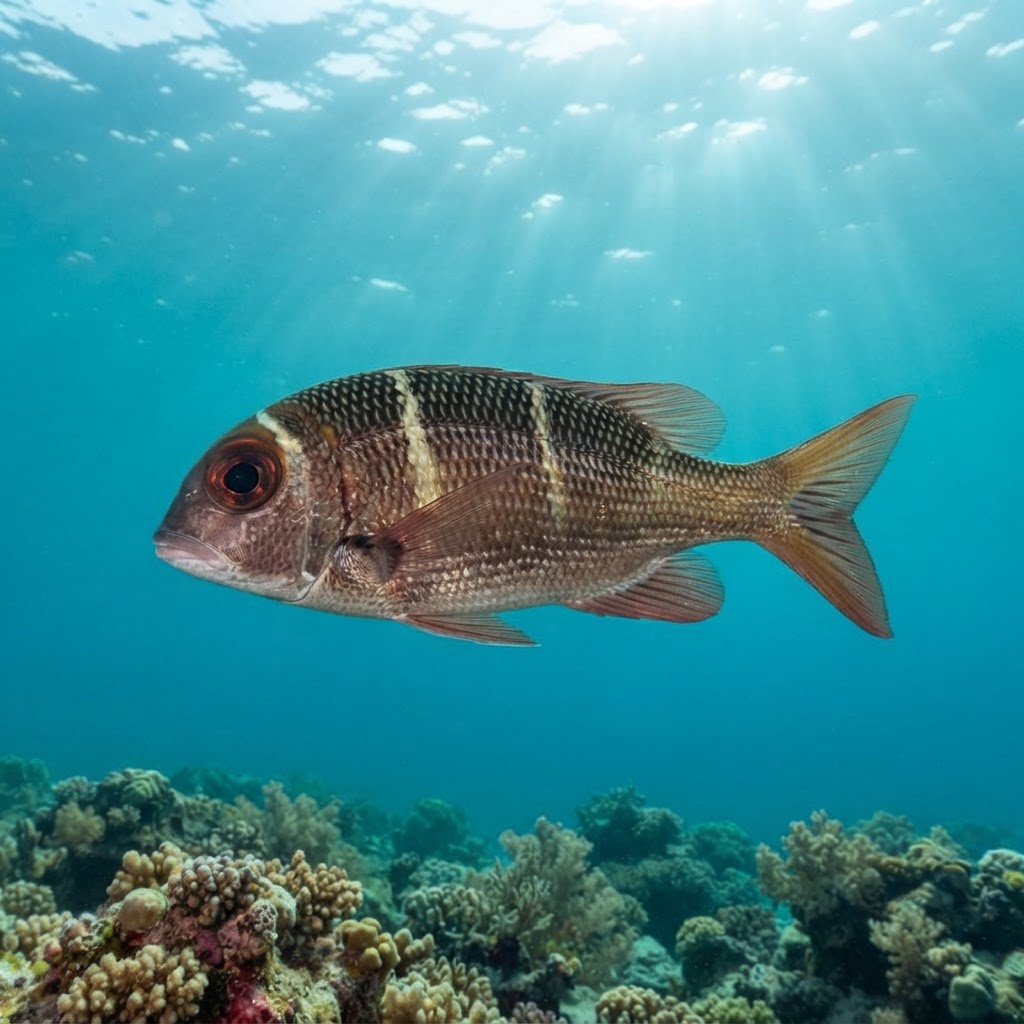
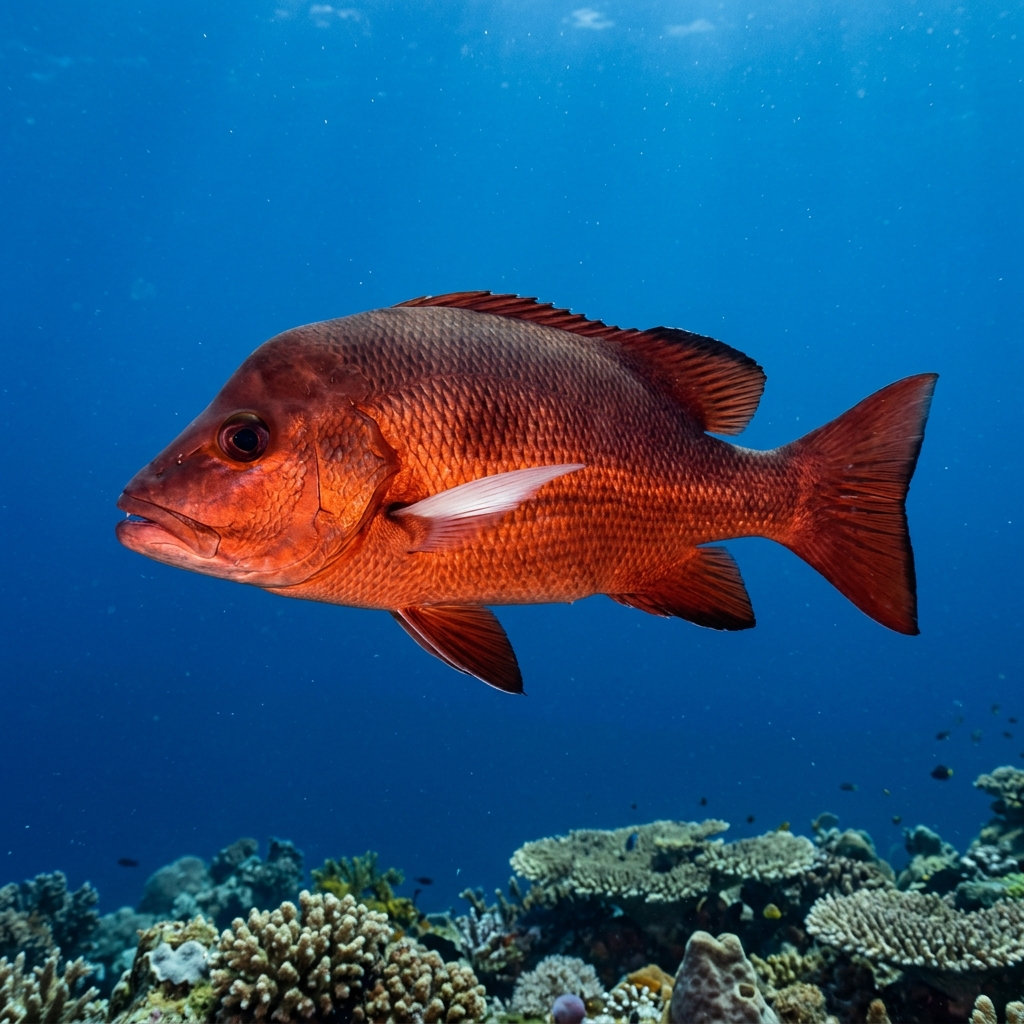
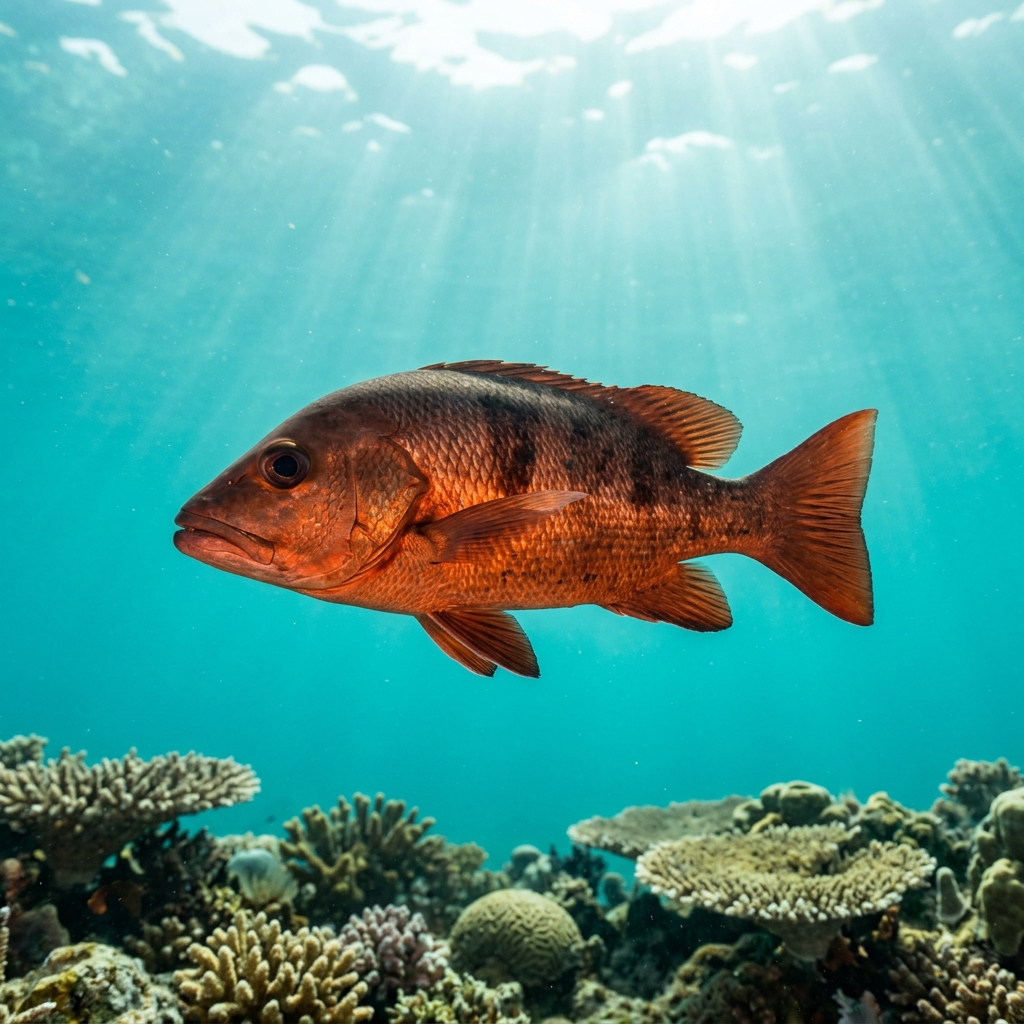
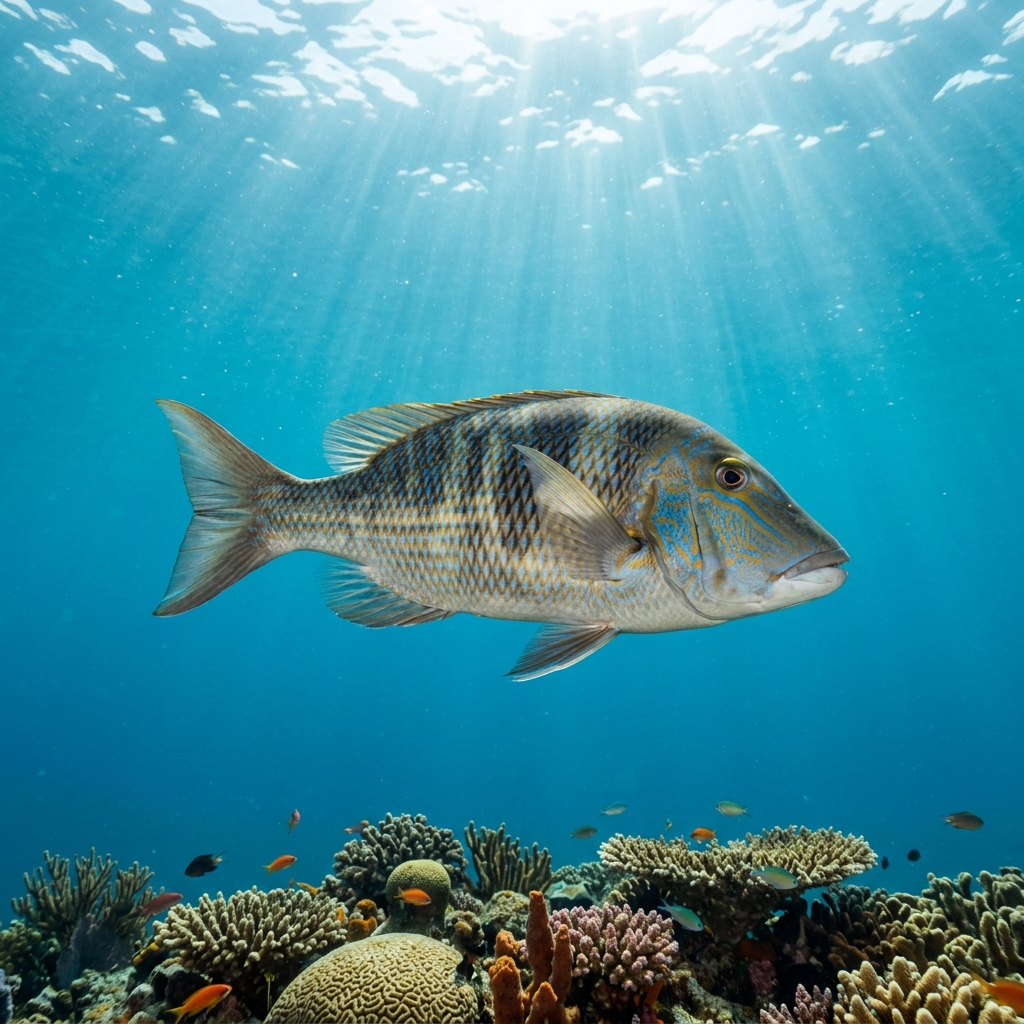
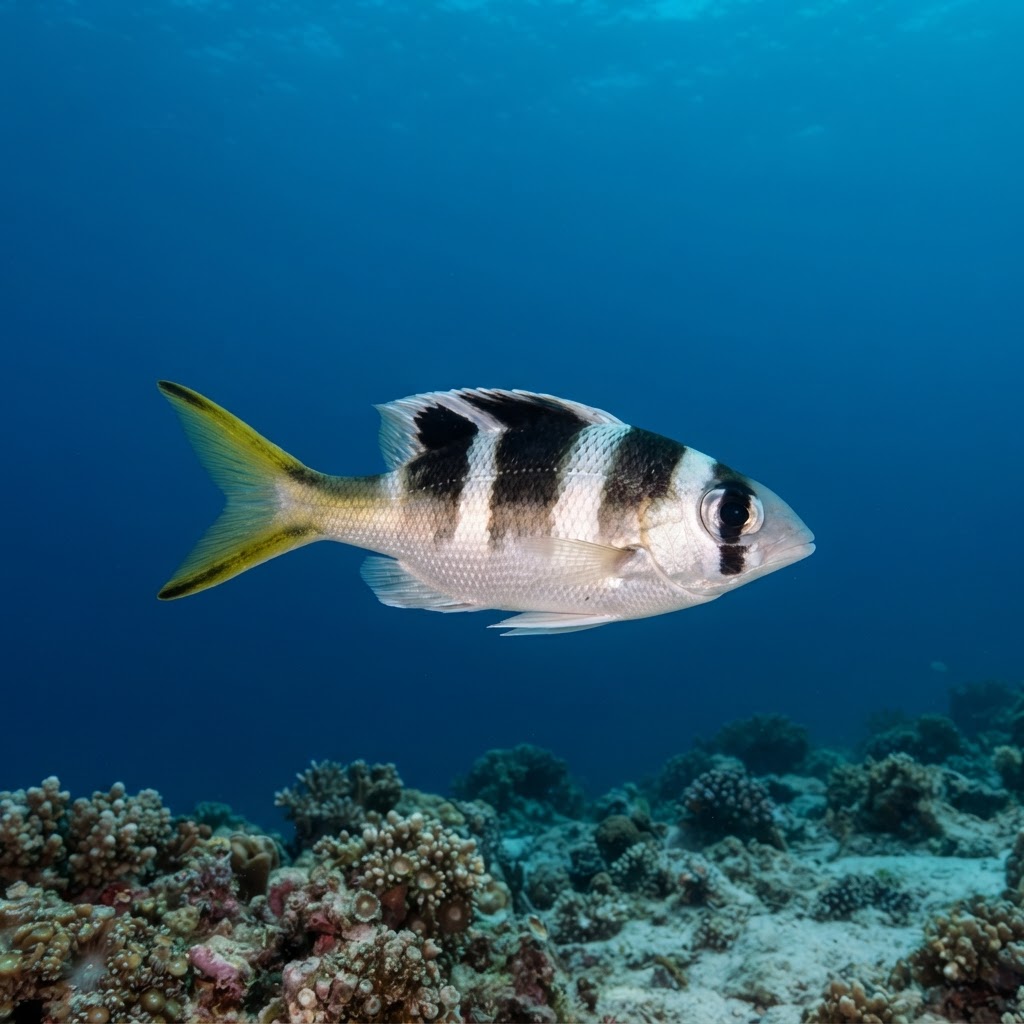
Deep, oval-bodied fish around 42 cm, silvery-grey with faint dusky vertical bars that can fade in and out depending on mood and light. The name gives away the best ID clue: eyes noticeably larger than on other reef fish of similar shape, set high on a blunt, steep-profiled head. Look for a single dark blotch sometimes visible at the base of the pectoral fin and a slightly humped forehead that separates it from slimmer snapper-type fish nearby.
Usually seen cruising alone or in loose, unhurried groups over reef flats and sandy patches near coral structure, often hanging a little off the reef rather than tucked into it. It tends to keep a cautious distance from divers rather than fleeing outright, so slow, level approaches give the best look. Bigger individuals are often spotted resting or moving slowly during the day, which fits its reputation as a fish that feeds more actively after dark.
Those oversized eyes are a low-light adaptation: bigeye emperors do much of their hunting on the reef at night, picking off crustaceans and other invertebrates that are harder for day-active predators to find.
No clear seasonal pattern shows up in the data, and with a comfortable range of roughly 24.6 to 29.1 C it sits happily on tropical reefs all year, so any month at these destinations works.
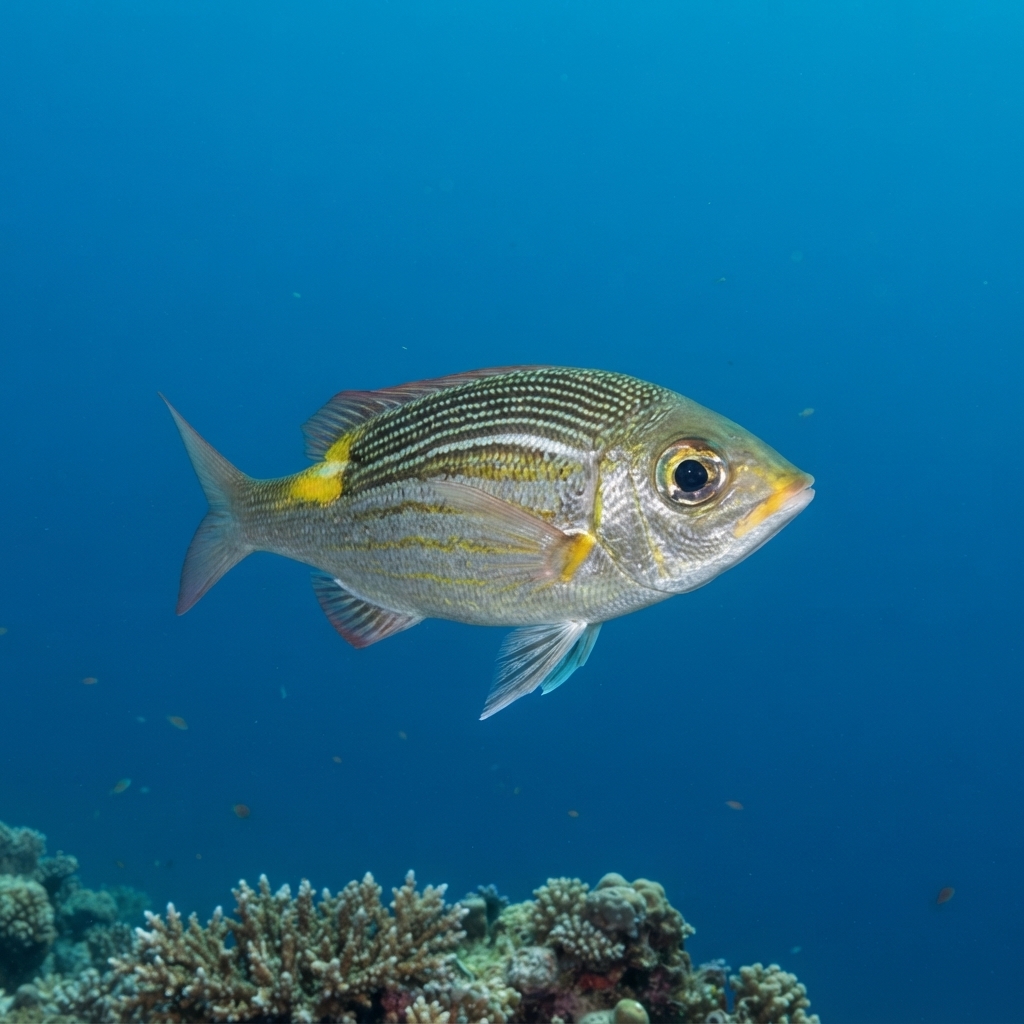
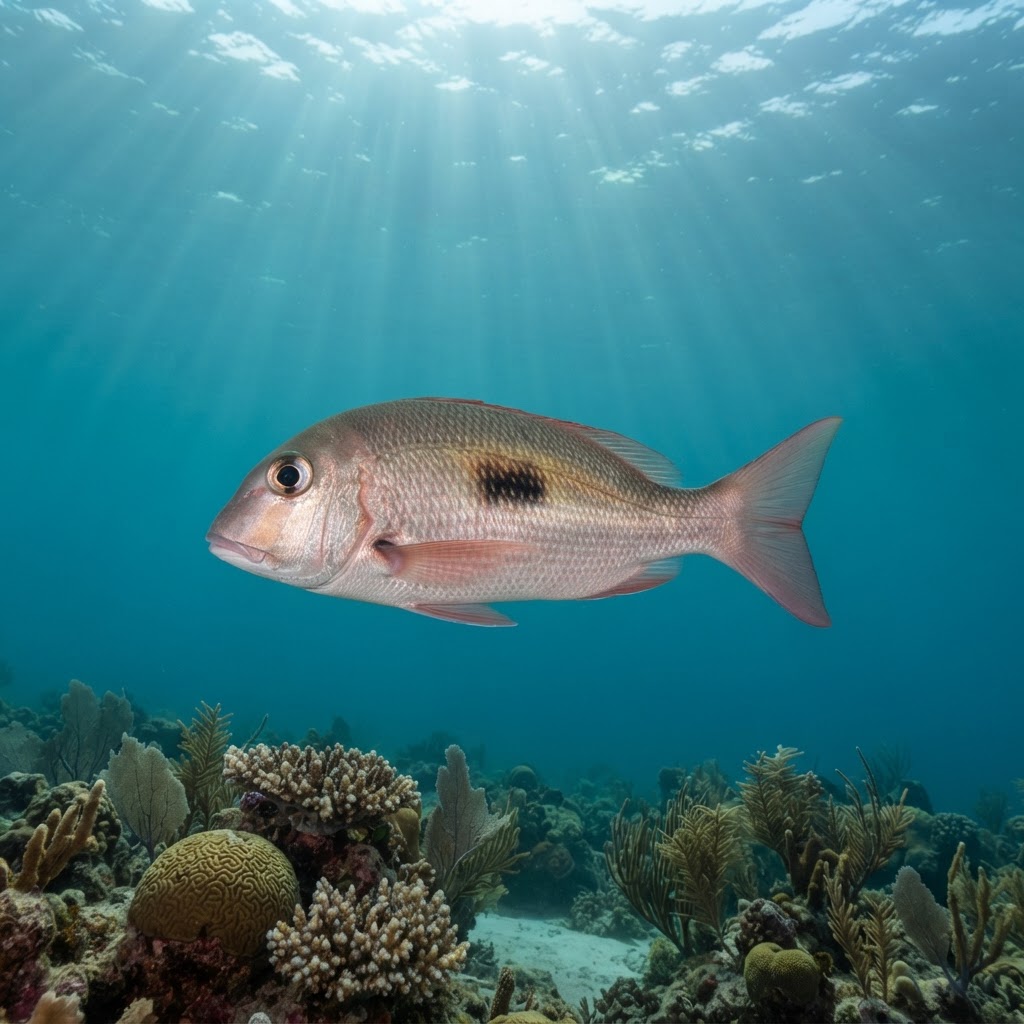
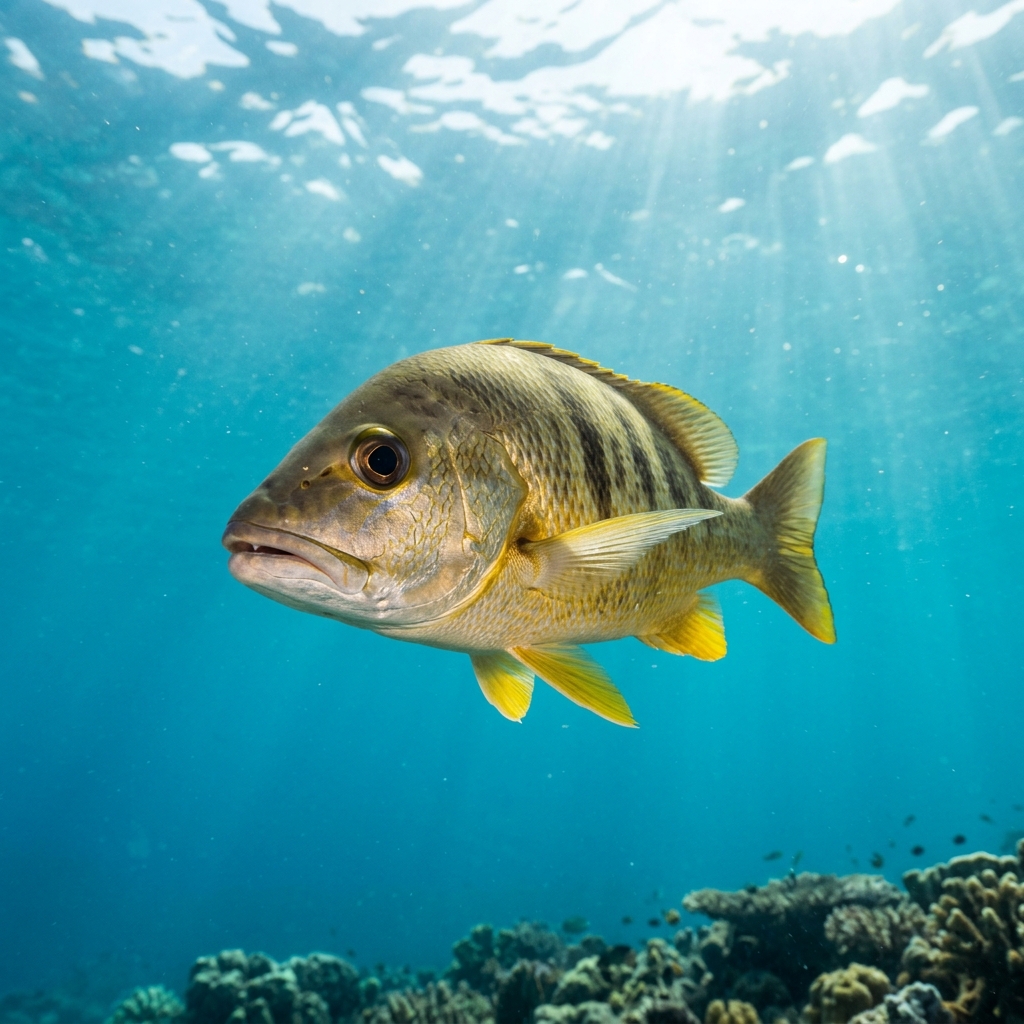
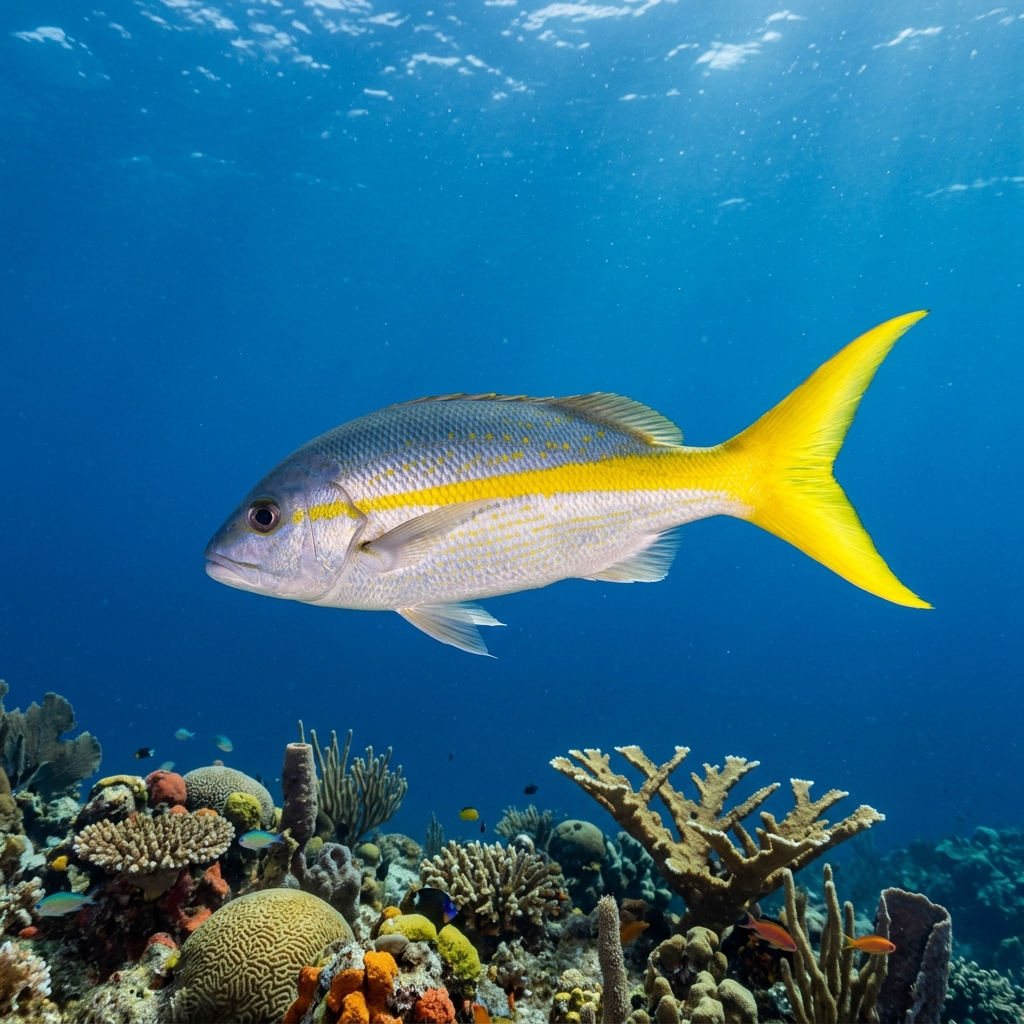
Reef neighbours a diver could mistake it for. Use the identification notes above to tell them apart.
This is a reliable sighting across the Maldives, especially the Central Atolls, and a strong presence throughout Egypt's Red Sea, from Marsa Alam and the Deep South up through South Sinai and the Red Sea Riviera. Beyond the Red Sea and Maldives, it turns up regularly in Indonesia's Sulawesi, French Polynesia's Society Islands, Hawaii, and on reefs off Queensland and Thailand.
Mapping where Bigeye Emperor is logged…
The Maldives' Central Atolls and Egypt's Red Sea coast, including Marsa Alam, South Sinai, and the Red Sea Riviera, are the most consistent places to find them. They're also logged regularly in Sulawesi (Indonesia), French Polynesia's Society Islands, and Hawaii.
There's no strong seasonal pattern in sightings, and the species tolerates a wide 24.6 to 29.1 C range, so it's present on tropical reefs year-round rather than tied to a particular season.
Look for a silvery-grey, deep-bodied fish with a blunt head, faint dusky vertical bars, and unusually large dark eyes for its size. It typically hovers just off the reef alone or in small, loose groups rather than schooling tightly.
They typically reach around 42 cm, a solid mid-sized reef fish that's easy to spot once you know its head shape and oversized eyes.
Its enlarged eyes are an adaptation for low-light feeding. Bigeye emperors are most active hunting invertebrates on the reef at night, and the extra eye size helps them see in dim conditions.
No, they pose no threat to divers. They tend to keep their distance and are best watched from a relaxed, slow approach rather than being chased for a photo.
Site and sighting data is aggregated from diver logs, iNaturalist and GBIF. For taxonomy and conservation status:
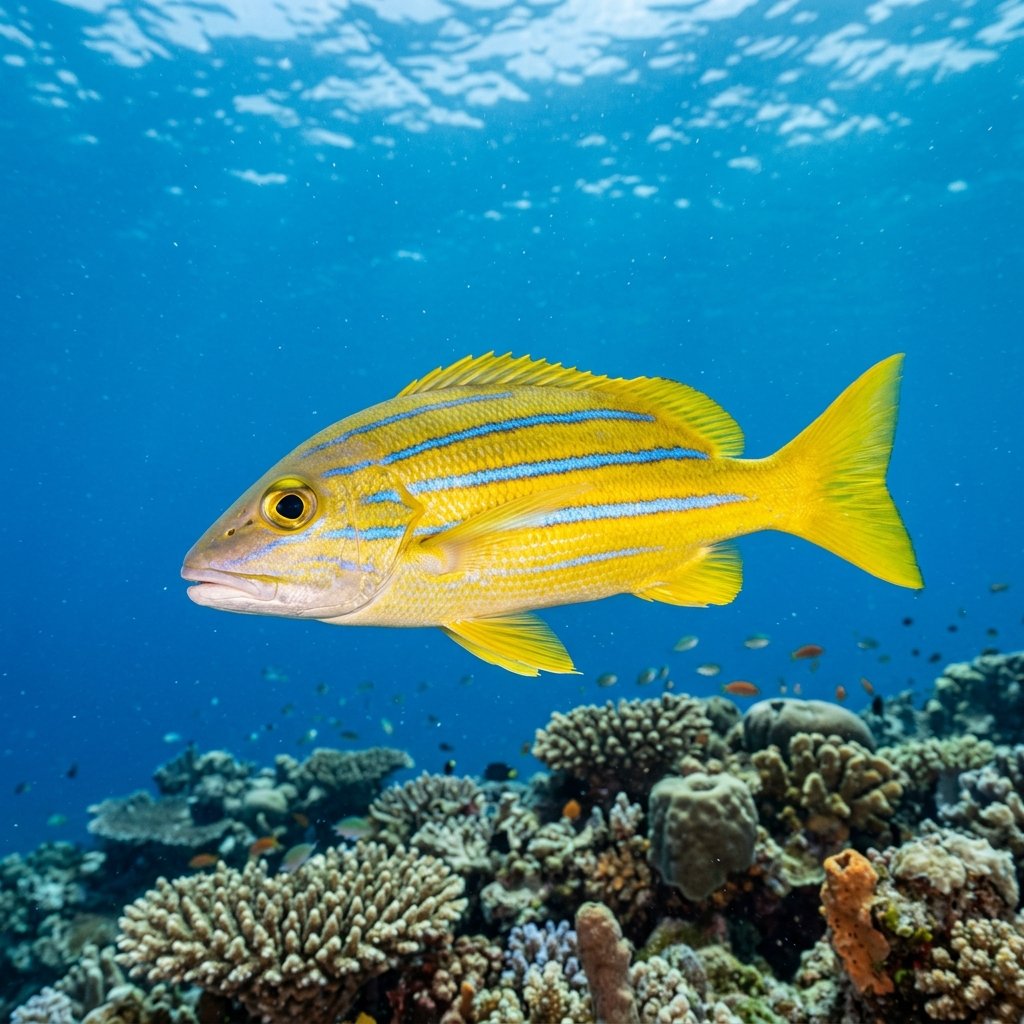
Bluestriped Snapper
2,054 sites