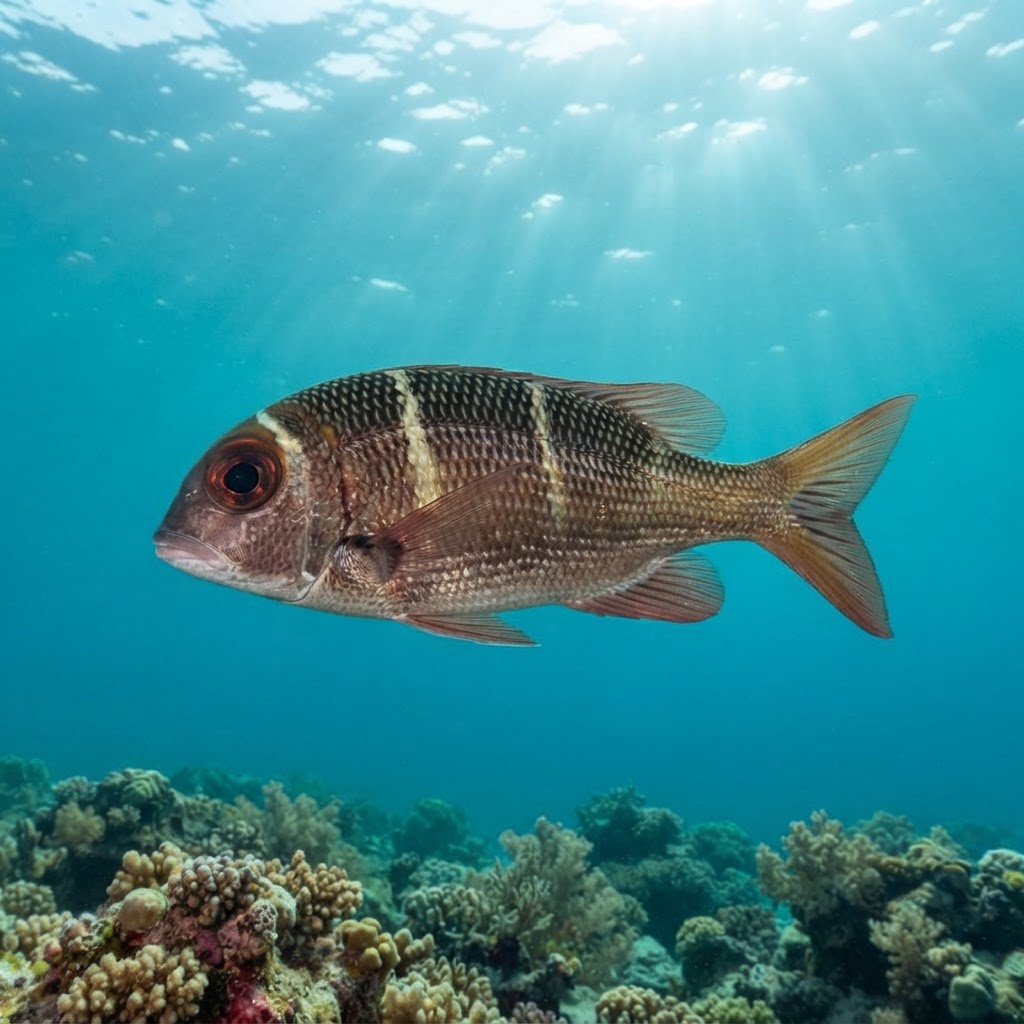
Monotaxis heterodon
A reef fish most divers overlook: strong numbers in the Maldives' Central Atolls, warm water year-round, and easy to mistake for other emperors.
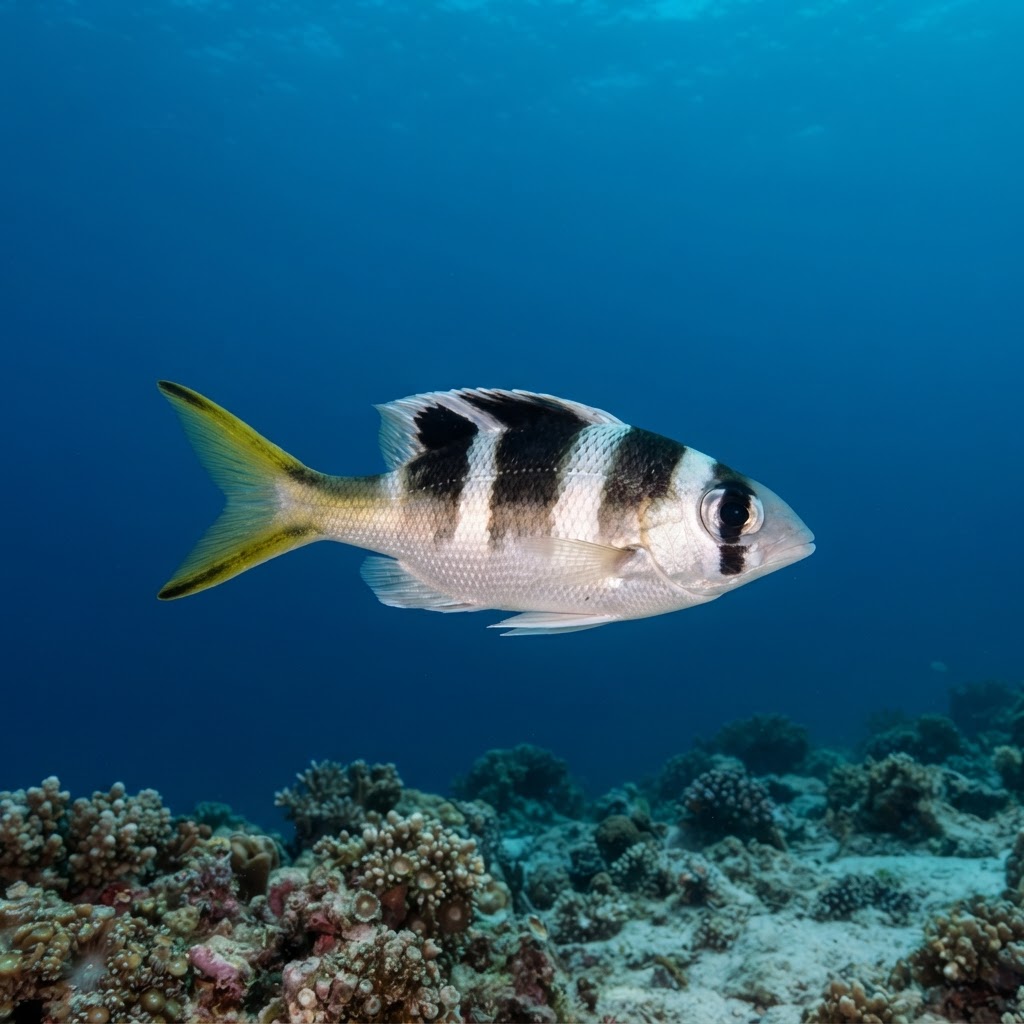
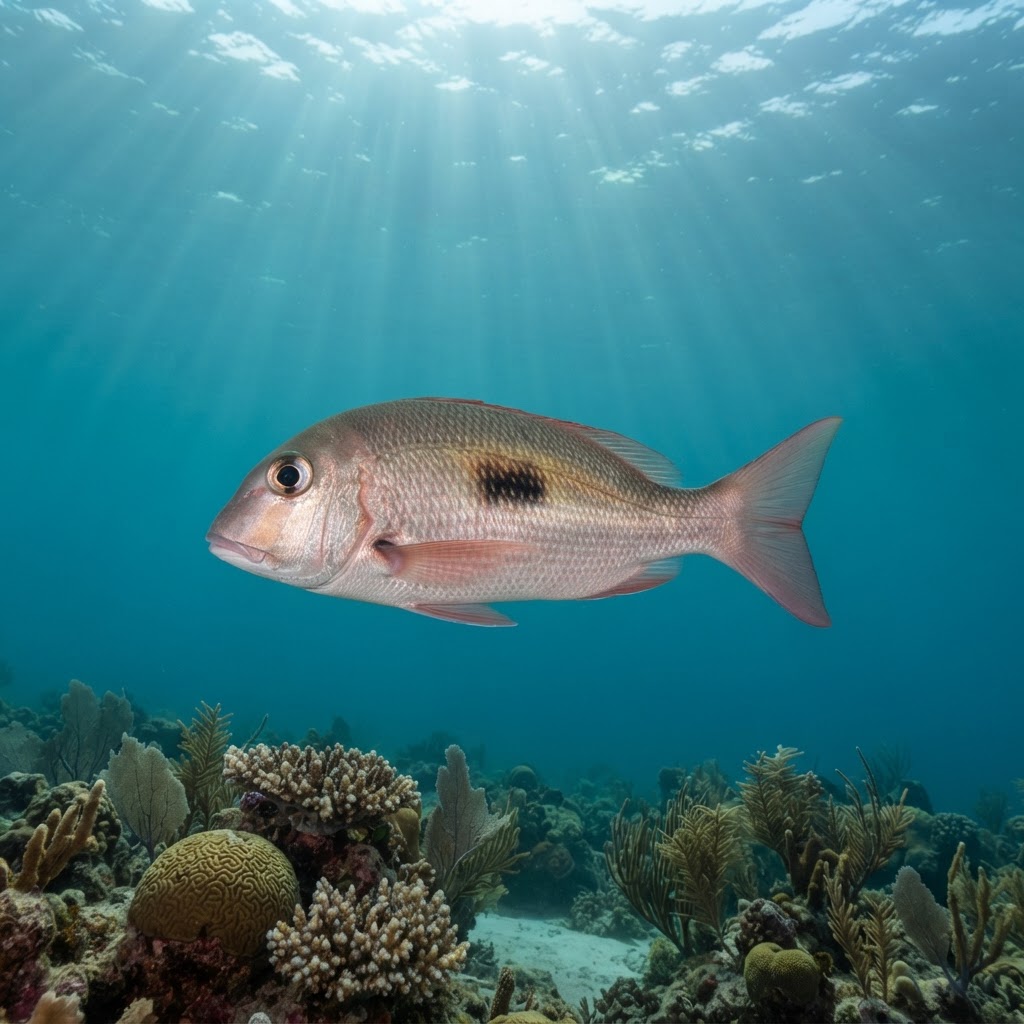
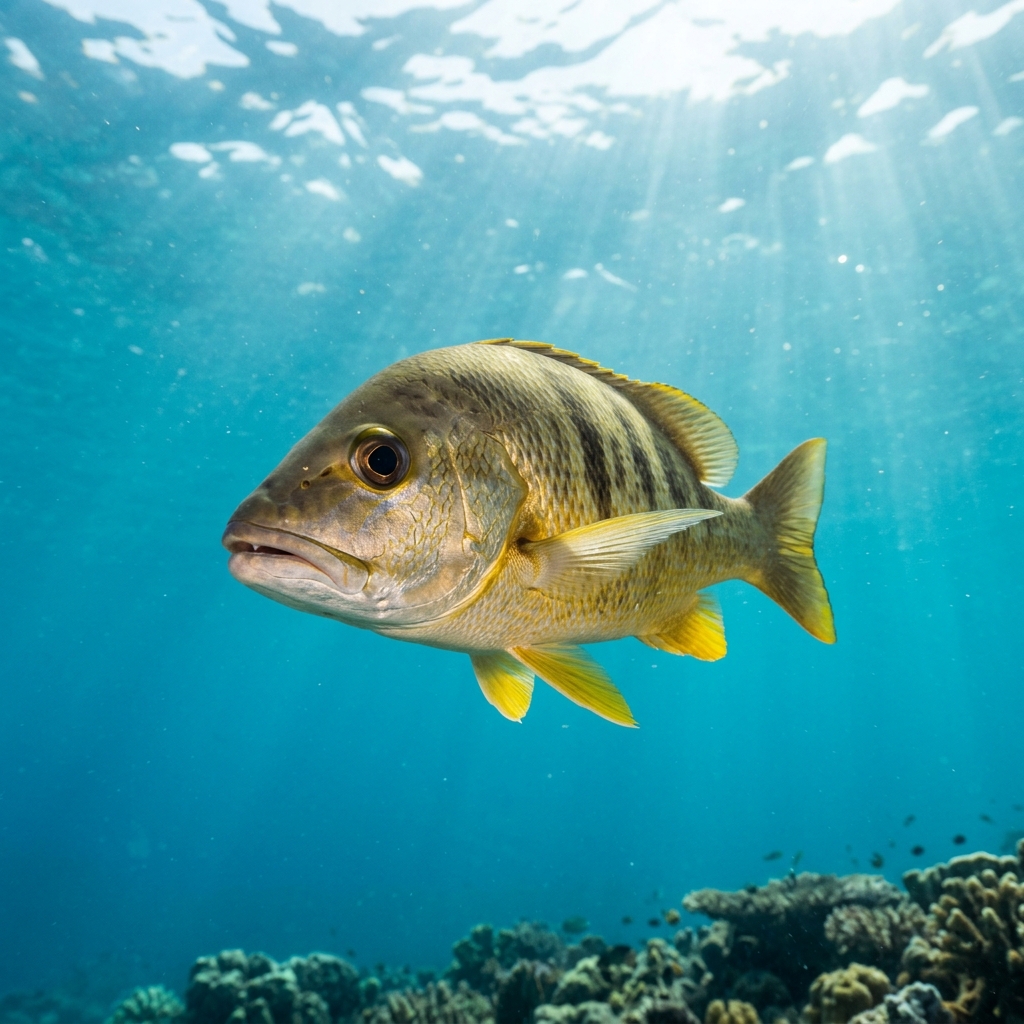
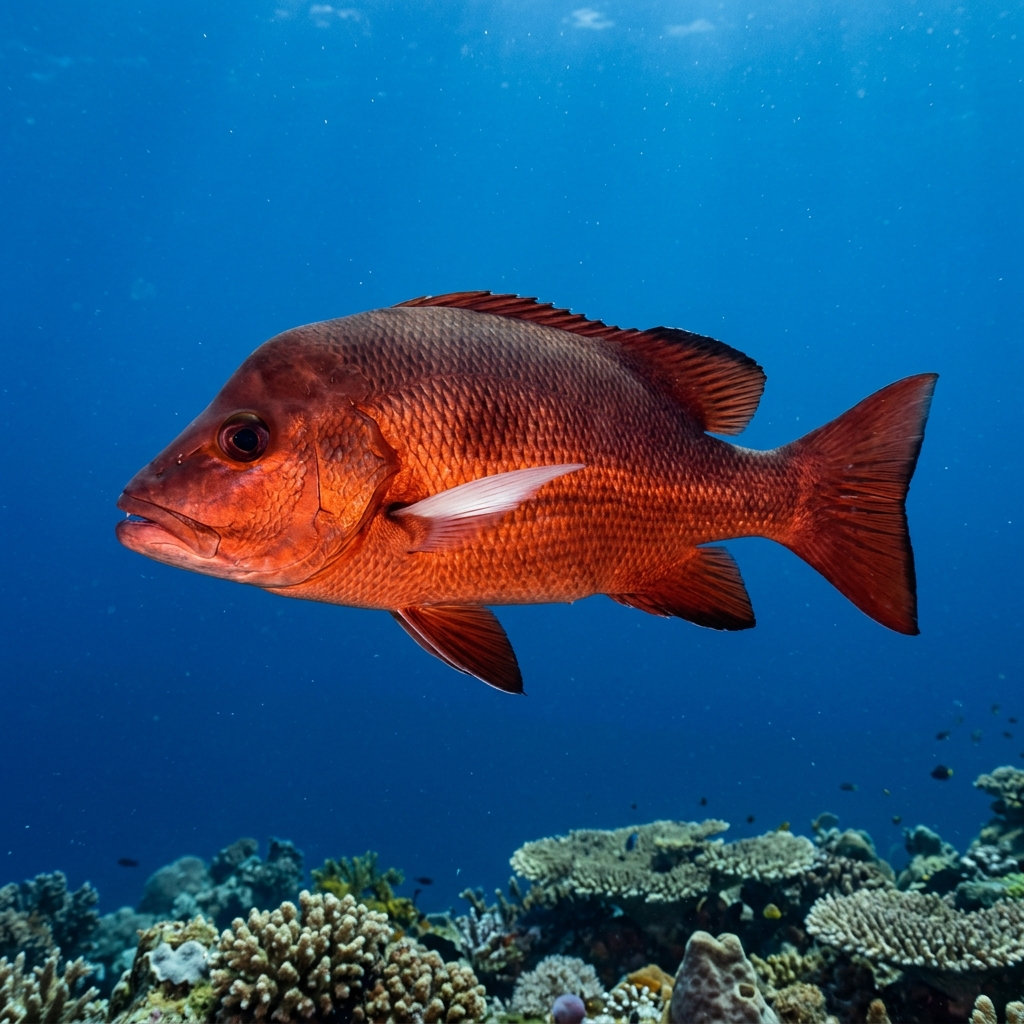
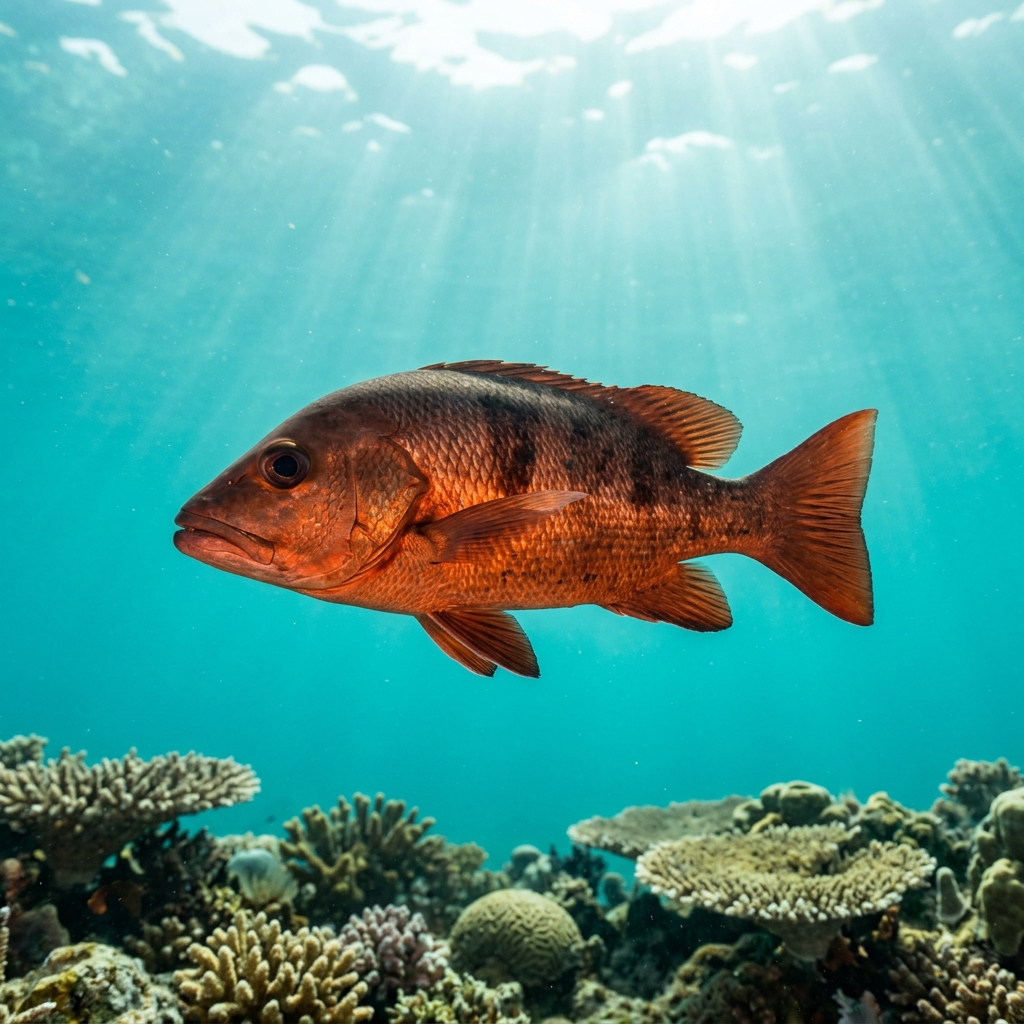
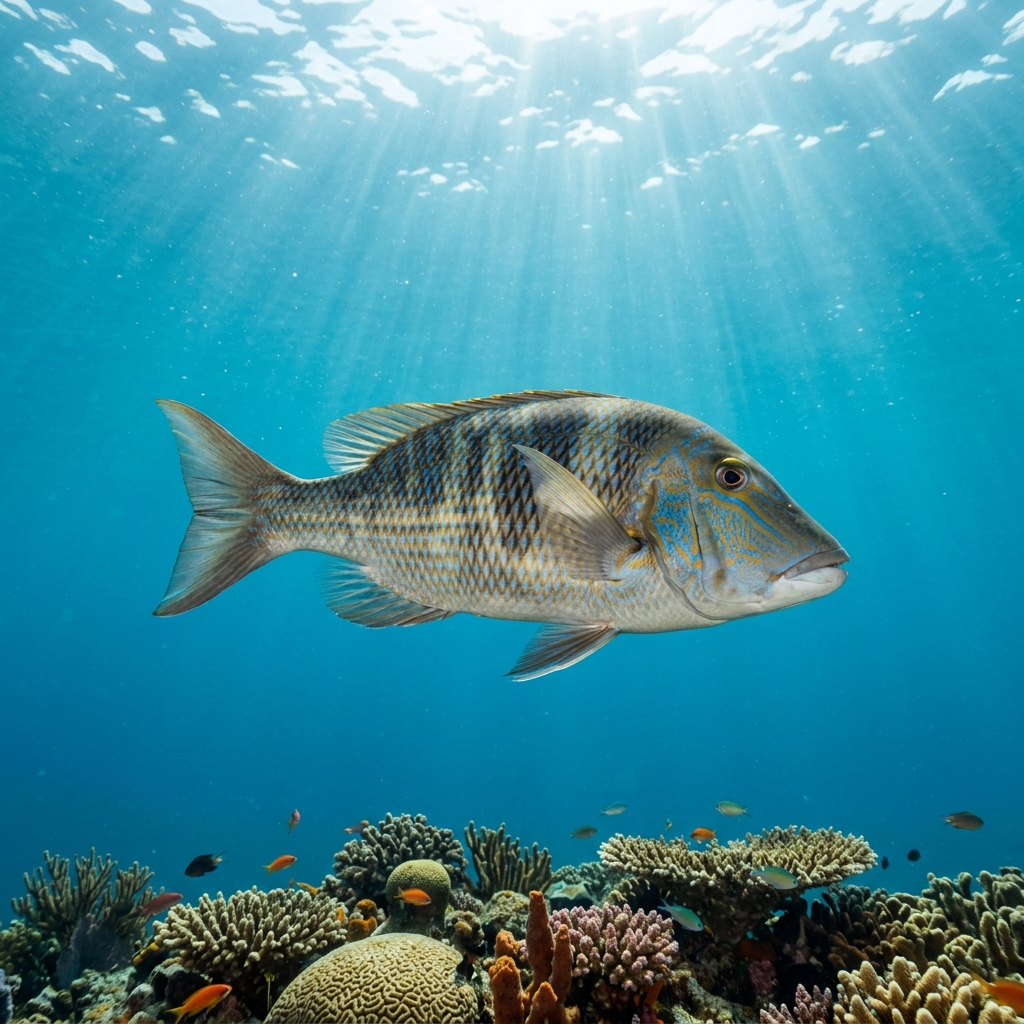
Look for a deep-bodied, silvery-grey fish with a blunt snout and noticeably reddish-orange fins that give it its name. It often shows faint darker bars or blotches on the upper flank when at rest, fading as it swims. Sized like a typical reef emperor, it moves with a steady, unhurried glide rather than darting, usually alone or in loose small groups over open reef or sand patches near structure.
Divers typically find it cruising slowly over reef edges, rubble patches, or sandy flats adjacent to coral, often solo or in small, loosely spaced groups rather than tight schools. It keeps a fairly relaxed distance from divers, neither approaching nor bolting, and is most often noticed mid-dive on open reef rather than tucked into cover. Look for it near the interface between hard coral structure and open sand, where it seems to forage.
Like other emperors (Lethrinidae), it hunts by picking invertebrates and small prey off the sand and rubble rather than chasing fish in open water, making it a useful indicator of healthy reef-sand interfaces.
No clear seasonal pattern shows up in the sighting data, and it sits comfortably in water from about 25 to 31C, so it's a year-round encounter on tropical reefs rather than a seasonal target.
Reef neighbours a diver could mistake it for. Use the identification notes above to tell them apart.
Most reliably logged in the Maldives, especially the Central Atolls, where it turns up on a large share of reef dives. Beyond the Maldives it has strong, consistent records in Queensland (Australia), Raja Ampat (Indonesia), Palau's Koror & Malakal area, French Polynesia's Tuamotu and Society Islands, the Visayas (Philippines), and Khao Lak (Thailand). Across all these regions it tends to show up as an uncommon but dependable sighting rather than something you'll see on every dive.
Mapping where Redfin Emperor is logged…
The Maldives, particularly the Central Atolls, is by far the most reliable region. Good secondary chances come from Queensland in Australia, Raja Ampat in Indonesia, Palau's Koror & Malakal area, and the Tuamotu and Society Islands in French Polynesia.
There's no strong seasonal pattern in the sighting data, and it's found in warm water from roughly 25 to 31C year-round, so any time of year on a tropical reef trip is fair game.
Look for a silvery-grey, deep-bodied reef fish with reddish-orange fins and a blunt face, usually cruising alone or in small loose groups over reef edges and sand. The reddish fin colour against the grey body is the quickest giveaway.
No, it poses no threat to divers. It's a calm, reef-associated fish that keeps its distance and has no venomous spines or aggressive behaviour to worry about.
It forages over sand and rubble near reef structure, picking off small invertebrates rather than hunting in open water, which is typical of emperors as a family.
Site and sighting data is aggregated from diver logs, iNaturalist and GBIF. For taxonomy and conservation status:
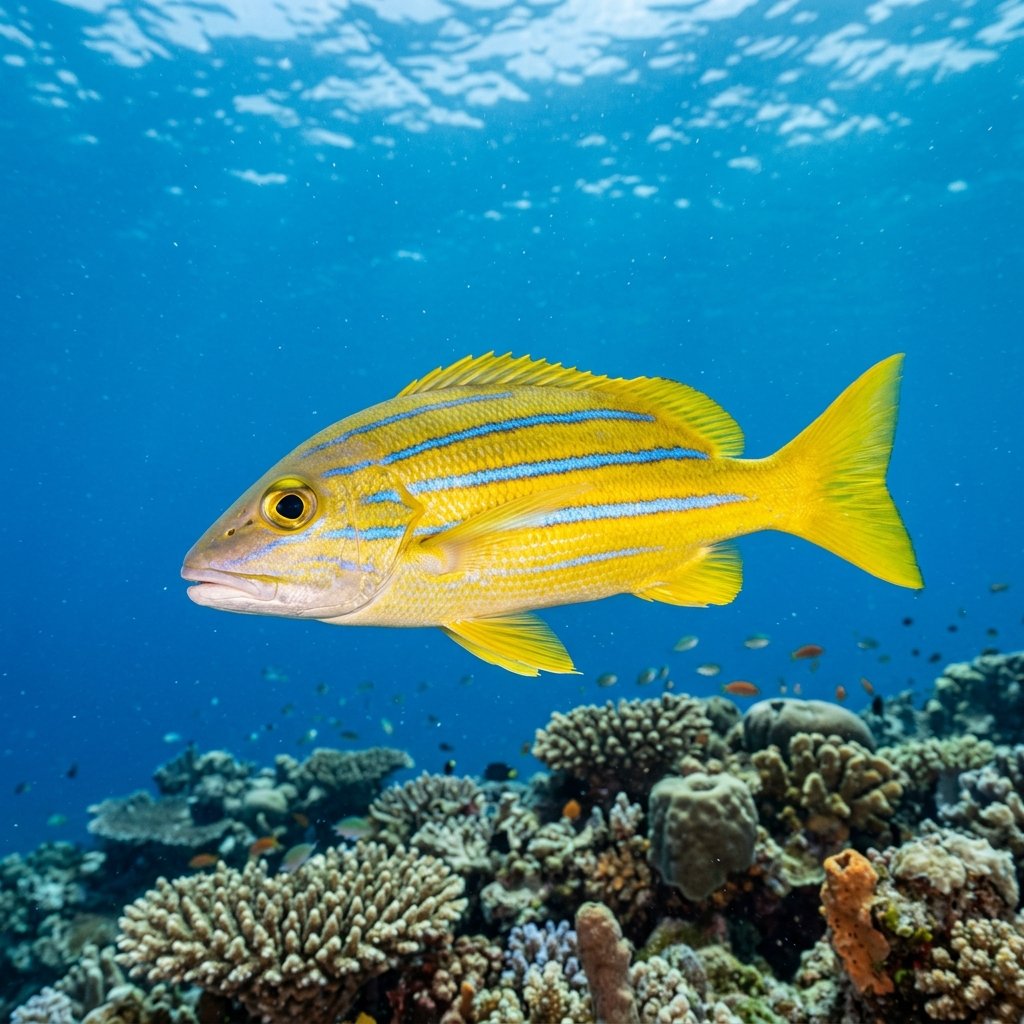
Bluestriped Snapper
2,054 sites