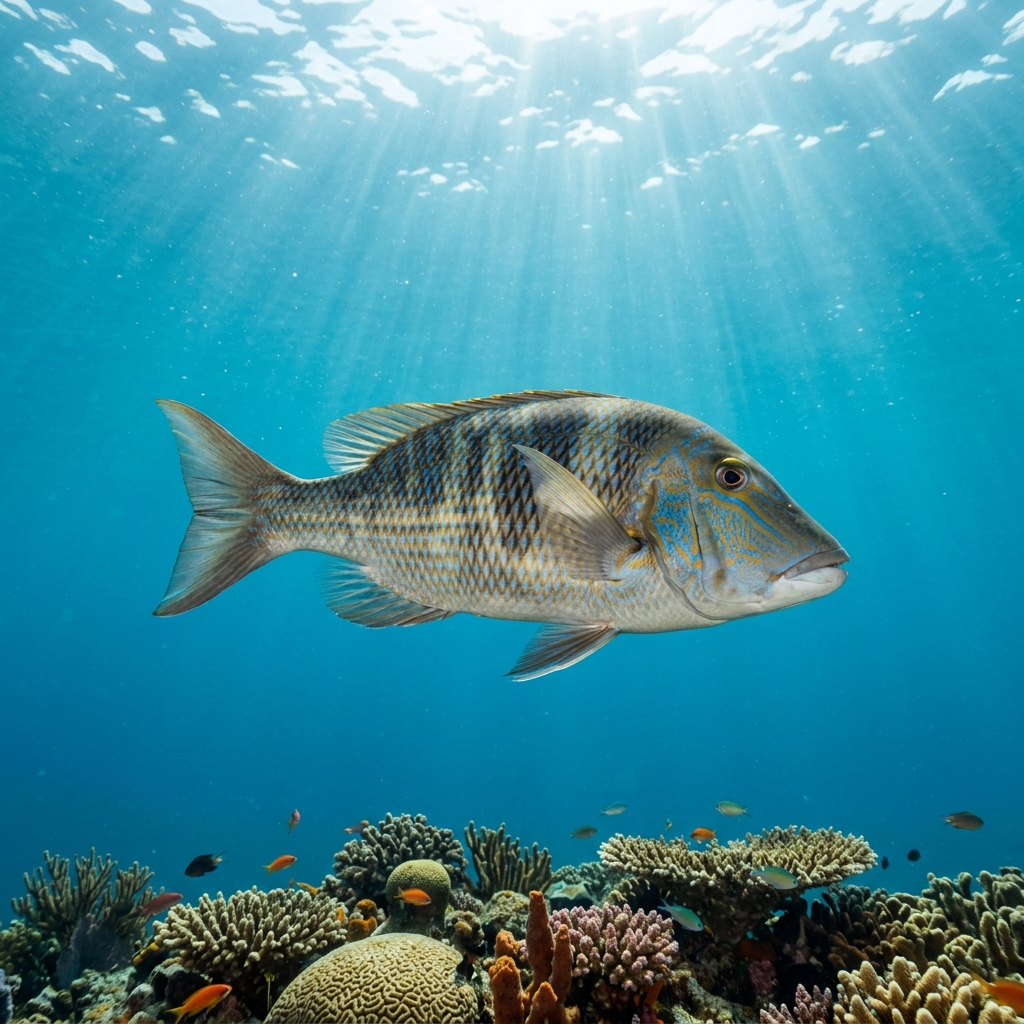
Lethrinus spp.
Emperors turn up year-round from the Maldives to the Red Sea. Here's how to spot them, where they're most reliably logged, and what to look for underwater.
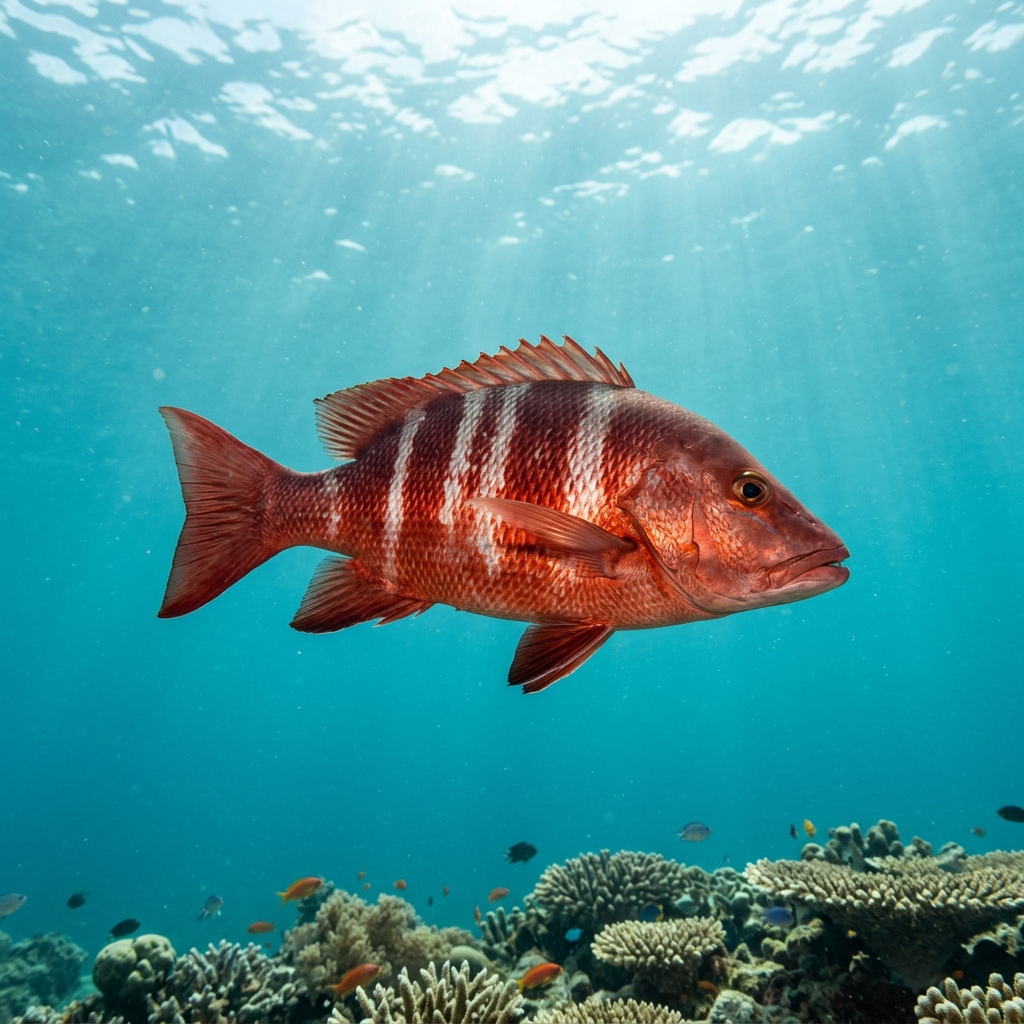
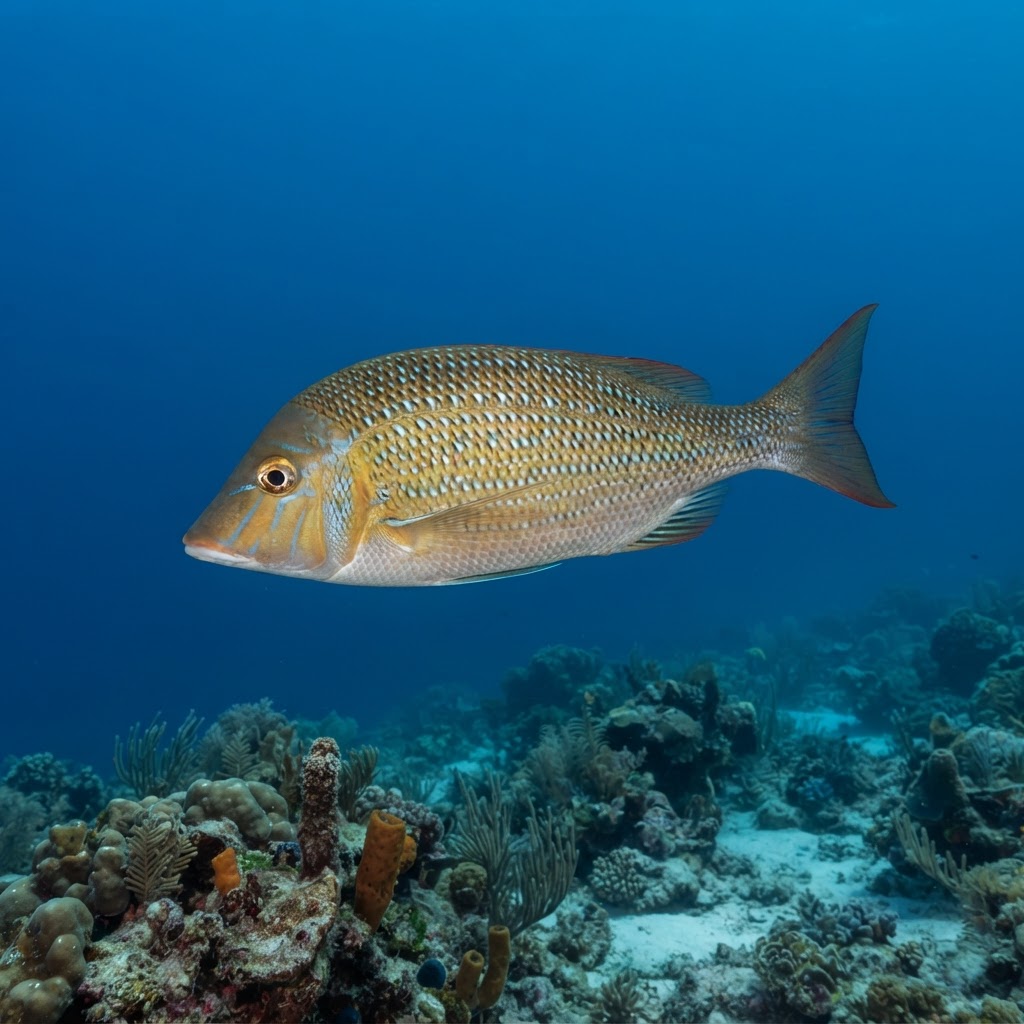
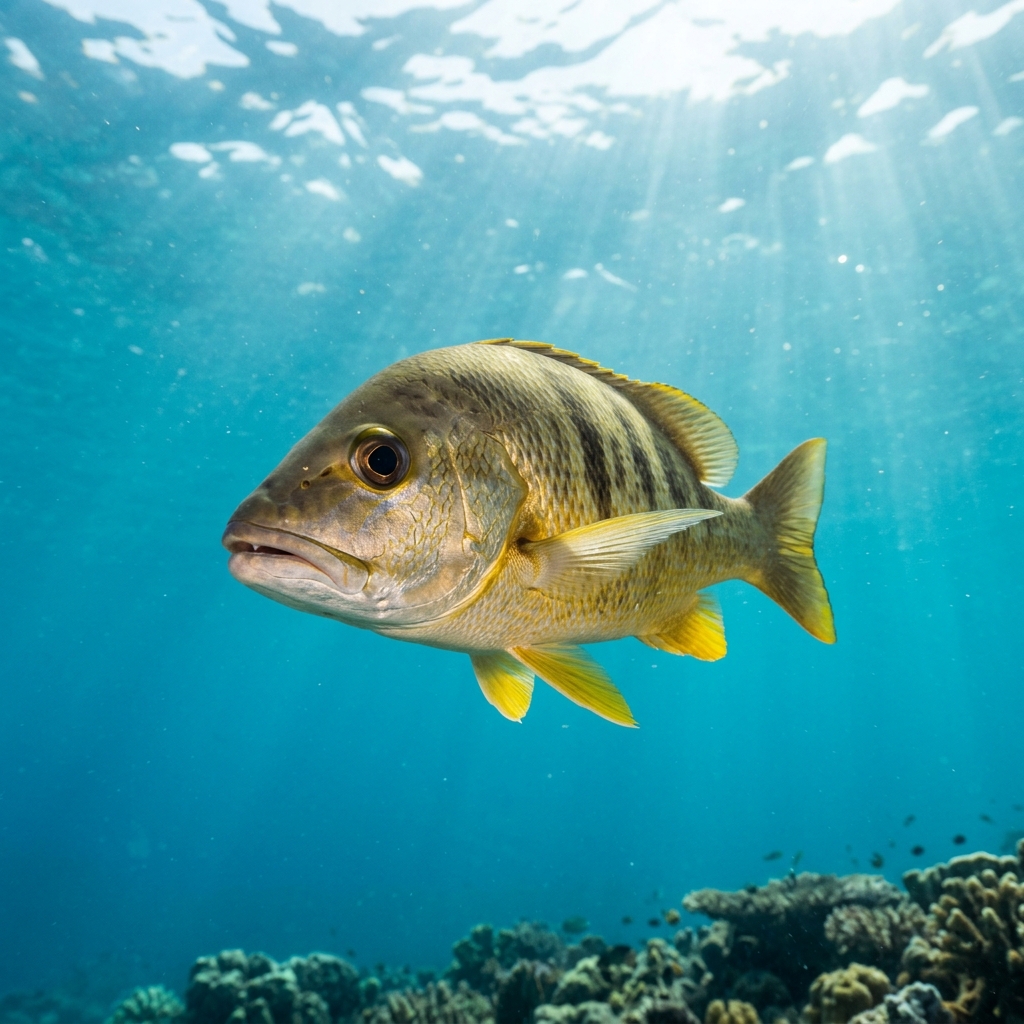
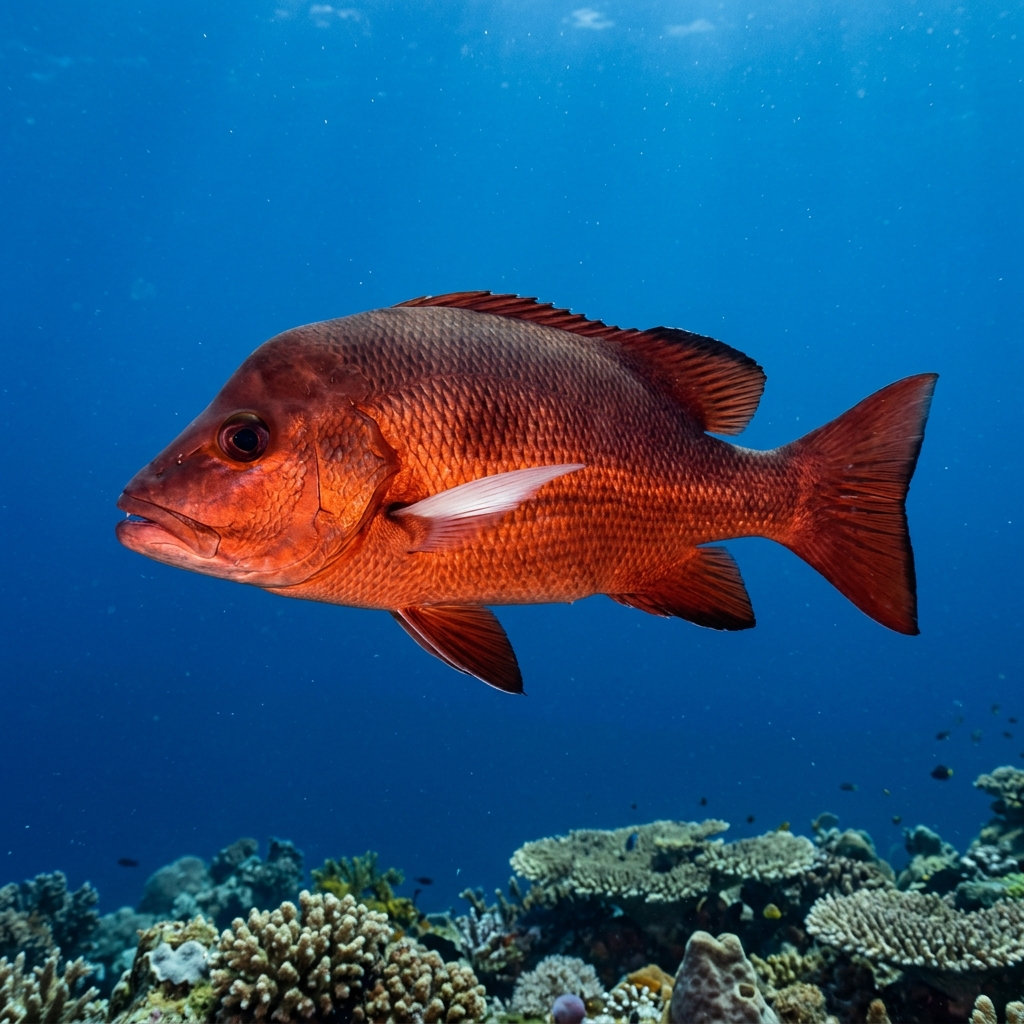
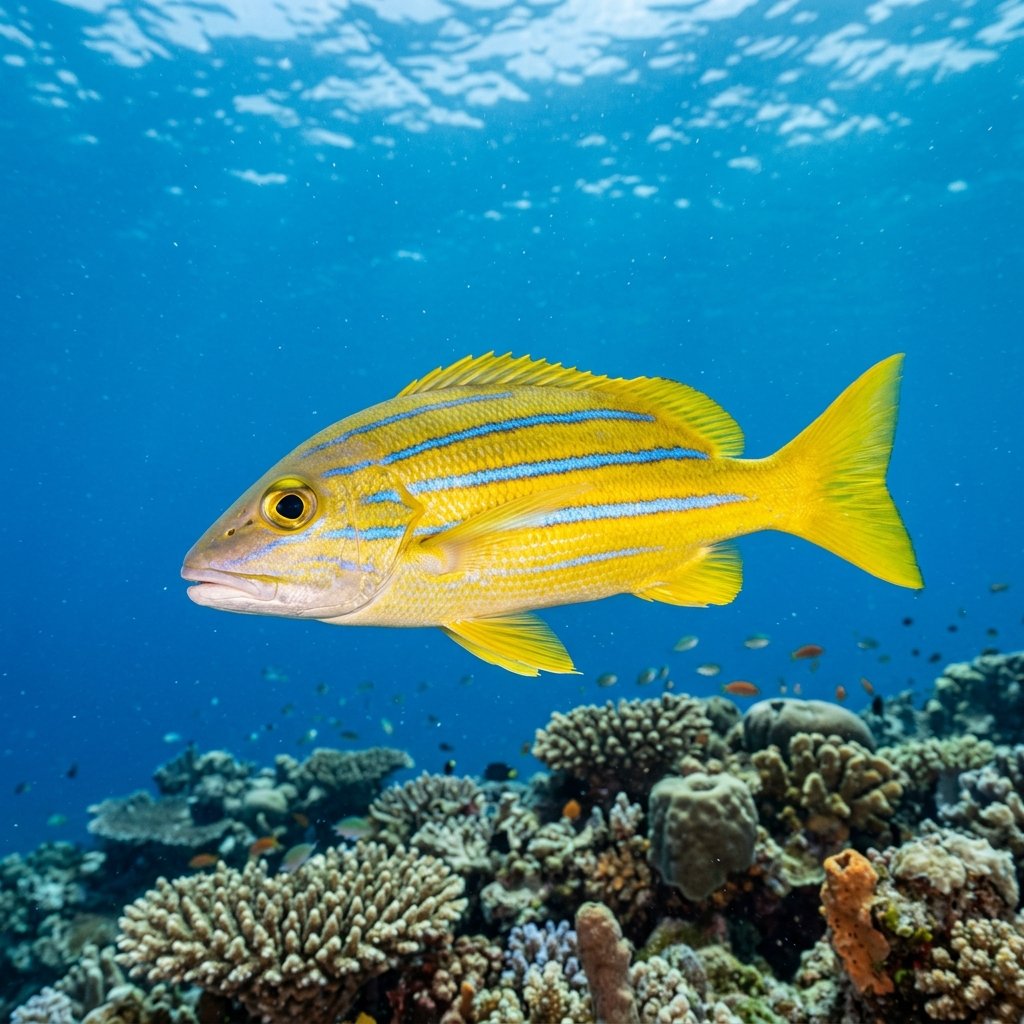
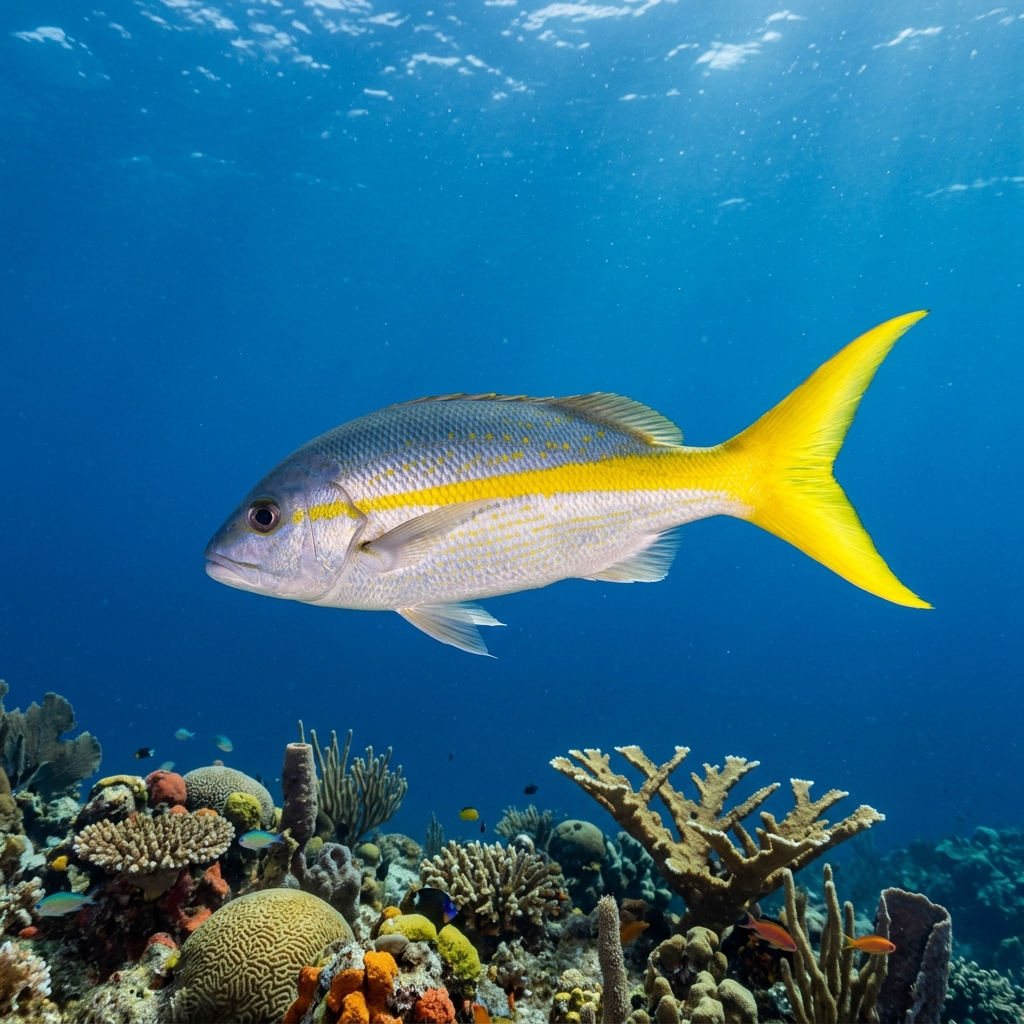
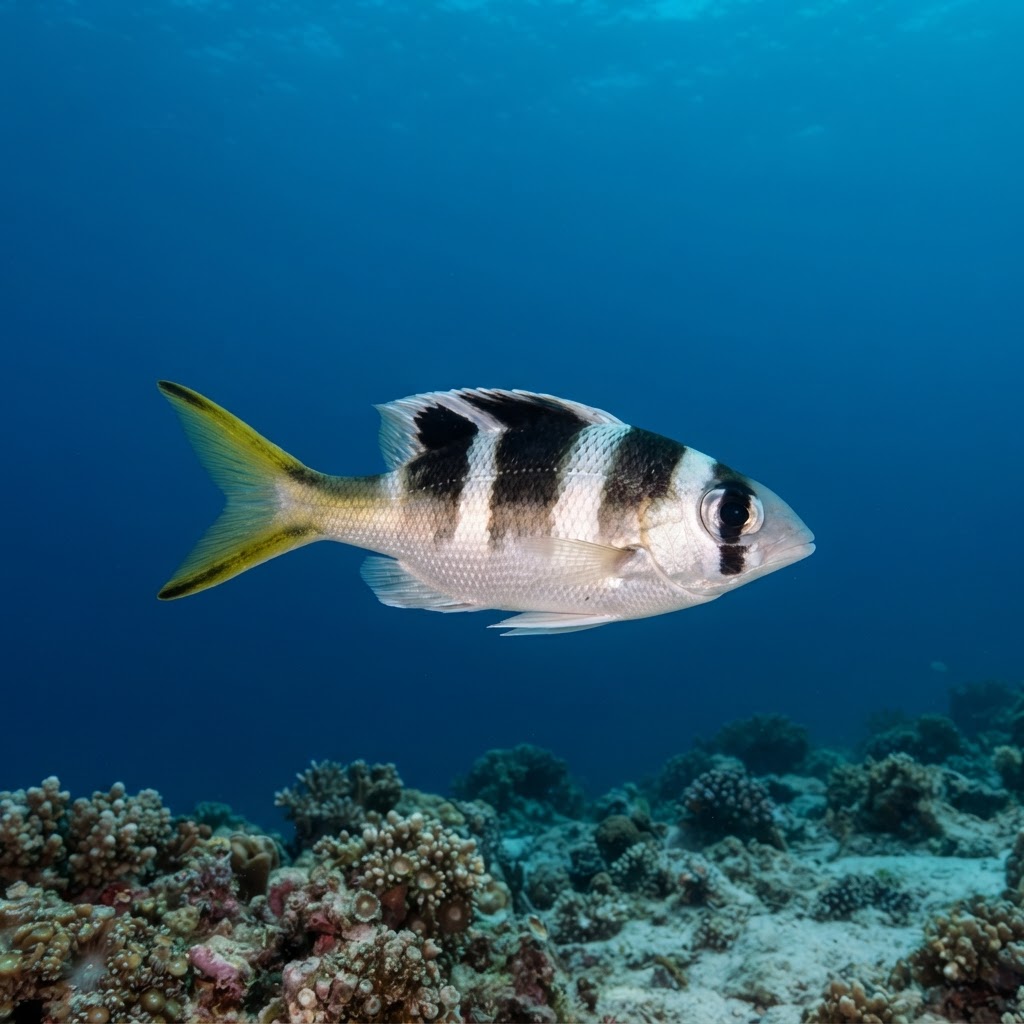
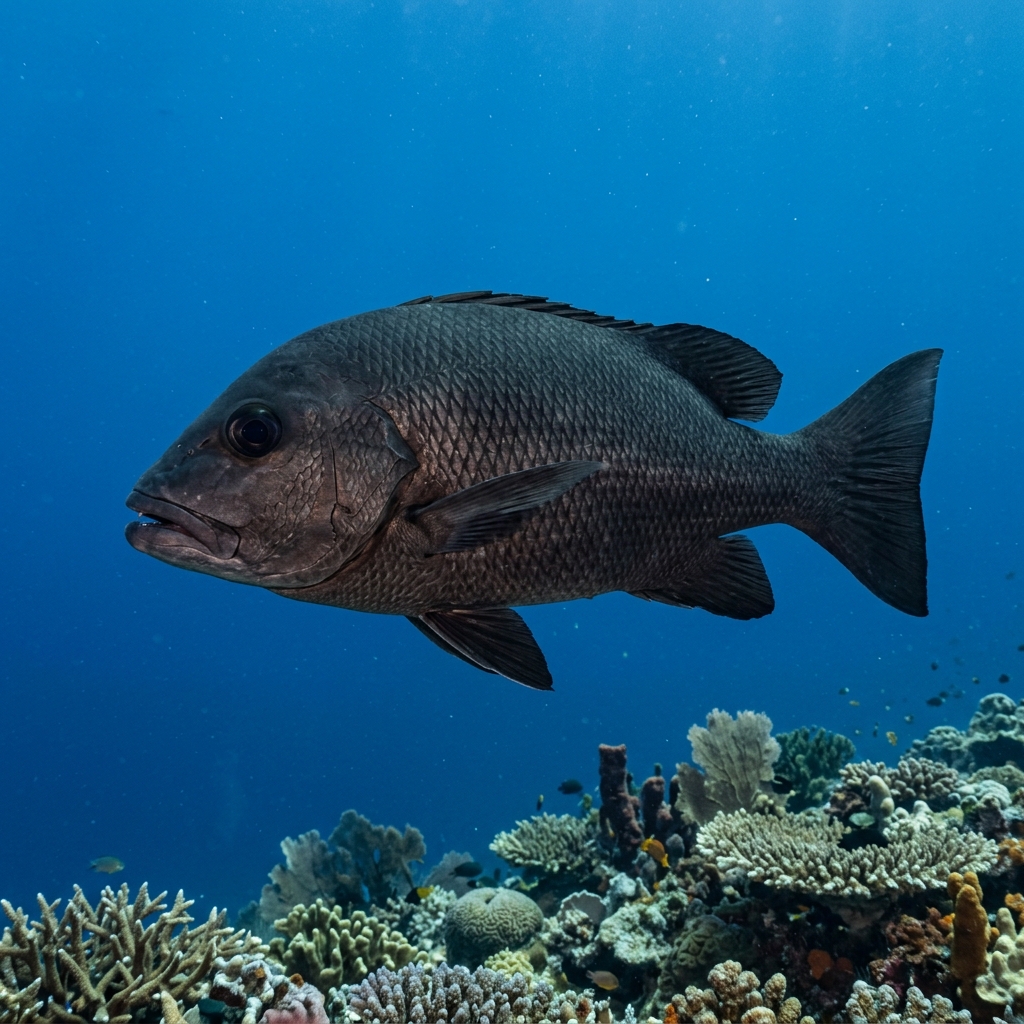
Emperors share a distinctive body plan that helps you place the whole family underwater: a deep, oval-to-elongated profile, noticeably thick fleshy lips, and a pointed snout that gives them an almost hound-like face. Most species are silvery, grey, or greenish across the flanks, often with subtle banding or spotting that shifts depending on mood and light. Size varies considerably across the group, but adults typically have a solid, chunky presence on the reef rather than the sleeker look of true snappers. Juveniles are a different story entirely, wearing bold horizontal stripes in white, yellow, and brown that disappear completely as the fish matures.
Most often encountered singly or in small, loose groups patrolling sandy patches and rubble zones at the reef edge, emperors use those heavy lips to root through sediment and crush hard-shelled prey. They tend to be cautious rather than bold around divers, typically maintaining a steady distance and moving away if approached too directly. Early morning and late afternoon are when feeding activity is most visible, though they can be spotted at any point during a dive.
Those thick, rubbery lips are purpose-built for crushing hard prey such as sea urchins, crustaceans, and molluscs, making emperors important predators that help regulate invertebrate populations on coral reefs.
Emperors are present year-round in both hemispheres, with no concentrated season in the data. Their preferred water temperatures of roughly 23 to 29 °C mean they sit comfortably on tropical reefs throughout the year, so there is no need to time a trip specifically around them.
Reef neighbours a diver could mistake it for. Use the identification notes above to tell them apart.
Emperors are most commonly logged in the Maldives, Philippines, and Indonesia, with the Male and Ari Atolls and Palawan and Apo Reef standing out as particularly strong areas. Australia's Queensland coast and the Red Sea around Sharm el Sheikh are also reliable, and the group is recorded across a wide spread of countries throughout the Indo-Pacific and beyond.
Mapping where Emperor is logged…
Emperors are logged across a vast range of tropical dive destinations. The strongest concentrations in the data are in the Maldives, the Philippines, and Indonesia, followed by Australia's Queensland coast, the Egyptian Red Sea around Sharm el Sheikh, and Thailand. The Male and Ari Atolls in the Maldives and Palawan and Apo Reef in the Philippines are among the top regions for sightings.
There is no single best season. Emperors are recorded year-round in both the northern and southern hemispheres, with no peak month in the sighting data. They are comfortable in water temperatures from around 23 to 29 °C, so virtually any visit to a healthy tropical reef can produce a sighting.
Look for that distinctive thick-lipped, hound-nosed face on a deep oval body in silvery, grey, or greenish tones. The fleshy lips and pointed snout set them apart from most reef fish at a glance. Adults lose the stripy juvenile pattern entirely, so a fully plain, stocky fish with that heavy face is a solid indicator you are looking at an emperor.
At most sites where they are recorded, emperors are classed as uncommon rather than common or rare. You may well see one on a reef dive, but sightings are not guaranteed. Reefs with sandy or rubble patches near the reef edge give you the best odds, as that is where emperors tend to forage.
No. Emperors pose no threat to divers. They are cautious fish that tend to keep their distance and move away if approached. No special precautions are needed beyond normal respectful reef behaviour.
Site and sighting data is aggregated from diver logs, iNaturalist and GBIF. For taxonomy and conservation status:
Yellowtail Snapper
2,012 sites