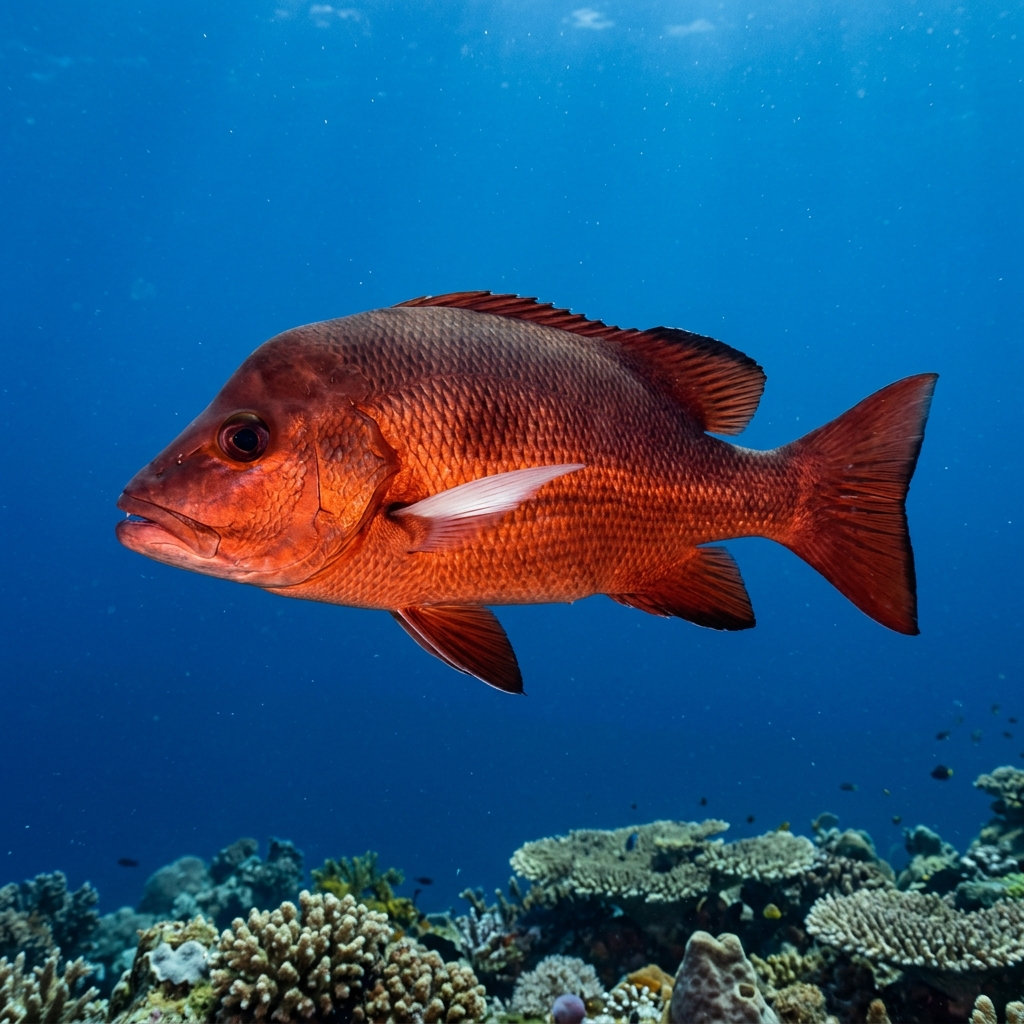
Lutjanus gibbus
Spot humpback snapper on coral reefs across the Maldives, Philippines and Indonesia. Daytime diver sightings, 24-29 °C water, most commonly logged uncommon.
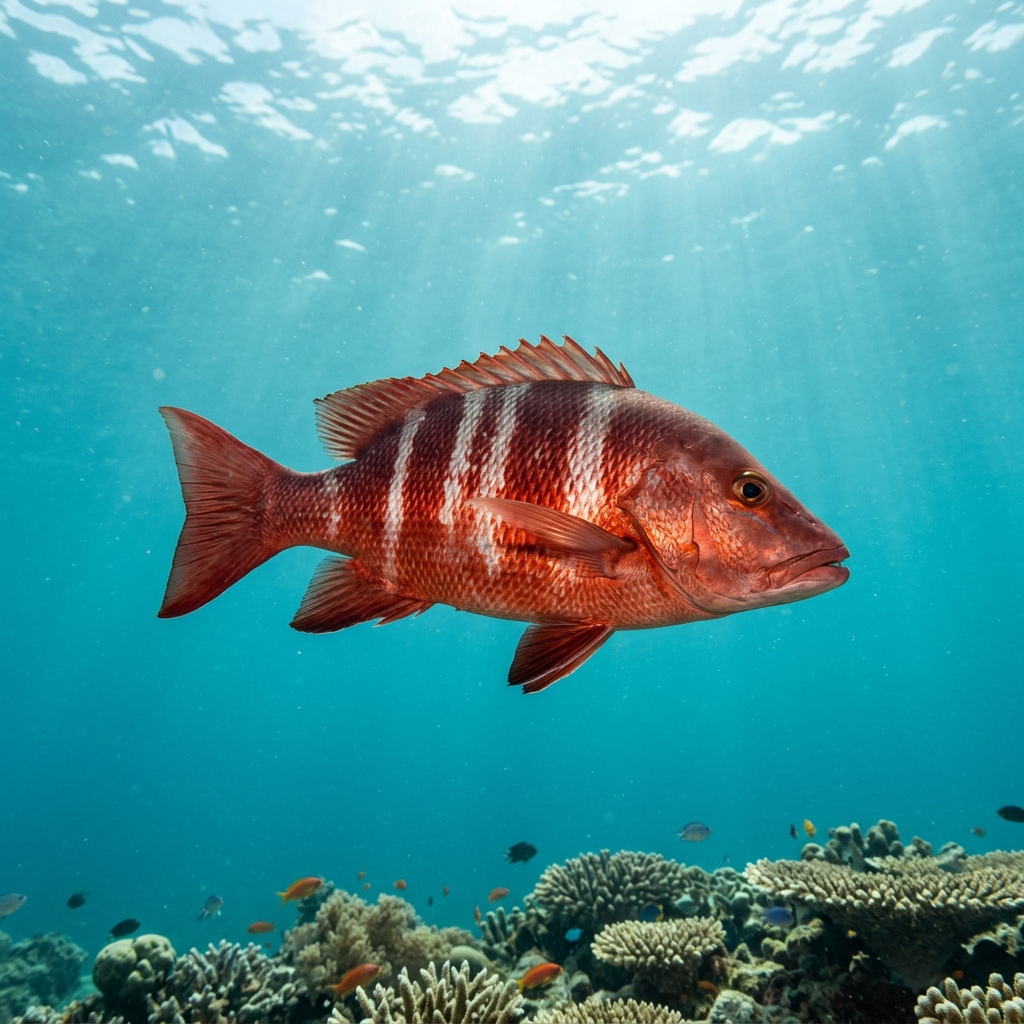
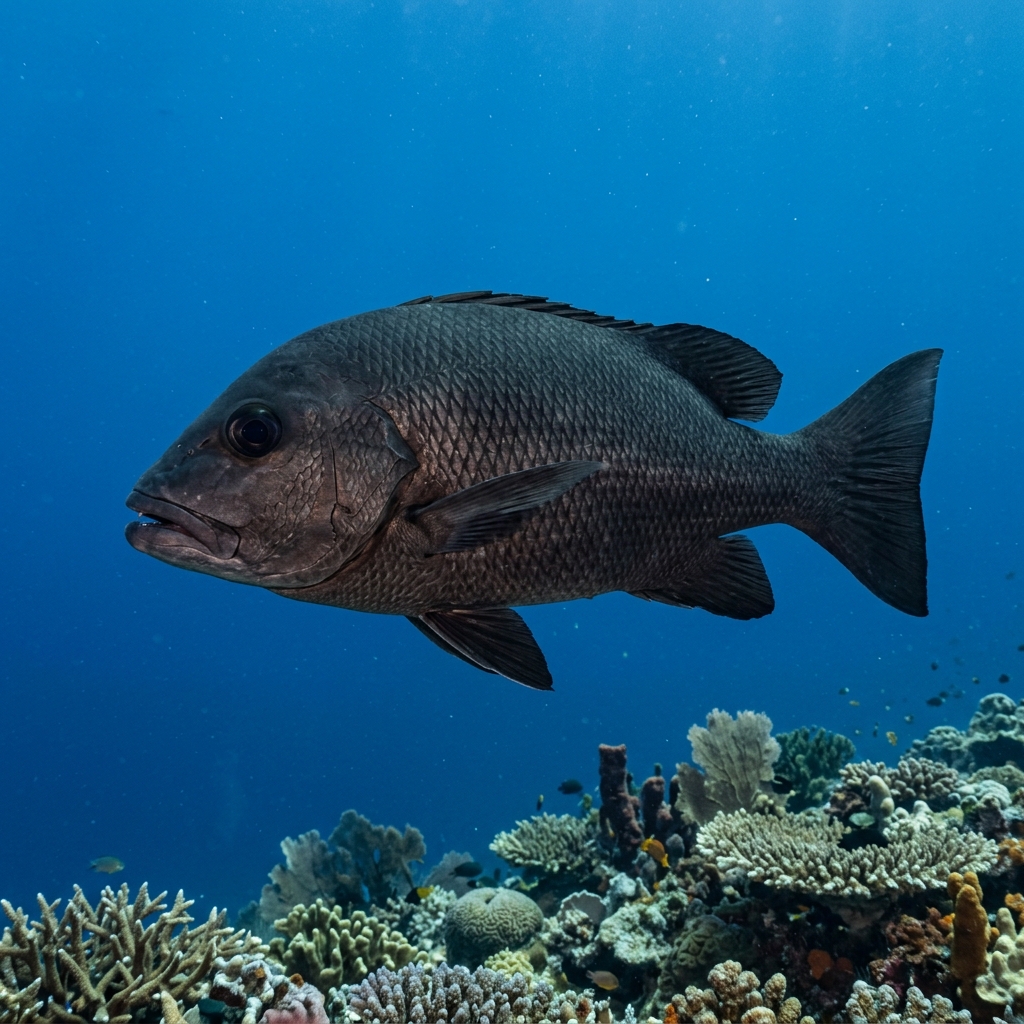
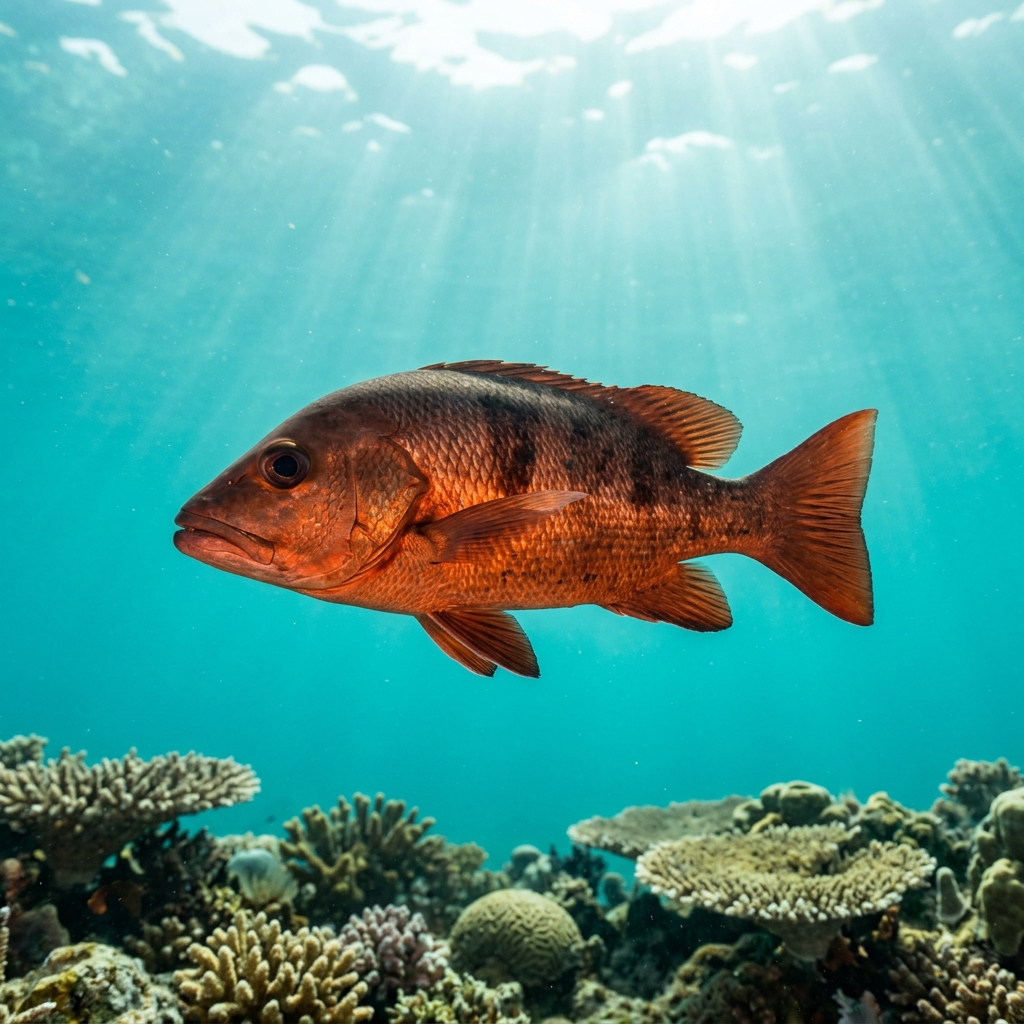
A stocky, deep-bodied snapper, roughly 40 cm, with a noticeably humped back profile that sets it apart from most other reef snappers. Body colour ranges from deep rose-red to brick-pink, paler on the belly, with no bold stripes or bars to distract from that distinctive arched dorsal line. The tail has a pale or whitish margin. Look for schools hovering near coral formations rather than solitary individuals.
Day dives give you the best shot, humpback snappers are active during daylight hours and tend to school near coral formations or along reef edges where they forage for small invertebrates. They are not particularly wary of divers; slow, observant divers may find the fish approaching out of curiosity rather than moving away. Social interactions within the school are worth watching, as individuals jostle for position and occasionally break off to investigate the reef.
The characteristic humped back profile, which gives the species its name, becomes more pronounced with age, making older, larger individuals the easiest to pick out in a mixed school.
Across the tropics it is present year-round, comfortable in water temperatures of roughly 24-29 °C. In the Southern Hemisphere specifically, sightings concentrate between July and November, so that window is worth targeting for destinations such as Queensland.
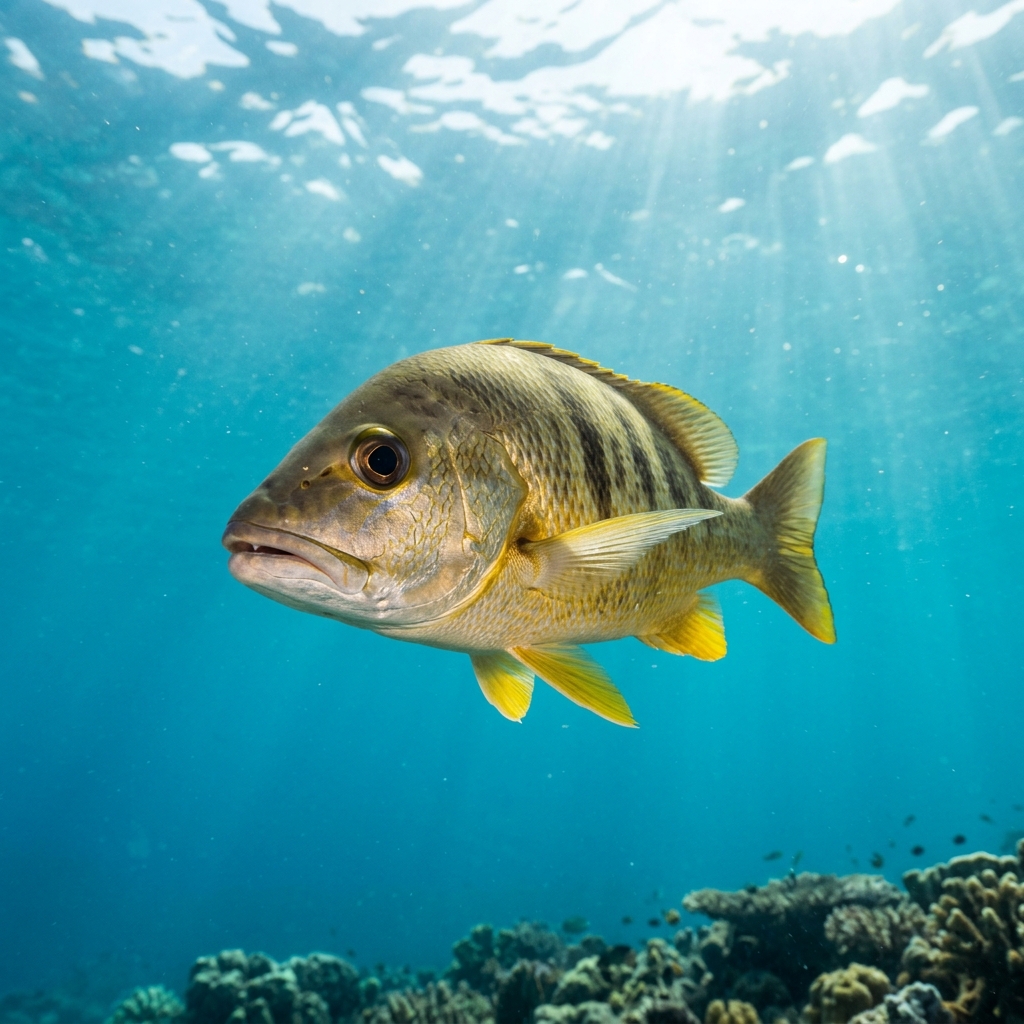
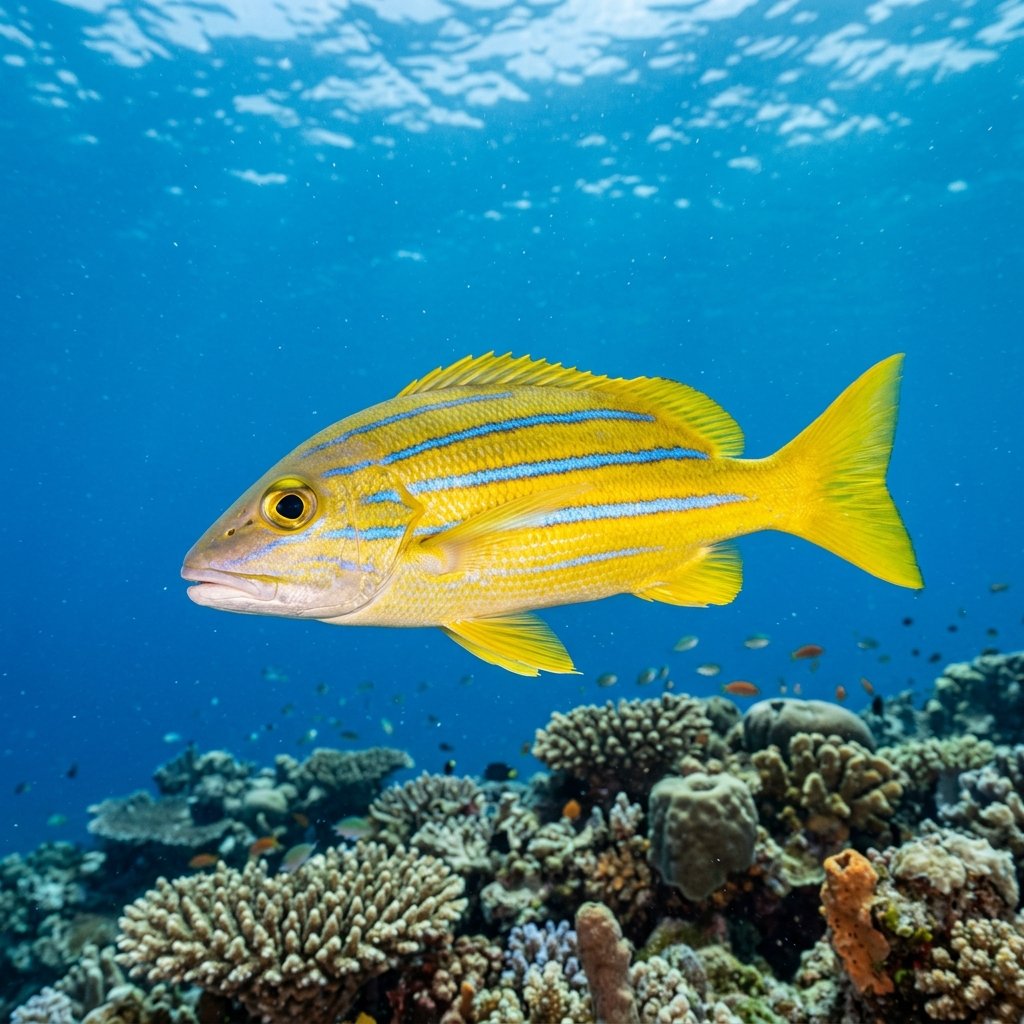
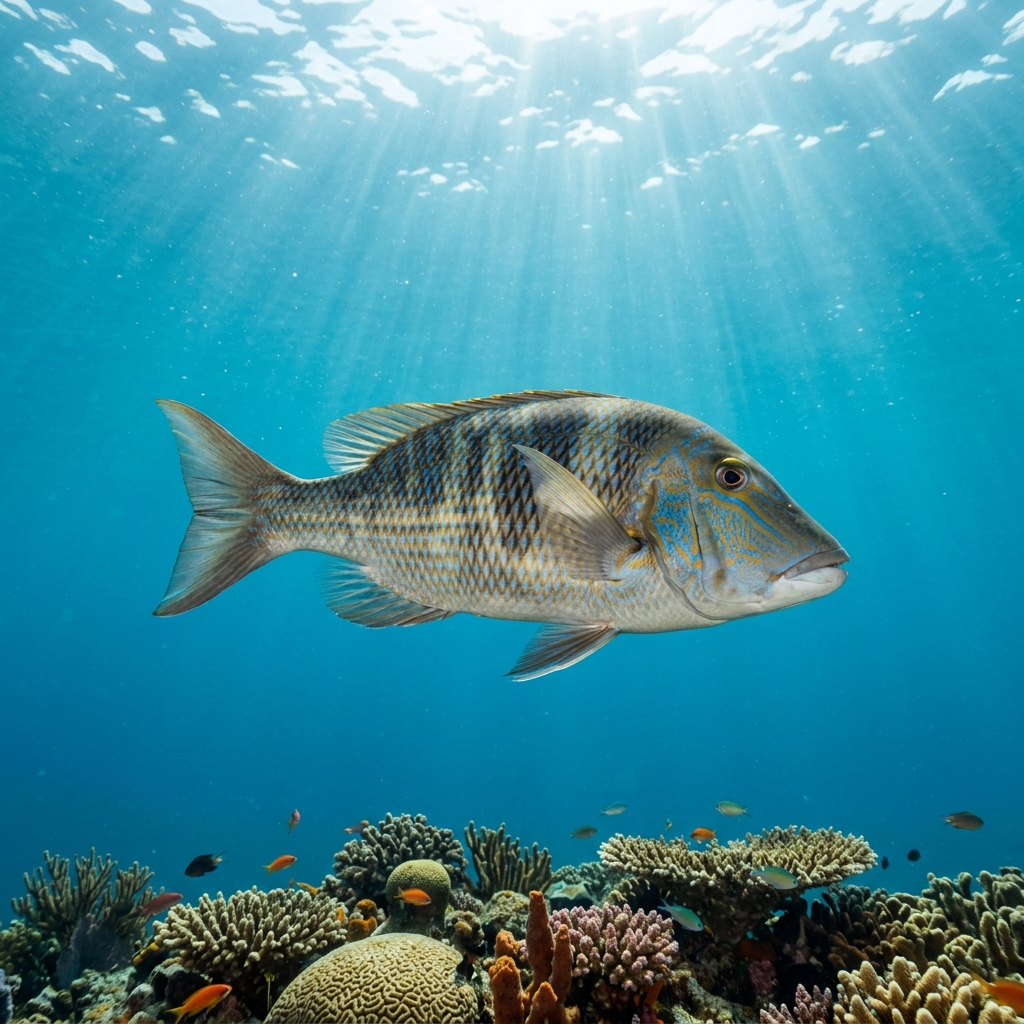
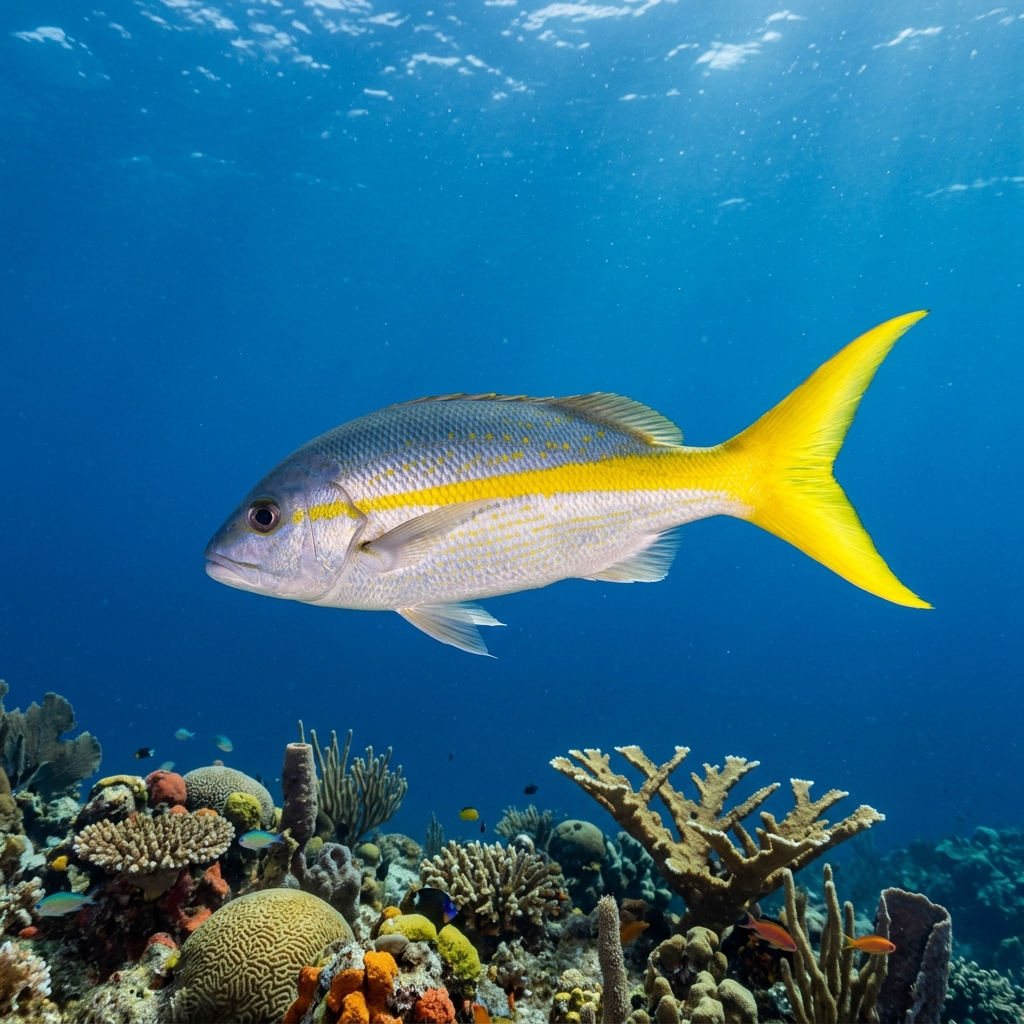
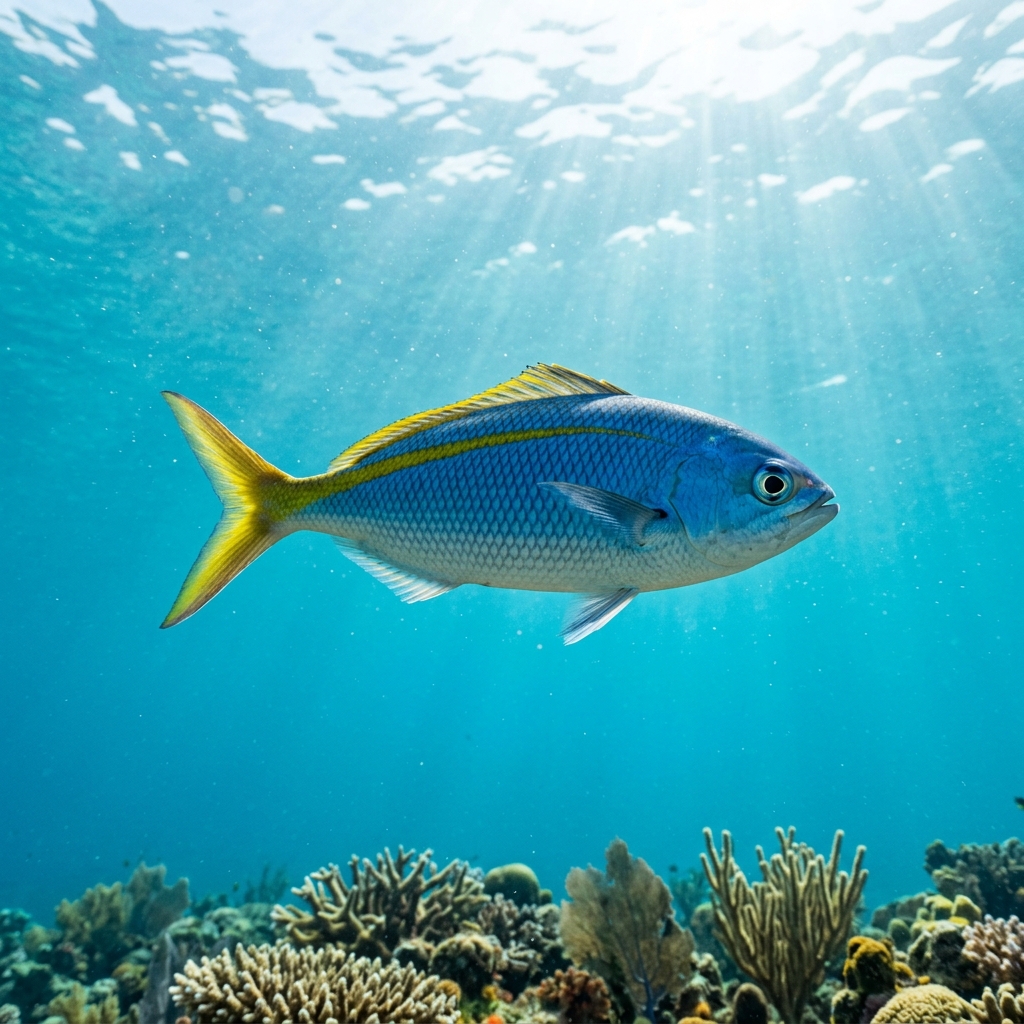
Reef neighbours a diver could mistake it for. Use the identification notes above to tell them apart.
Most commonly logged in the Maldives, where Male and Ari Atolls, as well as the North and Central Atolls, account for a large share of records. Strong populations are also reported in the Philippines (particularly Palawan and the Visayas), across Indonesia, and along Queensland, Australia. The species turns up as far afield as Sudan in the Red Sea and French Polynesia in the South Pacific.
Mapping where Humpback Snapper is logged…
Humpback snapper are most commonly logged across Indo-Pacific reefs. The Maldives (especially Male, Ari, and the North and Central Atolls) hold the strongest records, followed by the Philippines, Indonesia, and Queensland in Australia. They also appear in the Red Sea around Sudan and across French Polynesia.
On tropical reefs they are present all year, as they favour water temperatures of 24-29 °C that persist across most Indo-Pacific dive destinations. If you are diving in the Southern Hemisphere, for example along Queensland, July through November sees the highest concentration of sightings.
Key in on the strongly arched, humped back profile, it is the most distinctive feature of this species. Body colour is deep rose to brick-red, paler on the belly, with a pale-edged tail. They are typically seen in schools near coral formations rather than as solitary fish.
Adults typically reach around 39-40 cm in length. They are compact and deep-bodied, so they look stockier than their length suggests when you encounter them on the reef.
No. Humpback snapper pose no threat to divers. They are curious rather than aggressive, and a calm, slow approach will usually keep the school in place rather than sending it into the reef.
Site and sighting data is aggregated from diver logs, iNaturalist and GBIF. For taxonomy and conservation status:
Emperor
2,052 sites