Neomyxus leuciscus
Silver schooling fish seen along Hawaii's shallow reefs and the Tuamotu Islands in warm 25-29C water, year-round but always uncommon.
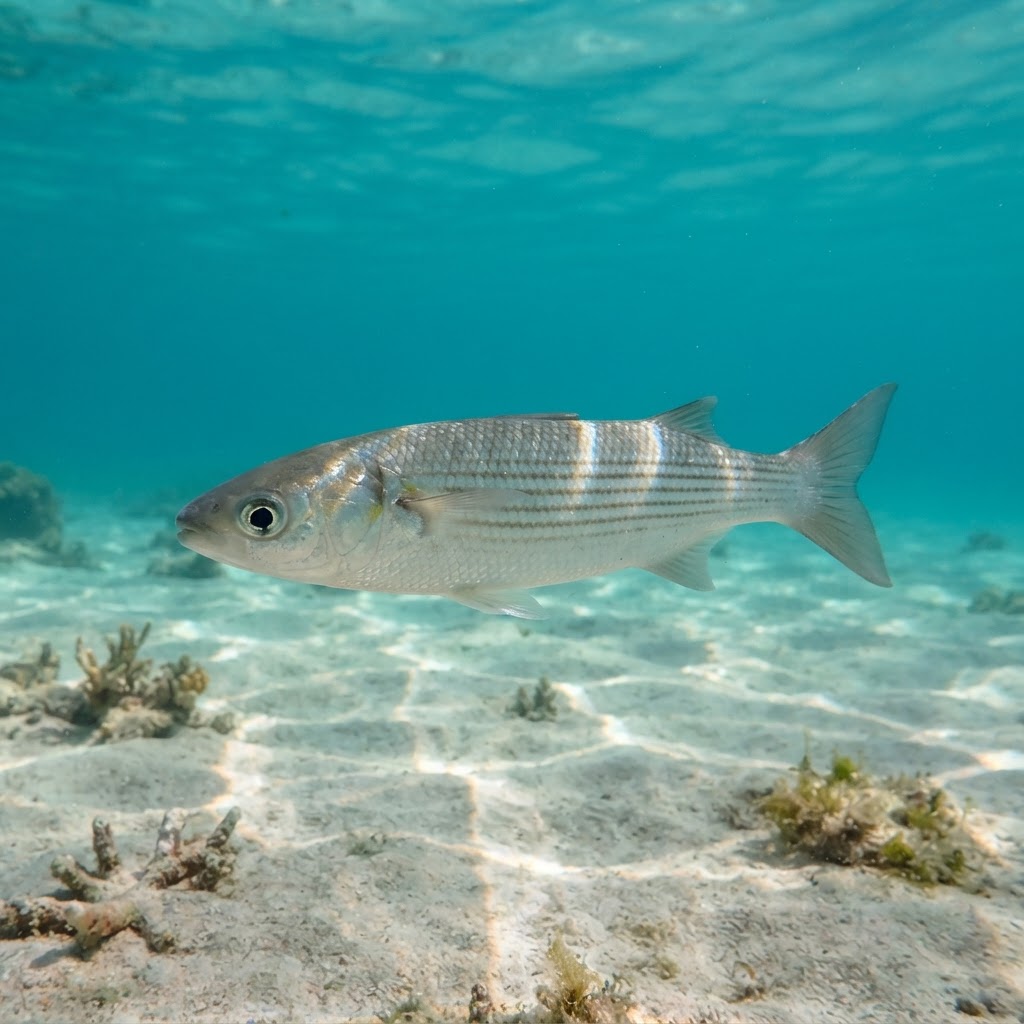
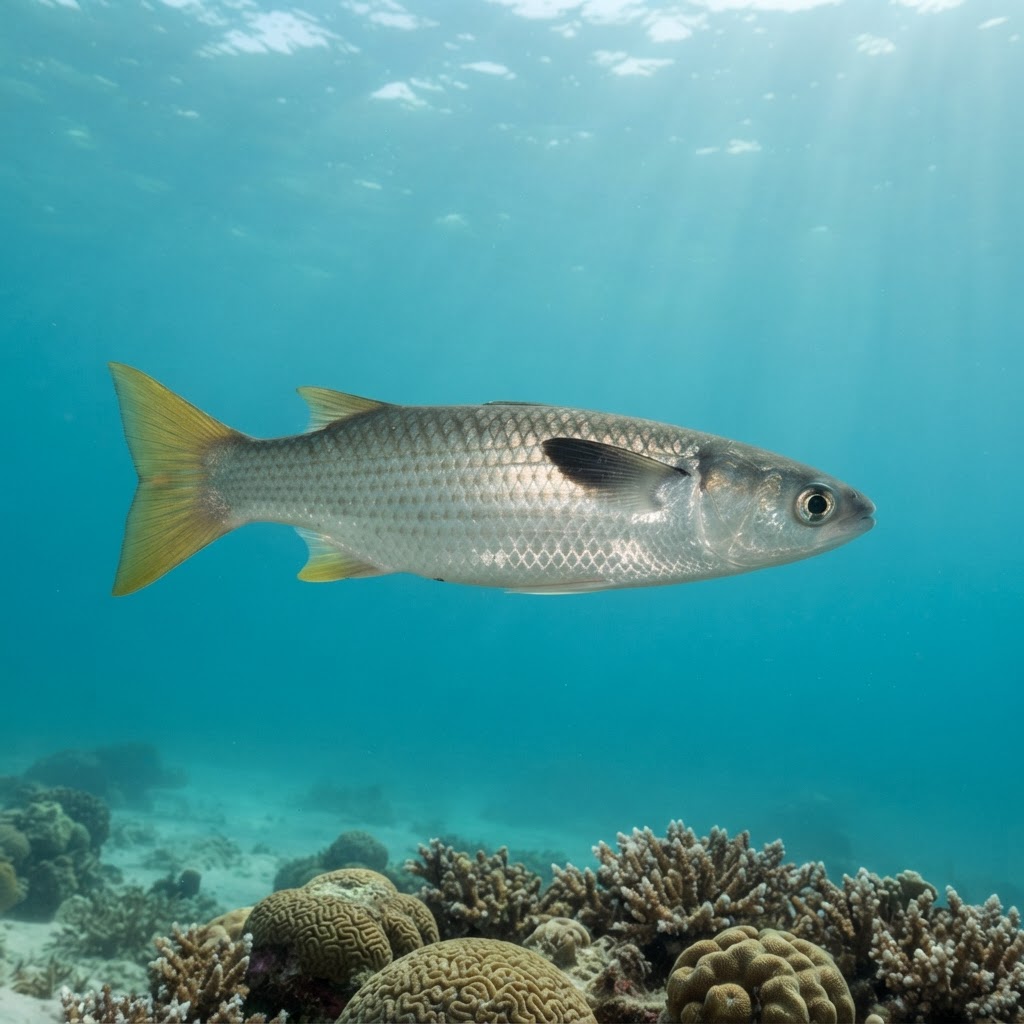
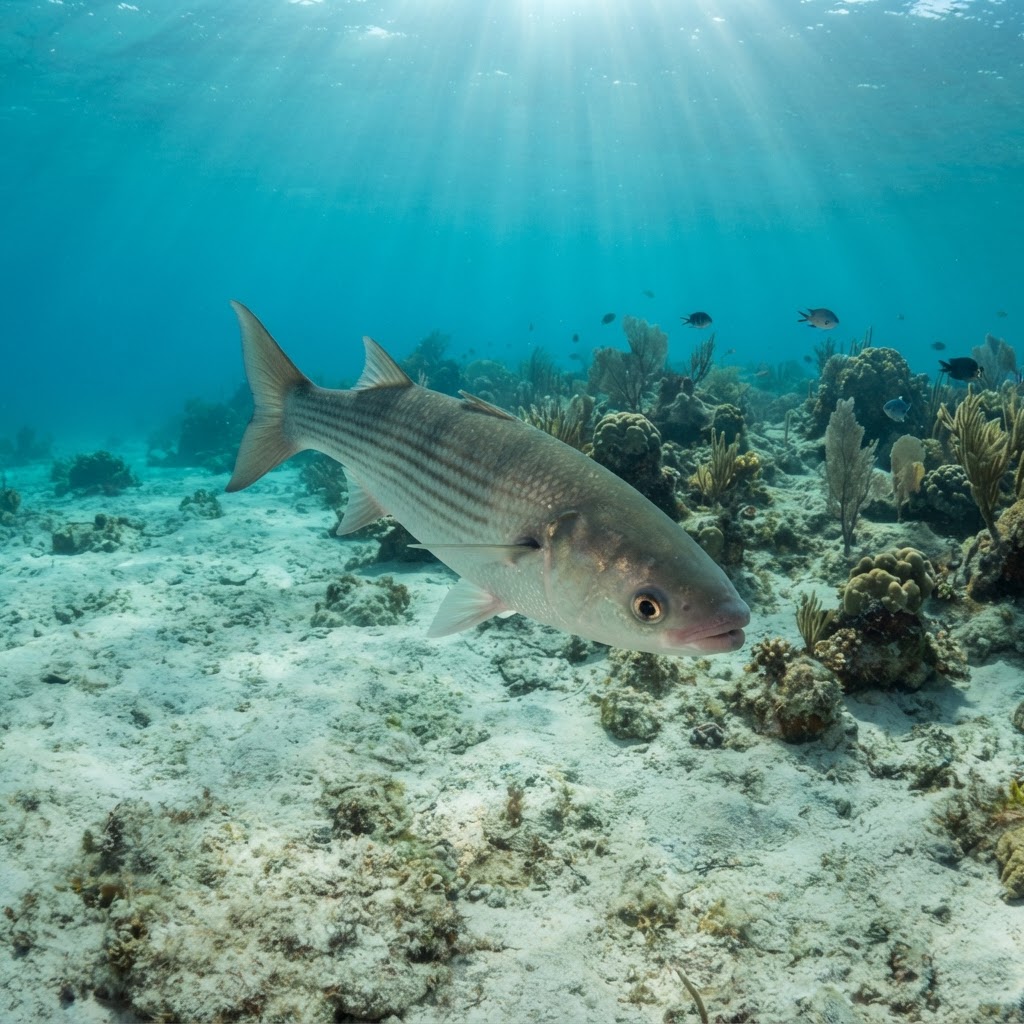
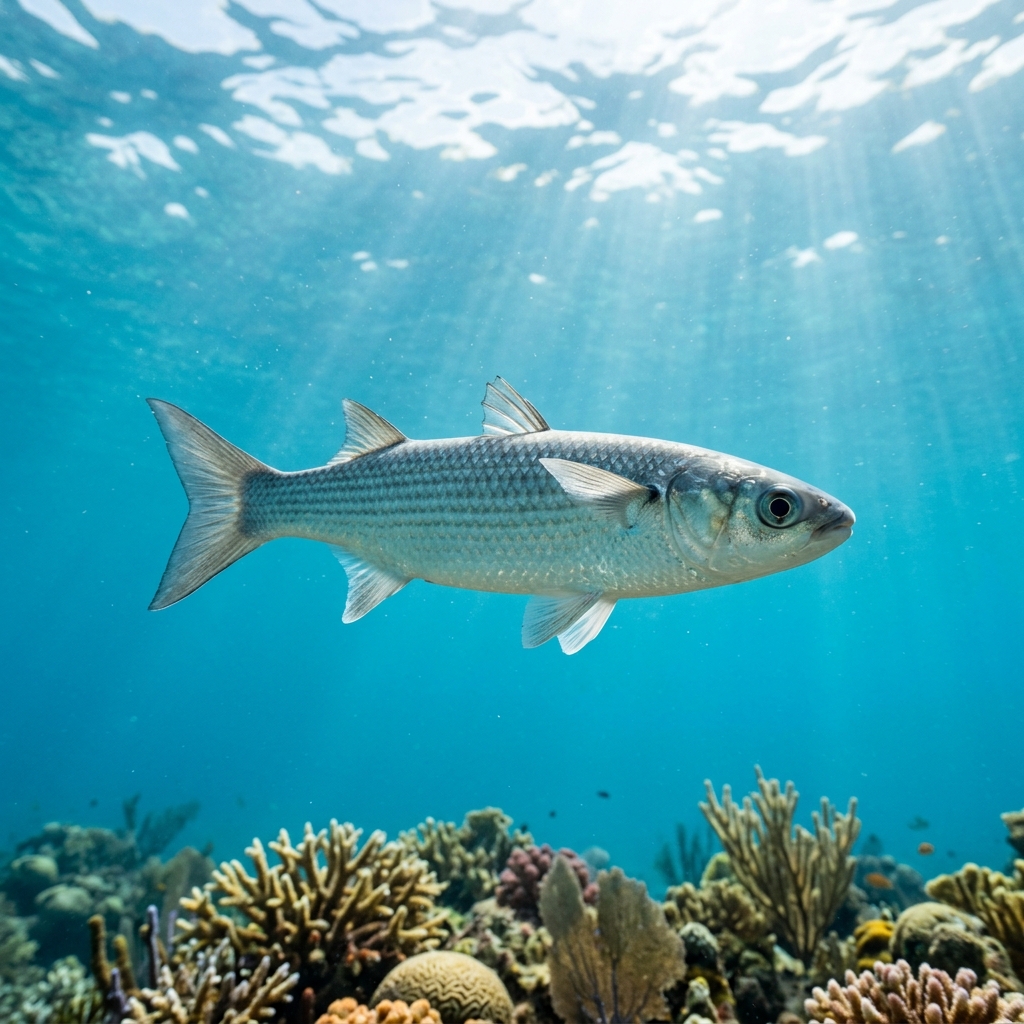
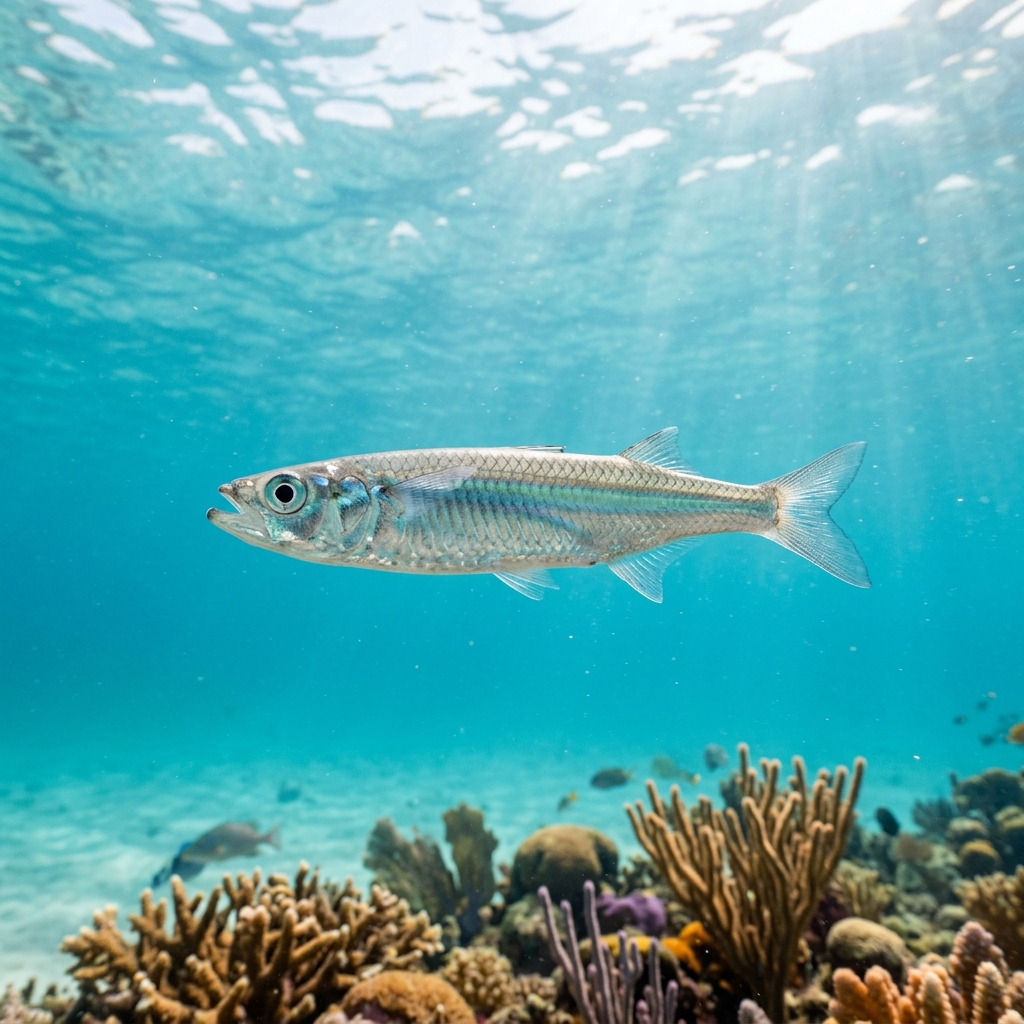
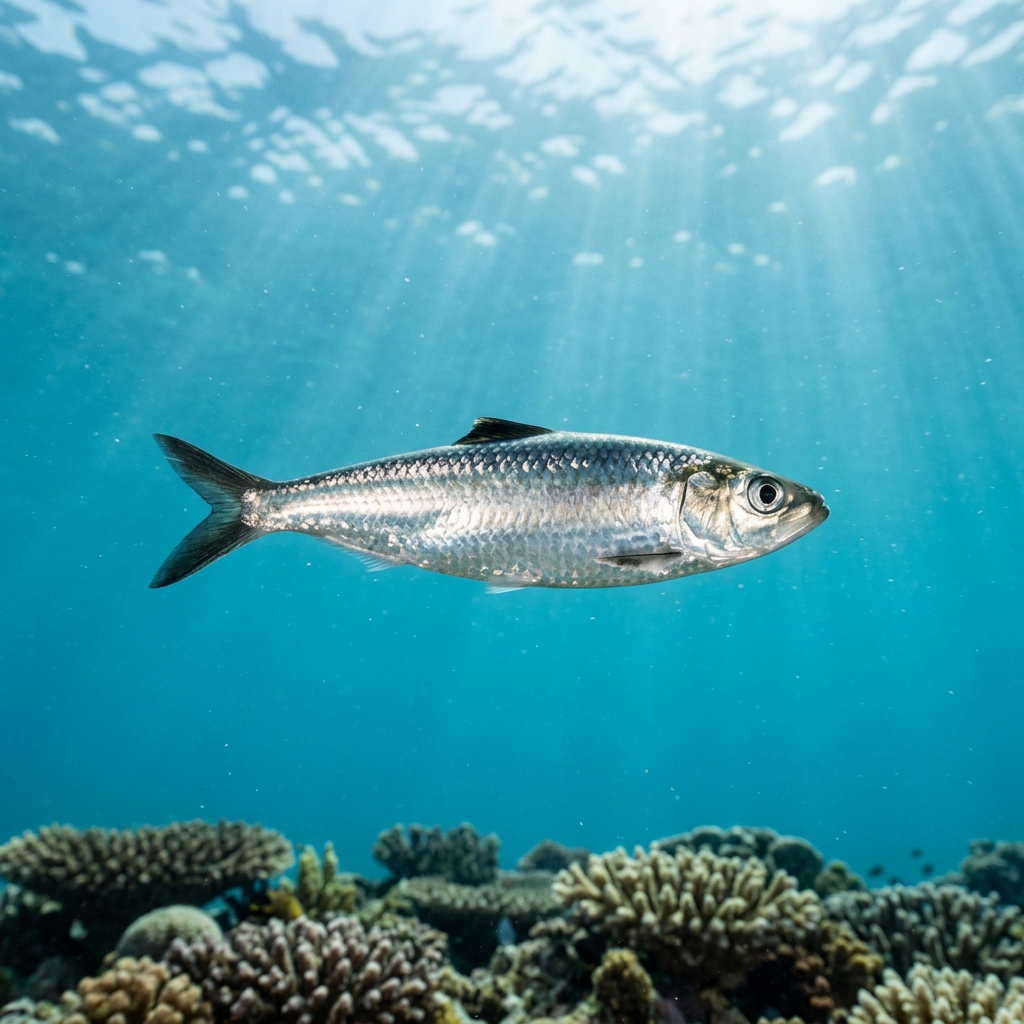
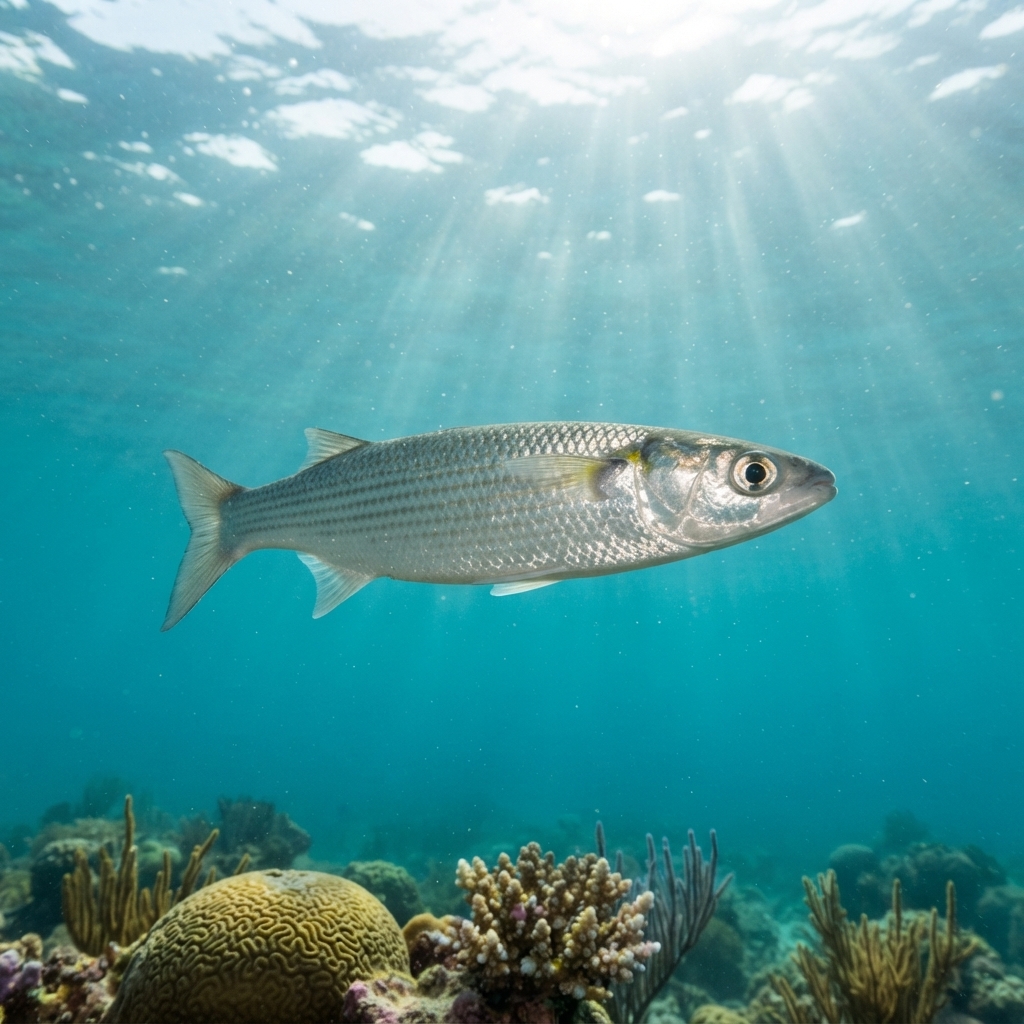
Slender, torpedo-shaped body around 32 cm long with bright silver flanks and a faint yellowish stripe running along the side. The snout is noticeably pointed compared to bulkier mullet species, which is the quickest tell underwater. Look for it moving in loose schools just under the surface over shallow reef flats and rocky shorelines.
Divers usually see it cruising in loose, fast-moving schools just below the surface over shallow reef flats and sandy margins rather than down on the deeper reef. It tends to keep its distance and moves off steadily if approached rather than holding position, so a slow, low-profile approach gives the best look. Sightings tend to happen in the shallows near shore rather than out on the drop-off.
Like other mullets it feeds by grazing algae and organic film off rock and sand rather than hunting, which is why it is usually seen working the shallows in tight formation instead of alone.
No clear seasonal pattern shows up in the sightings, and with a comfort range of roughly 25 to 29C it stays on these tropical reefs year-round. Any month works in Hawaii or the Tuamotus, though you should still expect only an uncommon encounter rather than a guaranteed one.
Reef neighbours a diver could mistake it for. Use the identification notes above to tell them apart.
Most reliably logged around Hawaii, particularly its shallow nearshore reefs, and a solid second population in French Polynesia's Tuamotu Islands. Outside these two areas it has not been widely reported by divers, so Hawaii is the strongest bet for a sighting.
Mapping where Sharpnose Mullet is logged…
Hawaii is the most consistent place to find them, especially on shallow nearshore reefs, with a second reliable population around the Tuamotu Islands in French Polynesia.
There is no strong season in the sightings data, and they stay comfortable in 25 to 29C water year-round, so any month diving Hawaii or the Tuamotus gives a fair shot.
Look for a slim, silvery, torpedo-shaped fish around 32 cm with a distinctly pointed snout, usually moving in a loose school near the surface over shallow reef or rock.
They typically reach around 32 cm in length, a mid-sized schooling fish rather than anything bulky.
No, they pose no threat to divers and simply move away if you get too close.
Site and sighting data is aggregated from diver logs, iNaturalist and GBIF. For taxonomy and conservation status:
Anchovy
2,433 sites