Scorpaena laevis
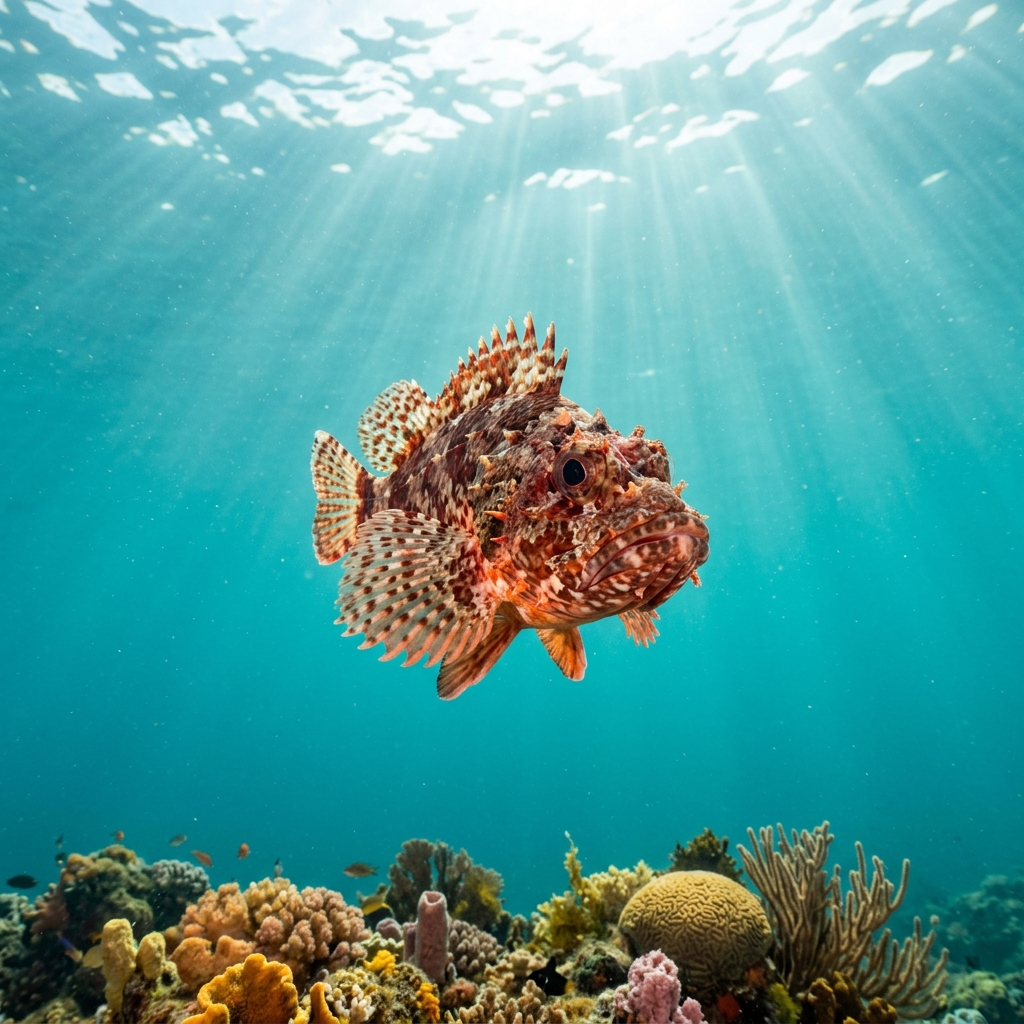
Camouflaged on rock and reef in São Vicente and Sal, Cape Verde, this scorpionfish sits still in 19-28C water year-round.
Safety warning
Carries venomous spines along its dorsal fin, and because it sits so still and blends so well into rock and rubble, the real risk is an accidental hand or knee placement rather than an attack. Watch where you put your hands when steadying yourself near rocky bottom, and give any spiny, camouflaged fish a wide berth rather than trying to move it.
If you're stung
Venomous spinesGeneral first-aid guidance, not a substitute for professional medical care. In an emergency, call your local emergency number.
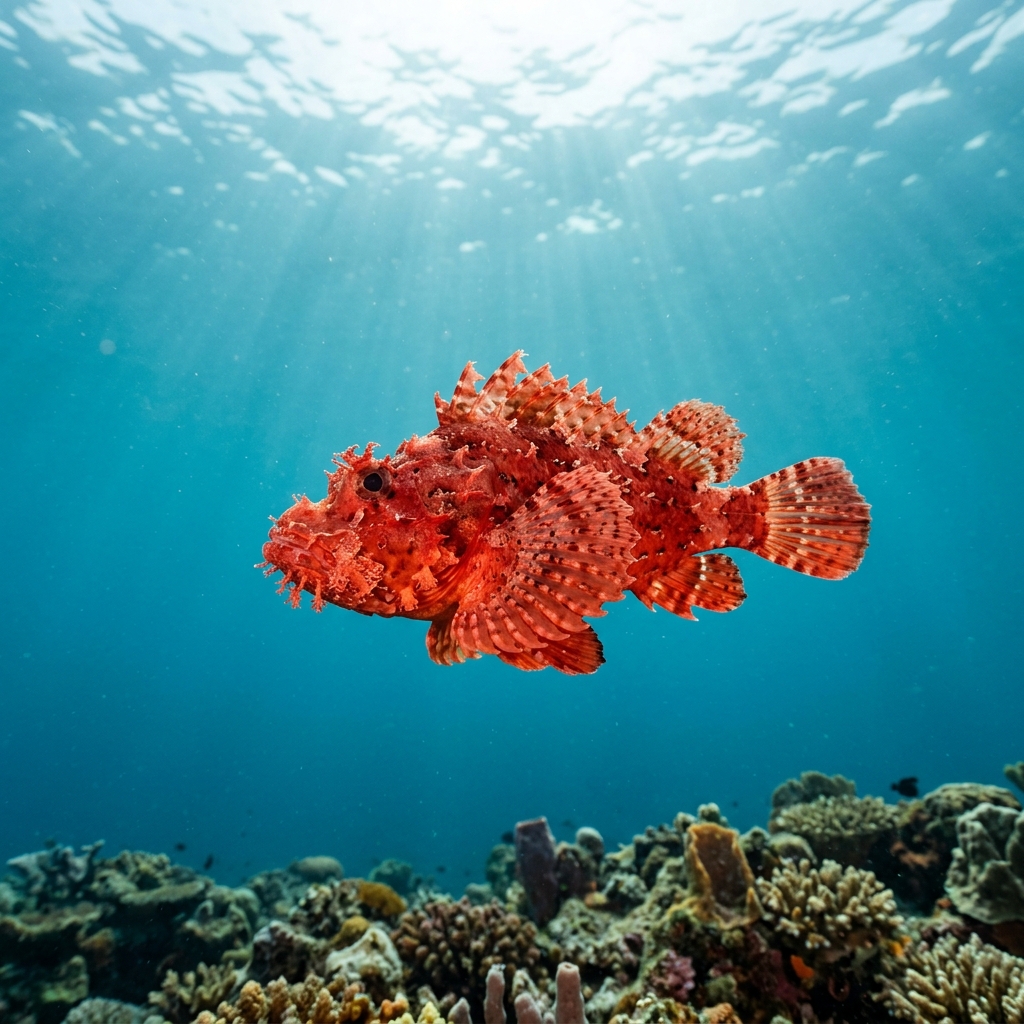
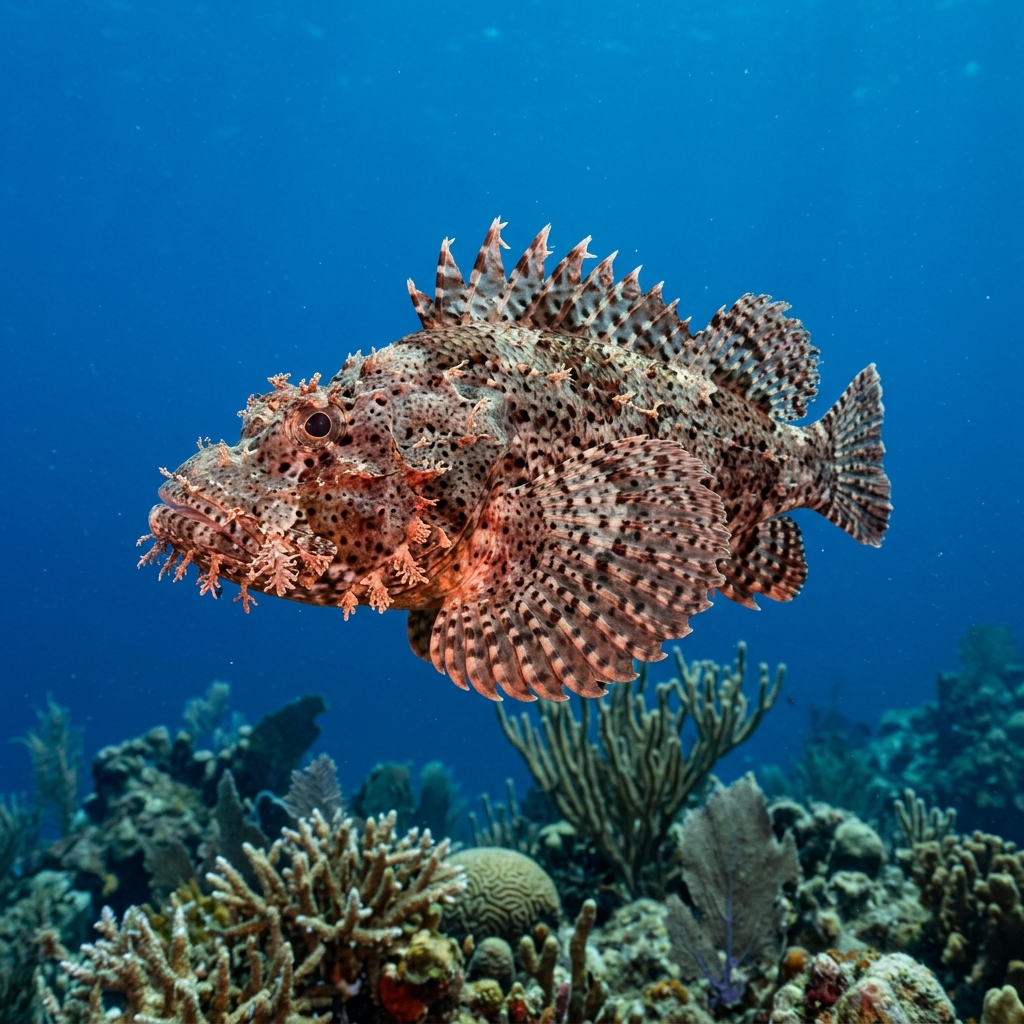
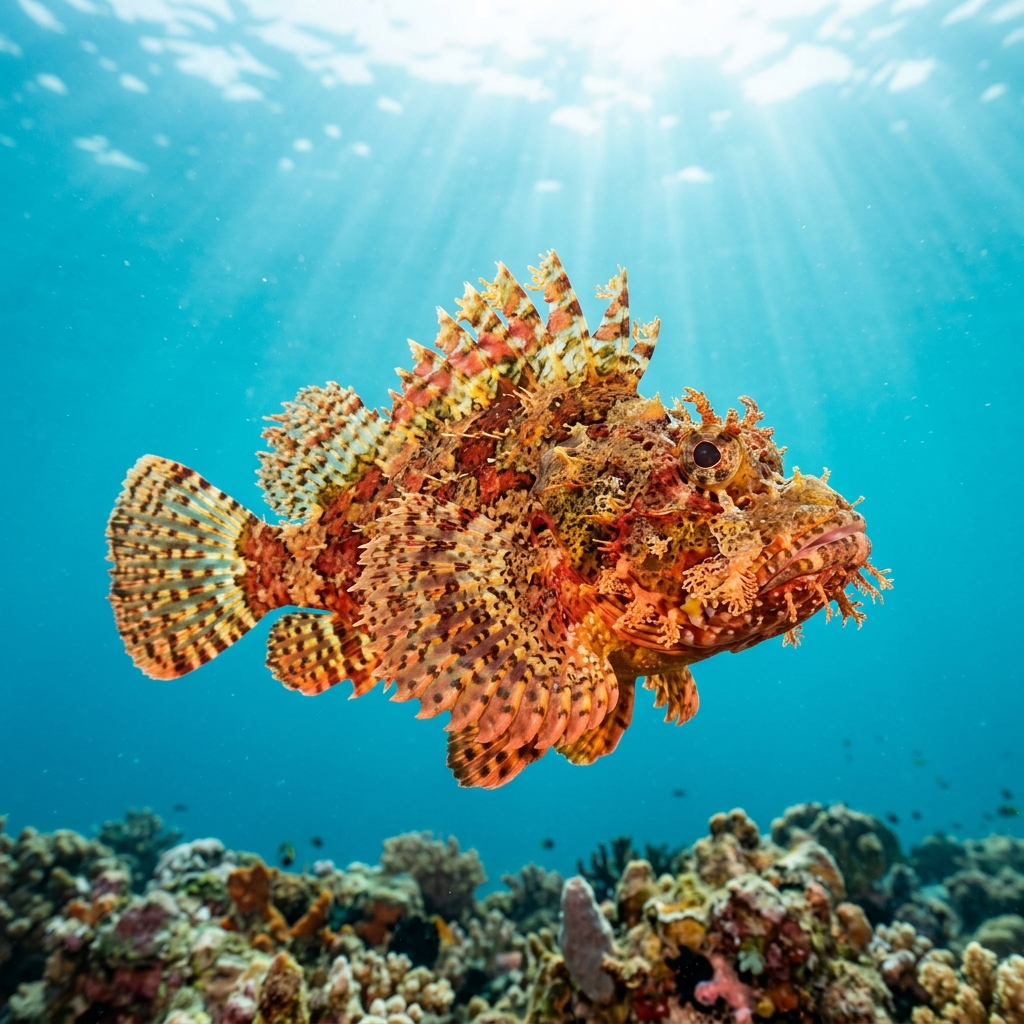
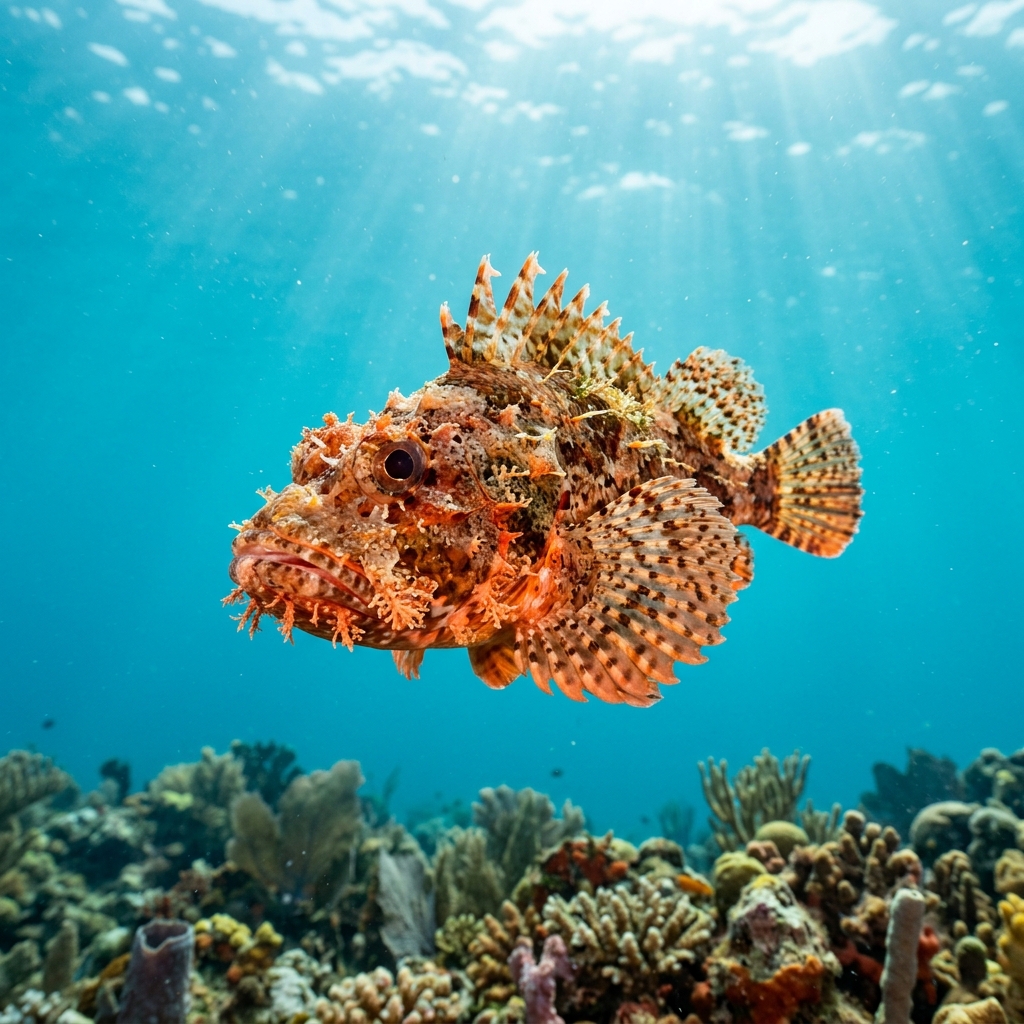
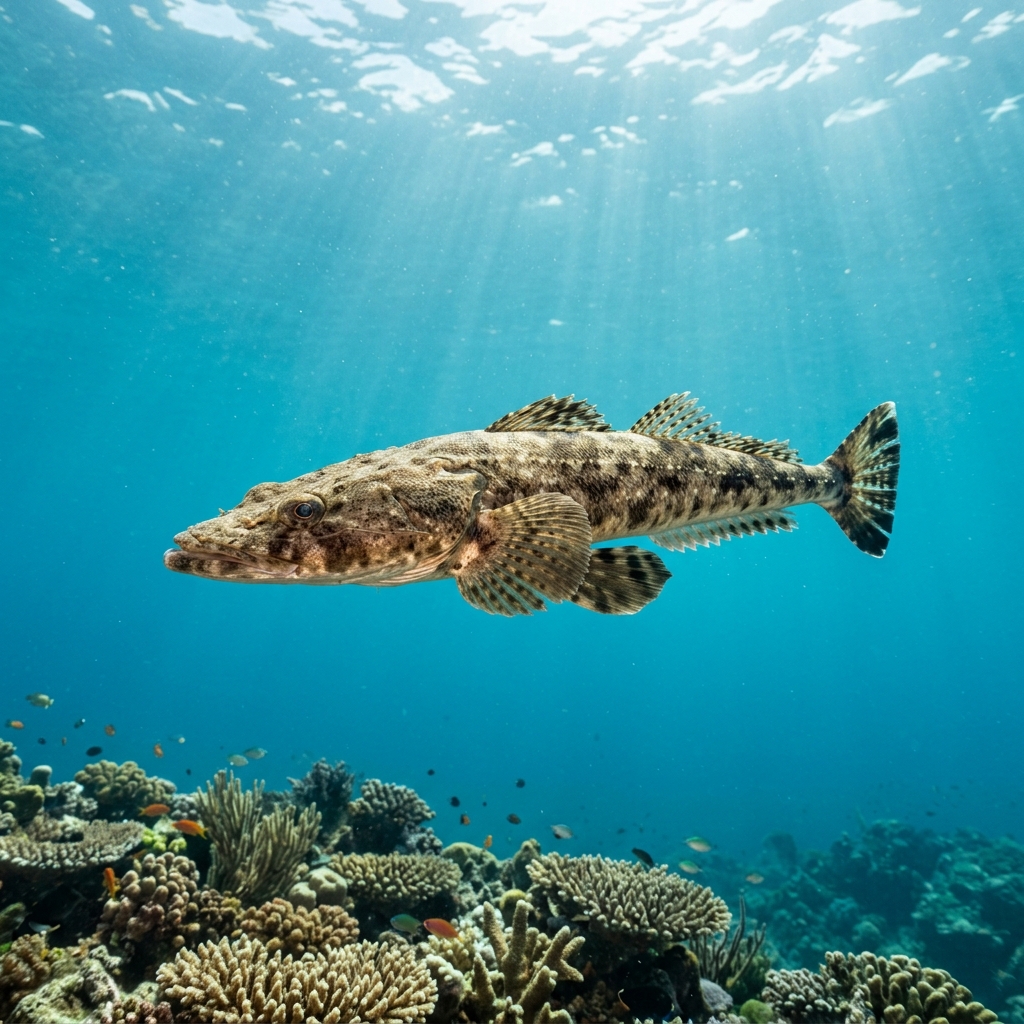
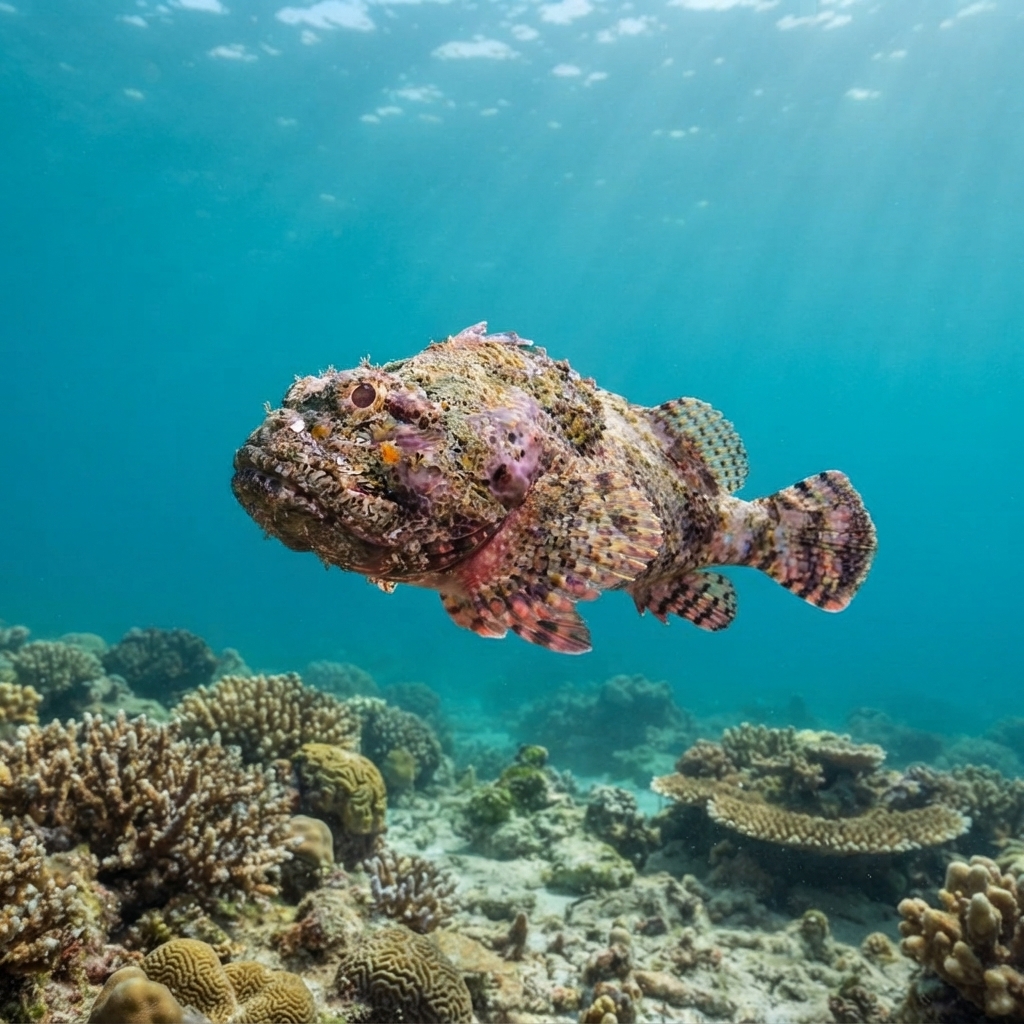
Grows to around 24 cm, with a stocky, big-headed body covered in mottled brown, grey and rust blotches that break up its outline against rock and rubble. Look for the heavy ridged head, fleshy flaps and spines above the eyes, and the way it sits dead still on the bottom rather than swimming off. There is no obvious sail-like dorsal fin display like a lionfish, and no long wispy lures like a leaf scorpionfish, just a squat, rock-textured shape that only gives itself away when it finally moves.
Spends most of its time motionless on rock, rubble or low reef, relying on its blotchy camouflage to disappear rather than fleeing when divers approach. It is an ambush predator, so encounters are usually of a fish sitting tight rather than one on the move, and it is easy to swim straight past without noticing it at all. Most sightings come from divers scanning the bottom closely rather than mid-water.
That camouflage is also a defence and a hunting tool in one: staying still lets it both avoid predators and get close enough to ambush small fish and crustaceans that wander past.
No clear seasonal pattern shows up in sightings, and with a comfortable range of 19.2 to 28C it is logged across the year in Cape Verde and Senegal. Plan around calm, clear conditions rather than a particular month.
Reef neighbours a diver could mistake it for. Use the identification notes above to tell them apart.
Most reliably logged around Cape Verde, especially São Vicente and Sal, with a solid presence on the mainland coast at Dakar, Senegal. Santo Antão, Cape Verde also turns up sightings, making the archipelago the strongest bet for a dedicated look.
Mapping where Senegalese Rockfish is logged…
Cape Verde is the strongest area, particularly São Vicente and Sal, with Santo Antão also producing sightings. On the African mainland, Dakar in Senegal is the other reliable spot.
There's no strong seasonal pattern in sightings, and it tolerates a wide temperature range from about 19 to 28C, so it turns up year-round in Cape Verde and Senegal.
Yes, it has venomous dorsal spines, though it poses no threat unless touched or accidentally knelt on. The main risk comes from its camouflage making it easy to miss on rocky or rubble bottom.
Look for a squat, big-headed fish around 24 cm long with mottled brown, grey and rust camouflage and spiny ridges over the eyes. It typically sits motionless on rock or rubble rather than swimming in the open.
They reach around 24 cm, making them a medium-sized member of the scorpionfish family, easily overlooked against a similarly coloured seabed.
Its camouflage does double duty as both defence and hunting strategy, letting it stay hidden from predators while ambushing small fish and crustaceans that pass close by.
Site and sighting data is aggregated from diver logs, iNaturalist and GBIF. For taxonomy and conservation status:
Madeira Rockfish
2,773 sites