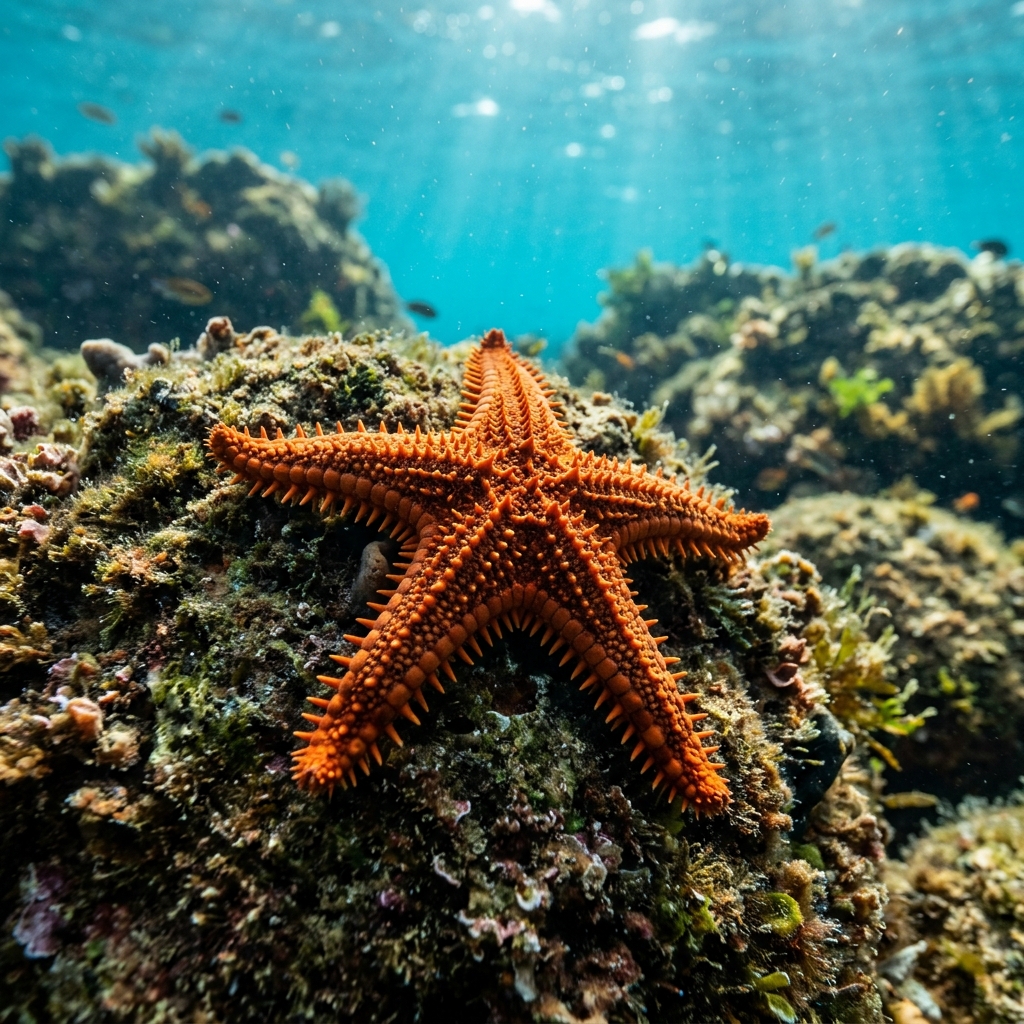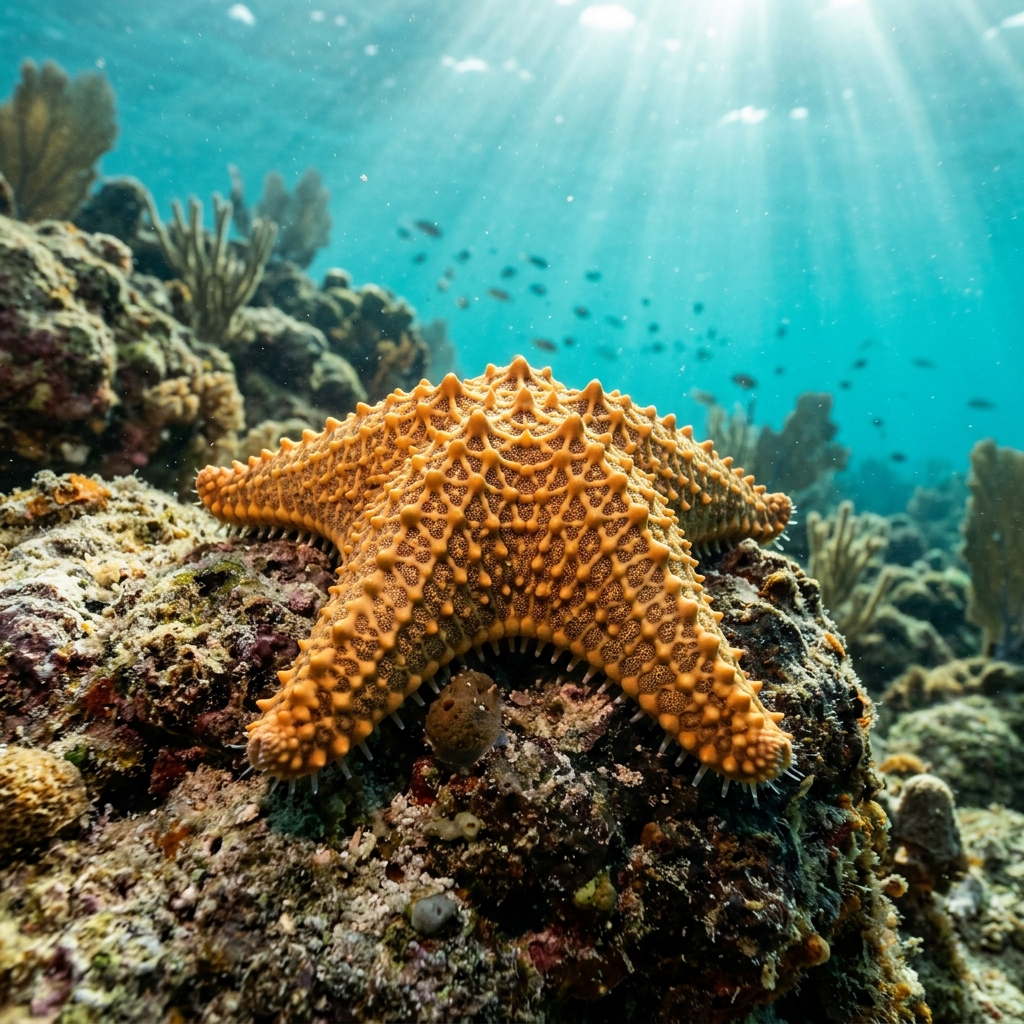
Oreaster reticulatus
Spot the Cushion Sea Star across the Caribbean and Atlantic. Strongest sightings from the Yucatán Peninsula to Roatán in warm 25-29 °C waters.
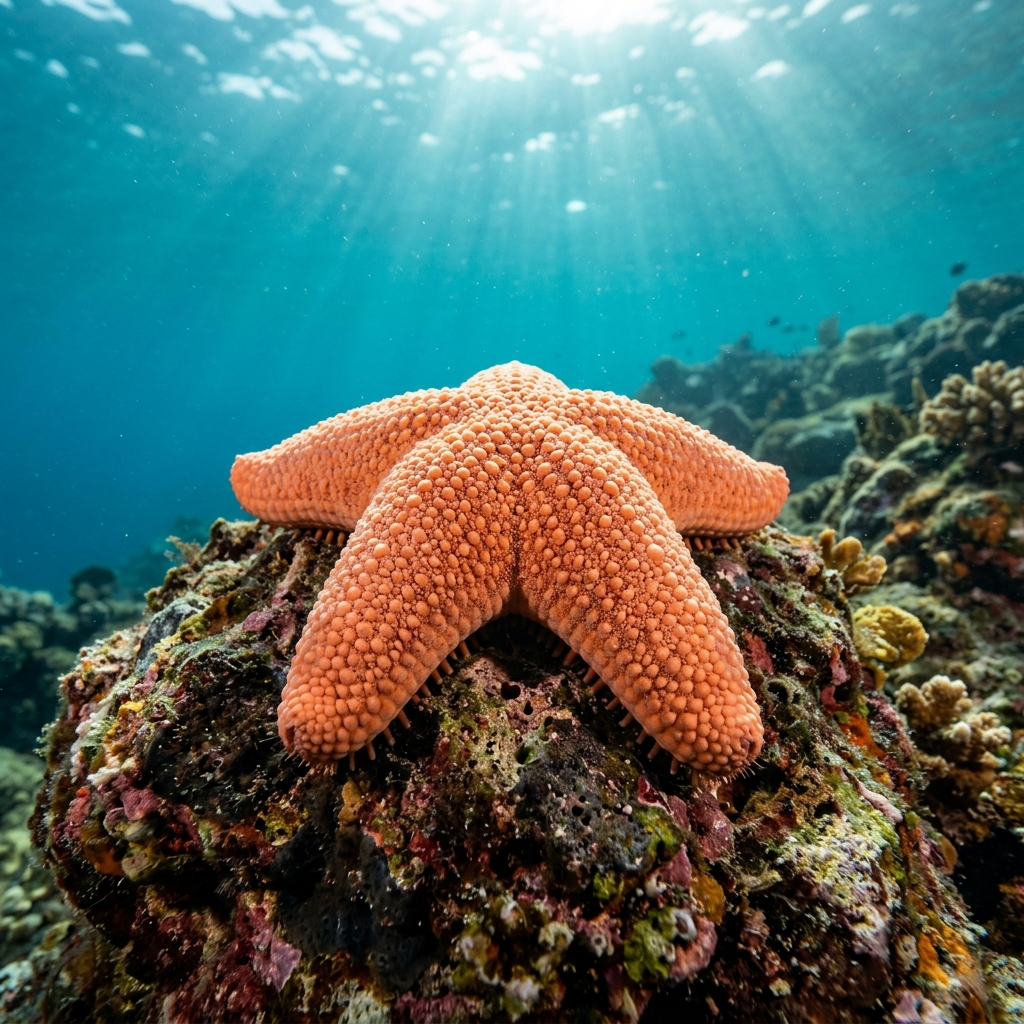
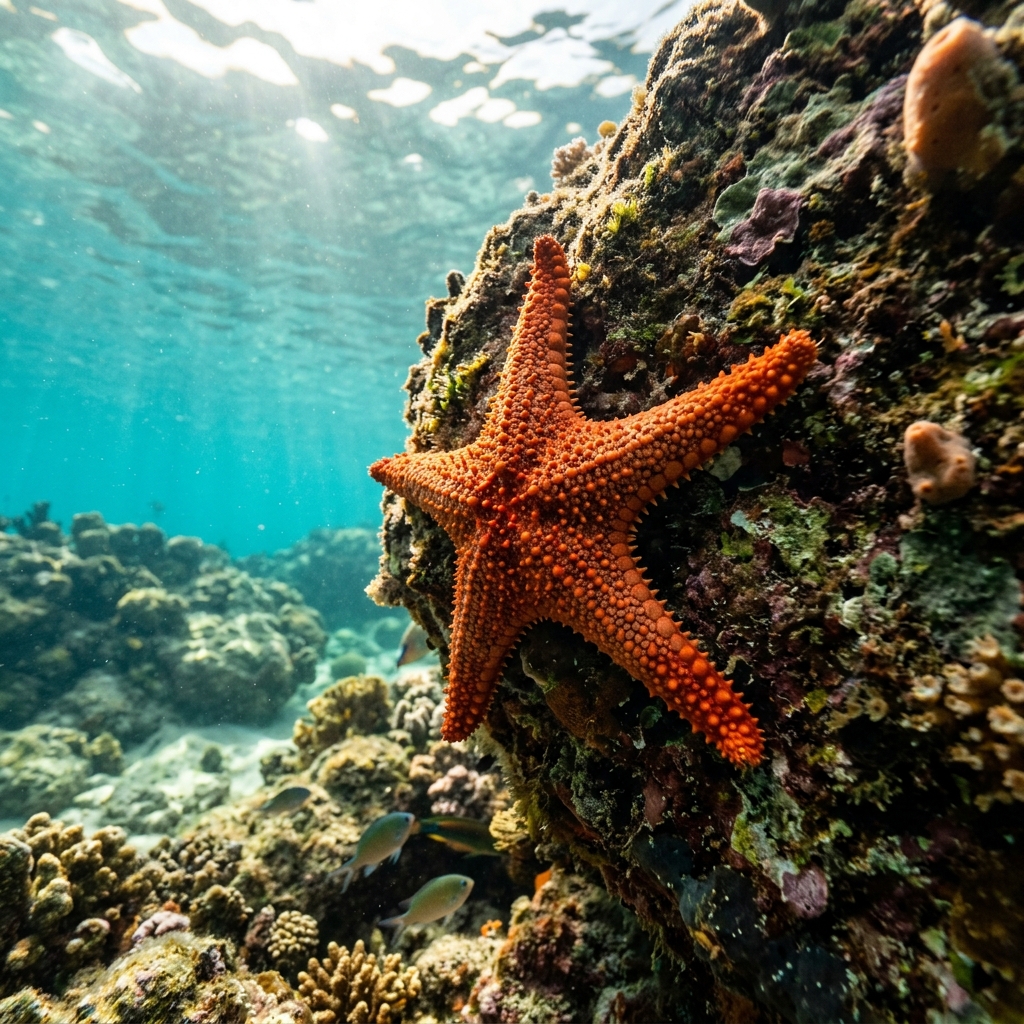
Thick, heavily inflated body is the giveaway underwater; this is a chunky, cushion-shaped star rather than a flat, slender one. Colouration ranges from orange and yellow to brick red, with a bold raised reticulate (net-like) pattern of ridges across the upper surface. Five broad, stubby arms blend into the central disc, giving it an almost pentagonal outline at a glance. Adults can reach a considerable span that makes them hard to miss against pale sand or seagrass beds.
You will typically find cushion sea stars slowly moving across sandy flats, seagrass meadows, and rubble zones rather than on hard coral, often in relatively shallow water where these habitats dominate. They are slow and unbothered by divers, making them easy to observe without disturbing their activity. Most sightings are during daylight dives when the animals are out in the open, feeding on the substrate by extruding their stomach over organic material.
Like other sea stars, the cushion sea star can regenerate a lost arm entirely, but it can also reproduce asexually by splitting in two, with each half regrowing what it needs to become a complete animal.
Sightings are recorded across most of the year, concentrating from August through to June, suggesting a slight dip in mid-summer reports rather than a true off-season. The observed temperature window of 25 to 29 °C aligns with Caribbean tropical conditions year-round, so timing your dive around your destination's peak visibility season is usually a safe guide.
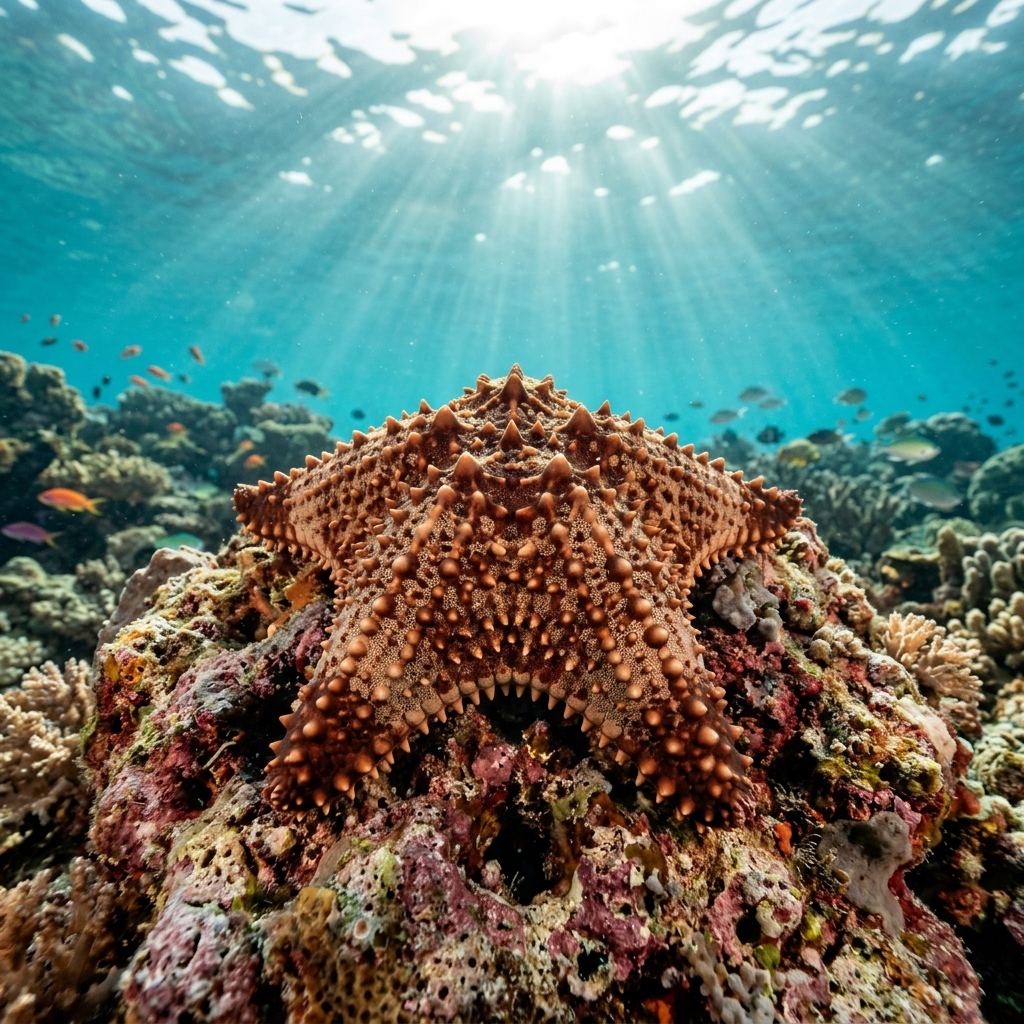
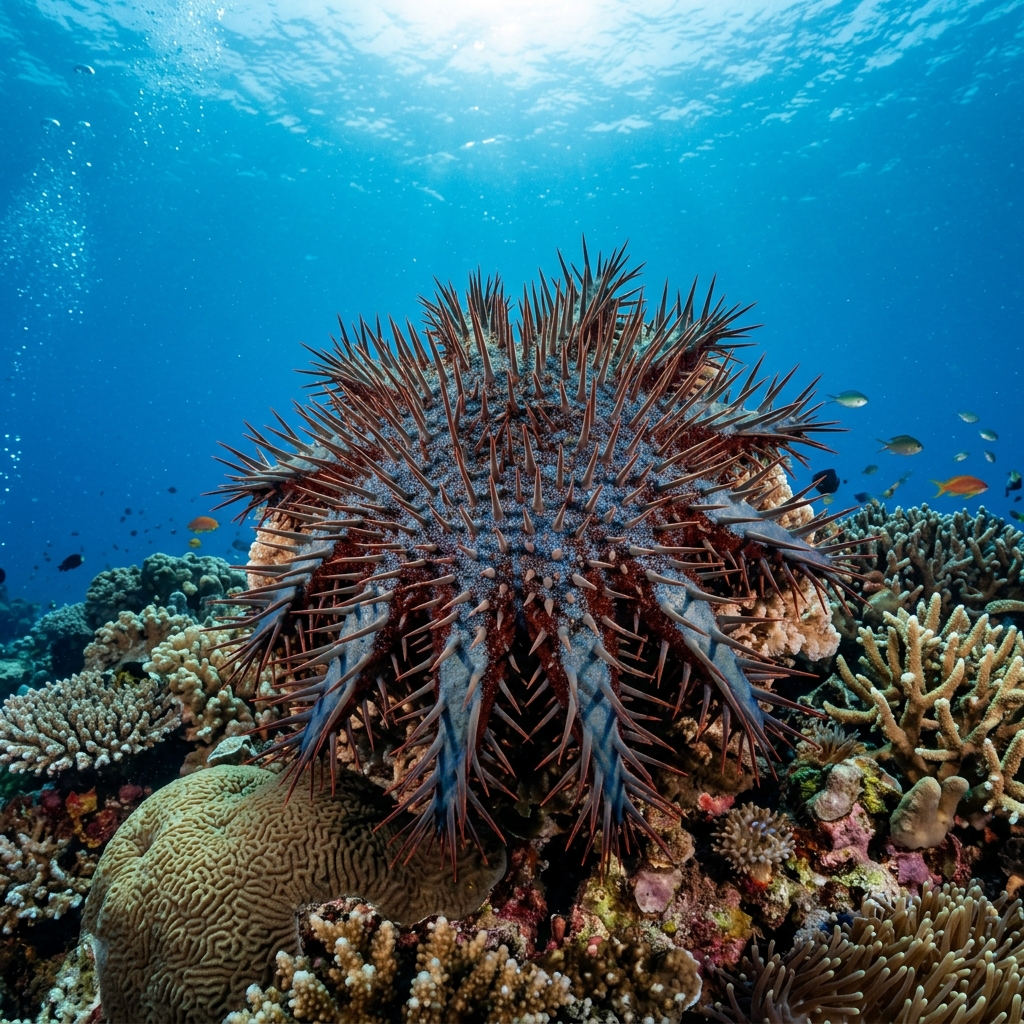
Reef neighbours a diver could mistake it for. Use the identification notes above to tell them apart.
Most commonly logged across the wider Caribbean, with the strongest concentrations in the Yucatán Peninsula in Mexico and around Roatán in Honduras. Grenada, the Colombian islands of San Andrés and Providencia, Florida, and the US Virgin Islands all hold reliable populations, and Cape Verde extends its Atlantic range well into the eastern ocean.
Mapping where Cushion Sea Star is logged…
The Caribbean is the heartland for this species. The Yucatán Peninsula in Mexico and Roatán in Honduras lead the way for recorded sightings, followed by Grenada, Florida, the US Virgin Islands, and Colombia's San Andrés and Providencia islands. Cape Verde offers sightings in the eastern Atlantic.
Sightings are recorded across most of the year, with data suggesting August through June as the main window. Because they live in warm tropical waters between roughly 25 and 29 °C, there is no sharp off-season; dive planning around good conditions at your chosen Caribbean destination is your best strategy.
Look for a visibly puffed-up, almost round starfish with five short, broad arms and a bold raised grid or net pattern across its orange, red, or yellow upper surface. The inflated cushion shape is distinctive and immediately separates it from flatter, more slender sea stars on the same reef.
Adults regularly exceed 20 cm across and can reach up to around 50 cm in diameter, making them one of the larger sea stars in the Caribbean. Their size, combined with that thick, raised profile, makes them among the easier invertebrates to spot against a sandy or seagrass bottom.
They feed by pushing their stomach outside their body and placing it directly over organic matter on the seafloor, including sponges, algae, and detritus. This external digestion means they can consume organisms much larger than their mouths would otherwise allow, and you may observe them resting motionless over a patch of substrate for some time while feeding.
Site and sighting data is aggregated from diver logs, iNaturalist and GBIF. For taxonomy and conservation status:
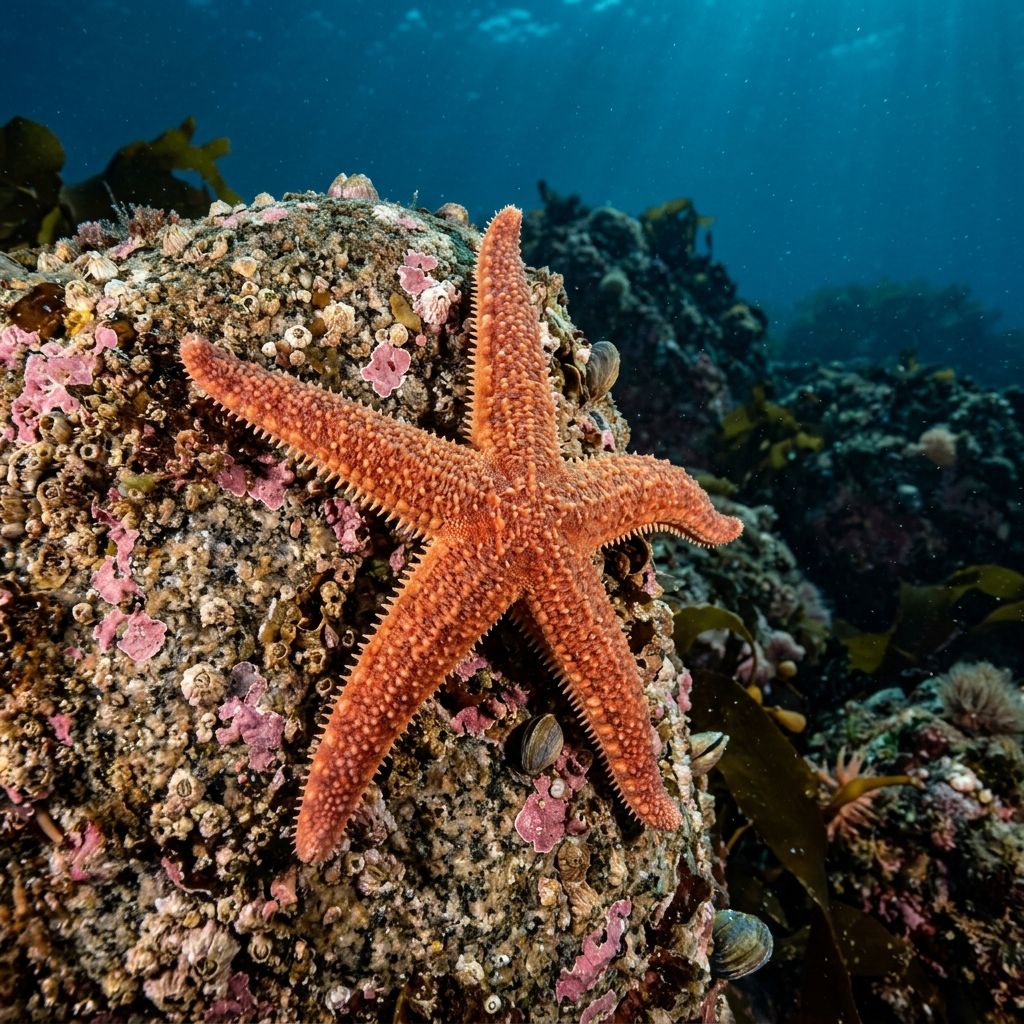
Common Sea Star
2,271 sites