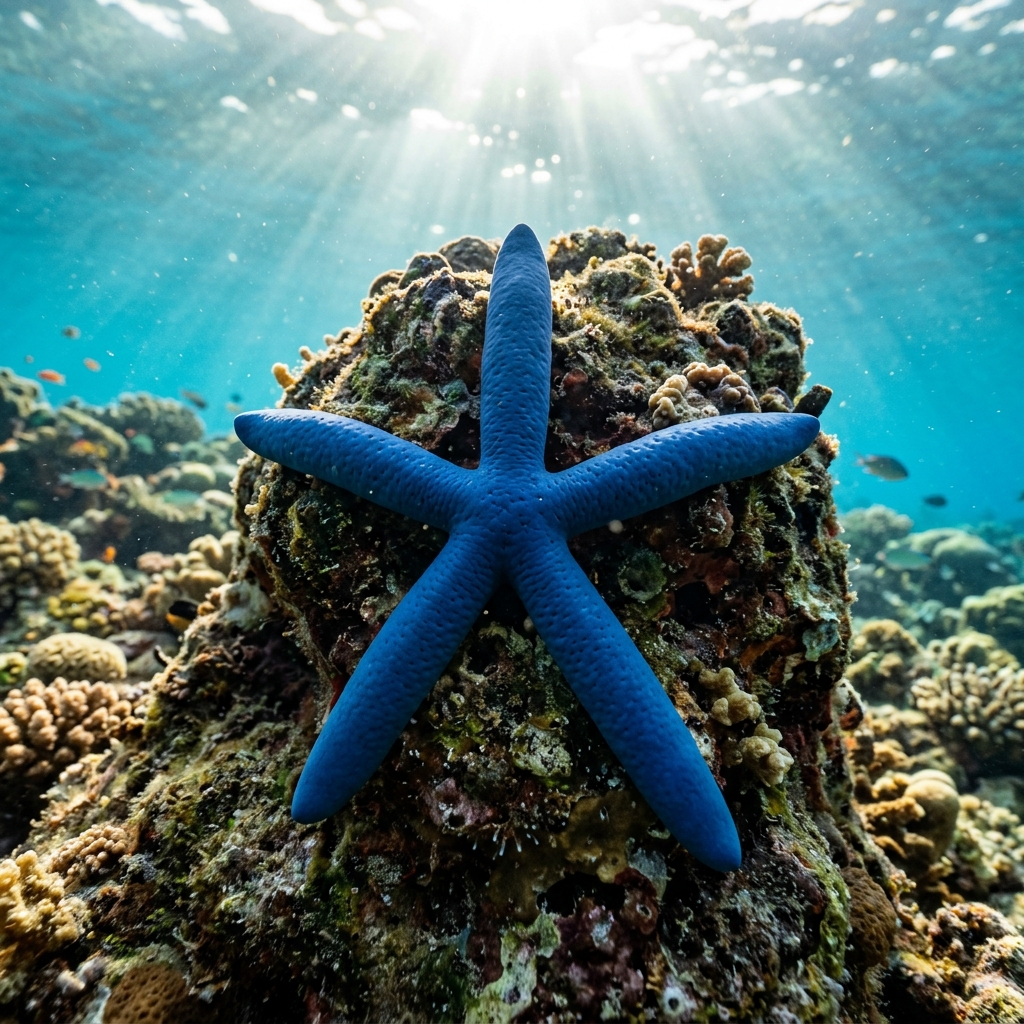
Linckia laevigata
Spot the vivid blue Azure Sea Star across the Philippines, Indonesia, and Malaysia. Best sightings run Nov, Aug in the northern tropics. Diver ID guide inside.
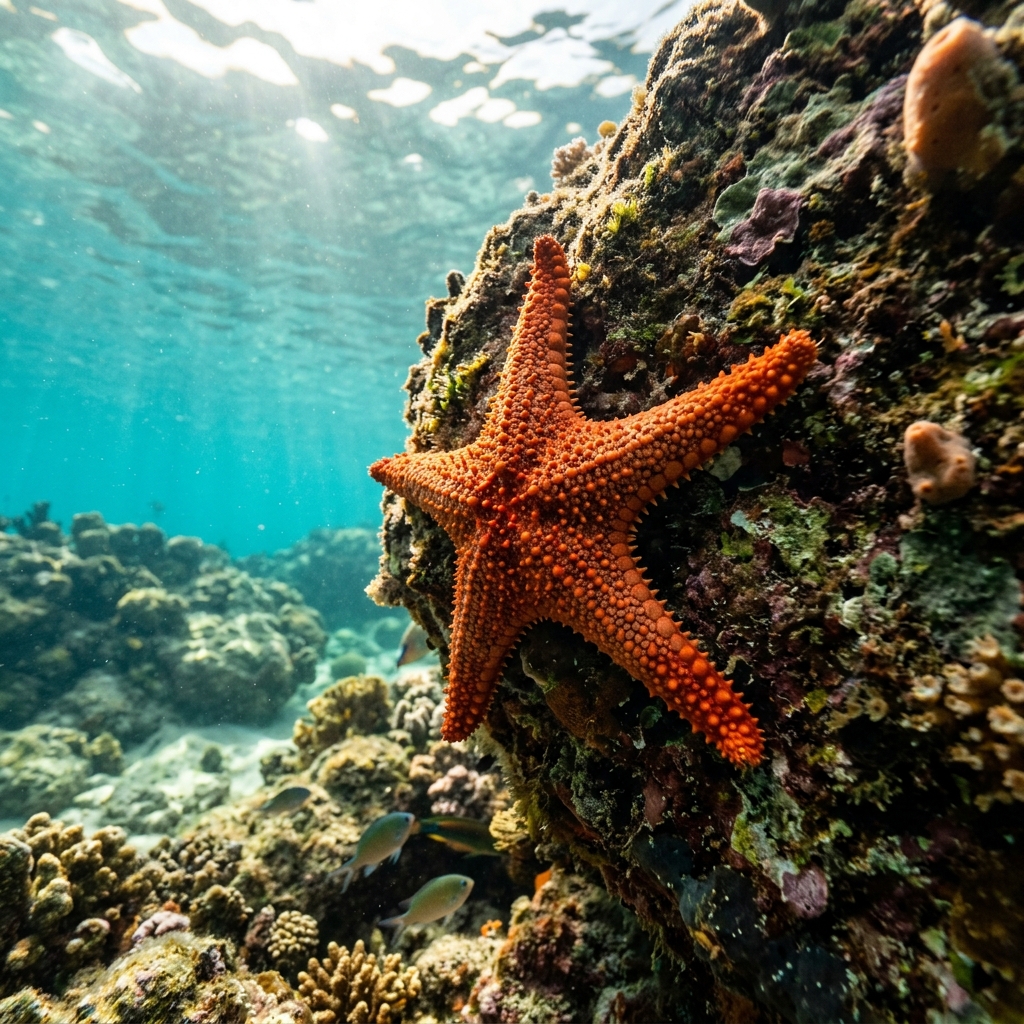
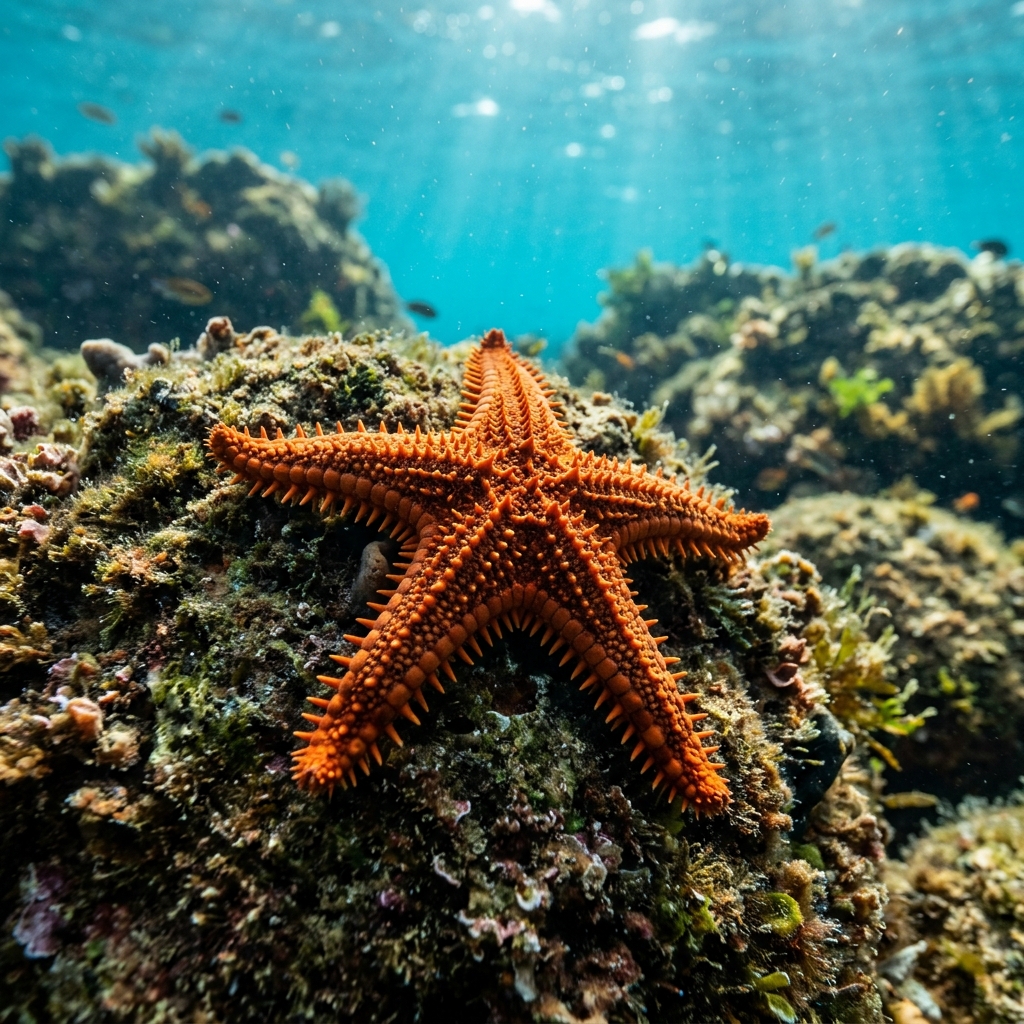
Five smooth, cylindrical arms in a striking uniform blue, ranging from sky blue to deep cobalt, make this one of the most immediately recognisable sea stars on a tropical reef. The arms are round in cross-section and taper gradually to blunt tips, giving the whole animal a sausage-fingered silhouette. Unlike most sea stars, the surface is almost completely smooth with no obvious spines or raised texture. Adults are typically palm-sized, though some individuals grow noticeably larger.
You will usually find azure sea stars sitting openly on rubble, sand patches, or coral rock in shallow to mid-water reef zones, making no effort to conceal themselves, their colour is apparently all the advertisement they need. They move slowly across the substrate on hundreds of tiny tube feet (small suction-tipped appendages on their underarms) and are entirely indifferent to diver presence. Daylight hours are as productive as night dives for spotting them.
Azure sea stars are capable of autotomy, deliberately shedding an arm, and each detached arm can regenerate into a complete new individual. This asexual reproduction means a lone arm stranded on a reef can eventually become a whole star, which is why solitary arms are occasionally seen crawling independently across the substrate.
In the Northern Hemisphere, sightings concentrate from November through August, covering the cooler dry season and into the warmer months across the Philippines, Thailand, and Japan. In the Southern Hemisphere, May through February sees the most records, aligning with the warmer season in Australian and Tanzanian waters where observed temperatures run 25.5 to 29.4 °C.
Most commonly logged across the Indo-Pacific, with the strongest concentration of sightings in the Philippines, particularly the Visayas, and across Bali, Lombok, and Java in Indonesia. East Sabah and Sipadan in Malaysia, the Okinawa Islands in Japan, and the Phuket and Phi Phi area in Thailand are also reliable spots. Queensland in Australia and Tanzania round out the range for divers approaching from the southern Indo-Pacific.
Mapping where Azure Sea Star is logged…
The Philippines, especially the Visayas, and Indonesia, particularly Bali and Sulawesi, hold the most logged sightings. Strong populations are also recorded in East Sabah in Malaysia, the Okinawa Islands, and Phuket and Phi Phi in Thailand. Tanzania and Queensland, Australia are good options further afield.
Northern Hemisphere diving is most productive from November through August, covering the main season across the Philippines, Malaysia, Thailand, and Japan. In the Southern Hemisphere, Australia and Tanzania, records concentrate from May through February. The species favours warm tropical water in the 25-29 °C range year-round.
Look for a five-armed sea star with smooth, cylindrical, sausage-like arms in a vivid, uniform blue, no spines, no patterns, no colour breaks. The round cross-section of each arm is the key structural tell; most other sea stars in the same habitat have flatter or textured arms. Juveniles can be paler or mottled, but adults are unmistakable.
Most individuals you encounter underwater are roughly palm-sized, around 20 to 30 cm tip to tip, though some can grow larger. The arms are notably thick and cylindrical relative to their length, which makes the animal look more substantial than its arm-span alone suggests.
Yes. Azure sea stars can shed an arm deliberately, and that detached arm is capable of regenerating an entirely new body, a form of asexual reproduction called autotomy. This is why divers occasionally spot lone arms crawling slowly across the reef without an obvious parent animal nearby.
Site and sighting data is aggregated from diver logs, iNaturalist and GBIF. For taxonomy and conservation status:
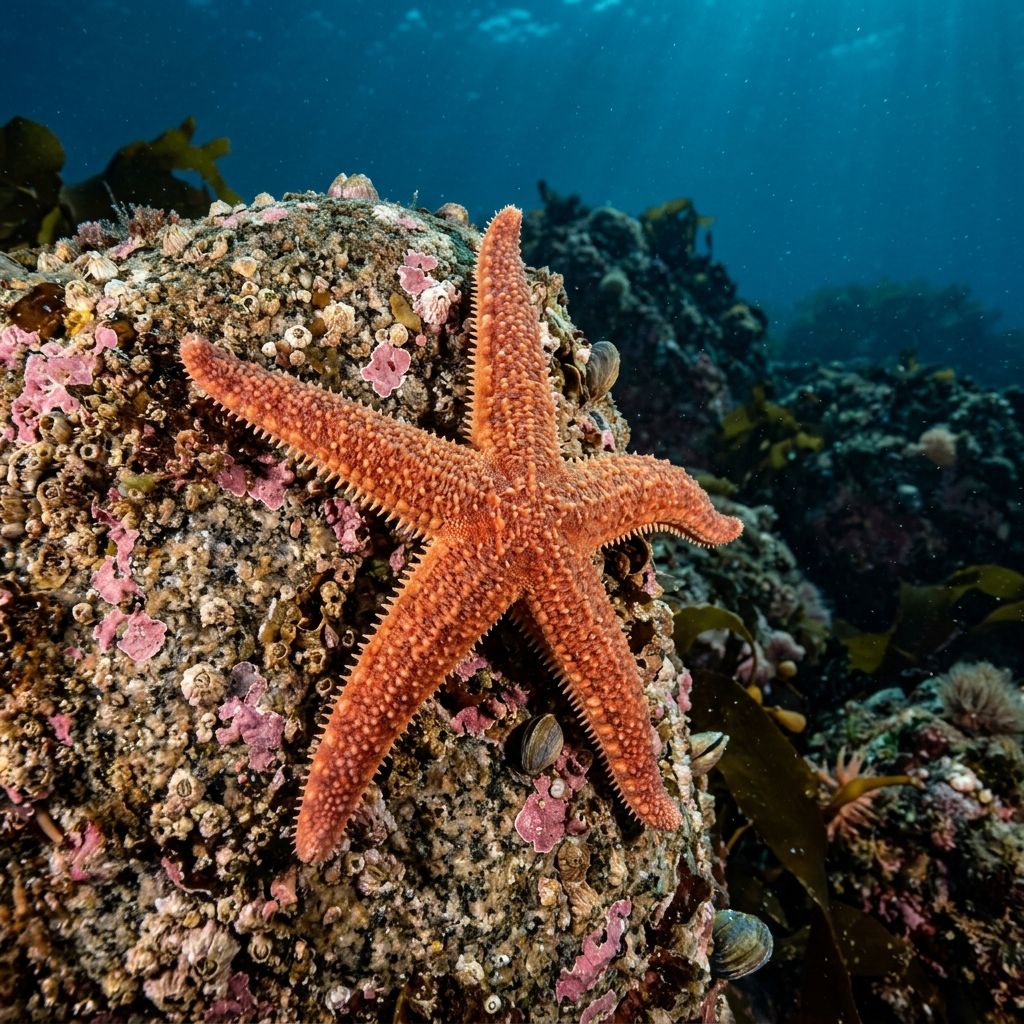
Common Sea Star
2,271 sites