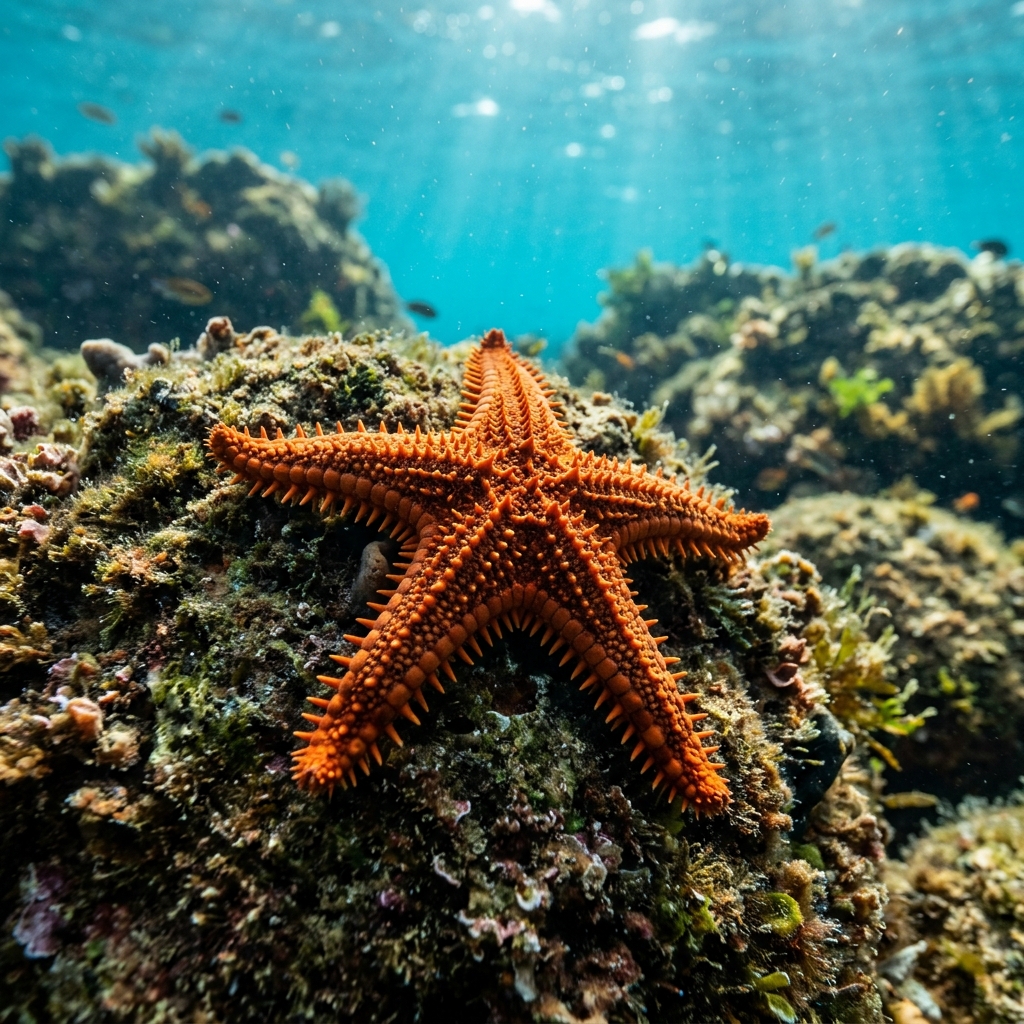
Culcita spp.
Spot the puffy, pillow-shaped Cushion Star across the Indo-Pacific. Most commonly logged in the Maldives, Philippines, and Malaysia in warm 25-29 °C water.
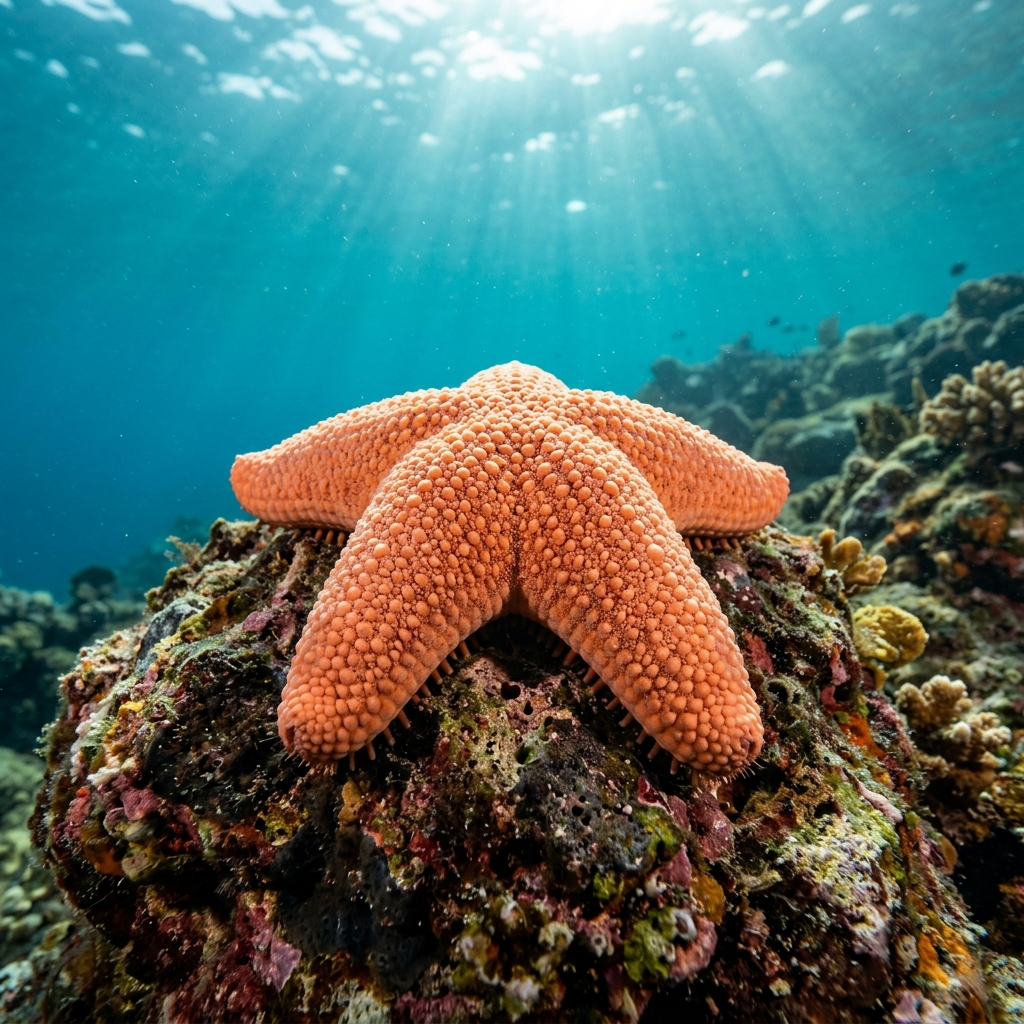
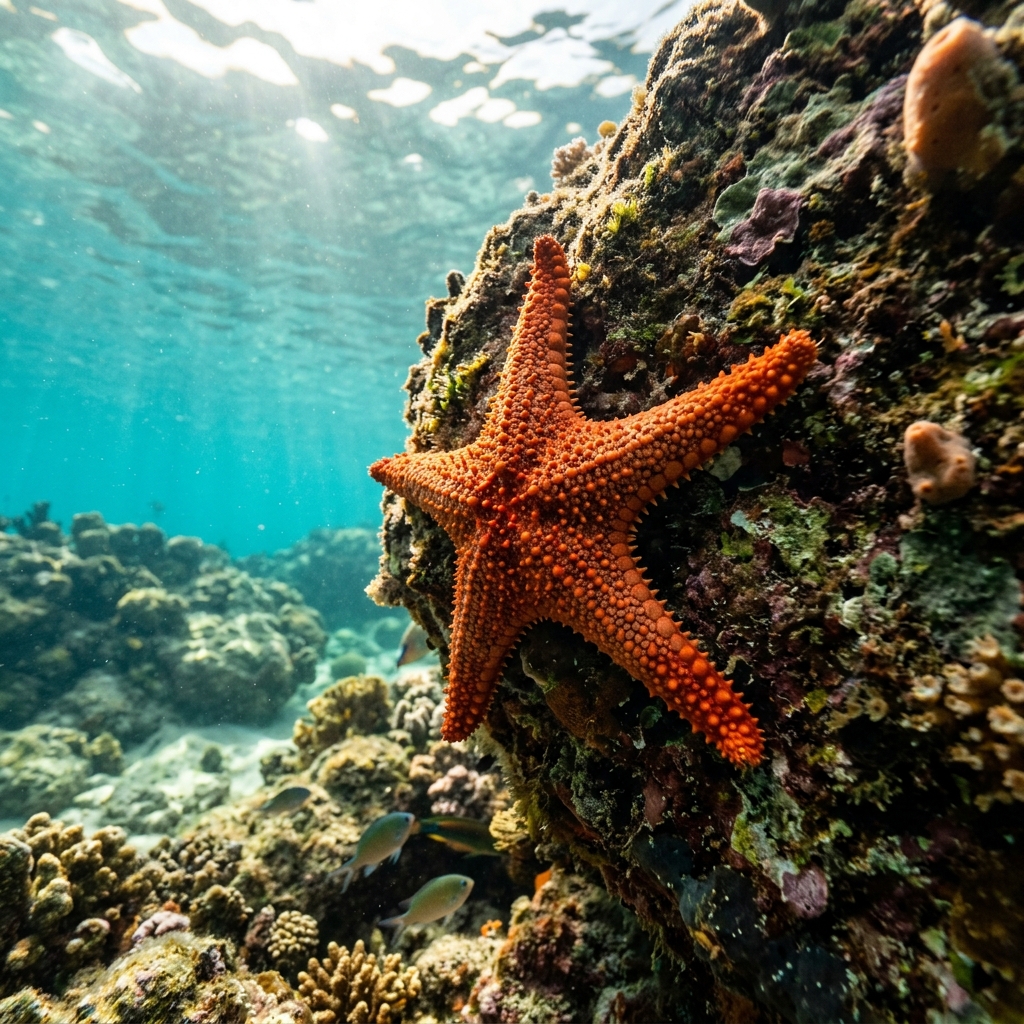
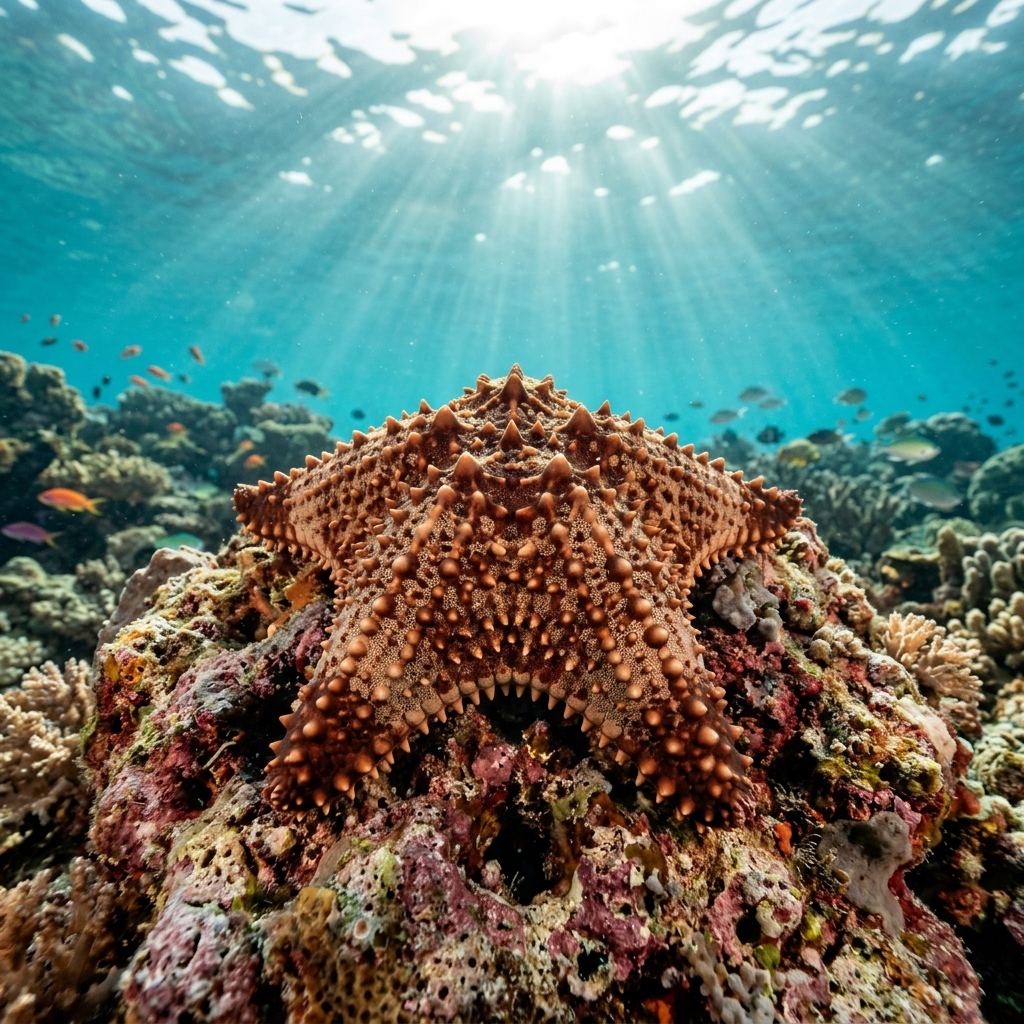
Plump and almost spherical, this sea star's five arms are so swollen with fluid they barely look like arms at all, the whole animal resembles a thick pincushion dropped on the reef. Colouration ranges from mottled orange-brown and tan through to green or reddish hues, often with a granular, warty surface texture. Adults can reach the size of a large grapefruit, making them easy to spot against sand or rubble. That inflated, bun-like shape is the single best field mark underwater, nothing else on a tropical reef looks quite like it.
You'll usually find cushion stars sitting motionless on sandy patches, rubble, or coral rubble slopes, often in relatively shallow reef zones. They move slowly, this is not an animal in any hurry, and typically ignore divers completely. They feed by everting their stomach directly onto encrusting organisms such as coral, algae, and sponges, so if you look closely at one that's been still for a while, you may catch it actively feeding on the reef surface beneath it.
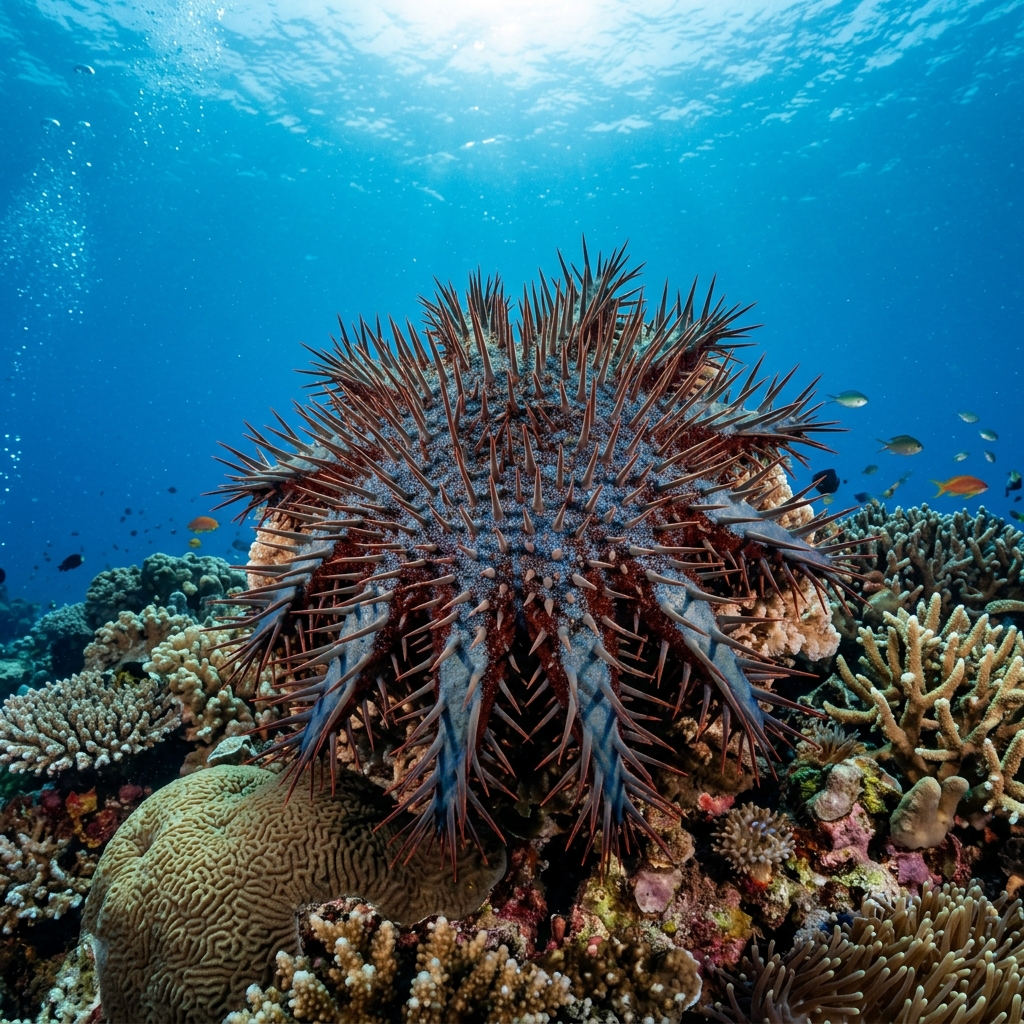
Cushion stars are one of the main predators of the coral-eating crown of thorns sea star in its juvenile stage, playing a quiet but important role in keeping reef communities in balance.
In the Northern Hemisphere, sightings are spread throughout the year with no peak season, which makes sense given the species' preference for consistently warm tropical water between 25 and 29 °C. Northern Hemisphere divers can visit at any point; the animal is simply resident wherever the reef stays warm.
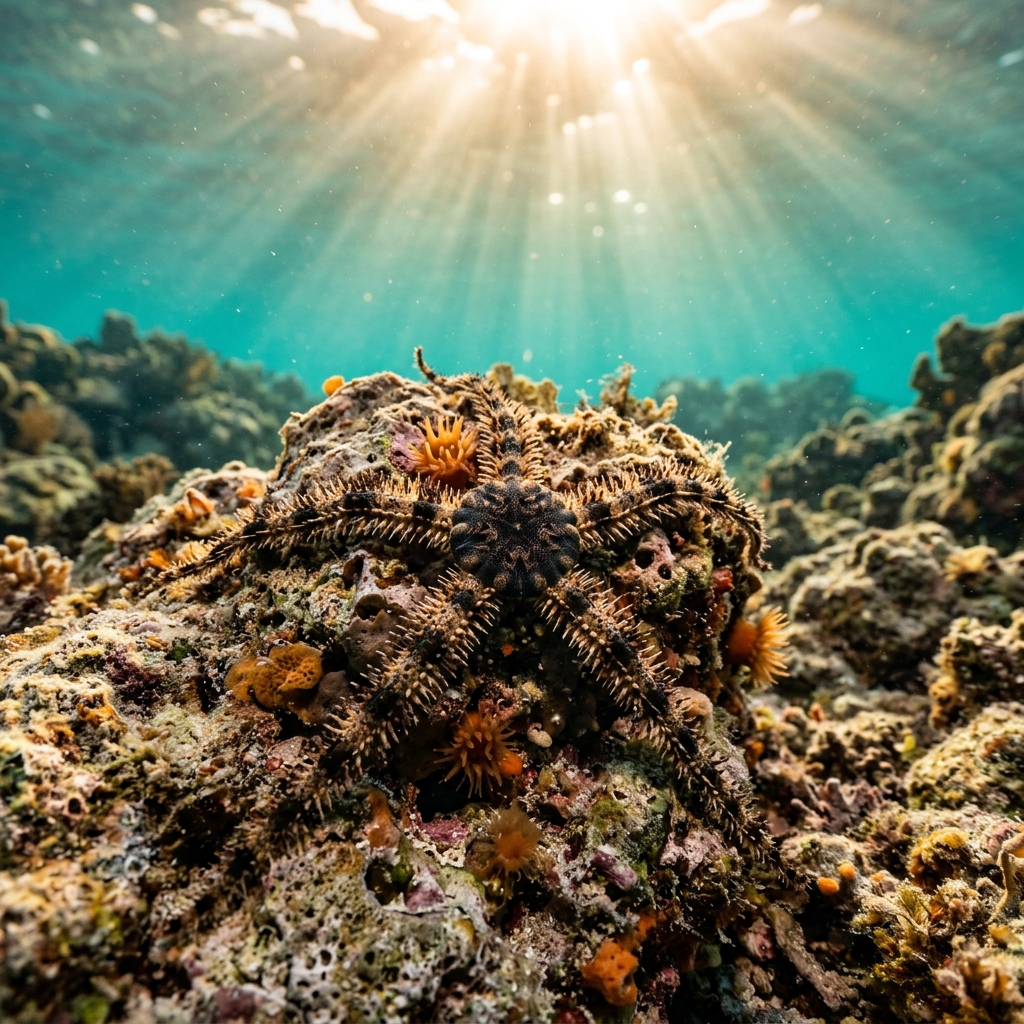
Reef neighbours a diver could mistake it for. Use the identification notes above to tell them apart.
Most commonly logged in the Maldives, particularly around the Male and Ari Atolls, which account for the largest share of recorded sightings globally. The Philippines (especially the Visayas), Malaysia's Perhentian and Redang islands and Pulau Tioman, and Indonesia's Bali and Lombok are all strong bets, with Thailand's Phuket and Phi Phi area and French Polynesia's Tahitian reefs also producing reliable encounters. Hawaii is the standout site for divers in the United States.
Mapping where Cushion Star is logged…
Cushion stars are logged across a wide sweep of the Indo-Pacific and Pacific. The Maldives, Philippines, Malaysia, Indonesia, and Thailand are the top destinations by number of recorded sites. French Polynesia and Hawaii are also reliable, and Oman represents a good option in the Arabian Sea.
In the Northern Hemisphere they're present year-round with no concentrated season, so there's no wrong time to look for them. The species thrives in warm tropical water (25-29 °C), which persists year-round on most Indo-Pacific reefs where it's recorded.
Look for the shape: a dramatically puffed-up, almost spherical body where the five arms are so inflated they're barely distinguishable. The surface is granular and warty, and colour ranges from mottled orange-brown and tan to greenish or reddish tones. If it looks like a small, lumpy cushion on the reef, that's your animal.
Adults commonly reach around 25-30 cm across, roughly the size of a large grapefruit or small dinner plate. Their inflated shape makes them look even larger in the water. Juveniles are much smaller and far flatter, lacking the distinctive cushion shape entirely.
They feed by pushing their stomach out through their mouth and pressing it against the reef surface, a technique called stomach eversion. This allows them to digest encrusting algae, sponges, and coral tissue externally before absorbing the nutrients. They're also known to prey on juvenile crown of thorns sea stars.
Site and sighting data is aggregated from diver logs, iNaturalist and GBIF. For taxonomy and conservation status:
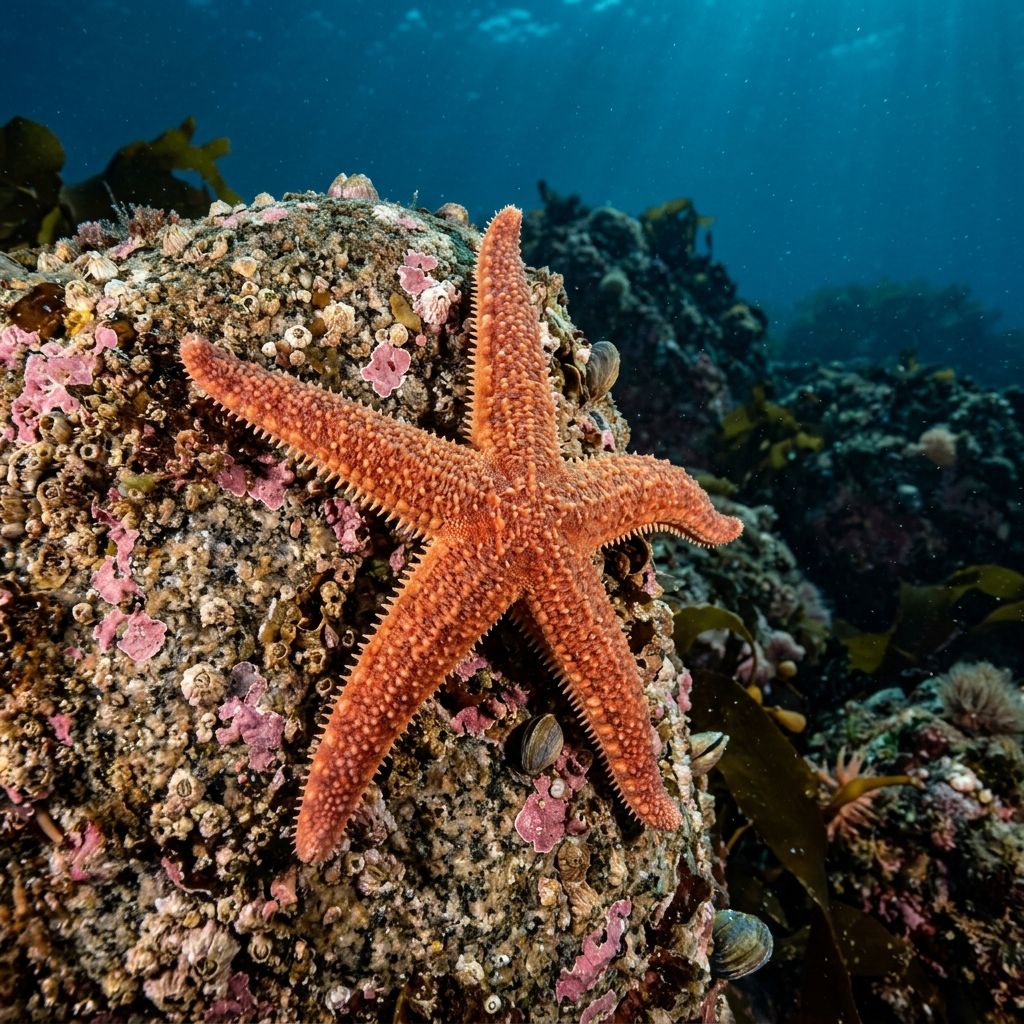
Common Sea Star
2,271 sites