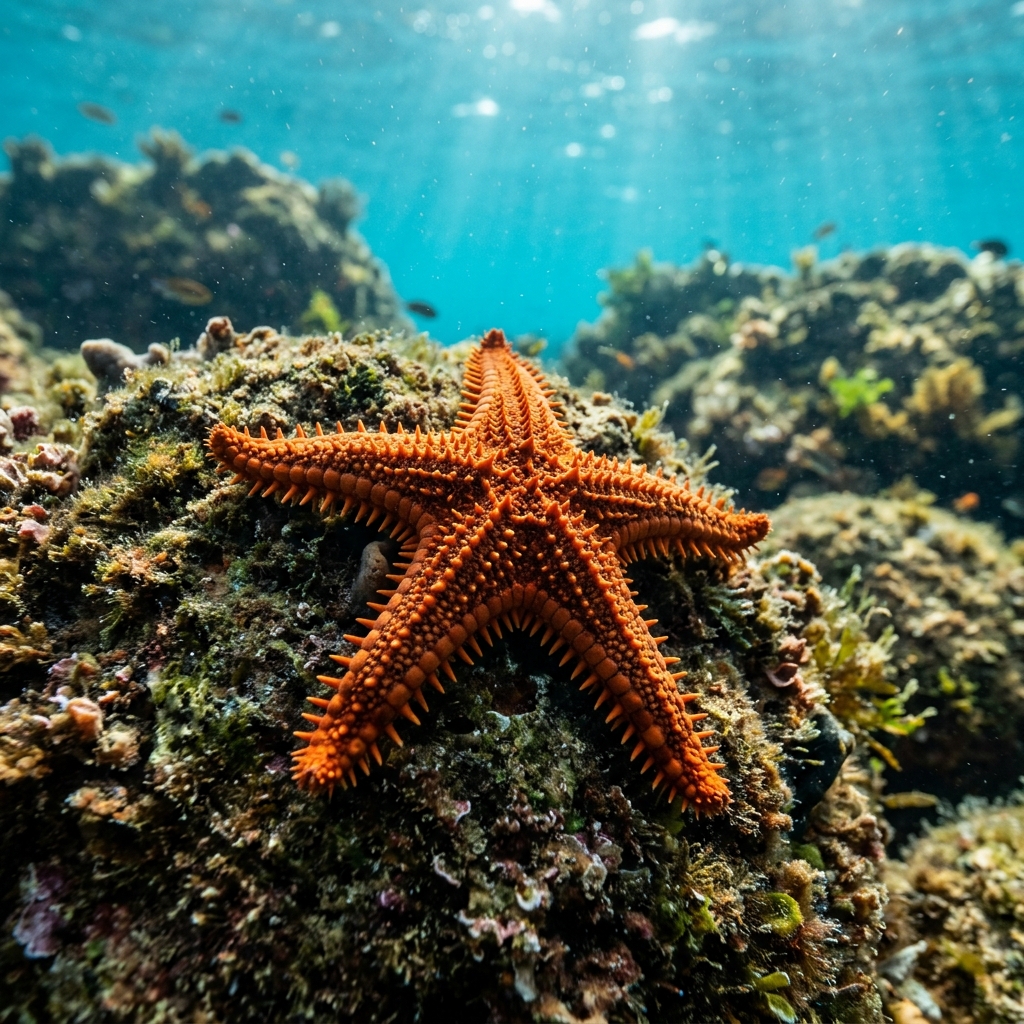
Astropecten aranciacus
Spot the Red Comb Sea Star in the Canary Islands, Costa Blanca or Algarve. Sightings peak Oct, Apr in cooler 14-24 °C Atlantic and Mediterranean waters.
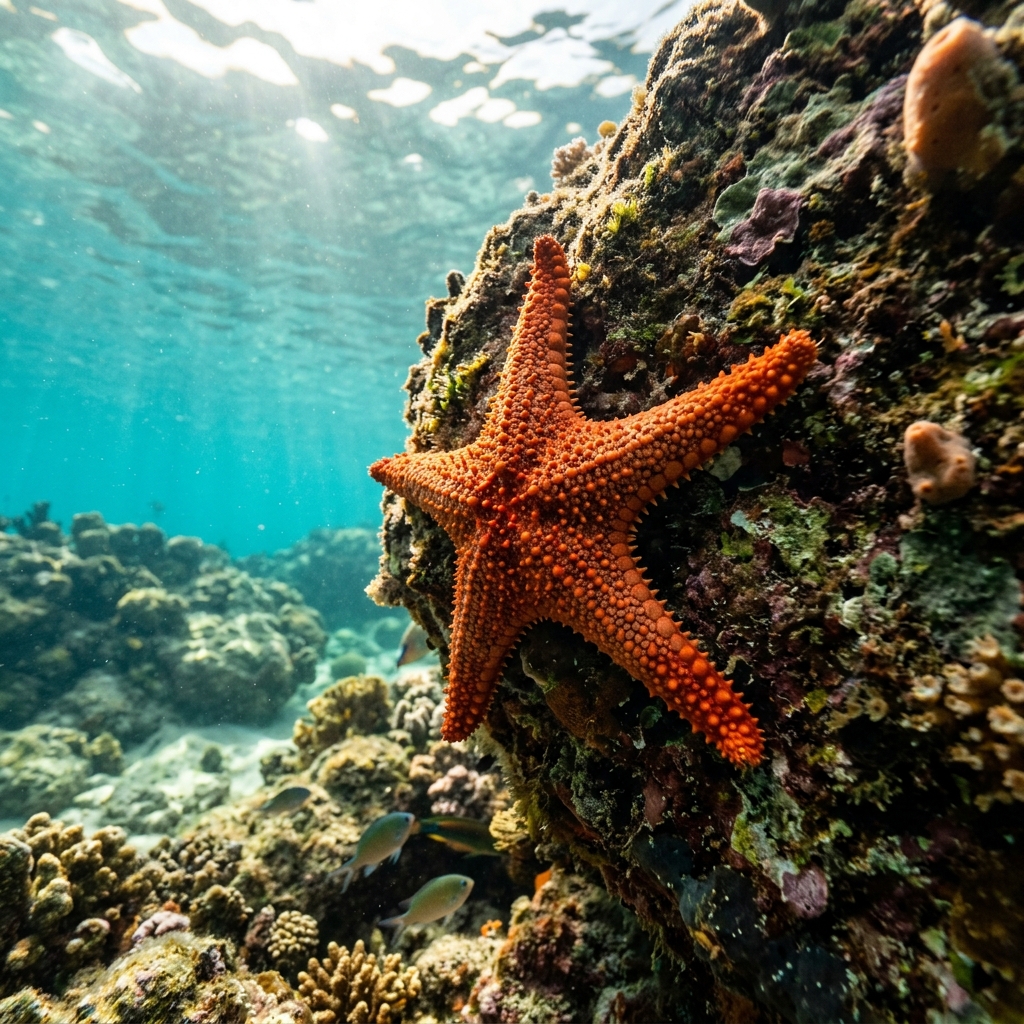
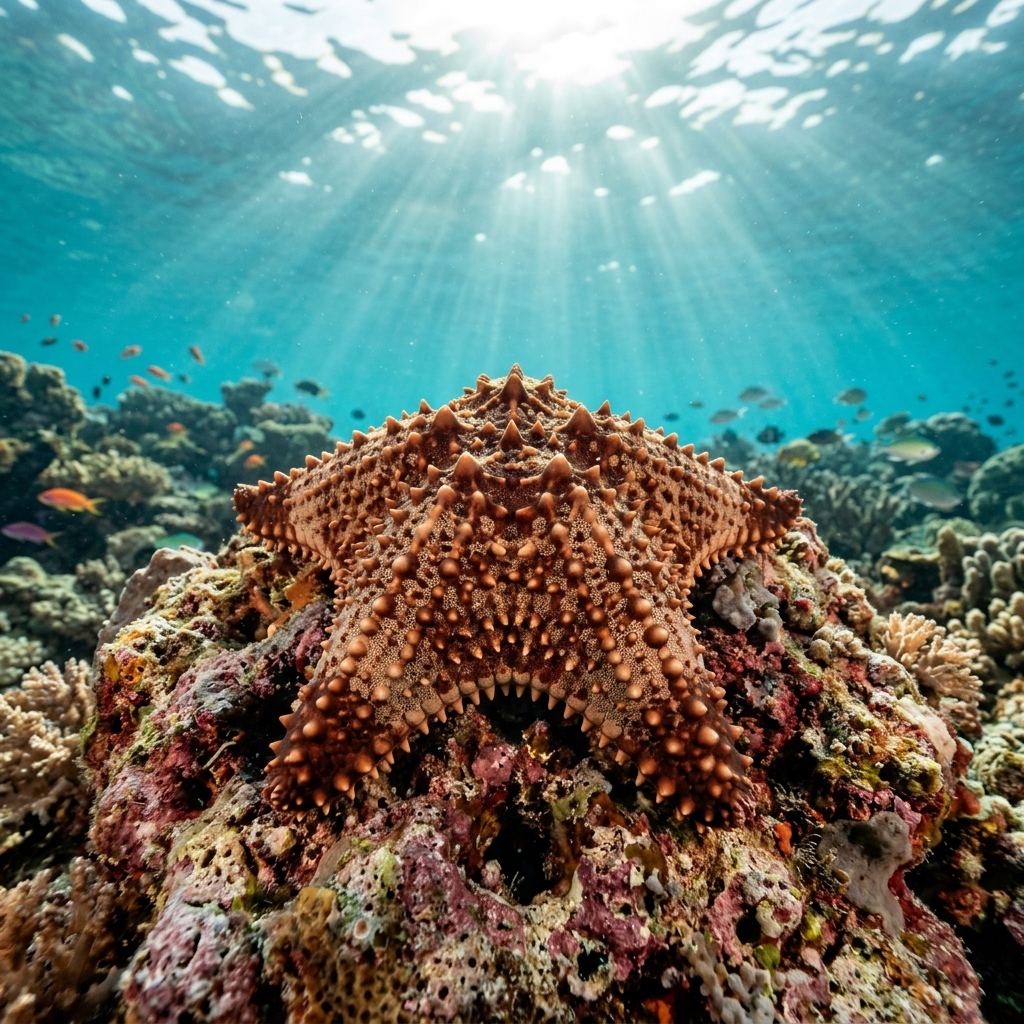
Bold orange-red colouration makes this sea star stand out against sand or rocky substrate. The arms are lined with two distinct rows of marginal spines that resemble a comb when viewed from the side, giving the animal its name. It is one of the larger sea stars in the Mediterranean and eastern Atlantic, with a broad, flat profile and clearly defined arm borders. Look for that sharp spine fringe and the rich orange hue to separate it from duller relatives.
Typically found moving slowly across sandy or mixed-sand-and-rubble bottoms, often in relatively shallow water, hunting for buried bivalves and small invertebrates by arching over prey and everting its stomach. It tends to ignore divers entirely, continuing its methodical patrol across the seafloor. Look down rather than at the reef wall, this is an animal of the seabed, not the vertical structure.
Like other astropectinid sea stars, the Red Comb Sea Star swallows prey whole rather than digesting it externally the way many sea stars do, then expels hard shell fragments after digestion, a useful trait to watch for if you spot one feeding.
In Northern Hemisphere destinations such as the Canary Islands and the Mediterranean, sightings concentrate between October and April, when water temperatures sit closer to the cooler end of the species' 14-24 °C comfort range. Southern Hemisphere records from South Africa peak around April and May.
Reef neighbours a diver could mistake it for. Use the identification notes above to tell them apart.
Most consistently logged across the Canary Islands, with Tenerife and Lanzarote among the standout spots, and throughout Spain's Costa Blanca coastline. The Algarve in Portugal and Sardinia in Italy also produce regular sightings, while Croatia's Kvarner Gulf rounds out the Mediterranean core range. Smaller but notable records also come from the Western Cape in South Africa and the Visayas in the Philippines.
Mapping where Red Comb-(sea) Star is logged…
The strongest sightings come from the Canary Islands (especially Tenerife and Lanzarote), the Costa Blanca in Spain, and the Algarve in Portugal. Italy's Sardinia and Croatia's Kvarner Gulf are also reliable. Smaller populations have been logged in South Africa's Western Cape and the Philippine Visayas.
In the Mediterranean and Canary Islands, sightings peak from October through April, which aligns with cooler water temperatures the species favours. In South Africa, the best window is around April to May.
Look for a large, flat sea star with vivid orange-red arms and a distinctive double row of comb-like marginal spines running along each arm edge. The bold colour and the clearly fringed arm borders are the two features to key on against sandy or rocky seabeds.
No. They pose no threat to divers. As with all sea stars, avoid handling or touching them, as even brief contact can disrupt the mucus layer that protects them from infection.
Unlike many sea stars that evert their stomachs over prey, the Red Comb Sea Star swallows small bivalves and invertebrates whole, digesting them internally and expelling the hard shell remains. This makes it a voracious predator of sandy-bottom invertebrates.
Site and sighting data is aggregated from diver logs, iNaturalist and GBIF. For taxonomy and conservation status:
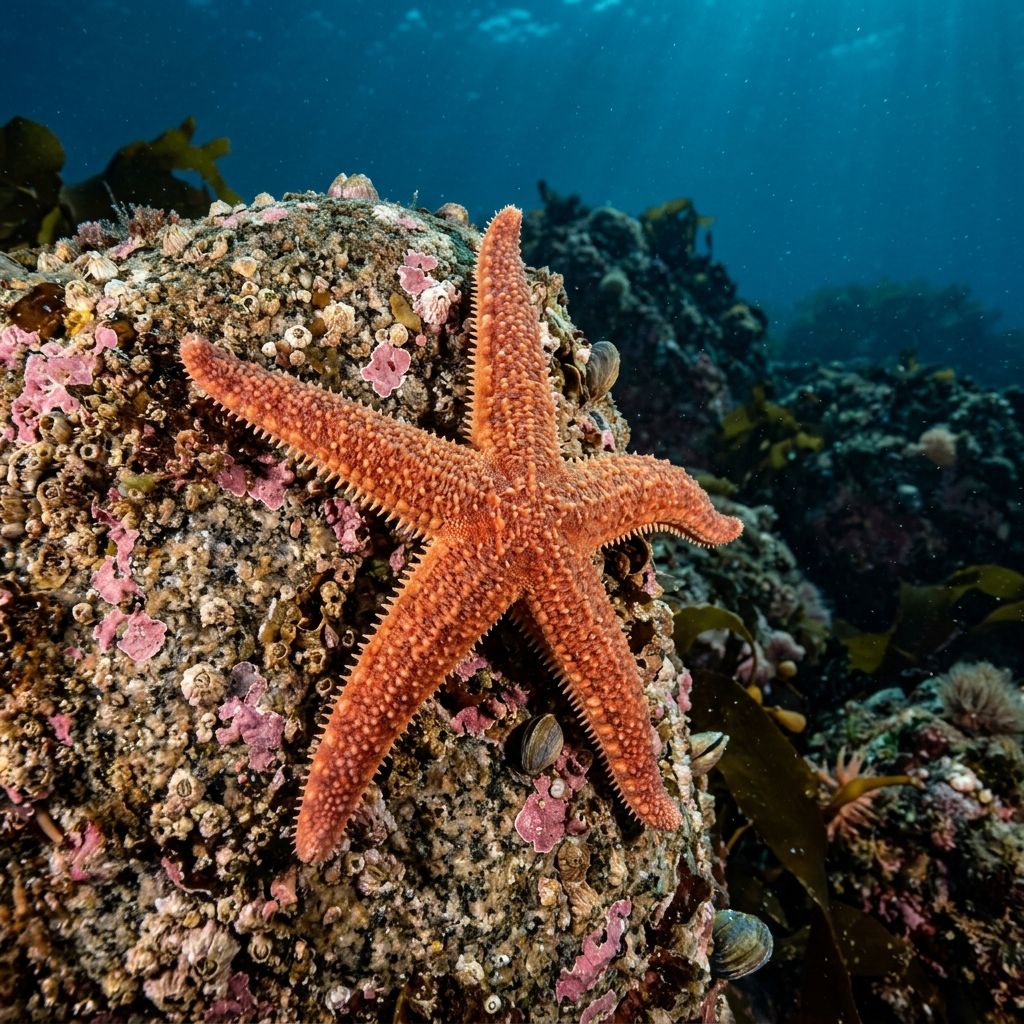
Common Sea Star
2,271 sites