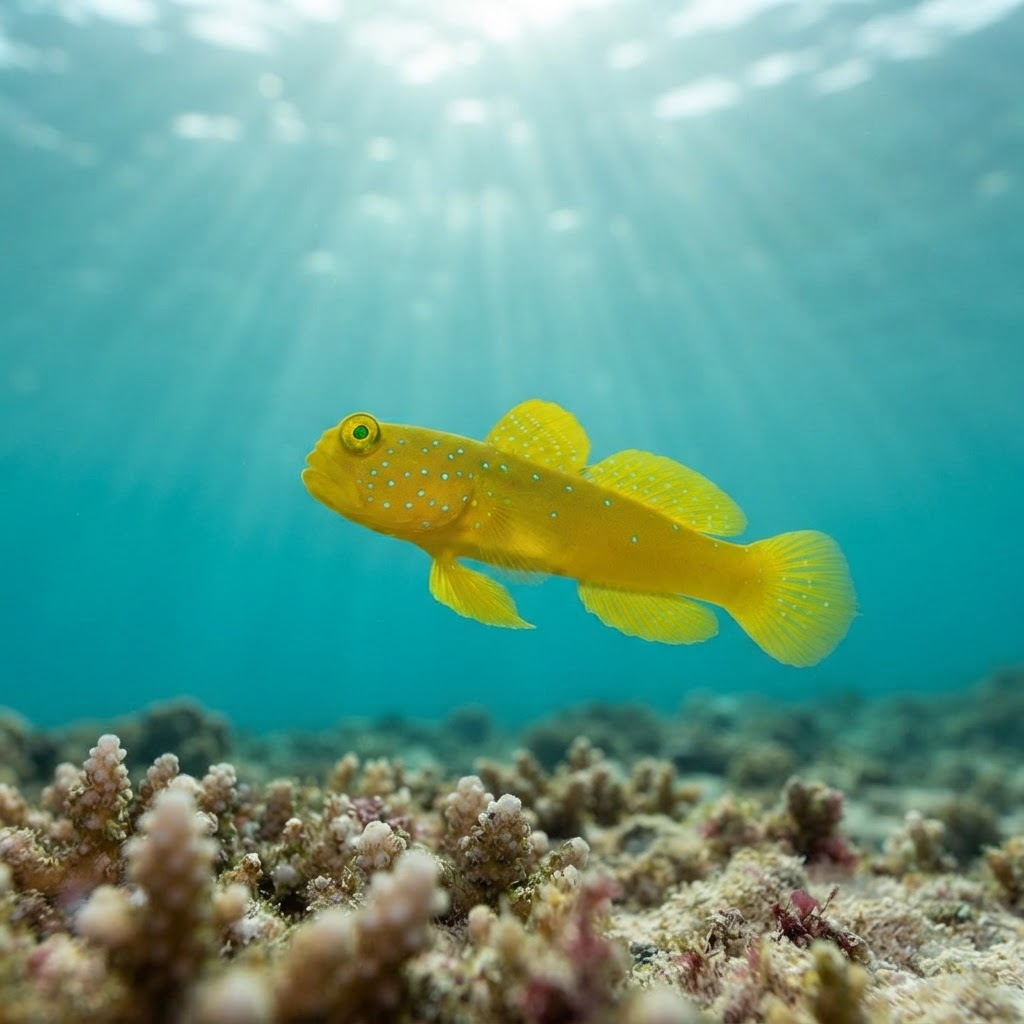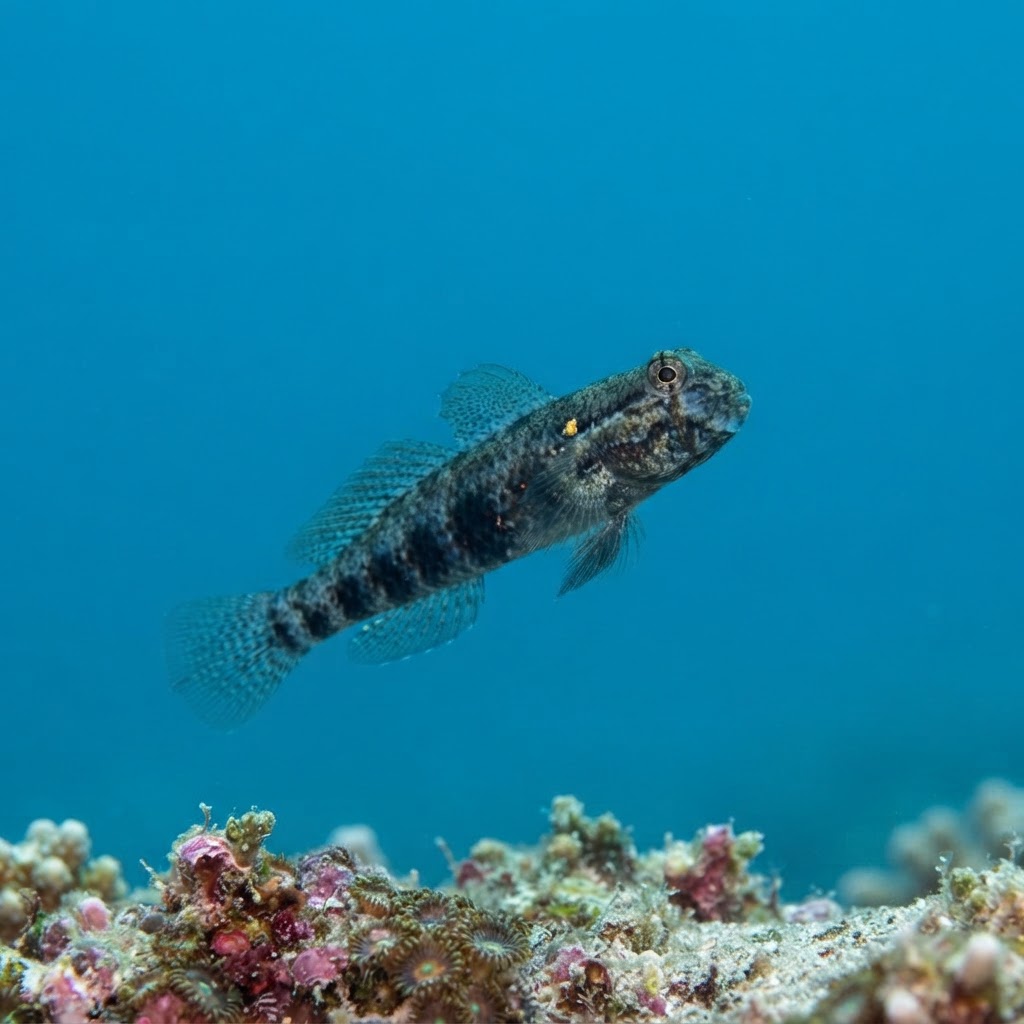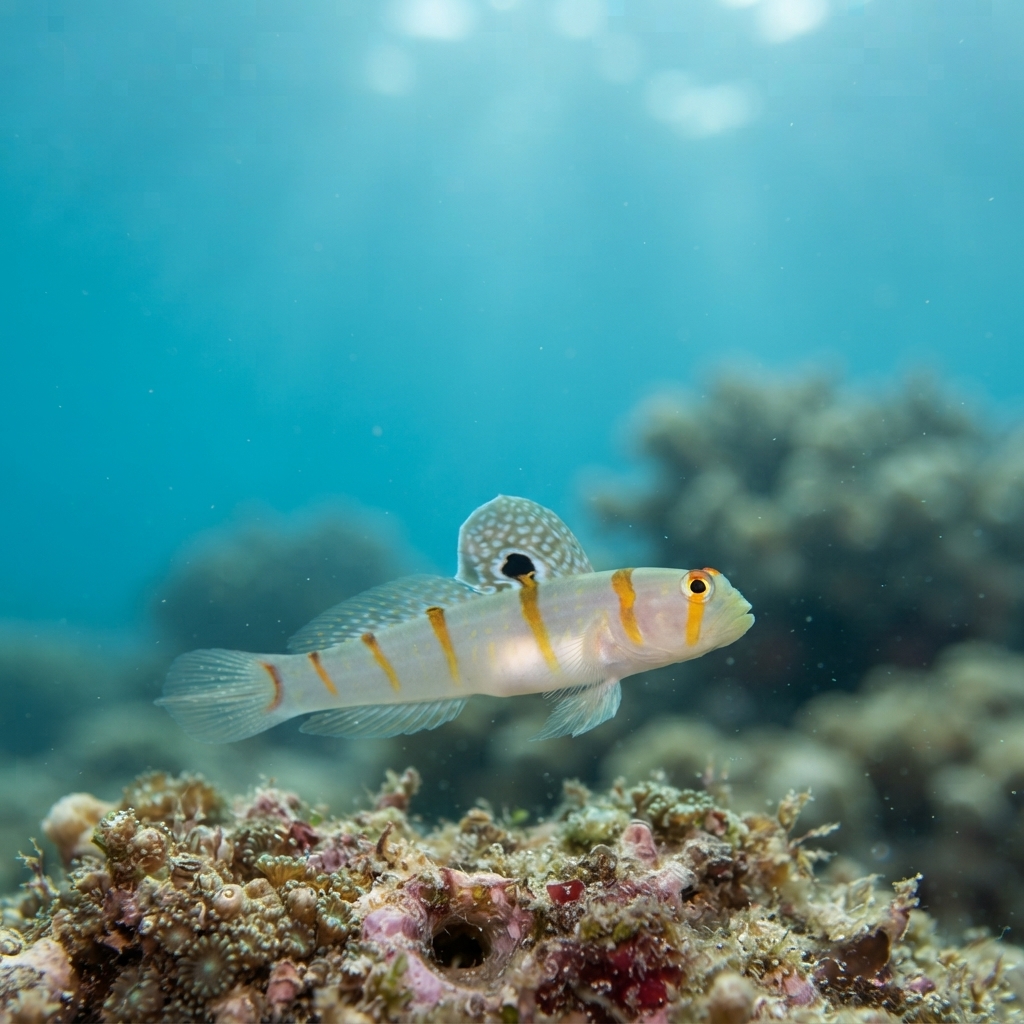
Ctenogobiops crocineus
Pale, gold-flecked goby found hovering over sand burrows in South Sinai and the Visayas, year-round in 25-29C water.
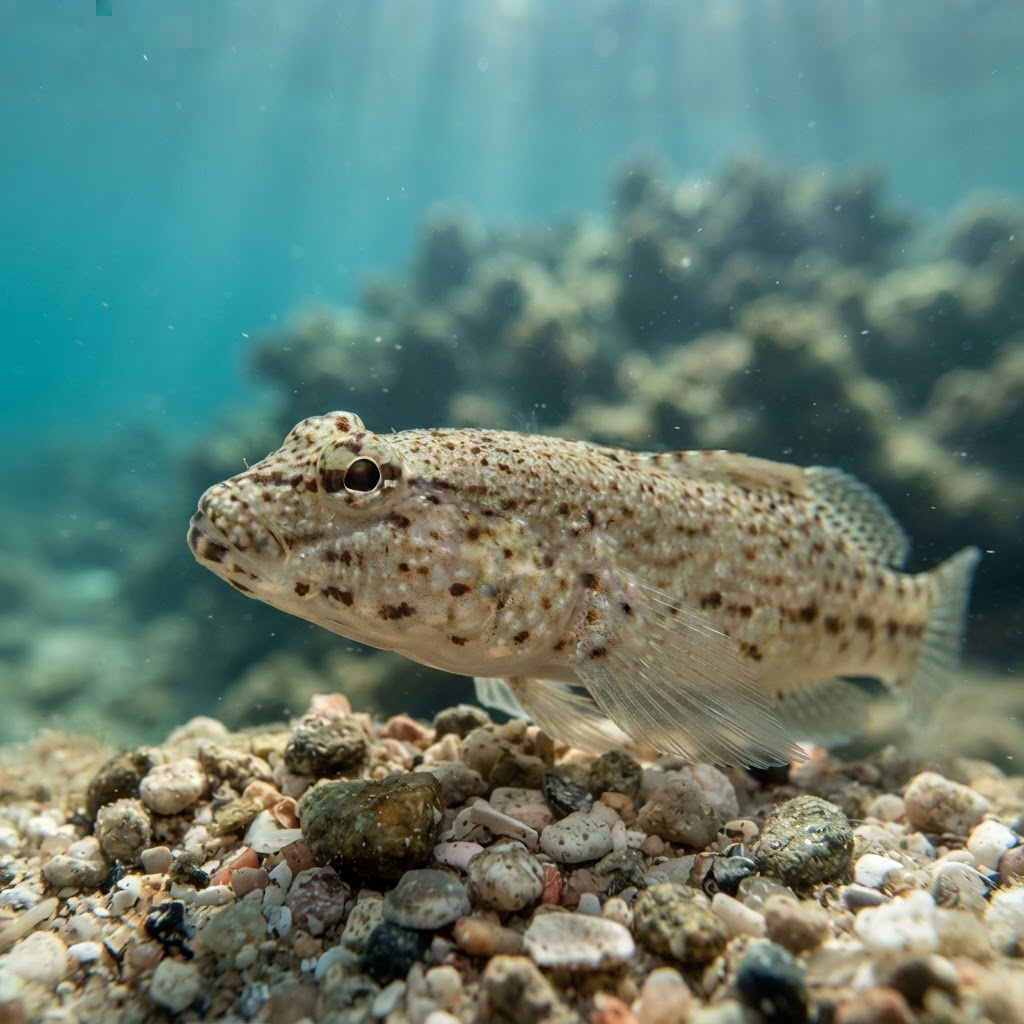
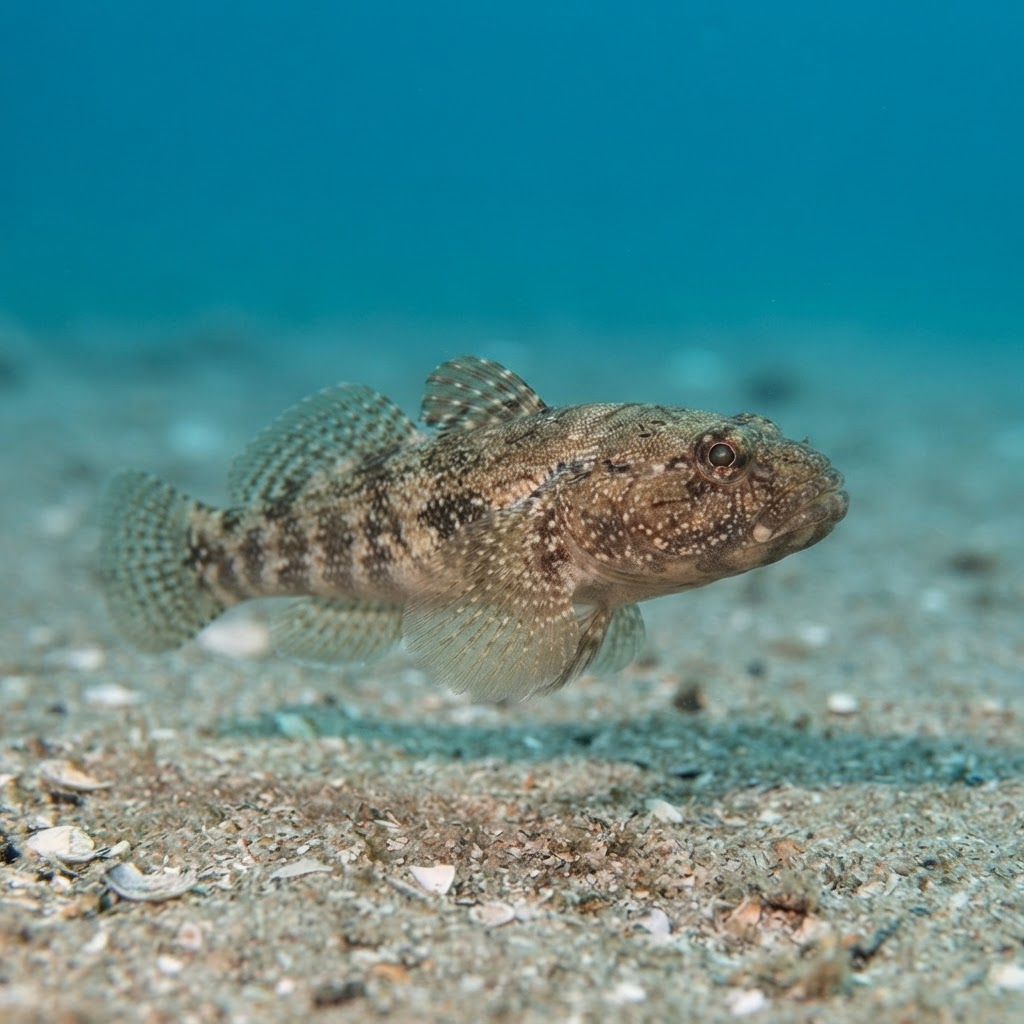
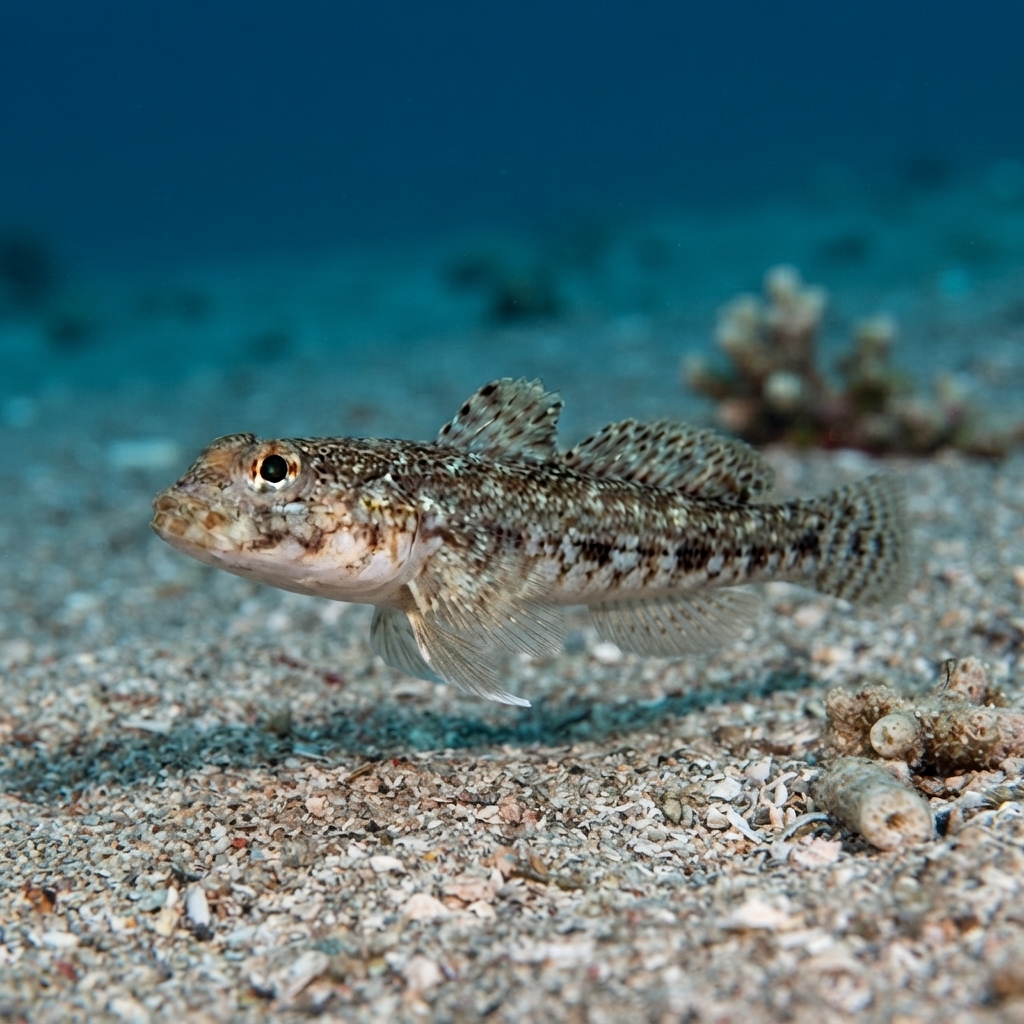
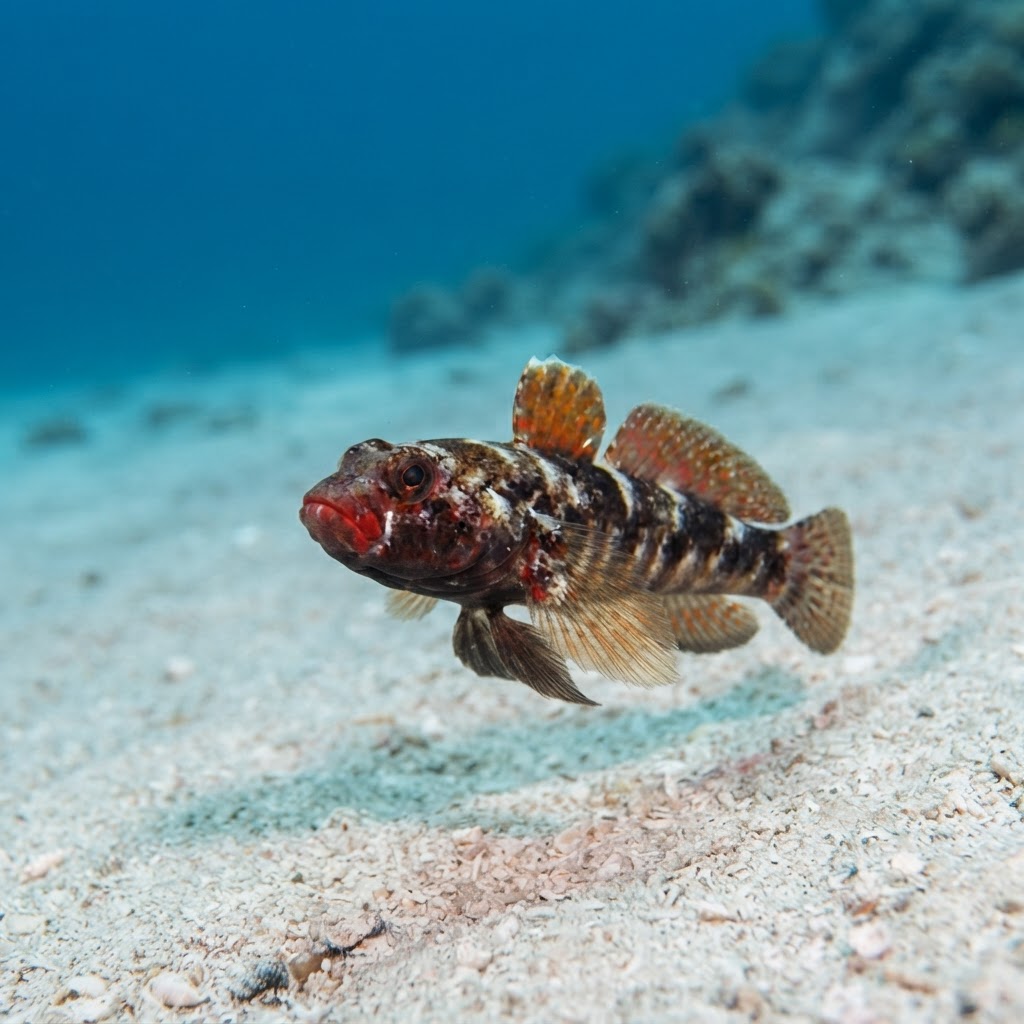
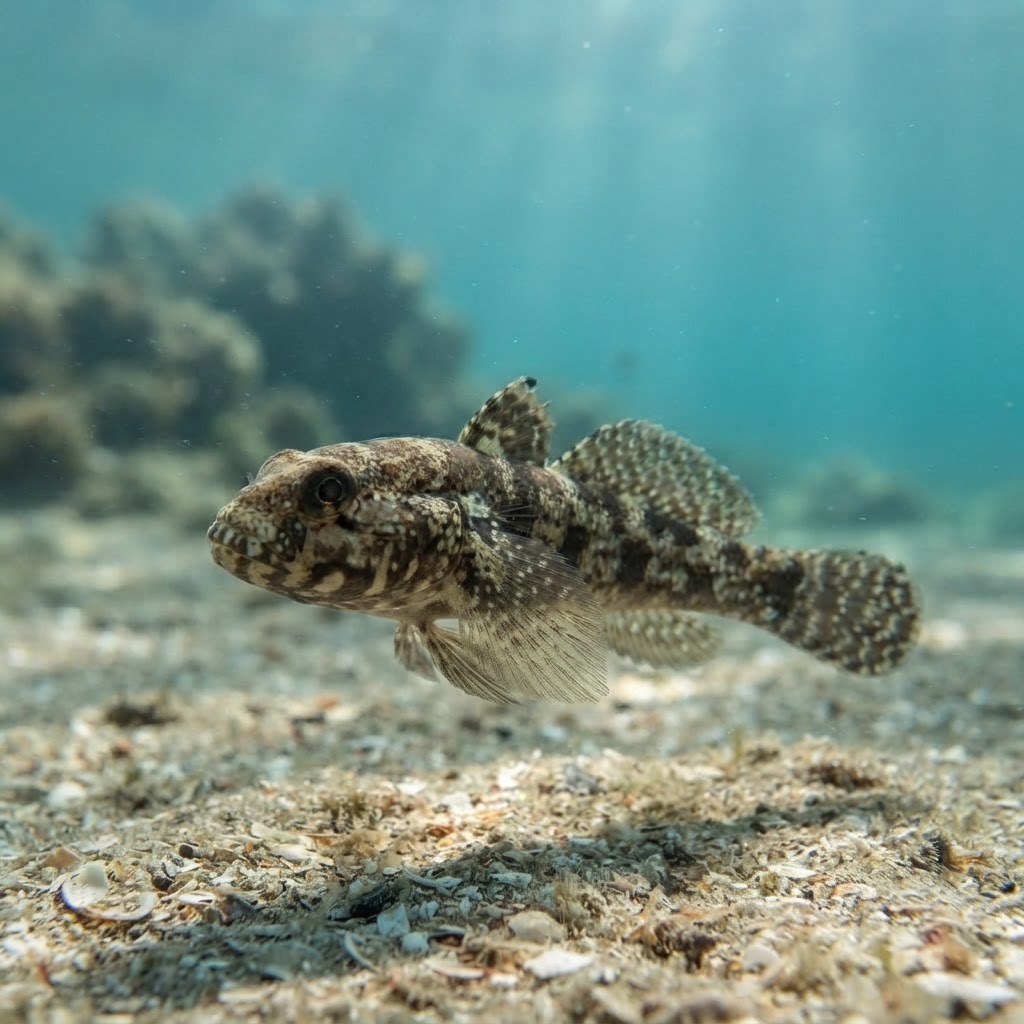
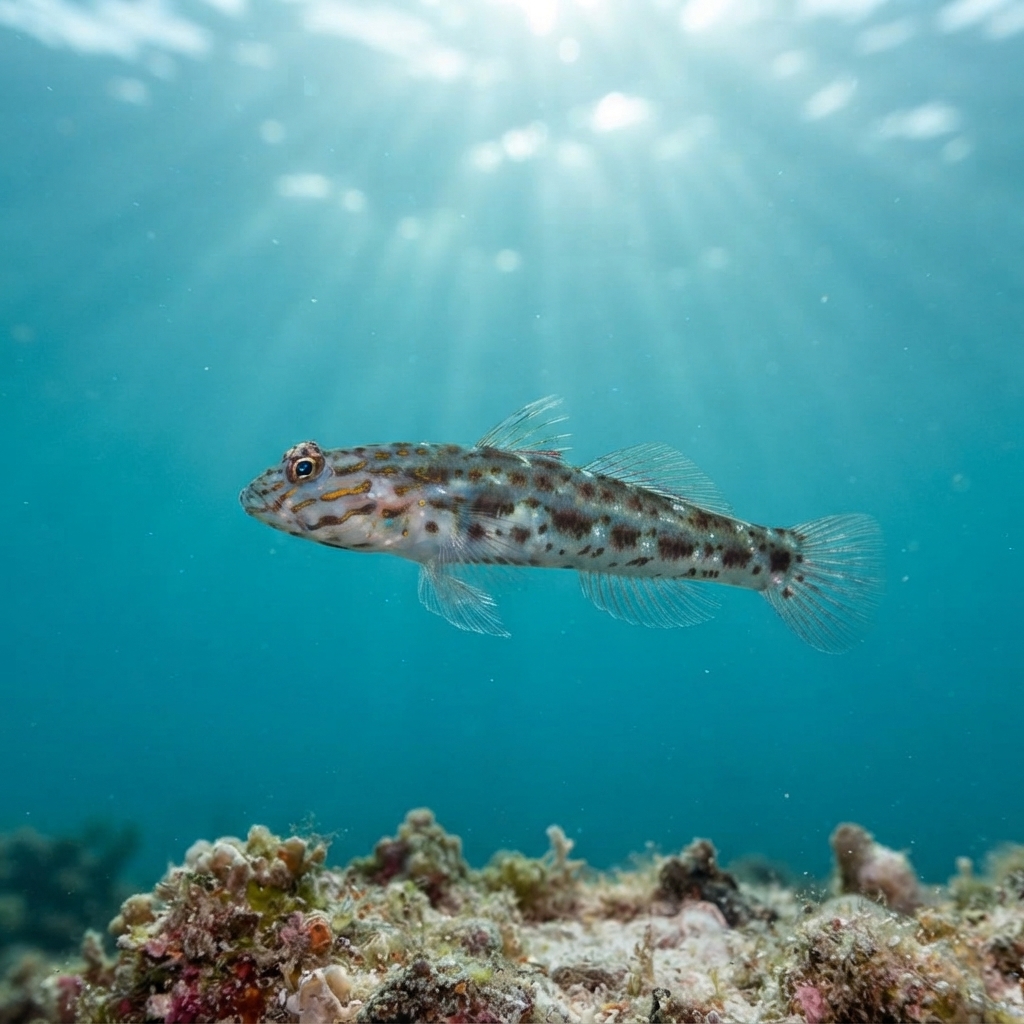
A slender, pale grey to cream goby around 4 cm long, with faint rows of orange-gold speckles scattered along the upper body and a translucent, high first dorsal fin. It hovers just above a burrow entrance in sand or rubble, propped on its pelvic fins, and drops in tail-first the moment it feels threatened. The speckled pattern and small size are the main things to key on, since it lacks bold bars or blotches.
Look for it hovering at the mouth of a burrow it shares with a snapping shrimp, feeding on drifting particles with quick little darts back to the hole. It is skittish and retreats underground fast when divers approach too directly, so a slow, low approach and some patience gets you a much longer look. Most sightings are on open sand or rubble patches away from the reef crest, in the shallower parts of a dive.
It lives in a burrow it does not dig itself, sharing the tunnel with a burrowing shrimp that maintains the hole while the goby stands guard and signals danger with a flick of its tail.
No clear seasonal pattern shows in the sightings, and it sits comfortably in water from about 25 to 29 C, so it is a year-round find on the sandy flats where it lives rather than a seasonal target.
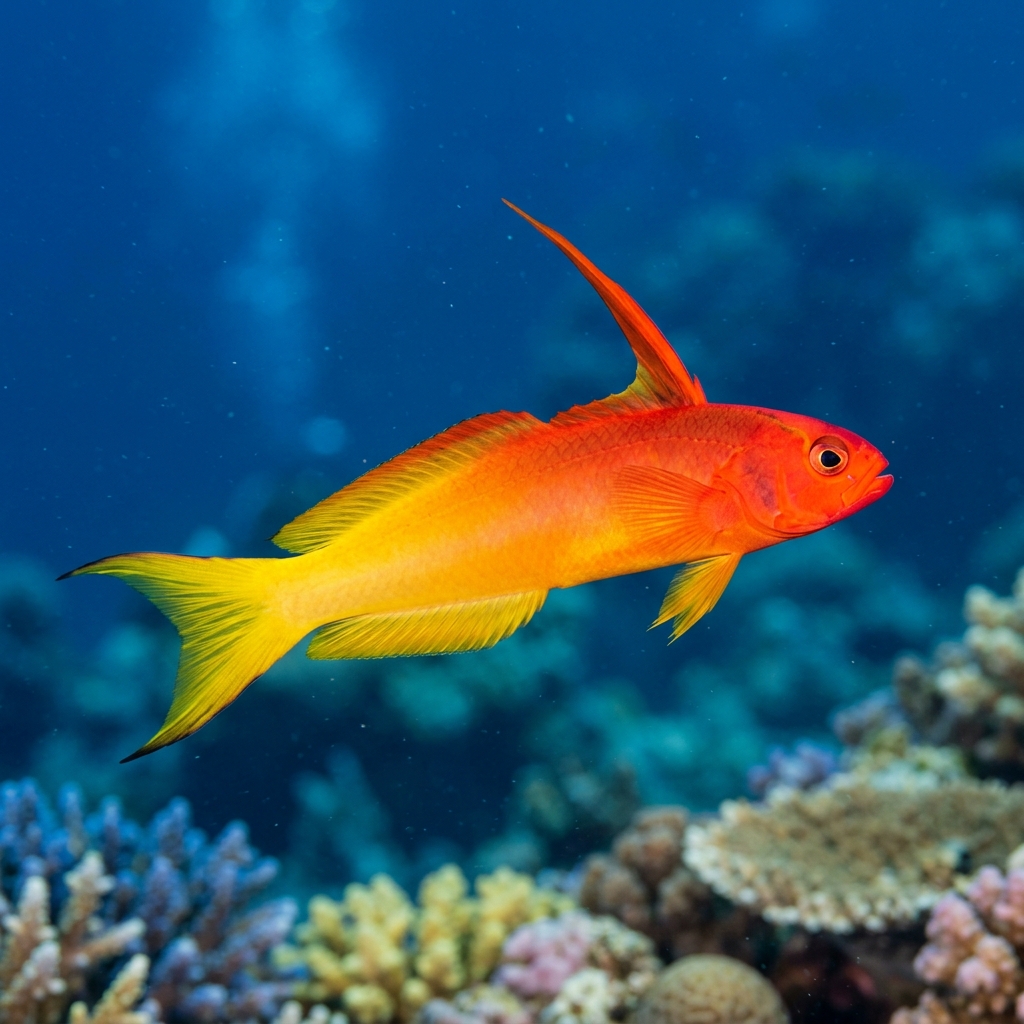
Reef neighbours a diver could mistake it for. Use the identification notes above to tell them apart.
Most reliably logged on sandy reef flats and rubble patches in the Visayas region of the Philippines and across South Sinai in Egypt, with a smaller but steady presence around Dili in Timor-Leste. Sites in the Red Sea Riviera and Marsa Alam add to the Egyptian spread, making the northern and central Red Sea a strong bet alongside the Philippines.
Mapping where Saffron Shrimp-goby is logged…
It turns up most often on sandy reef flats in the Visayas region of the Philippines and across South Sinai in Egypt, with additional sightings around Dili in Timor-Leste.
There is no strong season in the sighting data. It lives in water from roughly 25 to 29 C, so it is present on tropical sand flats throughout the year.
Look for a small, pale goby around 4 cm long with scattered gold speckles, hovering near a burrow on sand or rubble rather than perched on the reef itself. It disappears into the burrow quickly if you swim straight at it.
They stay small, typically around 4 cm long, which is roughly the length of a thumb.
Yes, it partners with a burrowing shrimp that digs and maintains the burrow while the goby keeps watch and warns the shrimp of danger with tail flicks.
Site and sighting data is aggregated from diver logs, iNaturalist and GBIF. For taxonomy and conservation status:
Slender Goby
806 sites