Gymnothorax reevesii
Mottled reef eel logged year-round at 24-29C, most reliably around Sai Kung, Hong Kong and Longdong, Taiwan.
Safety warning
It's listed as dangerous to divers, and the risk is almost entirely about hands near holes: morays have poor eyesight and strong, reflexive jaws, and a hand or finger reaching into a crevice can be mistaken for food or a threat. Enjoy it from a normal viewing distance, keep hands out of cracks and rubble, and never attempt to touch or feed it.
If you're bitten
BiteGeneral first-aid guidance, not a substitute for professional medical care. In an emergency, call your local emergency number.
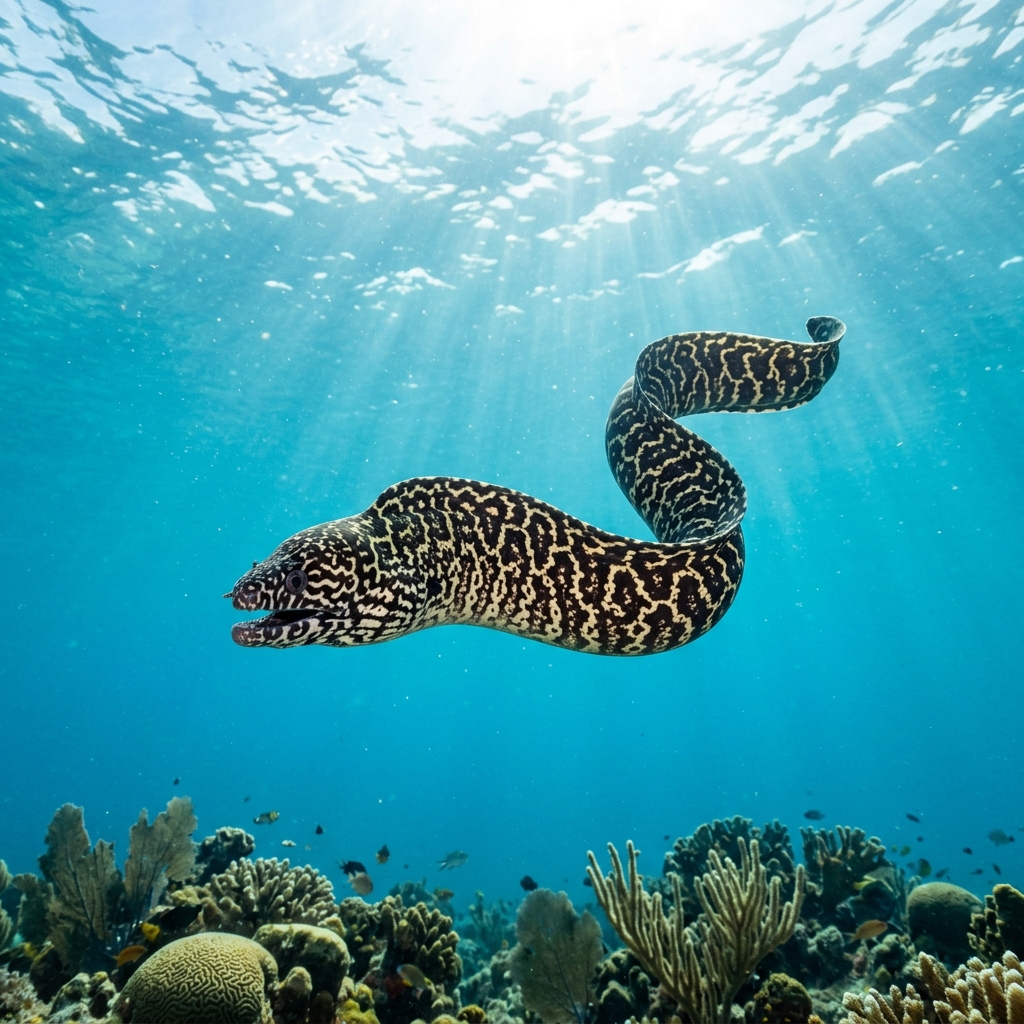
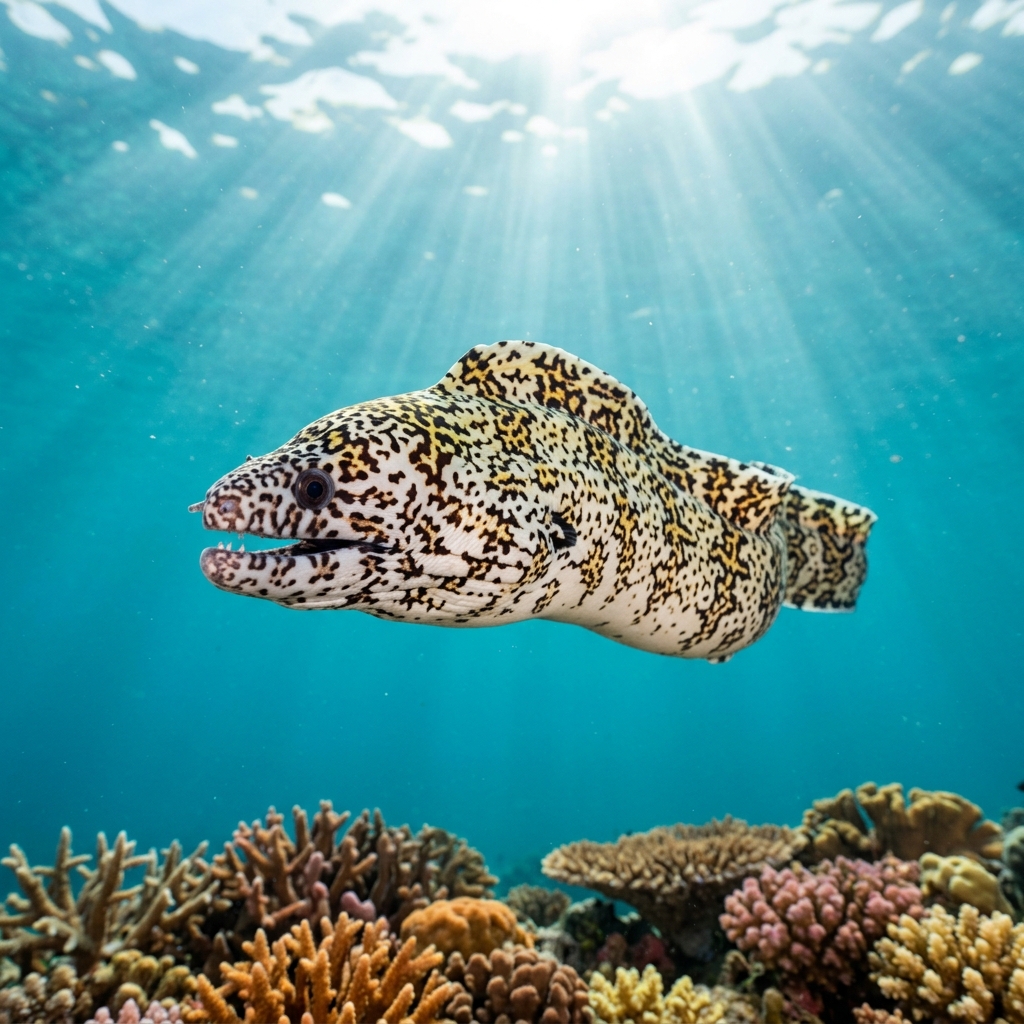
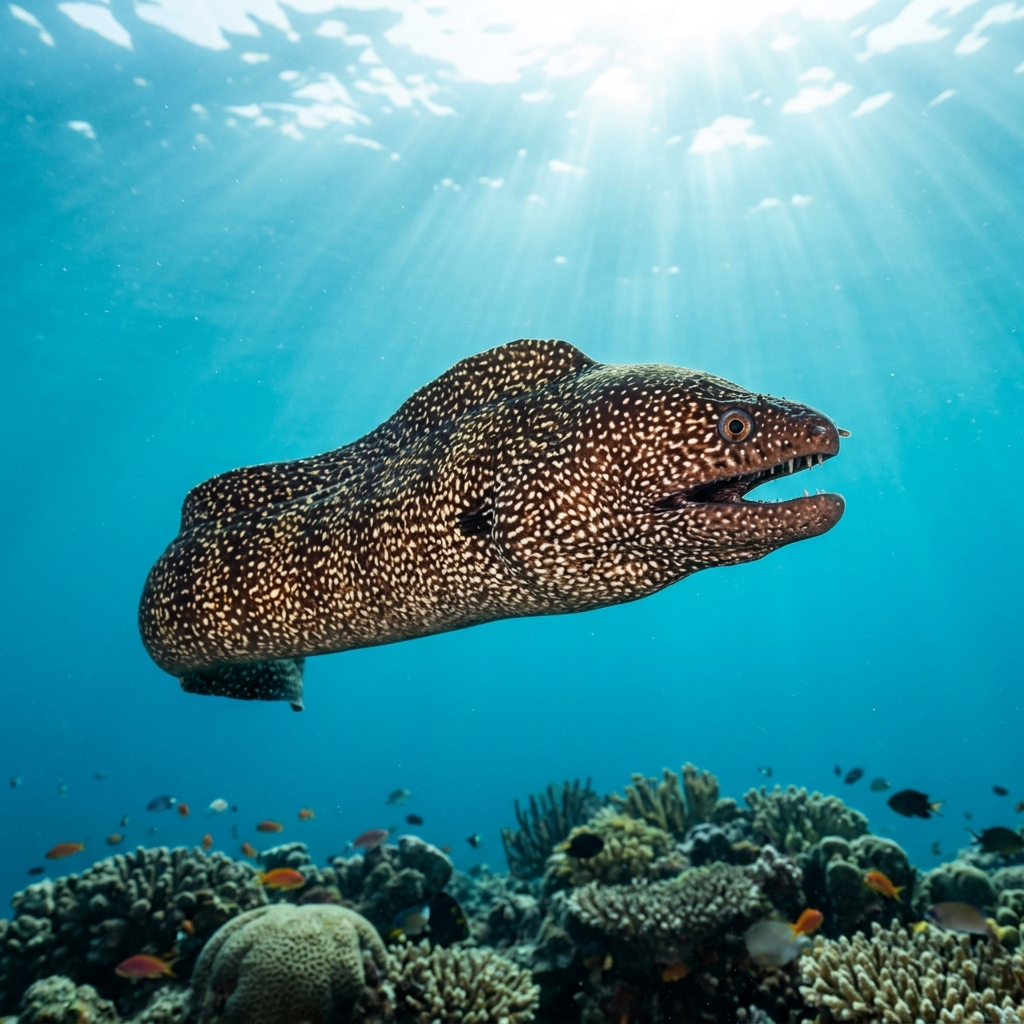
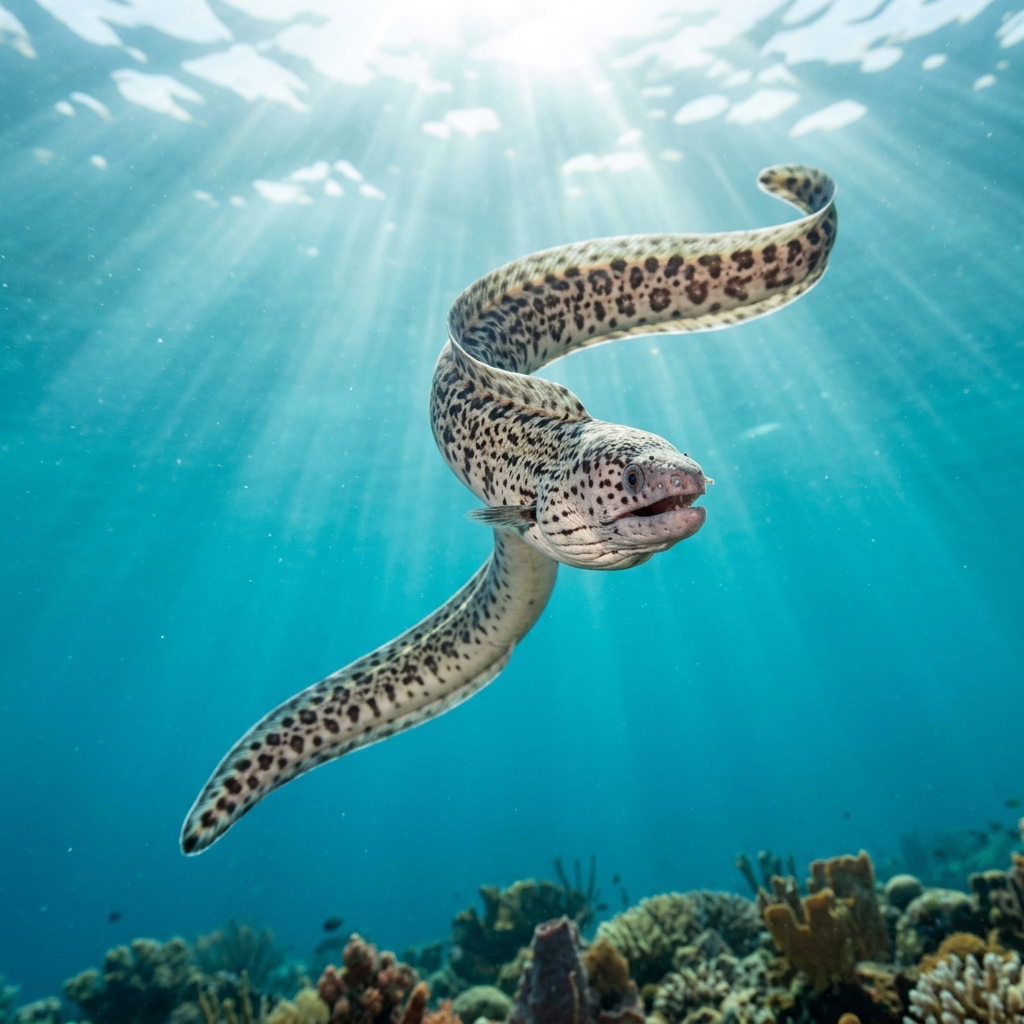
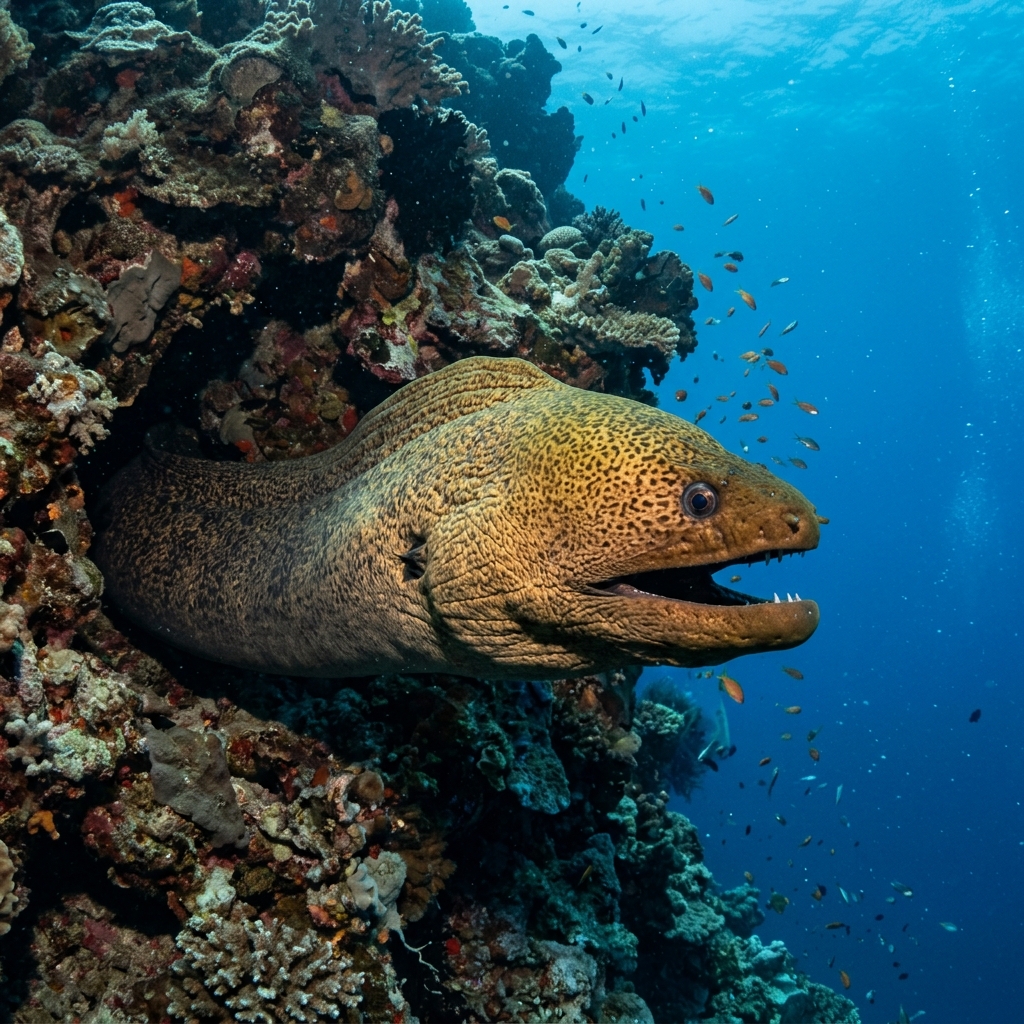
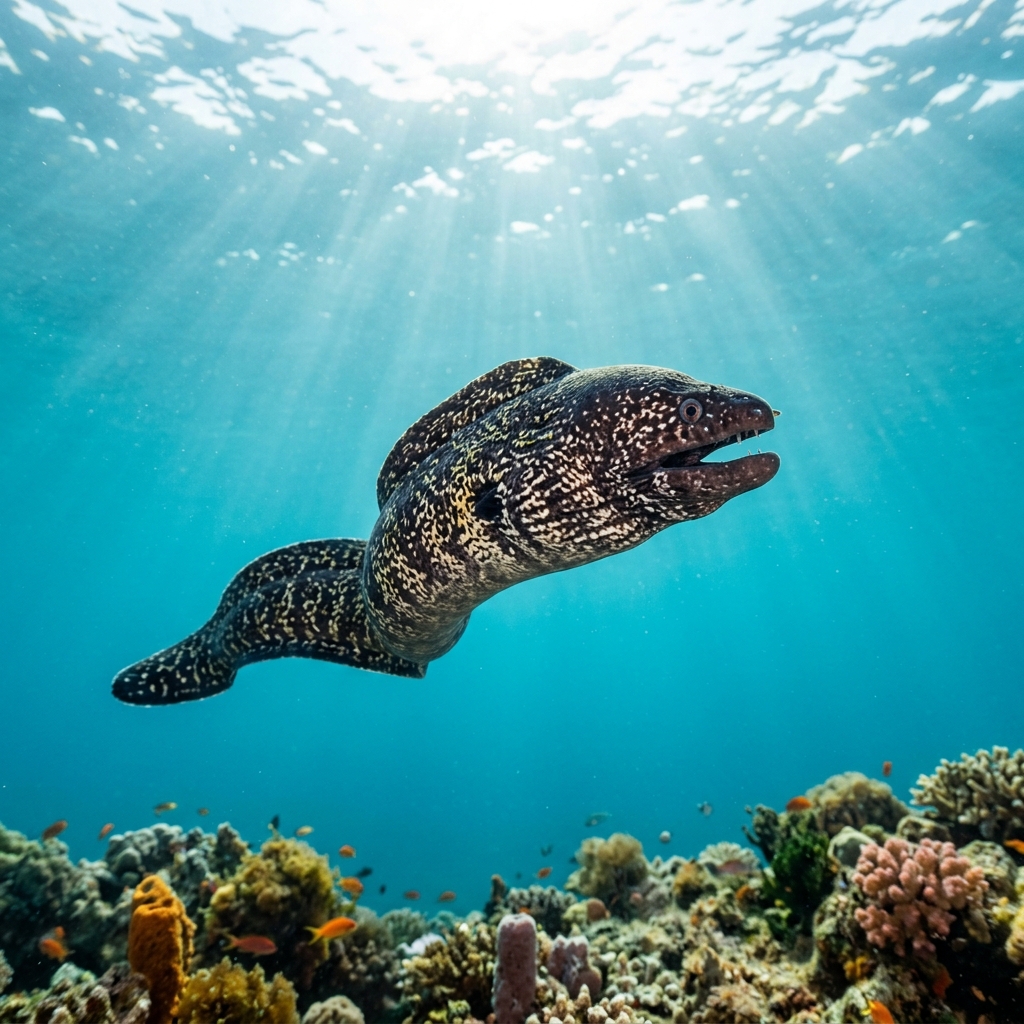
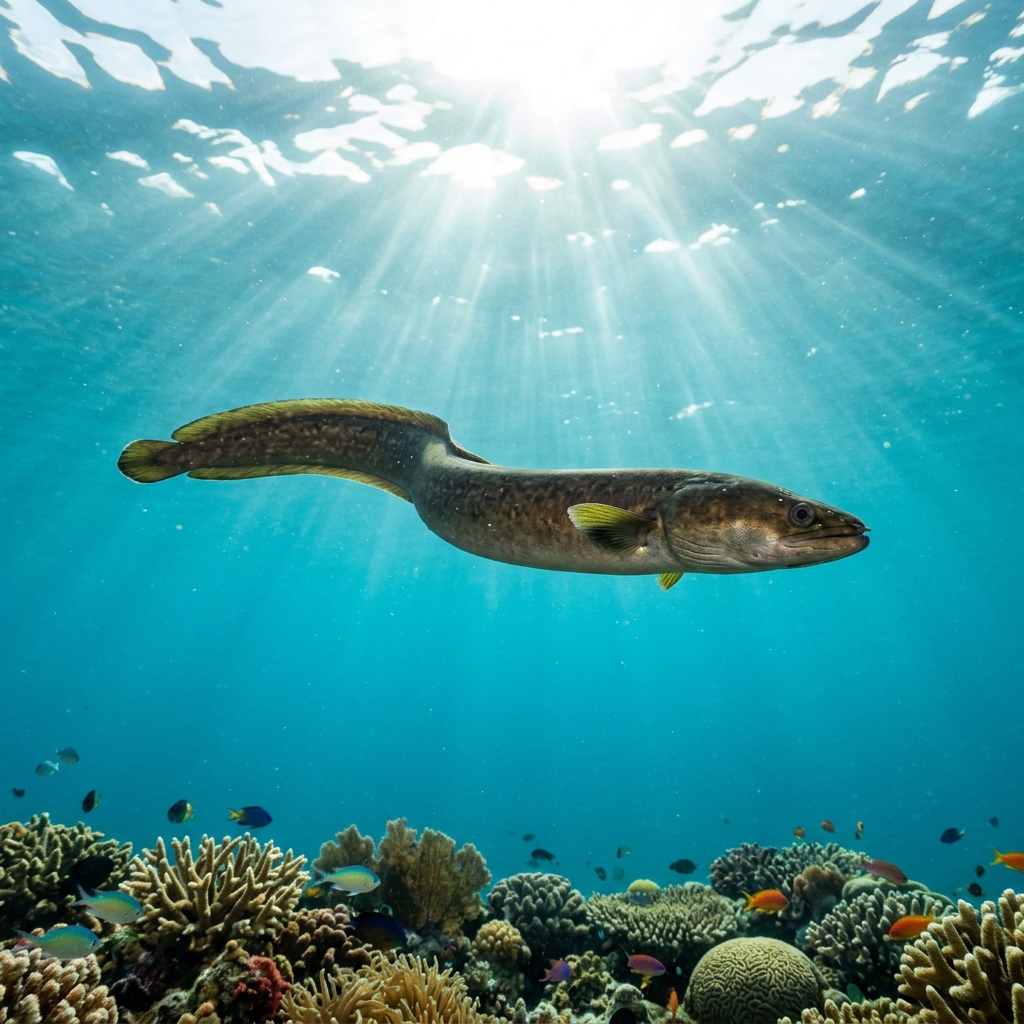
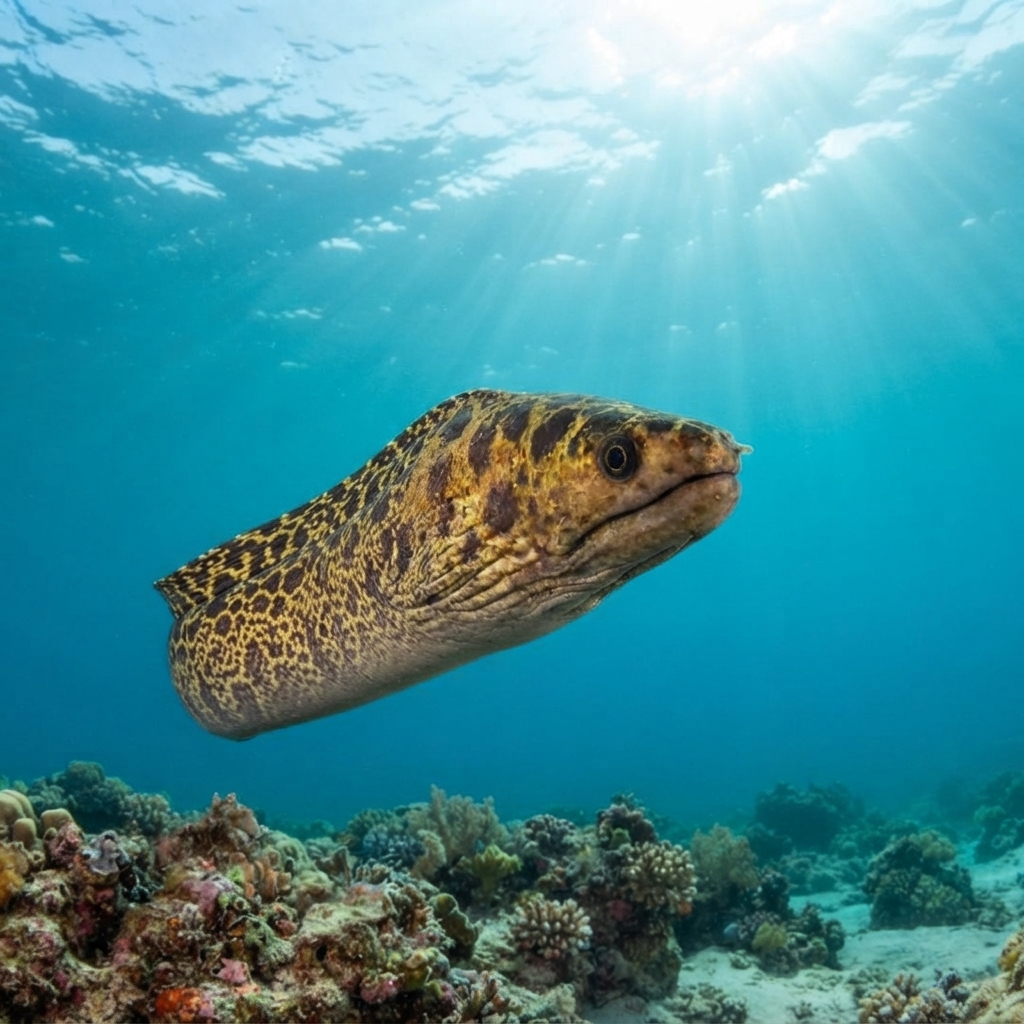
A stocky, medium-sized moray reaching around 49cm, noticeably shorter and thicker-set than the big reef morays you might already know. Its body is covered in a mottled pattern of dark brown to olive blotches over a paler cream or tan background, giving a marbled rather than banded look. The head is blunt and the eyes sit relatively far forward, and most sightings are of the head and forebody protruding from a crevice or rubble hole rather than the whole animal swimming in the open.
Usually spotted with just the head or forebody showing from a crack in rock or rubble, watching the reef rather than actively hunting in view. It tends to hold its ground when divers pass rather than bolting for deeper cover, which is what makes it a reliable subject for a close look. Most logs describe it as a stationary, easy-to-approach subject rather than one seen swimming freely over open reef.
Like other morays, it relies on a second set of jaws in its throat (pharyngeal jaws) to drag prey down, which is why a moray's bite can be hard to release even after the strike itself.
Sightings don't show a clear seasonal pattern, and with a comfortable temperature range of 24.2 to 29.0C it appears to be encountered across the year rather than in one tight window. Plan around general dive conditions at Sai Kung or Longdong rather than a specific month.
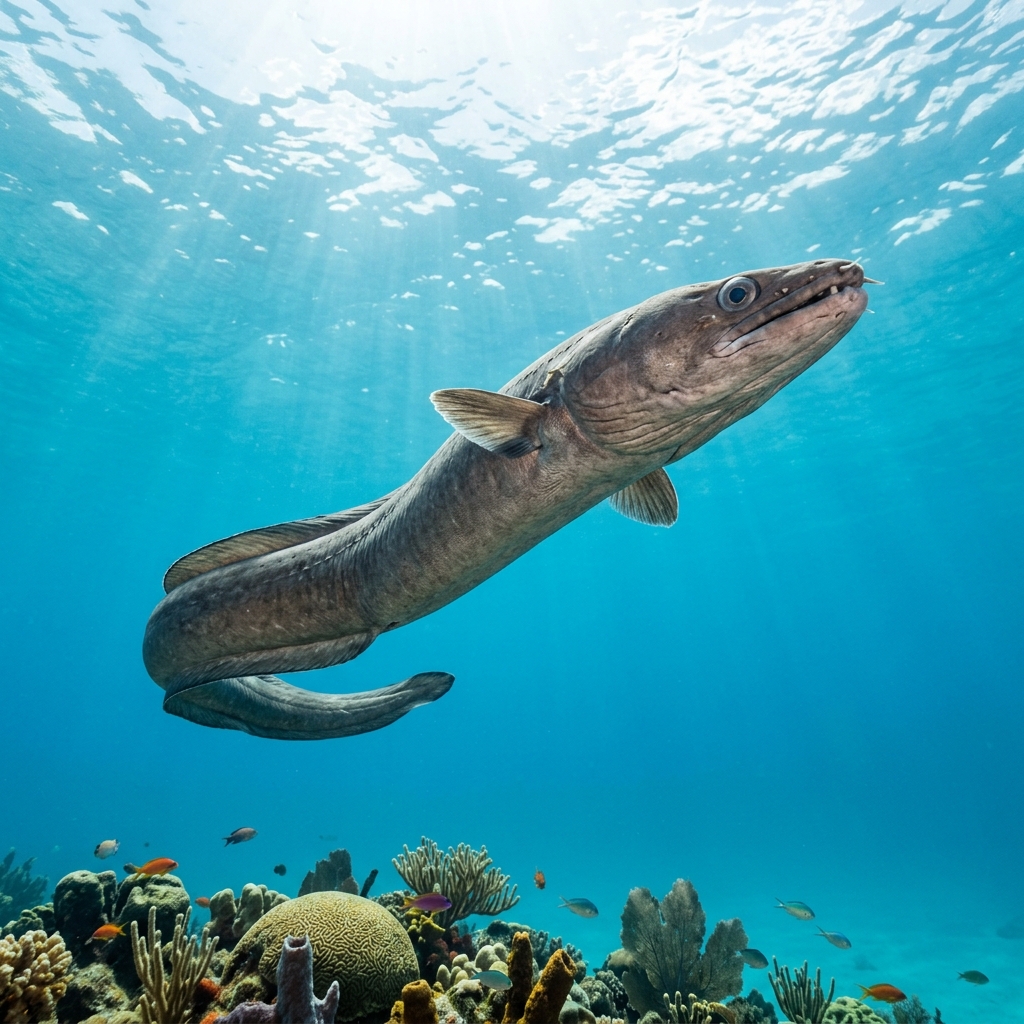
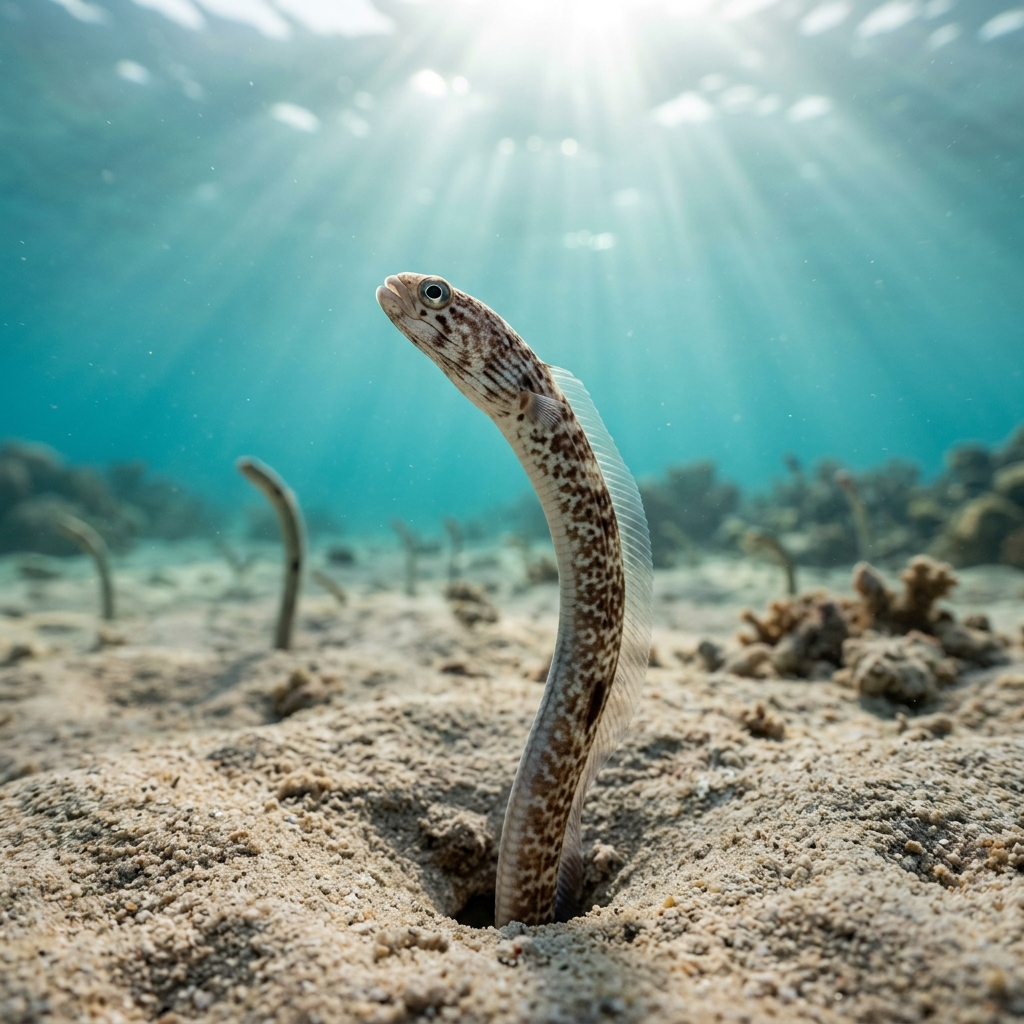
Reef neighbours a diver could mistake it for. Use the identification notes above to tell them apart.
This is a rocky-reef species with a tight, well-documented range: it's most commonly logged around Sai Kung in Hong Kong and Longdong in Taiwan, with no strong records outside these two countries in current data. Divers heading to either area should check crevices and rubble patches on shallower rocky reef rather than open coral slopes.
Mapping where Reeve's Moray is logged…
It's most reliably found on rocky reef around Sai Kung in Hong Kong and Longdong in Taiwan, the two regions with the strongest and most consistent sightings logged so far.
There's no clear seasonal pattern in current sightings, and its 24 to 29C comfort range suggests it's around year-round at these sites rather than tied to one season.
It's flagged as a species that can bite if provoked or startled, mainly a risk if hands go near its crevice. Watch from a normal distance and keep your hands to yourself and it's a non-issue.
Look for a stocky, roughly 49cm moray with mottled brown-and-cream blotching rather than clean bands or spots, usually with just its head and forebody poking from a rock crevice.
They typically reach around 49cm, making them one of the smaller and more compact morays you'll encounter on Hong Kong and Taiwan's rocky reefs.
Like all morays, it has a second set of jaws in its throat that shoots forward to grab and drag prey back, a feeding trick unique to moray eels among reef fish.
Site and sighting data is aggregated from diver logs, iNaturalist and GBIF. For taxonomy and conservation status:
Garden Eel
2,448 sites