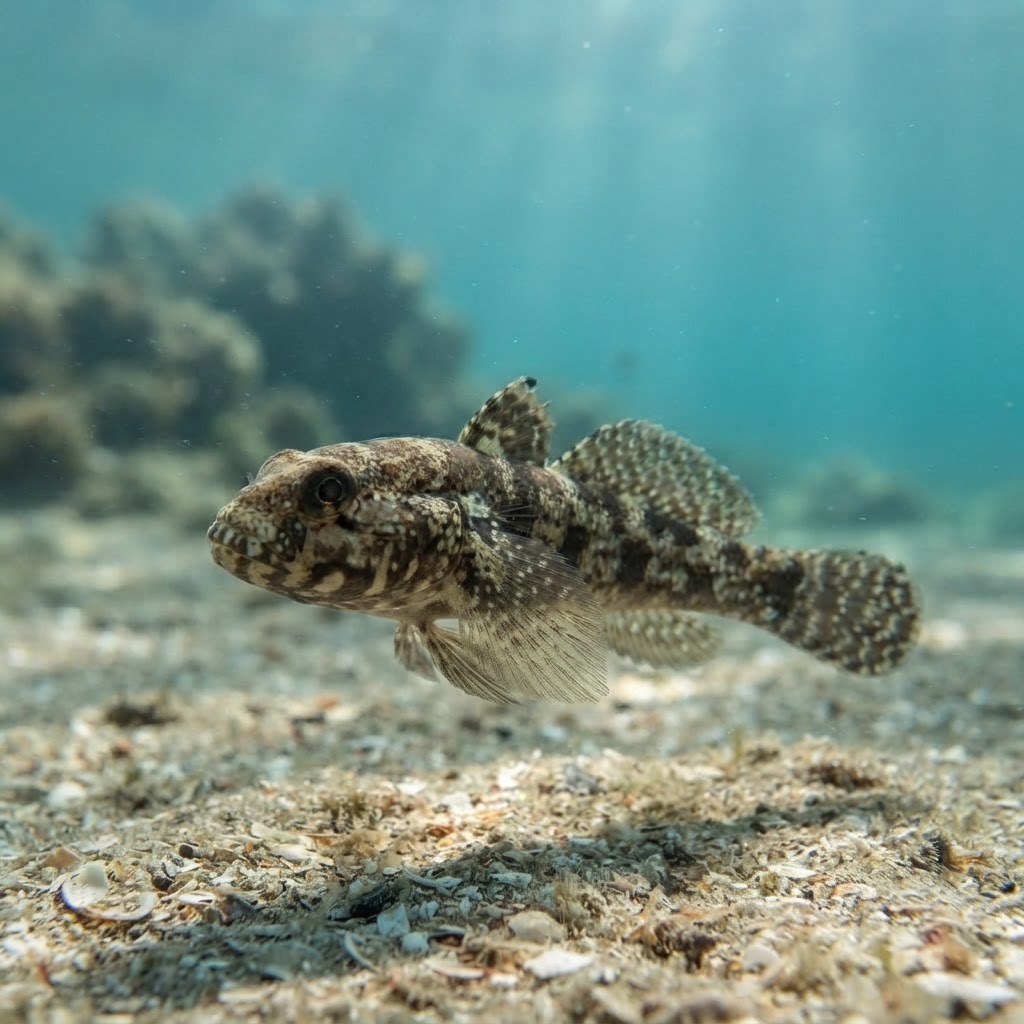
Amblyeleotris rubrimarginata
Sandy-slope goby found paired with shrimp across Sulawesi and Raja Ampat, in 25-29 C water, year-round and uncommon but findable.
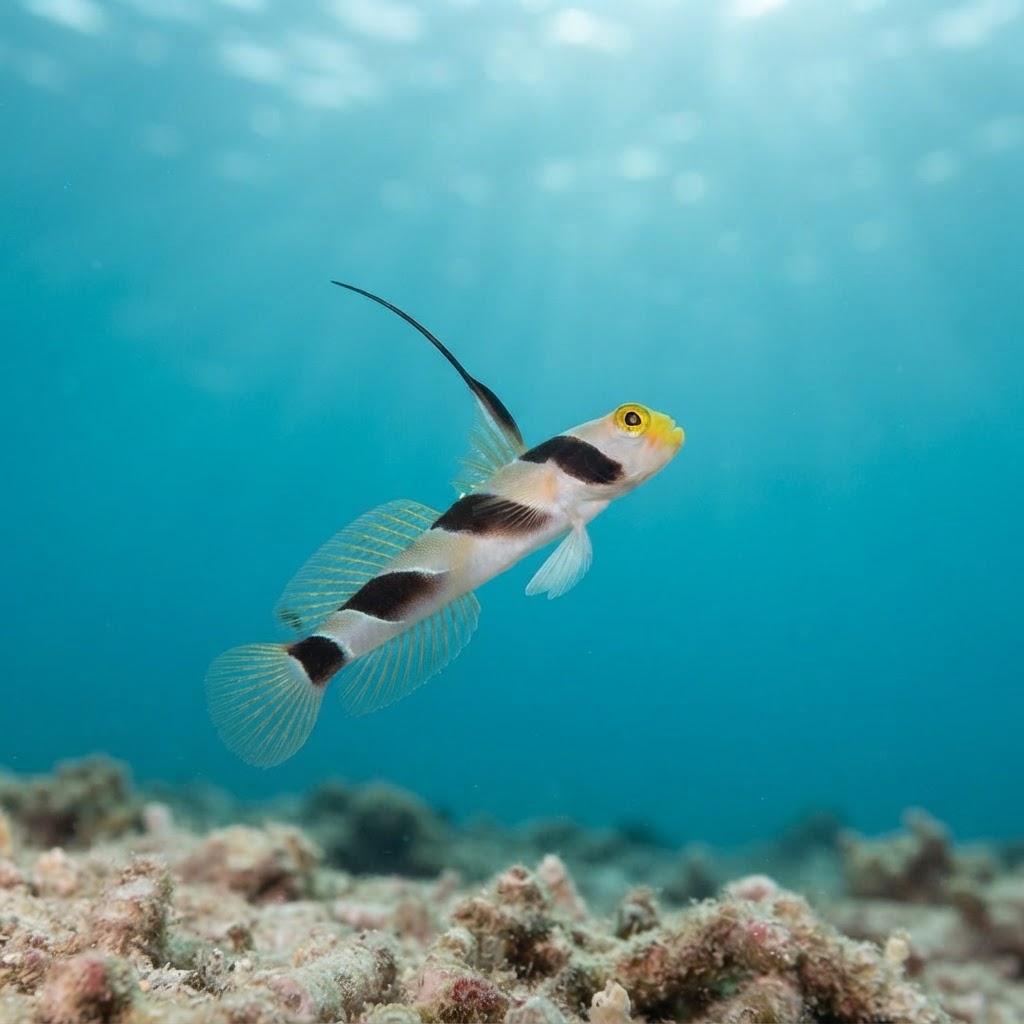
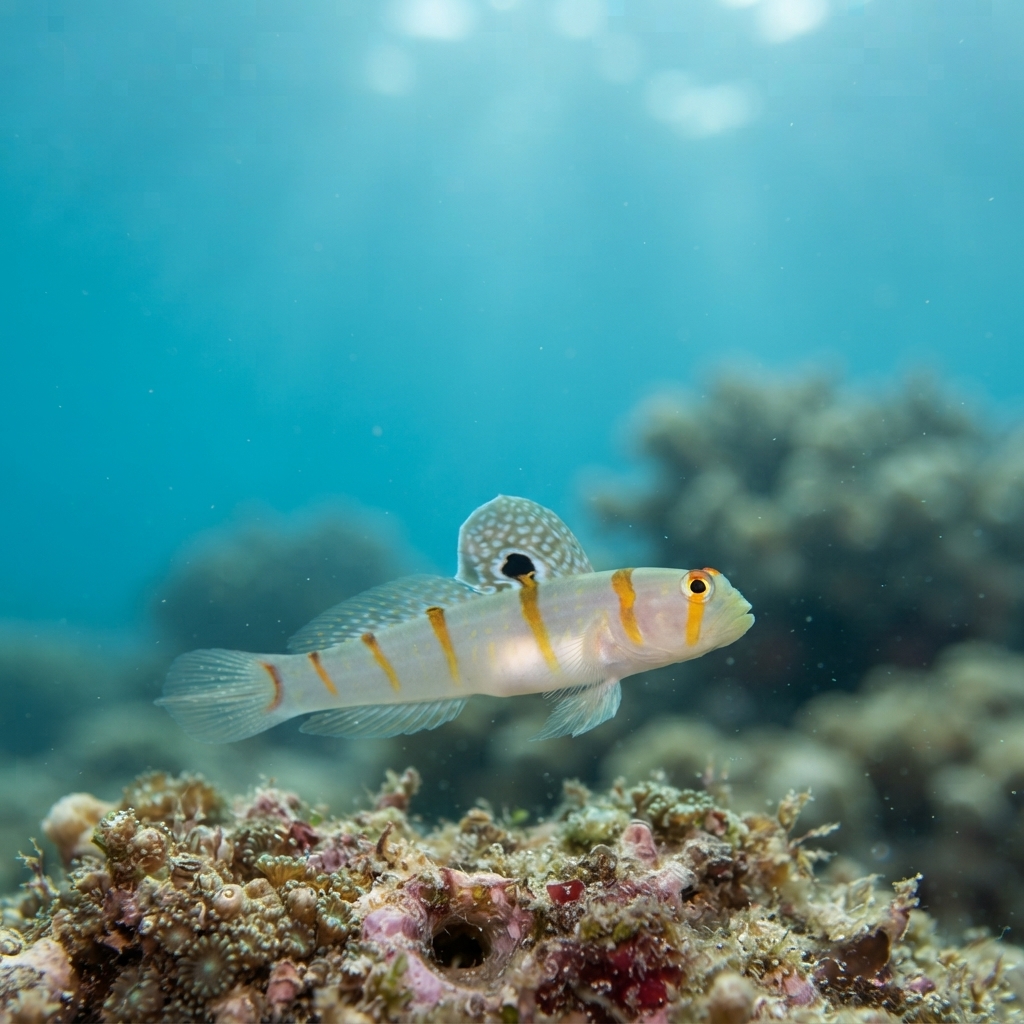
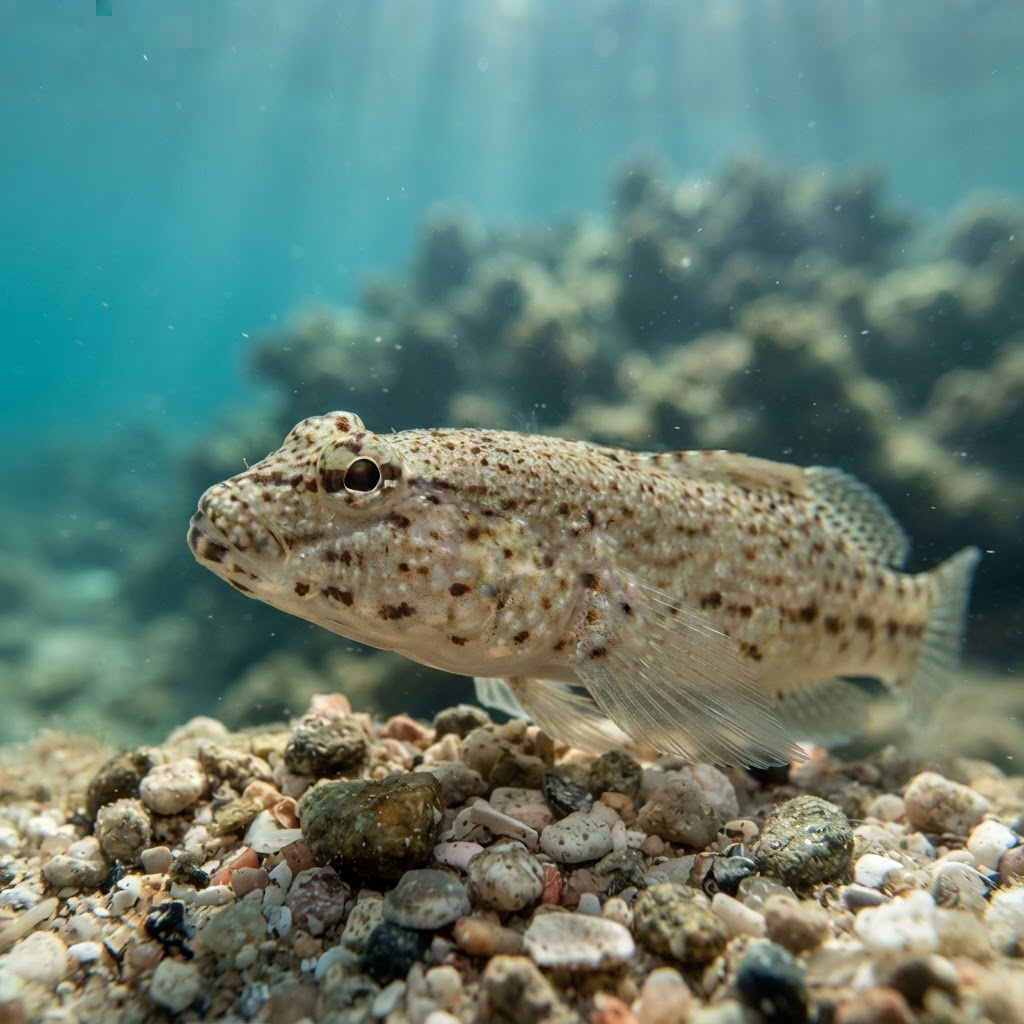
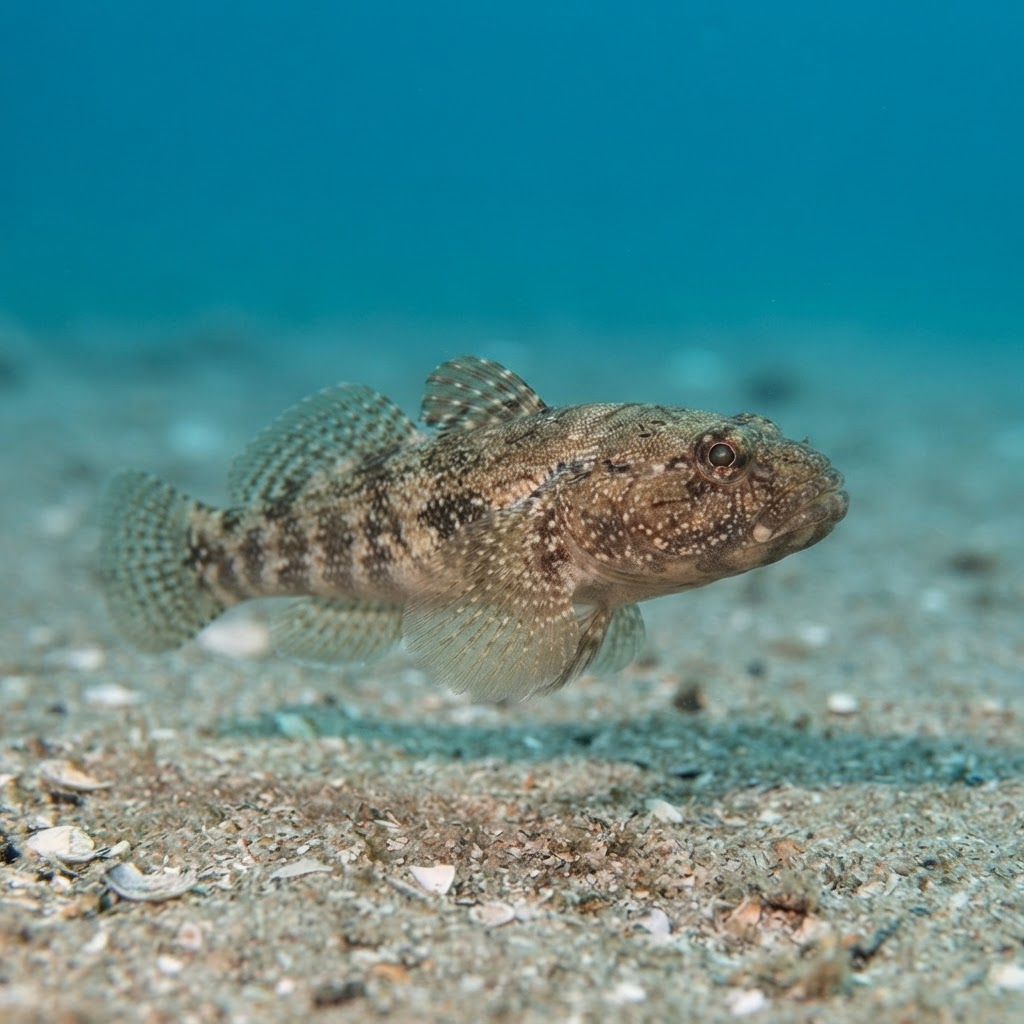
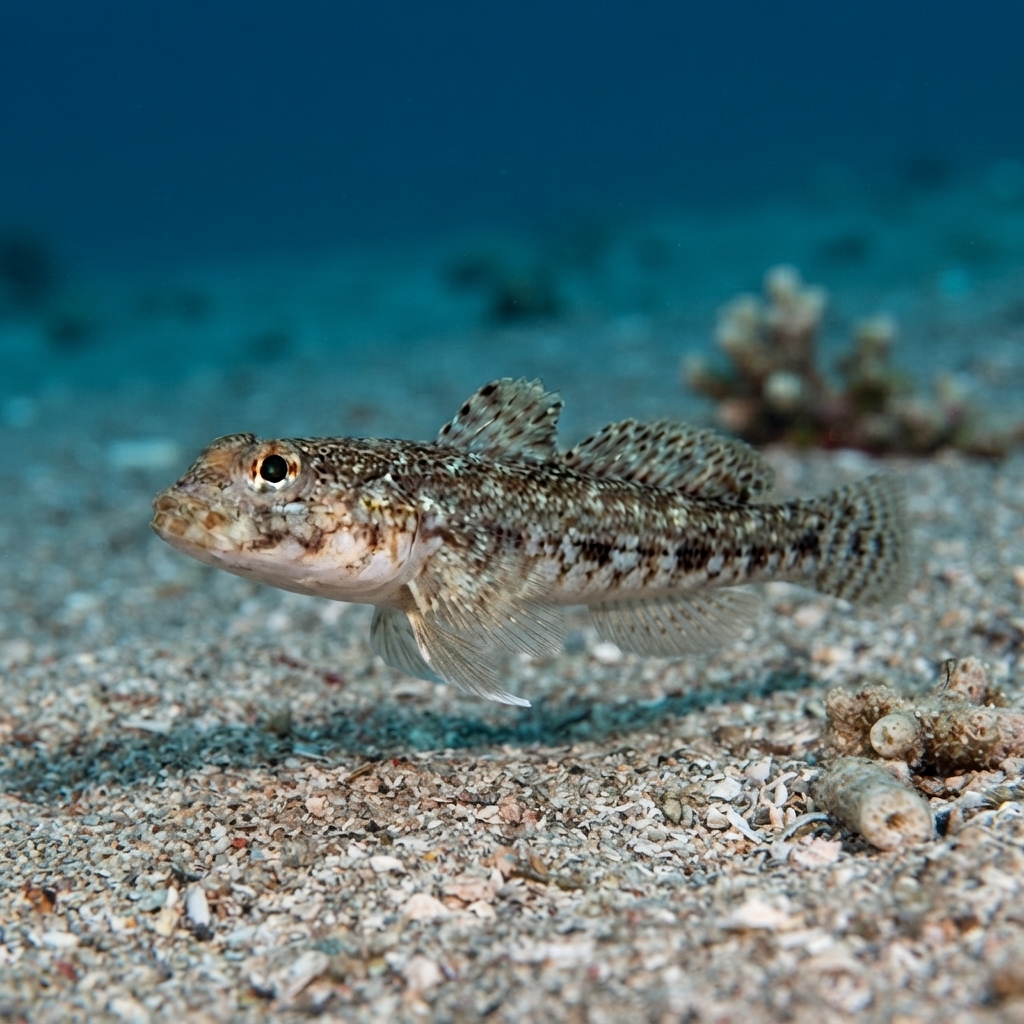
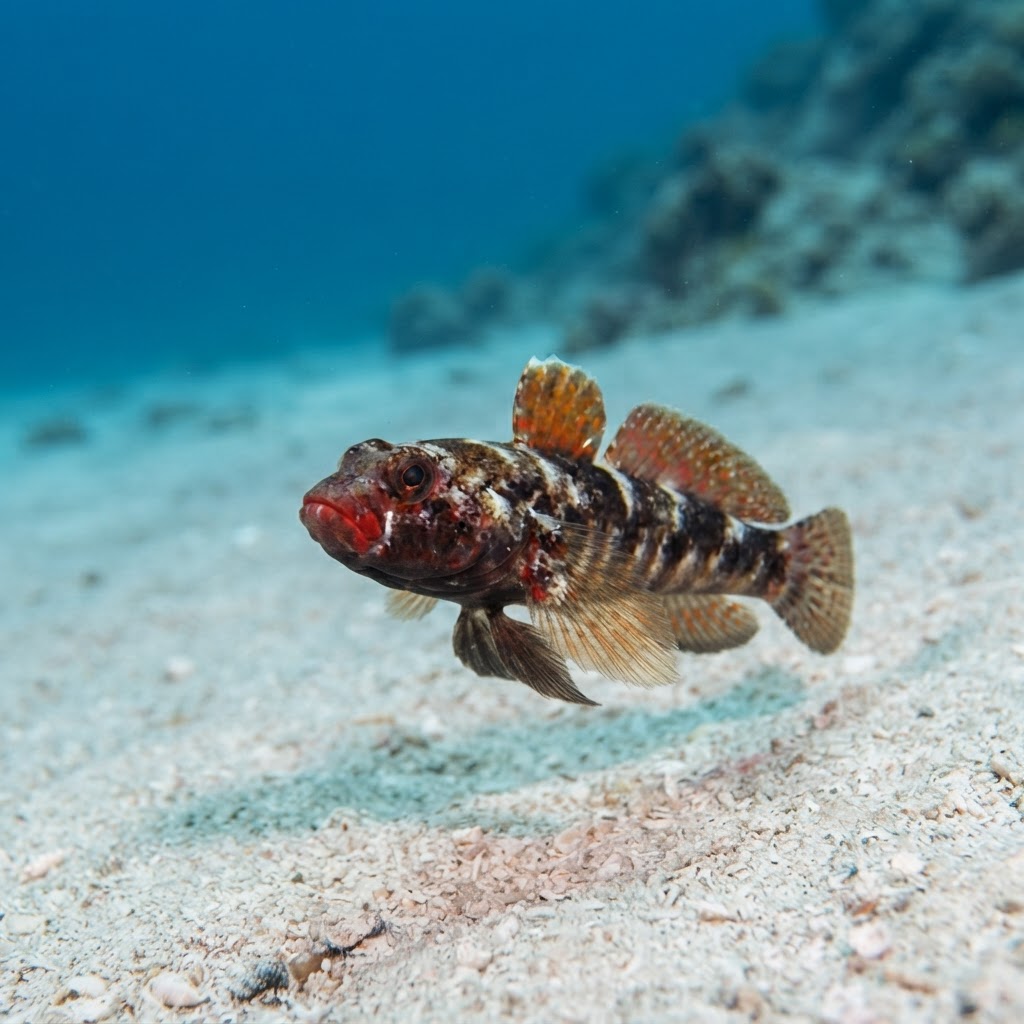
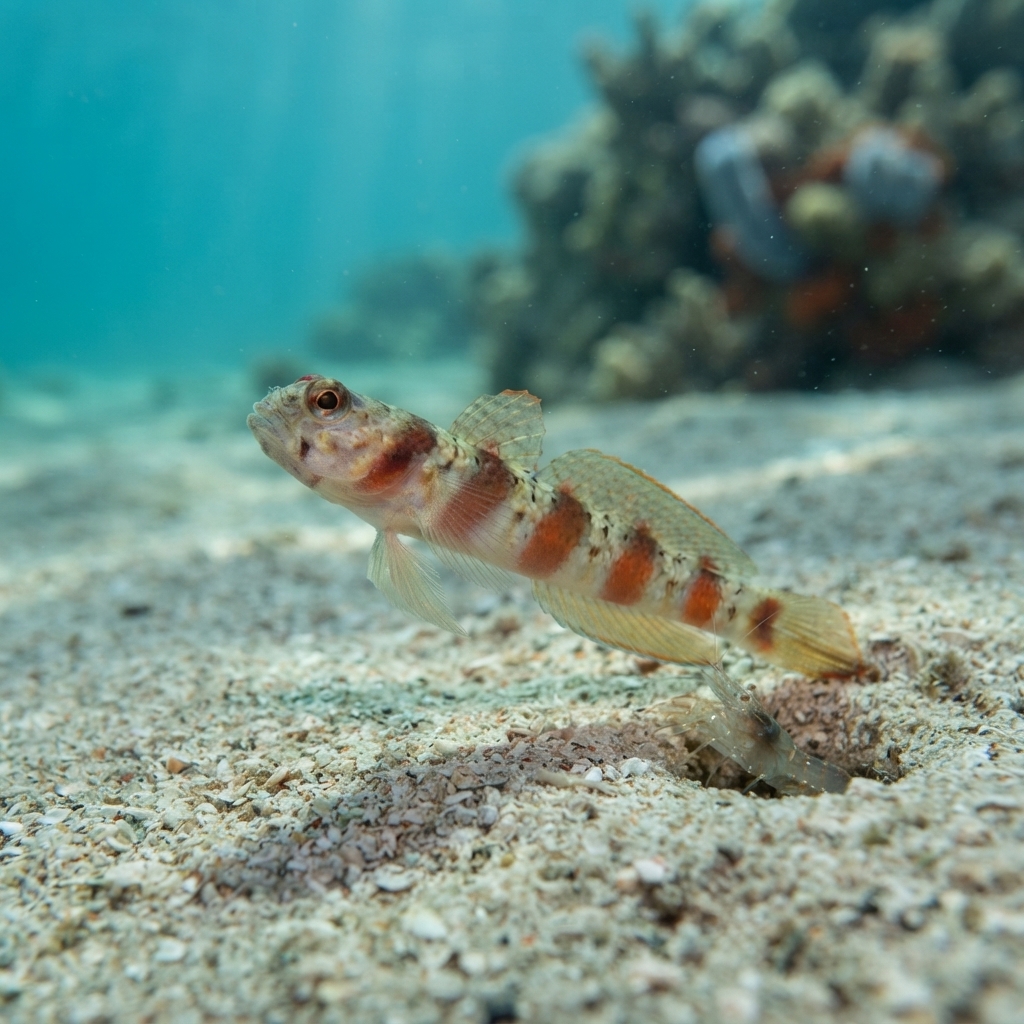
Slender pale goby around 7 cm long with a row of faint brownish saddle-like blotches along its back and a distinctive reddish (orange-red) margin edging the tail and dorsal fin. Hovers just above a burrow entrance rather than resting flat on the sand, tail often flicking. The red-fringed fins are the giveaway against the sand backdrop, especially when it catches direct light.
Spends most of its time hovering at the mouth of a shared burrow with a pistol shrimp, darting down tail-first the moment a diver gets too close or moves too fast. Give it a metre or two of space and a slow approach and it will often stay out, letting you watch the goby-shrimp partnership in action. Usually spotted on sand or rubble patches adjacent to reef, not out on open sand flats.
It shares its burrow with a burrowing pistol shrimp that digs and maintains the tunnel while the goby, with sharper eyesight, keeps watch and flicks its tail as a warning signal when danger is near.
No clear seasonal pattern shows up in the sightings, and it sits comfortably in 25.2 to 29.3 C water, so it's a year-round find on the sandy slopes where it occurs.
Reef neighbours a diver could mistake it for. Use the identification notes above to tell them apart.
Most reliably logged in Indonesia, especially Sulawesi, Raja Ampat and West Papua, with strong numbers also out of the Visayas in the Philippines and Peninsular Malaysia's East Coast. Koh Tao in Thailand is another consistent spot if you're based there.
Mapping where Redmargin Shrimpgoby is logged…
Sulawesi, Raja Ampat and West Papua in Indonesia carry the strongest numbers, alongside the Visayas in the Philippines, Peninsular Malaysia's East Coast and Koh Tao in Thailand.
There's no strong seasonal signal in the data, and it tolerates a wide 25 to 29 C range, so it's seen year-round wherever it occurs.
Look for a slender pale goby around 7 cm long hovering over a burrow, with faint dark saddle markings along the back and a reddish edge along the tail and dorsal fin.
They reach about 7 cm in length, a typical size for shrimpgobies, so they're easy to miss unless you're scanning sand patches slowly.
It partners with a pistol shrimp that digs and maintains the burrow while the goby stands guard, flicking its tail to warn the shrimp of approaching danger. Both animals benefit: shelter for the goby, an early-warning system for the near-blind shrimp.
No, it poses no threat to divers. It's a shy, small burrow-dwelling fish that retreats at the first sign of a close approach.
Site and sighting data is aggregated from diver logs, iNaturalist and GBIF. For taxonomy and conservation status:
Slender Goby
806 sites