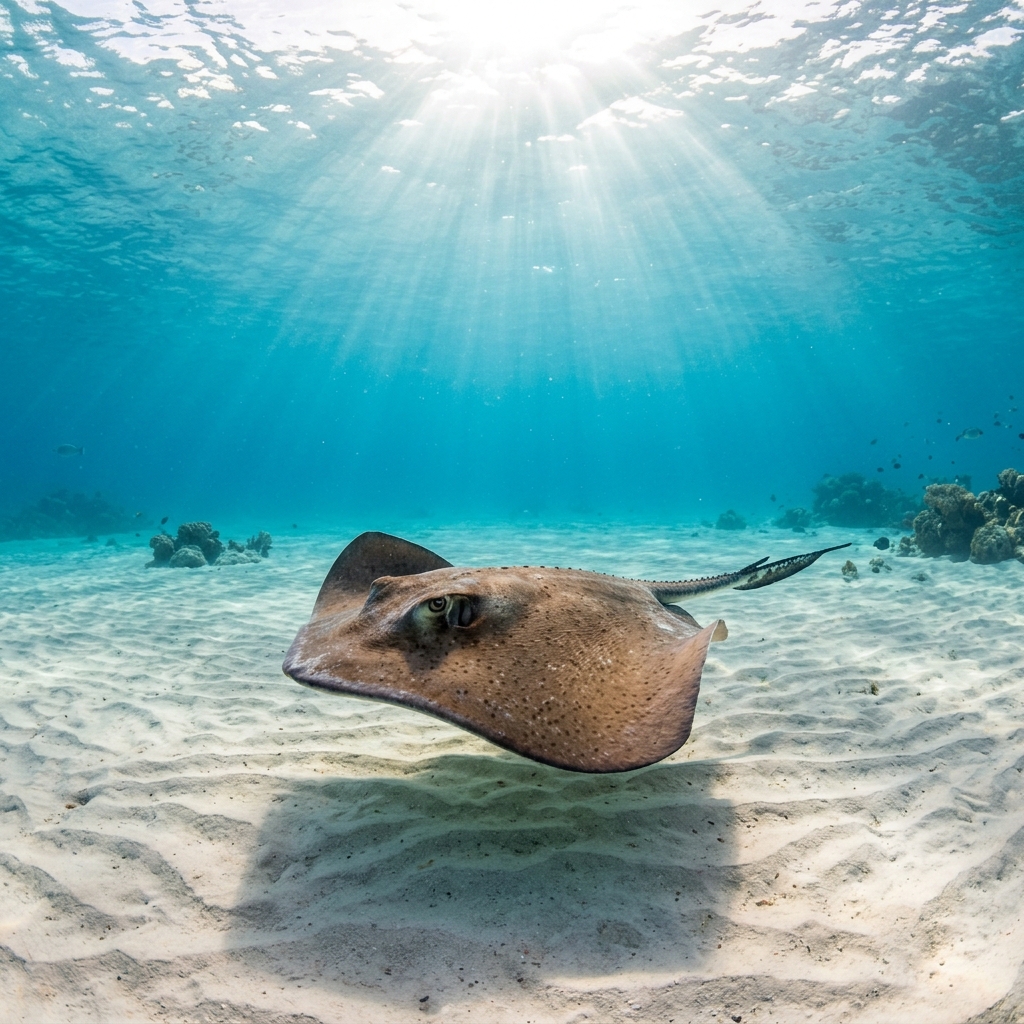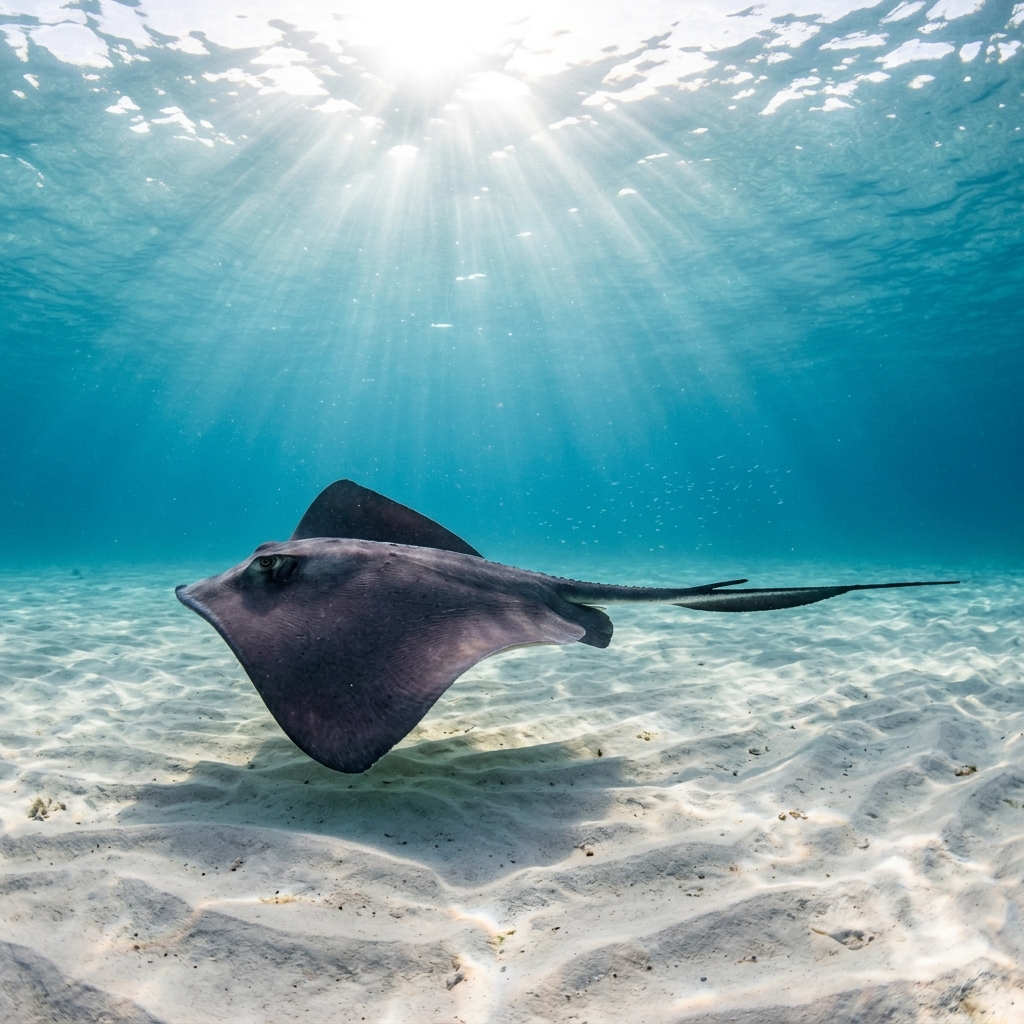
Pteroplatytrygon violacea
Spot pelagic stingrays in Spain's Costa Blanca and southern France. A rare open-water ray logged in cooler Mediterranean waters from 13 to 23°C.
If you're stung
Venomous tail barbGeneral first-aid guidance, not a substitute for professional medical care. In an emergency, call your local emergency number.
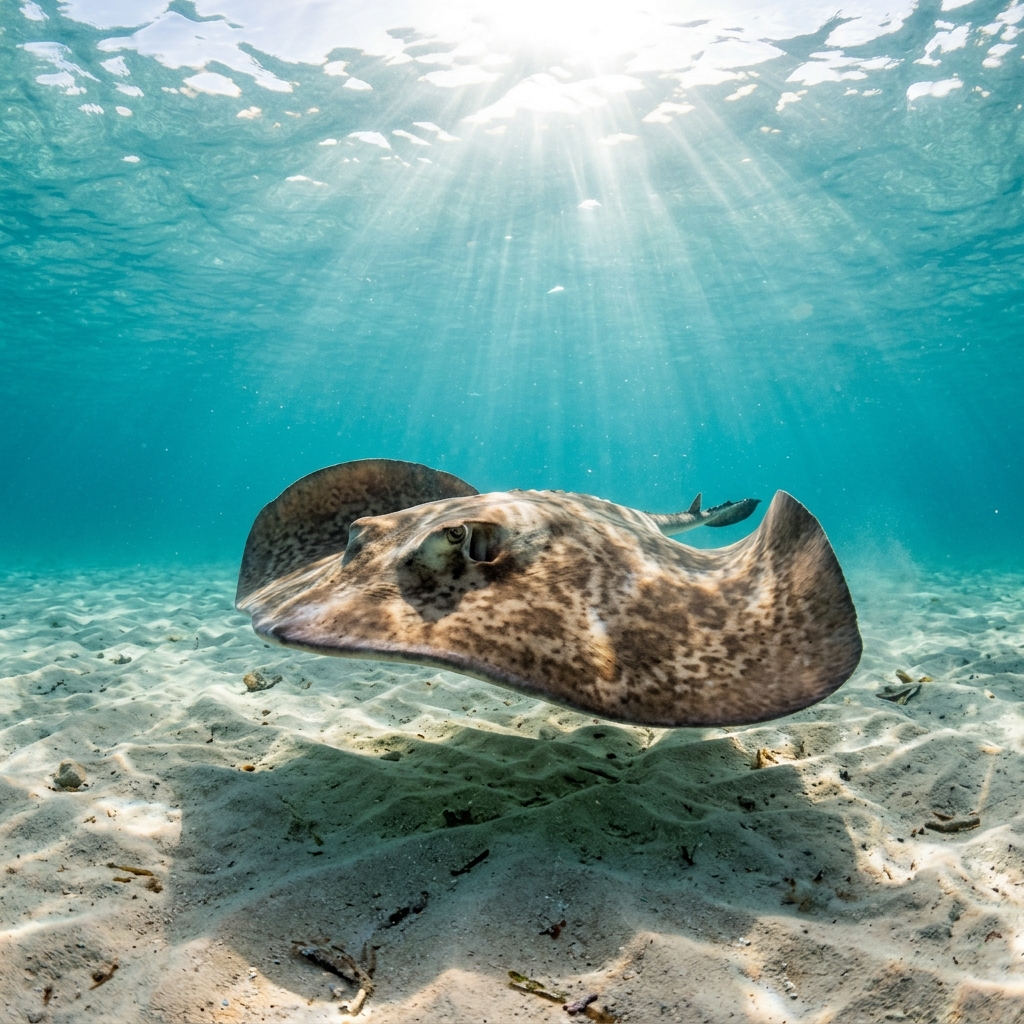
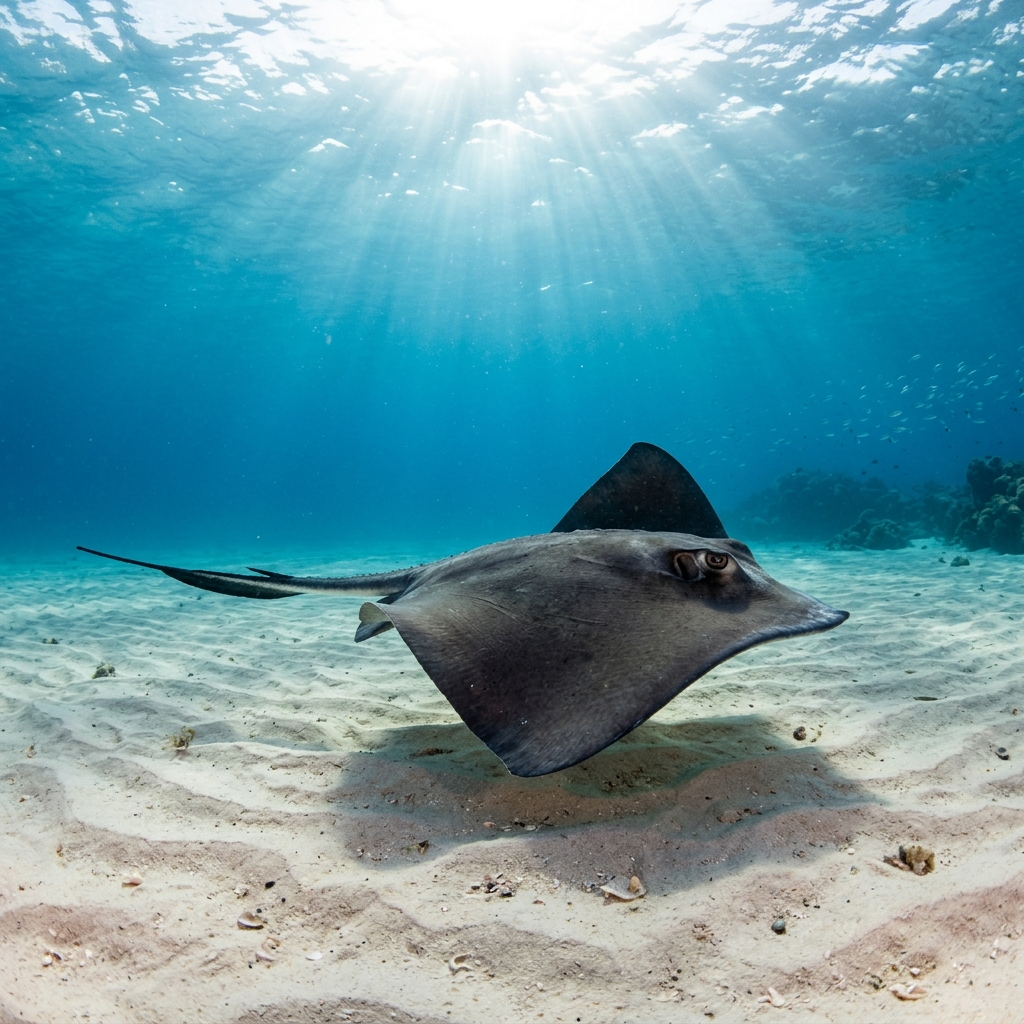
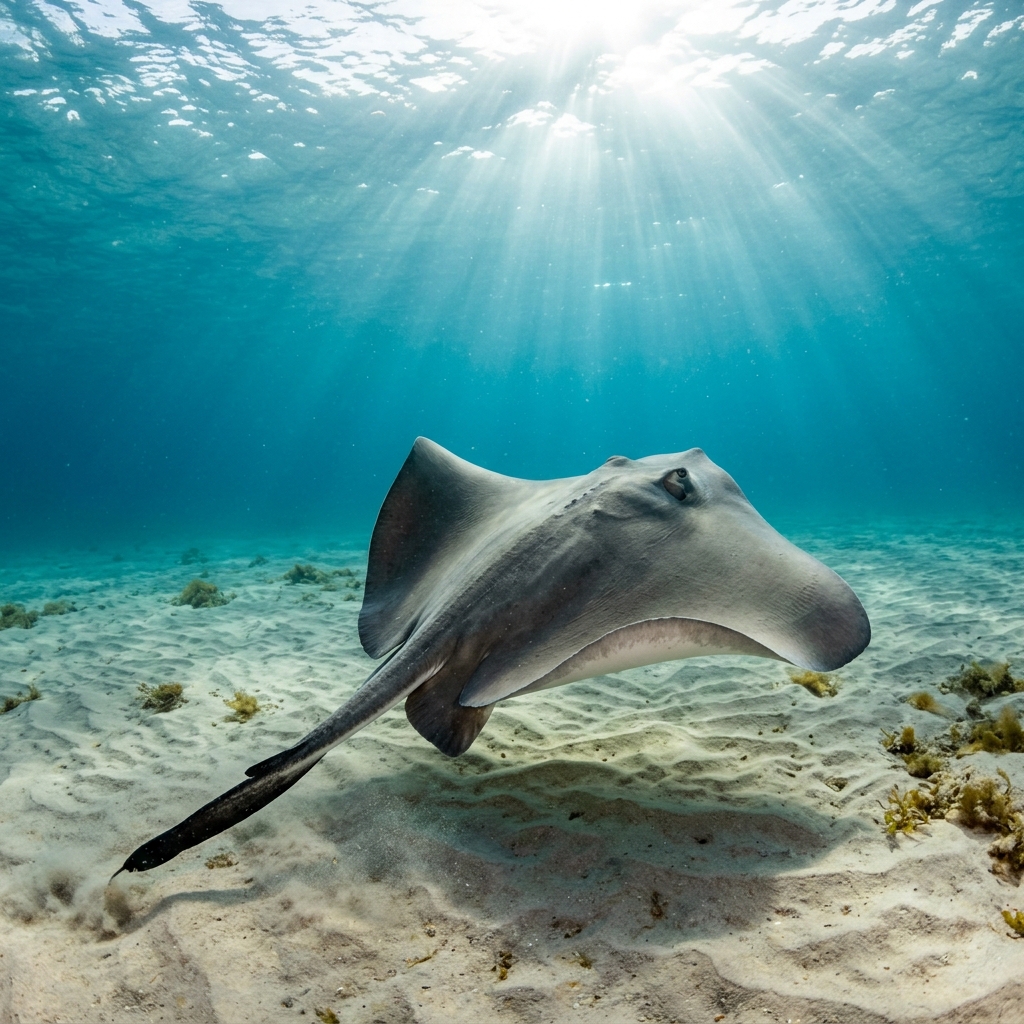
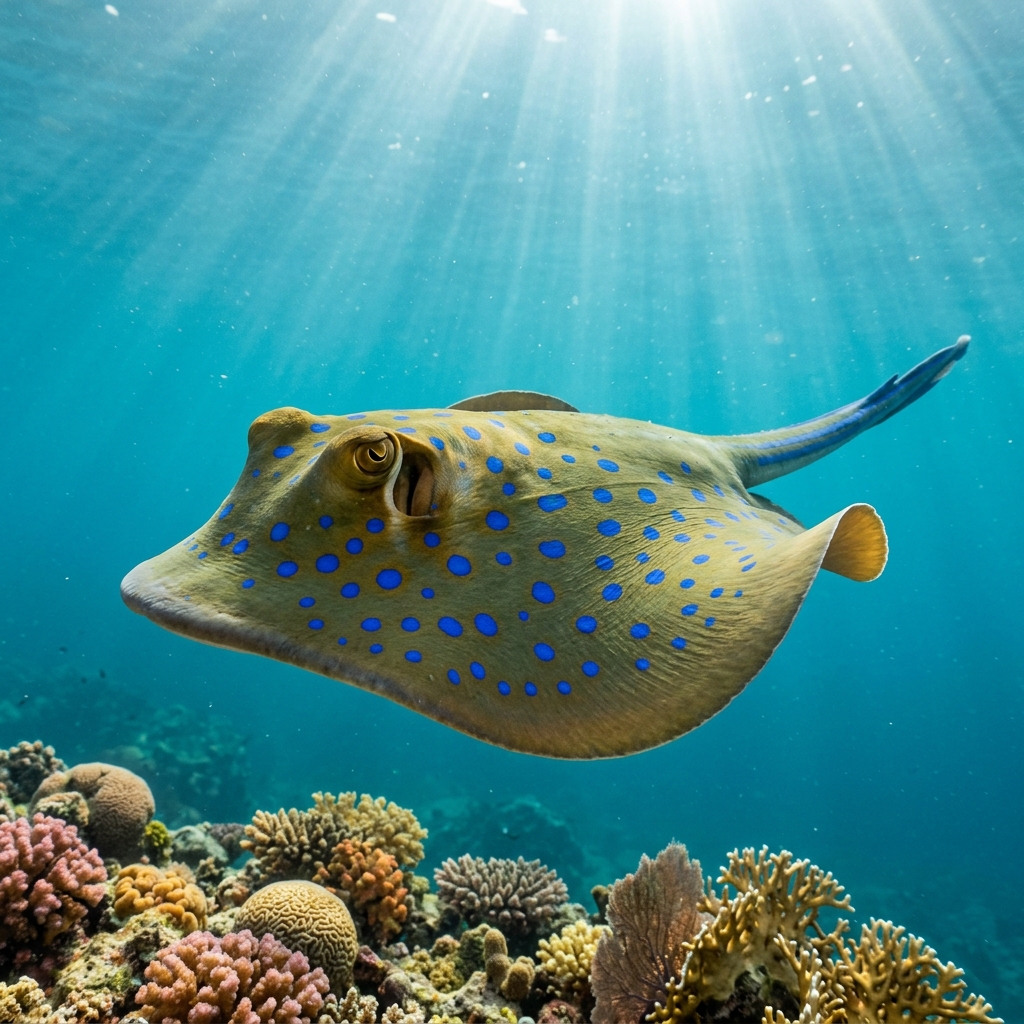
A deep violet to purple-black disc sets this ray apart from almost every other species you are likely to encounter, making colour the single most reliable clue. The disc is roughly diamond-shaped, with pointed wingtips and a relatively short, whip-like tail. It swims actively through the water column rather than resting on the seabed, so seeing a dark ray cruising in open water mid-column is a strong hint. There are no bold spots or patterned markings, just a near-uniform dark hue that can appear almost black in deeper water.
This is a pelagic (open-water) ray, meaning encounters typically happen away from the reef or sandy bottom as it cruises through mid-water. Divers most often spot it passing through rather than lingering, and it tends to continue on its path rather than approach or flee dramatically. Because it spends so much time in open water, sightings are brief and opportunistic.
Unlike most stingrays that lay eggs or give live birth in the usual sense, the pelagic stingray is ovoviviparous and the embryos are nourished partly by uterine secretions during development, a trait more akin to sharks than to typical bony fish.
There is not enough monthly data to point to a specific season, so treat this as a year-round possibility. The species is associated with water temperatures of 13 to 23°C, which suits the Mediterranean's cooler months as much as summer, so be prepared for it at any time of year.
Reef neighbours a diver could mistake it for. Use the identification notes above to tell them apart.
Sightings are concentrated along Spain's Costa Blanca, which accounts for the large majority of logged encounters, with a smaller cluster of records along the French Mediterranean coast in Occitanie. Both locations sit in the western Mediterranean, so this is largely a region-specific encounter rather than a widespread species. Outside these two areas there are no additional logged dive sites in the current data.
Mapping where Pelagic Stingray is logged…
Most logged encounters come from Spain's Costa Blanca and the French Mediterranean coast in Occitanie. These are the only regions where divers currently record sightings with any regularity, making the western Mediterranean the best-known place to look for this species.
There is no strong seasonal pattern in the available data, so encounters can happen at any time of year. The species favours water between roughly 13 and 23°C, which covers a broad range of Mediterranean conditions, so you are not confined to summer months.
Look for the deep violet to purple-black colouring across the entire disc, which is unlike any common Mediterranean ray. It also swims actively through open water rather than lying on the bottom, so a dark, mid-water ray with a plain, unpatterned disc is a strong indicator.
They are not considered dangerous to divers. Like all stingrays they carry a venomous tail spine, but the pelagic stingray is a free-swimming open-water animal, so the usual risk of accidentally stepping on a ray on the seabed does not apply. Observe from a respectful distance and avoid handling.
Disc width can reach around 80 cm in large adults, though most individuals encountered by divers are smaller. In the water they look moderately sized, noticeably smaller than a manta or eagle ray but with a compact, powerful build.
Site and sighting data is aggregated from diver logs, iNaturalist and GBIF. For taxonomy and conservation status:
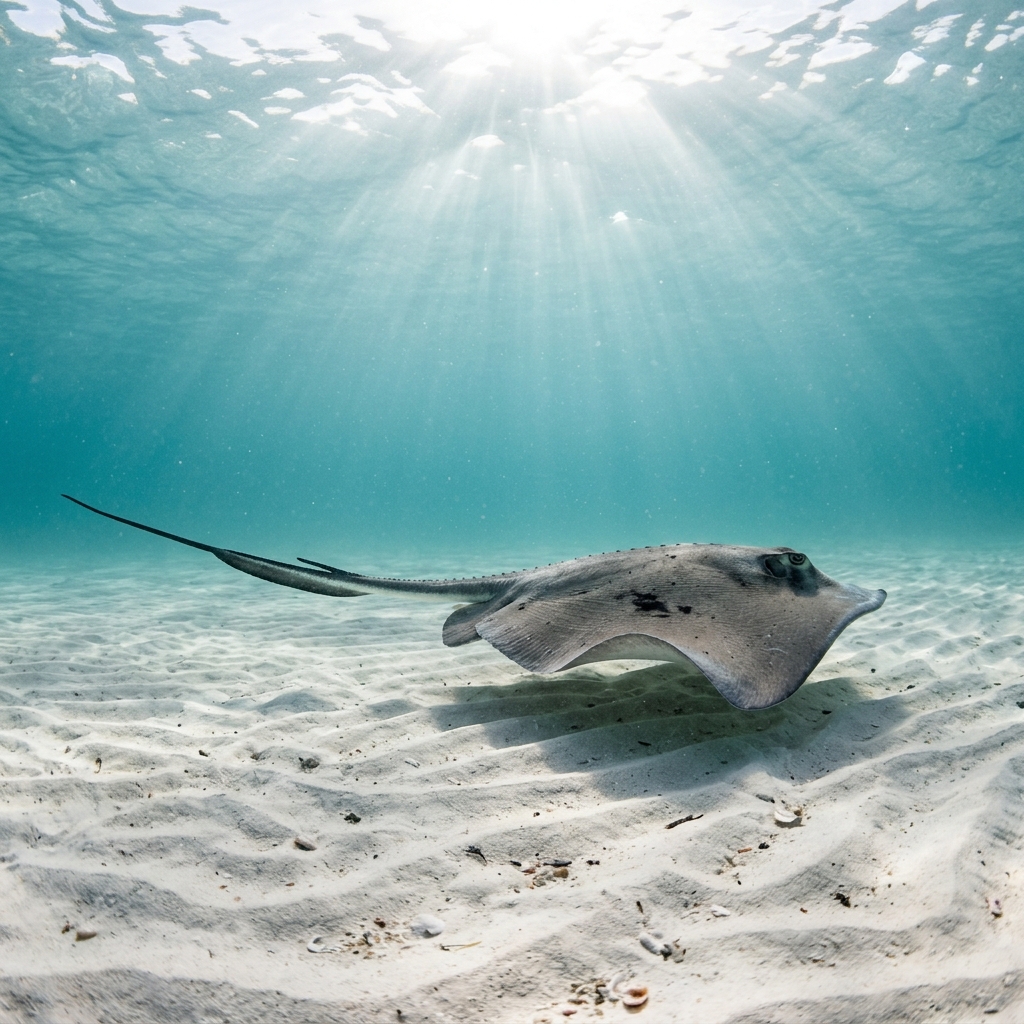
Whiptail Stingray
1,747 sites