Amphioctopus exannulatus
Rare find in Luzon, Philippines: a small warm-water octopus logged in reefs 25 to 31 C, seen year-round but never in numbers.
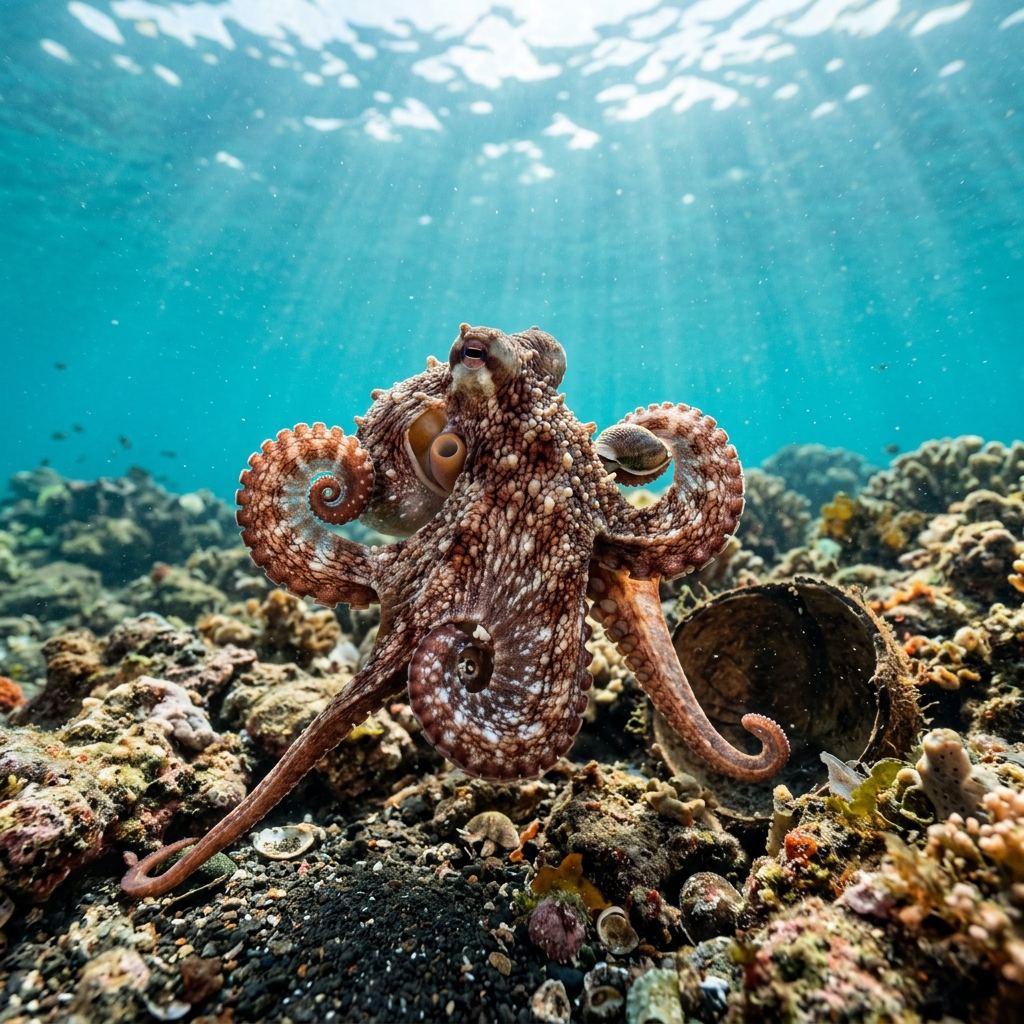
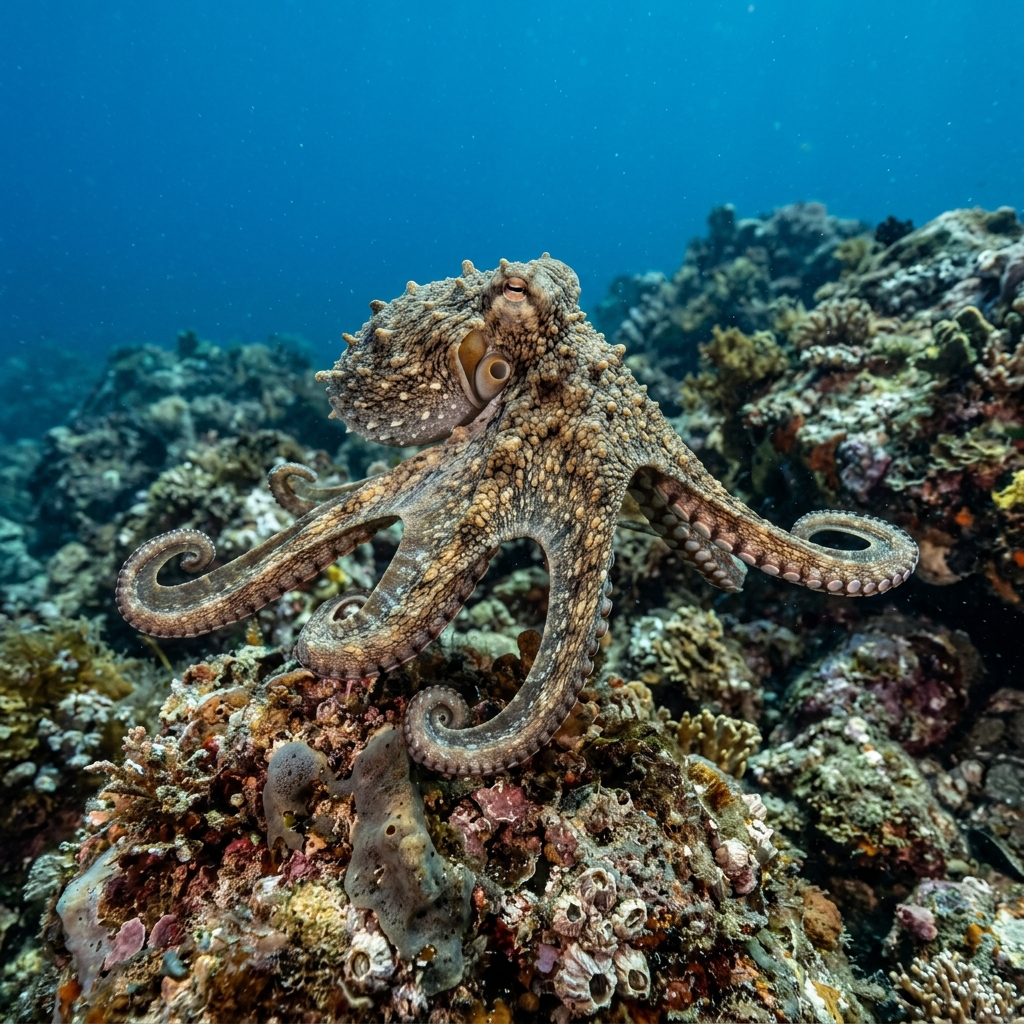
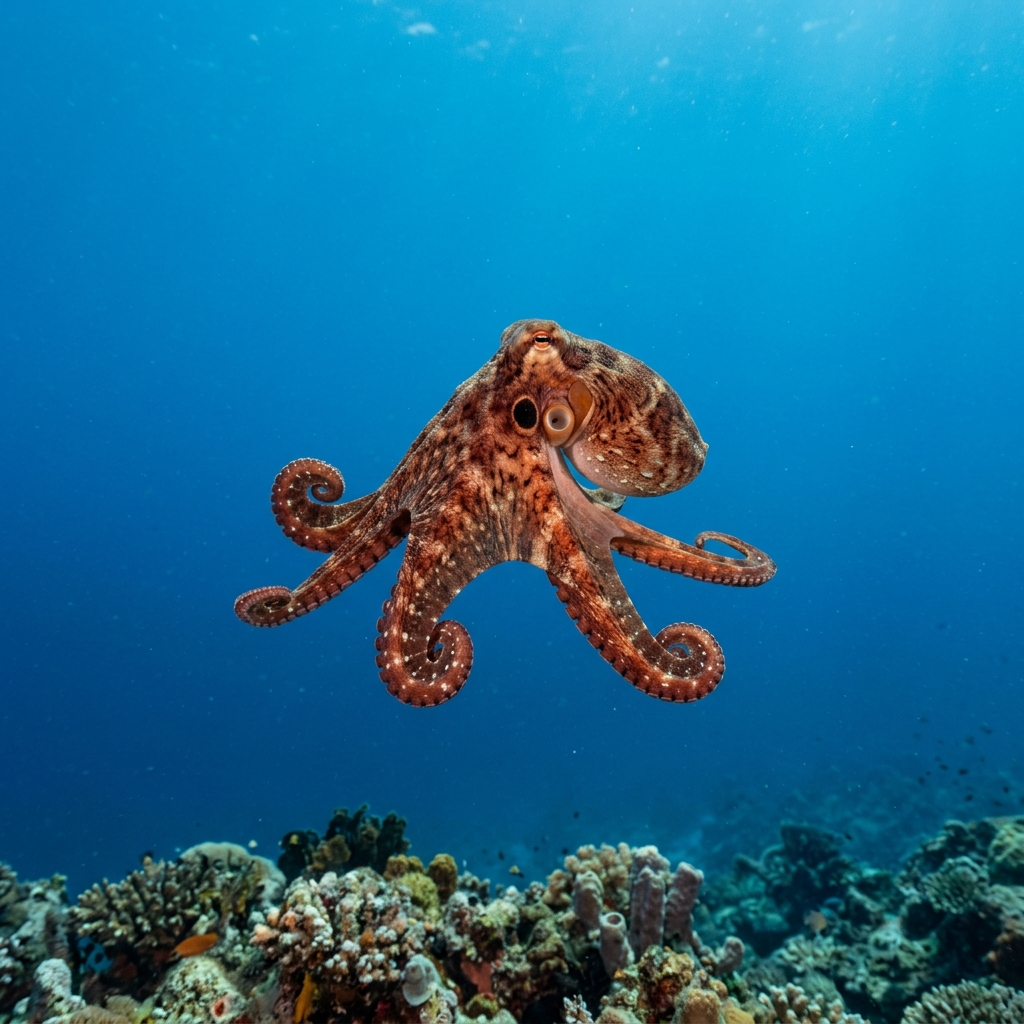
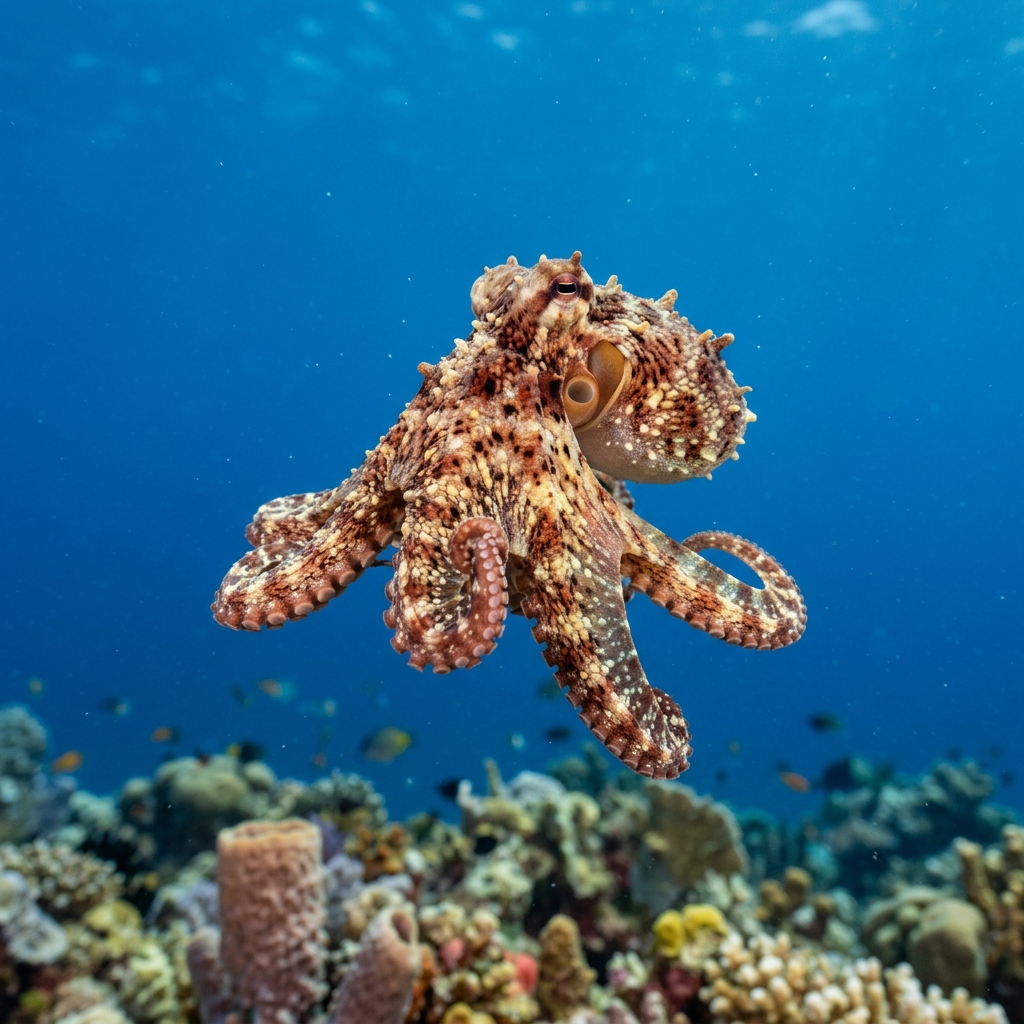
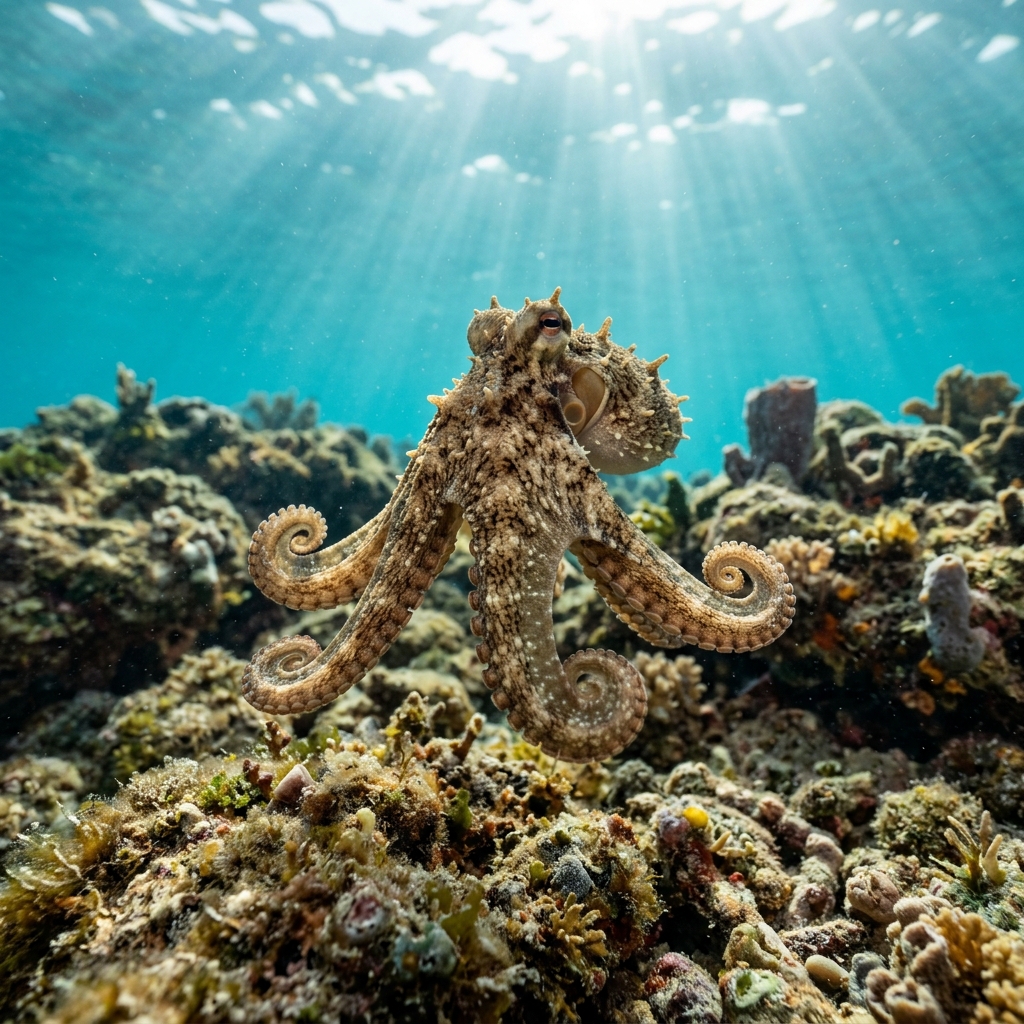
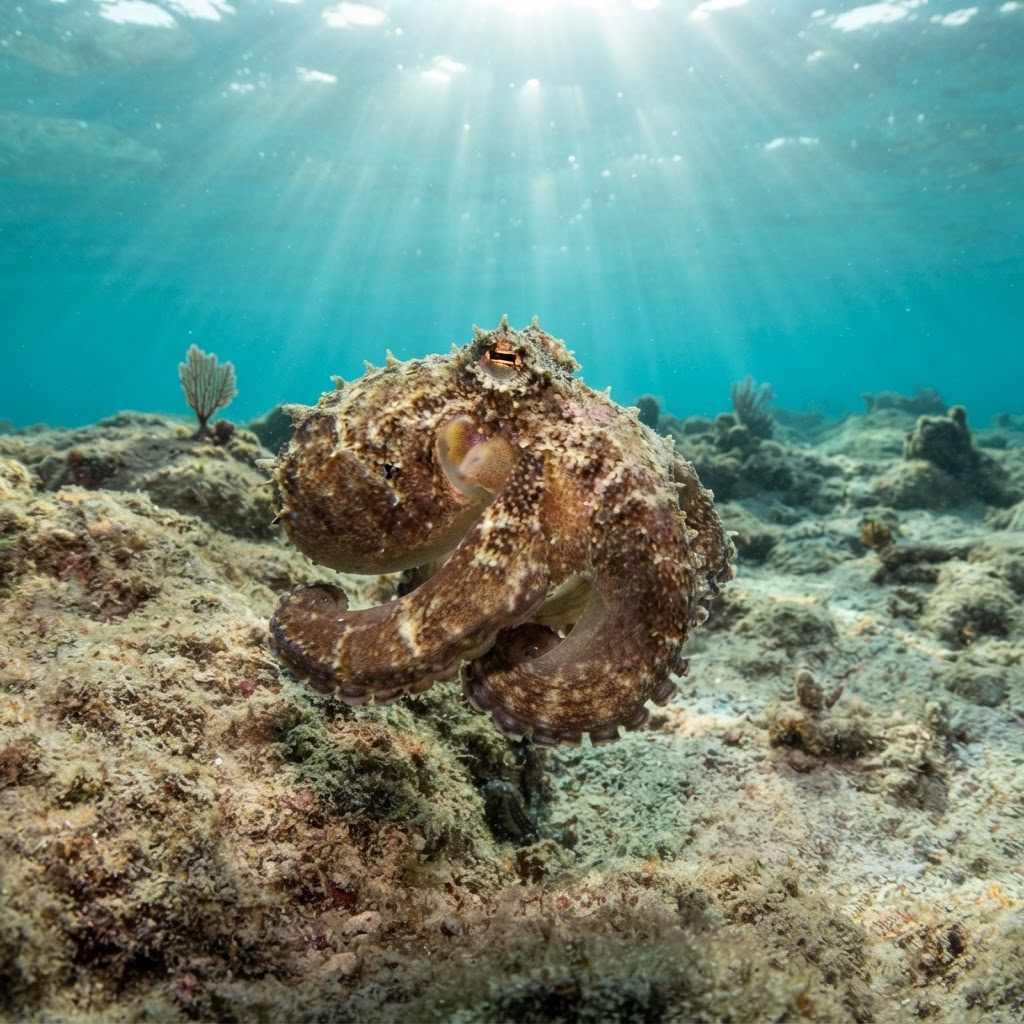
A small octopus, around 14 cm across the arms, with a mottled brown-to-grey body that lacks bold rings or eyespots, which is the main clue: it reads as understated and pattern-light next to its flashier relatives. Skin texture shifts quickly between smooth and papillate (bumpy) as it moves over the reef, and the arms are proportionally short relative to the mantle. Look for it tucked low against rubble or sand rather than out in the open water column.
Divers log this one low on the reef, working rubble, sand patches and crevices rather than swimming in open water. It is a wary, retiring animal that tends to hole up when approached, so most sightings come from divers moving slowly and scanning the substrate closely rather than cruising past. Rarity at most sites suggests it is easily overlooked rather than absent.
Like other members of its genus, it likely relies on rapid colour and skin-texture change to blend into rubble and sand rather than on bold markings, which is exactly why it is so easy to swim straight past.
No clear season shows up in the data, and with a comfortable range of 25.4 to 31.4 C this fits the year-round warm-water pattern typical of tropical Indo-Pacific reefs. Plan around good visibility and a slow, careful search rather than a particular month.
Reef neighbours a diver could mistake it for. Use the identification notes above to tell them apart.
Most records come from Luzon in the Philippines, which is currently the strongest area for this species, with a further site logged near Dili in Timor-Leste. Sightings are thin everywhere it turns up, so treat any dive here as a bonus rather than a target.
Mapping where Plain-spot Octopus is logged…
The strongest area on record is Luzon in the Philippines, with an additional sighting near Dili in Timor-Leste. It is logged as rare to uncommon even at these sites, so sightings are a matter of patience rather than a sure thing.
There is no detected season in current sightings, and its warm-water niche of 25.4 to 31.4 C fits a year-round presence on tropical reefs. Any time of year in Luzon or Timor-Leste is as good as any other based on current data.
Look for a small octopus, about 14 cm across, with a plain mottled brown-grey body lacking obvious rings or eyespots. It sits low against rubble or sand and shifts skin texture from smooth to bumpy as camouflage.
They reach roughly 14 cm across the arm span, making them a small, easily overlooked reef octopus rather than a large showy one.
No, they are not considered dangerous to divers. As with any octopus, admire from a distance and avoid handling.
Site and sighting data is aggregated from diver logs, iNaturalist and GBIF. For taxonomy and conservation status:
Brazilian Reef Octopus
1,142 sites