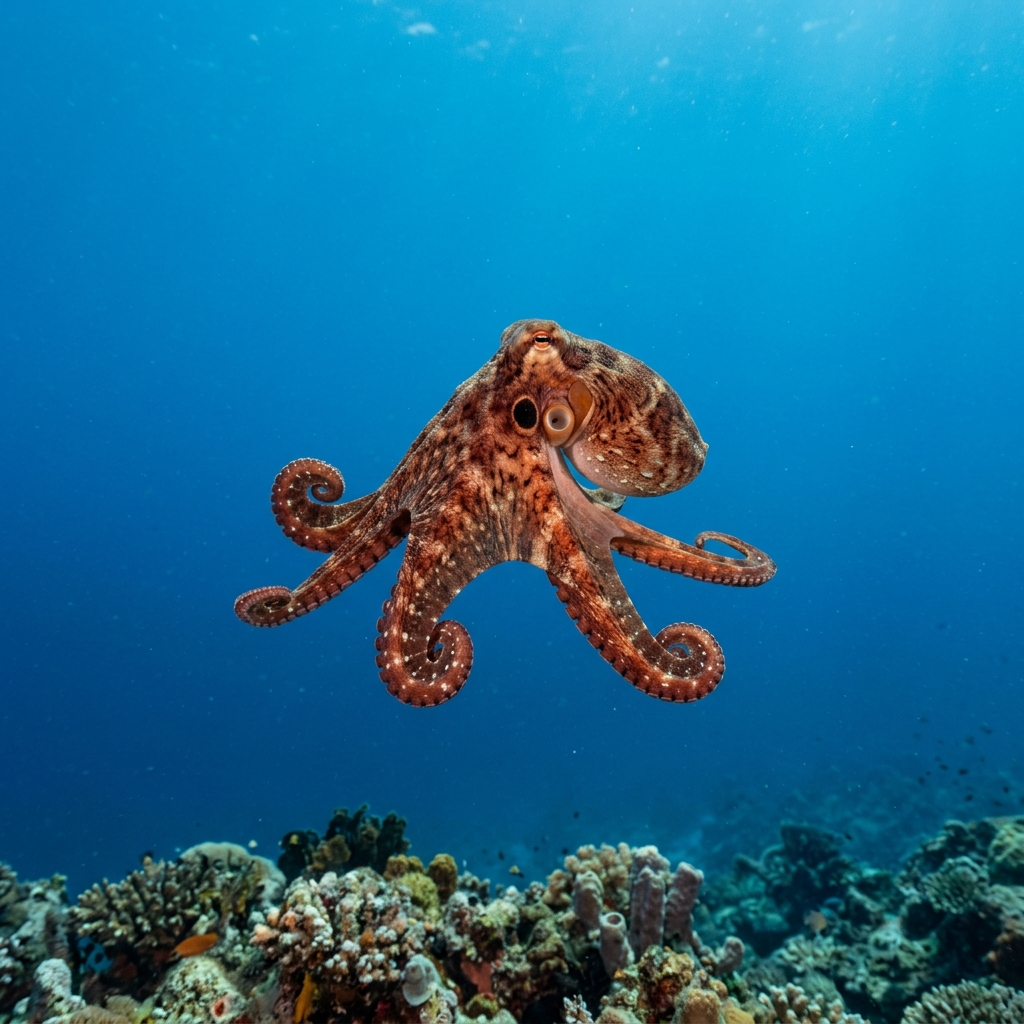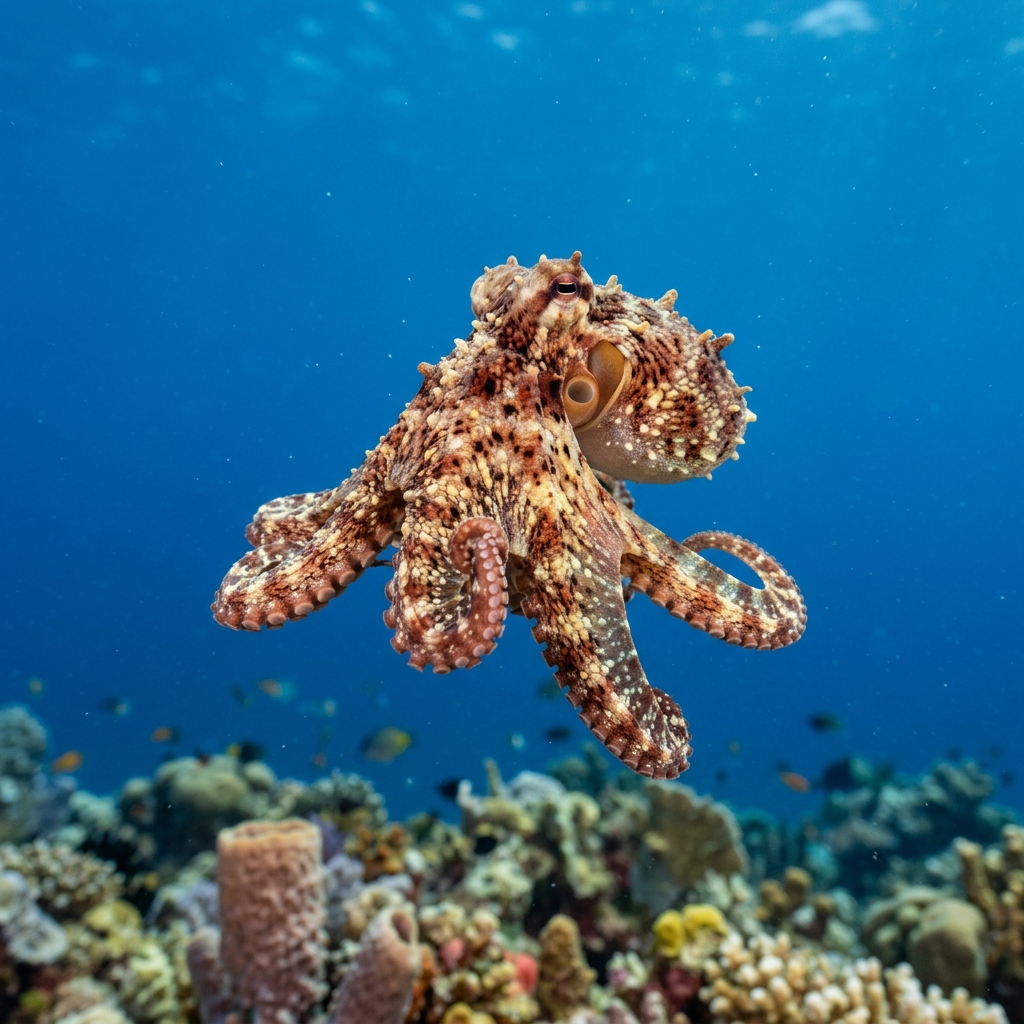
Abdopus spp.
Look for a two-armed walker on the sand flats of Sulawesi, Luzon and Queensland, active day and night in water around 25 to 29 C.
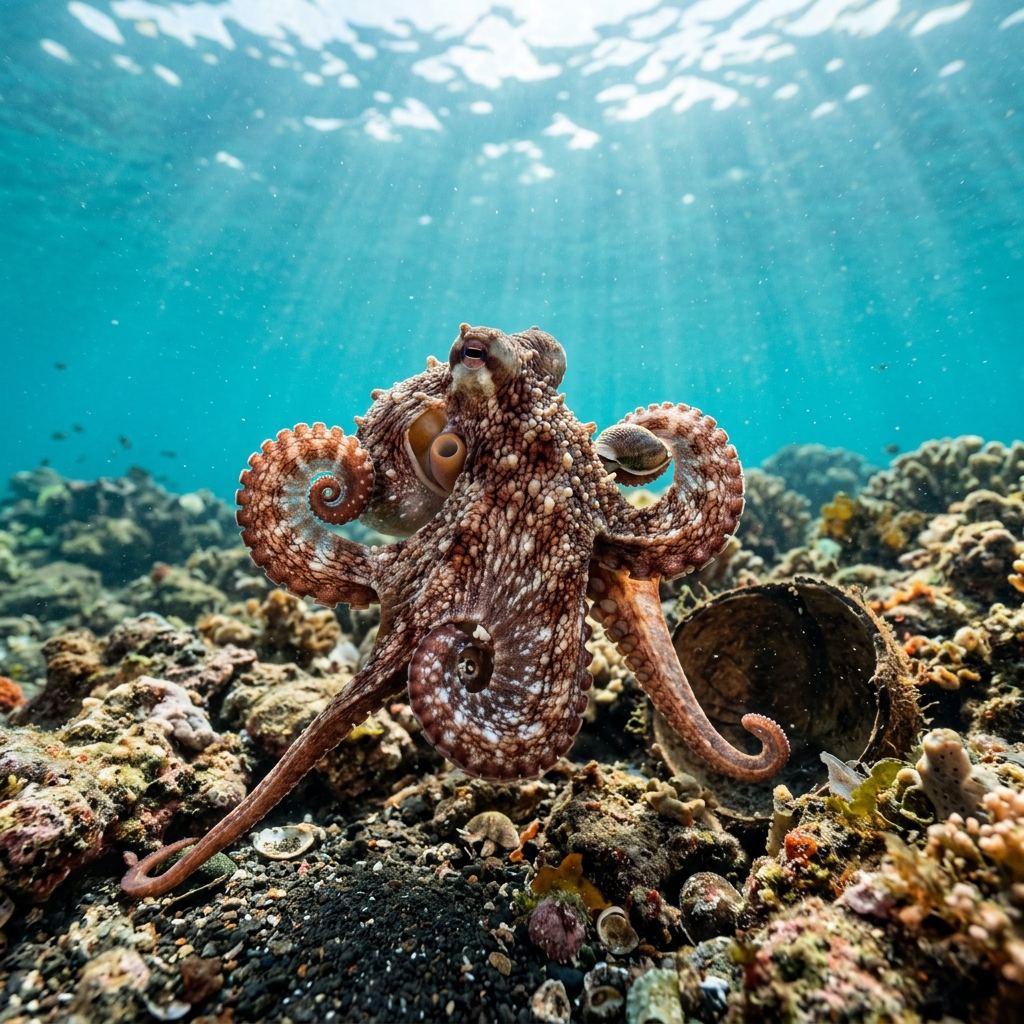
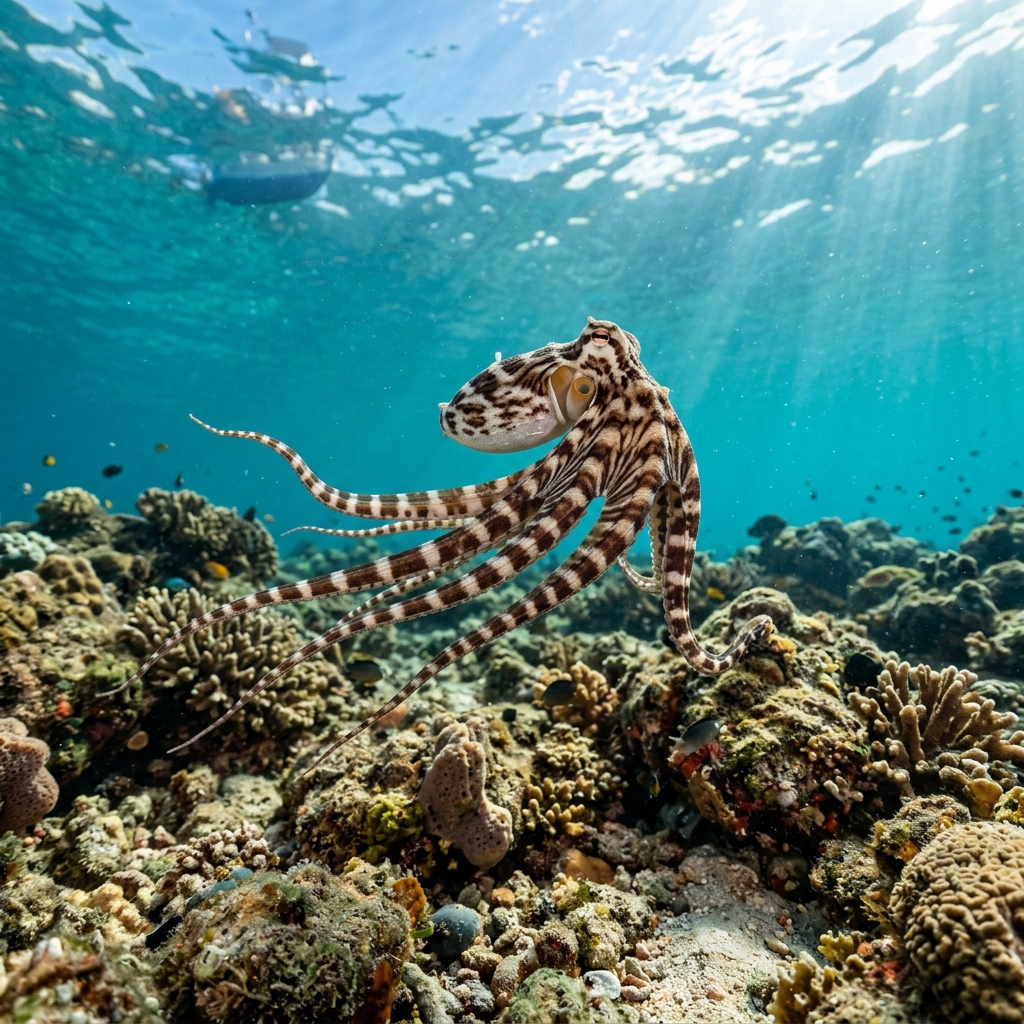
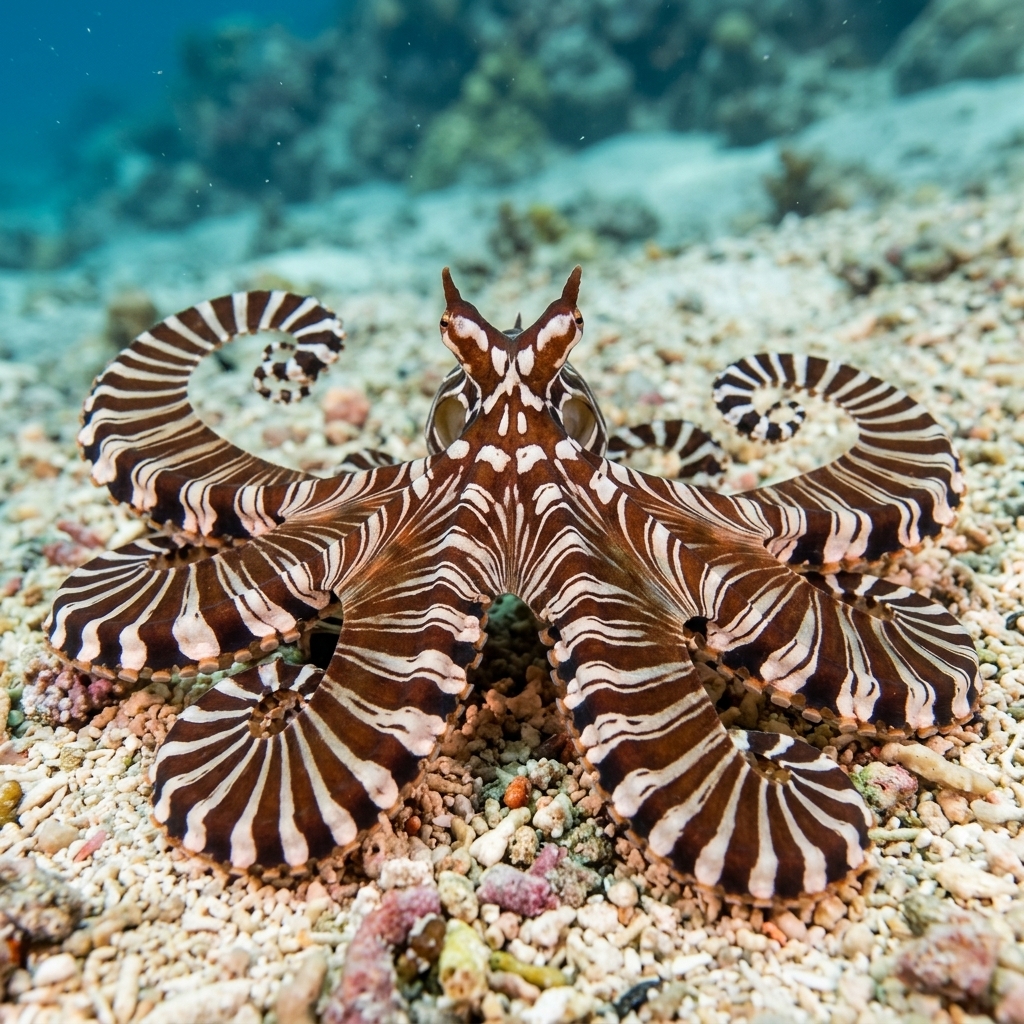
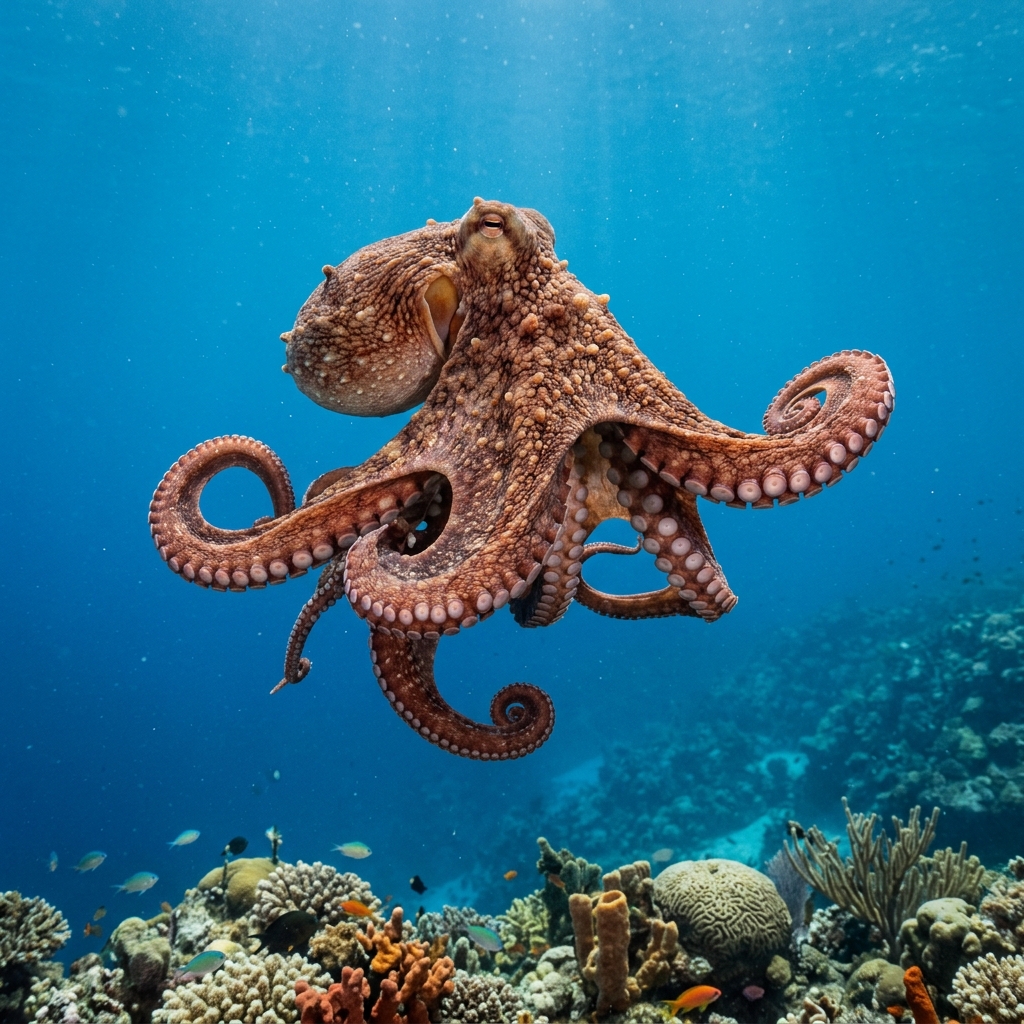
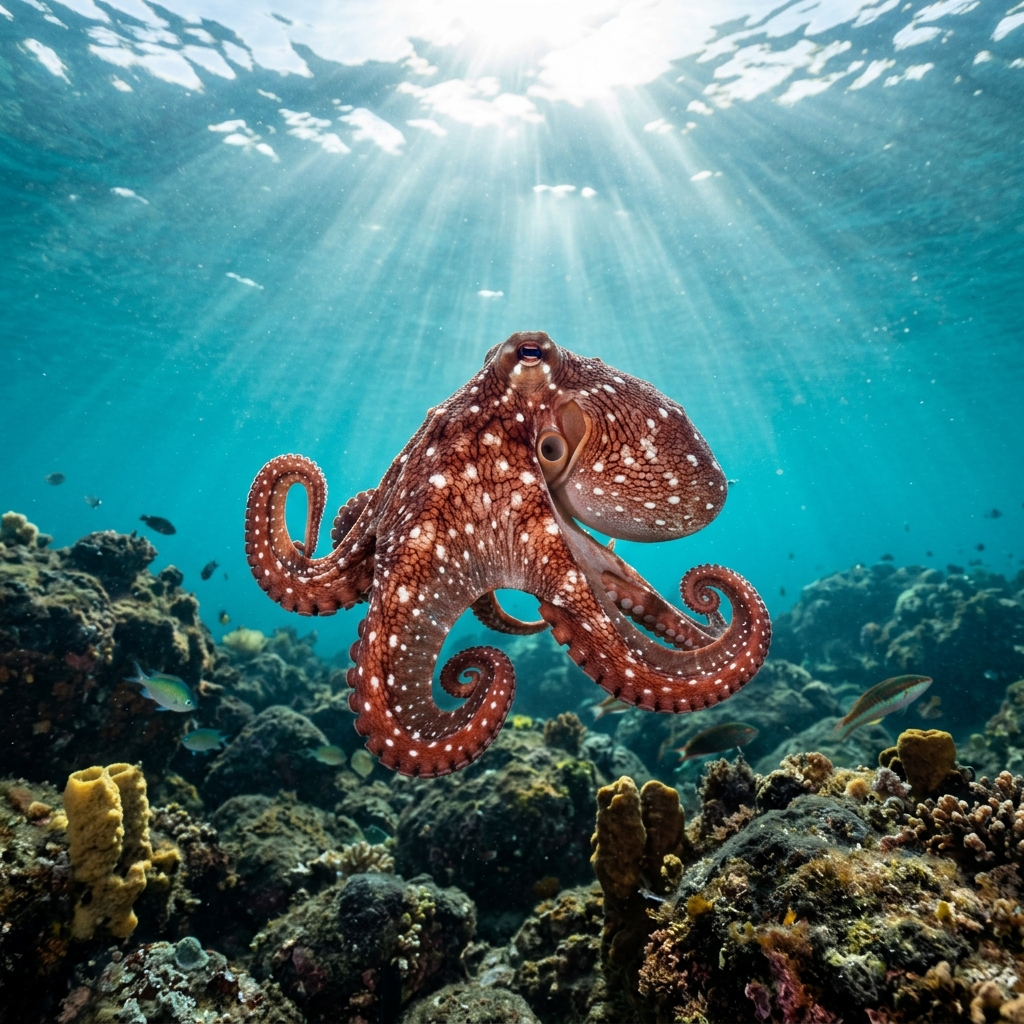
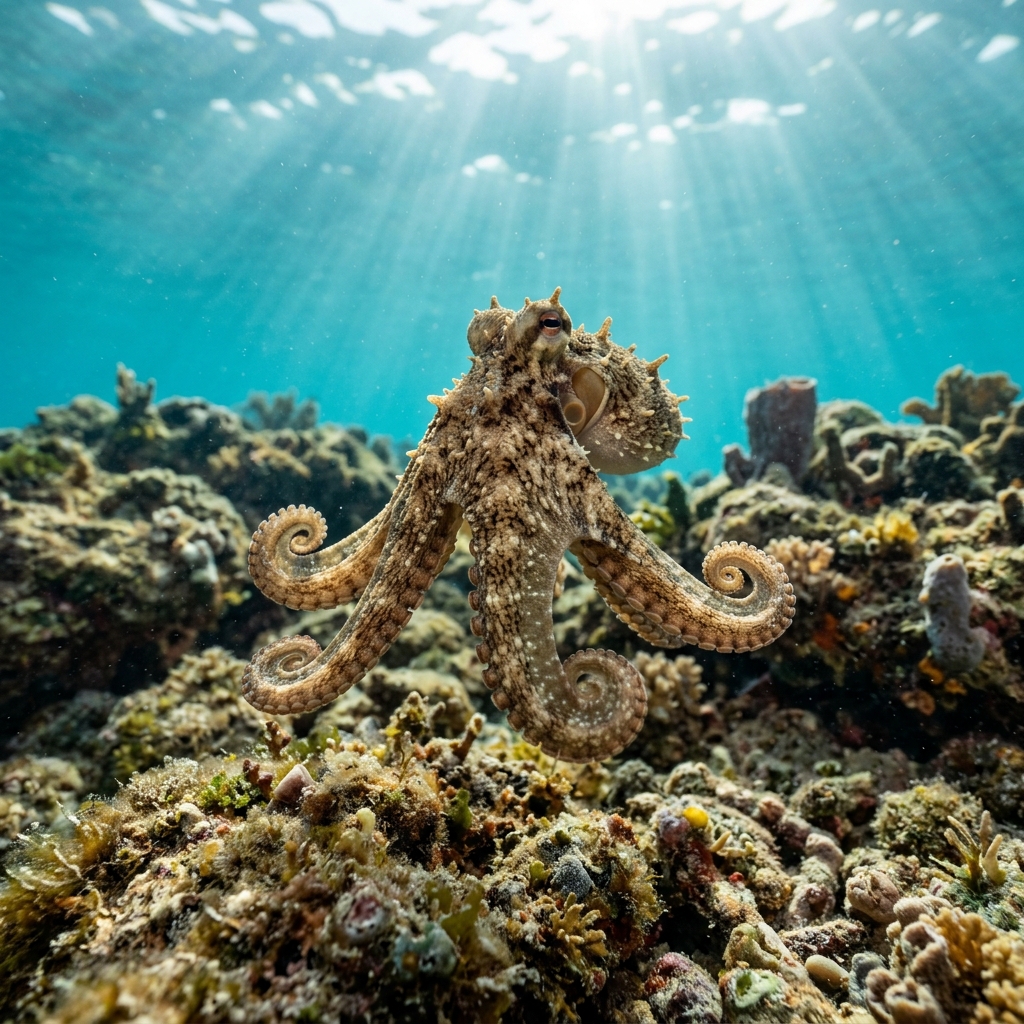
Small, mottled octopus in shades of brown and green that breaks up its outline against algae rather than matching a plain background. The giveaway is posture: watch for it rising up on its two rear arms with the other six held up and forward over its body, a walking stance almost no other reef octopus holds in daylight. Usually seen in a metre or two of water over open sand or rubble patches strung between algae clumps, not tucked into a den.
Active both by day and after dark, usually foraging out in the open across sand or rubble between algae patches rather than holed up in a den. Its rear-arm walk lets it move with six arms free to probe crevices and hold up over its body for camouflage, and a slow, patient diver will often see it keep feeding rather than bolt. Because it does not rely on a fixed burrow, the same individual can turn up in a slightly different spot on a repeat dive.
Bipedal walking frees six arms for foraging while moving, letting it search for prey continuously instead of the stop-start pattern of octopuses that duck into a den between forays.
No clear seasonal pattern shows up in the sighting data, and its comfort range of roughly 25 to 29 C spans typical tropical reef temperatures year-round, so any month is fair game across its range.
Reef neighbours a diver could mistake it for. Use the identification notes above to tell them apart.
Most reliably logged across the Philippines, particularly Luzon, Palawan, Visayas and Mindanao, and across Indonesia with a strong showing in Sulawesi and Nusa Tenggara. Also a regular find in Queensland, Australia, plus sites in Malaysia (notably Sabah), Micronesia, Fiji, New Caledonia and Brunei.
Mapping where Algae Octopuses is logged…
Best chances are in the Philippines (Luzon, Palawan, Visayas, Mindanao) and Indonesia (Sulawesi, Nusa Tenggara), with further sightings across Queensland in Australia, Sabah in Malaysia, and Micronesia.
There is no strong seasonal signal in the data, and it tolerates typical tropical reef temperatures of roughly 25 to 29 C, so it is seen across all months rather than in one particular season.
Look for a small mottled brown-and-green octopus moving in very shallow water, often standing up on just its two rear arms with the other six raised over its body in a distinctive walking posture.
No, they pose no danger to divers and typically keep foraging calmly rather than fleeing if you approach slowly and keep a respectful distance.
Its signature trick is walking on two rear arms while holding the remaining six up over its body, using the pose to blend with drifting algae while it keeps foraging.
Site and sighting data is aggregated from diver logs, iNaturalist and GBIF. For taxonomy and conservation status:
Brazilian Reef Octopus
1,142 sites