Cryptocentrus leptocephalus
Look for this shy goby hovering over sandy burrows in Fiji's Mamanuca Islands, in water around 25-29 C, year-round.
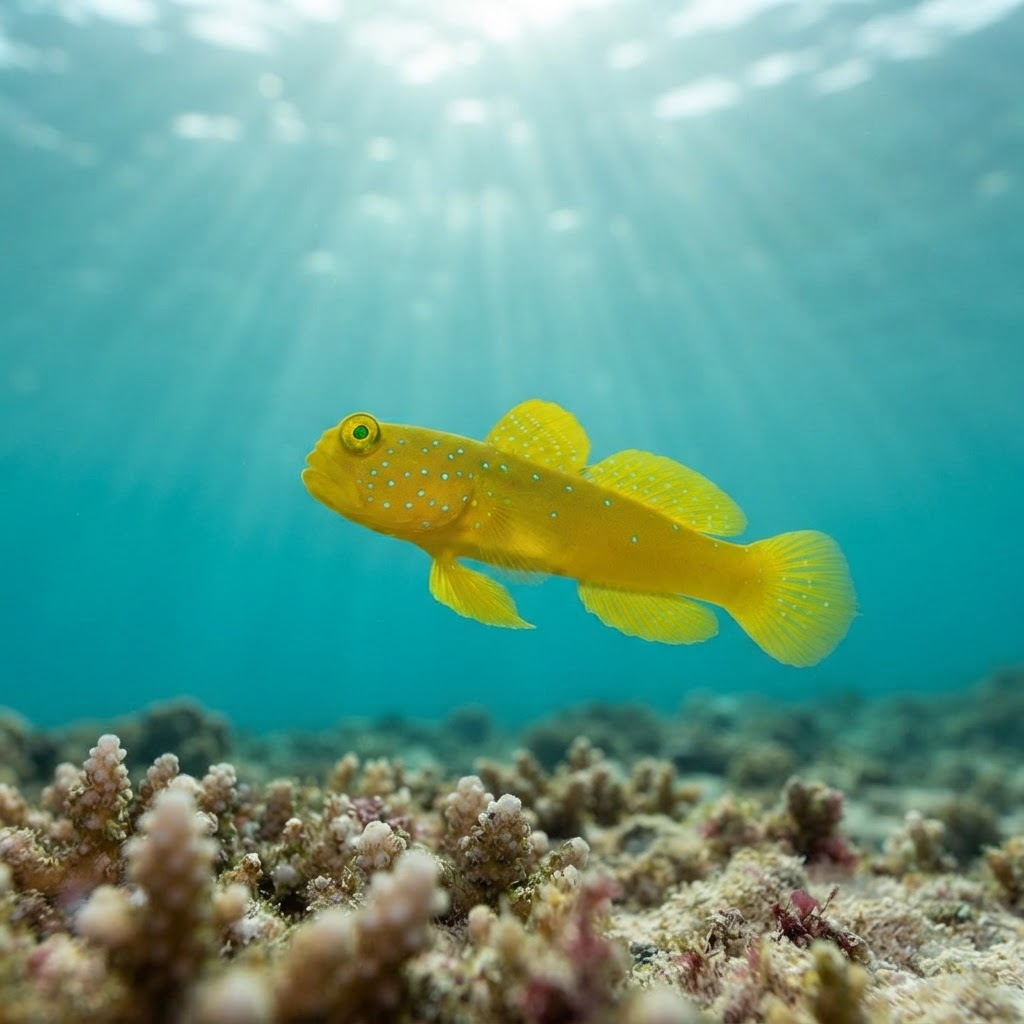
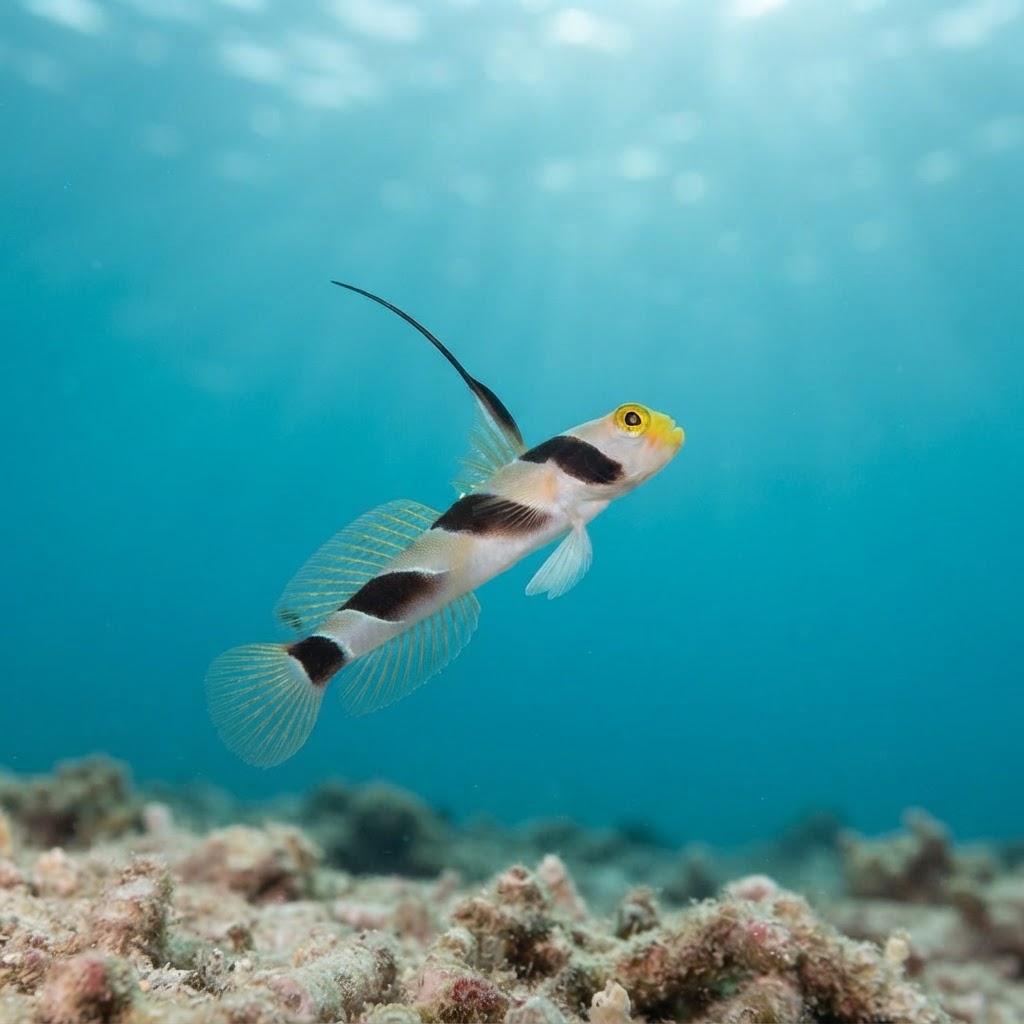
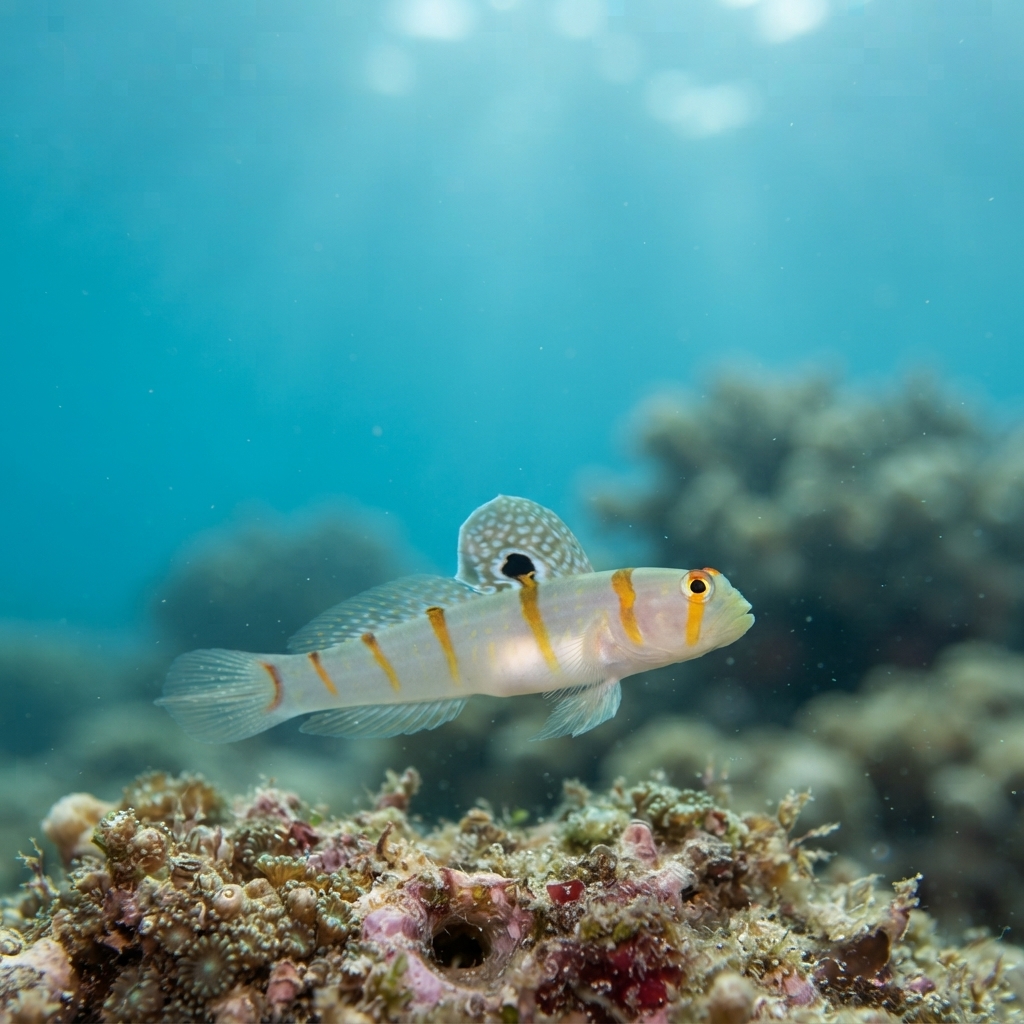
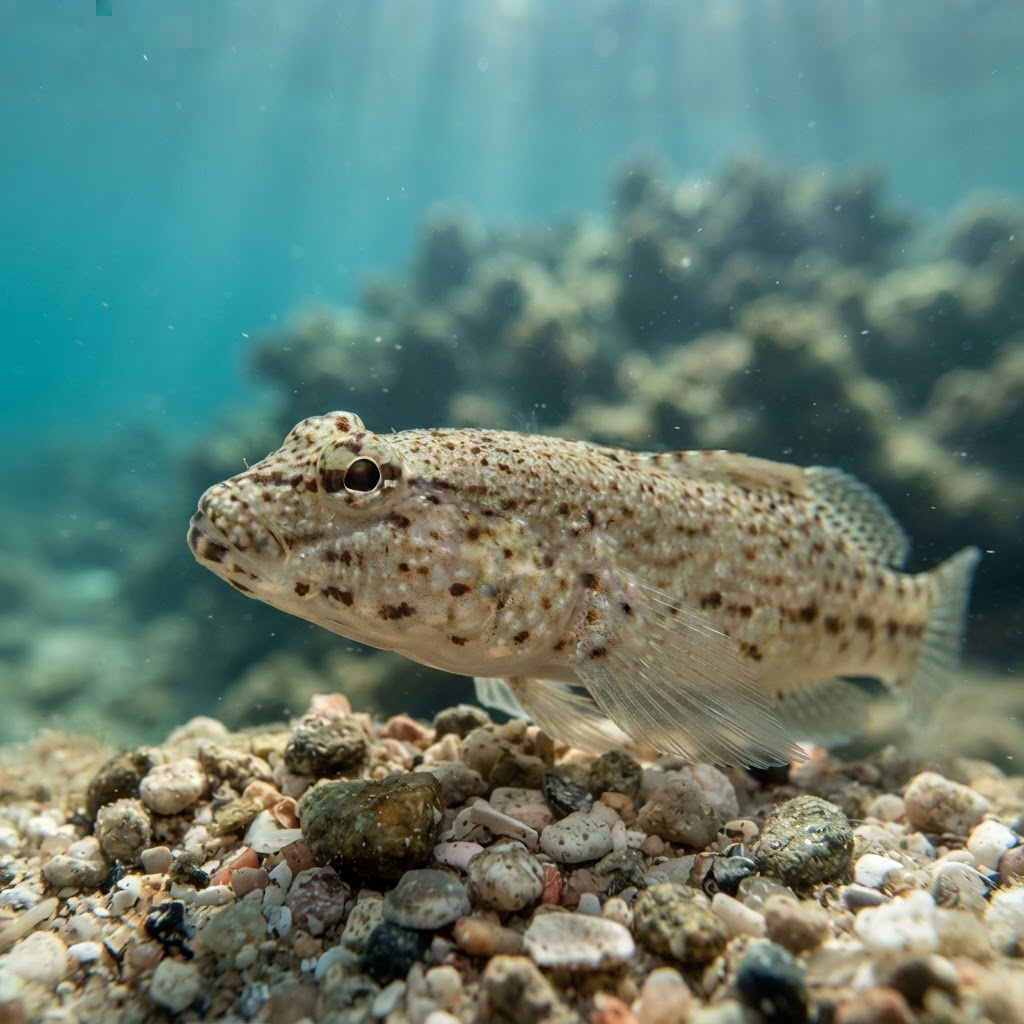
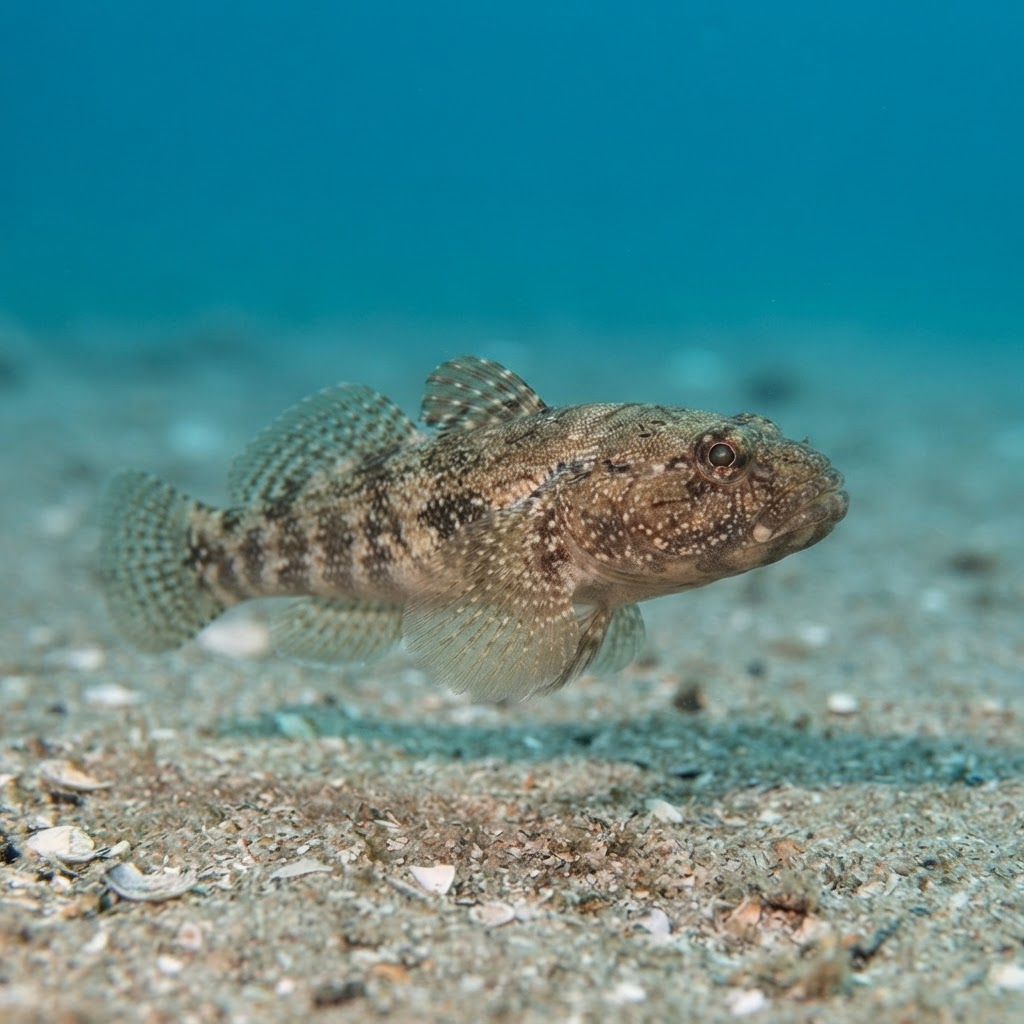
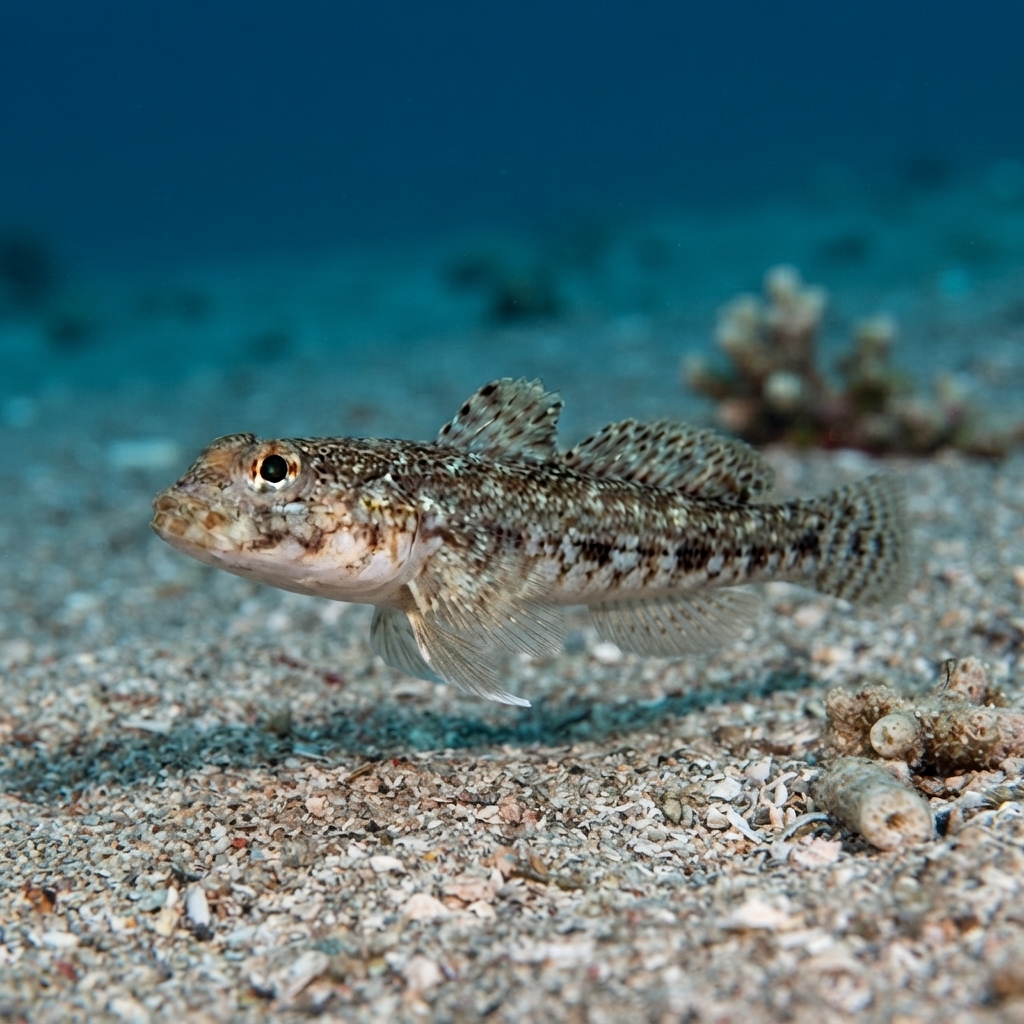
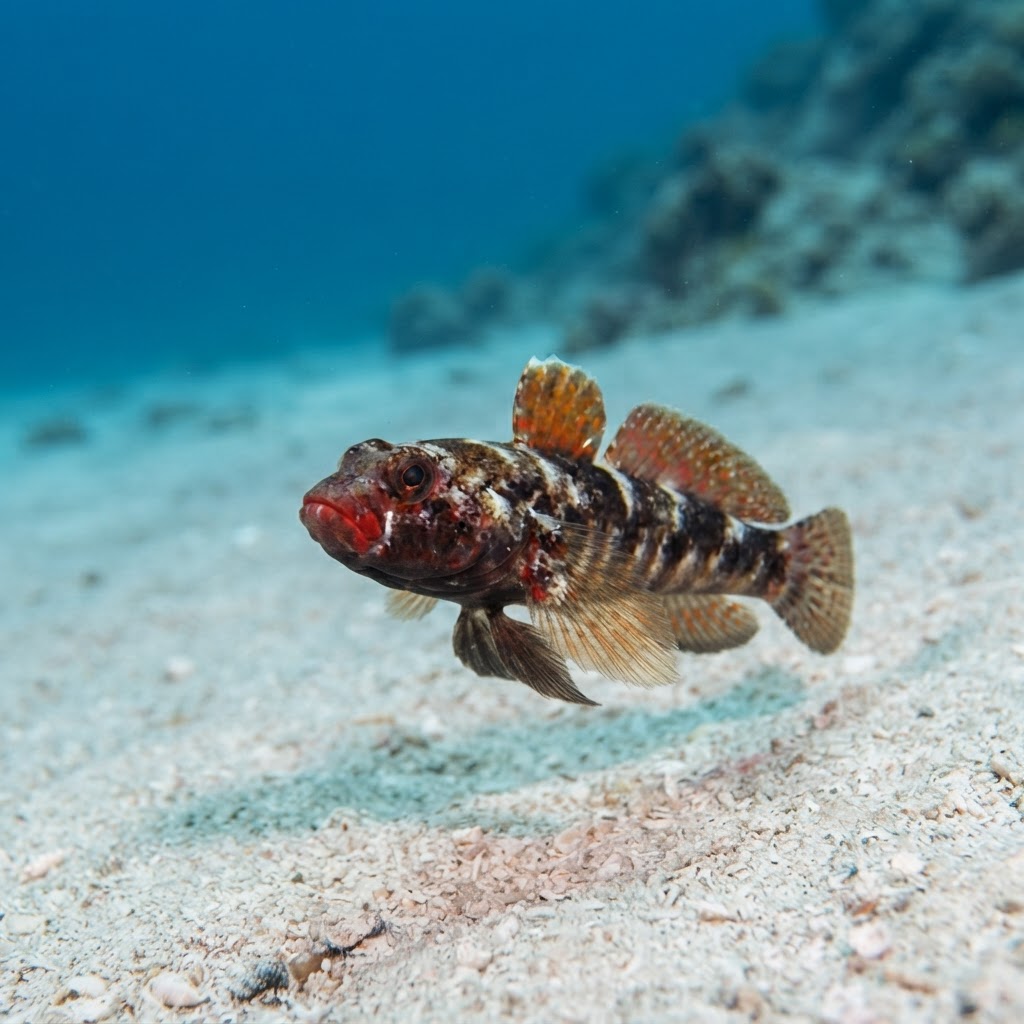
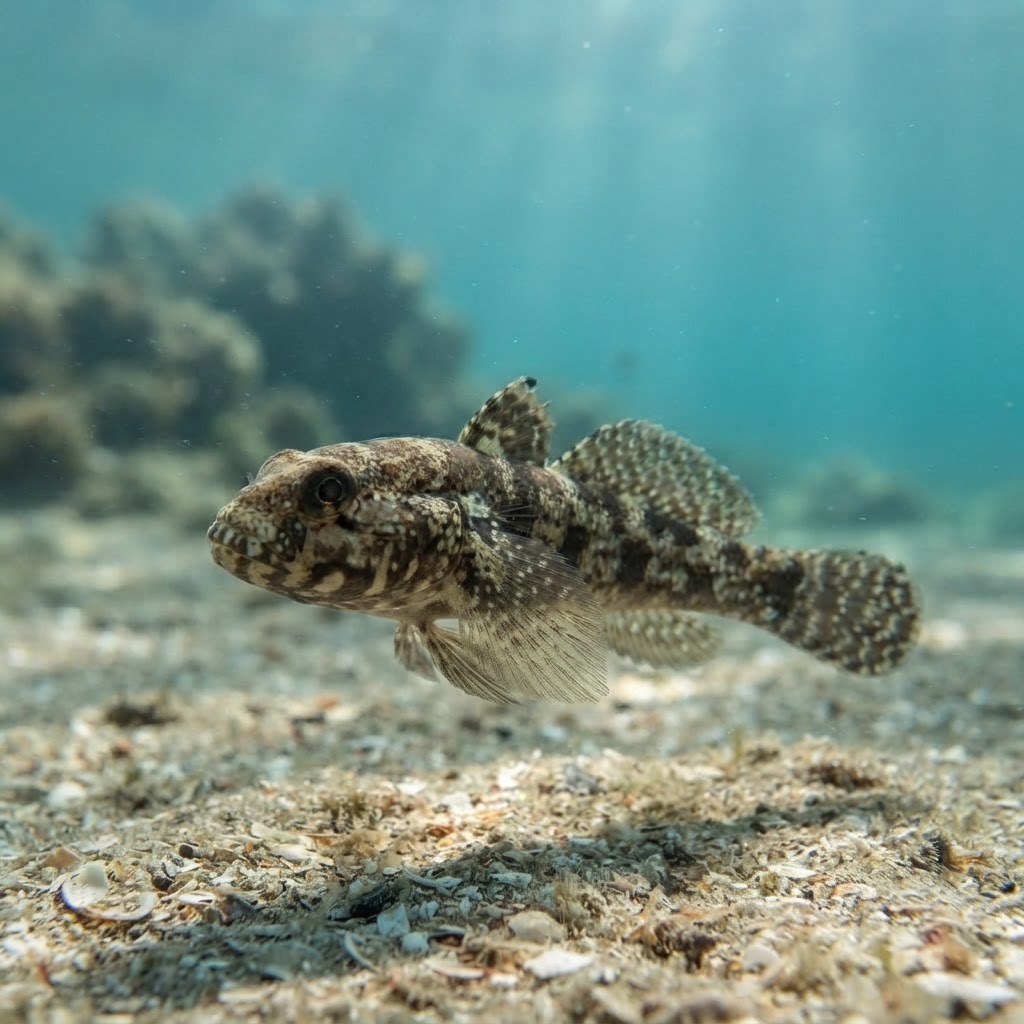
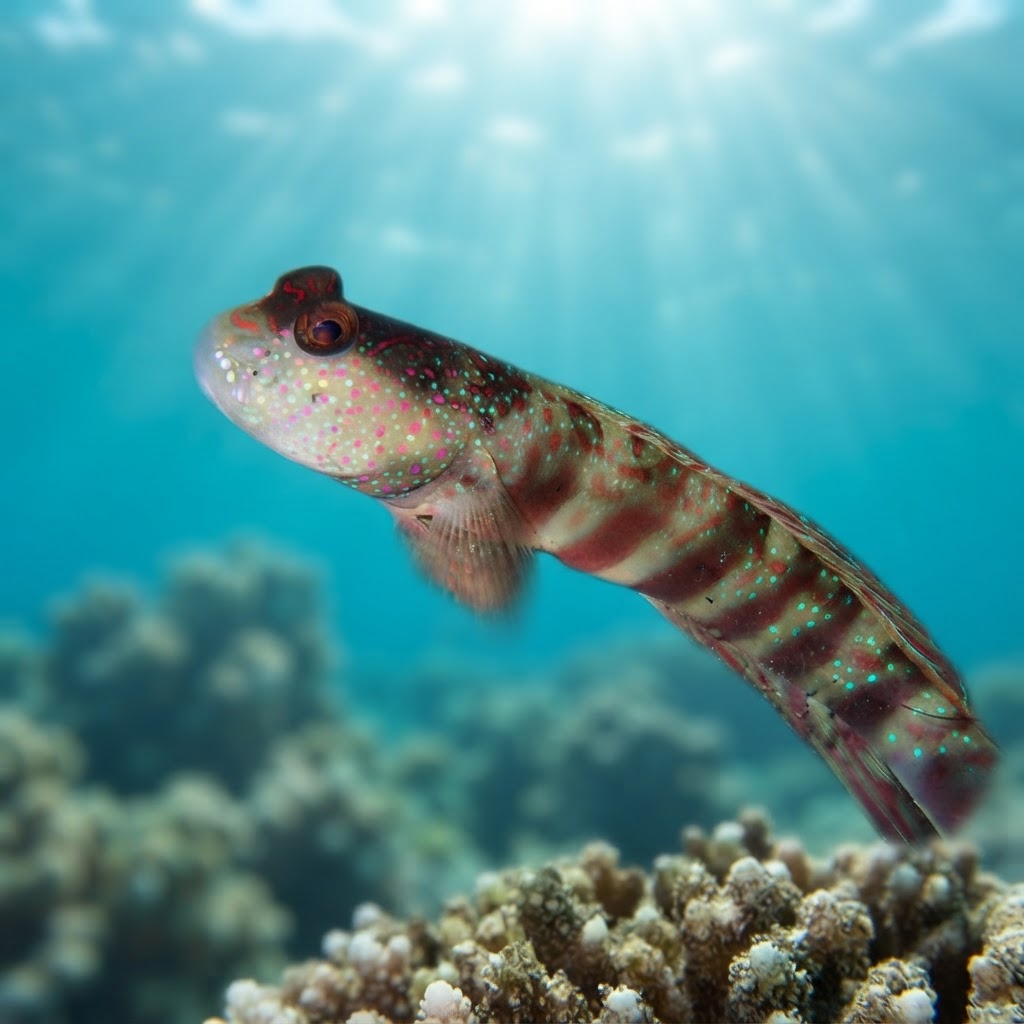
A small, slender goby around 8 cm, pale grey to sandy body scattered with fine pinkish-orange speckles from head to tail. It holds a near-vertical, alert posture just above a sand burrow, large eyes tracking movement, and flicks its tail before darting down at the first sign of danger. The first dorsal fin is often raised slightly, giving it a slightly finned, watchful look rather than a flat resting profile.
Spends most of its time hovering a few centimetres above its burrow entrance on sand or rubble flats, ready to bolt tail-first at the slightest disturbance. Like other shrimpgobies it likely shares its burrow with a symbiotic shrimp, though divers logging it note it as uncommon at most sites and only reliably common at a handful, so it takes a slow, patient scan of the sand to spot one. Approach low and move slowly, since it reacts fast to sudden fin movements or shadows passing overhead.
Like its shrimpgoby relatives, it almost certainly lives in partnership with a burrowing shrimp that digs and maintains the shared burrow while the goby stands guard and signals danger with tail flicks.
No clear seasonal pattern shows up in the data, and its comfort range of roughly 24.7 to 29.2 C spans typical tropical reef conditions year-round, so any month is workable in the Mamanucas or Queensland.
Reef neighbours a diver could mistake it for. Use the identification notes above to tell them apart.
Most reliably logged in Fiji's Mamanuca Islands, with further sightings off Queensland, Australia and around Nouméa in New Caledonia. Fiji is by far the strongest area for this goby, so divers specifically hunting it should focus their search there on sandy patches and rubble edges near coral bommies.
Mapping where Pink-speckled Shrimpgoby is logged…
It is most reliably seen in Fiji's Mamanuca Islands, with additional sightings off Queensland, Australia and near Nouméa, New Caledonia. Fiji currently holds the strongest and most consistent records.
There is no detected seasonal pattern, and it tolerates a broad tropical range of about 24.7 to 29.2 C, so sightings are possible year-round wherever it occurs.
Look for a small, pale grey to sandy goby around 8 cm long, covered in fine pink speckles, hovering upright above a burrow in sand or rubble. It sits alert with large eyes and darts into its hole quickly when approached.
They stay small, typically around 8 cm long, which is fairly average for a shrimpgoby and makes close, careful looking essential to spot one on the sand.
No, they pose no threat to divers. They are shy, retreat into their burrow immediately when approached, and have no venom or aggressive behaviour toward people.
Site and sighting data is aggregated from diver logs, iNaturalist and GBIF. For taxonomy and conservation status:
Slender Goby
806 sites