Trachinotus falcatus
Deep-bodied and silvery on Yucatán reefs and Caribbean flats, permit run 23-28C year-round and reward a patient look.
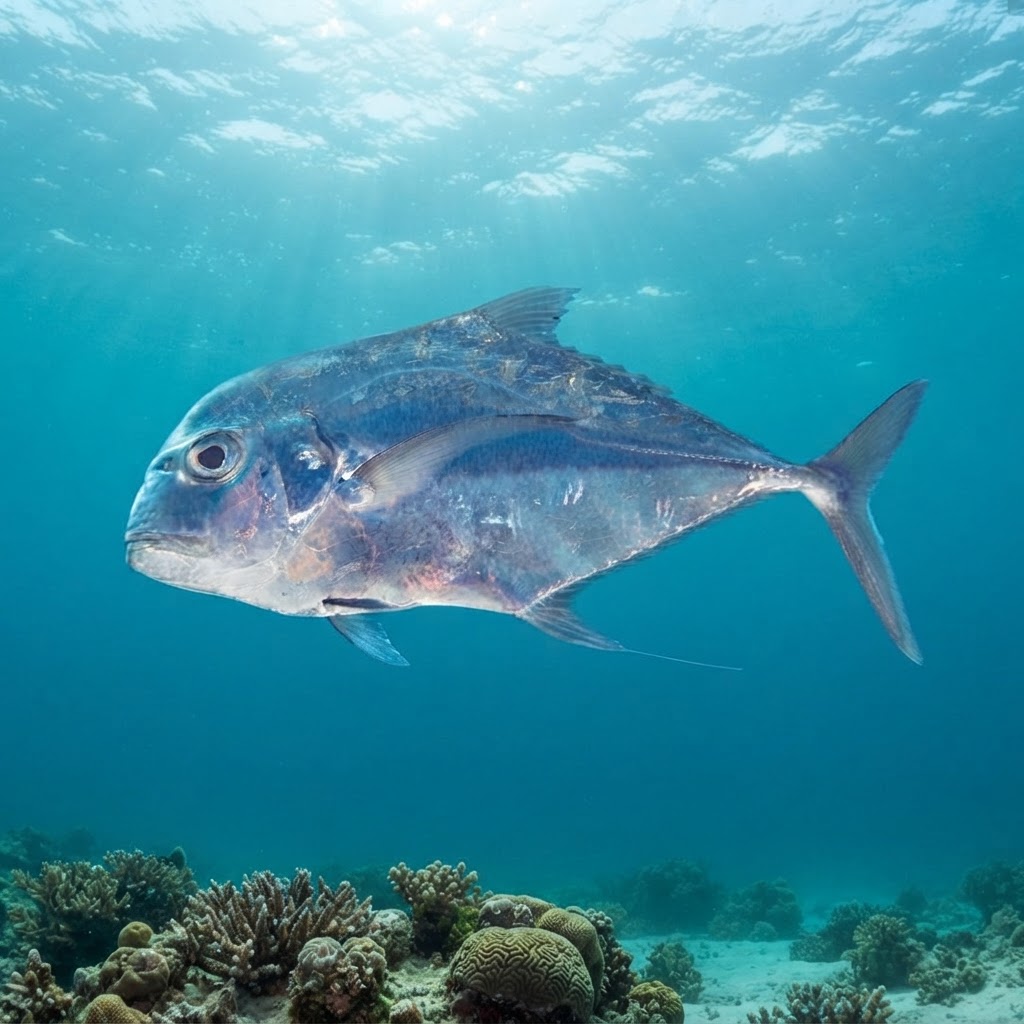
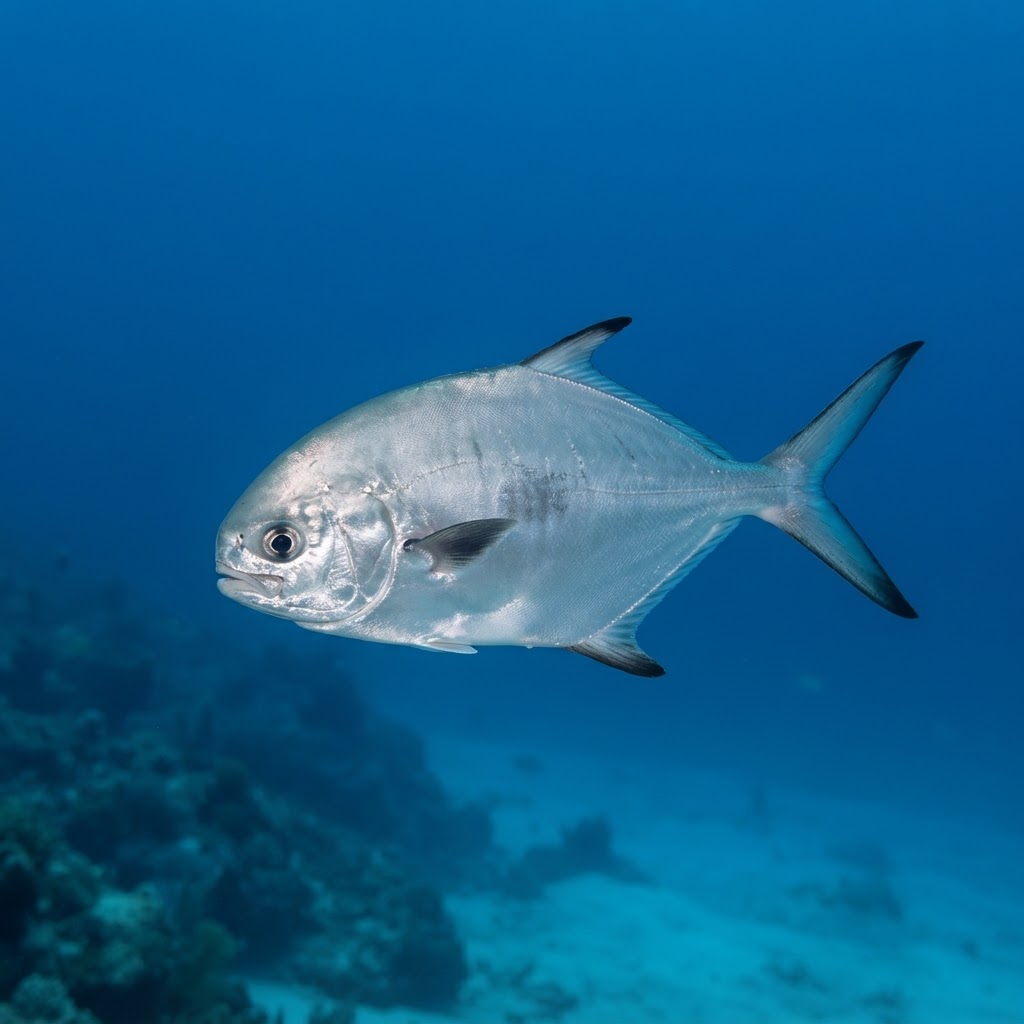
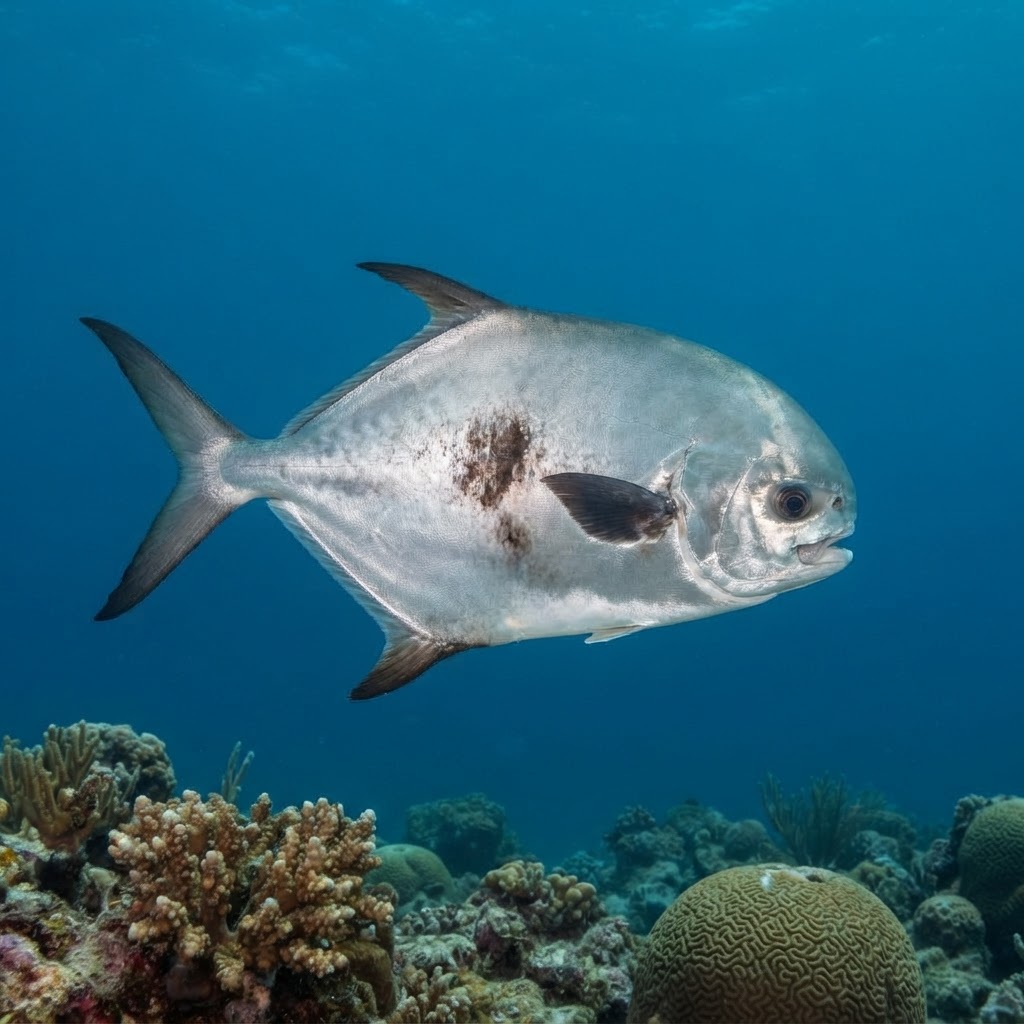
Deep, laterally flattened body that reads almost circular in profile, silvery overall with a faint yellow or gold wash on the belly and lower fins. Look for the tall, sickle-shaped dorsal fin and matching anal fin trailing behind it, and a small dark blotch near the pectoral fin base on some individuals. At up to 85 cm they are noticeably bulkier through the shoulders than most jacks sharing the same water.
Divers typically find permit cruising alone or in small loose groups over sand patches, rubble, and reef edges, often hanging near structure rather than out in open water. They tend to keep a respectful distance and move off steadily rather than bolting, which is part of why most logs call them uncommon rather than common. Look for them working the bottom with a slight nose-down tilt, a sign they are hunting rather than just passing through.
That deep, disc-like body isn't just for show: it lets permit tip almost vertically to root out crabs and other buried invertebrates from sand and rubble, a feeding posture that is often the first thing that gives them away underwater.
No clear seasonal pattern shows up in the data, and with a comfortable range of 23.2 to 28 C, permit sit on Caribbean and Gulf reefs year-round rather than showing up for a season.
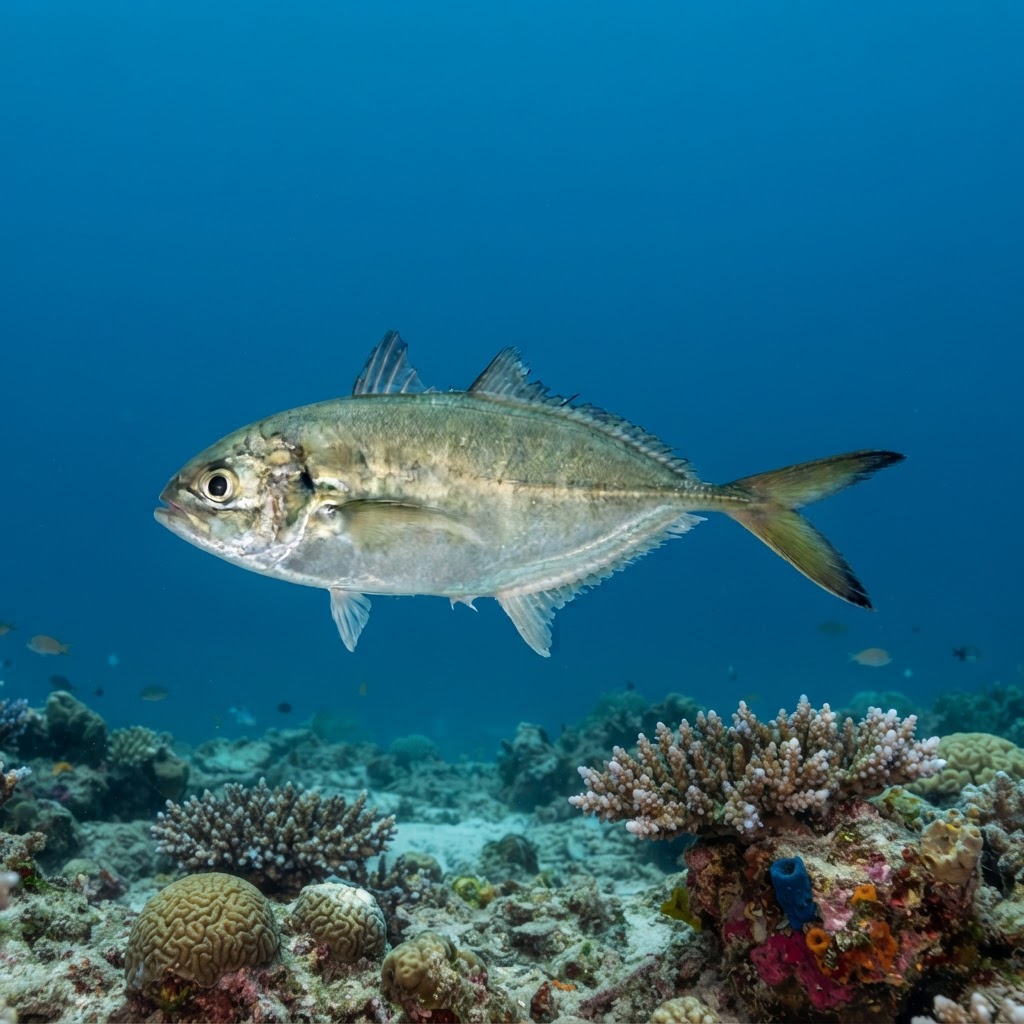
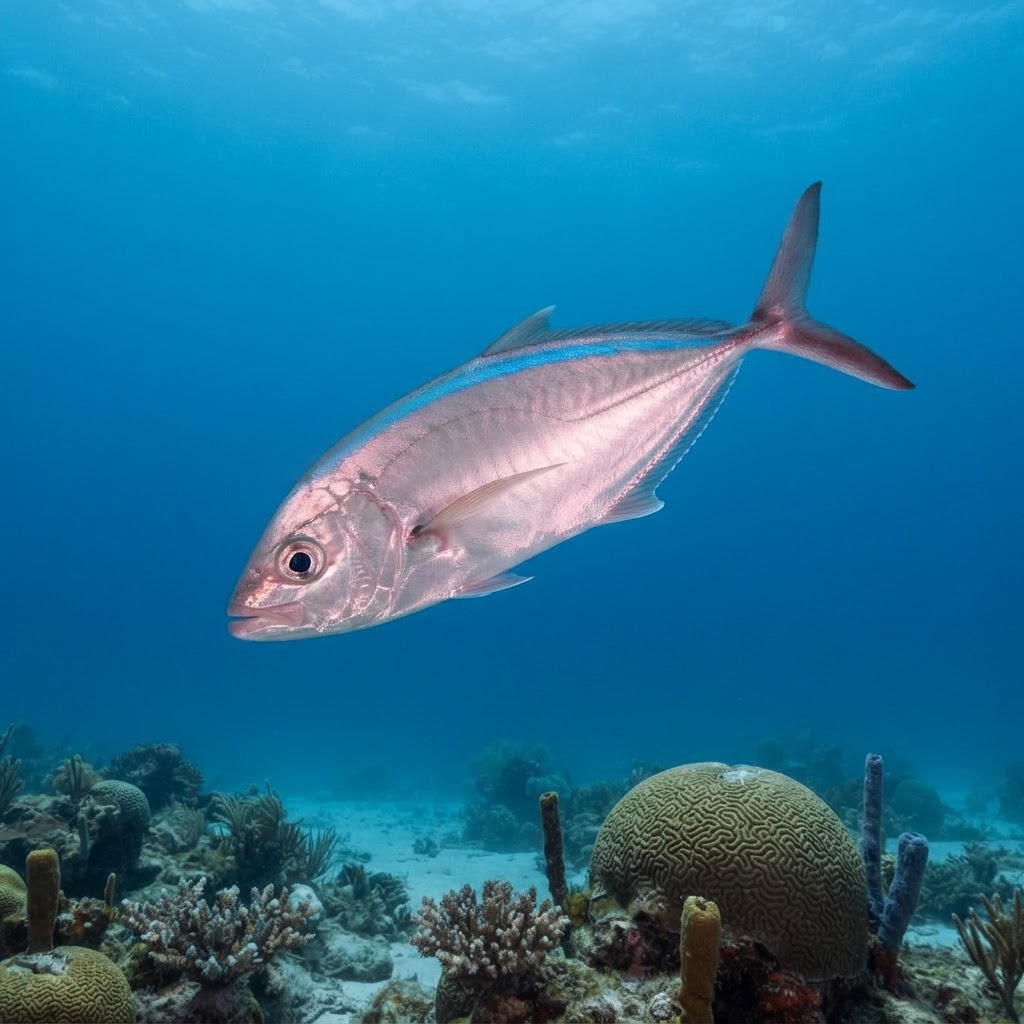
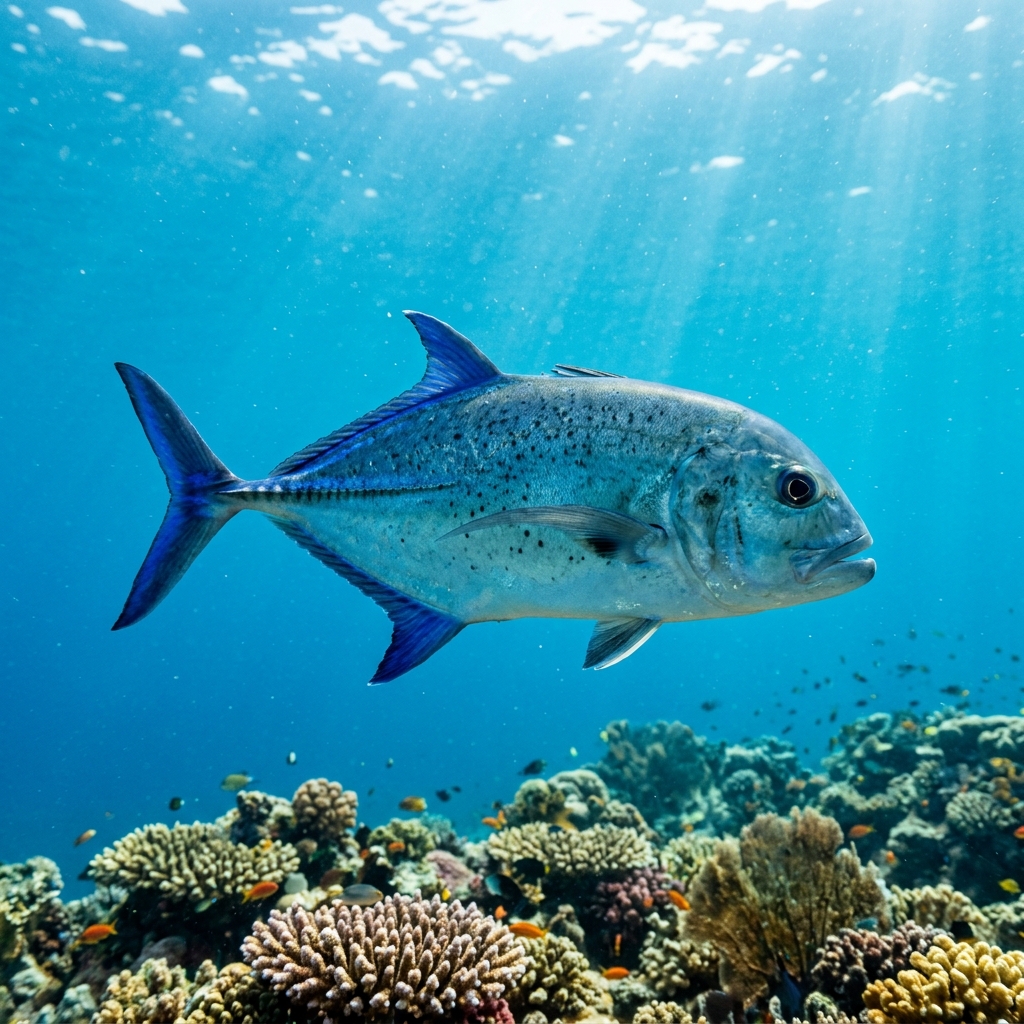
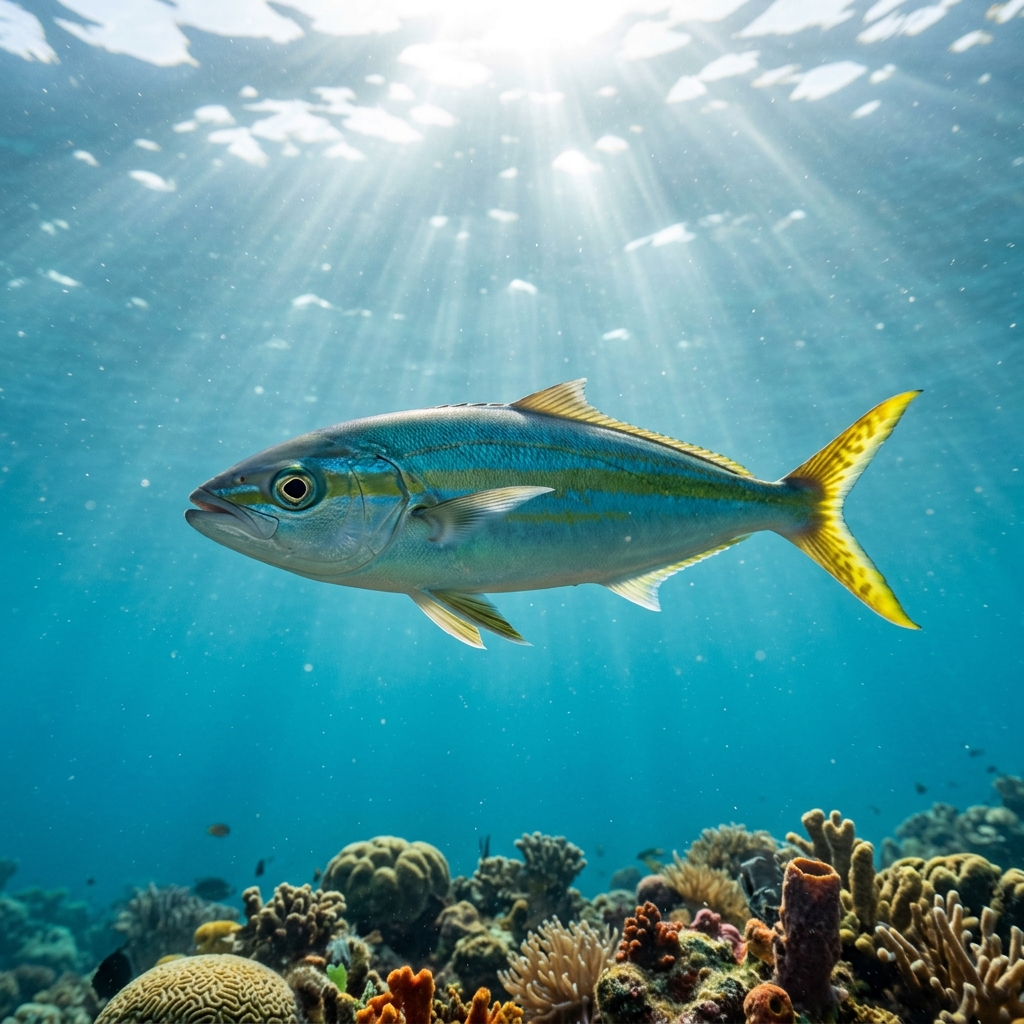
Reef neighbours a diver could mistake it for. Use the identification notes above to tell them apart.
Most reliably logged around Mexico's Yucatán Peninsula, which accounts for the bulk of sightings, with strong secondary populations in the Cayman Islands, Belize's Ambergris Caye, and Grande-Terre in Guadeloupe. Punta Cana in the Dominican Republic and the Bay Islands of Honduras also produce regular records, and Aruba's Arashi and Boca Catalina sites are worth a look too.
Mapping where Permit is logged…
Mexico's Yucatán Peninsula produces the most sightings by far, with the Cayman Islands, Belize, Guadeloupe, and the Dominican Republic's Punta Cana region also regularly logging them. Honduras's Bay Islands and Aruba round out the reliable spots.
There's no strong seasonal signal in the sighting data, so they're considered a year-round sighting. Their comfort range of roughly 23 to 28 C matches Caribbean reef temperatures for most of the year.
Look for a deep, almost round silvery body with a tall sickle-shaped dorsal and anal fin and a gold tint low on the belly. They're bulkier and rounder than most jacks you'll see on the same reef.
Divers typically encounter them around 85 cm, a solidly built, deep-bodied fish rather than a slender one for that length.
No, they're not considered dangerous to divers. They keep their distance and are far more interested in foraging in sand than in interacting with people.
Site and sighting data is aggregated from diver logs, iNaturalist and GBIF. For taxonomy and conservation status:
Bigeye Trevally
2,591 sites