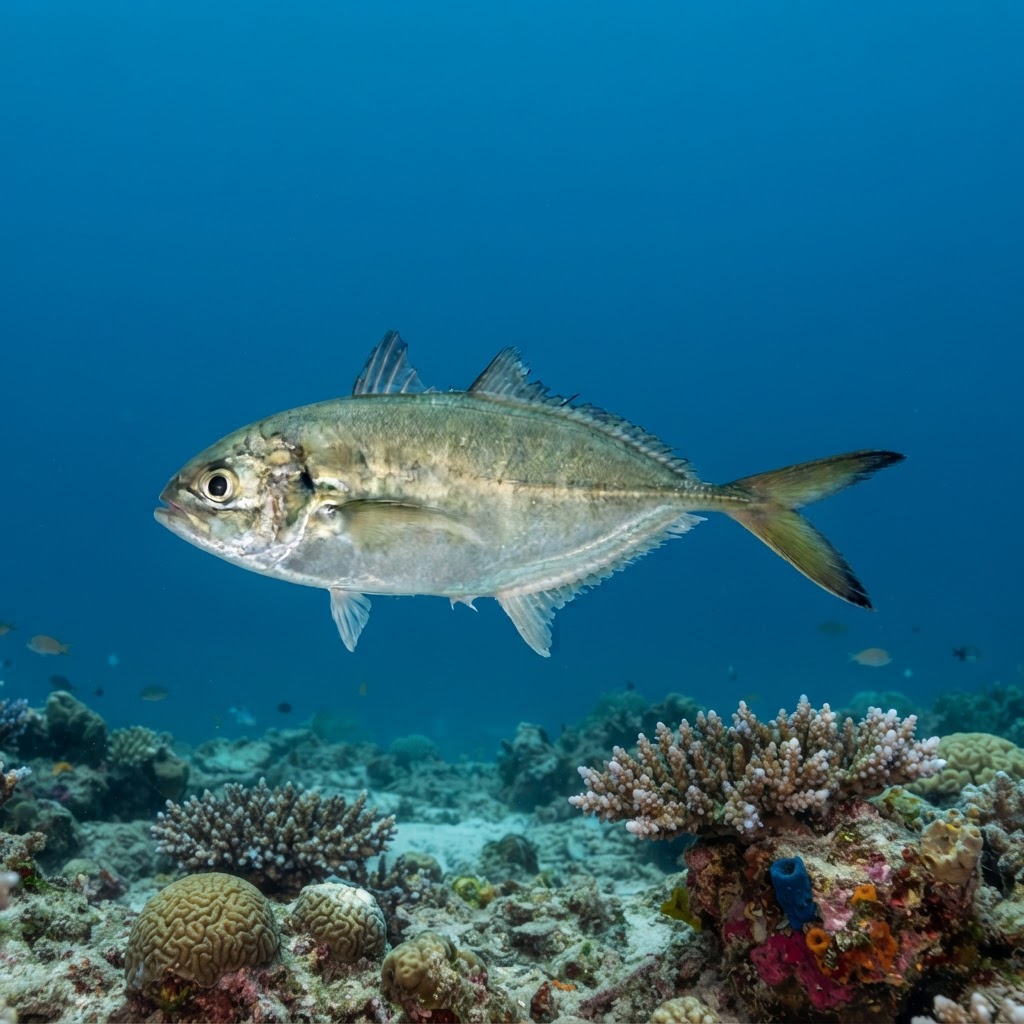
Caranx crysos
Silvery jack cruising reefs from Florida to Malta and Cyprus, comfortable in 17-28C water and logged year-round.
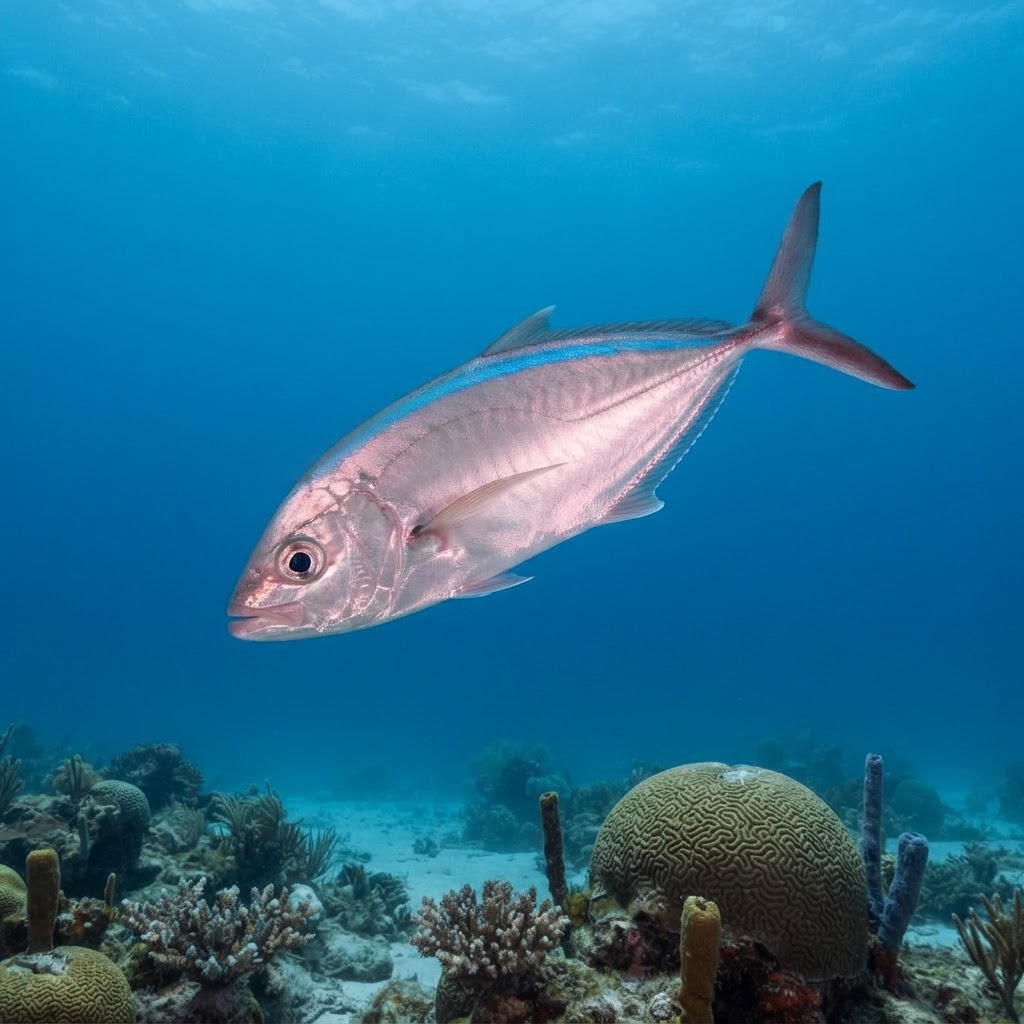
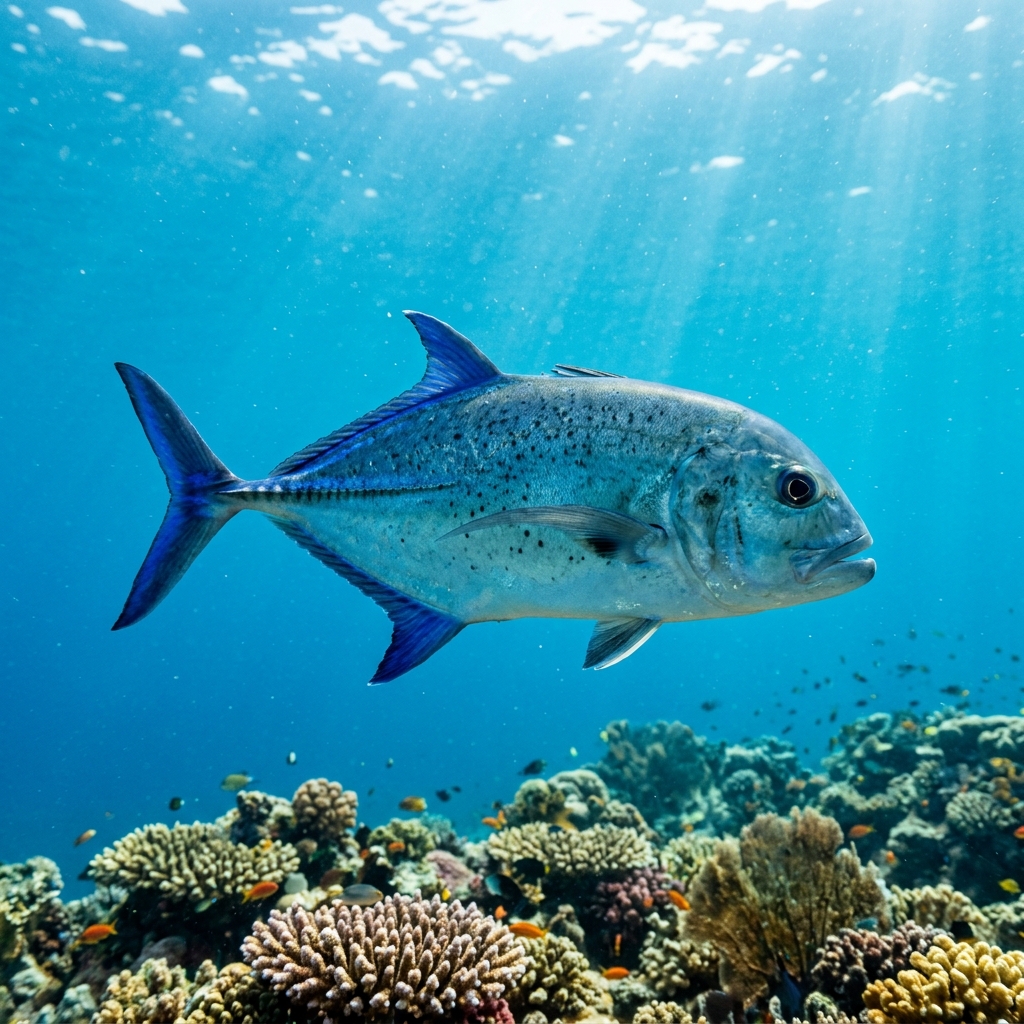
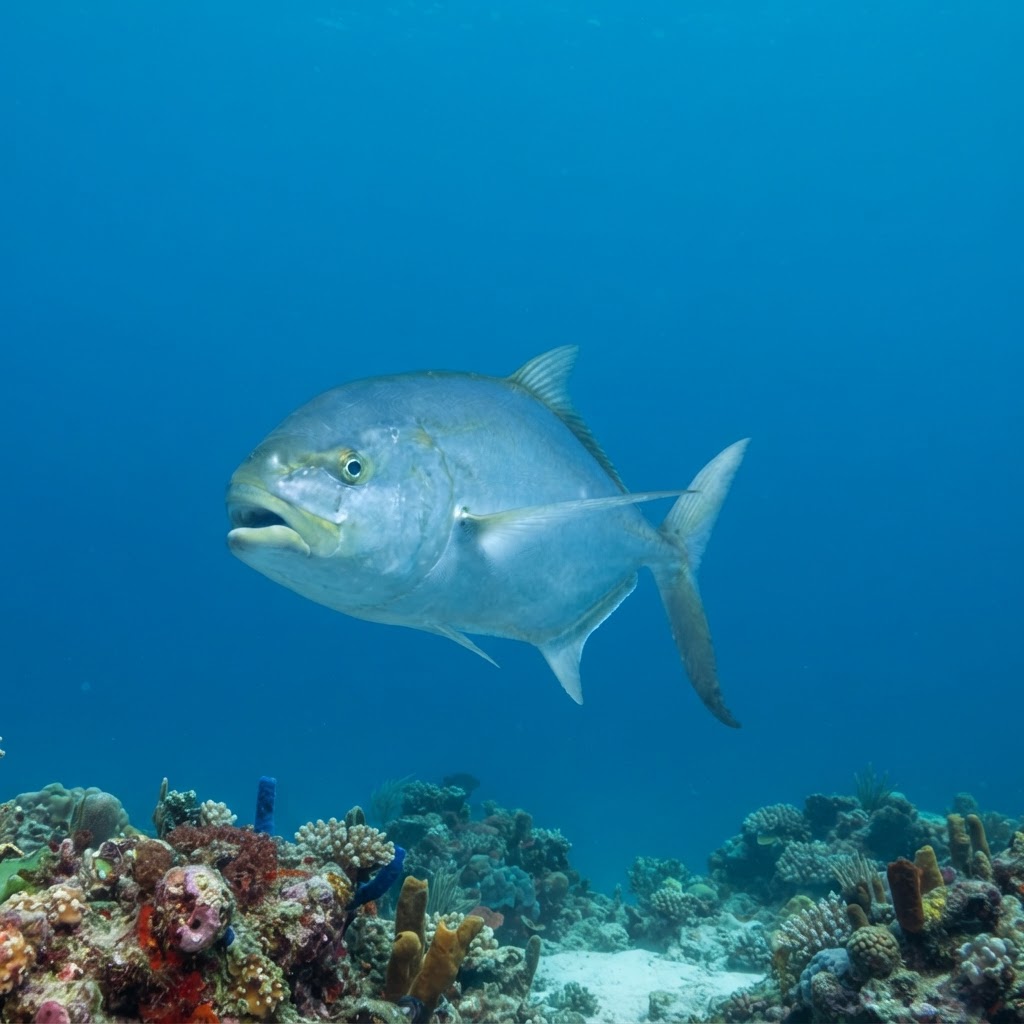
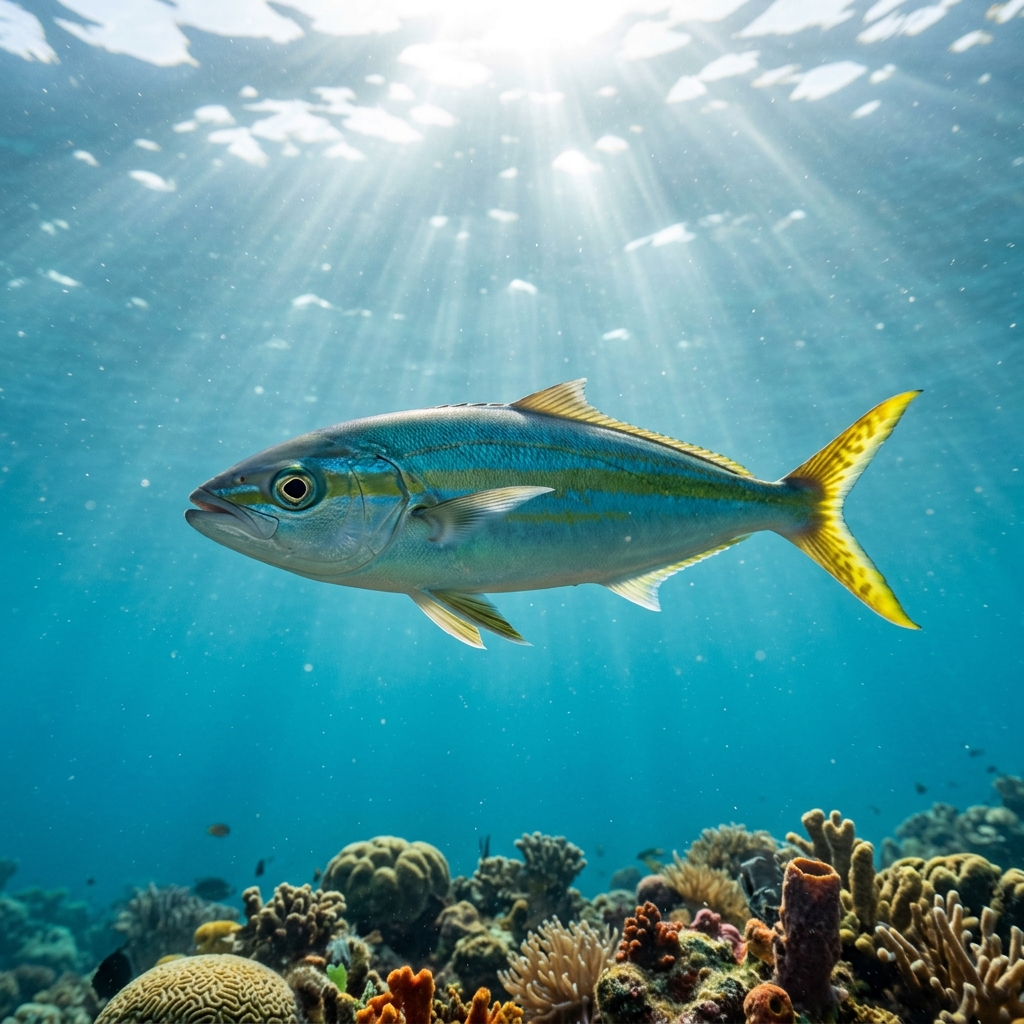
A slim, torpedo-shaped jack that runs silvery-blue on top fading to white below, usually seen mid-water in loose schools rather than hugging the bottom. Look for the small dark spot on the upper edge of the gill cover and the sharply forked yellowish tail. At around 49cm full size it is smaller and slimmer through the body than the bulkier trevallies it gets mistaken for.
Divers most often see them cruising in loose, fast-moving schools over reef edges and wrecks, sometimes shadowing larger predators to pick off scraps stirred up by the hunt. They keep a comfortable distance from divers and rarely pause for a close look, more often glimpsed as a silver flash passing through open water than as a fish that lingers.
Blue runners are known to shadow larger predators such as groupers or rays, using them as cover to ambush smaller prey that get flushed out during a hunt.
Sighting data shows no strong seasonal pattern, so treat it as a year-round encounter. It tolerates a wide temperature range from about 17 to 28C, which explains why it turns up on dives across the calendar rather than in a tight window.
Reef neighbours a diver could mistake it for. Use the identification notes above to tell them apart.
Most commonly logged in Florida in the United States, with strong numbers also reported around Malta and Gozo, Mexico's Yucatan Peninsula, and Italy. Cyprus (particularly Ayia Napa and Protaras), the Dominican Republic, Brazil, and Grenada's Carriacou also produce regular sightings, making this a fish you can reasonably expect on temperate and tropical reefs across both the Mediterranean and the Caribbean.
Mapping where Blue Runner is logged…
Florida in the United States has the most reported sightings, with reliable numbers also coming from Malta, Mexico's Yucatan Peninsula, Cyprus, and the Dominican Republic. It shows up across both Mediterranean and Caribbean dive regions rather than being tied to one area.
There's no clear seasonal pattern in the sighting data, so it's considered a year-round sighting. Its comfort across a wide temperature range, roughly 17 to 28C, means it isn't tied to a particular season on the reefs where it's found.
Look for a slim, silvery-blue jack with a forked yellowish tail, usually moving in loose schools mid-water rather than resting near the bottom. A small dark mark on the upper gill cover is a useful confirming feature if you get a close look.
They typically reach around 49cm in length, making them a mid-sized jack, smaller and slimmer than species like giant trevally.
No, they pose no danger to divers. They're fast-moving schooling fish that keep their distance and show no aggressive behaviour towards people in the water.
Site and sighting data is aggregated from diver logs, iNaturalist and GBIF. For taxonomy and conservation status:
Bigeye Trevally
2,591 sites