Caranx sexfasciatus
Silvery schools with dark tails logged across Queensland, the Maldives and Sulawesi, comfortable year-round in warm 24-29C reef water.
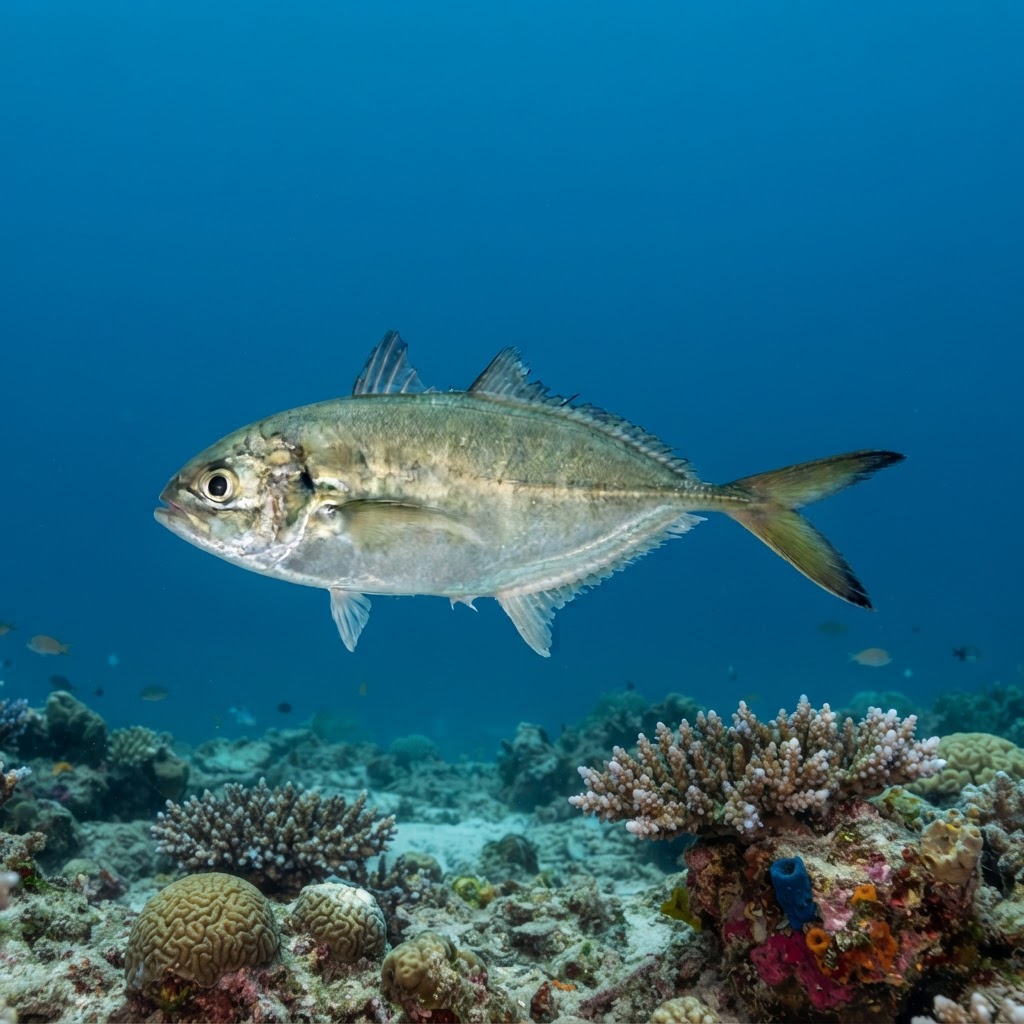
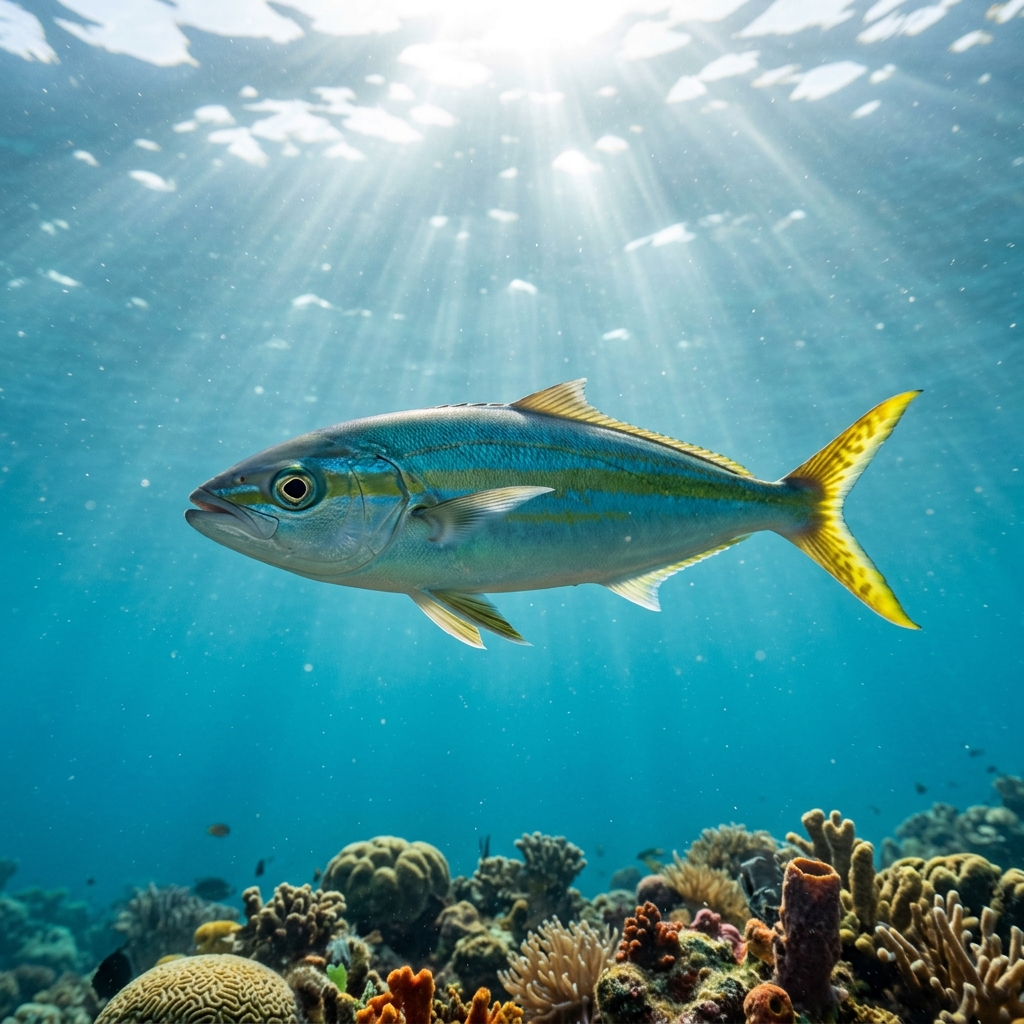
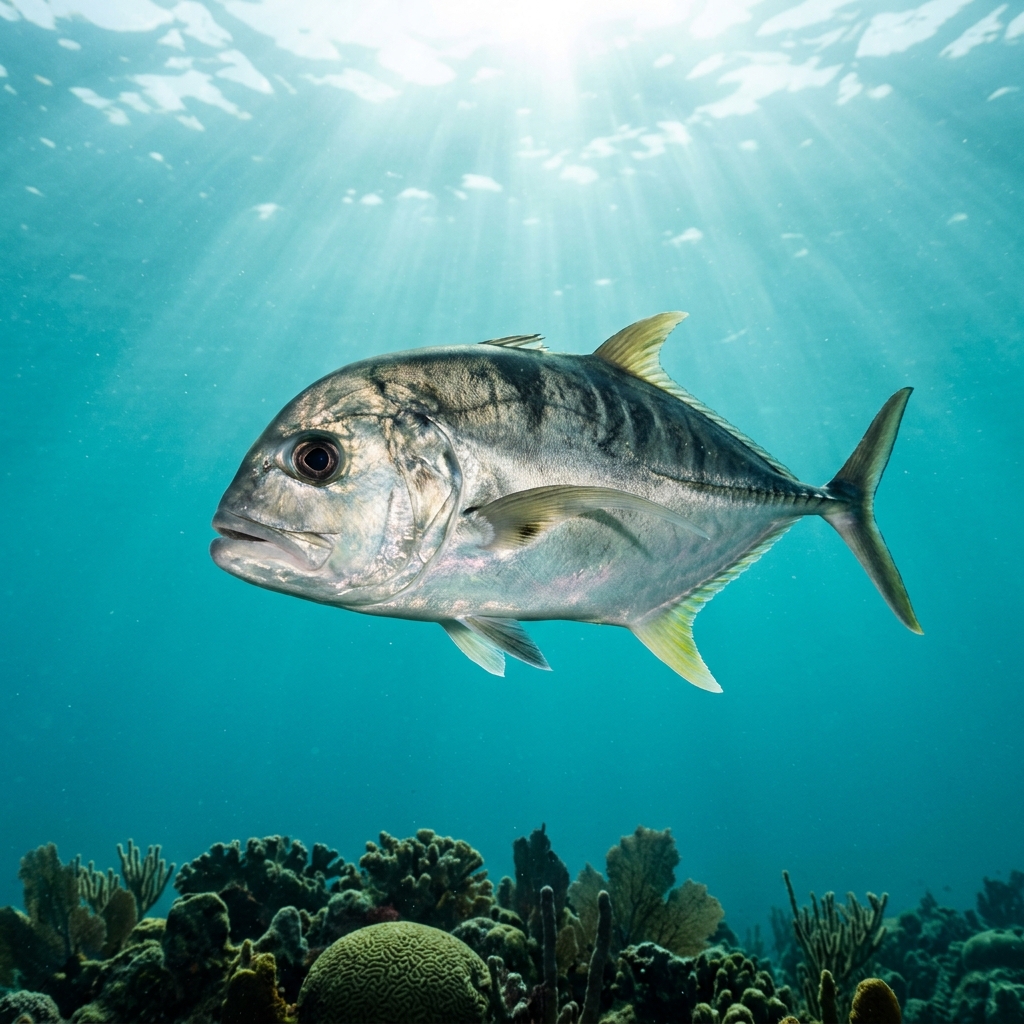
Deep-bodied and silvery with a steep forehead and, as the name suggests, a noticeably large eye. Look for a dark trailing edge on the tail and dusky fins, with faint bars sometimes visible on the flanks especially in younger fish. Adults reach around 84cm and are most often spotted schooling in tight, wheeling formations rather than swimming alone.
Usually seen in schools, sometimes numbering in the hundreds, holding position over reef slopes, walls or near current-swept points where they wheel slowly as a mass. They tend to keep some distance from divers rather than approach, though the schools can be approached slowly without scattering. Feeding activity picks up at dusk and after dark, when the school breaks up and individuals hunt more actively over the reef.
Large schools sometimes split apart at night into solitary hunters, a shift from the tightly packed daytime shoal to lone ambush feeding that divers rarely witness firsthand.
No strong seasonal pattern shows up in the data, and with a comfortable range of roughly 24 to 29C this is a year-round sighting on tropical reefs rather than a seasonal event.
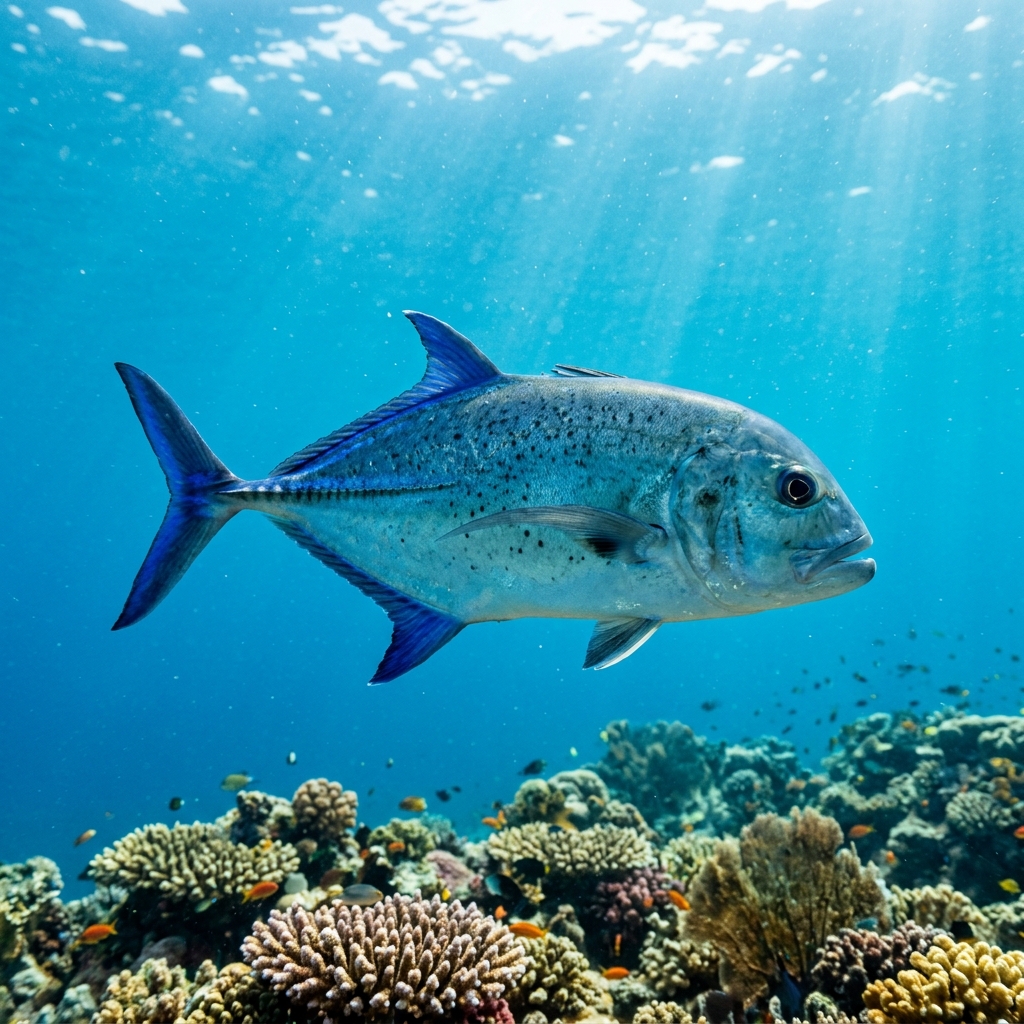
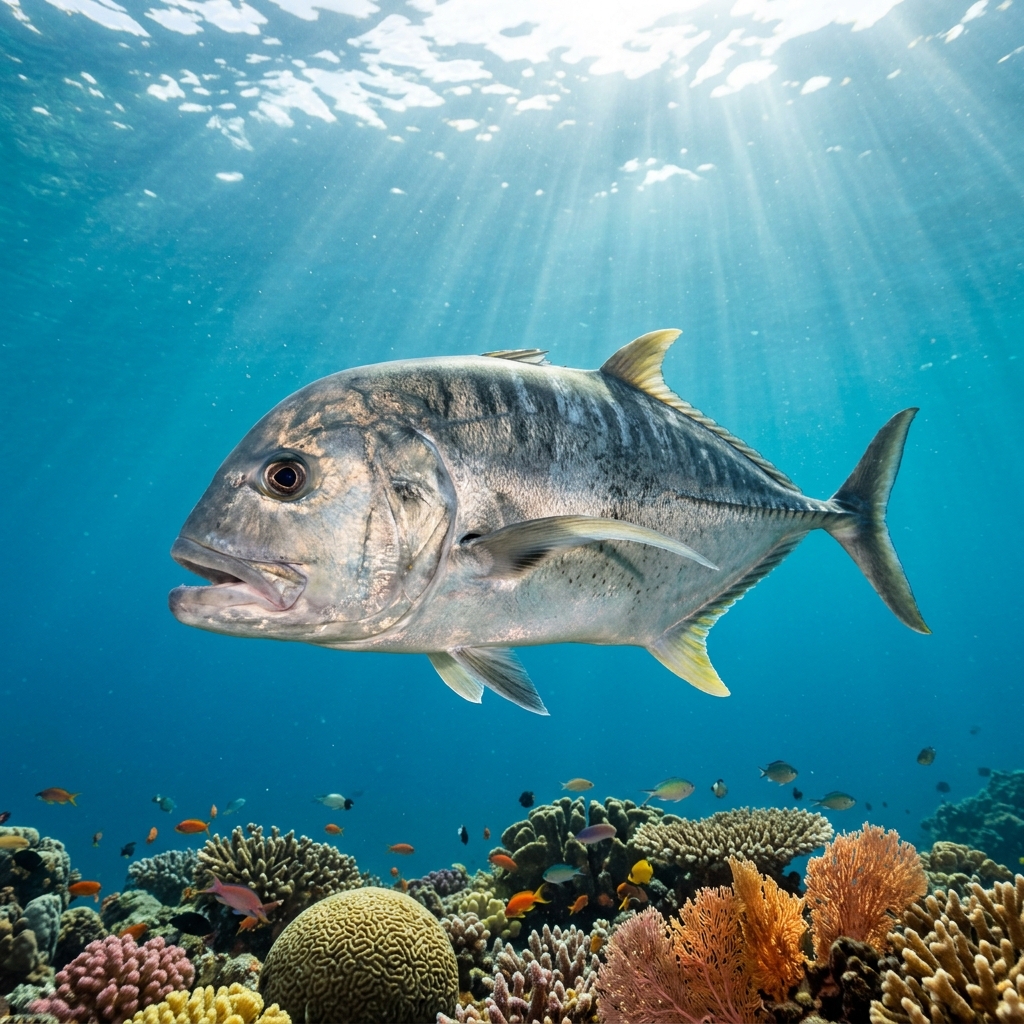
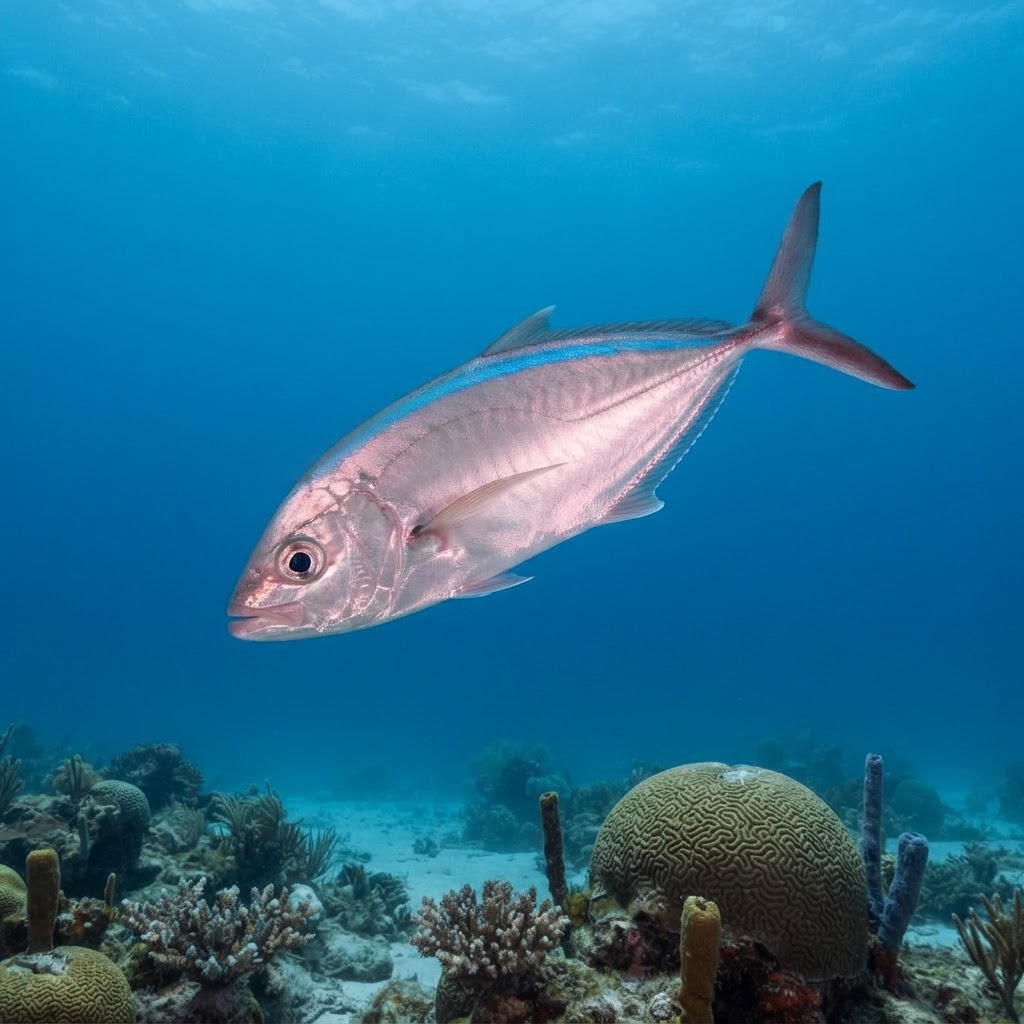
Reef neighbours a diver could mistake it for. Use the identification notes above to tell them apart.
Most reliably logged in Indonesia and the Philippines, with Sulawesi and the Visayas and Palawan regions standing out, plus strong numbers across Queensland's reefs in Australia. The Maldives is another dependable spot, especially the Northern and Central Atolls, alongside good sightings in Sabah, Malaysia and Thailand.
Mapping where Bigeye Trevally is logged…
Sulawesi and the Visayas in the Philippines are strong bets, as is Queensland in Australia and the Northern and Central Atolls of the Maldives. It also turns up reliably in Sabah, Malaysia and along Thailand's reefs.
There is no marked season in the sighting data, so they are considered a year-round species on the tropical reefs where they're found, thanks to a wide comfortable temperature range of about 24 to 29C.
Look for a silvery, deep-bodied fish with a steep forehead, a noticeably large eye and a dark trailing edge on the tail. They're most often seen schooling tightly rather than alone.
They typically reach around 84cm in length, making them a solidly sized mid-water jack rather than one of the giants of the family.
By day they often form dense, wheeling schools over reefs and current points, but at night the school can disperse as individuals switch to solitary hunting, a notable shift from group to lone behaviour.
Site and sighting data is aggregated from diver logs, iNaturalist and GBIF. For taxonomy and conservation status:
Bar Jack
1,748 sites