Caranx spp.
Silver flashes over reef and wreck: trevally show up as an uncommon sighting from the Maldives' Northern Atolls to Queensland reefs year-round.
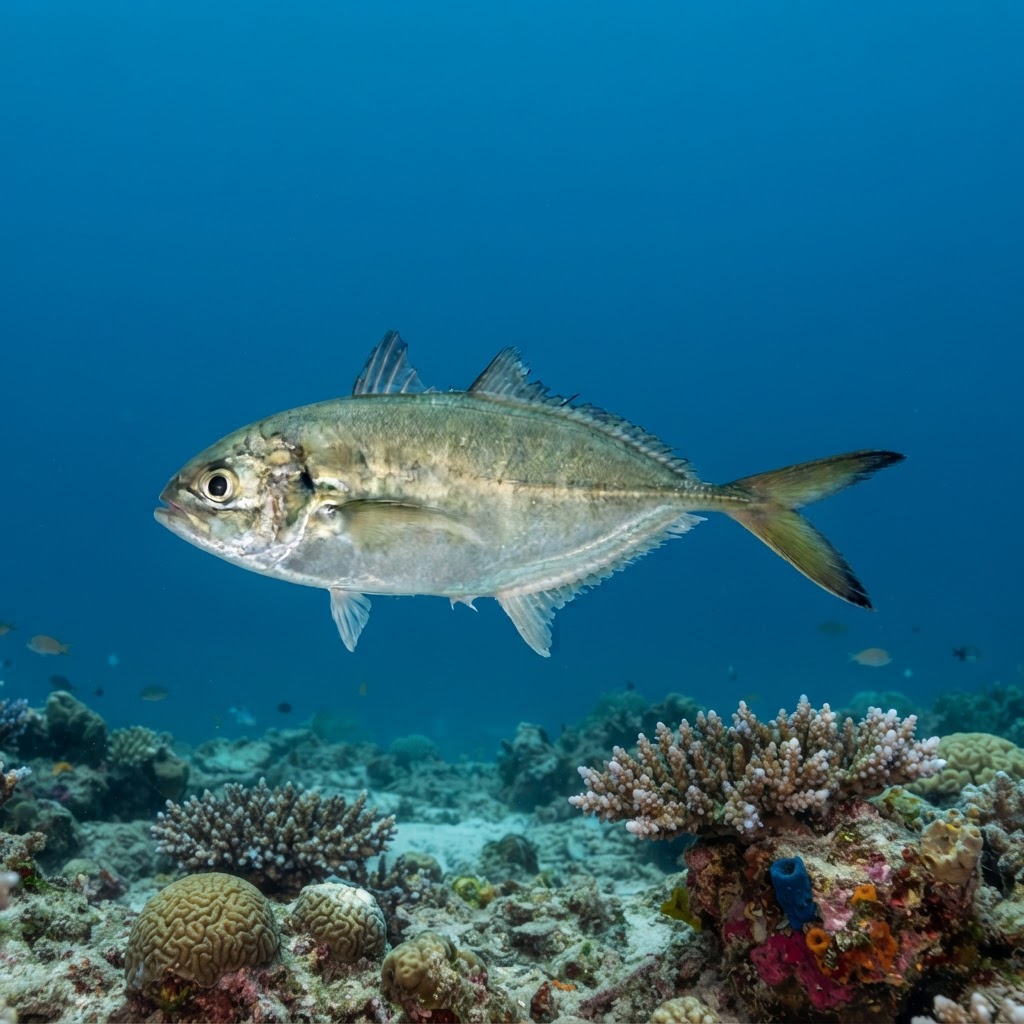
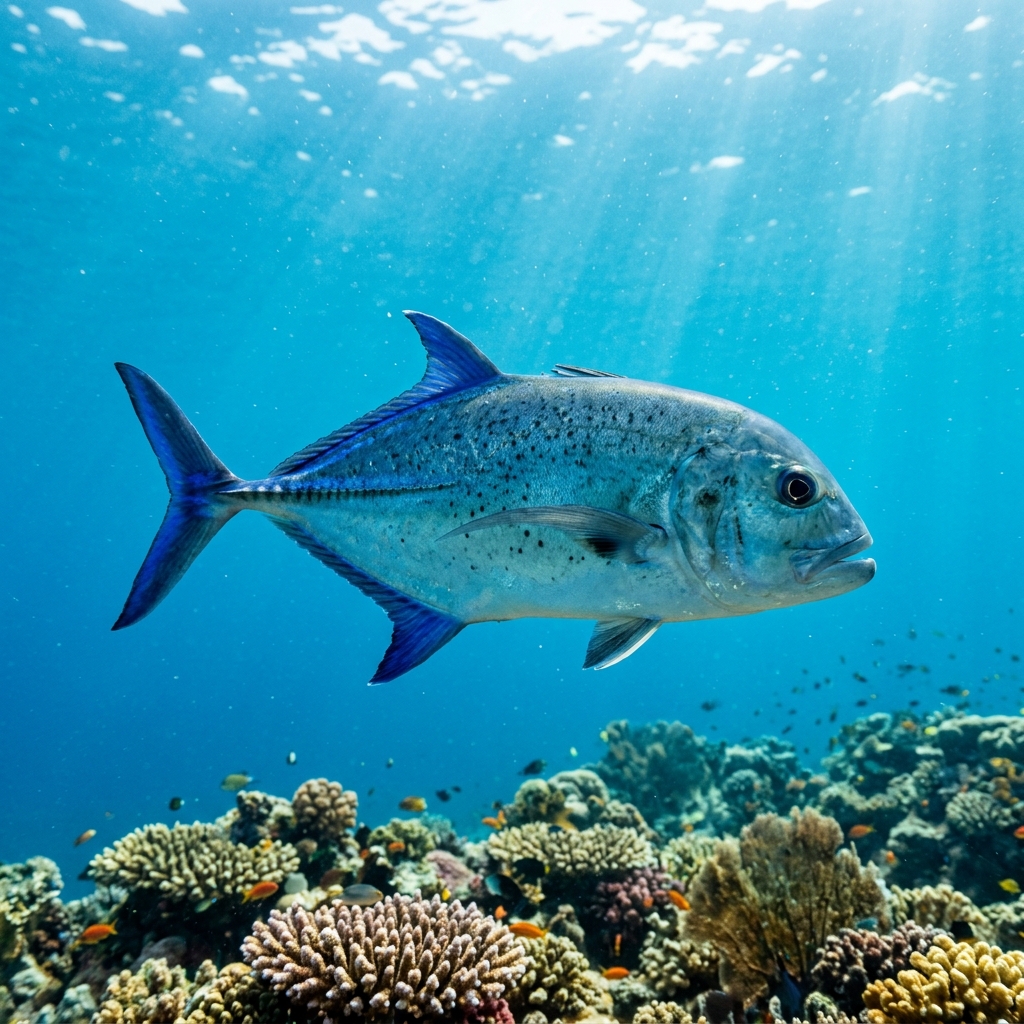
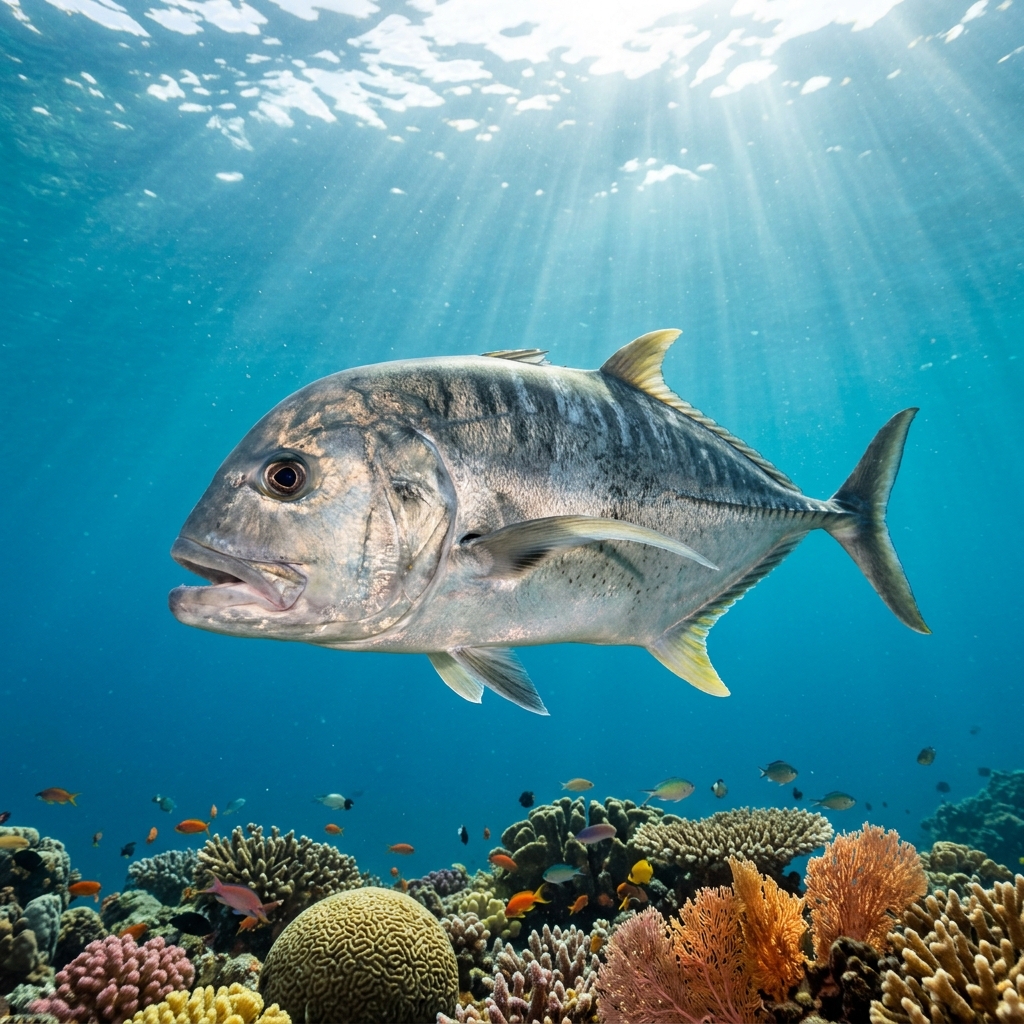
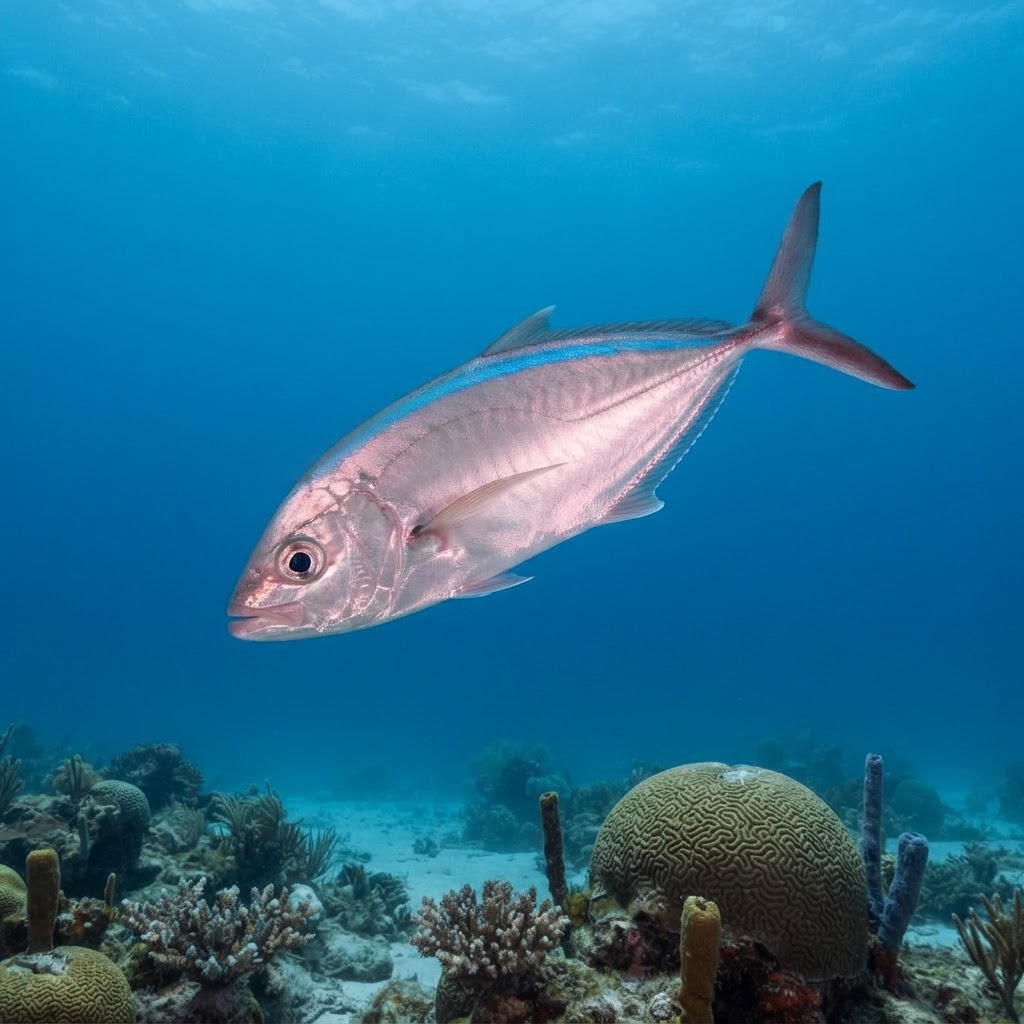
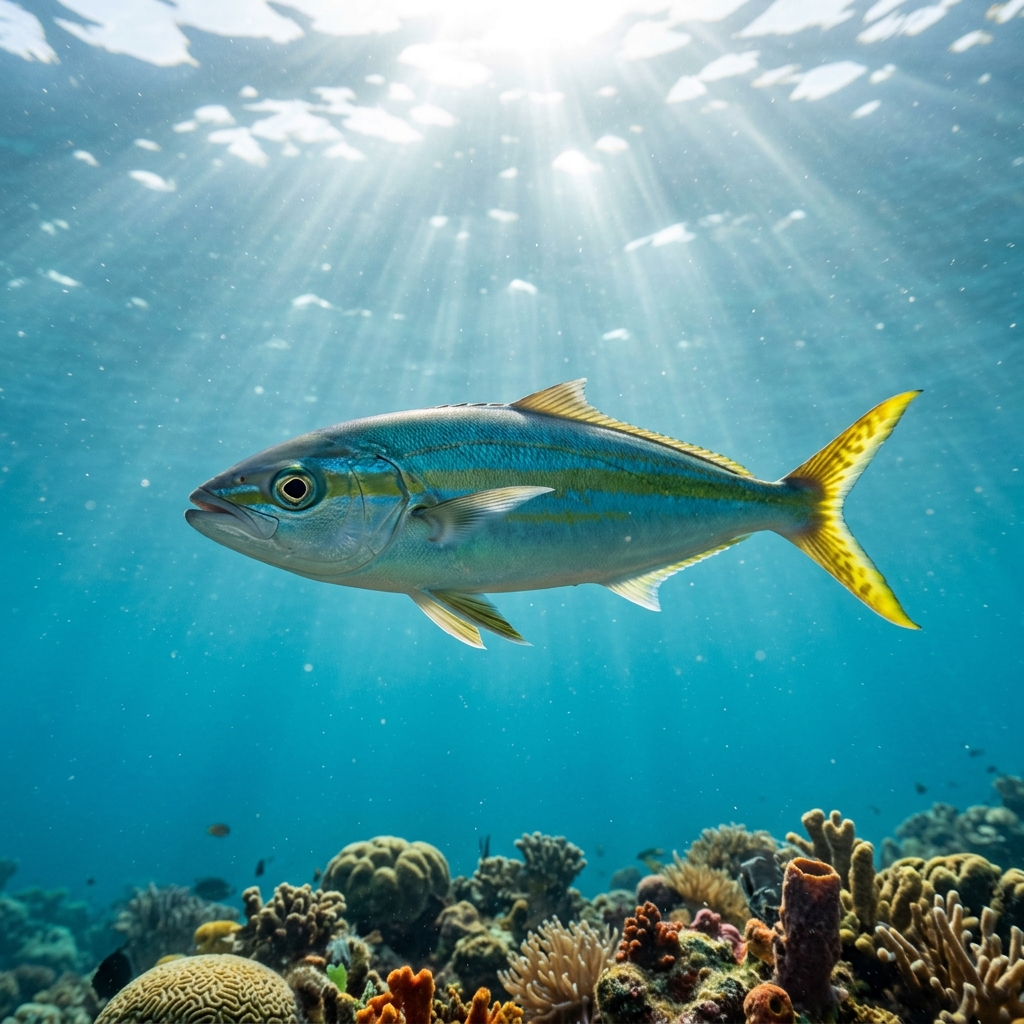
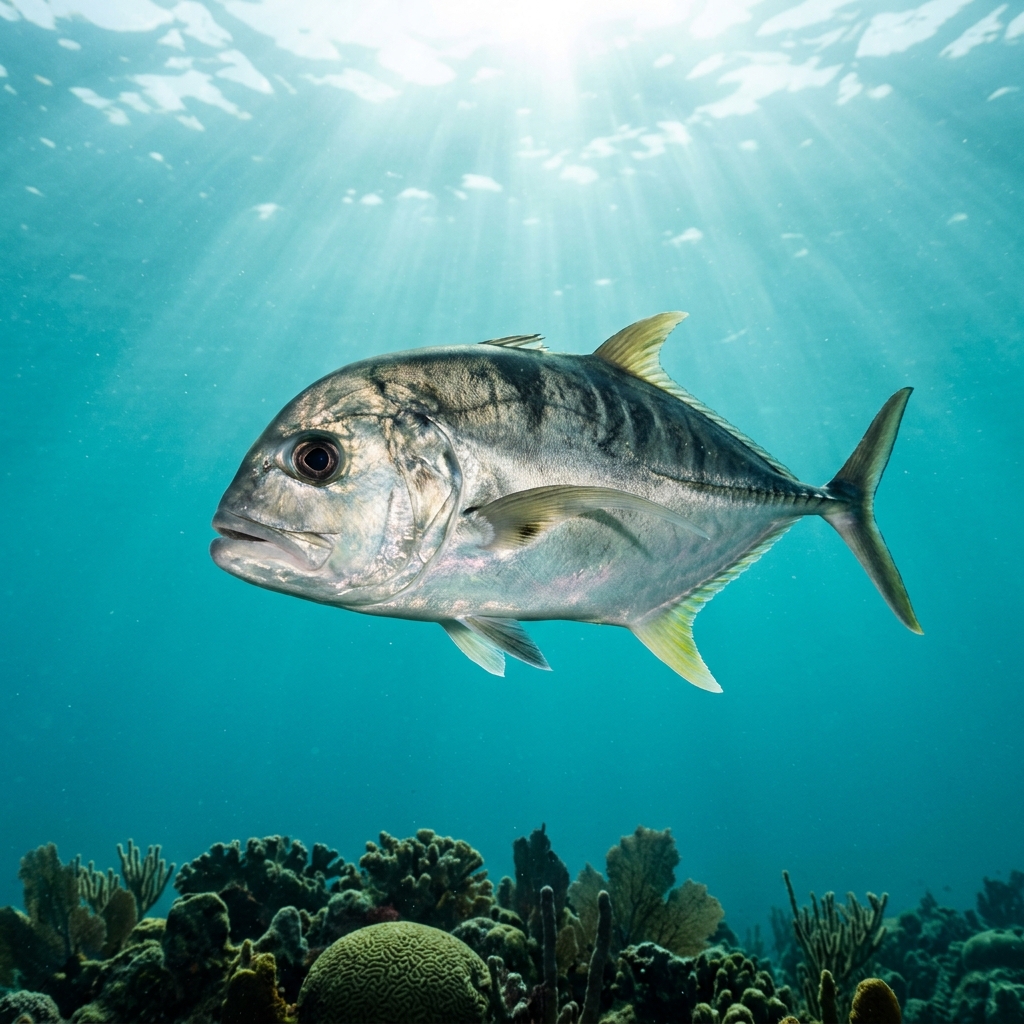
Look for a deep-bodied, laterally flattened silver fish with a sharply forked tail and a curved lateral line that often carries a row of bony scutes toward the rear. Most species in this genus show a steep, blunt forehead profile and travel either alone shadowing divers or in loose, fast-moving schools over reef edges and current-swept points. Colour varies by species, from plain chrome to blue-tinged flanks, but the flattened, torpedo-like silhouette and forked tail are the giveaway across the whole genus.
Divers most often spot trevally patrolling reef edges, drop-offs and current lines, sometimes solo and shadowing a diver out of curiosity, other times in loose schools working baitfish along the current. They're generally logged as uncommon rather than a guaranteed sighting, so a good current or a cleaning station nearby improves the odds. Expect fast, purposeful swimming rather than the slow reef-grazing of many other fish.
Several trevally species are known to hunt cooperatively, using coordinated rushes to pin baitfish against the reef or the surface, a behaviour divers occasionally get to watch play out in open water.
No clear seasonal pattern shows up in the data, and with a comfortable range of 24 to 29.3C, trevally are a year-round sighting on the tropical and warm-temperate reefs where they're logged.
Reef neighbours a diver could mistake it for. Use the identification notes above to tell them apart.
Most consistently logged in the Maldives, particularly the Northern and Southern Atolls, and a reliable find across Indonesia's Sulawesi and the Philippines' Luzon and Palawan regions. Strong populations also turn up on Queensland's reefs, in Florida, and along the Caribbean Coast of Colombia, making this one of the more widely distributed reef fish genera on the dive map.
Mapping where Trevally is logged…
The Maldives (especially the Northern and Southern Atolls), Indonesia's Sulawesi, and the Philippines' Luzon and Palawan regions are among the most consistent places to log trevally. Queensland in Australia, Florida, and Colombia's Caribbean coast also show strong sightings.
There's no strong seasonal pattern in the data, and trevally sit comfortably in water from 24 to 29.3C, so they're a year-round possibility on the reefs where they're found.
Look for a silver, laterally flattened body, a steep forehead, and a strongly forked tail, often with a curved lateral line carrying small bony scutes near the rear. They're usually seen cruising reef edges alone or in loose fast-moving schools rather than grazing on the bottom.
No, trevally pose no real danger to divers. They're often curious and will approach or shadow divers, but this is inquisitive rather than aggressive behaviour.
Yes, several species in this genus are known to hunt cooperatively, working together to corral baitfish against reef structure or the surface, a striking bit of behaviour to witness on a dive.
Site and sighting data is aggregated from diver logs, iNaturalist and GBIF. For taxonomy and conservation status:
Bar Jack
1,748 sites