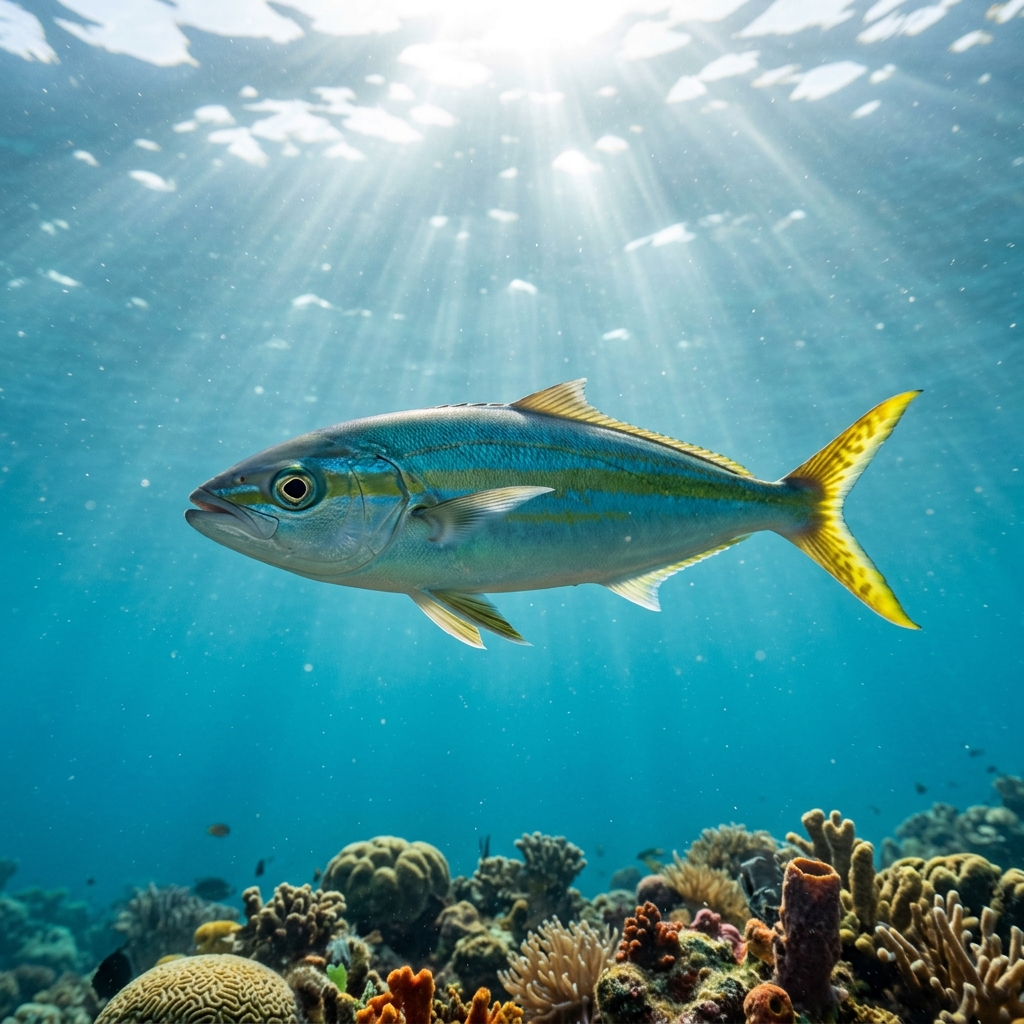
Elagatis bipinnulata
Spot rainbow runners in the Maldives, Philippines, and Red Sea. Learn their vivid stripe pattern and what sets them apart from other jacks.
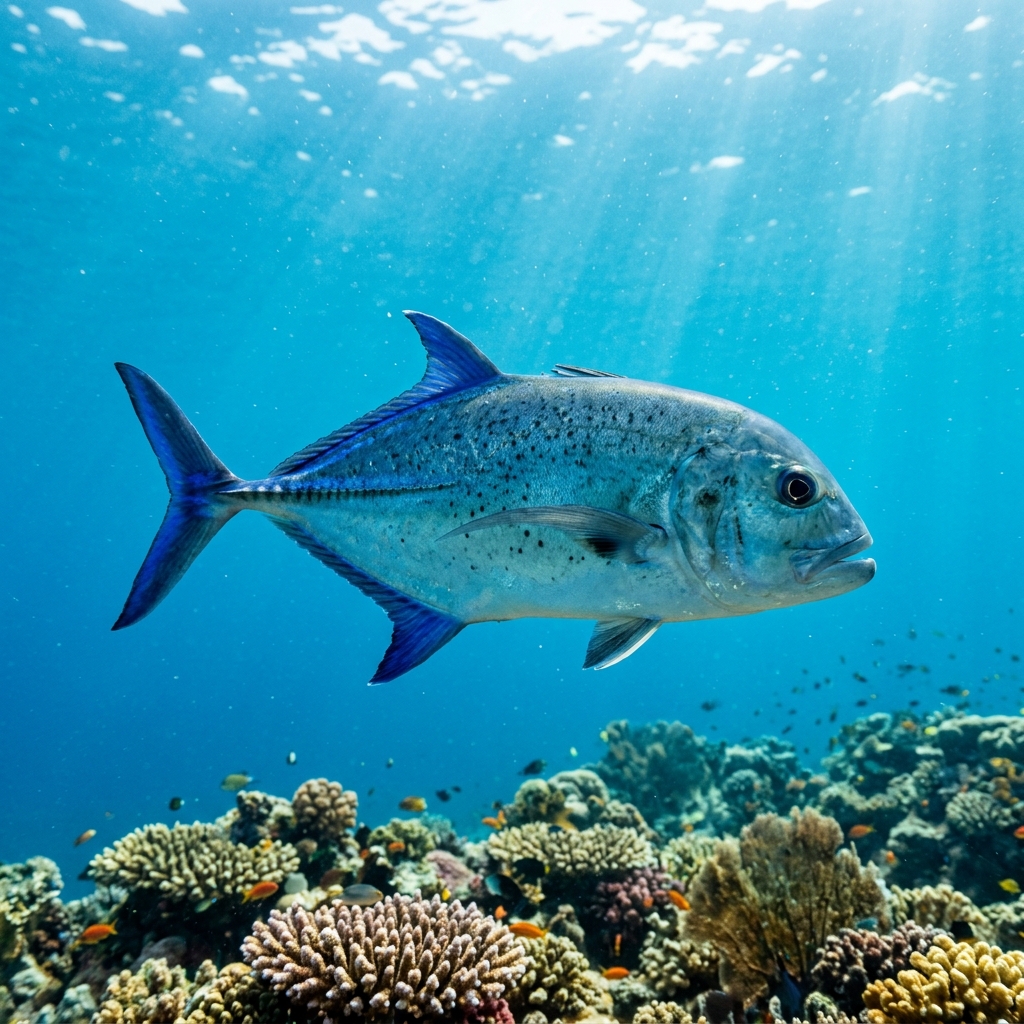
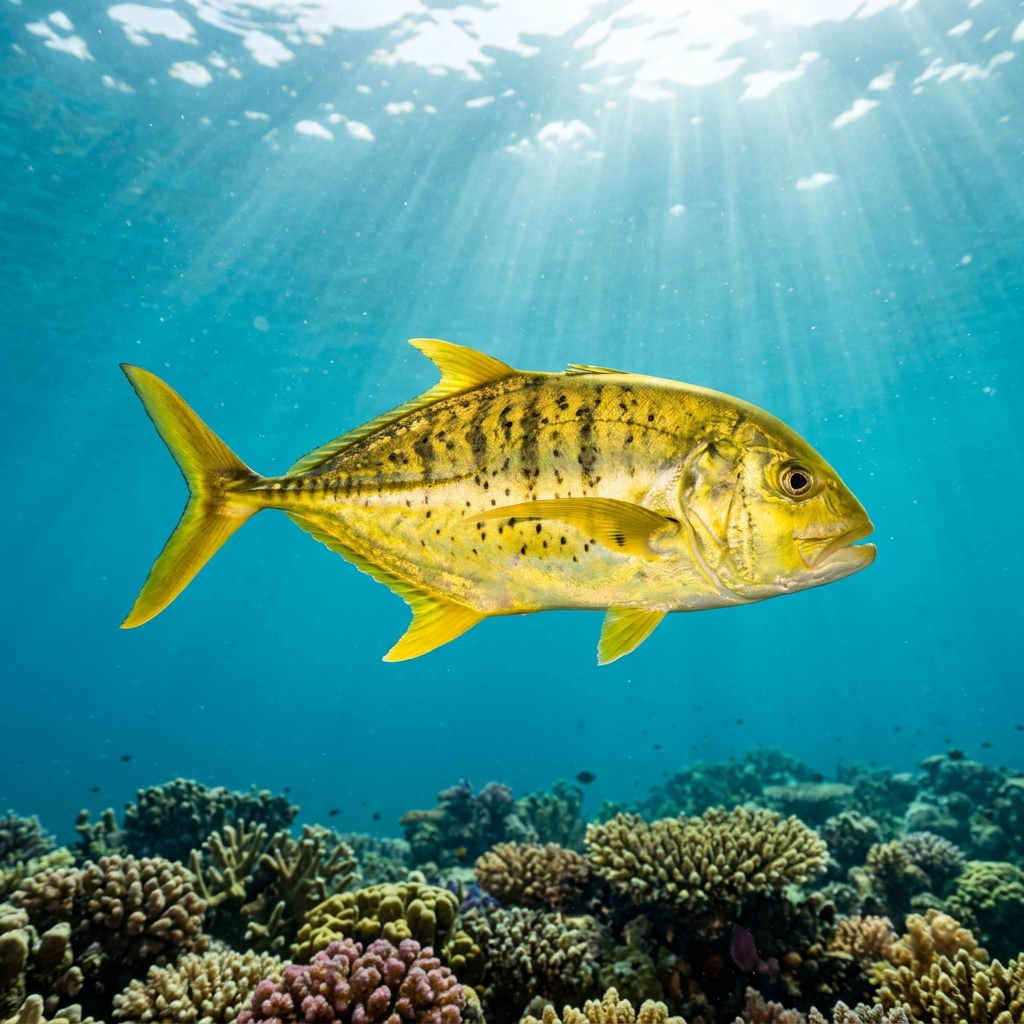
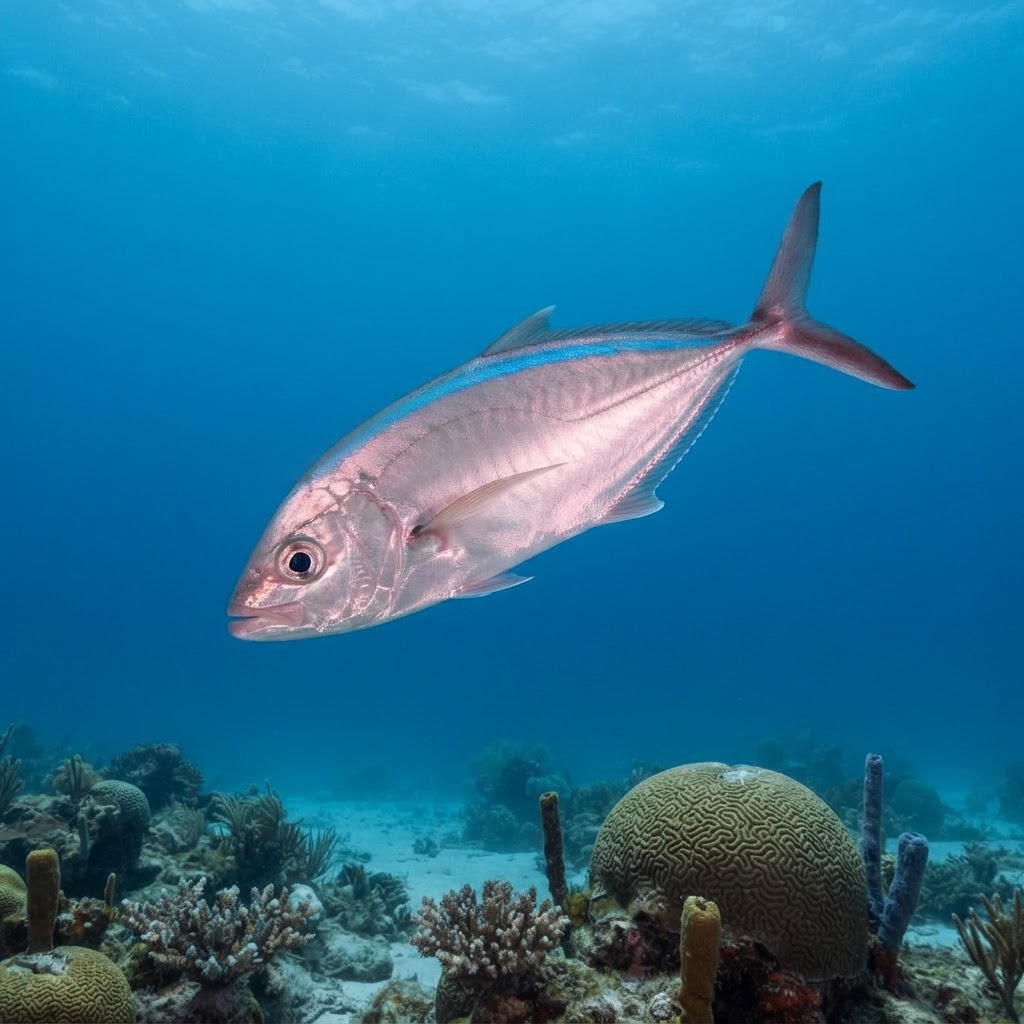
Two vivid horizontal stripes, one bright yellow and one electric blue, run the full length of the body from snout to tail, making them unmistakable in good visibility. The body is long and slender compared to most jacks, built for open-water speed, and adults regularly reach a metre or more. At the tail end, the stripes merge into a yellow-tipped forked tail. That stripe combination is the single fastest field mark you need.
Rainbow runners tend to cruise in loose, fast-moving schools at mid-water depth, often sweeping along reef drop-offs or over sandy channels rather than hugging the coral. They are not shy but rarely linger, so catching them means staying still and letting the school pass rather than chasing them. Schools will sometimes follow a diver briefly out of curiosity before continuing on their way.
Despite looking like an open-water sprinter, the rainbow runner is reef-associated and regularly uses cleaning stations on coral reefs, pausing long enough to let cleaner wrasse work over their bodies, which is one of the better chances to observe them up close.
No strong seasonal peak has emerged from sighting data, so rainbow runners are effectively a year-round target wherever they occur. Their observed temperature range of roughly 23 to 29 °C aligns with tropical and warm subtropical reefs across the globe, keeping them present through most of the year at top destinations.
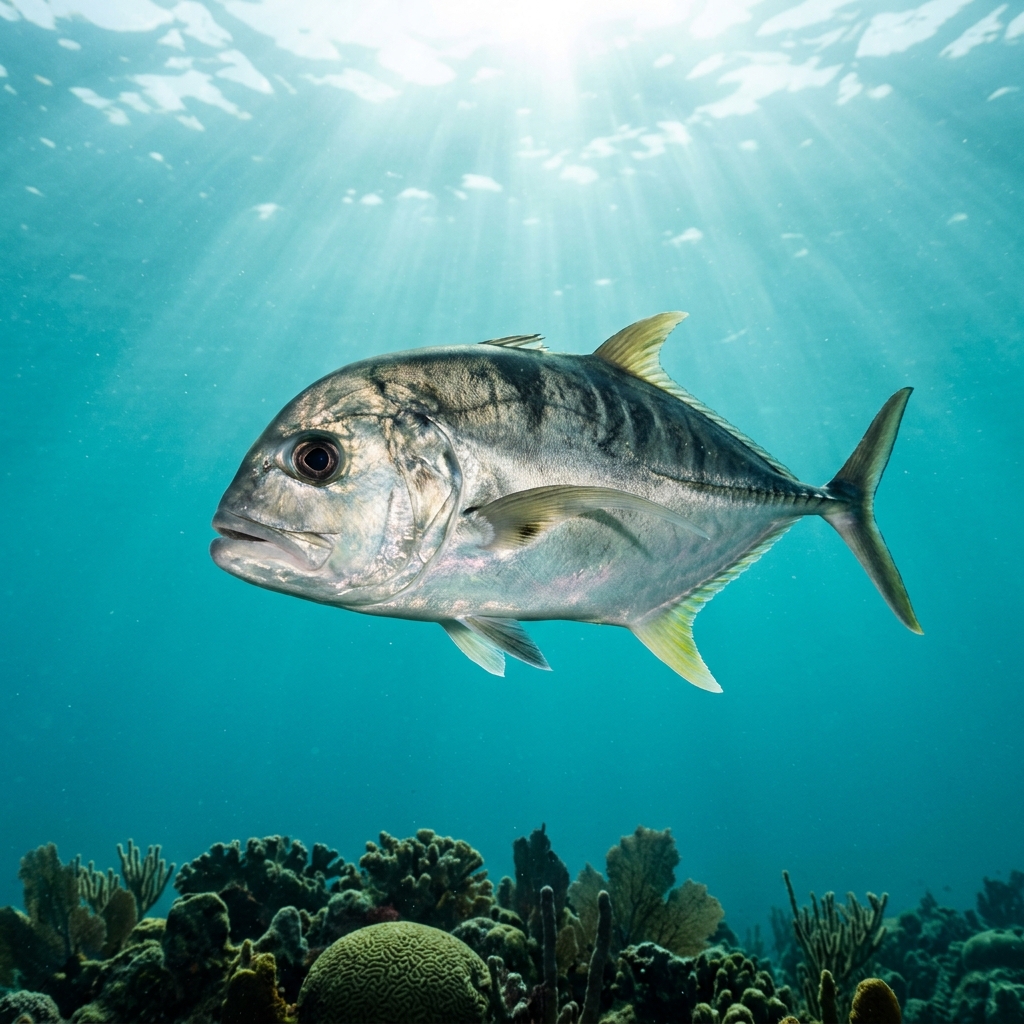
Reef neighbours a diver could mistake it for. Use the identification notes above to tell them apart.
Rainbow runners are most consistently logged in the Maldives, where North and Central Atolls, Felidhoo and Mulaku, and Deep South all return solid records. The Philippines (especially Palawan and Apo Reef), Indonesia, and Thailand round out the Indo-Pacific hotspots. Outside Asia, Florida and the southeast United States, northeastern Brazil, and the Red Sea off Sudan also produce reliable sightings.
Mapping where Rainbow Runners is logged…
Rainbow runners turn up across a wide spread of tropical destinations. The Maldives leads, with strong records across multiple atolls including North and Central Atolls and the Deep South. The Philippines, Indonesia, and Thailand are reliable Indo-Pacific spots, while Florida, northeastern Brazil, and the Sudanese Red Sea offer them in the Atlantic and western Indian Ocean.
Available sighting data shows no concentrated season, so they can realistically be encountered year-round at tropical dive sites. Their comfort zone sits between roughly 23 and 29 °C, which matches the typical range on coral reef destinations throughout the year.
Look for the two bold horizontal stripes: one vivid yellow and one bright blue, running unbroken from behind the eye to the tail. The body is noticeably more slender and elongated than other jacks, and the tail often shows a yellow tip. No other common reef jack in the same size range carries that two-tone stripe pattern.
Adults typically reach around 100 to 125 cm in length, making them one of the larger members of the jack family you are likely to encounter on a reef dive. Their slender shape means they look leaner than a trevally of similar length.
At most sites where they are recorded, rainbow runners are logged as uncommon rather than a reliable daily sighting. They are schooling, open-water wanderers, so encounters depend heavily on timing and luck. Staying near channel edges and drop-offs in the Maldives or Philippines improves your chances.
Site and sighting data is aggregated from diver logs, iNaturalist and GBIF. For taxonomy and conservation status:
Bigeye Trevally
2,591 sites