Parupeneus margaritatus
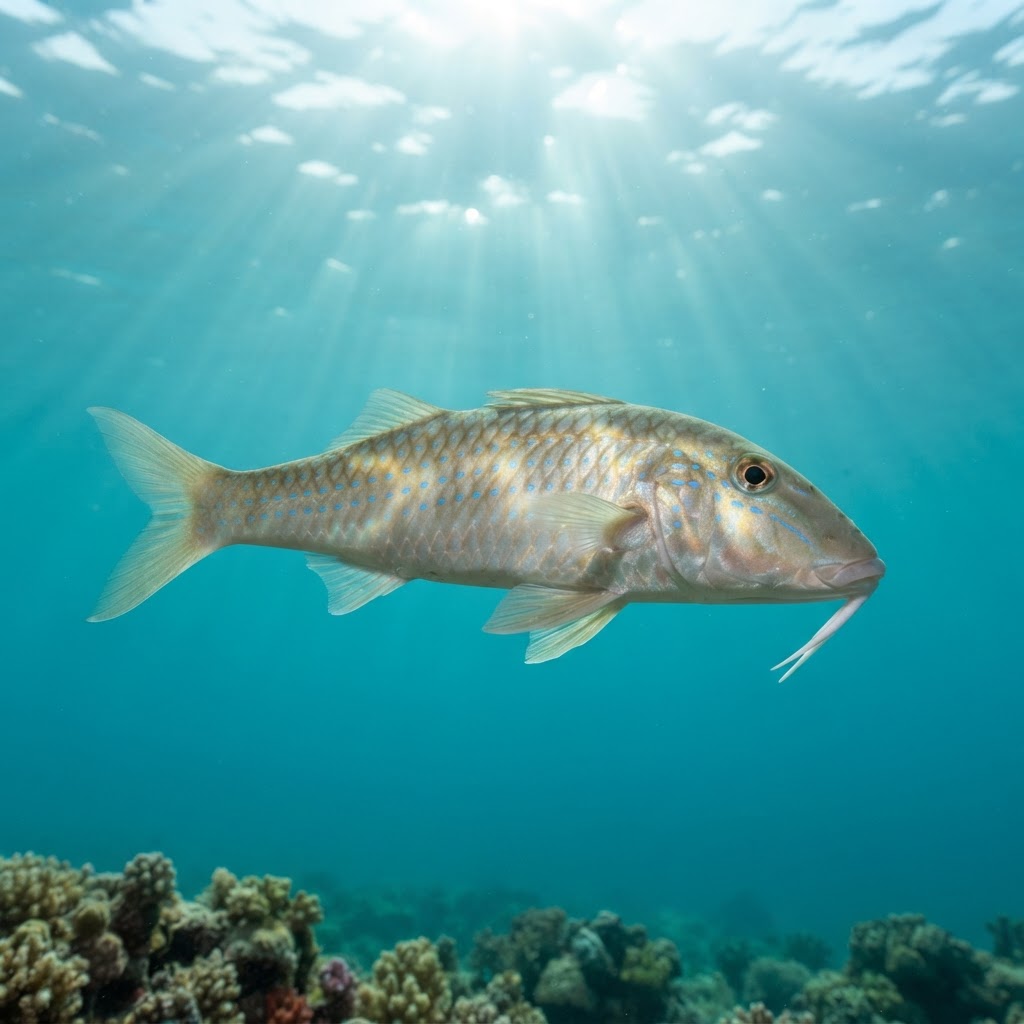
Pale pink goatfish with a shimmering, iridescent flank, most reliably logged around Oman's Daymaniyat Islands in warm 25.5 to 29.3C water.
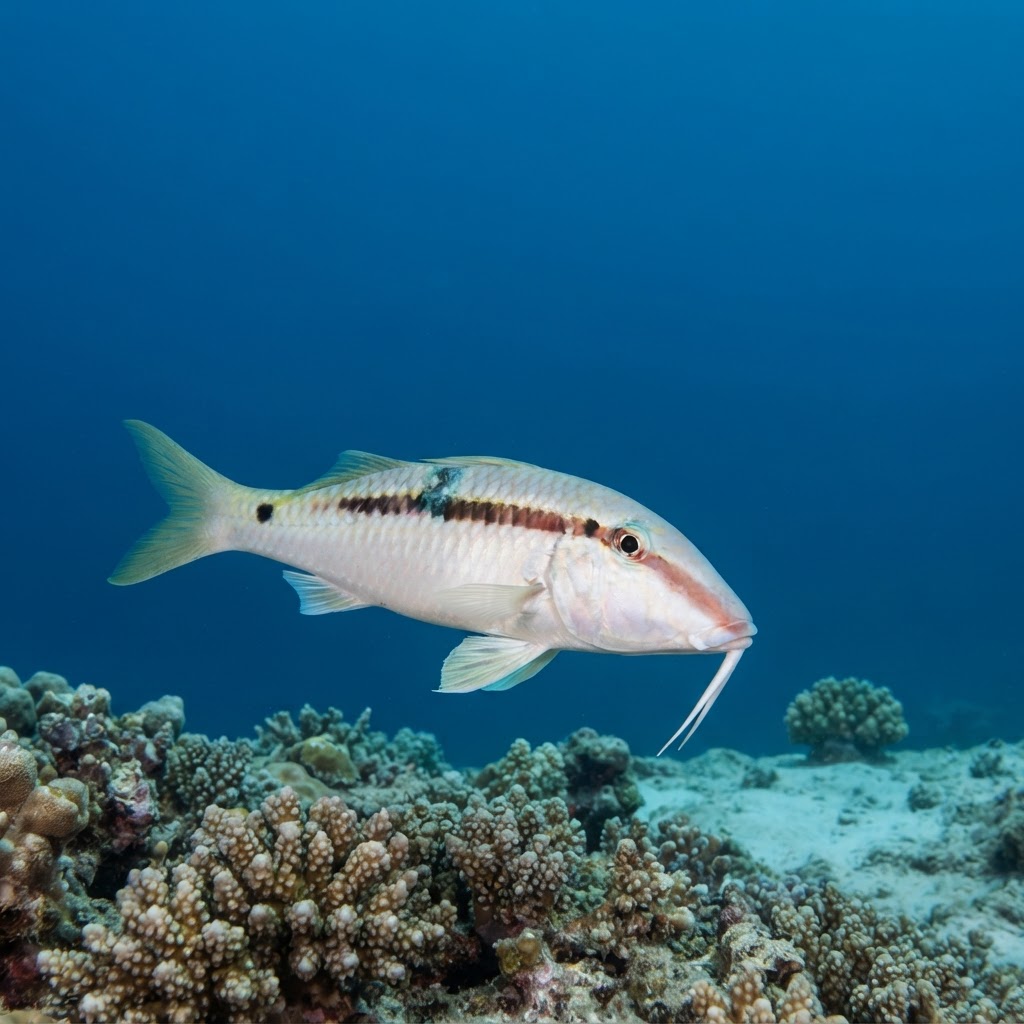
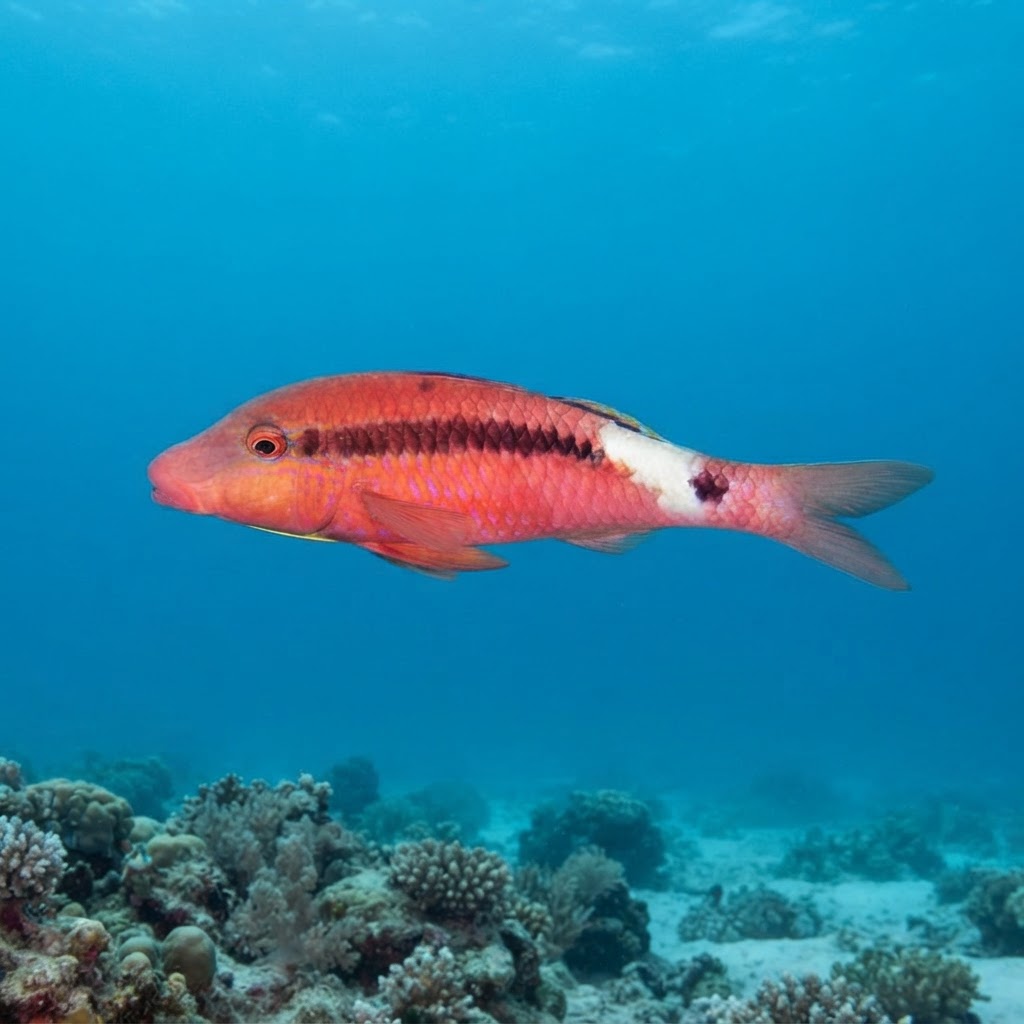
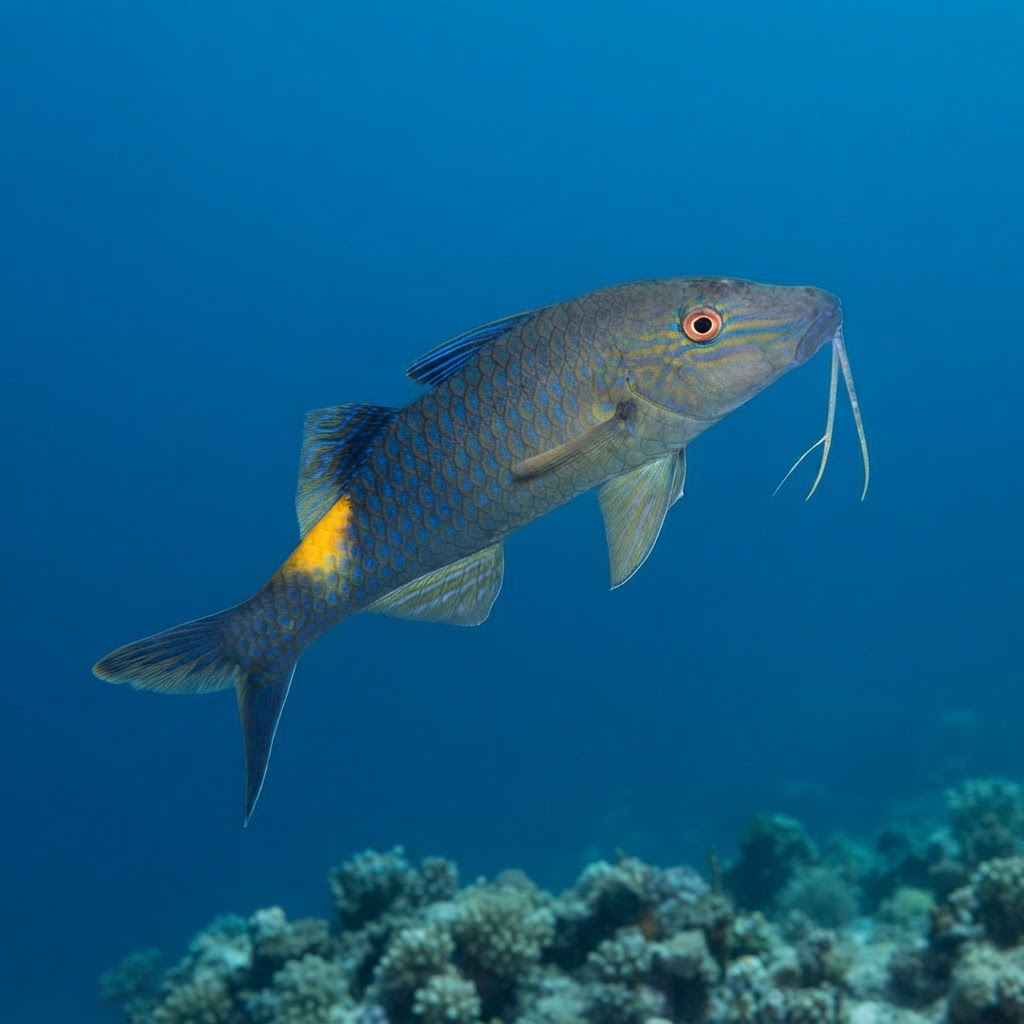
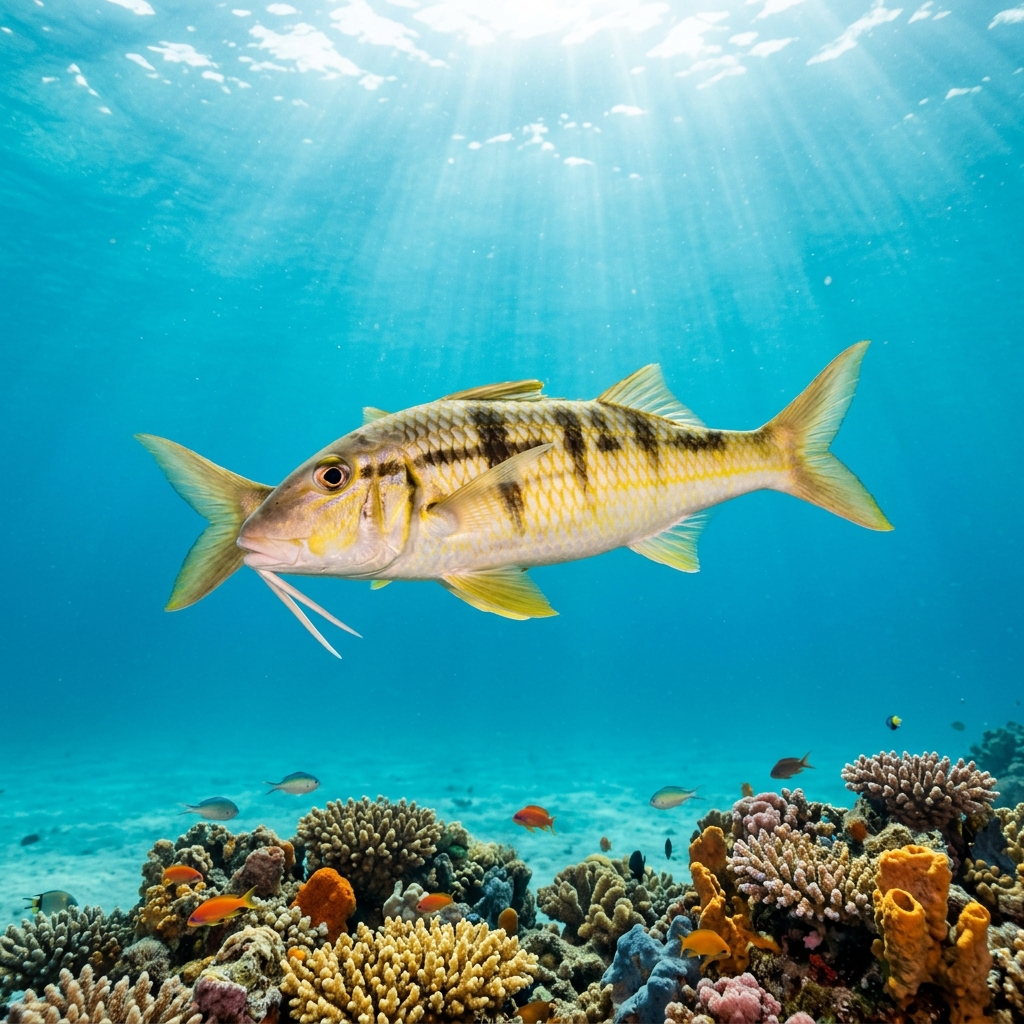
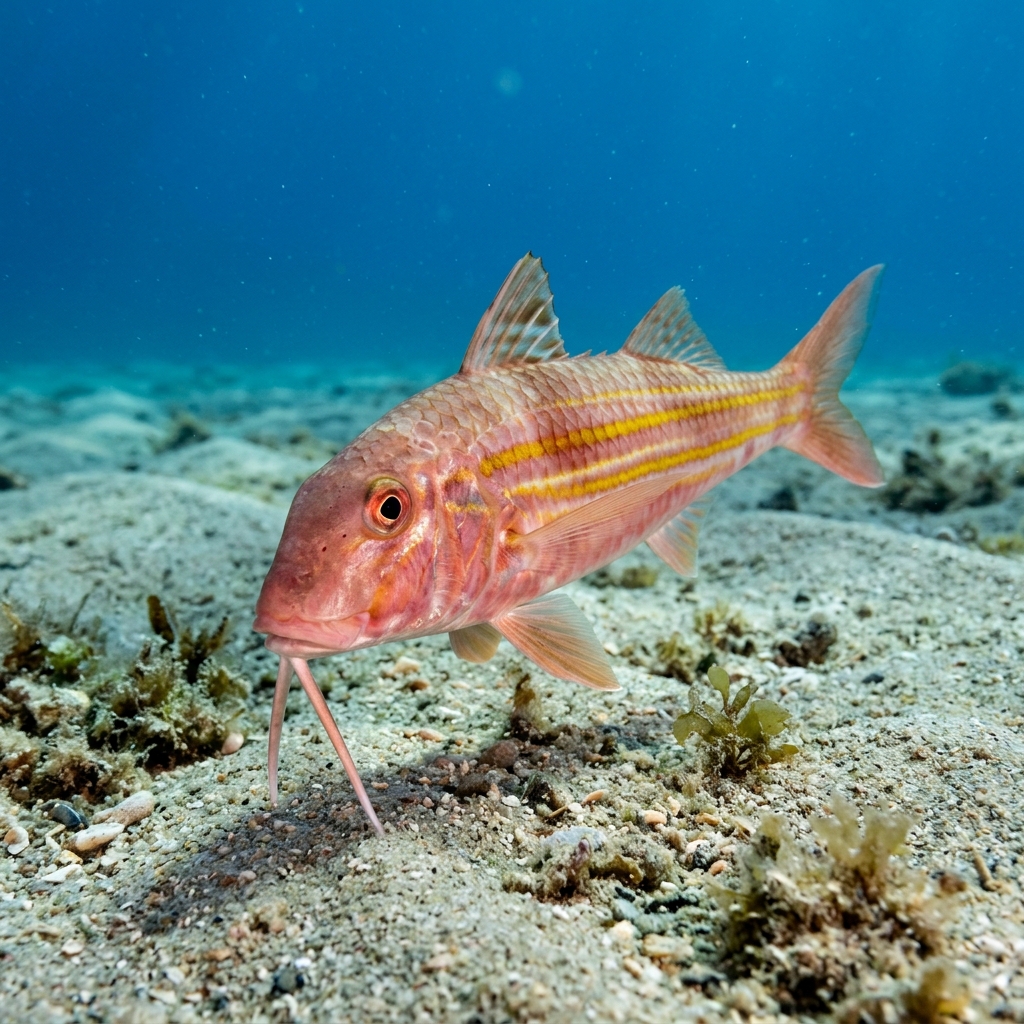
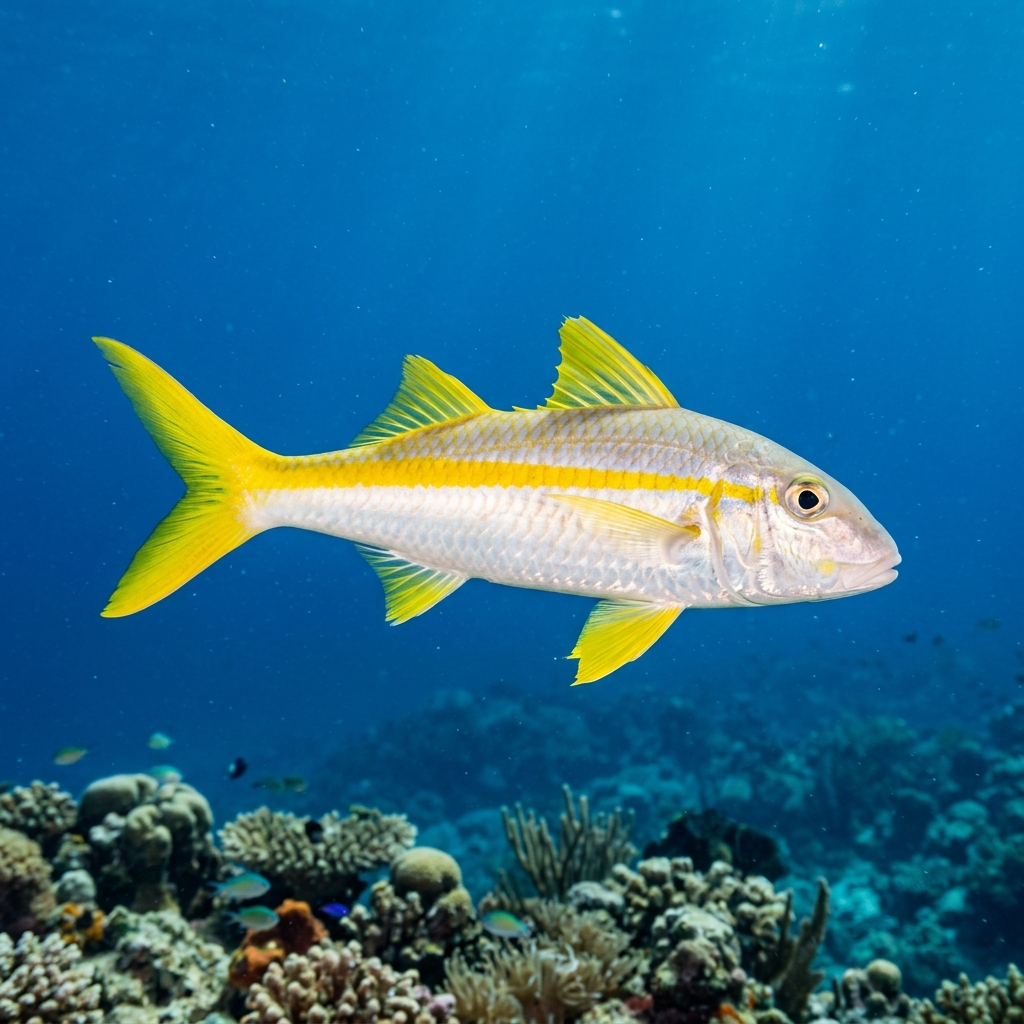
Grows to about 16cm and shows a soft pinkish-white body with an almost pearly, iridescent sheen that shifts as light hits it. Like other goatfish it has a pair of long chin barbels (whisker-like sensory feelers) used to probe sand and rubble for food. Look for the slim, torpedo-shaped body and the way it hovers just above the substrate rather than swimming mid-water.
Divers typically find it working sandy patches and rubble close to the reef, nose down and barbels sweeping the bottom as it hunts small invertebrates. It tends to stay low and unhurried, more focused on the substrate than on passing divers, so a slow approach usually gets you a good close look before it moves off a metre or two.
Those chin barbels are packed with chemical and touch sensors, letting it detect buried prey in sand that it cannot see, then flicking sediment aside once something is found.
Sightings are spread across the year with no clear seasonal pattern in the data, and the species sits comfortably in warm water between 25.5 and 29.3C, so it is worth looking for on any dive in the Daymaniyat Islands regardless of month.
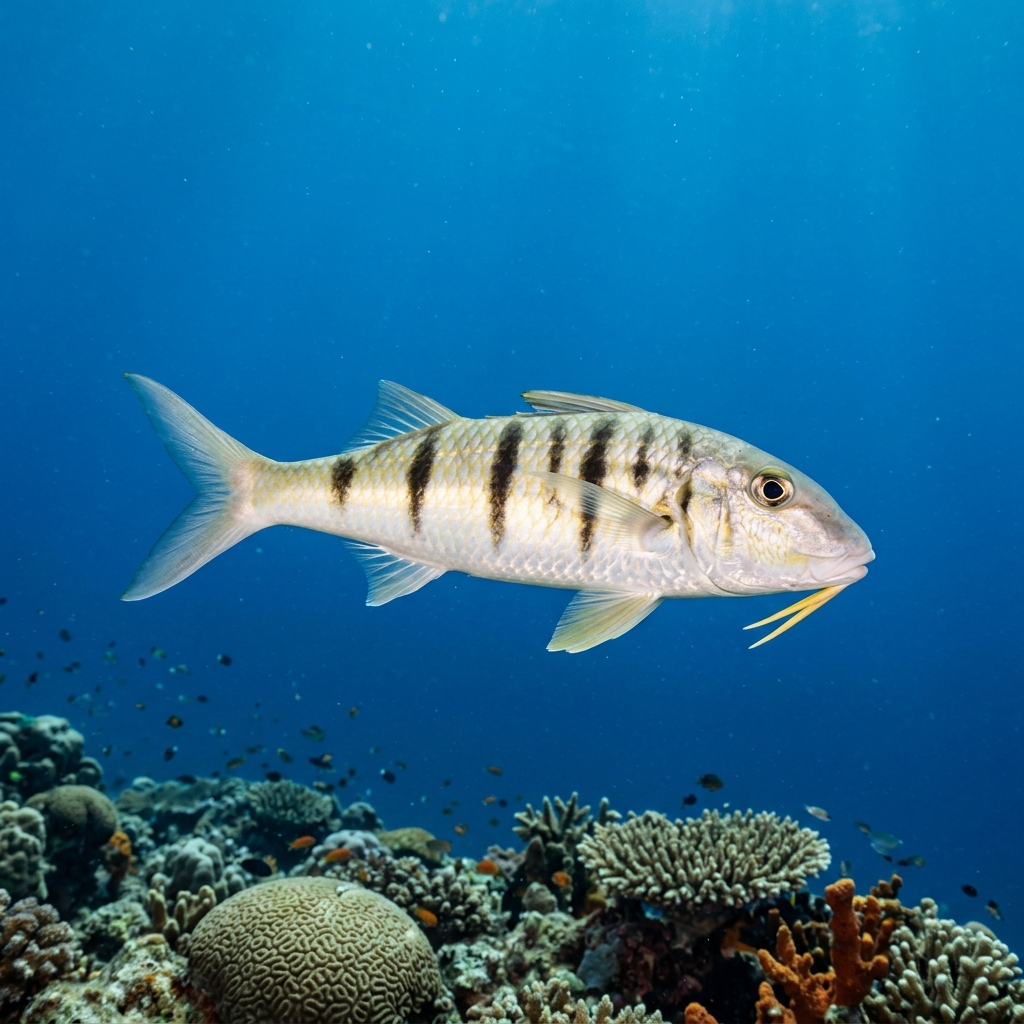
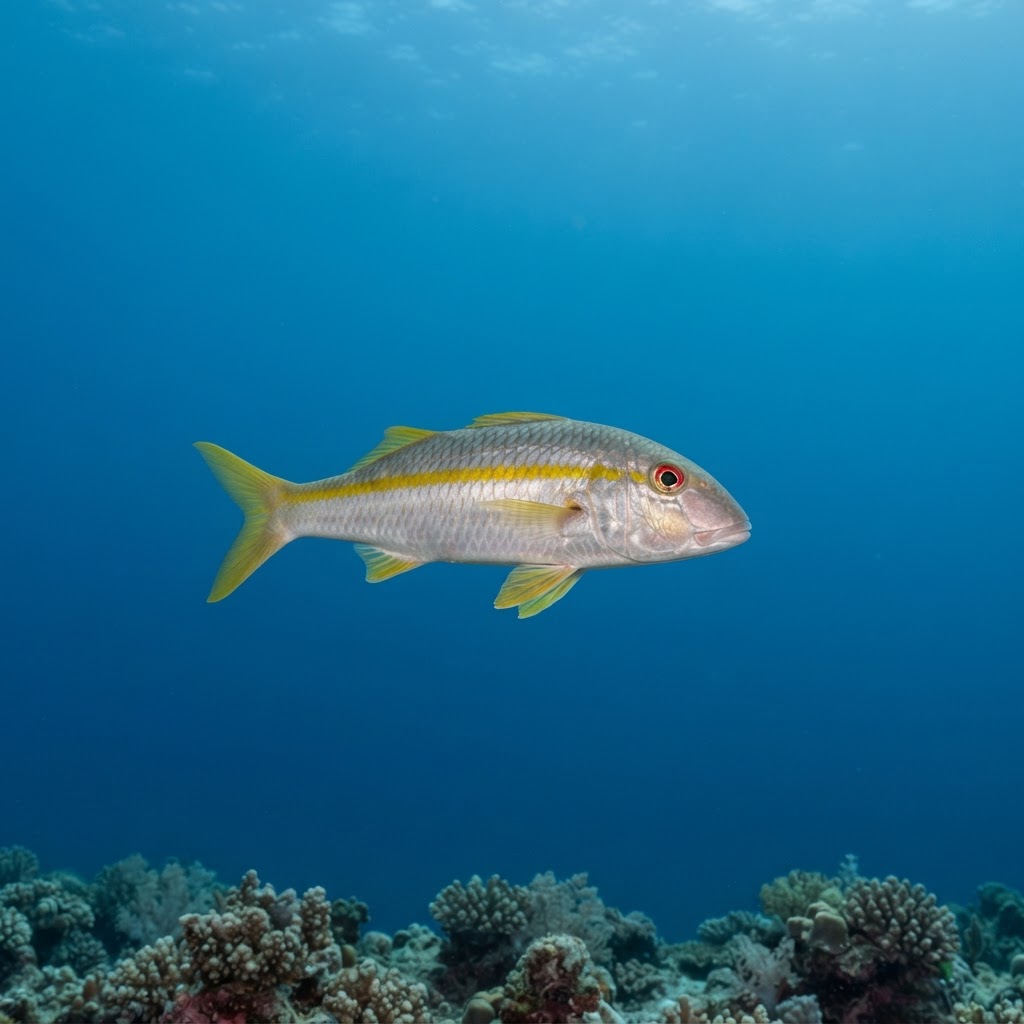
Reef neighbours a diver could mistake it for. Use the identification notes above to tell them apart.
Most reliably logged around Oman's Daymaniyat Islands, where it turns up as a common sighting on a large share of dive sites. It also shows up along the East Coast of the United Arab Emirates, though less consistently, making the Gulf of Oman region the best bet for a planned encounter.
Mapping where Pearly Goatfish is logged…
The strongest population by far is around Oman's Daymaniyat Islands, where it is logged as common on many sites. Smaller numbers are also seen along the East Coast of the United Arab Emirates.
There is no strong seasonal pattern in sightings, so it is considered a year-round find. It favours warm reef water in the 25.5 to 29.3C range, which fits most of the diving calendar in the Daymaniyat Islands.
Look for a small, slim, pale pink fish around 16cm long with an iridescent, pearly sheen and two long chin barbels. It is usually seen hovering close to sand or rubble rather than swimming freely over the reef.
They are a small reef fish, typically reaching around 16cm in length, so they are easy to overlook against a busy rubble or sand patch.
No, they pose no threat to divers. They are calm, bottom-feeding fish that generally ignore divers unless approached too quickly.
They hunt using a pair of sensitive chin barbels that detect buried prey in sand and rubble, then stir up the sediment to expose it. This barbel-feeding behaviour is a hallmark of the whole goatfish family.
Site and sighting data is aggregated from diver logs, iNaturalist and GBIF. For taxonomy and conservation status:
Yellowfin Goatfish
2,241 sites