Parupeneus forsskali
Common on Red Sea reefs, this whiskered goatfish shows up year-round in South Sinai waters around 25-29C. Here's how to spot it.
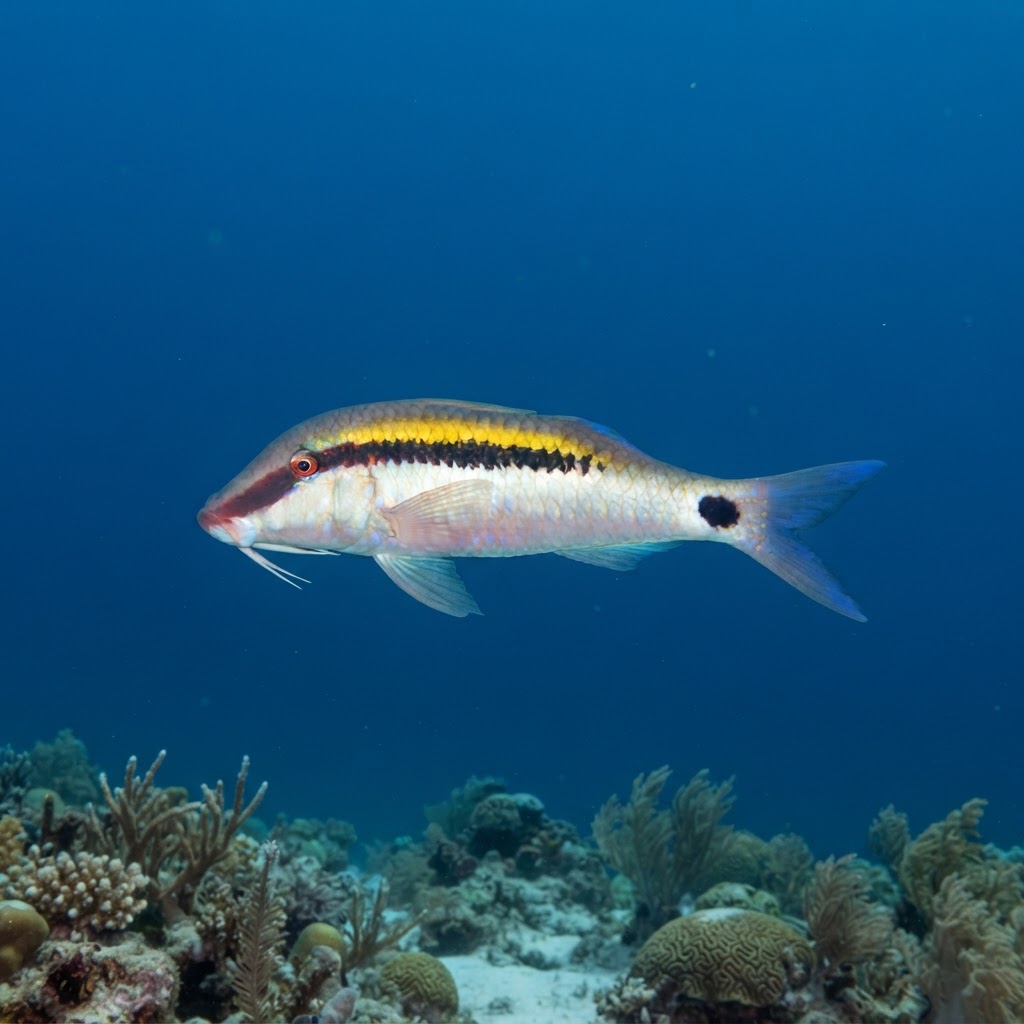
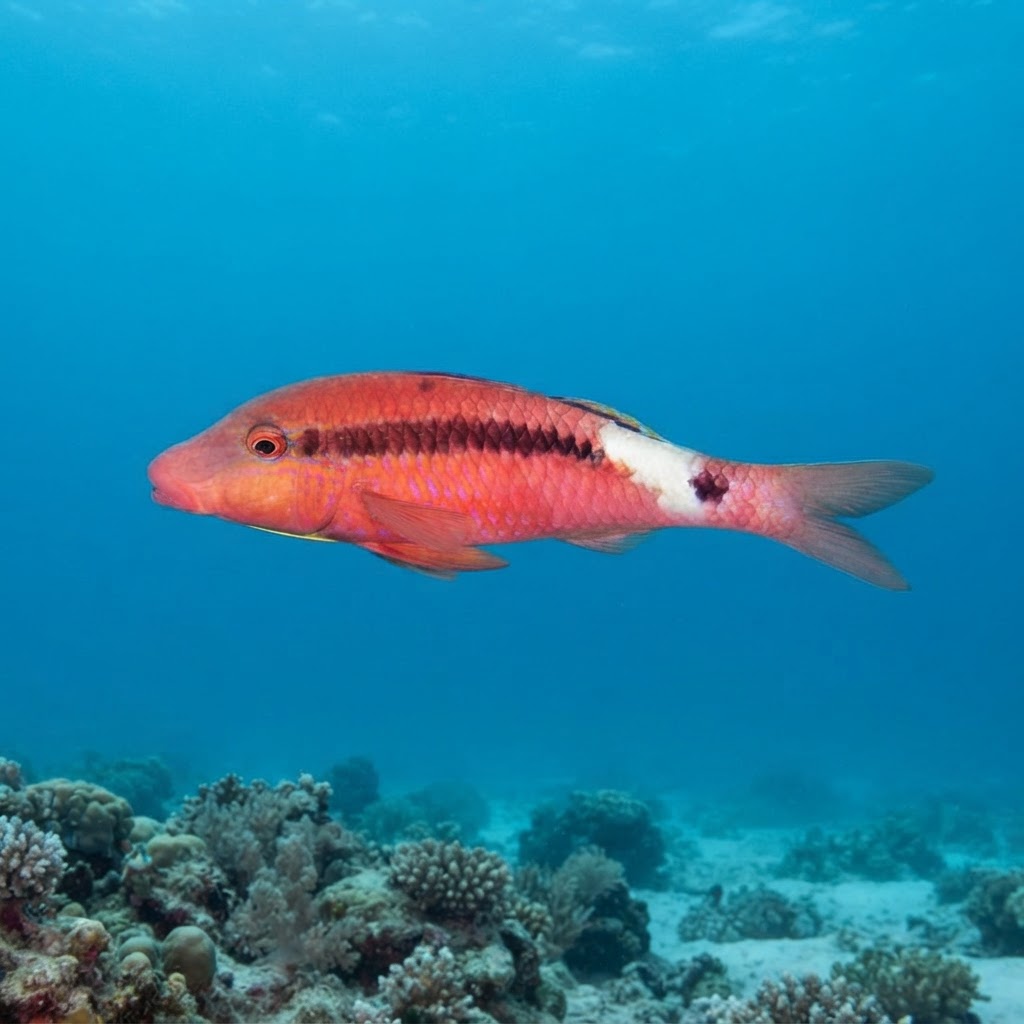
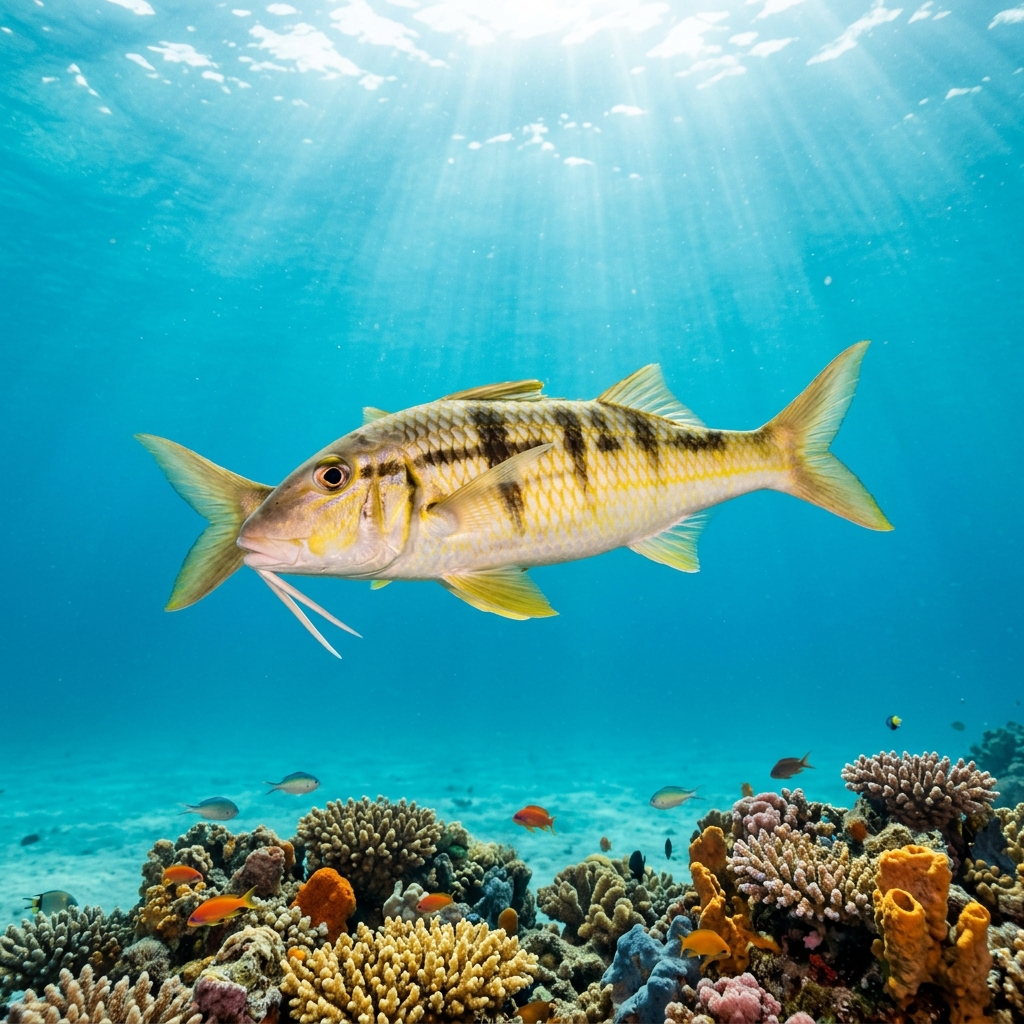
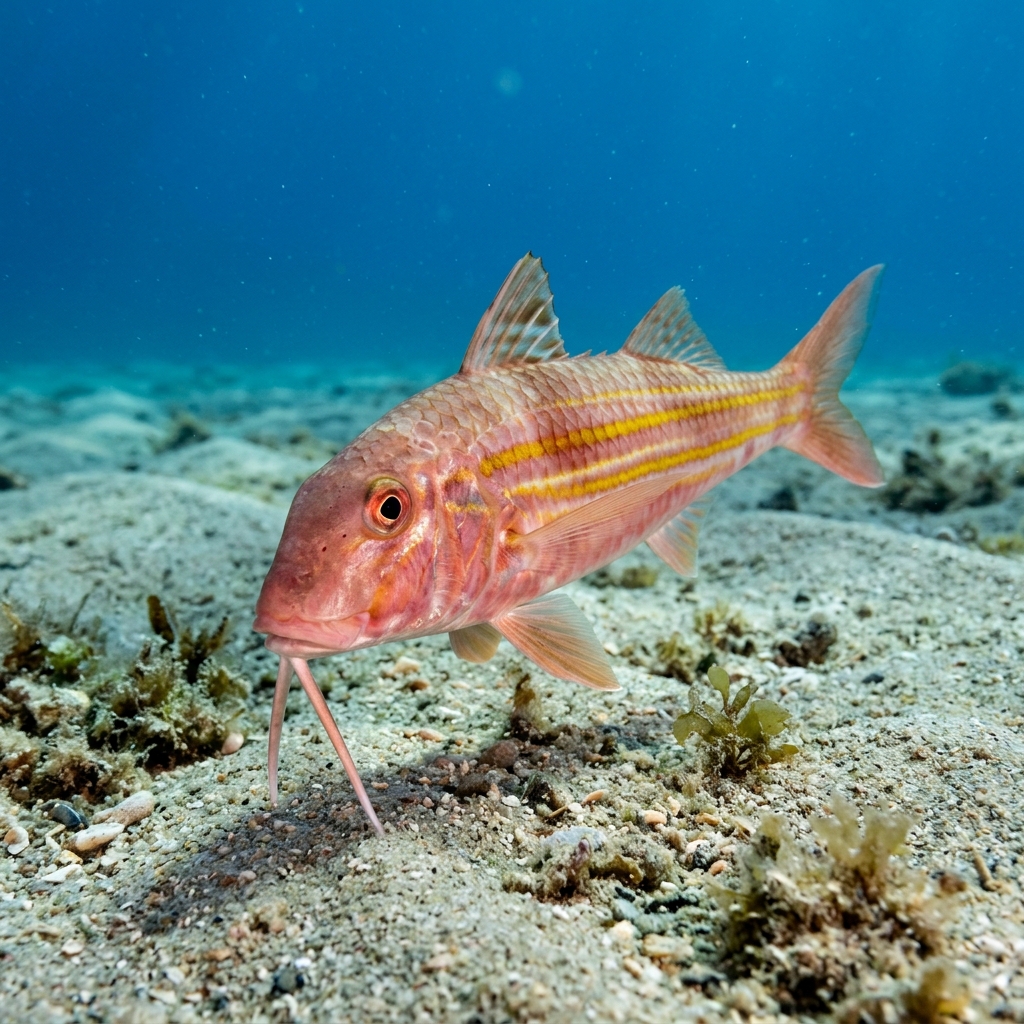
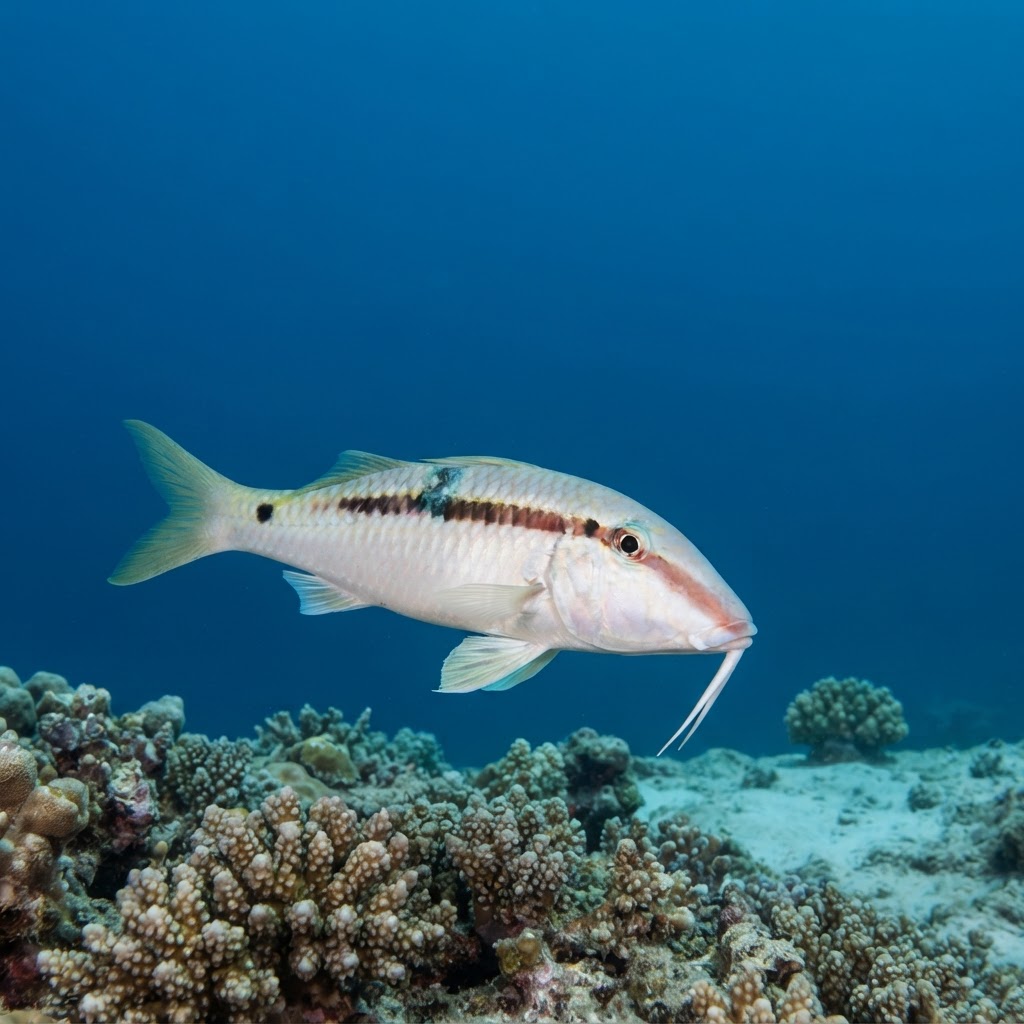
Slender, torpedo-shaped body around 19 cm long, usually reddish-brown to grey with a paler belly and a dark saddle-like blotch near the tail base. Look for the pair of long chin barbels (whisker-like feelers) it drags through the sand while foraging, a dead giveaway for any goatfish. Colour can shift between a mottled resting pattern and a more uniform flush when it's actively hunting.
Divers most often find it working the sand and rubble patches close to reef structure, sweeping its barbels through the substrate to flush out small invertebrates. It tends to ignore divers entirely, staying focused on foraging rather than reacting to bubbles or torches, which makes for easy, unhurried observation. Solitary or loosely grouped individuals are typical, often seen at shallower to mid depths rather than deep drop-offs.
Those chin barbels are packed with taste-sensing cells, letting it detect buried worms, crustaceans and molluscs in sand it can't see into, essentially fishing blind by feel.
No clear seasonal pattern shows up in the data, and with a comfortable range of roughly 25 to 29C it's present on these reefs year-round. Plan around your destination's general dive season rather than chasing a specific month for this species.
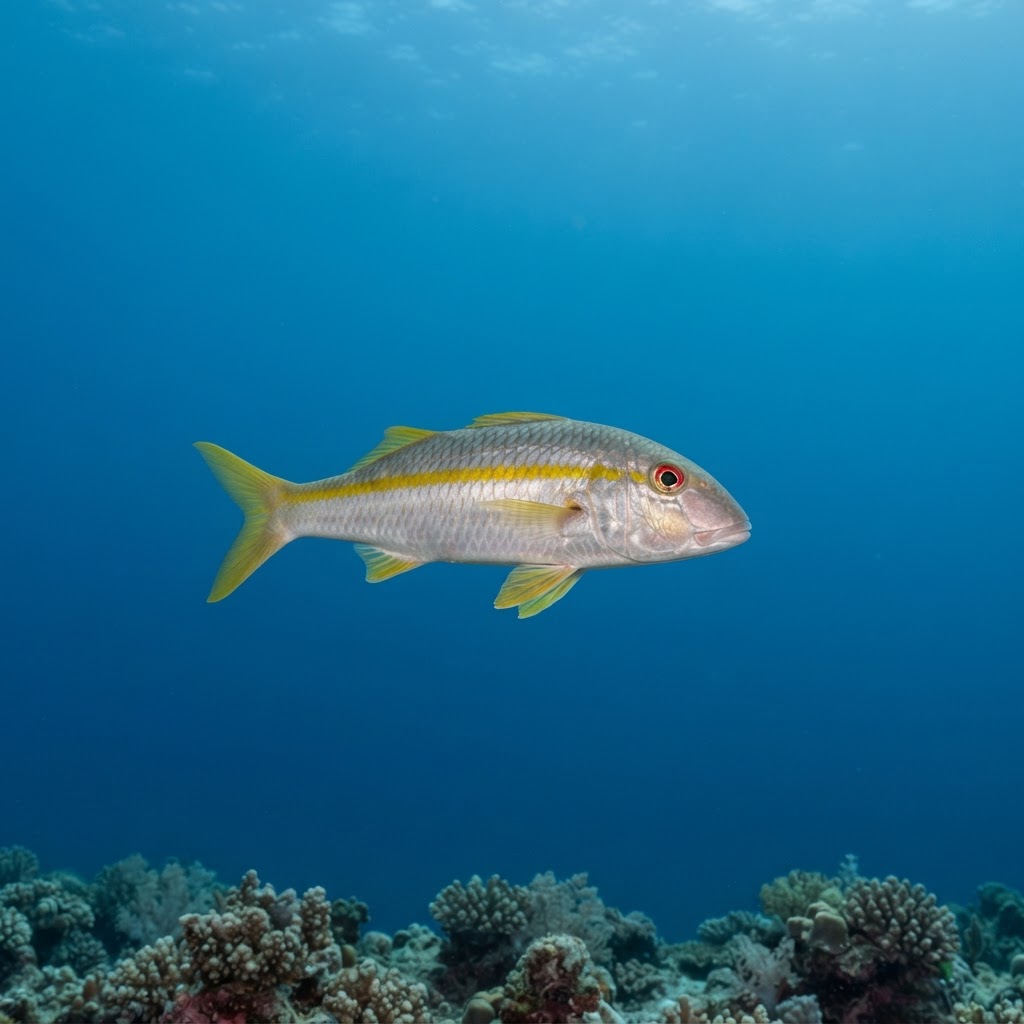
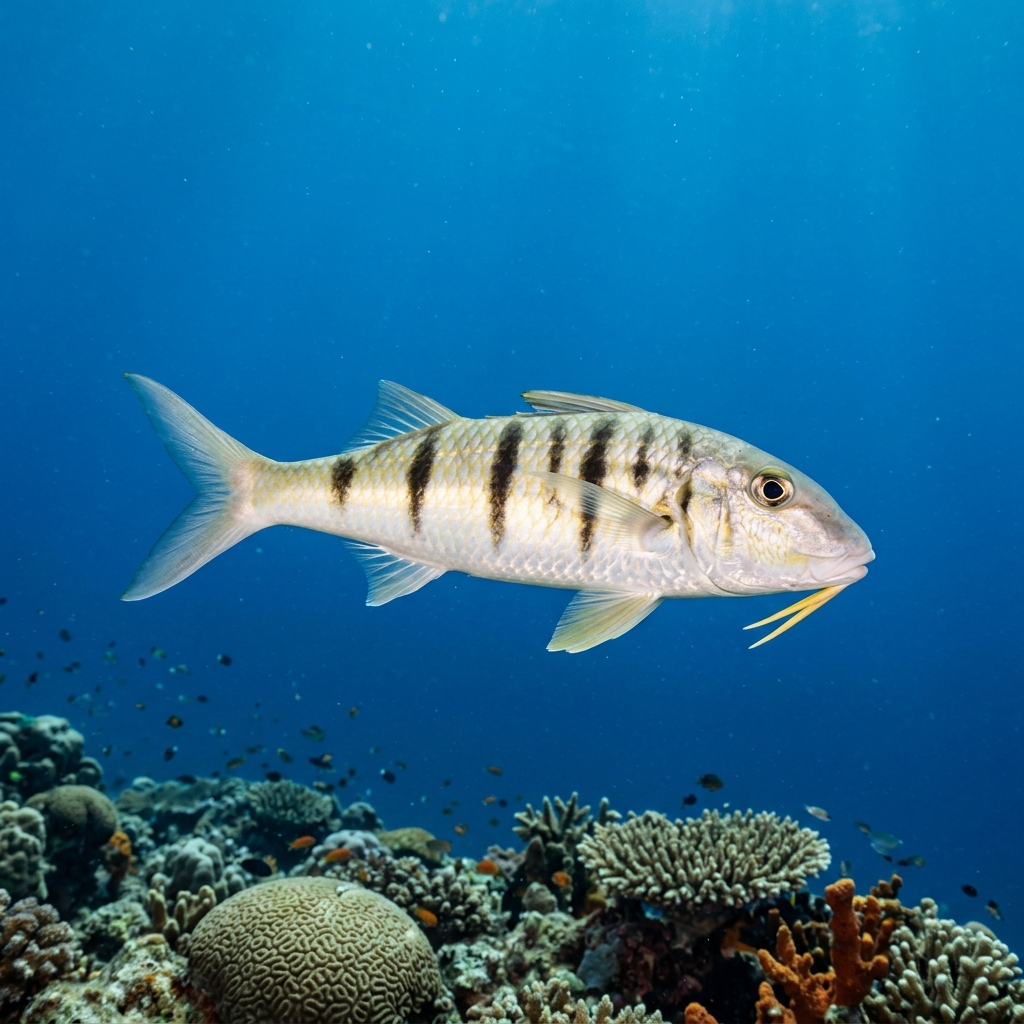
Reef neighbours a diver could mistake it for. Use the identification notes above to tell them apart.
Most reliably logged across Egypt, especially South Sinai, Marsa Alam and the Deep South, and the Red Sea Riviera, where it turns up as a common reef fixture. Strong secondary populations sit in Turkey's Turquoise Coast and Antalya region, Cyprus around Ayia Napa, Protaras and Paphos, and Greece's Dodecanese, with further sightings in Jordan, Israel, Saudi Arabia and Sudan.
Mapping where Forsskal's Goatfish is logged…
Egypt is the strongest bet, particularly South Sinai, Marsa Alam and the Red Sea Riviera. It's also a regular sight in Turkey's Turquoise Coast and Antalya region, plus Cyprus and Greece's Dodecanese islands.
There's no strong seasonal pattern in sightings, and it tolerates a wide warm-water range of about 25 to 29C, so it's seen year-round on Red Sea and eastern Mediterranean reefs.
Look for a slim, reddish-brown to grey fish around 19 cm with a pale belly, a dark saddle mark near the tail, and a pair of long barbels under the chin used to probe sand for food.
They typically reach around 19 cm in length, a modest, easy-to-overlook size that keeps them close to sand patches near the reef rather than out in open water.
No. They're harmless, sand-foraging fish that pay little attention to divers and pose no threat whatsoever underwater.
Site and sighting data is aggregated from diver logs, iNaturalist and GBIF. For taxonomy and conservation status:
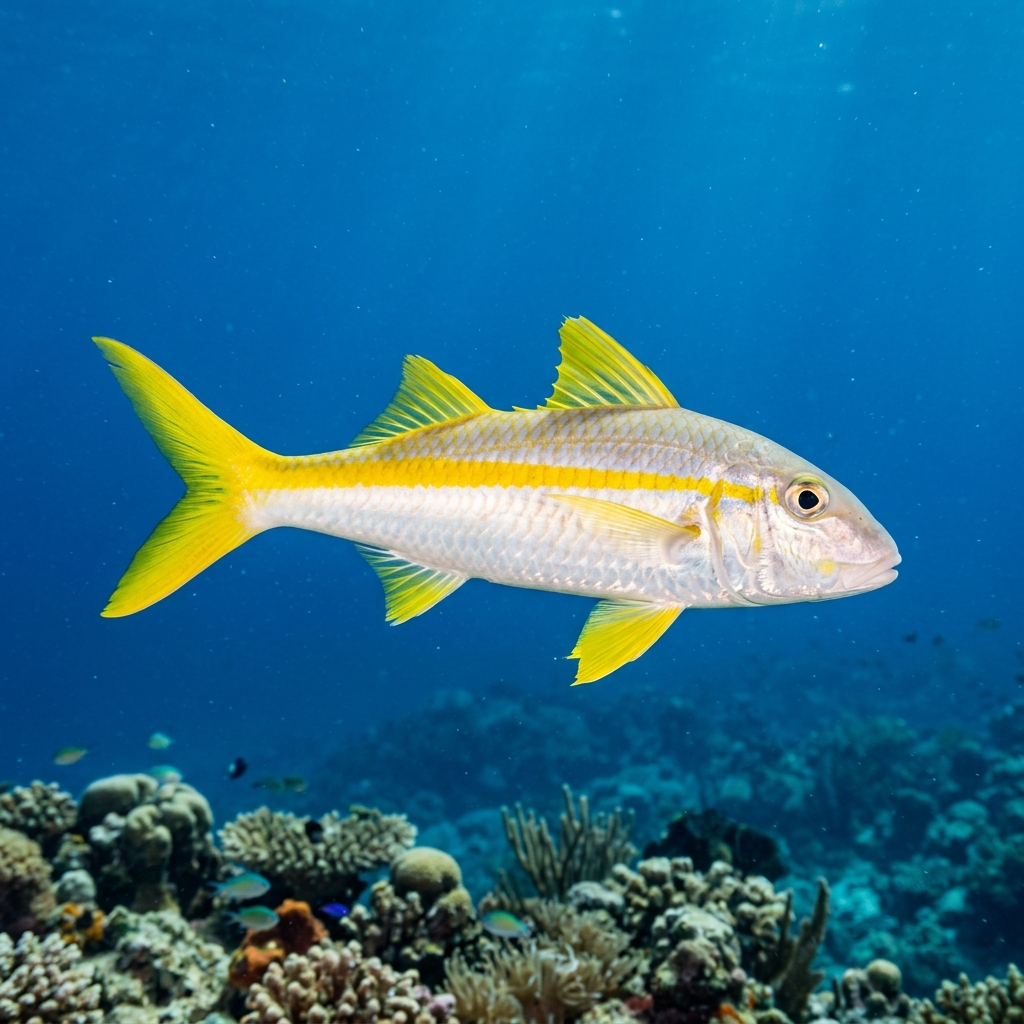
Yellowfin Goatfish
2,241 sites