Parupeneus macronemus
Reef-bottom regular from the Maldives to the Red Sea, this barbelled forager thrives at 26-29C and turns up year-round on shallow reefs.
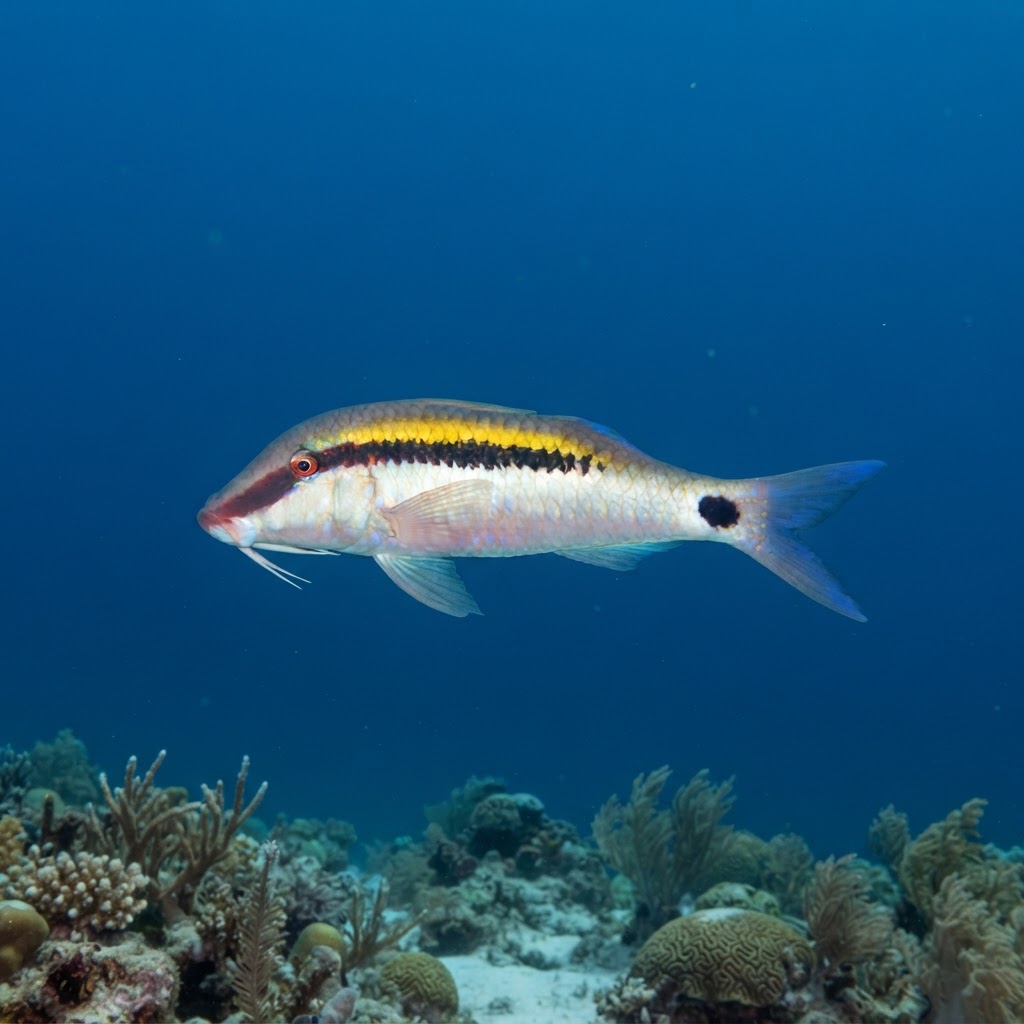
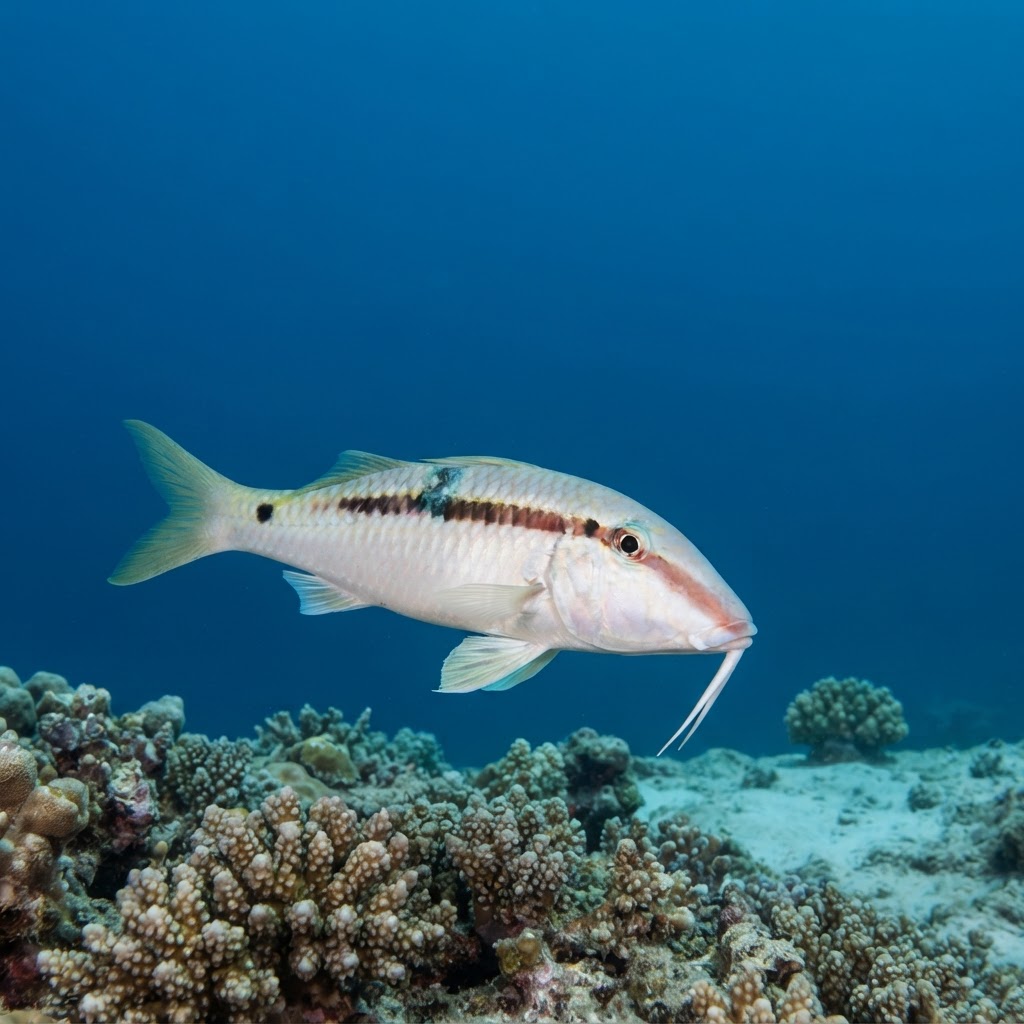
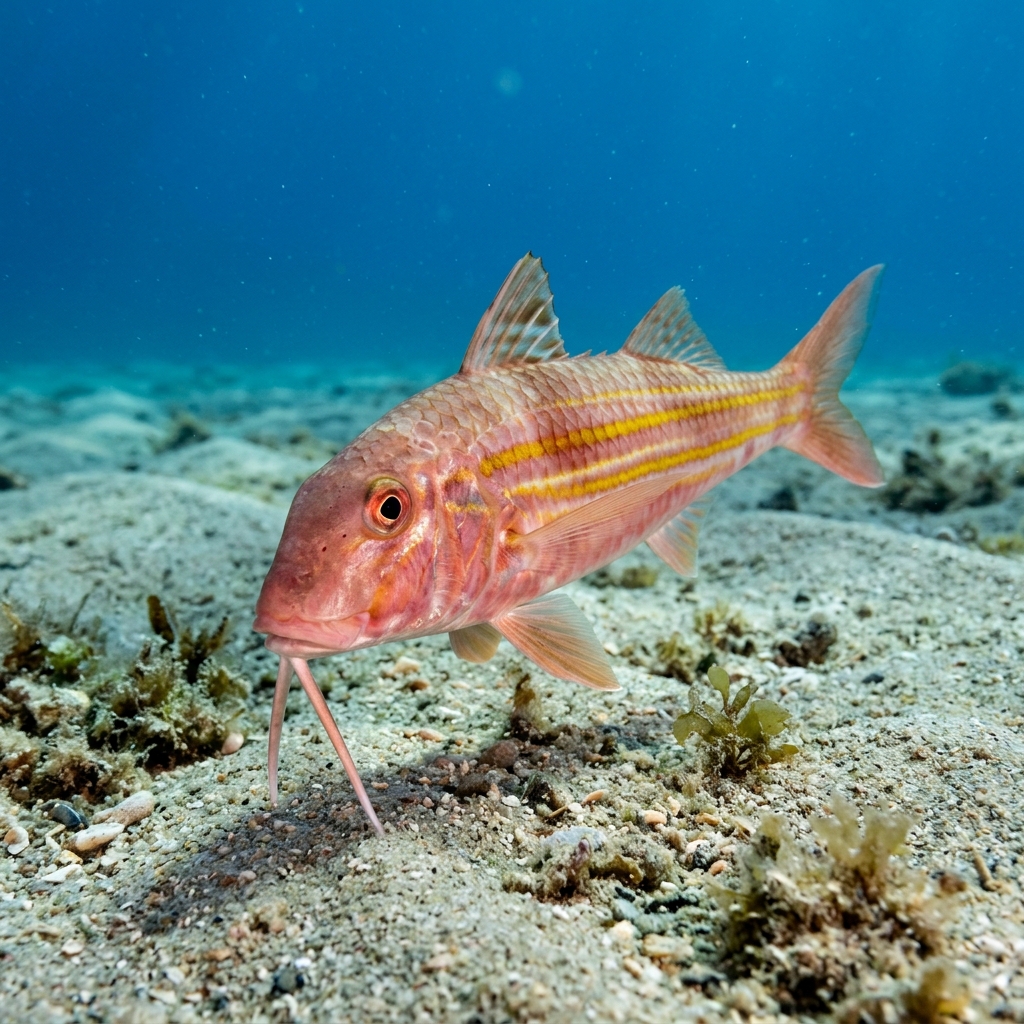
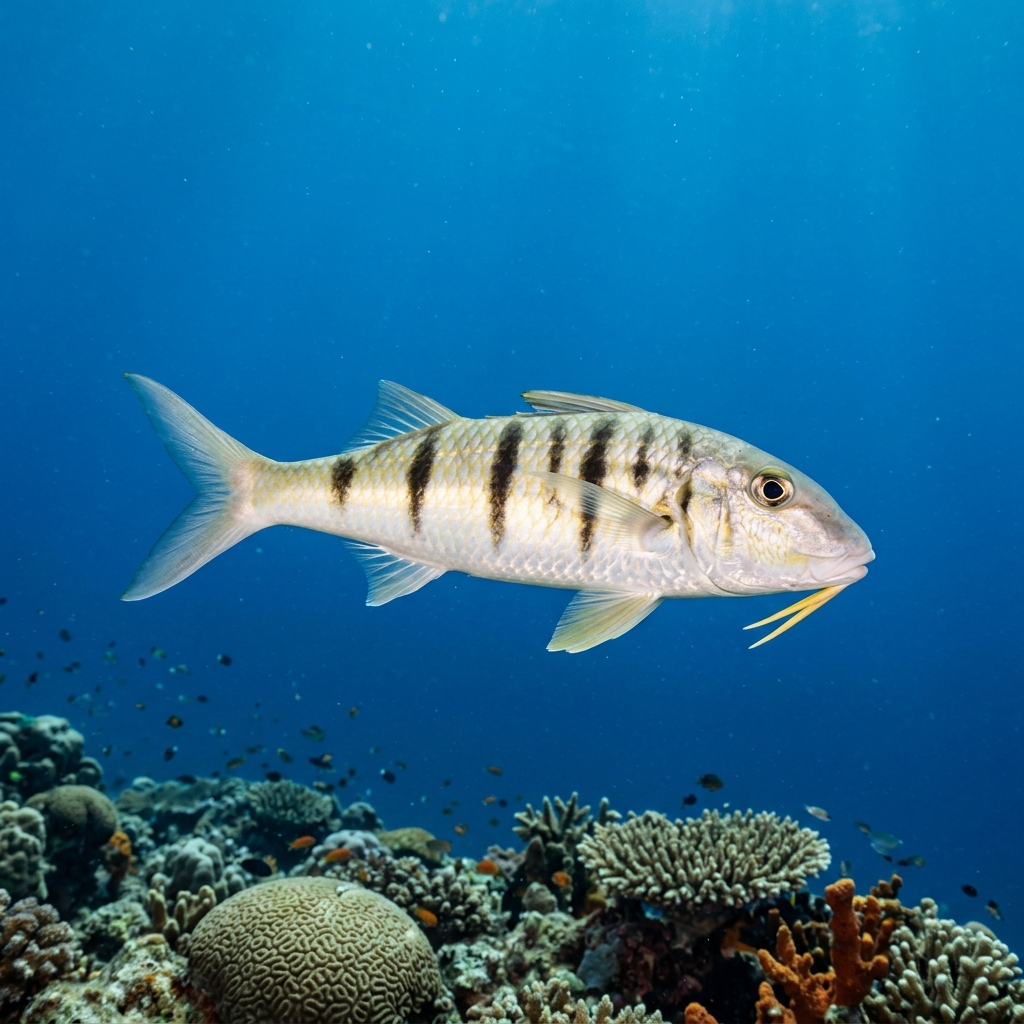
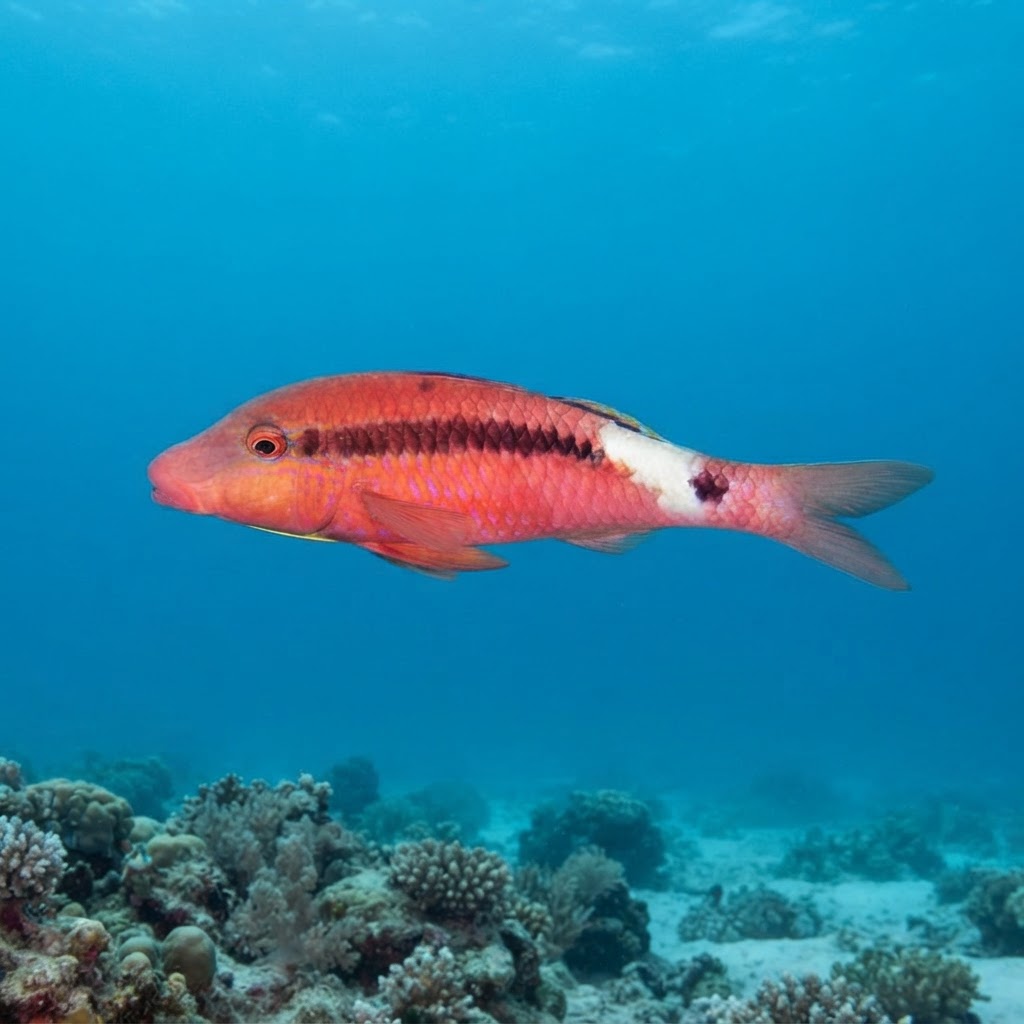
Slim, torpedo-shaped body around 28 cm long, usually pale grey to pinkish with a dark blotch or saddle patch partway down the back half of the body. The giveaway is the pair of long, whisker-like barbels under the chin, constantly probing sand and rubble, noticeably longer than on most other reef goatfish. Colour can shift between a plain washed-out phase and a more contrasted banded phase depending on mood and background.
Look for it working the sand and rubble patches near reef bases, barbels sweeping over the substrate to feel out buried worms and crustaceans. It's an unhurried, low-drama fish that tends to keep foraging even with divers nearby rather than bolting, though it will lift off and move a few metres if you crowd it. Most sightings are solitary or in loose pairs rather than schools, usually logged as an uncommon rather than everyday find.
Those barbels aren't just sensory feelers, they're loaded with taste buds, letting the fish detect prey hidden under sand without ever seeing it.
No clear seasonal pattern shows up in the data, and with a comfortable range of 25.6 to 29.1C it's a year-round resident on these tropical reefs rather than a seasonal visitor.
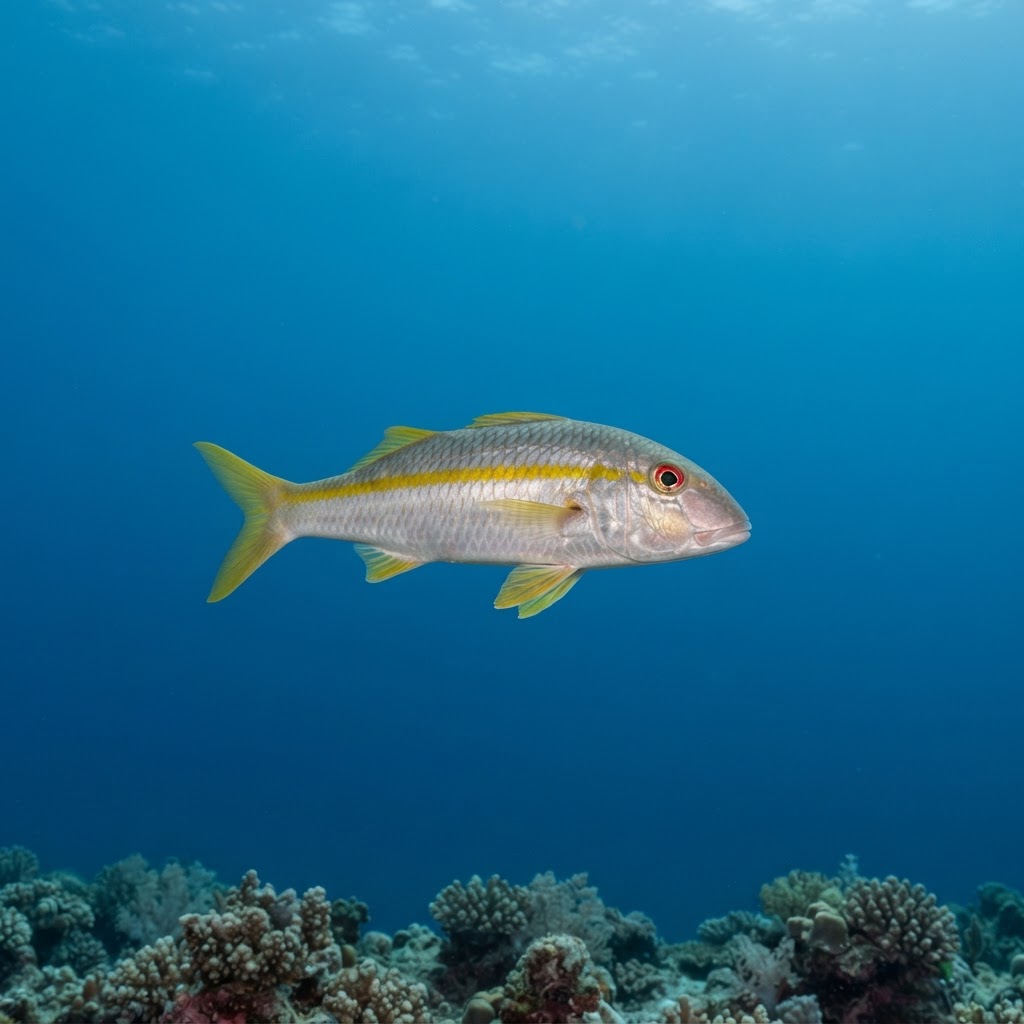
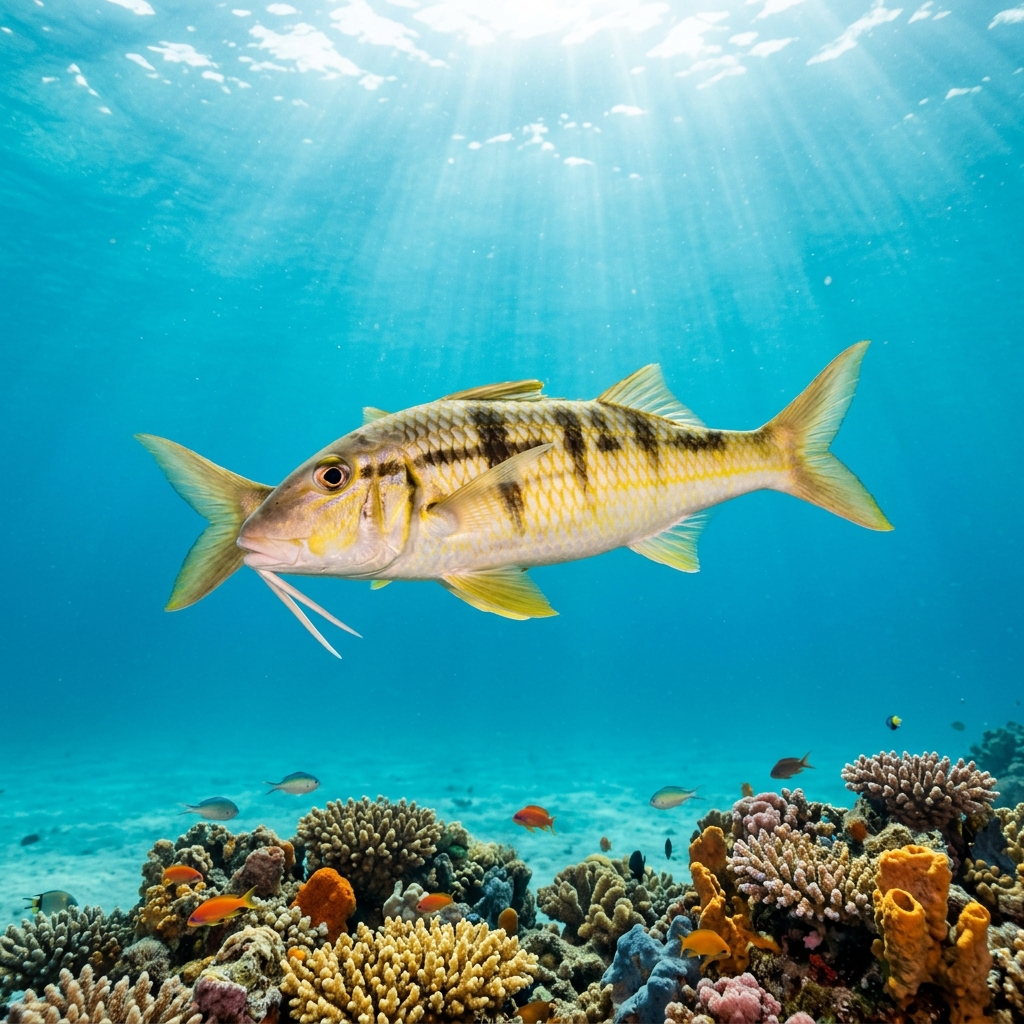
Reef neighbours a diver could mistake it for. Use the identification notes above to tell them apart.
Most reliably logged in the Maldives, especially the Central Atolls, and across the Egyptian Red Sea in South Sinai and Marsa Alam and the Deep South. Also a steady find in Thailand's Koh Lipe and Phuket, the Inner Islands of Seychelles, the Daymaniyat Islands in Oman, and around Zanzibar in Tanzania.
Mapping where Longbarbel Goatfish is logged…
Best bets are the Maldives' Central Atolls and Egypt's Red Sea coast around South Sinai and Marsa Alam. It also shows up reliably in Thailand (Koh Lipe, Phuket), Seychelles' Inner Islands, Oman's Daymaniyat Islands, and Zanzibar.
There's no strong seasonal signal in sighting data, and the species tolerates a wide warm-water range of 25.6 to 29.1C, so it's a fair year-round sighting on tropical reefs.
Look for a slim, pale grey to pinkish body around 28 cm with a dark saddle patch on the rear half, and unusually long chin barbels that it drags over sand and rubble while foraging.
They typically reach around 28 cm in length, a modest reef-associated size seen from shallow water down to about 40 metres.
They hunt with a pair of long, taste-bud-covered barbels under the chin, sweeping them across sand and rubble to detect buried worms and crustaceans without seeing them first.
Site and sighting data is aggregated from diver logs, iNaturalist and GBIF. For taxonomy and conservation status:
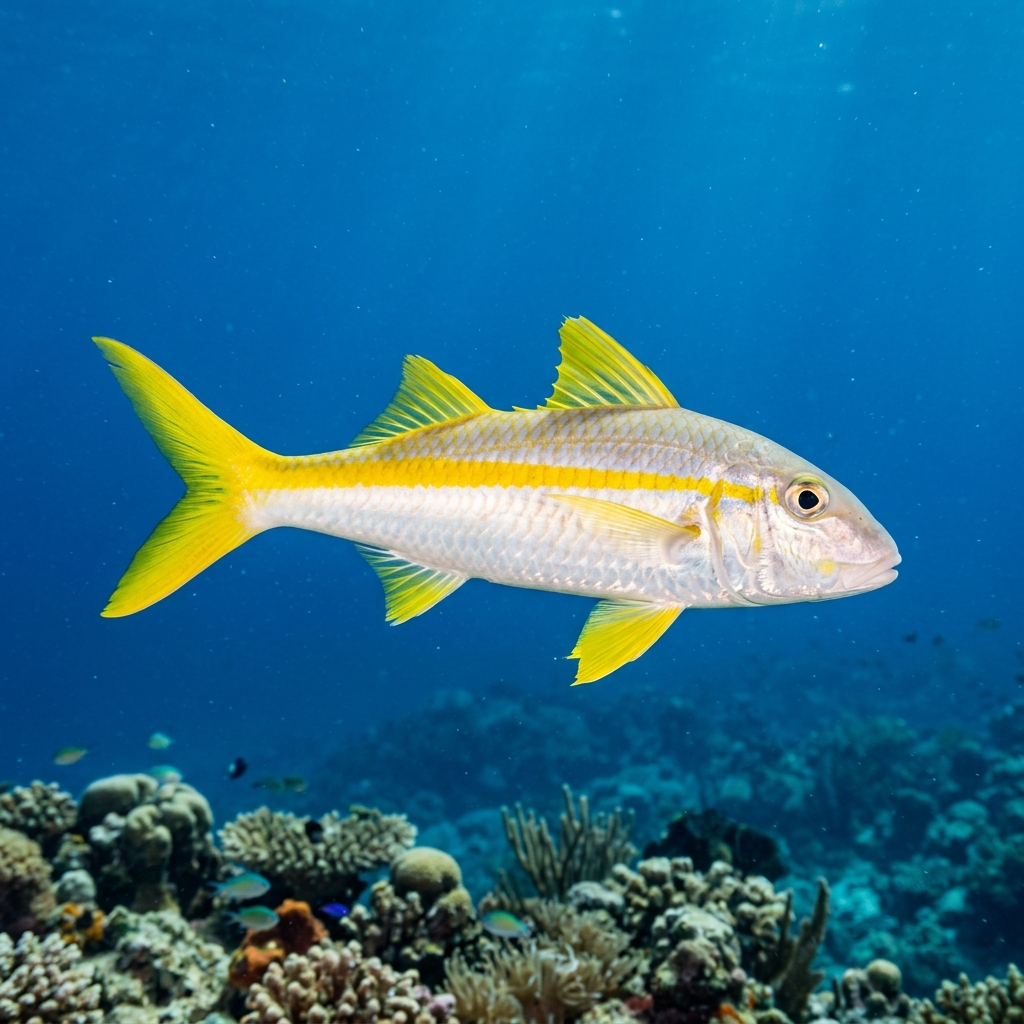
Yellowfin Goatfish
2,241 sites