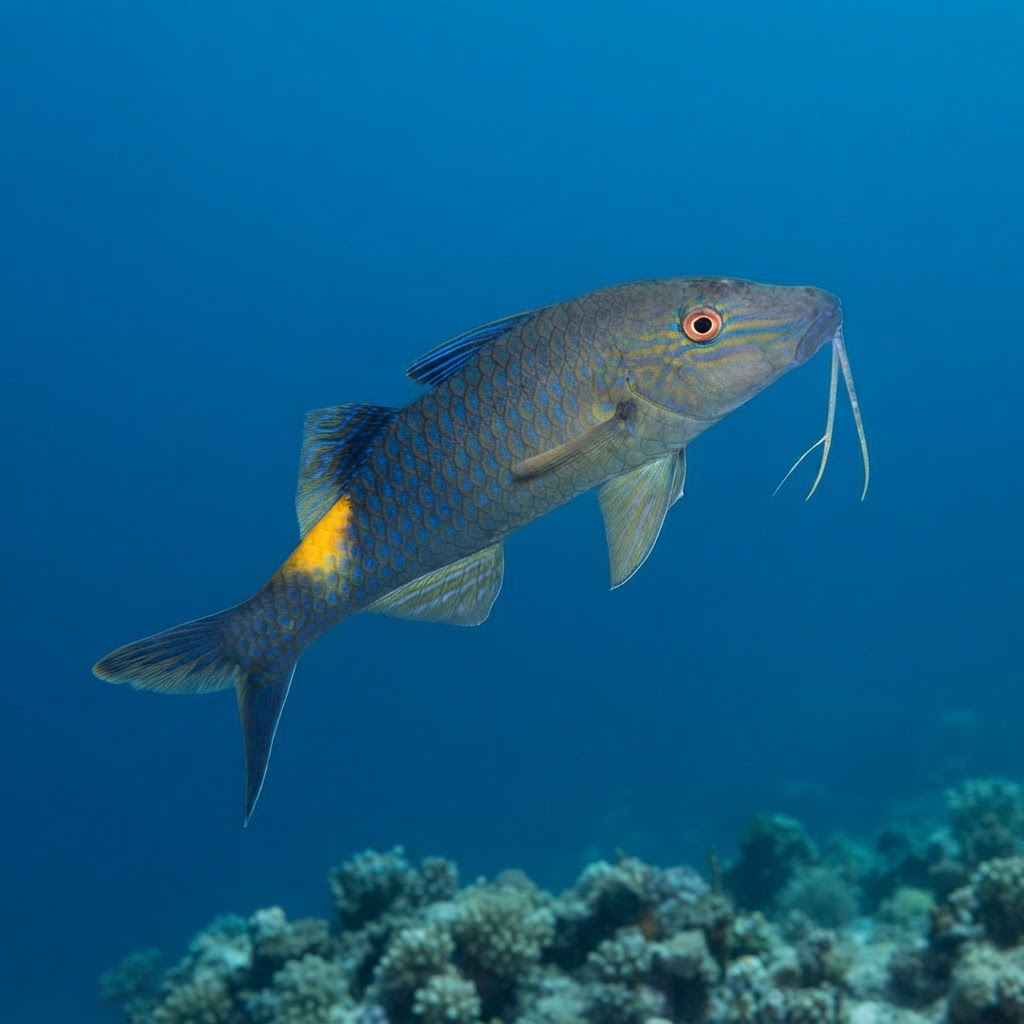
Parupeneus cyclostomus
Bright yellow with a dark saddle, hunting the reef in South Sinai and Marsa Alam year-round in warm Red Sea water.
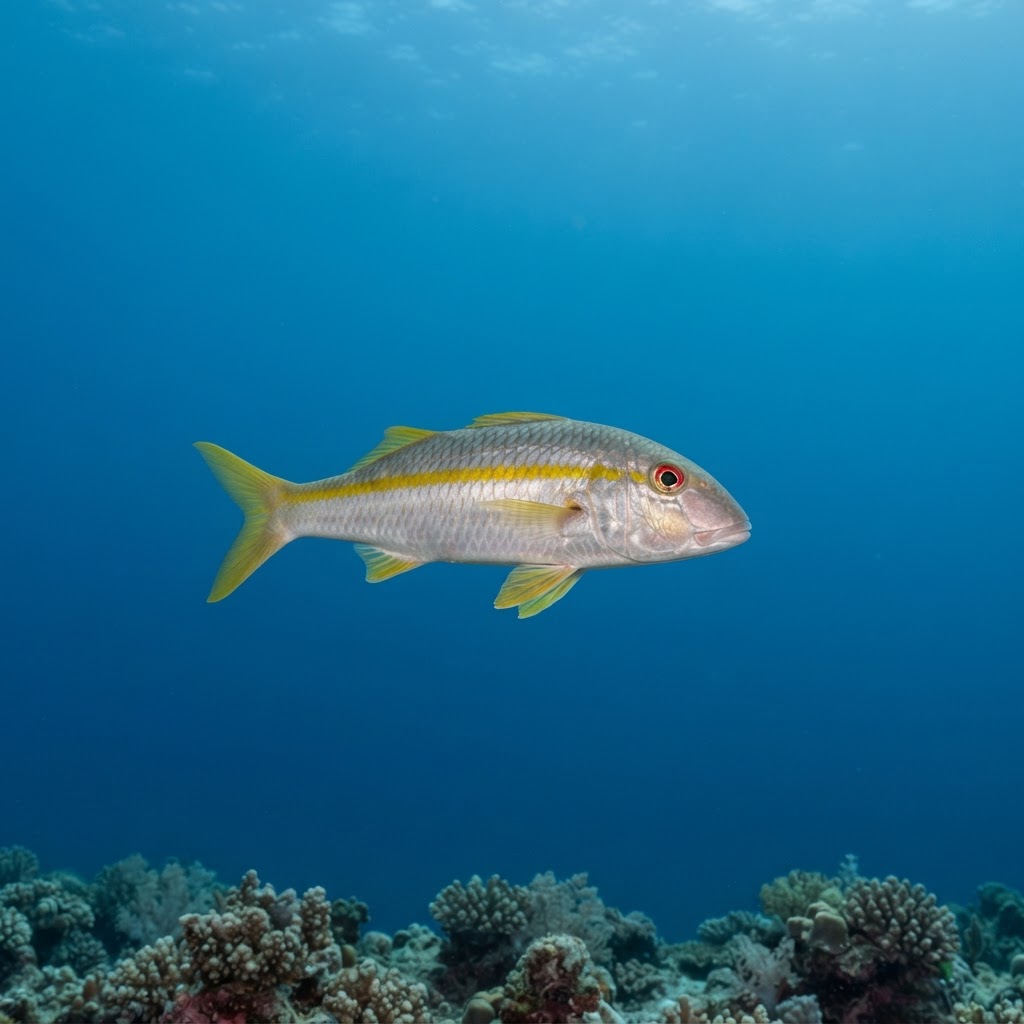
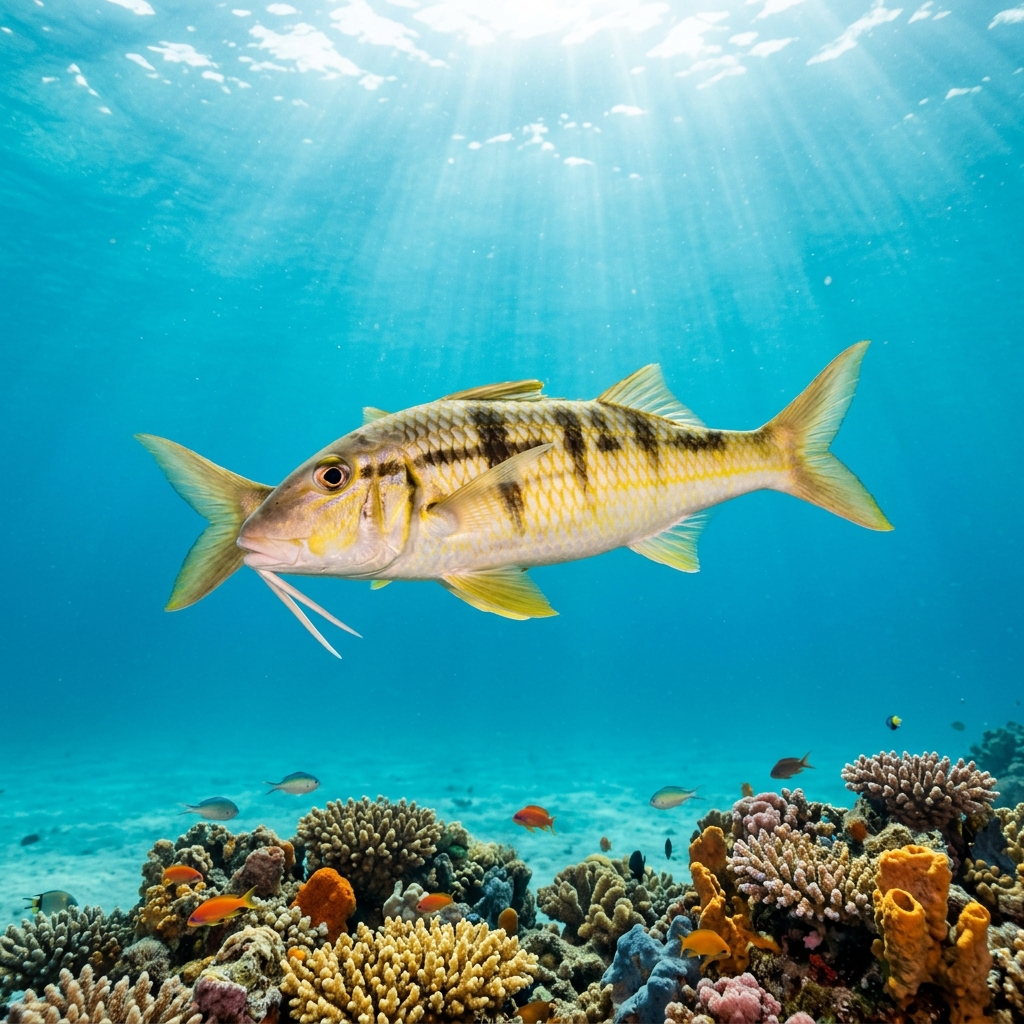
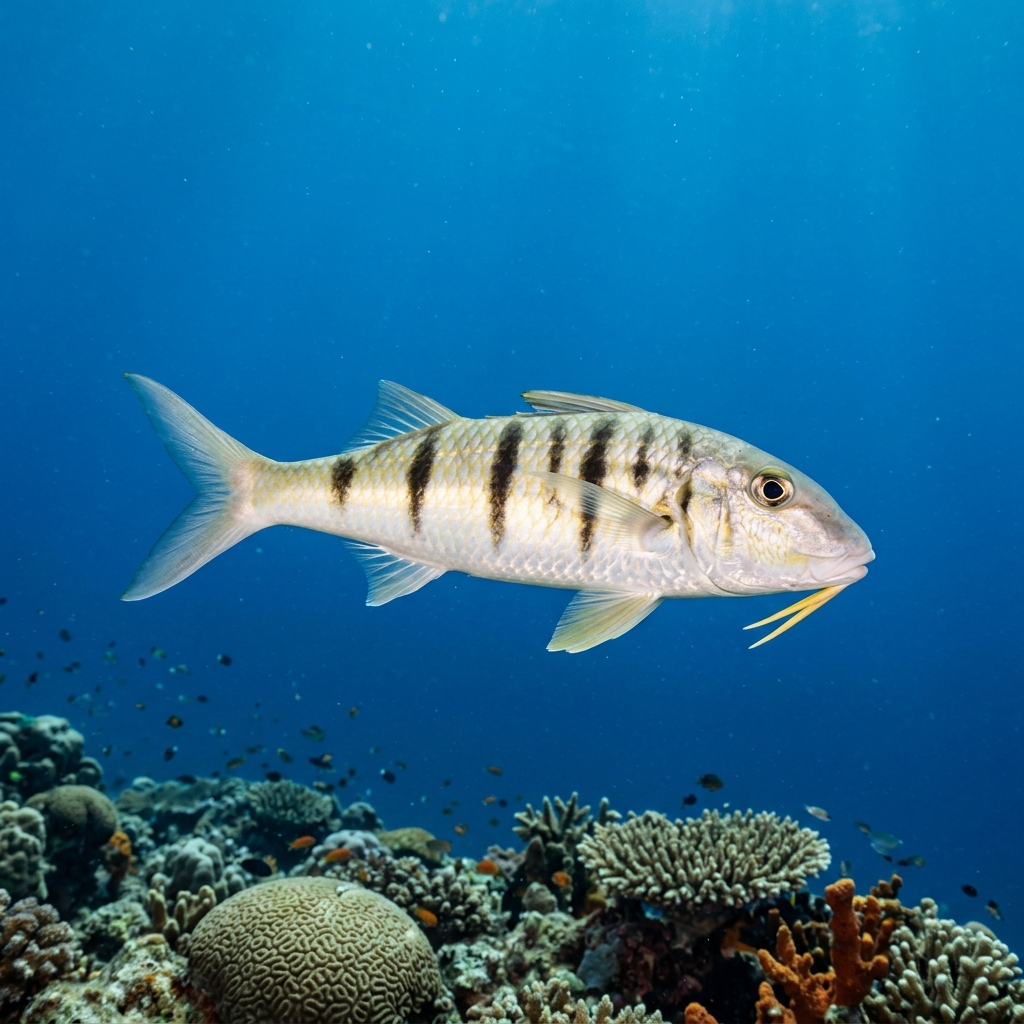
Bright yellow overall, sometimes shifting to blue-grey or blotchy tones when hunting, with a dark rectangular saddle patch just before the tail that gives it its name. Grows to around 35 cm, with a torpedo-shaped body and a pair of long chin barbels used to probe the sand and rubble for prey. The barbels tuck away flush against the throat when not in use, a giveaway for the whole goatfish family.
Usually seen cruising just above the reef or sand flats, sweeping its barbels through rubble and coral crevices to flush out small fish and crustaceans. It often teams up with other goatfish or hunts alongside groupers and other opportunists waiting to snap up anything it disturbs. Divers rarely get more than a brief look before it moves off to the next patch of reef, though it is not especially skittish and will tolerate a slow, quiet approach.
It can flush prey out of hiding by flashing rapid colour changes between yellow and pale blue-grey while foraging, a hunting trick that startles small fish into the open.
No clear seasonal pattern shows up in the sightings, and its comfortable range of 24.5 to 29 C covers reef conditions across its range all year, so it is a fair bet on any dive regardless of month.
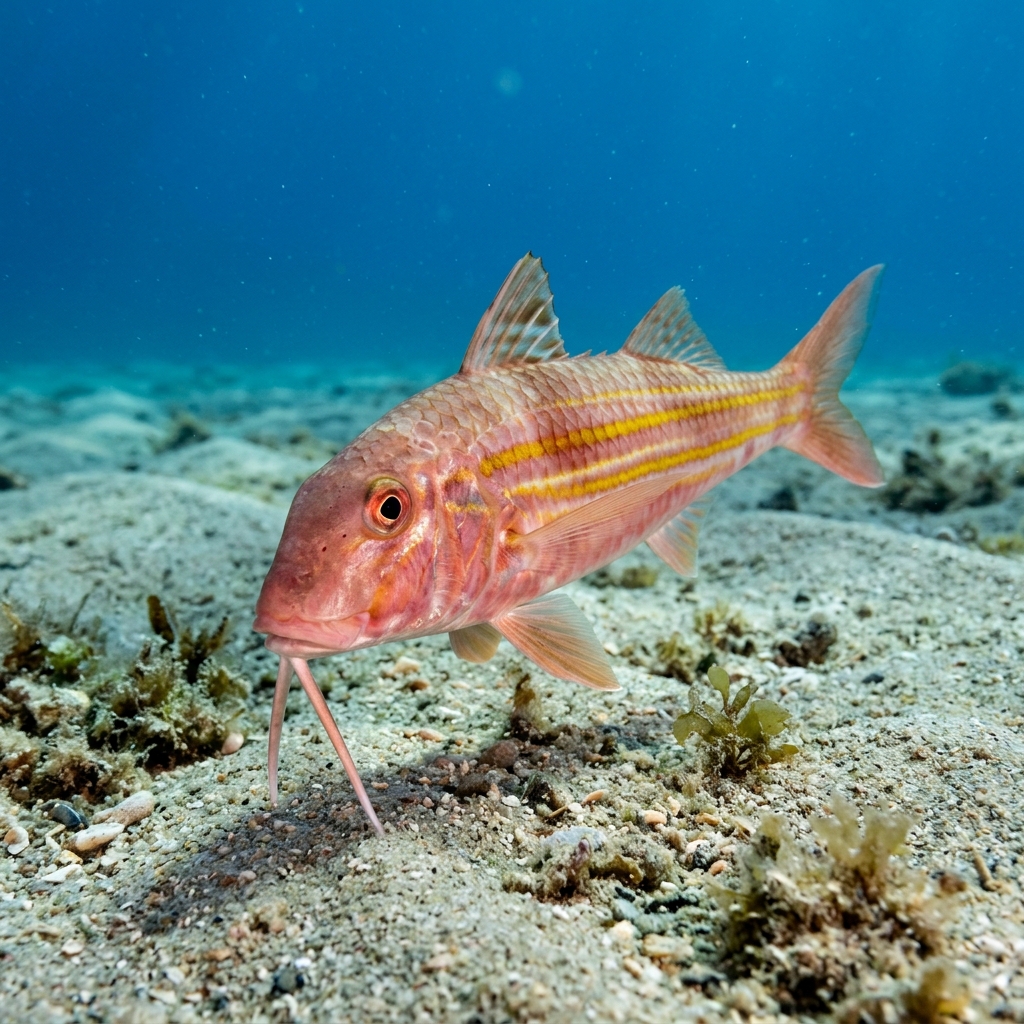
Reef neighbours a diver could mistake it for. Use the identification notes above to tell them apart.
Most reliably logged in Egypt's Red Sea, especially South Sinai and Marsa Alam & the Deep South, with strong showings also in the Red Sea Riviera. Outside Egypt it turns up regularly in Hawaii, the Maldives' Central Atolls, and around Eilat and Aqaba on the Israeli and Jordanian sides of the Gulf of Aqaba, with smaller but steady numbers in Mauritius and the Andaman Islands.
Mapping where Yellowsaddle Goatfish is logged…
South Sinai and Marsa Alam in Egypt's Red Sea are the most reliable spots, along with the Red Sea Riviera. It is also a regular sighting in Hawaii, the Maldives' Central Atolls, and the Gulf of Aqaba around Eilat and Aqaba.
There is no strong season for this species, and it favours water between 24.5 and 29 C, which covers reef conditions year-round across its range. Expect a similar chance of seeing it on any given month.
Look for a bright yellow, torpedo-shaped body around 35 cm long with a dark rectangular saddle marking near the tail. A pair of chin barbels, used for probing the sand, are the other quick tell for any goatfish.
They typically reach around 35 cm in length, a solid mid-size reef fish easy to spot cruising over sand and rubble.
No, they pose no threat to divers and simply go about foraging on the reef, generally ignoring a calm, distant observer.
Site and sighting data is aggregated from diver logs, iNaturalist and GBIF. For taxonomy and conservation status:
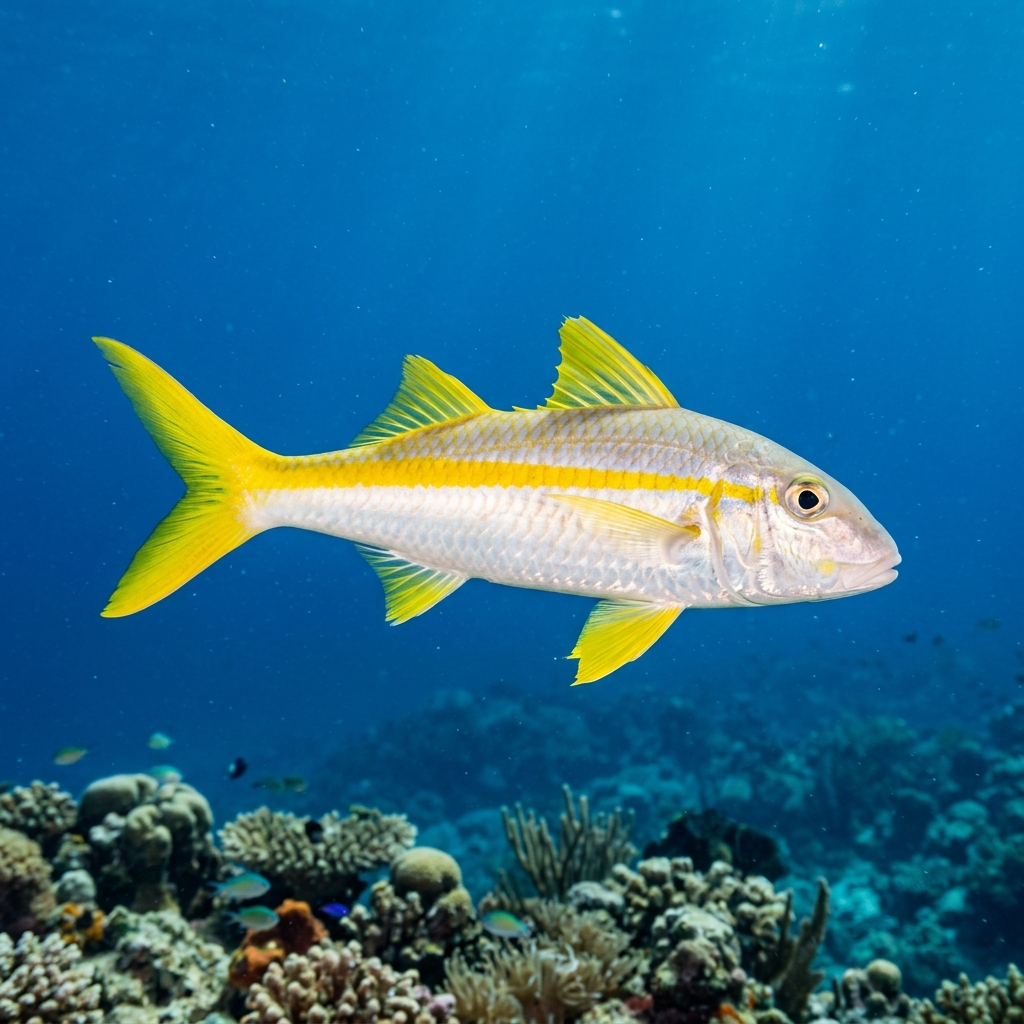
Yellowfin Goatfish
2,241 sites