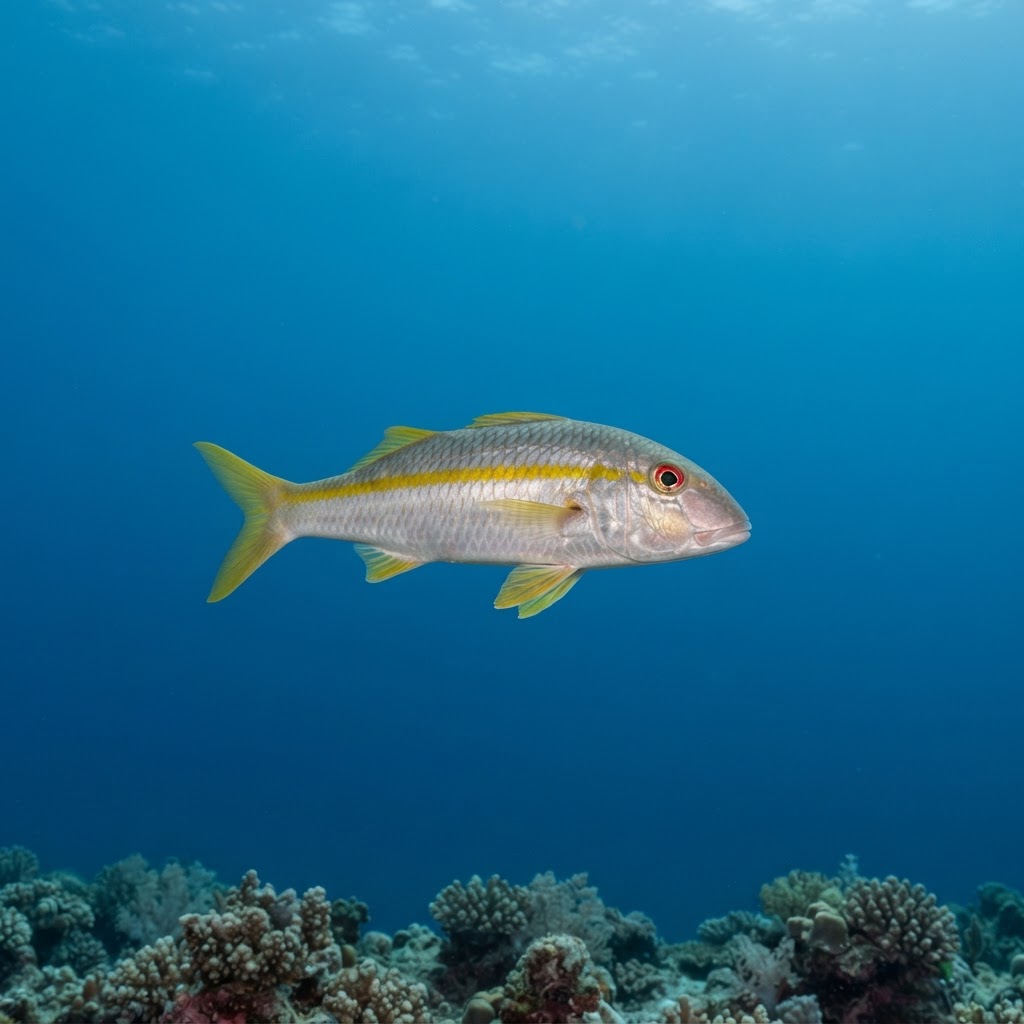
Mulloidichthys martinicus
Trailing yellow stripes and chin barbels give this reef forager away, common year-round from Bonaire to the Bay Islands of Honduras.
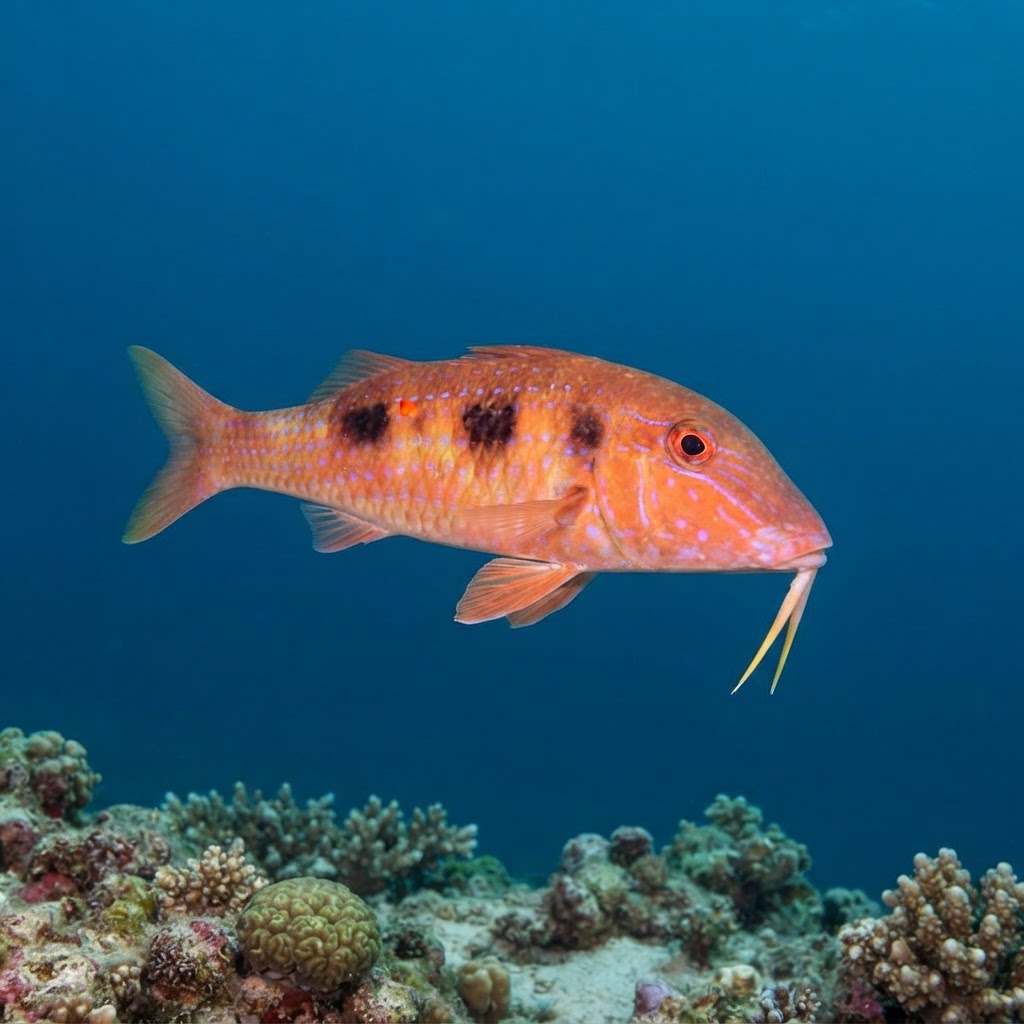
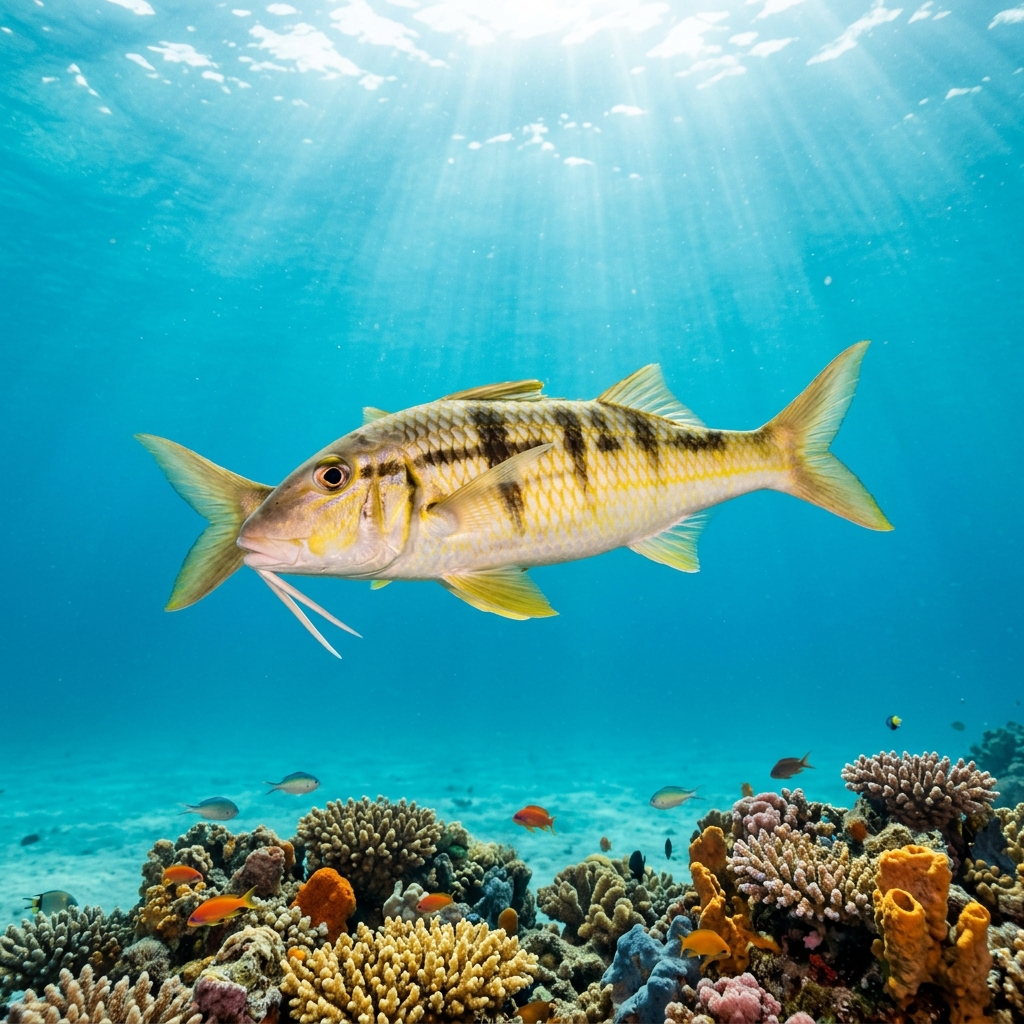
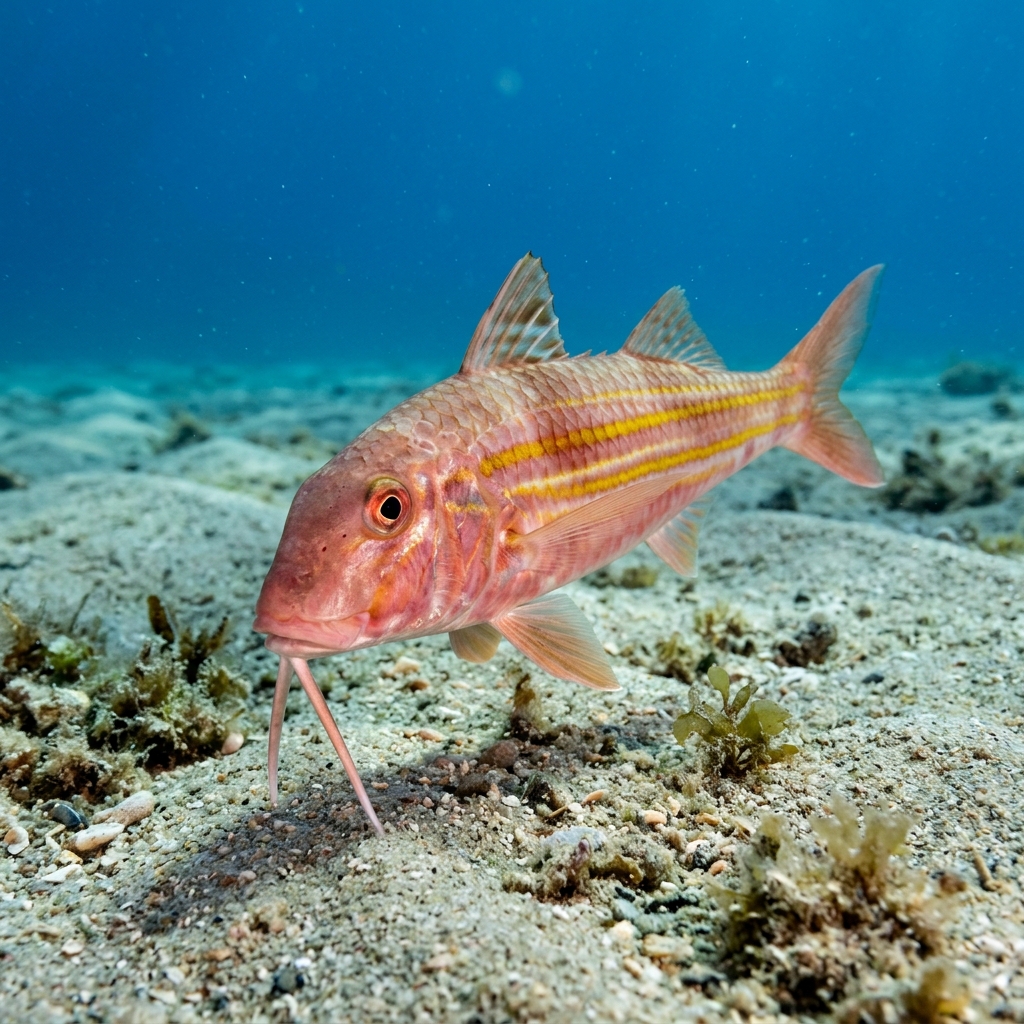
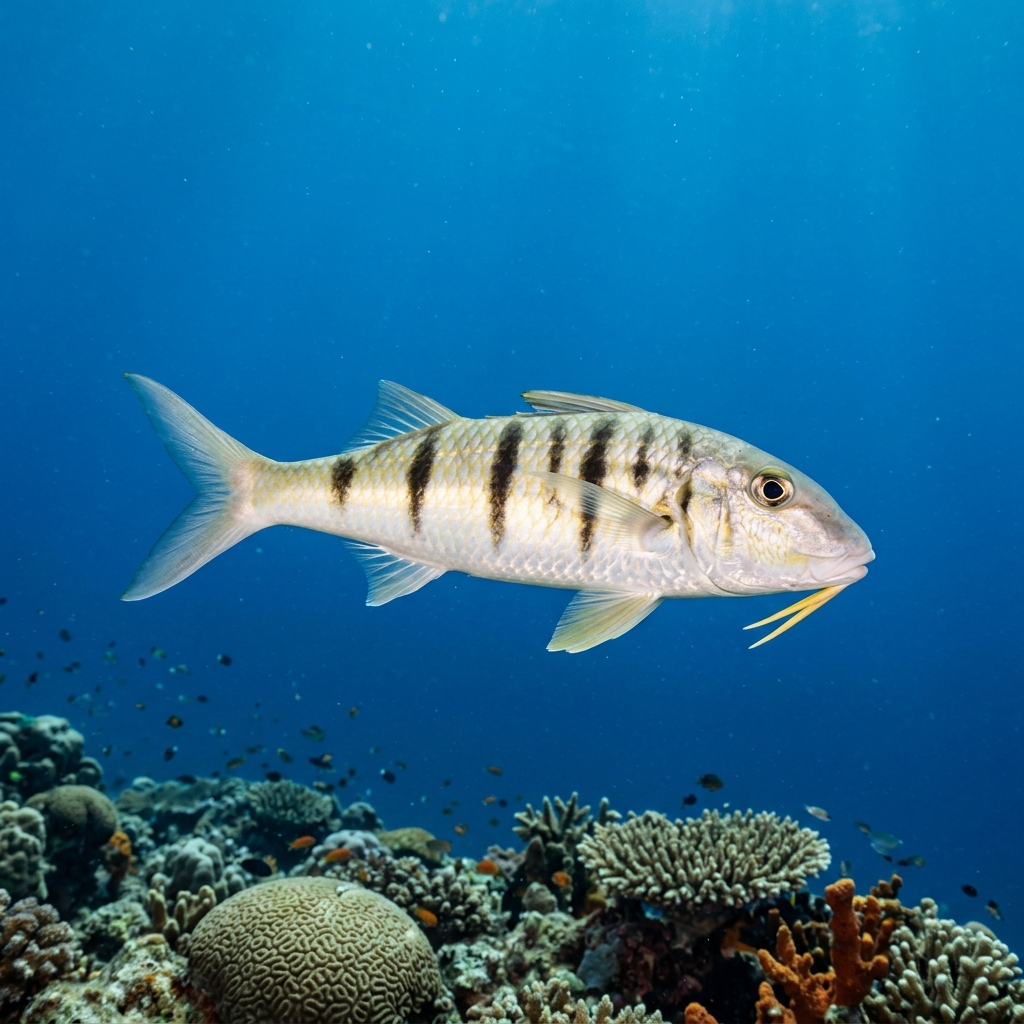
Look for a slender, silvery fish about 30cm long with a single bright yellow stripe running from head to tail. A pair of long chin barbels (whisker-like feelers) used for probing sand are the giveaway when it stops to feed. It often swims alone or in loose, drifting groups just above the reef or sand flats, holding a fairly straight, torpedo-shaped posture.
Watch for it cruising low over sand patches or reef edges, sweeping its barbels through the substrate to flush out buried prey. It is usually unbothered by divers, continuing to forage within easy photo range rather than bolting, and is often seen mixing in loose company with other goatfish or grunts during the day.
Those chin barbels are packed with chemical sensors that let it detect worms, crustaceans and other buried prey without ever seeing them, a hunting trick shared across the goatfish family.
No real seasonal pattern shows up in the data, and its comfortable range of roughly 23 to 28C matches Caribbean reefs year-round, so any month works.
Reef neighbours a diver could mistake it for. Use the identification notes above to tell them apart.
Most reliably found across the Caribbean, with strong numbers logged in Bonaire, the Bay Islands of Honduras, Grand Cayman, and Curacao. It also turns up consistently in the US Virgin Islands, Grenada, Guadeloupe, and the Yucatan Peninsula in Mexico, making it one of the more dependable reef sightings across the wider Caribbean basin.
Mapping where Yellow Goatfish is logged…
They are a common reef sighting across the Caribbean, with strongholds in Bonaire, the Bay Islands of Honduras, Grand Cayman, Curacao, and the US Virgin Islands.
There is no strong seasonal pattern, and warm Caribbean reef temperatures suit them year-round, so you can expect to see them on any dive in their range.
Look for a silvery, torpedo-shaped fish around 30cm with one bold yellow stripe from head to tail and a pair of long chin barbels used to probe the sand for food.
They typically reach around 30cm in length, a modest size that makes them easy to overlook against a busy reef unless you spot that yellow stripe.
Their chin barbels carry chemical sensors that detect hidden prey buried in sand, letting them hunt worms and small crustaceans they cannot actually see.
Site and sighting data is aggregated from diver logs, iNaturalist and GBIF. For taxonomy and conservation status:
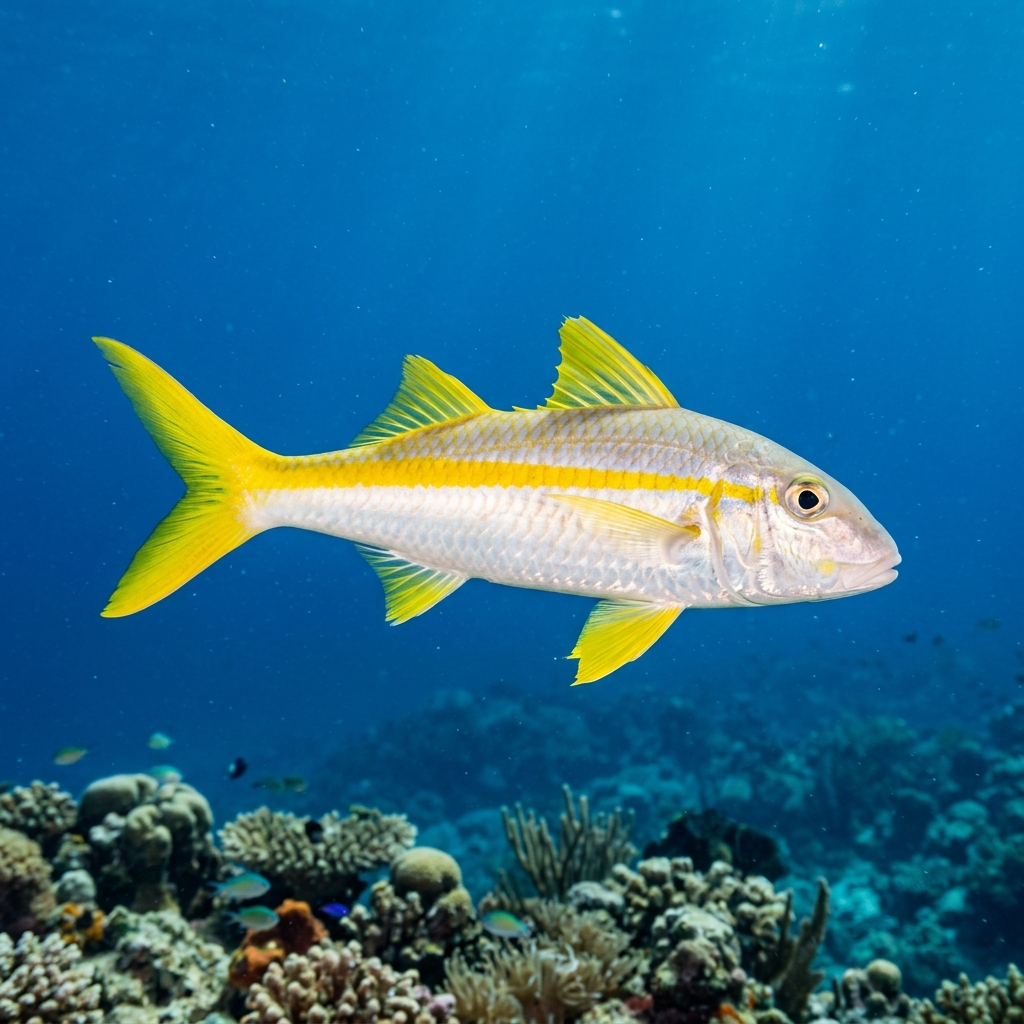
Yellowfin Goatfish
2,241 sites