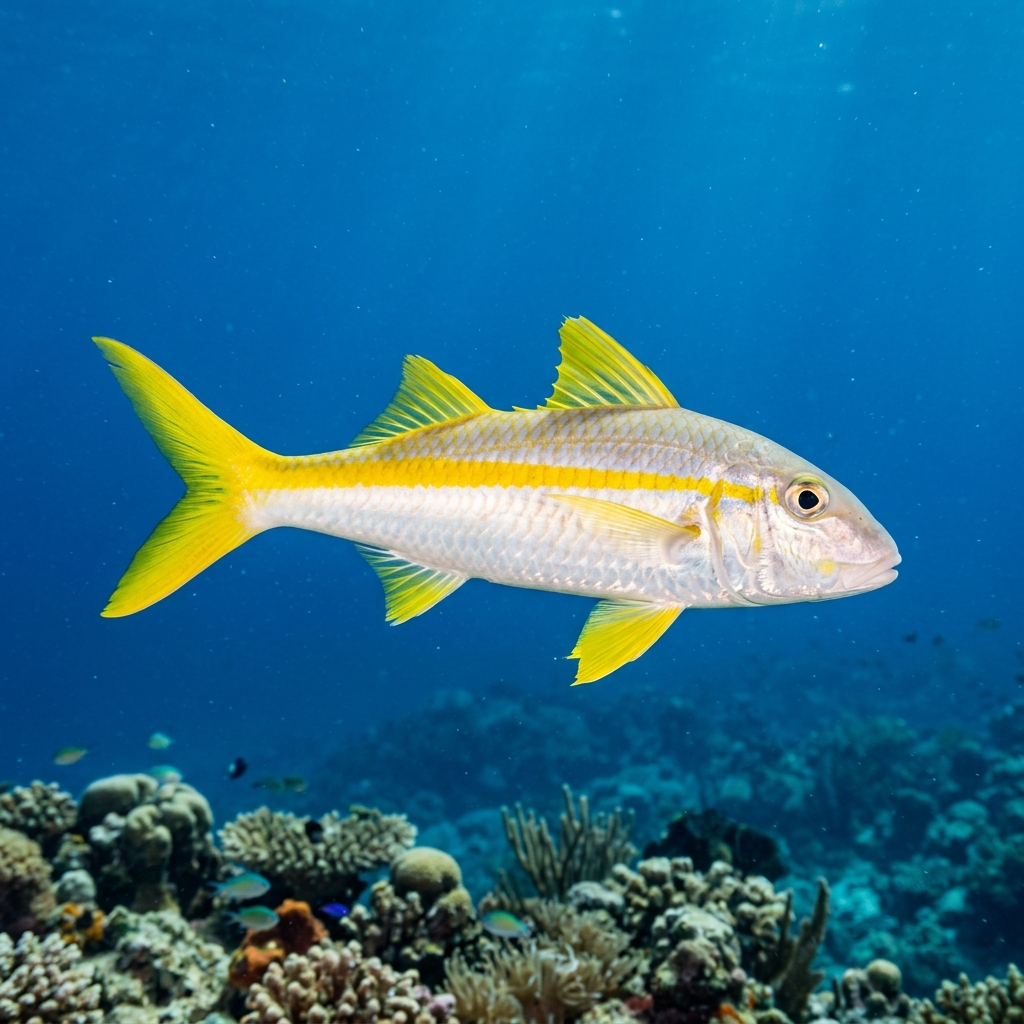
Mulloidichthys vanicolensis
Spot yellowfin goatfish sifting sand on Red Sea and Indo-Pacific reefs year-round. Strong sightings in Sharm el Sheikh, the Philippines, and Hawaii.
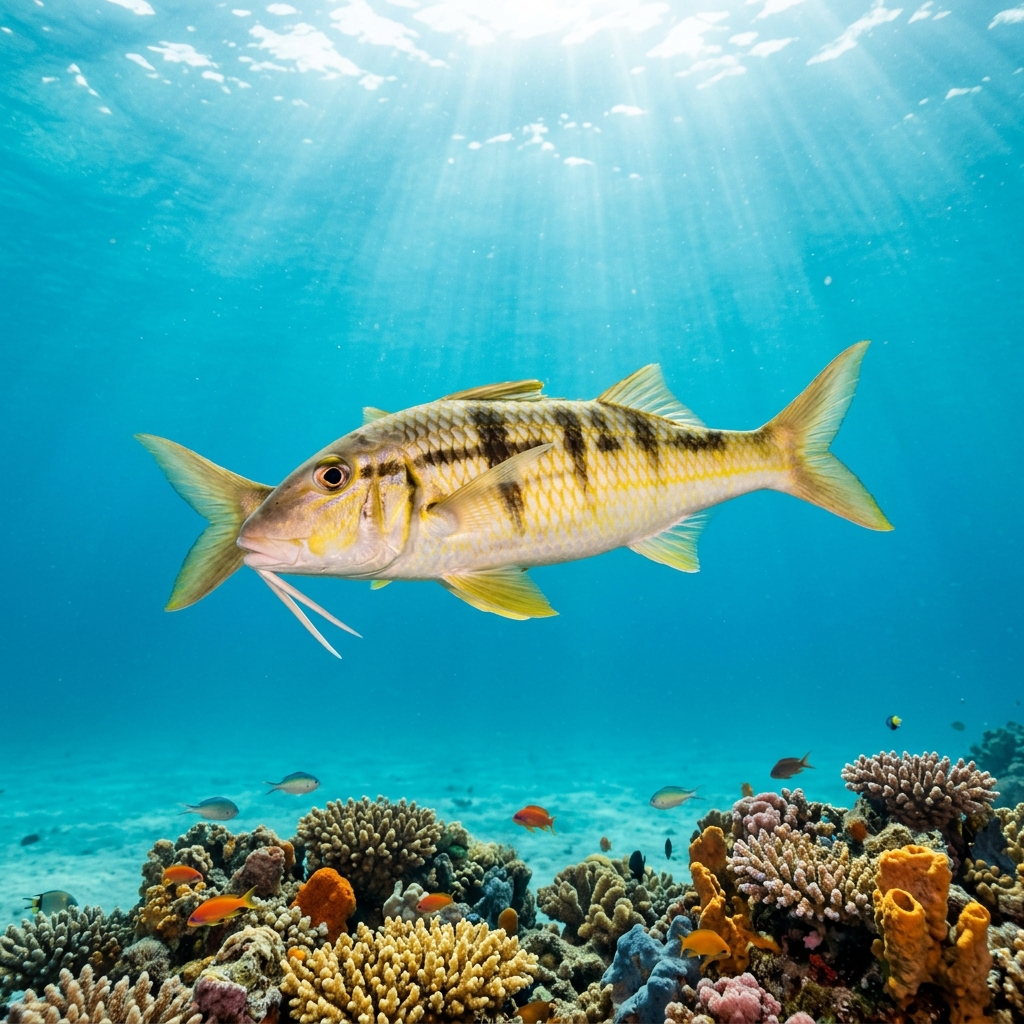
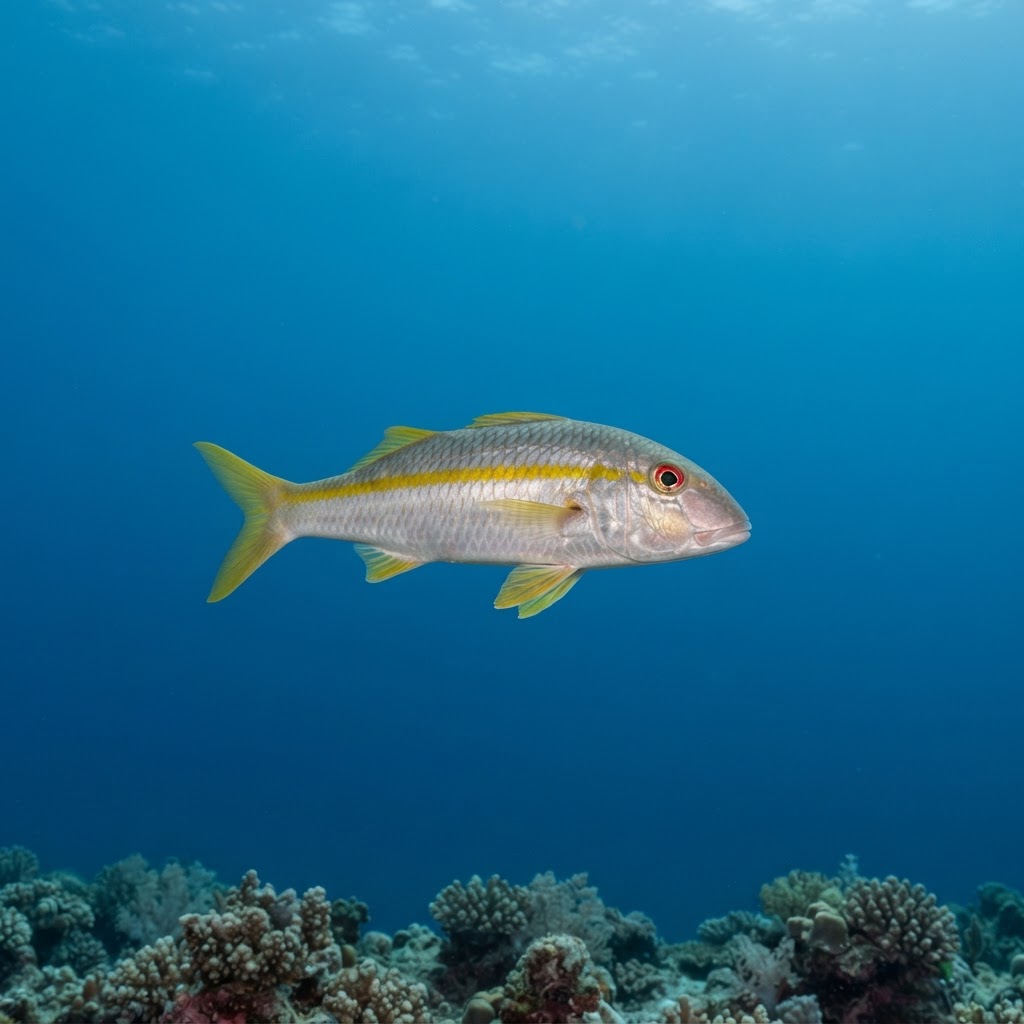
A slender, roughly 27 cm fish with a pale whitish or pinkish body and a vivid yellow stripe running from just behind the eye to the tail, which itself is bright yellow, the key field mark in the water. Two long barbels hang under the chin, and you will almost always see them being pressed into the sand while the fish hunts. The body is noticeably elongated compared to other goatfish, and the yellow colouring intensifies under a torch at depth.
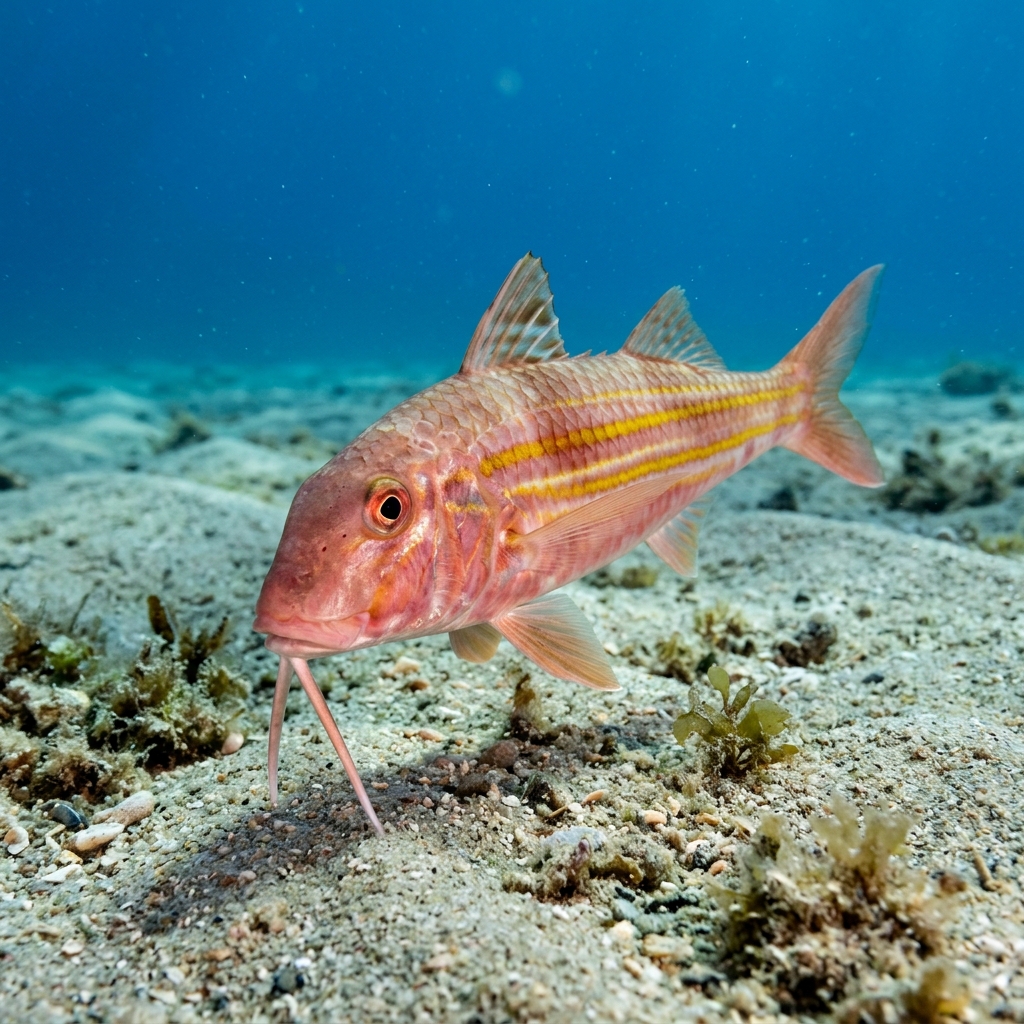
Yellowfin goatfish spend most of the day actively foraging, pressing their chin barbels (chemosensory feelers used to detect prey) into sand patches to flush out small invertebrates. They are unbothered by diver presence and typically carry on feeding even when you move close, making them easy to watch at leisure. Small loose groups often work the same sandy area together, which creates an oddly hypnotic back-and-forth display as each fish shuffles through the substrate.
At rest or when not actively feeding, yellowfin goatfish can shift to a mottled brownish pattern, a colour change rapid enough that a fish you watched foraging in bright yellow can look like a different species minutes later when it settles on the bottom.
Present year-round in both hemispheres with no concentrated season, which fits its thermal niche of roughly 24 to 29 °C, a range that describes most tropical reef destinations throughout the year. There is no off-season worth planning around.
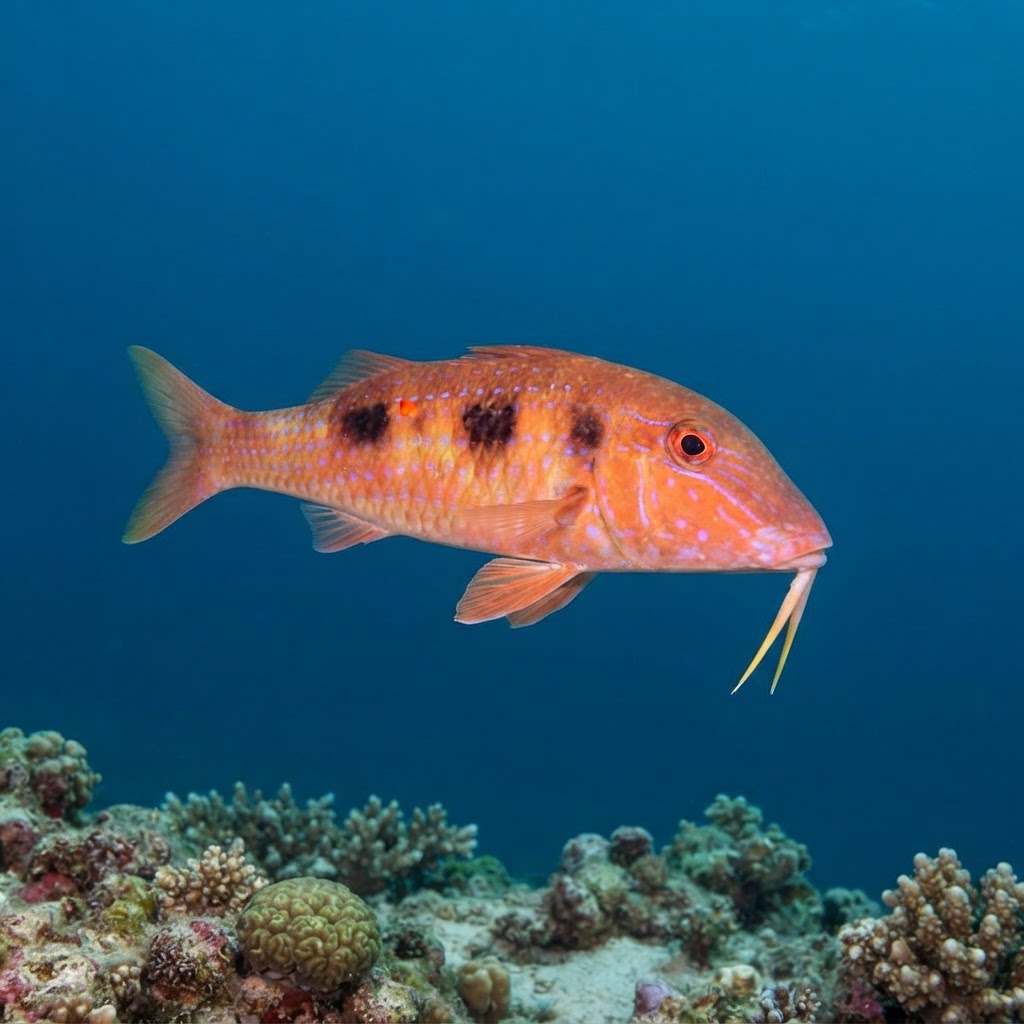
Reef neighbours a diver could mistake it for. Use the identification notes above to tell them apart.
Most commonly logged across the Red Sea, particularly around Sharm el Sheikh and Marsa Alam in Egypt, and throughout the Indo-Pacific from the Philippines and Indonesia to the Maldives and French Polynesia. Hawaii is the standout Pacific location, with strong records across the island chain, while Queensland in Australia rounds out the southern sightings. Egypt alone accounts for the largest share of logged sites, making the Egyptian Red Sea the single most reliable destination.
Mapping where Yellowfin Goatfish is logged…
The Red Sea is the most densely logged region, especially around Sharm el Sheikh and Marsa Alam. Strong populations also exist throughout the Philippines, Indonesia, and the Maldives, with Hawaii being the top Pacific location outside of Southeast Asia.
They are present year-round on tropical reefs in both hemispheres with no notable seasonal peak. Their preferred water temperature of 24 to 29 °C matches year-round conditions at most major Indo-Pacific and Red Sea dive destinations.
Look for the continuous yellow stripe from eye to tail and the bright yellow tail fins, both are distinctive even in dim conditions. The two long barbels probing the sand are another reliable clue. At around 27 cm, it is a medium-sized, noticeably slender fish compared to chunkier reef species.
Typical adults reach around 27 cm, though they can occasionally grow a little larger. In the water they appear slim and torpedo-shaped, which can make them look smaller than a similarly weighted, deeper-bodied reef fish.
The two barbels under the chin are packed with chemoreceptors, allowing the fish to taste and smell the sand as they probe it. This lets them detect hidden worms, small crustaceans, and other invertebrates before digging them out, an efficient hunting strategy that makes them fascinating to watch from close range.
Site and sighting data is aggregated from diver logs, iNaturalist and GBIF. For taxonomy and conservation status:
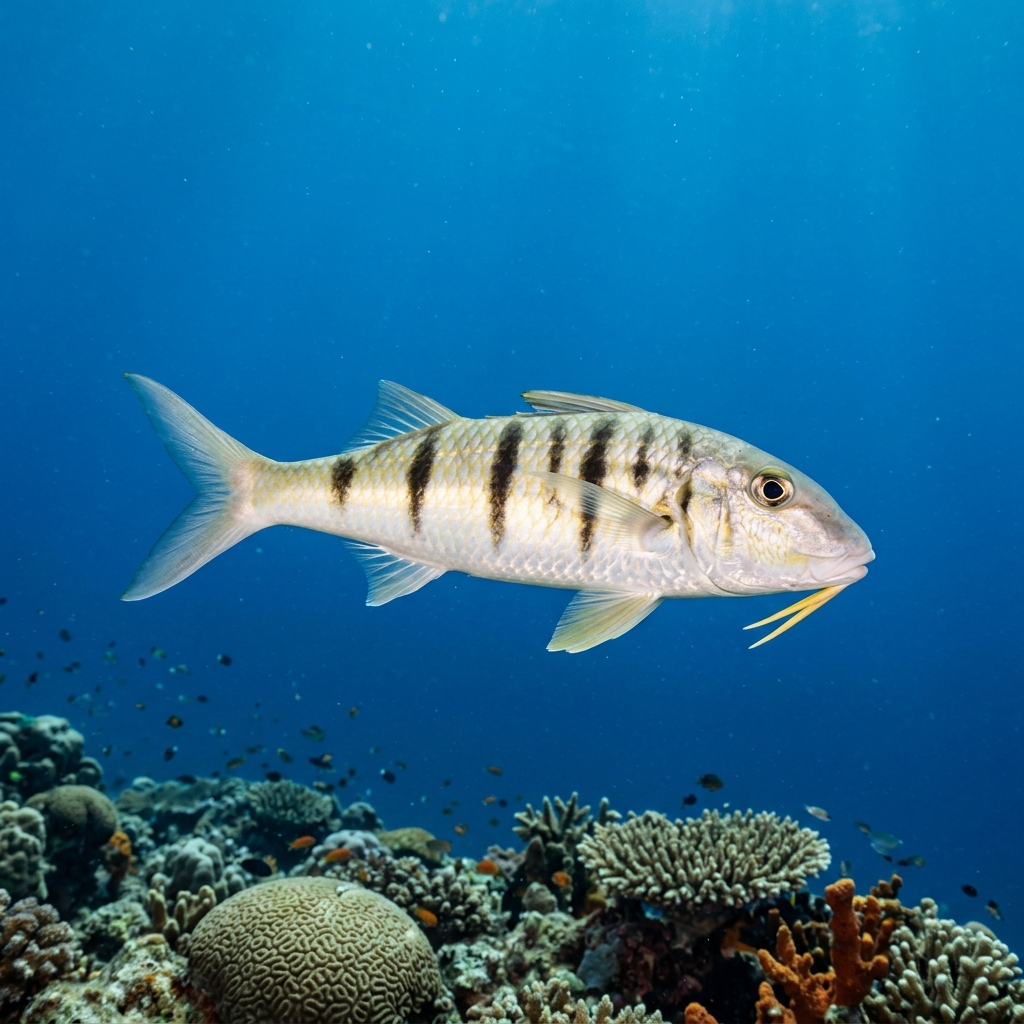
Manybar Goatfish
1,812 sites