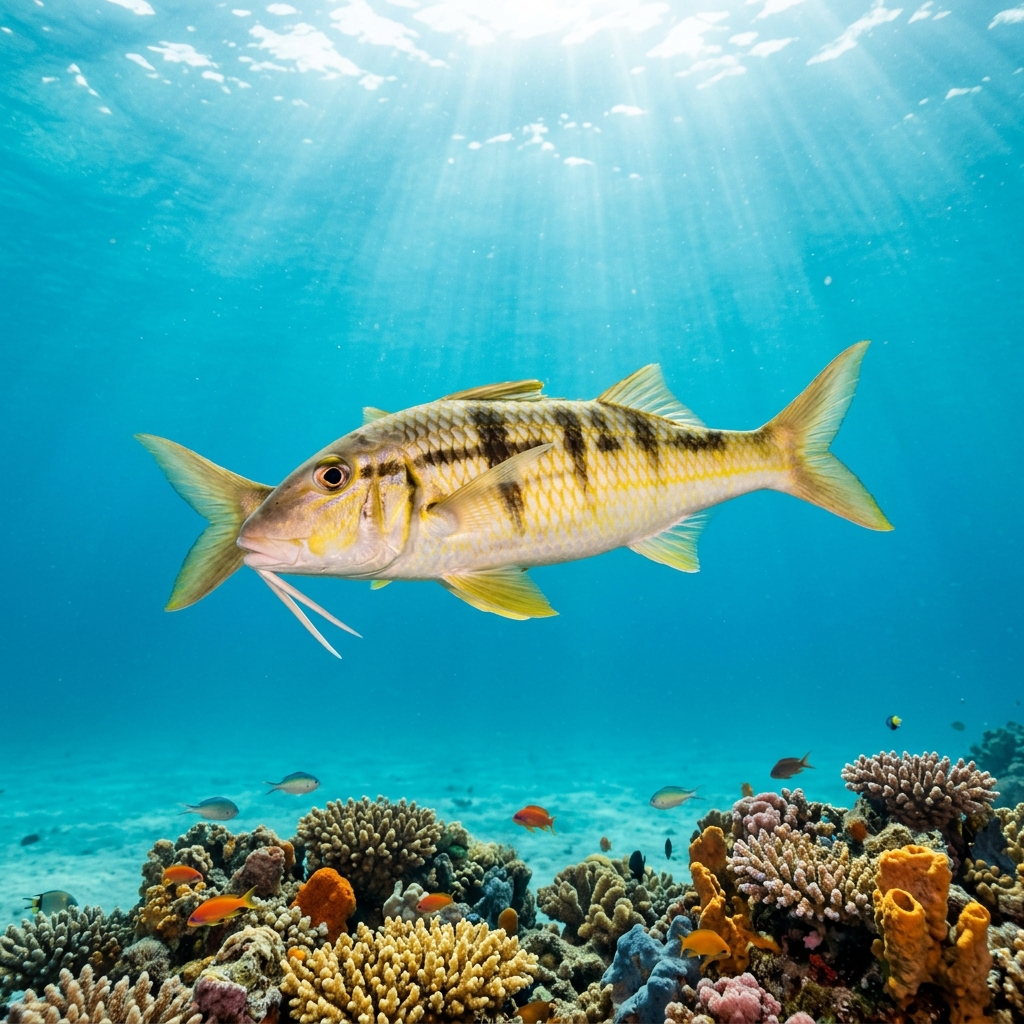
Mullidae spp.
Spot goatfish year-round from the Red Sea to the Maldives. Learn the barbel trick that makes this widespread family easy to identify underwater.
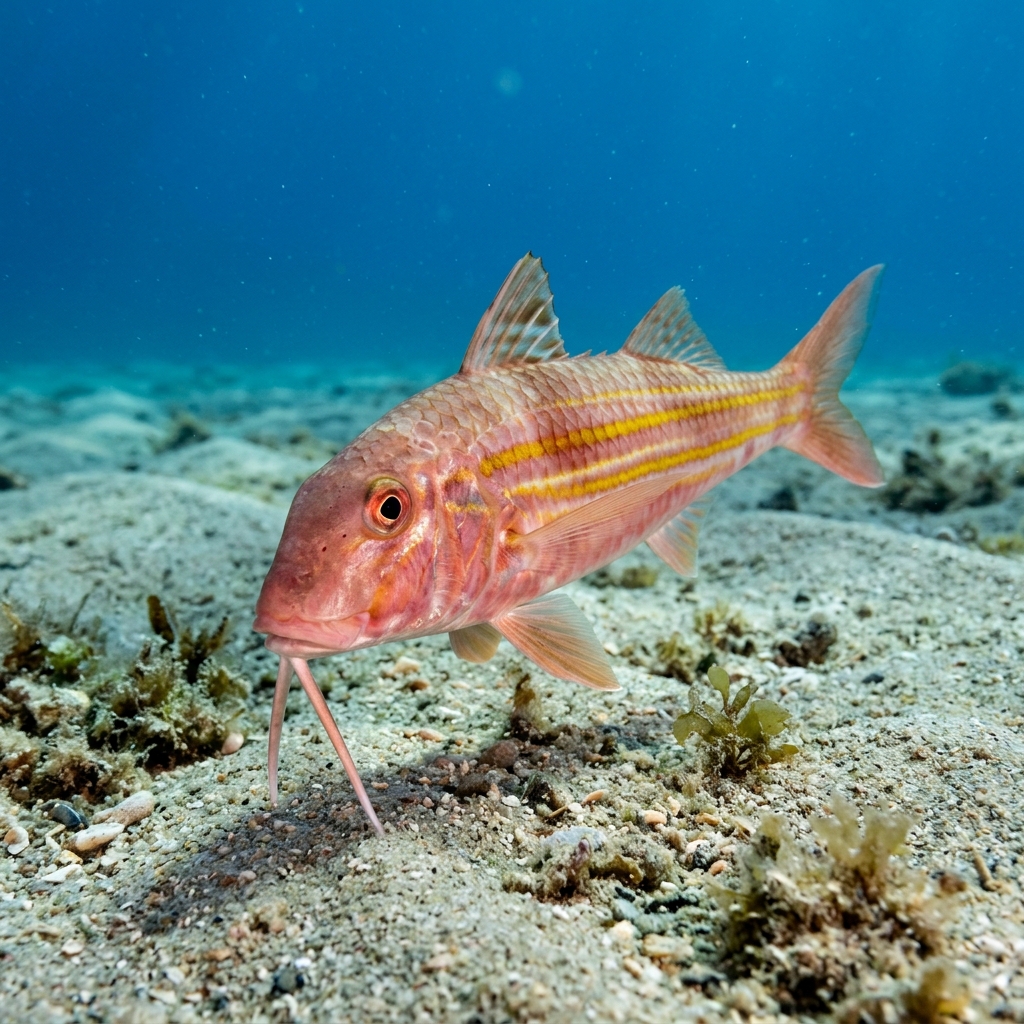
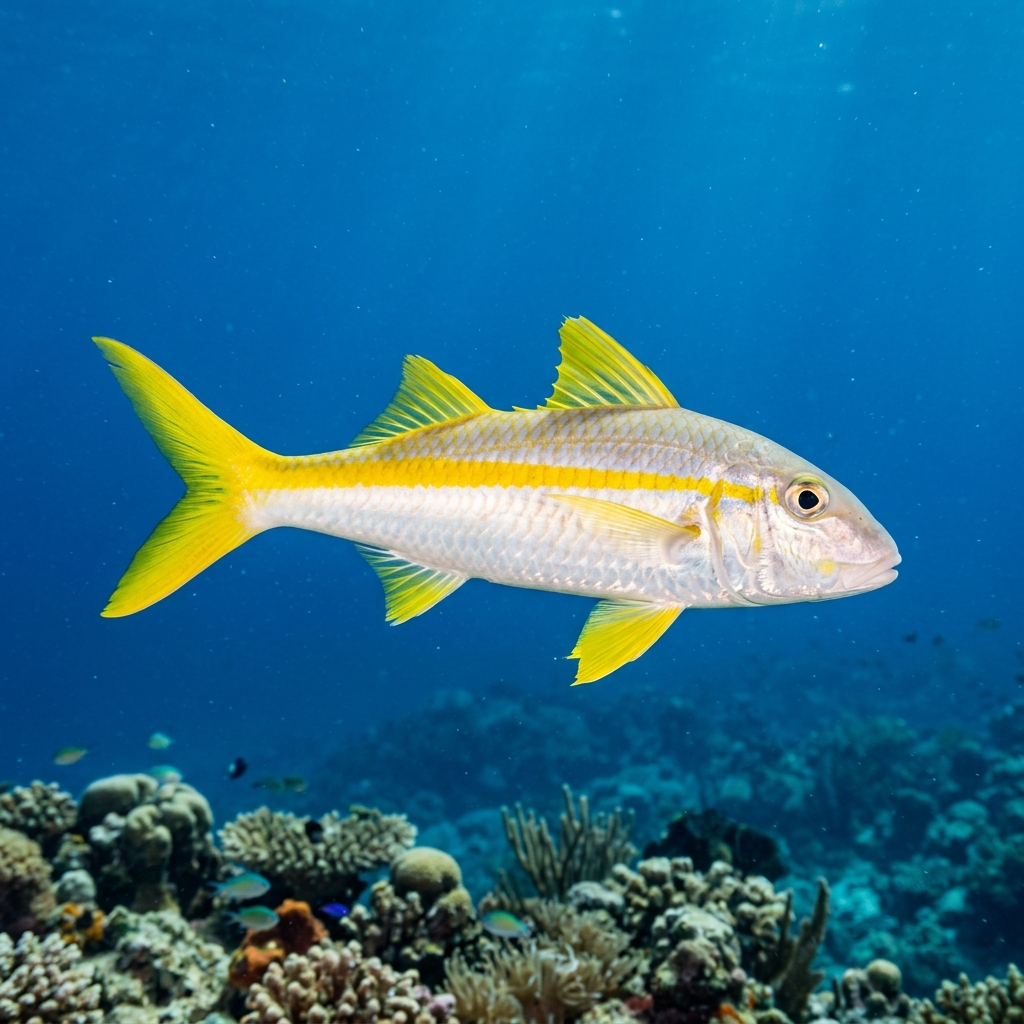
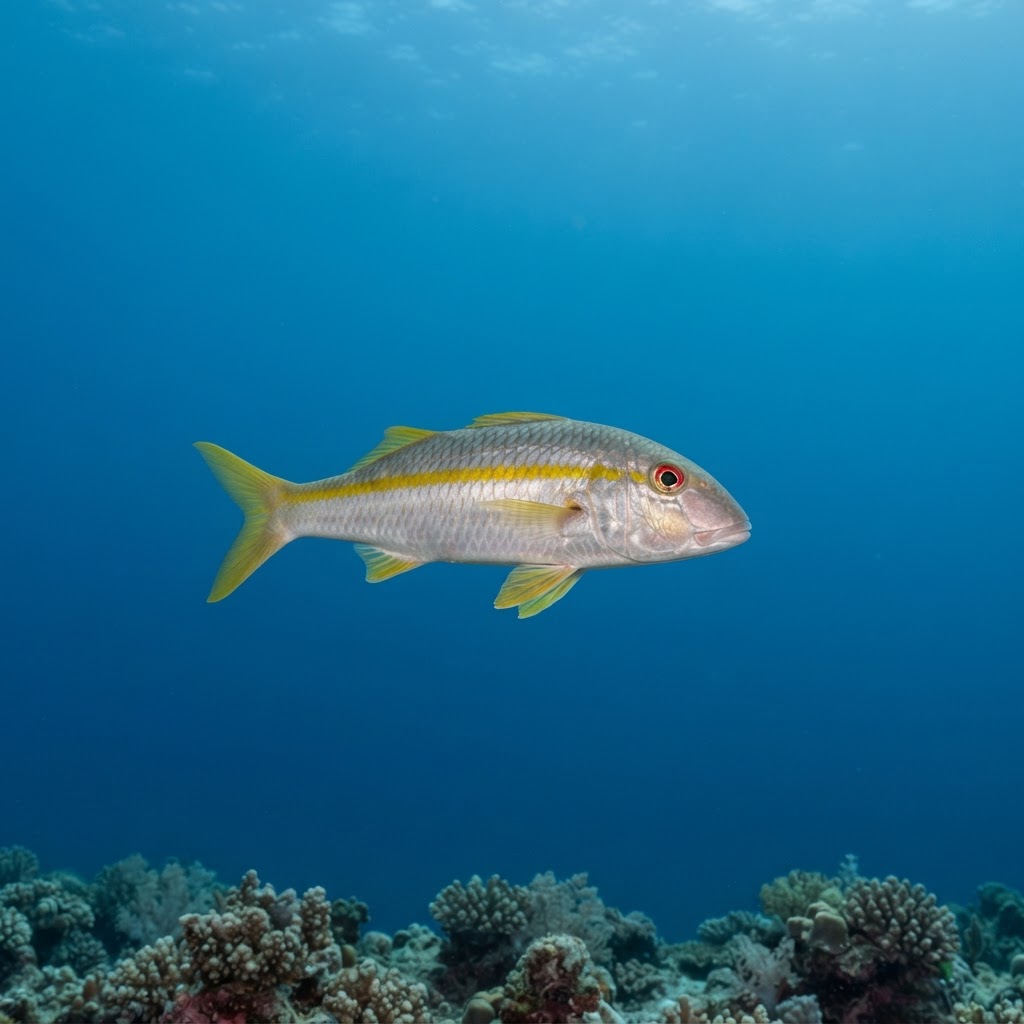
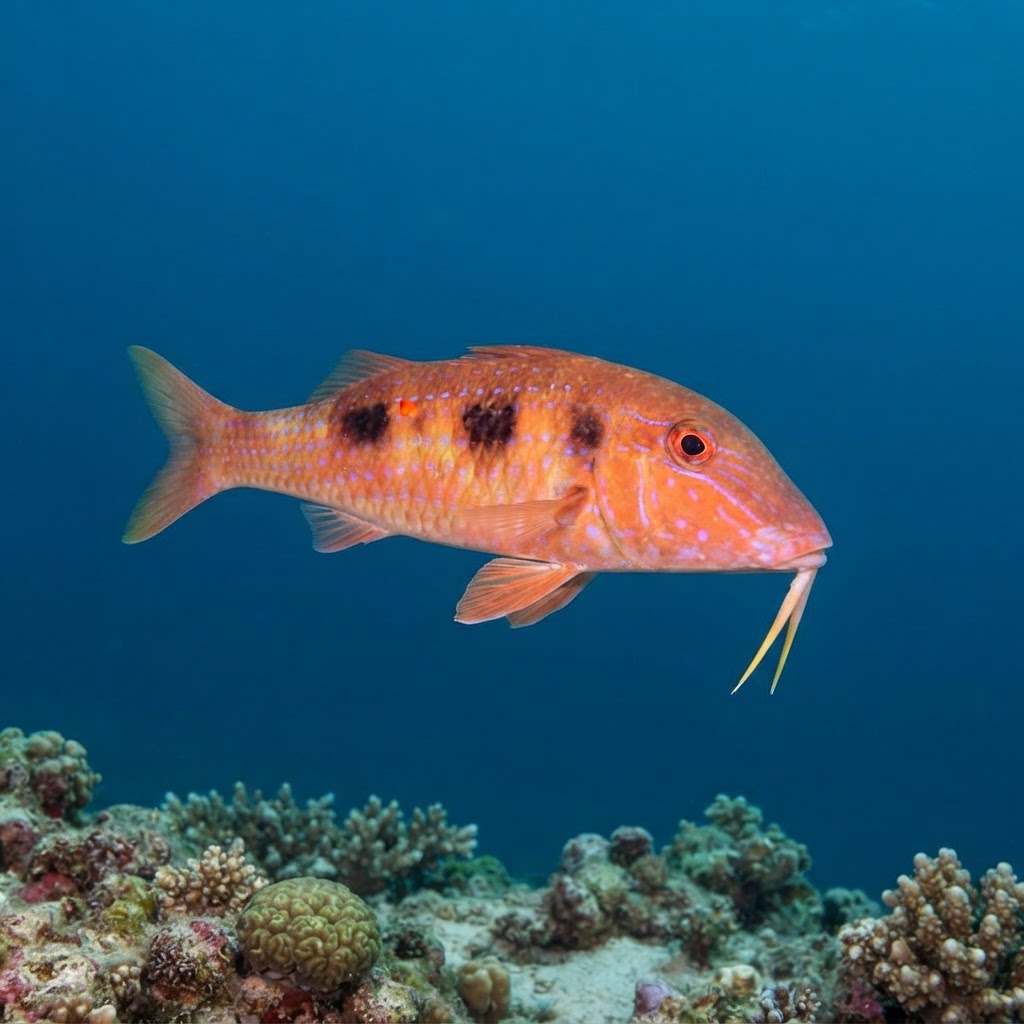
Two fleshy chin barbels (sensory whiskers used to probe the sand) are the single best field mark, no other common reef fish carries them. Most goatfish are elongated and slightly compressed, with two separate dorsal fins and colours ranging from white or yellow to deep red or striped, depending on species and mood. Many can change colour rapidly, shifting between a resting pale pattern and a more vivid active pattern within seconds. Juveniles of many species show bolder white-and-dark stripes or bright yellow markings that soften or change entirely as they mature.
You will almost always find goatfish working the bottom, heads down, barbels twitching across sand, rubble, or the base of coral, flushing out small invertebrates and worms. Resting fish often gather in loose groups mid-water or tucked against the reef, sometimes adopting a washed-out pale colour that looks quite different from the same animal feeding minutes later. They are largely indifferent to divers and will continue foraging if you approach slowly and stay low.
The chin barbels are not just for show, they are packed with chemoreceptors that effectively let goatfish taste the sediment as they probe it, making them specialist hunters of buried prey that most other reef fish cannot reach.
Goatfish are present year-round in both the Northern and Southern hemispheres, with no concentrated season detected across hundreds of logged sites. Their tolerance for water temperatures from around 20 °C up to 29 °C means they are at home on tropical reefs all year and extend into cooler subtropical waters without disappearing in winter.
Reef neighbours a diver could mistake it for. Use the identification notes above to tell them apart.
Goatfish are logged across a vast stretch of tropical and warm-temperate seas, with the strongest sighting records in Australia, the Philippines, Indonesia, and the Maldives. The Egyptian Red Sea, particularly around Sharm el Sheikh, and Florida and the Southeast United States are also reliable hotspots. Within the Indo-Pacific, the Visayas in the Philippines and the Male and Ari Atolls of the Maldives stand out as especially well-documented areas.
Mapping where Goatfish is logged…
Goatfish are one of the most widely distributed reef fish families on the planet, logged at sites across Australia, the Philippines, Indonesia, the Maldives, Egypt, Malaysia, Thailand, and the United States, among many others. Top regions include the Maldivian atolls, Sharm el Sheikh in the Egyptian Red Sea, the Visayas in the Philippines, and Florida. They turn up on sandy patches, rubble slopes, and coral reefs from the Indo-Pacific to the Caribbean.
There is no best season, goatfish are recorded year-round in both hemispheres with no seasonal peak. Their broad temperature tolerance, from roughly 20 °C to 29 °C, means they remain active on tropical and warm-temperate reefs across all months.
Look for the pair of fleshy barbels hanging beneath the chin, this is the definitive field mark shared by all goatfish and not found on any other common reef fish. Beyond the barbels, note the two separate dorsal fins and the elongated body. Colour varies widely by species and even by the individual's current activity, so rely on the barbels first and colour second.
Size varies across the family. Most species encountered on reef dives are somewhere between 20 and 40 centimetres in length, though some larger tropical species can reach close to 60 centimetres. On the reef they look moderate-sized, noticeably bigger than small wrasses, smaller than a snapper.
Goatfish use their chin barbels like metal detectors, probing sand and rubble to detect buried worms, crustaceans, and small invertebrates by taste and touch. This specialist foraging technique stirs up the sediment and attracts opportunistic followers, wrasses, small snappers, and other reef fish often trail a foraging goatfish to snatch dislodged prey.
Site and sighting data is aggregated from diver logs, iNaturalist and GBIF. For taxonomy and conservation status:
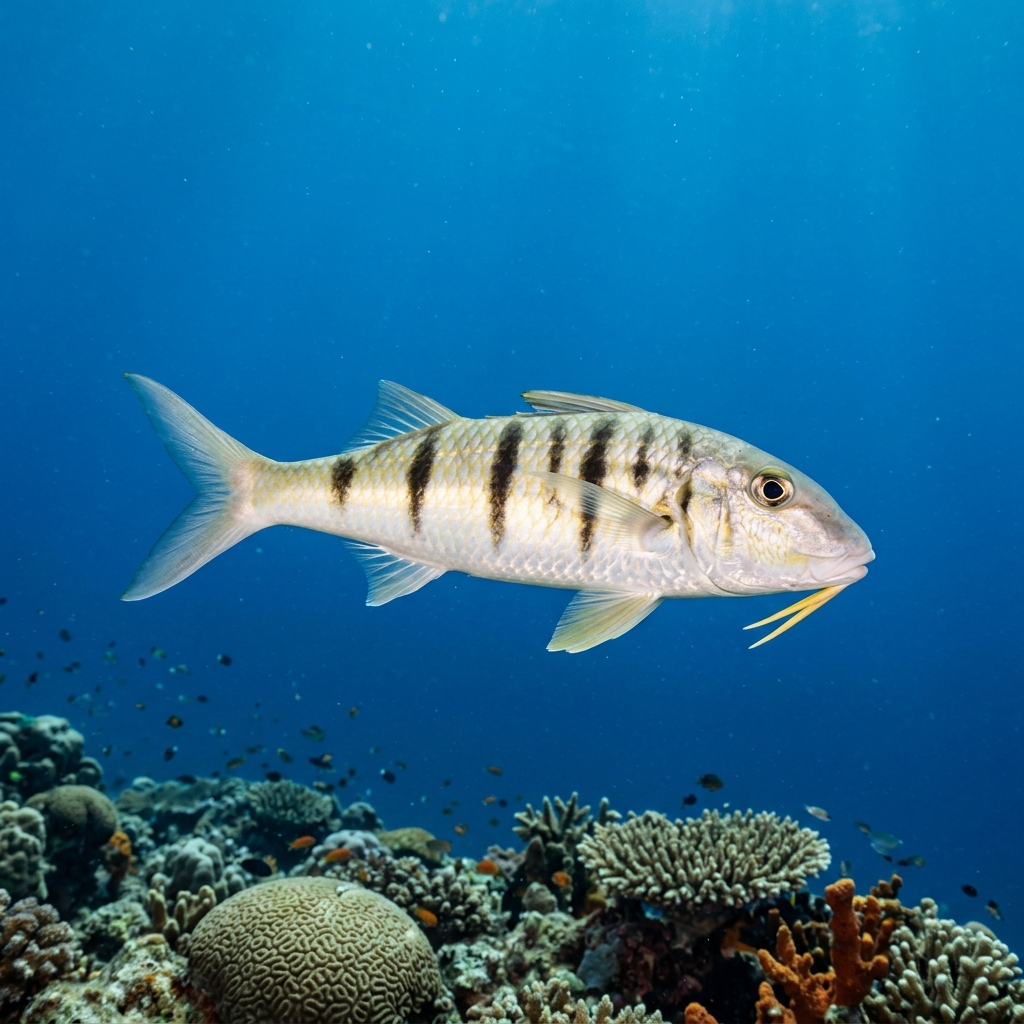
Manybar Goatfish
1,812 sites