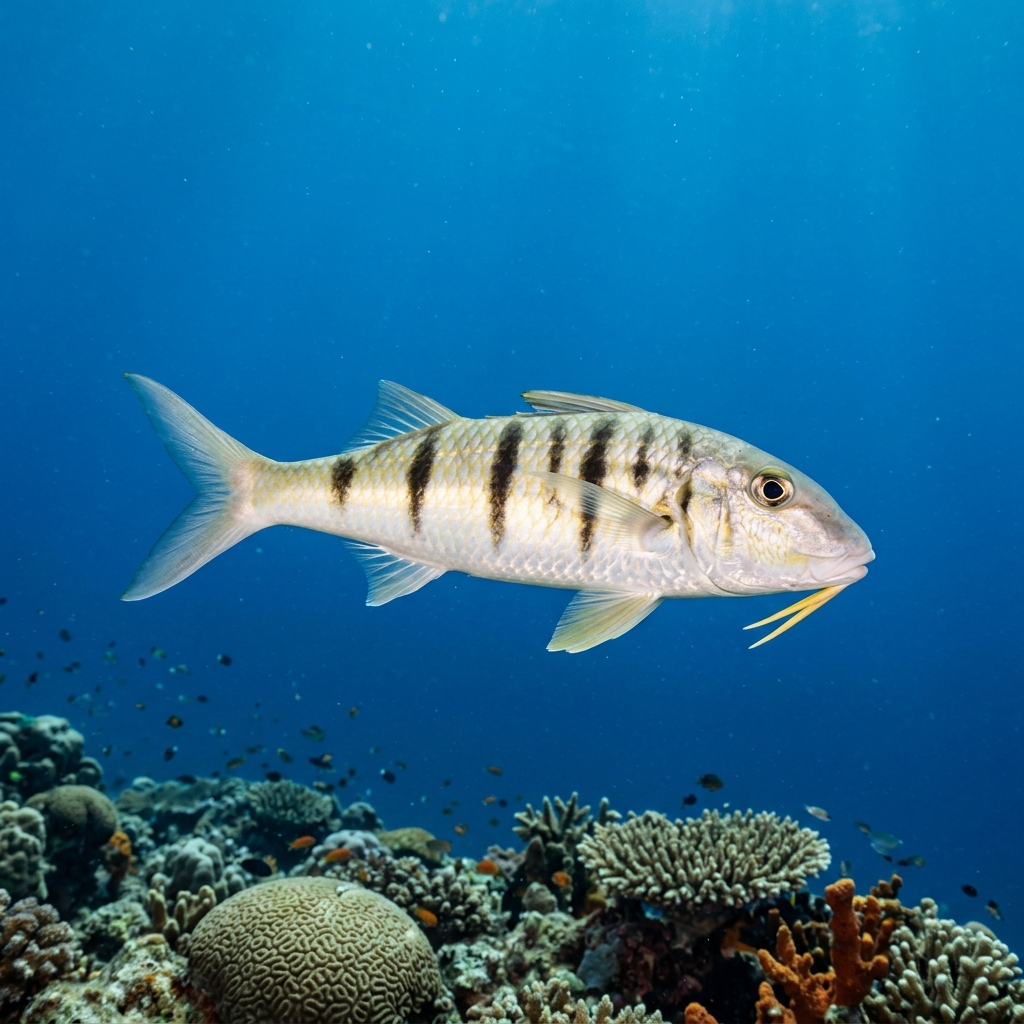
Parupeneus multifasciatus
Spot Manybar Goatfish foraging on reefs across Hawaii, the Philippines, and Bali. Learn its bold bar markings and when to find it.
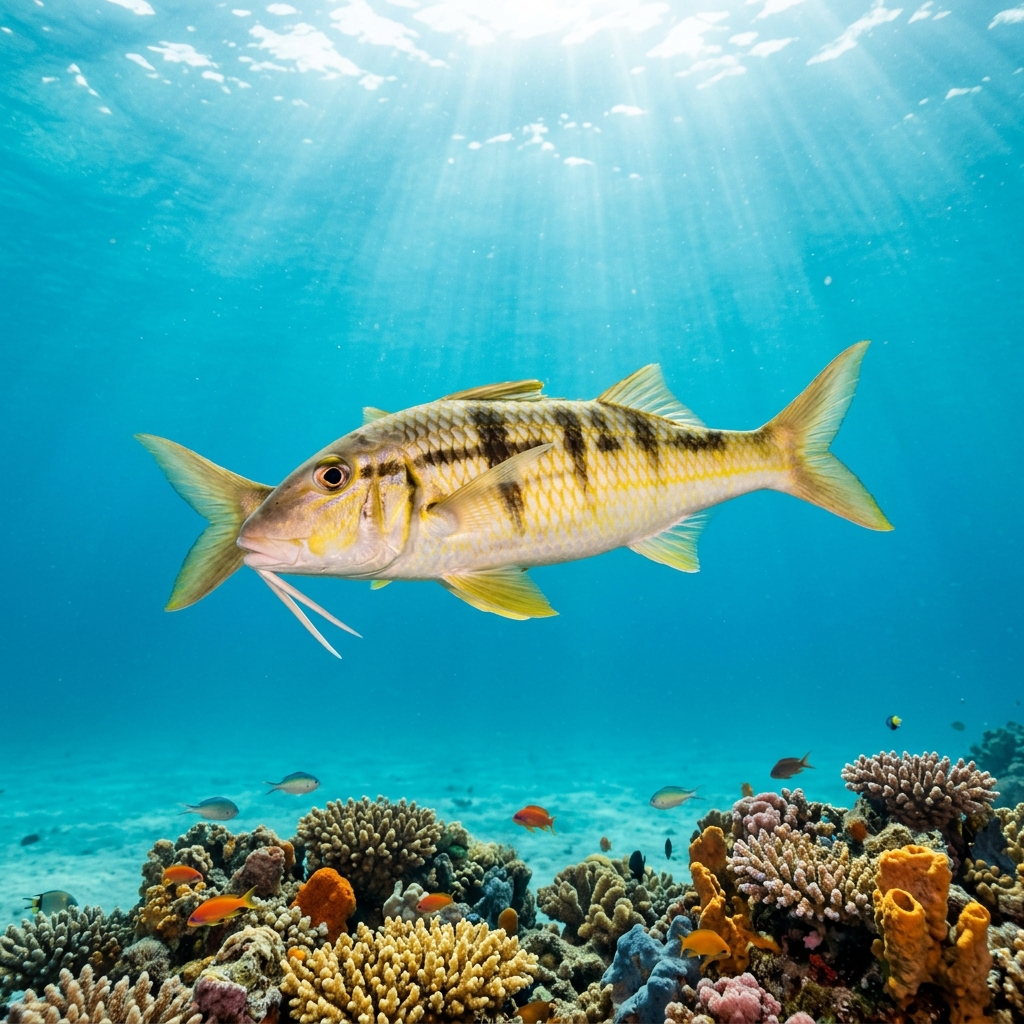
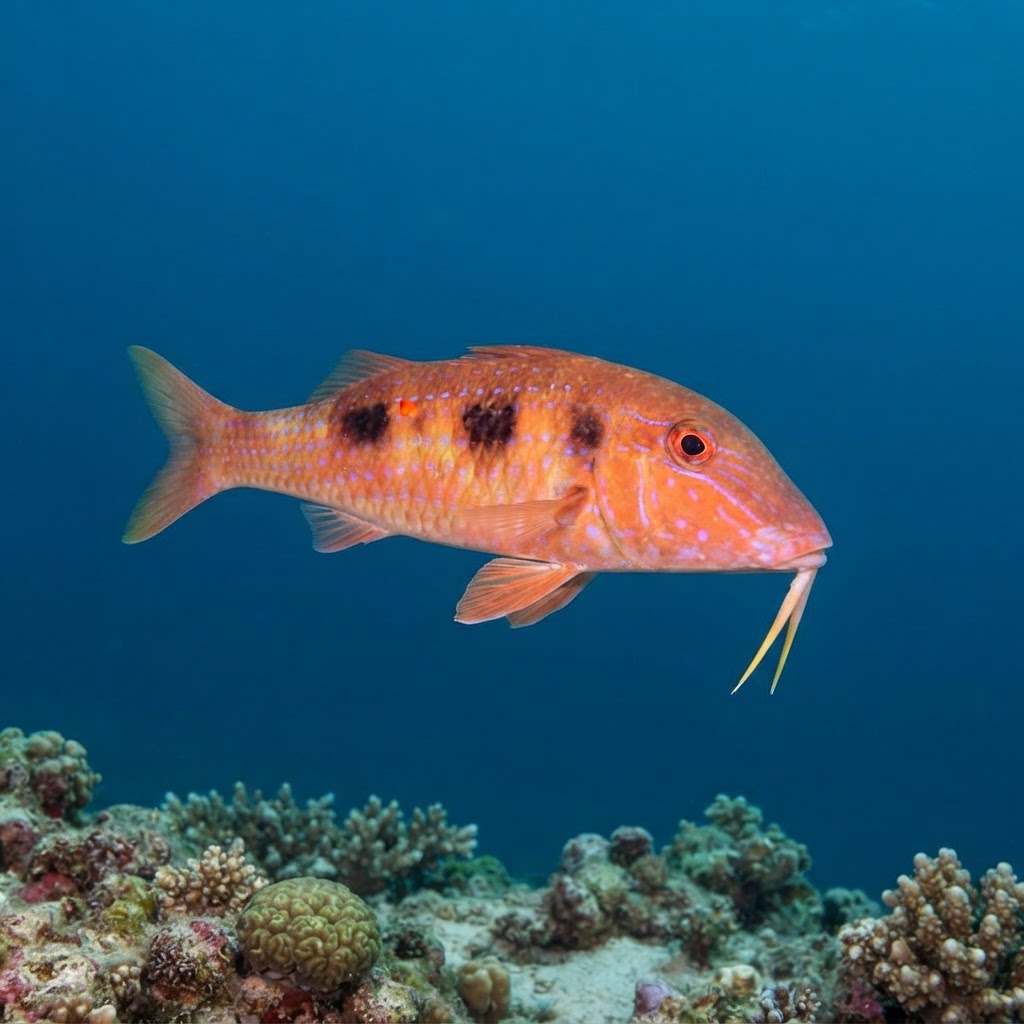
Look for a pale, elongated body marked with three to four bold dark vertical bars running from the back down toward the belly, the pattern that gives this fish its name. At around 24 cm it sits squarely mid-size among reef fish, and two long chin barbels (sensory appendages used to probe sediment) are always visible when the fish is actively foraging. Colouration can shift between a yellowish-white base and a more reddish hue depending on activity, so focus on the bar pattern rather than background colour as your primary ID cue.
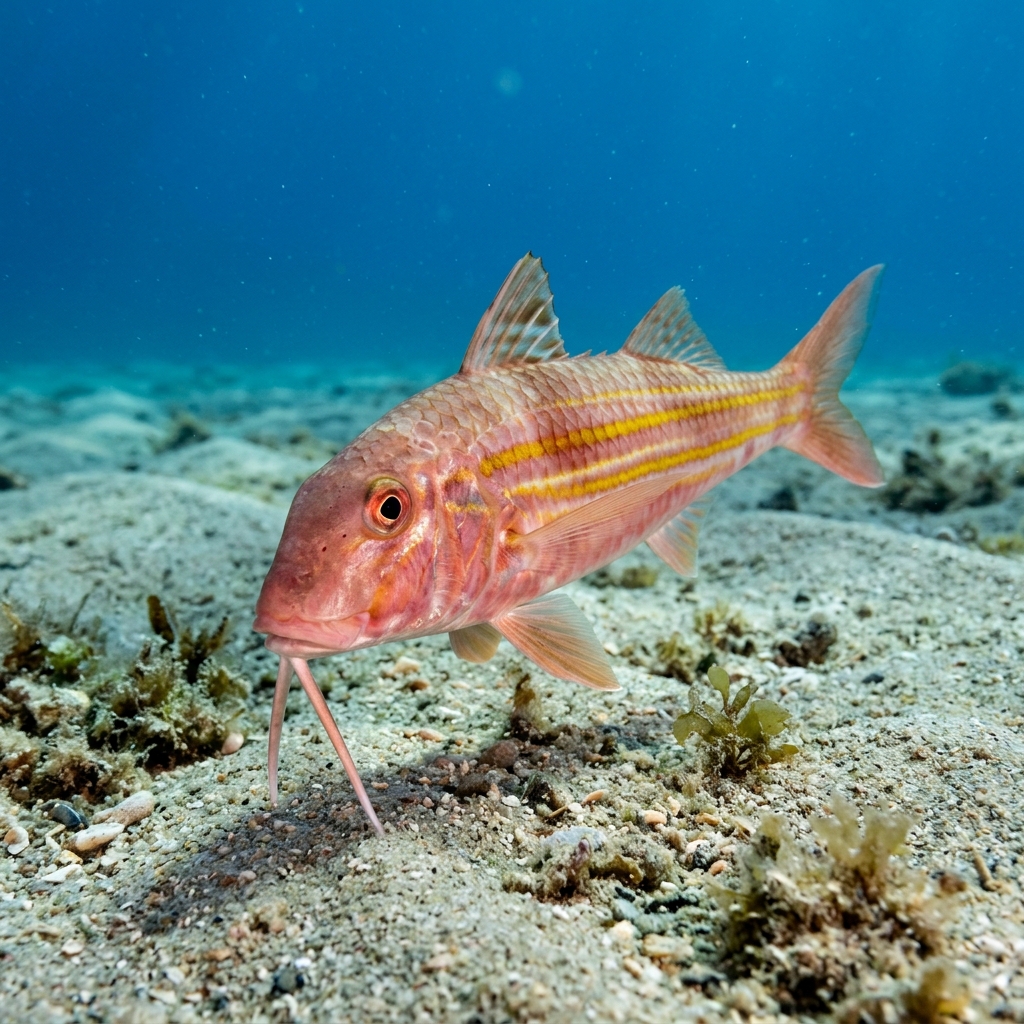
Most encounters happen while the fish is hunting, pressing its barbels into sandy patches between corals to flush out buried invertebrates, watch for small puffs of disturbed sediment rising around its snout. It tends to ignore divers who approach steadily and without sudden movements, making close observation easy. Small, loose groups are common, though individuals are just as likely to be seen working a patch of reef alone.
Those chin barbels are packed with chemoreceptors (chemical-sensing cells), letting the goatfish effectively taste the sand before it even touches it, a tool precise enough to locate buried shrimp and worms invisible to the eye.
In the northern hemisphere, sightings concentrate from July through March, covering Hawaii, Japan, and the Philippines. In the southern hemisphere, records peak from March through January, making most of the Australian and Indonesian diving calendar productive.
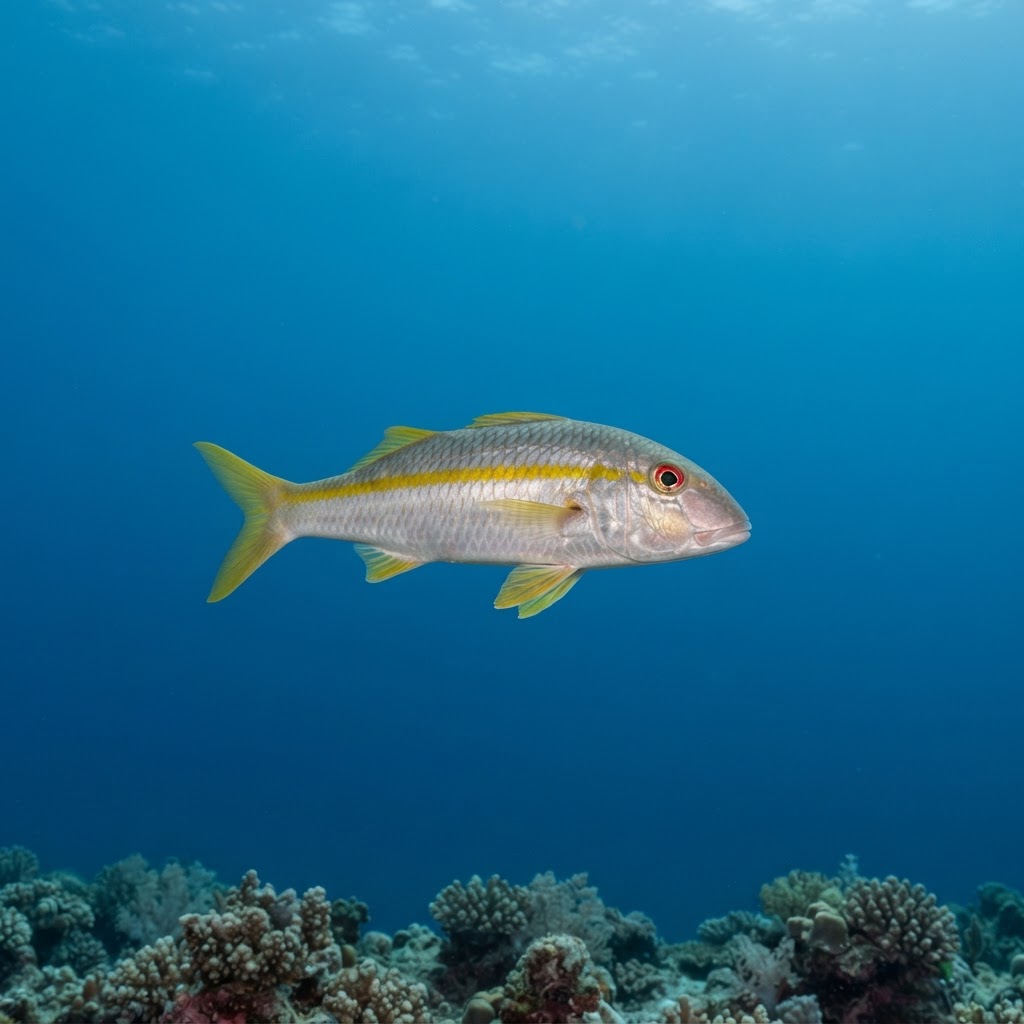
Reef neighbours a diver could mistake it for. Use the identification notes above to tell them apart.
Most commonly logged across the Indo-Pacific, with the strongest representation in the Philippines (particularly the Visayas and Palawan), Indonesia (especially Bali and Lombok), and Australia's Queensland coast. Hawaii also holds consistently strong records and is one of the most reliable places to search for it in the Pacific, along with Okinawa in Japan and Tahiti in French Polynesia.
Mapping where Manybar Goatfish is logged…
The species is logged across a wide sweep of the Indo-Pacific. The Philippines, Indonesia, Australia, and Hawaii are the top destinations by number of sites, with Okinawa, Tahiti, Bali, and Malaysian Borneo also offering reliable opportunities.
For northern hemisphere destinations like Hawaii, Japan, and the Philippines, July through March sees the most sightings. Southern hemisphere locations such as Queensland and Bali are most productive from March through January. The species tolerates water between roughly 24 and 29°C, so tropical reefs within that range hold fish year-round.
Focus on the three to four bold dark vertical bars on a pale or yellowish body. Two long chin barbels trailing below the jaw are the other key feature. Background colour can vary, so the bar pattern is the most reliable field mark.
Adults typically reach around 24 cm, making them a mid-sized reef fish. They are compact enough to manoeuvre easily between coral heads while foraging.
They are carnivores that hunt buried invertebrates such as worms, small crustaceans, and molluscs. Their chin barbels are loaded with chemoreceptors, letting them detect prey hidden beneath sand without needing to see it, a remarkably efficient hunting technique to watch up close.
Site and sighting data is aggregated from diver logs, iNaturalist and GBIF. For taxonomy and conservation status:
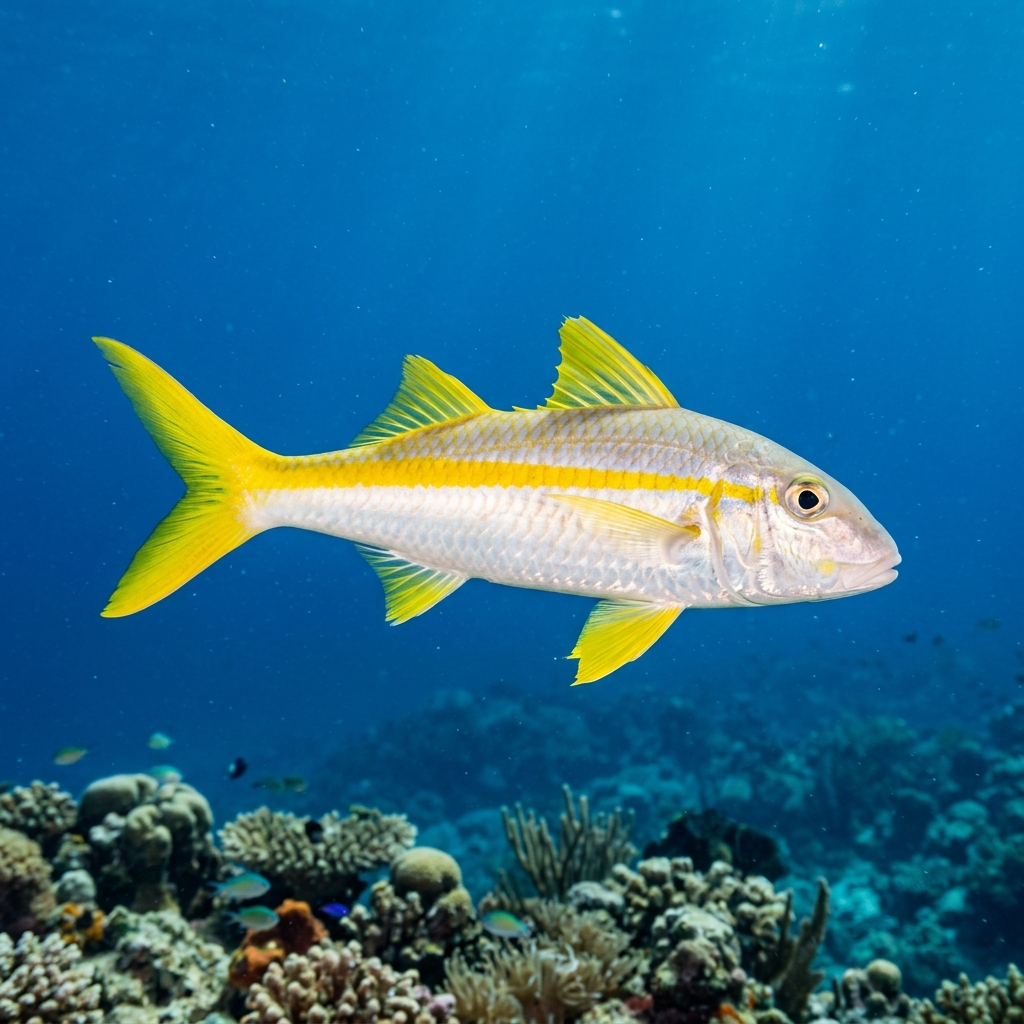
Yellowfin Goatfish
2,241 sites